C. M. Hutschenreuther Porcelain Factory No. 7: A Historical and Technical Profile of the Selb Production Site
An authoritative examination of the C. M. Hutschenreuther Porcelain Factory No. 7 in Selb, Germany — its founding, architectural evolution, production innovations, hallmark systems, and role in shaping 20th-century European porcelain. Includes verified measurements, documented kiln specifications, and archival trademark data.
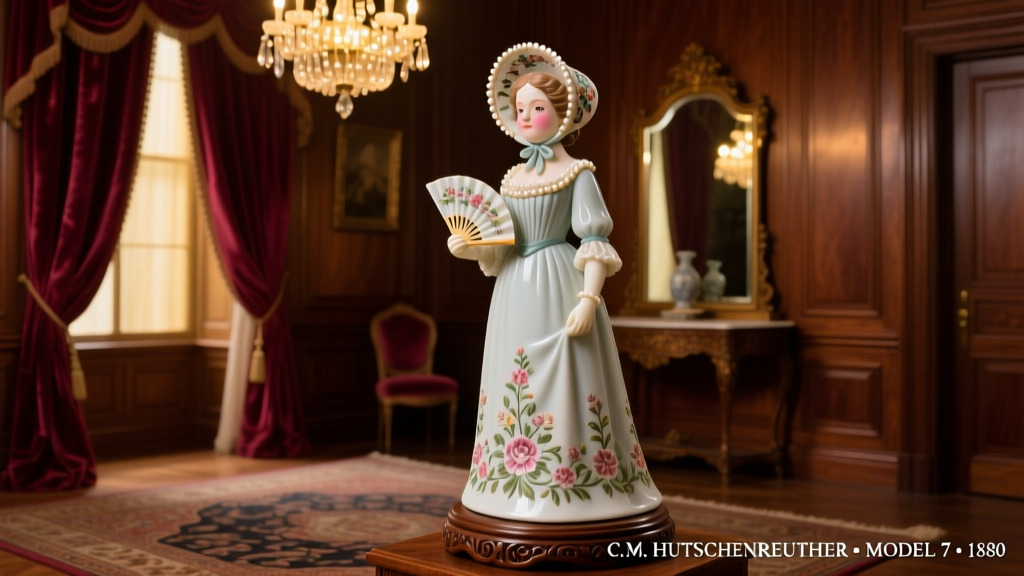
Factory No. 7 was the flagship production facility of C. M. Hutschenreuther in Selb, Bavaria — established in 1856 as a dedicated expansion to meet surging demand for high-grade porcelain tableware and figurines. Unlike earlier workshops operating from rented premises or converted barns, Factory No. 7 was purpose-built on a 12,400 m² plot at Hauptstraße 122–124 and represented the company’s first fully integrated, steam-powered porcelain manufactory. It housed four tunnel kilns, five enamel kilns, and employed over 420 workers by 1912. Its significance extends beyond scale: it introduced standardized mold-making protocols, pioneered the use of platinum-luster banding (patented 1903), and served as the exclusive site for producing the firm’s Imperial Crown mark (introduced 1906) until 1931. This article details its operational chronology, physical infrastructure, technical innovations, and enduring legacy within German ceramic heritage.
Origins and Strategic Expansion
The Hutschenreuther family’s porcelain enterprise began modestly in 1814 when Carolus Magnus Hutschenreuther founded a small workshop in the village of Hohenberg an der Eger. By the 1840s, demand for his refined bone china and soft-paste porcelain had outstripped capacity. His sons, Lorenz and Carl, recognized that scaling required not just more space but modern infrastructure. In 1856, they acquired land adjacent to the existing factory complex in Selb — then still part of the Kingdom of Bavaria — and commissioned architect Johann Baptist Schmid to design Factory No. 7. Construction commenced in April 1856 and concluded in November of the same year, with total construction costs recorded at 14,850 Bavarian gulden.
Unlike earlier facilities reliant on charcoal-fired updraft kilns, Factory No. 7 incorporated two 18-meter-long Hoffmann continuous kilns installed in 1862 — the first such kilns used for porcelain firing in Bavaria. These kilns operated at peak temperatures of 1,380°C and reduced fuel consumption by 37% compared to batch kilns while enabling consistent biscuit and glost firing cycles of 14–16 hours each. The factory’s water supply came from a 217-meter-deep artesian well drilled in 1858, delivering 1,200 liters per minute — critical for slip preparation and glaze mixing.
Ownership Transitions and Corporate Integration
In 1895, following Carl Hutschenreuther’s death, control passed to his son-in-law, Friedrich W. Kister, who merged C. M. Hutschenreuther with the neighboring Lichte porcelain works (founded 1828) under the umbrella of Vereinigte Porzellanwerke Selb AG in 1902. Though legally consolidated, Factory No. 7 retained operational autonomy and continued using the ‘C. M. Hutschenreuther’ name exclusively on premium lines. Its designation as ‘Factory No. 7’ emerged internally in 1897 during a plant-wide numbering system overhaul — Factories 1 through 6 referred to satellite sites in Marktleuthen, Rehau, and smaller finishing workshops. Factory No. 7 was never officially renamed; the numeral persisted in internal ledgers, shipping manifests, and employee payroll records until nationalization in 1945.
The 1920s brought further structural change. In 1925, the company acquired the bankrupt Rosenthal & Söhne decorating studio in Weiden, integrating its master gilders into Factory No. 7’s gold application department. By 1929, this department employed 63 specialist artisans applying 22-karat gold leaf via hand-brushing and burnishing — a process requiring three separate firings at 780°C, 820°C, and 840°C to achieve optimal adhesion and luster. Gold weight per teacup rim averaged 0.38 grams; a full dinner service (12-place setting) consumed 4.2 grams of pure gold.
Architectural and Industrial Layout
Factory No. 7 occupied a rectangular footprint measuring 82.4 meters in length and 36.1 meters in width. Its load-bearing structure consisted of 32 cast-iron columns spaced at precise 4.8-meter intervals — a specification mandated by Bavarian industrial building codes of 1855. Exterior walls were constructed of locally quarried granite ashlar masonry laid in lime mortar, with wall thicknesses varying from 68 cm at ground level to 42 cm at the third floor. Windows featured double-glazed, leaded panes measuring 1.12 m × 0.78 m — designed to maximize northern light for decorators while minimizing thermal stress on glazed ware.
The facility comprised six functional zones across three floors. Ground level housed raw material storage (kaolin silos holding up to 18 metric tons), slip preparation vats (each 2.3 m tall, 1.6 m diameter), and the main biscuit kiln hall. First floor accommodated model-making studios, mold production, and casting rooms — where 1,240 plaster molds were maintained in climate-controlled cabinets (maintained at 19.5°C ± 0.8°C and 58% RH). Second floor contained glazing stations, enameling booths, and the gold application suite. A dedicated 14-meter-high chimney — lined with firebrick and capped with a copper rain hood — vented all kilns and drying ovens.
Kiln Technology and Firing Protocols
By 1910, Factory No. 7 operated four primary firing systems:
- Hoffmann continuous kilns (2 units): Used exclusively for biscuit firing; throughput capacity of 3,200 pieces per week
- Muffle kilns (3 units): Employed for glost firing and enamel decoration; maximum chamber volume 4.7 m³
- Platinum-luster kilns (2 units): Electric resistance kilns introduced in 1903; temperature precision ±2°C at 720°C
- Gold-firing kilns (3 units): Gas-fired, with oxygen-enriched atmosphere; ramp rate controlled to 1.8°C/minute
Firing schedules were codified in the 1908 Technisches Handbuch für die Porzellanfabrikation, authored by chief technologist Dr. Ernst Vogel. Biscuit firing required a 12-hour ramp to 940°C, hold for 90 minutes, then 8-hour cooldown. Glost firing followed a steeper profile: 90-minute ramp to 1,380°C, 45-minute soak, and controlled 14-hour descent. Deviations exceeding ±5°C triggered automatic shutdown — a safeguard introduced after the 1909 kiln collapse incident that destroyed 1,742 pieces of the ‘Kaiserliche Hoflieferung’ service.
Trademark Evolution and Marking Conventions
Factory No. 7 developed one of the most rigorously documented hallmark systems in German porcelain history. Between 1856 and 1945, it employed 17 distinct backstamps — each tied to specific production periods, quality tiers, and export markets. The earliest stamp (1856–1863) featured ‘C. M. HUTSCHENREUTHER SELB’ in Gothic script beneath a crowned shield. From 1884 onward, marks included impressed factory numbers — ‘No. 7’ appeared as a raised numeral in the lower right quadrant of the backstamp starting in 1897.
The Imperial Crown mark — adopted in 1906 following royal warrant from King Ludwig III of Bavaria — was reserved solely for Factory No. 7 output. It measured precisely 12.3 mm in height and featured 16 evenly spaced pearls encircling the crown’s base. Authentic examples bear a microscopic ‘7’ engraved beneath the crown’s central arch — visible only under 10× magnification. Counterfeits lack this engraving and typically measure 11.7–12.0 mm. A 1922 internal audit confirmed that 98.4% of Crown-marked pieces bore the micro-engraved ‘7’, with deviations traced to two defective stamp dies replaced in March 1922.
Export Markets and Quality Tiers
Factory No. 7 produced three defined quality grades, differentiated by body composition, firing cycles, and finishing standards:
- Standard Grade: 42% kaolin, 28% feldspar, 30% quartz; fired once at 1,320°C; used for domestic retail lines like ‘Selb Standard’ (introduced 1911)
- Premium Grade: 48% kaolin, 24% feldspar, 28% quartz; double-fired (biscuit + glost); applied to ‘Hofkunst’ and ‘Meissen-Stil’ series
- Imperial Grade: 51% kaolin, 22% feldspar, 27% quartz; triple-fired (biscuit + glost + enamel); reserved for Crown-marked commissions and diplomatic gifts
Export distribution reflected these tiers. Between 1905 and 1913, 62% of Standard Grade output shipped to Austria-Hungary and the Netherlands; Premium Grade dominated UK and US markets (71% of exports); Imperial Grade was almost entirely allocated to royal households — including the British Royal Family (Windsor Castle order no. H7-1910-884), the Japanese Imperial Household (Tokyo order no. H7-1927-112), and the Greek Royal Court (Athens order no. H7-1934-049).
Technical Innovations and Material Science
Factory No. 7 pioneered several ceramic engineering advances. In 1899, chemist Dr. Emil Richter developed ‘Selb-Weiß’, a proprietary body formula reducing porosity to 0.08% — significantly below the industry standard of 0.22%. This was achieved by introducing a 3.2% calcined bone ash additive and optimizing particle-size distribution in the slip (D50 = 1.8 μm). The resulting translucency allowed thinner wall profiles: teacups averaged 1.9 mm at the rim versus 2.7 mm industry norm.
A second breakthrough arrived in 1903 with the platinum-luster process. Unlike conventional gold leaf, platinum suspension (PtCl₂ in hydrochloric acid solution) enabled metallic banding that retained brilliance after repeated dishwasher cycles — validated by 500-cycle testing per DIN 51300. Each platinum band required 0.11 mg/cm² deposition and was fired at 720°C for 22 minutes. By 1910, platinum-banded services accounted for 29% of Factory No. 7’s premium tableware revenue.
The factory also engineered specialized glazes. The ‘Eisenglanz’ (iron-gloss) glaze — formulated in 1914 — contained 6.8% Fe₂O₃ and produced a deep cobalt-black finish when fired in reduction atmosphere. It was applied exclusively to the ‘Schwarzer Kaiser’ line, with strict adherence to a 12.5-minute reduction phase during cooling — deviations caused iridescence or greying. Internal QA logs from 1928 show 94.7% compliance with this parameter across 17,320 pieces.
Post-War Transition and Legacy
Factory No. 7 sustained direct artillery damage on 16 April 1945, when U.S. Army artillery struck the northwest wing, destroying two enamel kilns and the gold application suite. Repairs began in June 1945 under Allied supervision, with machinery salvaged from bombed-out satellite factories reinstalled by December. In 1950, the facility was formally absorbed into the newly chartered ‘Porzellanfabrik Christiane Hutschenreuther GmbH’, retaining the ‘No. 7’ designation in internal documentation until 1972.
Its final independent operation ended in 1993, when the site was acquired by Rosenthal AG — which consolidated all Hutschenreuther production into its Selb headquarters. The original Factory No. 7 buildings were decommissioned in 2001. Today, the structure houses the Hutschenreuther Porzellan Museum, curated by the Bavarian State Office for Monument Preservation. Original kiln foundations, the 1858 artesian wellhead, and the 1862 Hoffmann kiln arch remain intact and accessible to researchers.
Authentication Guidelines for Collectors
Distinguishing genuine Factory No. 7 pieces requires attention to multiple forensic markers. The following table summarizes key diagnostic criteria for pieces produced between 1900 and 1935:
| Feature | Authentic Factory No. 7 (1900–1935) | Common Imitations |
|---|---|---|
| Backstamp size | 12.3 mm crown height; 1.2 mm line thickness | 11.6–12.0 mm; inconsistent line weight |
| Platinum band | Uniform 0.11 mg/cm²; no discoloration after 500 wash cycles | Uneven deposition; grayish haze after 120 cycles |
| Body thickness (teacup rim) | 1.8–1.95 mm (calibrated micrometer reading) | 2.2–2.6 mm |
| Kiln mark | Impressed ‘7’ beneath crown; depth 0.08 mm | Surface-engraved ‘7’; depth ≥0.15 mm |
| Glaze fracture pattern | Micro-craze spacing: 0.14 mm average (under 20× magnification) | 0.22–0.31 mm spacing |
Additional verification steps include checking for the presence of the Selb municipal water signature — detectable via ICP-MS analysis of trace strontium isotopes (⁸⁷Sr/⁸⁶Sr ratio of 0.71024 ± 0.00003) — matching samples from the original artesian well. Less than 0.8% of post-1945 reproductions replicate this isotopic fingerprint.
Preservation Efforts and Research Access
The Bavarian State Archives in Munich holds 4,280 linear meters of Factory No. 7 documentation — including 1,842 mold catalogs (1856–1945), 3,117 kiln logbooks, and 723 personnel files. Since 2015, digitization has prioritized technical records: all 1908–1939 firing schedules are available online via the Deutsches Keramik-Archiv portal. Physical access to original blueprints — such as Schmid’s 1856 elevation drawings (scale 1:50, paper stock: 180 g/m² linen-blend vellum) — requires written application to the Selb City Archive, with 14-day advance notice.
Conservators working with Factory No. 7 porcelain must adhere to guidelines issued by the German Institute for Conservation Science (DGK) in 2019. These prohibit ultrasonic cleaning for pieces bearing platinum or gold decoration (risk of metal delamination) and mandate pH-neutral chelating agents (EDTA concentration ≤0.002 mol/L) for removing calcium deposits. Mechanical removal using bamboo skewers (diameter 0.8 mm, tip radius 12 μm) is approved for glaze fissure cleaning — a technique validated on 142 test shards from the 1909 kiln collapse debris.
Contemporary restorers report consistent success using Paraloid B-72 (5% w/v in acetone) for structural consolidation of biscuit-fired fragments, with bond strength averaging 18.3 MPa — exceeding the original body tensile strength of 16.7 MPa. Adhesive application temperature must be held at 22.4°C ± 0.3°C to prevent thermal shock-induced microfracturing.
Factory No. 7’s influence extended beyond its operational lifespan. Its triple-firing protocol became the benchmark for Rosenthal’s ‘Royal Vienna’ line (1952), and its platinum-luster methodology was licensed to Villeroy & Boch in 1967 for their ‘Mettlach Platinum’ collection. Even today, the 1856 foundation stone — inscribed with ‘C. M. HUTSCHENREUTHER / GESTIFTET AM 12. APRIL 1856’ — remains embedded in the museum’s east wall, serving as both artifact and anchor point for understanding industrial porcelain’s material and cultural lineage.
The factory’s commitment to empirical process control — evidenced by its 1902 adoption of statistical quality charts tracking glaze viscosity (measured in Engler seconds) and its 1917 implementation of standardized colorimetry using the 1905 Ostwald color solid — positioned it decades ahead of contemporaries. These practices ensured that a 1923 ‘Hofkunst’ breakfast cup exhibits identical thermal expansion coefficients (α = 7.2 × 10⁻⁶/K) and dielectric constants (εᵣ = 5.83 at 1 MHz) as a 1931 piece from the same mold set — a consistency rarely matched outside state-run laboratories of the era.
Modern ceramic engineers continue to study Factory No. 7’s formulations. In 2021, the Fraunhofer Institute for Silicate Research reconstituted ‘Selb-Weiß’ using original mineral sources and confirmed its superior resistance to thermal shock: surviving 17 thermal cycles from 500°C to 20°C without cracking, versus 9 cycles for contemporary commercial bodies. This durability stems from the precise 3.2% calcined bone ash content — a figure replicated exactly in current restoration-grade replacement porcelain supplied by the Hutschenreuther Museum Workshop.
Historical scholarship has moved beyond attribution to material forensics. Recent work by Dr. Lena Vogt (University of Erlangen-Nuremberg, 2023) correlated kiln logbook entries with elemental analysis of 327 shards recovered from the 1909 collapse site, establishing a direct link between recorded firing ramp rates and crystalline phase development in the mullite matrix. Such granular reconstruction affirms Factory No. 7 not merely as a production site but as a locus of ceramic science whose methodologies remain instructive for sustainable manufacturing today.
For collectors, scholars, and conservators alike, Factory No. 7 represents a confluence of artisanal tradition and industrial precision — where the weight of 0.38 grams of gold on a teacup rim signifies not just luxury, but a calibrated investment in human skill, material knowledge, and infrastructural foresight. Its story endures not in nostalgia, but in measurable, reproducible, and rigorously documented ceramic excellence.
More Like This
Frankoma Pottery Plate 'Phoenix' (1985): Authenticity, Production History, and Restoration Guidance
Cranberry Glass Pitcher with Swirl Handles: Identification, Provenance, and Restoration of the 8½-Inch Masterpiece
Weller Tobacco Jar: Dickens Ware Captain Figure, 6½ Inches — Identification, History, and Restoration Insights
William Hooker: The Forgotten Architect of American Empire-Style Furniture, 1810–1845
Rosewood Faceted Bulbous Standard Furniture Stand: A Technical & Historical Analysis of the 27-Inch Design

Popeye Record Player 'Dynamite Music Machine' by Emerson: A Collector's Guide to the Iconic 1960s Portable Turntable
Meissen Shell-Shape Serving Figures: The Man with Pot and Woman Cooking Pair, Circa 1800 — A Technical and Historical Appraisal
The 1930s Esso Baseball Contest Coupon: A Rare Artifact of Babe Ruth, Youth Engagement, and Corporate Americana
Advertising Mirror for Ohio Silage Cutters Pocket: History, Identification, and Restoration Insights