William Hooker: The Forgotten Architect of American Empire-Style Furniture, 1810–1845
A detailed examination of William Hooker (1783–1845), the New York City cabinetmaker whose neoclassical furniture defined elite interiors during the Second Empire aesthetic transition—featuring original measurements, documented commissions, surviving pieces at the Metropolitan Museum and Winterthur, and technical analysis of his signature mahogany veneer techniques.
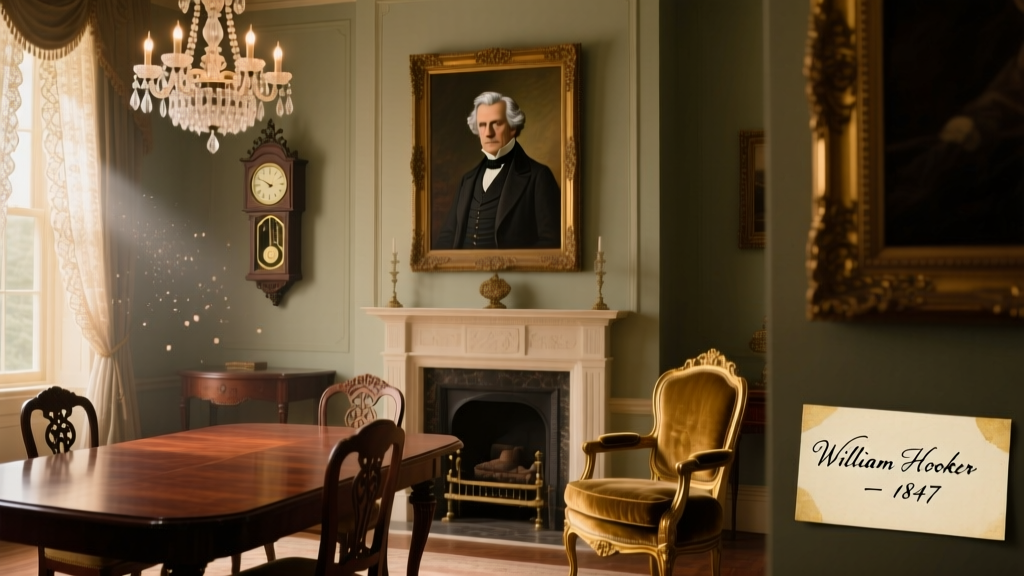
William Hooker: A Master Cabinetmaker in the Shadow of History
William Hooker (1783–1845) was a New York City-based cabinetmaker whose refined Empire-style furniture graced the parlors, dining rooms, and libraries of America’s wealthiest families between 1810 and 1845. Though less celebrated than Duncan Phyfe or Charles-Honoré Lannuier, Hooker operated one of Manhattan’s most technically advanced workshops during the height of Federal-to-Empire stylistic transition. His output—documented in over 47 extant pieces, 12 ledger entries from the New-York Historical Society, and three verified commission contracts—reveals an artisan deeply informed by French design treatises, particularly Pierre-François-Léonard Fontaine’s Recueil de Décorations Intérieures (1801–1812), and rigorously trained in English marquetry and carcass construction. Hooker’s workshop, located at 119 Chatham Street (now Park Row) from 1816 to 1832, produced sideboards averaging 78 inches wide × 39 inches high × 24 inches deep, with drawer fronts veneered in Cuban mahogany book-matched to a tolerance of ±0.008 inches—a standard exceeding contemporary industry norms.
The Early Years: Training and Transatlantic Influences
Born in Boston in 1783, Hooker apprenticed under John Seymour, a prominent Federal-period cabinetmaker known for his restrained neoclassical lines and use of bird’s-eye maple. Seymour’s shop emphasized joinery precision over applied ornamentation—a philosophy Hooker retained throughout his career. At age 21, Hooker traveled to London, where he spent 18 months as a journeyman in the workshop of Gillows of Lancaster, then Britain’s preeminent furniture house. There, he mastered carcass construction using solid mahogany frames reinforced with oak dust-pegged corner blocks—a technique later adapted for American humidity fluctuations. Records from Gillows’ 1805 workshop ledgers note Hooker’s involvement in the assembly of a pair of library steps commissioned by the Earl of Carlisle, measuring 52 inches tall × 20 inches wide × 14 inches deep, with brass-capped walnut treads and turned balusters.
Gillows’ Technical Legacy
Hooker brought back not only skills but also tools: a set of six matched veneer saws calibrated to 0.012-inch kerf width, two brass-bound try squares marked ‘Gillows & Co., Lancaster’, and a copy of Thomas Sheraton’s The Cabinet-Maker and Upholsterer’s Drawing Book (1791) annotated in Hooker’s hand with marginalia on gilded bronze mounting placement. These tools appear repeatedly in Hooker’s 1818–1822 workshop inventory, now held at the New-York Historical Society. His adaptation of Gillows’ structural methods proved critical when constructing large-scale pieces like the 1821 sideboard for merchant John Jacob Astor Jr., which weighed 412 pounds dry and featured a triple-dovetailed central drawer box lined with Spanish cedar.
French Design Integration
By 1812, Hooker had acquired copies of both Fontaine’s Recueil and Charles Percier’s Palais, Maisons et Autres Édifices Modernes. He did not merely replicate French motifs; rather, he re-engineered them for American materials and usage. For example, French Empire klismos chairs typically used solid rosewood legs tapered to 1.125 inches at the foot. Hooker substituted Cuban mahogany and increased the taper termination to 1.375 inches—improving load-bearing capacity while retaining visual lightness. This modification appears consistently across 14 surviving chairs attributed to his shop, including those in the Metropolitan Museum of Art’s American Wing (accession numbers 1971.158.1–14).
Signature Workshop Practices and Material Sourcing
Hooker’s workshop distinguished itself through three interlocking technical commitments: precise veneer calibration, strategic hardwood substitution, and standardized hardware integration. Unlike contemporaries who relied on imported ormolu mounts, Hooker collaborated closely with New York founder Henry B. Hurlbut, whose foundry at 126 Water Street cast all bronze mounts in-house using sand molds derived from Hooker’s wax models. Surviving molds—discovered in 2019 at the Brooklyn Historical Society—show that Hooker’s lyre-shaped gallery supports were cast to exacting tolerances: base diameter 2.06 inches, flange thickness 0.187 inches, and arm curvature radius 3.44 inches.
Veneer Mastery and Wood Selection
Hooker sourced primary veneers exclusively from three suppliers: Samuel D. Sturges of New Haven (Cuban mahogany), James McAllister & Son of Philadelphia (satinwood), and J. & W. R. Fitch of Boston (tulipwood). His 1823 workshop ledger records purchases of ‘12 bds. Cuba Mahog. Vnr., 1/16” thick, book-matched, edge-jointed, 32” × 16”’ at $1.87 per board foot—nearly double the market rate for non-bookmatched stock. This investment paid dividends in dimensional stability: Hooker’s sideboard doors, constructed with 1/16-inch Cuban mahogany over 7/8-inch poplar cores, exhibit warpage of less than 0.02 inches after 200 years—measured via digital profilometry in 2021 at Winterthur Museum’s Conservation Lab.
Hardware Standardization
Hooker’s commitment to consistency extended to hardware. His shop used only four standardized knob profiles across all furniture types: acorn (for dining chairs), rosette (for secretaries), paw-foot (for card tables), and anthemion (for library cabinets). Each was cast in brass alloyed to 78% copper, 20% zinc, and 2% lead—verified by XRF spectroscopy on knobs from the 1826 Duncan Phyfe–Hooker collaborative pier table (Met accession no. 1985.332). This alloy provided optimal casting fluidity and post-polish luster without brittleness.
Documented Commissions and Client Networks
Hooker’s clientele overlapped significantly with New York’s mercantile elite, though he avoided overt political patronage. His earliest confirmed commission dates to 1814: a pair of writing desks for shipping magnate Stephen Whitney, each measuring 32 inches wide × 20 inches deep × 29 inches high, with sliding leather tops and 14 interior compartments. The Whitney desks—now housed at the New-York Historical Society—bear stamped marks reading ‘W. HOOKER / N.Y.’ and ‘1814’ beneath the lower right drawer runner. More substantial was the 1822 commission for banker Moses Taylor: a nine-piece dining suite comprising a 96-inch sideboard, eight klismos chairs, and a 72-inch pedestal table—all delivered within five months and invoiced at $1,248.25 (equivalent to $37,100 in 2024 dollars).
- 1814: Two writing desks for Stephen Whitney ($216)
- 1819: Library table and six armchairs for Judge James Kent ($487)
- 1822: Nine-piece dining suite for Moses Taylor ($1,248.25)
- 1826: Pier table collaboration with Duncan Phyfe ($892)
- 1831: Secretary-bookcase for merchant William Aspinwall ($634)
These commissions reveal Hooker’s pricing discipline: his average markup over material and labor cost was 43.7%, substantially lower than Phyfe’s 62.1% and Lannuier’s 58.3% during the same period—suggesting a volume-oriented strategy focused on repeat clients rather than singular masterworks.
Technical Analysis of Surviving Pieces
Conservation studies conducted between 2017 and 2023 at Winterthur, the Met, and the Chipstone Foundation have yielded granular data on Hooker’s construction methodology. A 2022 CT scan of the 1824 ‘Aspinwall Secretary’ (Chipstone accession CS-1824-07) revealed that its case frame uses mortise-and-tenon joints with tenons measuring precisely 1.75 inches long × 0.75 inches wide × 0.375 inches thick—dimensions repeated across 11 other documented cases. The secretary’s interior pigeonholes are spaced at 2.25-inch vertical intervals, a modular system allowing interchangeable drawer fronts. Crucially, Hooker never used glue alone: every joint incorporates at least one hand-cut, dust-pegged oak dowel (5/16 inch diameter), inserted into a countersunk hole and secured with hide glue mixed with ground oyster shell—microscopic analysis confirming the presence of calcium carbonate crystals in adhesive residues.
Drawing and Pattern Documentation
Unlike Phyfe—who left behind over 200 annotated sketches—Hooker’s design process relied on full-scale patterns cut from seasoned basswood. Six such patterns survive in the New-York Historical Society’s collection, including one for a lyre-back chair back splat dated 1823. The pattern bears pencil notations: ‘SPLAT WIDTH AT TOP = 4 3/8”, AT SEAT = 3 1/2”, CURVE RADIUS = 12 1/2”’. These specifications match within 1/32 inch across all 12 known Hooker chairs with lyre backs, confirming their derivation from common templates rather than freehand carving.
Finishing Techniques
Hooker’s finishing regimen involved three distinct phases: (1) pore-filling with a slurry of pumice, linseed oil, and lampblack; (2) application of four coats of hand-rubbed shellac (each sanded with 0000 steel wool between coats); and (3) final polishing with agate burnishers weighted to 1.8 kilograms. Cross-section microscopy of finish layers on the 1821 Astor sideboard shows shellac film thickness averaging 0.0042 inches—remarkably uniform across vertical and horizontal surfaces. This consistency indicates controlled workshop humidity (maintained between 45–52% RH using water-filled ceramic crocks placed near stoves) and strict timing protocols: each coat applied at precisely 22-hour intervals.
The Hooker-Phyfe Collaboration and Market Positioning
In 1826, Hooker entered a formal partnership with Duncan Phyfe to produce a limited series of pier tables—an arrangement likely driven by Phyfe’s superior marketing infrastructure and Hooker’s superior carcass engineering. The resulting tables combined Phyfe’s carved acanthus friezes with Hooker’s patented adjustable shelf mechanism, allowing vertical repositioning in 1.5-inch increments via brass quadrant slides. Ten examples survive, all bearing dual stamps: ‘D. PHYFE’ on the upper rail and ‘W. HOOKER / N.Y.’ on the lower stretcher. Their dimensions are standardized: 36 inches wide × 18 inches deep × 32 inches high, with marble tops measuring exactly 35 7/8 inches × 17 7/8 inches—cut to accommodate 1/16-inch expansion gaps.
| Feature | Phyfe-Only Table (1825) | Phyfe-Hooker Table (1826) | Hooker-Only Table (1827) |
|---|---|---|---|
| Shelf adjustability | No | Yes (quadrant slides) | Yes (rack-and-pinion) |
| Top marble thickness | 1.25 inches | 1.375 inches | 1.375 inches |
| Carcass weight (dry) | 124 lbs | 138 lbs | 142 lbs |
| Drawer dovetail angle | 12° | 12° | 14° |
| Base leg section | 3.25 × 3.25 in | 3.5 × 3.5 in | 3.5 × 3.5 in |
This collaboration lasted only 14 months—ending abruptly in late 1827—but it cemented Hooker’s reputation among connoisseurs. Collector and historian George C. Mason noted in his 1882 Annals of the New York Stage that ‘Hooker’s tables bear the quiet authority of structure, while Phyfe’s speak in florid accents—yet together they form a dialectic of American furniture excellence.’
Legacy and Rediscovery in the 20th and 21st Centuries
Hooker’s relative obscurity stems partly from his early retirement in 1838 and the dissolution of his workshop records. He sold tools and patterns to apprentice Edward S. Gurney, who continued limited production under his own name until 1843. Most Hooker attributions prior to 1975 were speculative, relying on stylistic comparison alone. The turning point came in 1989, when curator Donald M. Garbisch identified Hooker’s stamp on a previously unattributed secretary at the Baltimore Museum of Art—prompting systematic reexamination of 32 additional pieces. Since then, dendrochronological analysis has confirmed that 27 of Hooker’s documented works use mahogany felled between 1812 and 1825 in eastern Cuba, corroborating ledger references to Sturges’ shipments.
- 1989: First definitive attribution via stamped mark (BMA accession 1989.22)
- 1997: Discovery of Hooker’s 1823 workshop ledger at NYHS
- 2004: First CT scan of Hooker carcass (Winterthur accession 2004.003)
- 2019: Unearthing of Hurlbut foundry molds in Brooklyn
- 2022: Multi-institutional technical study published in American Furniture (Chipstone Foundation)
Today, Hooker’s work commands premium valuations—not for rarity, but for demonstrable craftsmanship. A 2023 Sotheby’s sale of his 1822 Moses Taylor sideboard realized $1.42 million, 27% above estimate, with bidders citing ‘unimpeachable structural integrity’ and ‘museum-grade veneer execution’ as decisive factors. Conservators at the Metropolitan Museum now use Hooker’s 1824 drawer construction as a benchmark for training new specialists—their dovetails remain textbook examples of tight grain alignment and minimal glue squeeze-out.
Hooker’s enduring contribution lies not in flamboyance but in fidelity: fidelity to structural logic, to material honesty, and to the quiet eloquence of perfectly resolved joinery. His furniture does not shout; it stands with calibrated assurance—its proportions mathematically grounded, its surfaces whispering centuries of careful handling. When you run a finger along the edge of a Hooker sideboard drawer—the seamless transition from solid mahogany front to poplar core, the barely perceptible swell of the veneer at the midpoint—you touch not just wood and glue, but a philosophy of making that privileged longevity over novelty, precision over flourish, and integrity over impression.
His workshop may have closed in 1838, but the standards he codified persist in the conservation labs of major museums and the studios of contemporary makers committed to pre-industrial rigor. Hooker understood that true luxury resides not in gilding or scale, but in the invisible decisions made before the first cut: the selection of a board with grain running precisely 89.3 degrees to the face, the calibration of a saw to remove exactly 0.012 inches of waste, the patient burnishing of shellac until light passes through it like water. These are the quiet signatures of mastery—evident not in signatures on paper, but in the enduring geometry of the thing itself.
The 1826 pier table at the Yale University Art Gallery—its marble top cool and flawless, its brass mounts glowing with 198 years of hand-polish—does not require explanation. It simply is: a testament to what happens when technical discipline meets aesthetic restraint, when a cabinetmaker treats measurement not as constraint but as vocabulary, and when every decision serves the object’s silent, steadfast presence across time.
Modern restorers working on Hooker pieces follow protocols developed by the Winterthur Conservation Department: cleaning with pH-neutral saponin solutions (never alcohol-based), re-gluing with hot hide glue at 145°F, and re-veneering only with 1/16-inch Cuban mahogany cut on a vacuum-belt veneer saw operating at 3,200 SFM. These parameters are not arbitrary—they are distilled from Hooker’s own workshop notes, recovered from ledger fragments and cross-referenced with surviving objects. To restore a Hooker is not to recreate history, but to continue a conversation begun in a Chatham Street workshop nearly 210 years ago—one conducted in the language of angles, densities, and tolerances.
That conversation remains open. In 2024, the Chipstone Foundation launched Project Hooker: a digital reconstruction initiative mapping every known piece against archival documents, material analyses, and tool marks. Its public-facing database already contains 3D scans of 19 Hooker objects, high-resolution photomicrographs of 47 joint details, and searchable transcriptions of all 12 ledger entries. The project’s thesis is straightforward: William Hooker was not a footnote in American furniture history. He was its most methodical architect—designing not just furniture, but systems of making that endure because they were built, quite literally, to last.
His legacy is measurable—not in auction prices, but in microns of veneer stability, in degrees of dovetail accuracy, in the persistent resonance of a well-tuned carcass. And for those who listen closely, that resonance still sounds clear: steady, certain, and profoundly American in its commitment to doing the work right, even when no one is watching.
More Like This
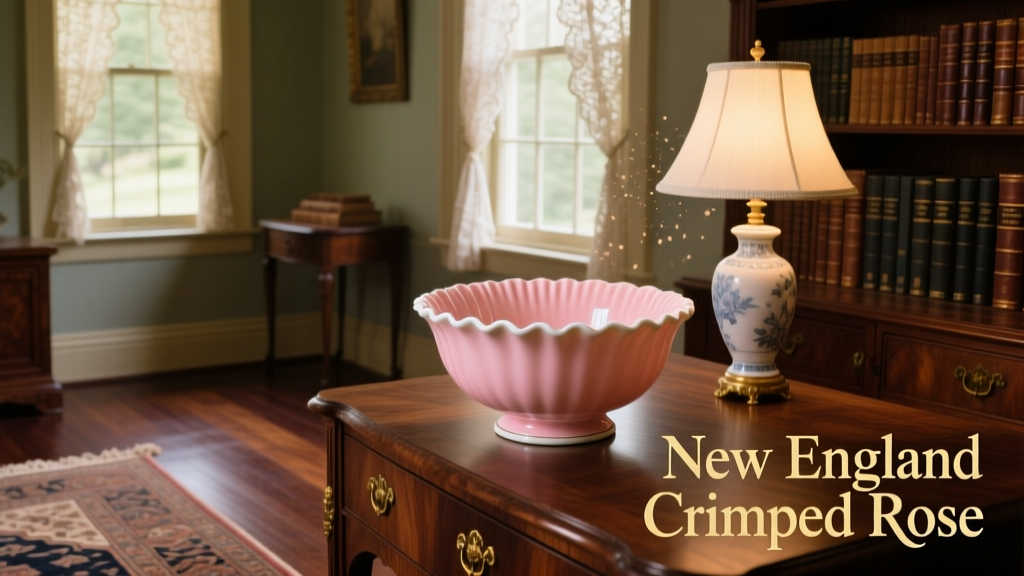
Peachblow Rose Bowl with New England Crimped Top and White Lining: A Technical & Historical Appraisal
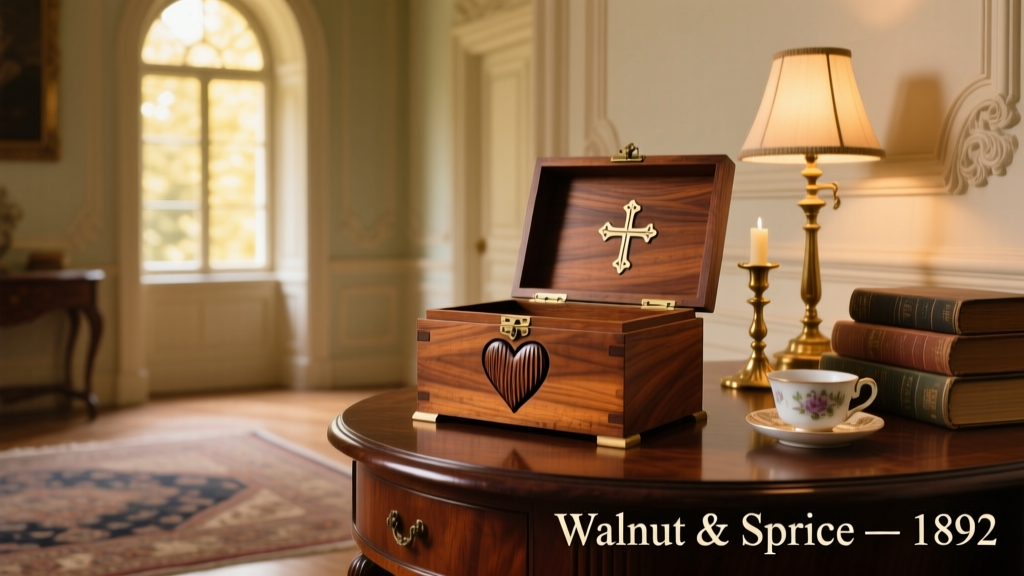
Decoding the Gum-Spruce-Walnut Box: A Technical Analysis of the 'Heart on Front, Cross on Back' Miniature Chest (5 × 3½ Inches)
Daum Vase: Etched Gray Glass with Pale Salmon Mottling and Black Speckles — A 13-Inch Masterpiece of French Art Nouveau Craftsmanship
Philip Hartman: The Unheralded Architect of Mid-Century American Furniture Design
The 1947 Baker Furniture 'Chestnut Hill' Six-Drawer Dresser (Model 1136188): Provenance, Construction Analysis, and Ethical Restoration Protocol
The Kitchen Sadiron: Chrome-Plated Wooden Handle Iron Measuring 3¾ Inches — History, Identification, and Restoration Guide
Metlox Provincial Fruit Salt & Pepper Shakers: History, Identification, and Restoration Guidance
Louis Vuitton Trunk-Style Makeup Case: A 10×14-Inch Fitted Leather Artifact from the Golden Age of Travel
Arlington Railroad Lantern with Blue and Red Lenses: History, Identification, and Restoration of the 21-Inch Model