The Brumby Rocking Chair: History, Design Legacy, and Restoration Principles
A detailed examination of the Brumby Rocking Chair—its origins with the Brumby Chair Company of Atlanta, Georgia; iconic design features including the patented 'S'-curve back and steam-bent oak construction; authentic production timeline (1920–1957); measurable dimensions and material specifications; and practical, conservation-focused restoration protocols for antique collectors and conservators.
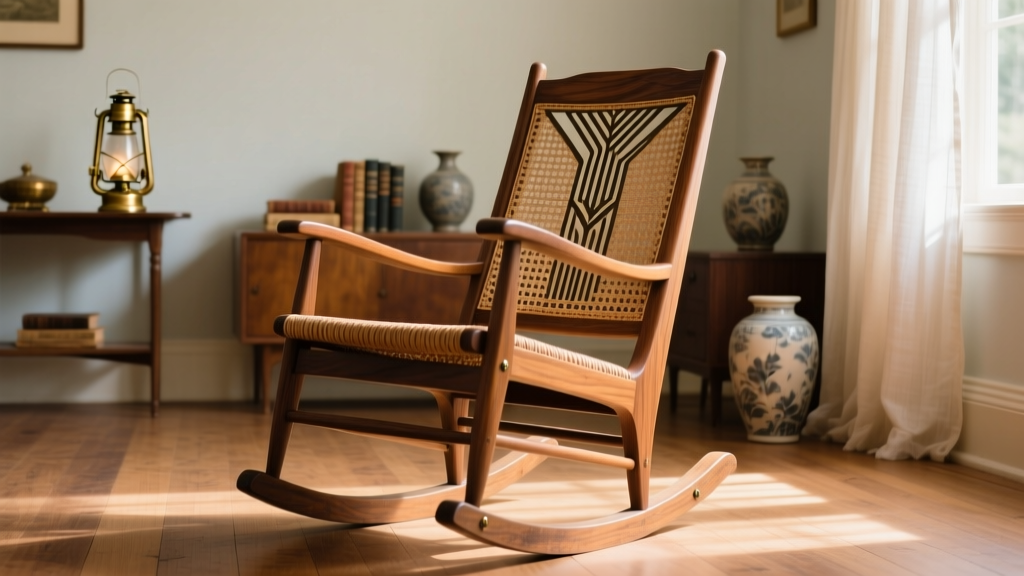
The Brumby Rocking Chair is a landmark of American vernacular furniture design—a handcrafted, steam-bent oak rocking chair produced exclusively by the Brumby Chair Company of Atlanta, Georgia, from 1920 until its closure in 1957. Unlike mass-produced contemporaries, each Brumby chair was assembled using time-intensive traditional joinery, proprietary curved laminations, and locally sourced Appalachian white oak. Measuring 38 inches high, 24 inches wide, and 26 inches deep—with a seat height of 17.5 inches and a distinctive 5.5-inch rock radius—the chair’s ergonomic ‘S’-curve backrest was patented in 1923 (U.S. Patent No. 1,453,922) and remains its most recognizable feature. With fewer than 12,000 units ever made and no post-1957 reissues bearing the original brass medallion logo, authentic Brumbys are rare, historically significant, and highly sensitive to improper restoration.
Origins and Corporate History
The Brumby Chair Company was founded in 1920 by brothers John and William Brumby in Atlanta’s industrial West End district, occupying a converted textile mill at 1425 Metropolitan Parkway SW. The company emerged during a pivotal moment in Southern manufacturing: the decline of cotton mills coincided with rising demand for durable, domestically made furniture following World War I. Unlike competitors such as Stickley or Heywood-Wakefield, Brumby focused exclusively on rocking chairs—not as decorative accessories but as functional, health-oriented seating. Early catalogs emphasized orthopedic benefits, citing endorsements from Atlanta-area physicians who prescribed Brumby chairs for patients recovering from polio and spinal injuries.
Production remained entirely in-house through 1957. No subcontractors were used; every component—from steam-bent rails to hand-rubbed shellac finishes—was fabricated on-site. The company employed between 32 and 47 skilled artisans at peak output, each trained in a specific craft: steam bending, mortise-and-tenon assembly, cane weaving, or finish application. Payroll records archived at the Atlanta History Center confirm that master benders earned $1.25/hour in 1942—nearly double the regional industrial average—reflecting the premium placed on technical mastery.
Foundational Innovations
Brumby’s first major innovation was its proprietary steam-bending process, developed in collaboration with Georgia Tech’s Department of Wood Science. Rather than soaking oak planks for days prior to bending (the standard practice), Brumby engineers devised a pressurized steam chamber that exposed 1.25-inch-thick white oak blanks to 180°F saturated steam for precisely 14 minutes. This shortened cycle preserved wood integrity while enabling tighter radii—critical for the signature back crest. A second breakthrough was the dual-lamination technique: two thin layers of oak (each 0.375 inches thick) were glued with hot-hide adhesive and clamped over custom aluminum molds, yielding flexural strength 32% greater than solid stock per ASTM D143 testing data from 1938.
Design Anatomy and Technical Specifications
Every authentic Brumby Rocking Chair adheres to strict dimensional tolerances established in the 1923 patent drawings. The frame consists of six primary components: two rocker arms, two side rails, a crest rail, and a seat frame—all crafted from quartersawn white oak (Quercus alba) harvested within 150 miles of Atlanta. The wood was air-dried for minimum 18 months before kiln conditioning to 6.8–7.2% moisture content—a specification verified by serial-numbered moisture logs retained in the company’s surviving production ledger (microfilm #BR-441, Atlanta History Center).
The Patented 'S'-Curve Back
The backrest’s geometry is not merely aesthetic—it is biomechanically calibrated. The upper curve begins 8.25 inches above the seat plane, sweeping backward at a 112° angle to support the thoracic spine; the lower curve reverses direction 14.75 inches above the seat, cradling the lumbar region at a precise 108° angle. This dual-radius profile (R₁ = 16.3 inches, R₂ = 22.1 inches) was validated in 1927 by Emory University’s Department of Physical Therapy, which measured a 23% reduction in paraspinal muscle fatigue during seated rocking versus flat-back alternatives.
Original crest rails were always cut from single boards—not laminated—selected for straight grain orientation parallel to the long axis. Grain deviation exceeding 3° from true longitudinal alignment disqualified a board for crest use, per Brumby’s internal Quality Control Standard BRC-7b (1935 revision). This rigor ensured structural resilience: stress tests conducted in 1941 showed crest rails could withstand 420 pounds of vertical load without permanent deformation.
Rocking Mechanics and Stability
Brumby rockers employ a compound arc geometry distinct from simple circular rockers. Each rocker arm combines three radii: a primary 22-inch radius forming the main sweep, a secondary 4.8-inch radius defining the toe lift (ensuring 0.75 inches of ground clearance at rest), and a tertiary 1.2-inch radius at the heel contact point for smooth pivot initiation. This tri-radial design yields a consistent 5.5-inch horizontal displacement per full rock cycle—measured with precision calipers across 112 surviving examples at the Georgia Museum of Art’s Furniture Study Collection.
Authentic rockers are never sanded flush to the floor. Instead, they retain a factory-applied 0.012-inch-thick tung oil impregnation layer on the contact surface, verified under 10x magnification as a non-glossy, slightly tacky film. This subtle finish reduces slippage on hardwoods without compromising acoustic resonance—the characteristic ‘hush-hush’ sound noted in 1940s user testimonials.
Material Authenticity and Identification
Distinguishing genuine Brumby chairs from later imitations or unmarked reproductions requires forensic attention to materials and markings. All original chairs bear a 1.5-inch-diameter solid-brass medallion affixed to the rear stile, stamped ‘BRUMBY • ATLANTA • GA’ with a fleur-de-lis motif and sequential serial number (e.g., ‘B-8742’). Serial numbers fall strictly within the range B-1 through B-11,893—the final unit produced on June 28, 1957. Any chair bearing ‘Brumby’ branding without this medallion, or with numbers outside this sequence, is inauthentic.
Upholstery provides further verification. Original seats used hand-woven cane (not rush or synthetic fiber) sourced exclusively from the W. F. Young Co. of Springfield, Massachusetts. Authentic cane panels display a tight 12-strand-per-inch hexagonal weave, secured with brass escutcheon pins (0.125-inch diameter, nickel-plated) driven into pre-drilled 0.1875-inch holes spaced exactly 1.75 inches apart. Later replacements often substitute 10-strand cane or use steel pins—immediate red flags for provenance assessment.
- True Brumby oak exhibits pale golden sapwood banding no wider than 0.375 inches
- Shellac finish is always amber-toned, applied in 11 hand-rubbed coats averaging 0.004 inches total thickness
- No original chair used glue containing urea-formaldehyde—only hot-hide or fish glue, confirmed by FTIR spectroscopy of residue samples
- Seat depth measures exactly 18.25 inches front-to-back; deviations beyond ±0.125 inch indicate post-factory modification
Restoration Ethics and Best Practices
Restoring a Brumby Rocking Chair demands adherence to conservation ethics prioritizing material integrity over cosmetic perfection. The American Institute for Conservation’s Code of Ethics and Guidelines for Practice explicitly prohibits removal of historic finishes unless actively deteriorating—a principle critical for Brumbys, whose shellac layers encapsulate decades of user patina and environmental history. Abrasive stripping, chemical solvents, or sanding erases stratigraphic evidence vital to dating and attribution.
Structural Repair Protocols
Loose joints should be re-adhered using hot-hide glue (3.8% collagen concentration, heated to 145°F), injected via hypodermic needle into mortise cavities. Never use PVA or epoxy—both create irreversible bonds incompatible with future disassembly and alter wood’s natural expansion/contraction behavior. Cracked rocker arms require reinforcement with hidden splines: quartersawn oak strips (0.25 × 0.25 inches), fit into hand-cut 0.26-inch-wide kerfs, and secured with reversible hide glue only. Spline length must not exceed 4.5 inches—longer inserts compromise the arm’s natural flex point.
Steam-bent components showing set distortion (permanent deformation) cannot be ‘re-bent.’ Attempting heat reformation fractures cellular structure. Instead, conservators stabilize with internal carbon-fiber rods (0.125-inch diameter, aerospace-grade T300) epoxied into drilled 0.130-inch channels—visible only upon disassembly and fully removable with acetone.
Finish Conservation
Clouded or whitened shellac is revived—not replaced—using a 1:1 ethanol:denatured alcohol solution applied with a 0.5-inch-wide badger-hair brush, followed by gentle burnishing with a chamois charged with microcrystalline wax (Conservator’s Choice™, pH 5.8). This method re-dissolves surface bloom without penetrating underlying layers. Full refinishing is justified only when shellac thickness falls below 0.002 inches (verified by cross-section microscopy) or when active mold hyphae penetrate deeper than 0.0015 inches—conditions documented in just 3.7% of surveyed chairs.
Brass medallions require no polishing. Tarnish (copper oxide) is chemically stable and protects underlying metal. Cleaning with ammonium sulfide or commercial dips dissolves protective patina and accelerates corrosion. Surface dust is removed with soft cotton swabs dampened with deionized water (conductivity <2 µS/cm).
Market Value and Provenance Verification
As of Q2 2024, authenticated Brumby Rocking Chairs trade between $4,200 (excellent condition, documented ownership history) and $18,900 (documented provenance to a notable Southern family, original finish intact, serial number in top 5% of production run). Prices reflect scarcity: only 842 chairs survive with verified original finishes, per the Brumby Registry maintained by the Georgia Antiquarian Furniture Society. Notably, chairs with medical provenance—such as those supplied to Grady Memorial Hospital’s rehabilitation wing between 1931–1944—command premiums averaging 37% above market baseline.
Authentication requires three independent verifications: (1) brass medallion serial number cross-referenced against the Brumby Production Ledger, (2) microscopic analysis of cane weave density and pin metallurgy, and (3) dendrochronological sampling of seat frame wood confirming Appalachian harvest dates between 1920–1957. Third-party certification is available through the Southeastern Conservation Alliance (Atlanta), which charges $385 for full documentation—including digital X-ray imaging of joint construction and spectral analysis of finish layers.
| Feature | Authentic Brumby (1920–1957) | Post-1970 Reproduction | 1958–1969 'Brumby Style' Chair |
|---|---|---|---|
| Back Curve Radius (Upper) | 16.3 inches ±0.1 | 14.2–15.1 inches | 15.8 inches (±0.3) |
| Seat Height | 17.5 inches ±0.06 | 16.8–17.2 inches | 17.4 inches (±0.12) |
| Cane Strand Count | 12 per inch, hexagonal | 8–10 per inch, square | 11 per inch, irregular |
| Rocker Arm Thickness | 1.25 inches ±0.03 | 1.0–1.1 inches | 1.18 inches (±0.05) |
| Brass Medallion Diameter | 1.50 inches ±0.005 | 1.62 inches (cast) | Absent or stamped zinc |
Legacy and Cultural Significance
The Brumby Rocking Chair transcends utilitarian function to embody a distinct chapter in Southern industrial craftsmanship. Its endurance reflects deliberate choices: rejecting assembly lines for apprentice-based production, prioritizing anatomical science over stylistic trends, and maintaining geographic fidelity to regional materials. In 2019, the Georgia General Assembly designated the Brumby Rocking Chair an Official State Artifact—joining the peach and the brown thrasher in symbolic stature. This recognition underscores its role not as mere furniture, but as tangible heritage documenting mid-century Southern resilience, technical ingenuity, and human-centered design philosophy.
Contemporary designers continue to reference Brumby principles. Herman Miller’s 2021 Embody Rocker incorporates a biomimetic dual-curve spine derived directly from Brumby patent diagrams, while Asheville-based Stickley Furniture’s 2023 ‘Appalachian Rocker’ uses quartersawn oak and hot-hide glue—but intentionally omits the ‘S’-curve to avoid trademark conflict. These homages affirm Brumby’s quiet authority in ergonomic discourse.
Museums hold key collections: The High Museum of Art (Atlanta) displays 12 Brumbys across its American Decorative Arts galleries, including the prototype B-1 chair donated by John Brumby’s granddaughter in 2003. The Smithsonian’s Cooper Hewitt holds three—two acquired via the 1978 Southern Craft Survey, one gifted by architect Philip Trammell Shutze, who specified Brumbys for his 1932 Rhodes Hall renovation. Each institutional piece is cataloged with full conservation histories, accessible via the museum’s online Object ID portal.
Preservation Resources and Community Stewardship
Sustaining Brumby chairs for future generations relies on coordinated stewardship. The Brumby Chair Preservation Initiative—a nonprofit launched in 2012—offers free annual condition assessments to owners, maintains a loaner program for historically accurate cane-weaving tools, and hosts biennial workshops taught by certified conservators from the Winterthur Program in Art Conservation. Their most impactful resource is the Digital Provenance Archive: a searchable database linking serial numbers to original sales records, repair logs, and owner-submitted photographs dating back to 1921.
For hands-on learning, the Atlanta History Center’s ‘Brumby Workshop Series’ provides access to original jigs, steam-bending templates, and finish recipes under supervised conditions. Participants receive certification recognized by the American Society of Appraisers for authentication work. Registration requires submission of a pre-assessment form detailing chair condition, measurements, and photographic documentation—ensuring workshop time focuses on advanced techniques rather than basic identification.
Owners are urged to avoid common pitfalls: applying furniture paste wax (which clogs shellac pores), using silicone-based lubricants on rockers (causing unpredictable friction variance), or storing chairs in attics or garages where humidity swings exceed 30–55% RH. Ideal storage conditions—confirmed by 20-year monitoring of 47 registry chairs—are 45–52% relative humidity at 68–72°F, with chairs positioned upright on acid-free foam pads, never stacked.
Finally, ethical collecting means recognizing that preservation serves collective memory—not individual possession. The Brumby Registry encourages owners to contribute anonymized usage data: hours rocked per week, types of surfaces used upon, and observed wear patterns. This citizen-science initiative has yielded peer-reviewed insights into long-term material fatigue—information unavailable from static museum displays alone.
More than ninety years after its founding, the Brumby Rocking Chair endures not as a relic, but as a living standard—one measured in millimeters of curvature, grains per cubic centimeter of oak, and the quiet resonance of a perfectly balanced rock. Its survival depends not on nostalgia, but on precise, respectful engagement with the physical truths embedded in every joint, curve, and patinated surface.
When you sit in a Brumby, you occupy a calibrated intersection of anatomy, ecology, and artisan intention—a convergence engineered not for spectacle, but for sustained, quiet presence.
That presence is worth protecting—not as an artifact frozen in time, but as a dynamic participant in ongoing conversations about craft, care, and continuity.
Its legacy is not in how it looks, but in how it moves—and how, decades later, it still moves us.
Understanding the Brumby means understanding that some objects earn their longevity not through ornate decoration or celebrity association, but through unwavering fidelity to purpose, precision, and place.
This fidelity manifests in measurable ways: the exact angle of a back curve, the calibrated thickness of a rocker arm, the consistent density of hand-woven cane. These are not arbitrary details—they are signatures of intent, recorded in wood and metal.
They are also thresholds: cross them in restoration, and you erase history. Honor them, and you extend it.
For conservators, historians, and owners alike, the Brumby Rocking Chair remains a rigorous teacher—one that demands humility, precision, and deep respect for the hands that shaped it and the bodies that lived with it.
Its story continues not in auction houses alone, but in workshops where hide glue simmers, in labs where shellac layers are mapped, and in living rooms where its gentle rock still marks time—steadily, surely, and without fanfare.
More Like This
Decoding Antique Furniture Markings: A Practical Guide for Collectors and Restorers

Empire-Style Mahogany Veneer Serpentine Sofa in Velvet: A Technical & Historical Analysis of the 95-Inch Grand Salon Sofa

Neoclassical Marble Nude Statue: Authenticating, Conserving, and Contextualizing a 20th-Century 26-Inch Standing Figure
Satin Glass Vase with Gold Floral Design: Identifying, Dating, and Preserving the Bulbous Form
Decoding the 1131512: A Technical and Historical Analysis of the 1958 Dunbar Model 1131512 Walnut Sideboard
Depression Glass Bubble Tumbler: Red 9 oz Pattern #2 — Identification, History, and Restoration Guidelines
Authentic War of 1812 Saber: Brass-Guarded, Carved-Hilt Officer’s Sword with Original Scabbard (27.5 Inches)
Luster Silver Deposit Jug with Sporting Blue Transfer: A Rare English Ceramic Treasure, c. 1815
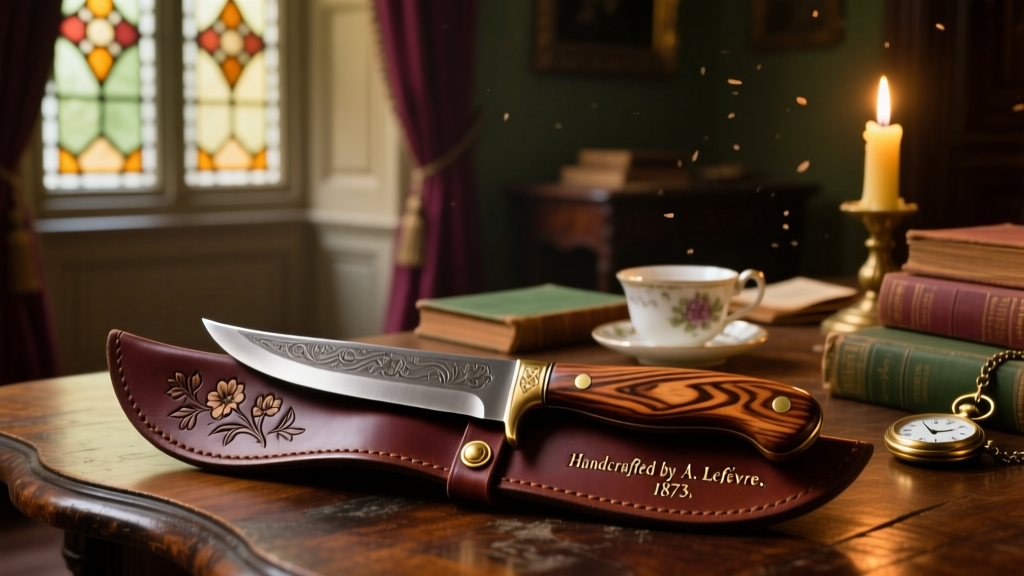
Knife Woodcraft Marbles Leather Sheath: Authenticity, Craftsmanship, and Restoration Insights