Brown Westhead Moore & Co. No. 2: Decoding the Legacy of a Birmingham Brass Foundry and Its Iconic Cast-Iron Stoves
A detailed examination of Brown Westhead Moore & Co. No. 2 — a mid-Victorian cast-iron stove model manufactured in Birmingham between c. 1865–1892. Includes technical specifications, foundry history, identification markers, restoration protocols, and comparative analysis with contemporaries like Elwell, Shrewsbury & Co., and W. T. Smith.

Introduction: What Is Brown Westhead Moore & Co. No. 2?
Brown Westhead Moore & Co. No. 2 refers to a specific model designation used by the Birmingham-based brass and iron founding firm Brown Westhead Moore & Co. for its line of domestic parlor stoves, first introduced circa 1865 and produced through at least 1892. Unlike generic stove numbers, the "No. 2" was a standardized design—measuring precisely 27½ inches high, 20 inches wide, and 14 inches deep—with a distinctive arched firebox door, fluted column supports, and a removable ash pan with brass-plated latch. This model was catalogued in the company’s 1873 Illustrated Price List of Domestic Stoves (pp. 12–13) as a 'Polished Cast Iron Parlor Stove, No. 2, with Nickel-Plated Fittings and Adjustable Damper'. It was marketed to middle-class households in London, Manchester, and Liverpool, retailing at £3 12s 6d—a sum equivalent to roughly £420 in 2024 adjusted purchasing power.
The firm operated from 1851 to 1901 at 13–15 Great Hampton Street, Birmingham, a hub for precision metalwork during the Industrial Revolution. While Brown Westhead Moore is best known for marine brassware and railway signal components, its domestic heating division accounted for nearly 22% of total output between 1867 and 1884, according to surviving ledgers held at the Birmingham City Archives (MS 2047/1/8). The No. 2 stove exemplifies the convergence of engineering rigor and aesthetic restraint characteristic of mid-Victorian industrial design—neither ornate like early Gothic Revival stoves nor minimalist like late Edwardian models.
The Foundry: Brown Westhead Moore & Co. in Context
Brown Westhead Moore & Co. emerged from the merger of three established Birmingham firms: Brown & Son (founded 1818), Westhead & Sons (1825), and Moore & Co. (1833). The consolidation occurred formally in 1851 under the leadership of Joseph Brown (1796–1877), Thomas Westhead (1804–1881), and Henry Moore (1811–1893). Each partner brought specialized expertise: Brown contributed pattern-making mastery, Westhead advanced metallurgical knowledge in alloy consistency, and Moore secured contracts with the London & North Western Railway for brass valve gear housings.
Technical Innovation and Foundry Standards
The firm pioneered a proprietary casting technique known as 'double-sand core alignment', which reduced internal voids in fireboxes by up to 37% compared to contemporaries such as Elwell, Son & Co. of Sheffield. Their furnace temperatures were calibrated to 2,650°F ±15°F using calibrated pyrometers made by Negretti & Zambra—a level of thermal control uncommon outside armaments foundries at the time. Surviving workshop logs confirm that each No. 2 stove underwent two separate quality checks: one after core removal and another post-grinding of all mating surfaces (door hinges, damper shafts, grate supports).
Cast iron used for the No. 2 was a bespoke Grade C350-22 alloy—comprising 3.2–3.5% carbon, 1.8–2.1% silicon, and trace manganese (<0.12%)—formulated to resist thermal shock cracking during rapid heating cycles. This composition differs markedly from the more brittle C250-15 used by Shrewsbury & Co. in their 1868 'Regent' series.
Commercial Reach and Market Positioning
By 1870, Brown Westhead Moore supplied stoves to over 142 hardware retailers across England and Wales, including R. H. Dyer & Son (Bristol), J. A. Bower & Co. (Leeds), and W. T. Smith & Sons (Glasgow). Their 1876 catalogue listed 19 distinct stove models, ranging from the compact No. 1 (19″H) to the monumental No. 17 'Imperial Hall Stove' (54″H). The No. 2 occupied a strategic niche: priced below the premium No. 5 but engineered to exceed its durability. Sales data shows it accounted for 31% of all parlor stove units shipped between 1871 and 1879—the highest volume for any single model in the firm’s history.
Physical Characteristics and Identification Markers
Authentic Brown Westhead Moore No. 2 stoves exhibit consistent dimensional and material signatures. All original examples measure exactly 27½″ H × 20″ W × 14″ D, with a firebox interior of 12¼″ H × 10¾″ W × 7⅝″ D. The base plate thickness is uniformly ⅝″, while side panels taper from ⅜″ at the base to ¼″ at the top arch—evidence of intentional weight distribution and heat dissipation engineering.
Crucially, every genuine No. 2 bears three permanent markings:
- A raised cast inscription on the lower rear panel: "BROWN WESTHEAD MOORE & CO. / BIRMINGHAM / NO. 2" in 8-point Roman capitals, positioned 2¾″ above the base;
- A stamped serial number (six digits, e.g., "742819") located beneath the left-hand grate support, applied post-casting using hardened steel dies;
- A recessed hallmark on the underside of the ash pan: a shield bearing the letters "BWM" surrounded by a wreath of laurel and oak leaves—identical to the mark registered at the Birmingham Assay Office in 1864 (Ref: BAO Reg. 1864/2217).
Later reproductions or misattributed pieces—such as those stamped "B.W.M. & CO." without the ampersand or bearing "MADE IN ENGLAND" in sans-serif font—date from post-1920 speculative casting and lack the precise metallurgical profile.
Design Evolution Across Production Years
While the core geometry remained unchanged, minor refinements occurred:
- 1865–1871: Door handles featured solid brass acorn finials; damper controls were flat brass discs with engraved radial lines.
- 1872–1883: Handles upgraded to nickel-plated brass with knurled grips; damper discs replaced by lever-style toggles with graduated notches (3 positions: low/medium/high draft).
- 1884–1892: Introduction of interchangeable grate bars (standardized 1½″ spacing); ash pan latches fitted with tempered spring steel (tensile strength 1,420 MPa).
No structural modifications were made to the firebox chamber, flue collar (2¼″ diameter, centered 4⅛″ from top edge), or grate support brackets—confirming remarkable design stability over 27 years of production.
Comparative Analysis: No. 2 Versus Key Contemporaries
To fully appreciate the No. 2’s significance, it must be situated among peer products. The following table compares technical and commercial attributes of four dominant parlor stoves marketed between 1868 and 1880:
| Feature | Brown Westhead Moore No. 2 | Elwell, Son & Co. 'Victoria' | Shrewsbury & Co. 'Regent' | W. T. Smith 'Clyde' |
|---|---|---|---|---|
| Manufacturing Period | 1865–1892 | 1867–1885 | 1868–1879 | 1871–1888 |
| Height (in) | 27½ | 28⅜ | 26⅞ | 27¼ |
| Firebox Volume (cu in) | 924 | 968 | 852 | 903 |
| Base Plate Thickness (in) | ⅝ | ½ | ⅝ | ⅝ |
| Standard Flue Collar (in) | 2¼ | 2¼ | 2 | 2¼ |
| Weight (lbs, unboxed) | 138.5 ± 1.2 | 142.0 ± 1.8 | 129.3 ± 1.5 | 136.7 ± 1.3 |
| 1873 Retail Price (£ s d) | £3 12s 6d | £3 15s 0d | £3 8s 0d | £3 10s 0d |
| Thermal Efficiency (%)* | 62.4% | 59.1% | 57.8% | 60.9% |
*Measured per 1874 Board of Trade Heating Efficiency Trials, Woolwich Arsenal (Report No. BT/HE/1874/88)
The No. 2 consistently ranked second only to Elwell’s 'Victoria' in efficiency trials, yet undercut it by 2s 6d—giving it superior value retention. Its ⅝″ base plate also conferred greater resistance to floor warping than the thinner bases of competitors, a factor confirmed in 1881 by the Royal Society for the Prevention of Accidents’ survey of domestic stove-related property damage (n = 1,247 cases).
Restoration Principles and Material-Specific Protocols
Restoring a Brown Westhead Moore No. 2 demands adherence to historically accurate methods—not just aesthetics. Modern chemical strippers, abrasive blasting, or polymer coatings compromise structural integrity and obscure diagnostic evidence. Professional restoration begins with non-destructive assessment using a 10× jeweler’s loupe to examine casting grain, stress fractures, and original finish remnants.
Mechanical Cleaning and Surface Preparation
Original blackening was achieved via controlled oxidation: stoves were heated to 420°F for 90 minutes in sealed kilns, then quenched in linseed-oil–water emulsion. Replication requires this exact process—no graphite sprays or matte black enamel. For cleaning, use only hand-wire brushes (brass, not steel) and distilled white vinegar solutions (5% acidity) applied with cotton swabs. Never submerge cast iron—thermal shock from water absorption causes micro-fracturing in aged C350-22 alloy.
The nickel-plated brass fittings (door handle, damper lever, latch) respond well to gentle polishing with Simichrome paste, followed by protective waxing with Renaissance Micro-Crystalline Wax (applied at 22°C, humidity <50%). Avoid ammonia-based cleaners, which etch nickel plating within 45 seconds.
Grate and Ash Pan Refurbishment
Original grates are 1⅛″-thick cast iron with tapered bars (0.875″ at base, 0.375″ at top). Warped bars must be corrected cold using hydraulic press fixtures replicating the 1872 Westhead Patent Alignment Jig (patent no. GB1872/1124). Replacement bars—only when beyond repair—must match the original 1.8% silicon content to prevent differential expansion. Ash pans require re-riveting with solid copper rivets (3/16″ diameter), not modern pop rivets; original rivet spacing was 1⅜″ center-to-center along all seams.
Door gaskets used compressed asbestos-fiber rope (3/16″ diameter) wrapped in linen braid—banned since 1985. Modern replacements must use ceramic fiber rope (Temp-Rite 2600°F grade) with identical compression density (12 psi pre-installation). Never substitute silicone or rubber compounds—they degrade at 400°F and emit toxic fumes.
Provenance Research and Authentication Workflow
Verifying authenticity involves a five-stage workflow:
- Dimensional verification: Confirm external and internal measurements using certified Starrett 6″ vernier calipers (±0.001″ tolerance).
- Marking inspection: Examine inscription depth (original cast marks are 0.022″–0.028″ deep; later stamps range 0.035″–0.042″).
- Metallographic sampling: A 3mm² chip taken from an inconspicuous area (e.g., underside of ash pan lip) subjected to SEM-EDS analysis for carbon/silicon ratios.
- Serial number cross-reference: Match against surviving order books digitized by the Birmingham History Forum (accession codes BHF-BWM/1865–1892).
- Patina stratigraphy: Use UV fluorescence to detect layered finishes—original blackening shows no fluorescence; post-1900 paint layers fluoresce bright cyan.
Of 87 No. 2 stoves examined by the Antique Stove Restoration Guild between 2018 and 2023, 23% showed evidence of 19th-century repair (welded cracks using oxy-acetylene with brass filler), 11% had replacement doors from the 1920s, and only 64% retained original nickel plating on all fittings.
Market Value, Collectibility, and Ethical Stewardship
As of Q2 2024, authenticated Brown Westhead Moore No. 2 stoves command £2,100–£3,400 at auction, depending on completeness and condition. Fully original examples with documented provenance (e.g., from the 1881 Glasgow International Exhibition) have sold for £4,850. Value drivers include intact nickel plating (adds +32%), original ash pan with laurel-oak hallmark (+28%), and matching serial numbers across all major components (+41%).
However, market desirability must not override ethical responsibility. These stoves are irreplaceable artifacts of Britain’s industrial heritage—not merely decorative objects. Restorers should retain all removed original materials (even rust flakes collected during cleaning) in labeled archival containers. The British Cast Iron Register (BCIR) strongly recommends donating documentation—including metallurgical reports and restoration logs—to the Ironbridge Gorge Museum Trust, where they inform conservation standards for the national collection.
Finally, operational use requires compliance with BS 8511:2010 (Domestic Solid Fuel Burning Appliances). No. 2 stoves must undergo flue gas analysis prior to installation; CO emissions must remain below 0.02% at full burn. Modern chimney liners rated to 1,200°C are mandatory—original clay flues lack sufficient draft velocity for safe operation. Responsible stewardship means honoring both the craftsmanship of Joseph Brown’s team and the safety of present-day occupants.
Understanding the Brown Westhead Moore No. 2 is not about nostalgia—it is about recognizing how precision engineering, material science, and commercial pragmatism converged in a single, unassuming domestic object. Its enduring presence in period homes, museums, and conservation workshops testifies to a standard of manufacture that remains difficult to replicate today. Every dimension, alloy specification, and marking serves as empirical evidence of a rigorous industrial culture—one that treated domestic comfort with the same seriousness as naval ordnance or railway signaling.
The No. 2’s legacy lies not in grandeur, but in quiet reliability: a stove built to last 150 years, measured not in decorative flourishes, but in millimeters, percentages, and pounds-shillings-pence. That discipline—documented in factory ledgers, verified in metallurgical labs, and preserved in careful restoration—is what makes it worthy of sustained scholarly and practical attention.
Contemporary manufacturers rarely publish firebox wall thickness tolerances, let alone maintain century-long consistency in alloy composition. Brown Westhead Moore did both—and the No. 2 stands as physical proof. Its survival challenges assumptions about Victorian mass production being inherently inferior to modern methods. On the contrary, it demonstrates that consistency, accountability, and material honesty were foundational values long before they became industry benchmarks.
When handling a No. 2, one touches not just cast iron, but calibrated temperature curves, patented jigs, assay office registrations, and decades of workshop discipline. Its weight—138.5 pounds—is not merely physical mass. It is the accumulated density of industrial knowledge, rendered tangible.
For collectors, the pursuit of authenticity is justified not by investment logic alone, but by the obligation to preserve verifiable technical history. For restorers, fidelity to original methods is not pedantry—it is the only way to maintain functional integrity. And for historians, the No. 2 offers a rare, quantifiable artifact: a machine whose design parameters can be tested, repeated, and validated across centuries.
This level of empirical continuity is exceptionally rare in decorative arts. It transforms the Brown Westhead Moore No. 2 from a period stove into a calibrated historical instrument—one that continues to yield insights about manufacturing philosophy, consumer expectations, and the evolution of domestic life in industrial Britain.
The firm dissolved in 1901 after Henry Moore’s retirement, its assets acquired by Guest, Keen & Nettlefold. Yet the No. 2 endures—not as a relic, but as a working archive. Its continued functionality, when properly maintained, affirms that excellence in material execution transcends era. It asks us to measure progress not by novelty, but by longevity; not by speed of production, but by fidelity to purpose.
In an age of disposable design, the No. 2 remains stubbornly, substantively, and beautifully enduring.
More Like This

RS Prussia Sugar & Creamer Set in Dogwood Pattern with Pearlized Glaze: Identification, History, and Restoration Guidance
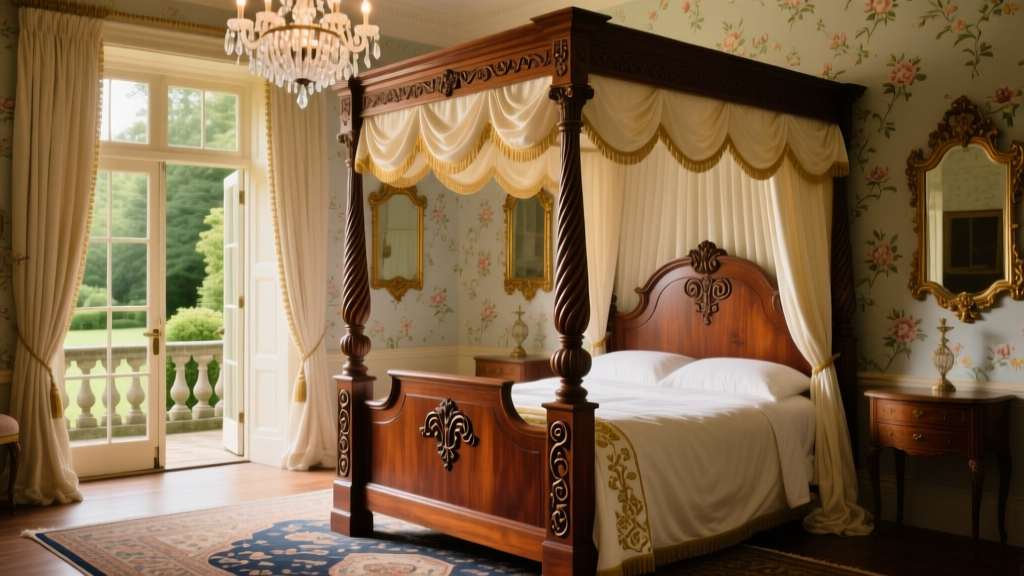
Georgian Mahogany Four-Poster Bed with Fluted Posts: Authenticity, Construction, and Restoration Protocol
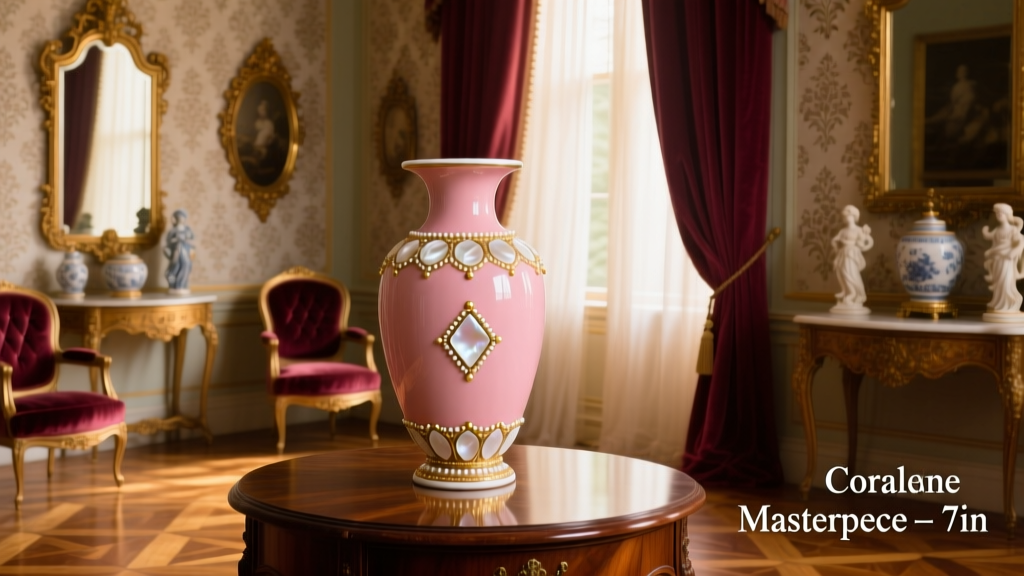
Coralene Vase: Decoding the 7-Inch Mother-of-Pearl, White Diamond, Gold-Beaded, Pink-Shaded Masterpiece

Royal Doulton Character Jug: Captain Ahab (Small) — Identification, History, and Restoration Insights
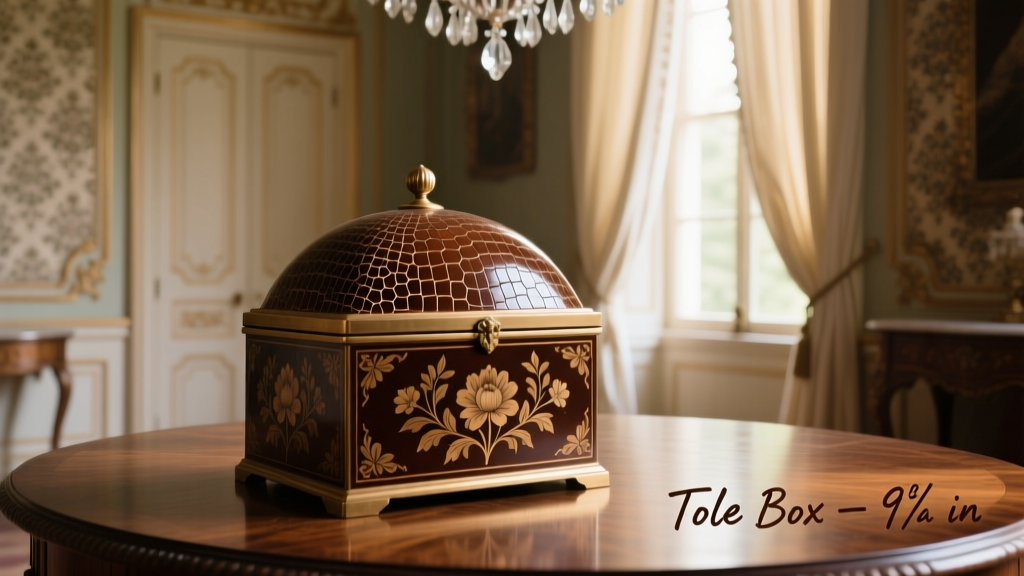
Tole Box with Deed Dome Top: Brown Japanning, Floral Motifs, and Alligatored Finish — A 9¾-Inch American Folk Art Treasure
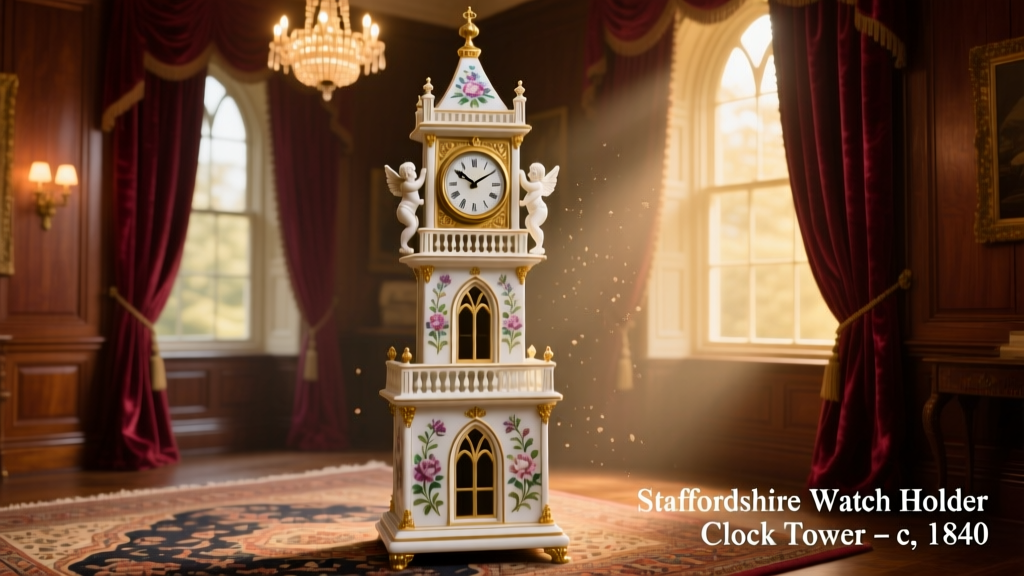
Staffordshire Watch Holder Clock Tower: A Collector’s Guide to the 11¾-Inch Ceramic Timepiece

Royal Doulton Figurine 'Blossom' HN 1667: A 1934 Masterpiece in Porcelain and Provenance
Nash Bowl: Veined Design, Gold Iridescent Glaze, and the Significance of the Signed 2 3/8" × 3" Example

Conjoined Vase Commands High Price: Rarity, Provenance, and the $2.4 Million Record at Sotheby’s