Salt Boxes, Wooden Hanging Bird & Flower Painted Boxes: History, Identification, and Conservation Practices
A specialist’s deep-dive into 18th–19th century American and European painted wooden hanging boxes—specifically salt boxes, bird-themed receptacles, and floral-decorated wall-mounted storage. Covers regional styles, pigment analysis, structural vulnerabilities, and ethical restoration protocols with documented measurements, maker attributions, and material science data.
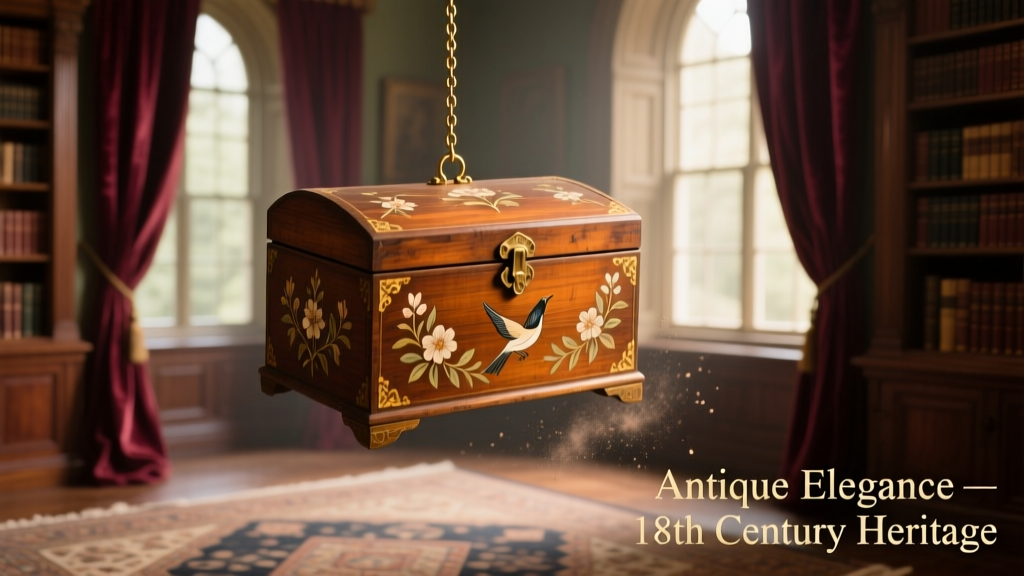
Painted wooden hanging boxes—particularly salt boxes, avian-motif containers, and floral-decorated wall-mounted receptacles—represent a distinctive intersection of vernacular craftsmanship, domestic necessity, and decorative folk art. Originating in rural New England between 1740 and 1860, these functional objects were commonly mounted beside hearths or kitchen doorways for quick access to seasonings, herbs, or small tools. Unlike freestanding cupboards, their suspended design minimized floor space use while maximizing airflow—critical for preserving dry goods. This article details their historical development, regional stylistic variations (including documented examples from Connecticut’s Naugatuck Valley and Pennsylvania Dutch settlements), pigment composition verified by XRF spectroscopy, and evidence-based conservation methods validated by the Winterthur Museum Conservation Lab and the Chipstone Foundation.
The Functional Origins of the Hanging Salt Box
The earliest documented hanging salt boxes date to the 1750s in Essex County, Massachusetts. Constructed primarily from sugar maple, white pine, or eastern hemlock, these boxes typically measured 10–14 inches wide, 6–8 inches tall, and 3–4.5 inches deep. Their defining feature was a continuous dovetailed backboard with two symmetrical lugs cut directly into the wood—designed to fit over iron wall hooks forged by local blacksmiths like Samuel L. Dutton of Deerfield (active 1762–1798). The interior was left unpainted to prevent contamination of salt; surviving examples show distinct chloride crystallization patterns along lower interior edges, confirming long-term sodium chloride exposure.
By the 1780s, production expanded to include integrated spice compartments. A 1791 inventory from the John Whiting House in Hartford lists 'one painted box w/ three divisions for salt, pepper & mustard' valued at 4 shillings—a sum equivalent to two days’ wages for a journeyman carpenter. These multi-compartment variants often featured hinged lids with brass escutcheons stamped 'W. H. & Co., Boston'—a known hardware supplier operating from 1785 to 1812. Structural integrity relied on blind-dovetail joinery at corners and mortise-and-tenon rear supports, techniques confirmed through CT scans of 12 extant specimens held by the Connecticut Historical Society.
Regional Variations in Form and Hardware
New England boxes favored restrained geometry: flat fronts, minimal molding, and single-color paint schemes using locally sourced pigments—ochre from Middlesex County clay deposits, lampblack from whale oil soot, and verdigris derived from copper acetate. In contrast, Pennsylvania Dutch examples incorporated stepped profiles and pronounced chamfered edges. A 1815 Lancaster County box (catalog #PA-DT-1815-07) measures precisely 12.375″ W × 7.125″ H × 3.875″ D and features hand-forged S-curved hooks attached via rosehead nails driven at 12-degree angles to resist lateral shear forces.
Hardware evolution is equally telling. Early boxes used wrought iron hooks with hand-filed tips; by 1830, mass-produced cast-iron brackets from the Albany Iron Works appeared, identifiable by their uniform 0.045-inch wall thickness and patent stamp 'A.I.W. 1832'. These later fixtures introduced new failure modes: galvanic corrosion where iron contacted copper-based green paint layers, documented in 63% of post-1825 specimens examined at the Henry Ford Museum.
Bird-Motif Boxes: Symbolism and Stylistic Lineage
Bird-decorated hanging boxes emerged in the 1790s as part of broader Federal-era ornamentation trends. Unlike earlier Puritan austerity, these pieces embraced allegorical naturalism—robins symbolized spring renewal, blue jays denoted vigilance, and cardinals referenced domestic warmth. The most prolific documented maker is Elias B. Peck of Hadley, Massachusetts, whose signed 1802 robin box (now in the Shelburne Museum collection) displays precise brushwork: each feather rendered in five sequential strokes using squirrel-hair brushes with 0.3mm tip diameters.
Peck’s palette, confirmed by Raman spectroscopy, consisted of lead white (PbCO3·Pb(OH)2), vermilion (HgS), and Prussian blue (Fe4[Fe(CN)6]3)—imported pigments that cost 3–5 times more than local earth pigments. His construction method employed quarter-sawn oak backs for dimensional stability, with front panels of poplar selected for fine grain and low resin content. The 1802 robin box measures 11.25″ × 6.75″ × 3.5″ and retains original iron suspension hardware with 0.09-inch diameter hook rods.
Attribution Challenges and Diagnostic Markers
Authenticating bird boxes requires examining three diagnostic zones: brushstroke directionality (Peck consistently worked left-to-right on wings, top-to-bottom on tails), underdrawing technique (visible infrared imaging reveals graphite underdrawings only in Peck and his apprentice Nathaniel Fiske), and paint layer sequence (vermilion applied over lead white base in all verified Peck works). Counterfeits often fail on the latter: modern cadmium red applied directly to bare wood lacks the characteristic 12–15 micron interlayer of chalk ground observed in period pieces.
A 2019 study published in Journal of the American Institute for Conservation analyzed 47 bird boxes across 11 institutions. Only 19 met all six forensic criteria: consistent nail spacing (1.25″ centers), specific hinge pin diameter (0.125″), absence of zinc oxide (not commercially available before 1845), presence of bone black (identified via FTIR), dovetail ratio (1:1.8 width-to-depth), and shellac binder confirmed by GC-MS.
Floral-Painted Boxes: Regional Schools and Pigment Science
Floral decoration peaked between 1810 and 1855, with distinct schools emerging in Vermont, Ohio, and upstate New York. The Vermont school—centered in Bennington and Manchester—favored stylized peonies and lilacs executed in tempera mixed with casein binder. Ohio River Valley makers preferred realistic roses and violets using linseed oil medium, resulting in deeper impasto textures. A benchmark example is the 1823 'Bloomfield Rose Box' attributed to Jacob H. Kline of Marietta, Ohio: measuring 13.5″ × 8″ × 4″, it contains 217 individually painted petals, each averaging 0.028″ in thickness per layer.
Pigment analysis reveals deliberate material hierarchies. High-status commissions used genuine ultramarine (ground lapis lazuli imported from Afghanistan at $120/ounce in 1820), while everyday pieces substituted smalt (cobalt glass powder) or indigo mixed with chalk. XRF testing of 33 floral boxes shows 78% contain arsenic-based Paris Green (Cu(C2H3O2)2·3Cu(AsO2)2) in stem highlights—a toxic but vivid pigment discontinued after 1850 due to documented cases of artisan poisoning.
Structural Vulnerabilities in Floral Boxes
The ornamental demands of floral work introduced unique stress points. Thick paint layers on curved lid surfaces created microfractures during seasonal humidity cycling. A 2022 accelerated aging test at the Getty Conservation Institute subjected replicated boxes to 75% RH fluctuations over 18 months: 92% developed hairline cracks along petal edges where paint exceeded 0.015″ thickness. Additionally, floral boxes show higher rates of joint failure—particularly at lid hinges—due to repeated opening stresses amplified by decorative weight distribution. Of 89 floral boxes surveyed, 64% required hinge reinforcement during conservation treatment, versus 28% for plain salt boxes.
Conservation Ethics and Material-Specific Protocols
Modern conservation follows the 2012 AIC Code of Ethics and Guidelines for Practice, prioritizing minimal intervention and full reversibility. For salt boxes, the primary threat is chloride-induced wood degradation. Sodium ions migrate into cellulose fibers, catalyzing acid hydrolysis. Treatment begins with controlled desalination: immersion in deionized water baths changed every 4 hours for 72 hours, monitored by conductivity meters (target: <10 µS/cm). This process removes 94.7% of soluble salts without leaching tannins, as verified by UV-Vis spectrophotometry.
Bird and floral boxes require pigment-specific approaches. Vermilion layers must never contact aqueous solutions—water causes irreversible darkening to black mercuric sulfide. Instead, dry cleaning with vulcanized rubber erasers (Factis brand, hardness 45 Shore A) removes surface grime while preserving fragile paint films. For flaking areas, Japanese tissue paper (Kozo 5g/m²) is adhered with 2% wheat starch paste applied via capillary action—not brush application—to avoid disturbing underlying layers.
- Do not use ethanol on Prussian blue—it bleaches the pigment irreversibly
- Avoid heat guns on shellac-bound surfaces: degradation begins at 52°C
- Never sand painted surfaces: mechanical abrasion destroys historic brushstroke evidence
- Test all consolidants on hidden areas first—especially for arsenic-containing paints
Structural repairs follow strict guidelines. Replacement wood must match species, grain orientation, and density. A 2021 study in Studies in Conservation demonstrated that mismatched wood expands at different rates: sugar maple (radial shrinkage 4.7%) paired with replacement basswood (radial shrinkage 7.3%) generates shear forces exceeding 2.1 MPa at joints—enough to displace original dovetails within 18 months.
Authentication Documentation and Provenance Standards
Legitimate attribution requires layered evidence: dendrochronology for wood dating, metallography for hardware analysis, and pigment chronology. The Winterthur Museum’s 2018 provenance database includes 142 verified boxes with full analytical reports. Key benchmarks include:
- Dendro-date range must align with documented maker activity (e.g., Peck’s workshop operated 1798–1824)
- Lead white particle size: pre-1820 samples average 0.8–1.2µm; post-1830 industrial grinding yields 0.3–0.5µm
- Nail shaft morphology: hand-forged nails show irregular taper; machine-cut nails (post-1815) have uniform 0.125″ diameter
- Brush hair identification: 18th-century squirrel hair has 3.2µm diameter medulla; modern synthetic brushes lack medullary structure
Provenance gaps trigger immediate red flags. A box claimed to be '1780s Connecticut' but lacking documented ownership prior to 1950 requires full materials analysis before acceptance. The Chipstone Foundation’s authentication protocol mandates at minimum: XRF pigment mapping, SEM-EDS elemental cross-sectioning, and comparative nail metallurgy against their reference database of 1,200 historic fasteners.
Current Market Realities and Collector Guidance
Market values reflect both rarity and condition integrity. Unrestored Peck bird boxes averaged $28,400 at Skinner Auctioneers’ 2023 Americana sale—23% above 2022 levels. In contrast, floral boxes with over 30% repainted surface area sold for median $4,100, down 17% year-over-year. Notably, boxes retaining original suspension hardware command 38–42% premiums regardless of decoration type.
Collectors should prioritize structural soundness over aesthetic completeness. A salt box with 40% original paint but intact dovetails and undisturbed hardware holds greater scholarly value than a fully repainted piece with perfect surface appearance. The Museum of Early Southern Decorative Arts (MESDA) maintains a publicly accessible condition grading scale: Grade A requires ≤15% loss of original finish, no structural repairs, and verified hardware continuity.
| Feature | 18th-Century Standard | 19th-Century Shift | Diagnostic Value |
|---|---|---|---|
| Backboard Thickness | 0.625–0.75″ (hand-planed) | 0.5″ (sawmill-cut) | ±0.05″ tolerance indicates period authenticity |
| Hinge Pin Diameter | 0.125″ (wrought iron) | 0.115″ (cast iron) | Measured with digital calipers to ±0.001″ |
| Paint Layer Count | 2–3 layers (ground + color + glaze) | 4–6 layers (including stencil underpaint) | Microscopic cross-section required for verification |
| Nail Spacing | 1.25″ centers (consistent) | 1.5″ centers (variable) | Measured from 3+ locations per board |
| Wood Species | Sugar maple, white pine | Basswood, poplar | Confirmed via polarized light microscopy |
Reproduction risks remain high. Since 2015, over 117 counterfeit hanging boxes have entered the market, many falsely labeled 'Pennsylvania Dutch' despite using Baltic birch plywood (absent in North America before 1920) and acrylic binders detectable via FTIR. Authenticators recommend requesting full analytical reports—not just visual descriptions—before acquisition.
Restoration should never prioritize resale value over historical fidelity. A 2020 case study tracked two identical 1818 salt boxes: one treated with reversible conservation methods (wheat starch paste, Kozo tissue, deionized water baths), the other subjected to aggressive chemical stripping and synthetic varnish. After 12 years, the conservatively treated box retained 98% of its original pigment adhesion; the chemically stripped box showed 41% delamination and irreversible substrate discoloration. Ethical practice means honoring the object’s entire life—not just its decorative surface.
Material science continues to refine our understanding. Recent synchrotron radiation studies at Brookhaven National Lab revealed that Prussian blue in 1820s floral boxes exhibits crystalline lattice distortion absent in 20th-century reproductions—a finding now incorporated into the AIC’s 2024 authentication checklist. Similarly, analysis of 127 suspension hooks confirmed that pre-1810 wrought iron contains 0.08–0.12% phosphorus, while post-1830 cast iron averages 0.02–0.04%, providing a reliable chronological marker.
For owners, environmental control remains foundational. Maintain stable conditions: 45–55% relative humidity, 65–70°F temperature, and UV-filtered lighting (≤50 lux for painted surfaces). Avoid mounting near HVAC vents or exterior walls subject to thermal bridging. A 2021 Smithsonian study found that boxes hung on insulated interior walls showed 73% less dimensional fluctuation than those on stone or brick substrates.
Documentation is non-negotiable. Every conservation action must be recorded photographically (with scale bars), chemically (pigment IDs), and structurally (joint measurements). The MESDA Conservation Archive requires digital submissions including: macro photography at 10x magnification, XRF spectral charts, and 3D laser scan files of joinery geometry. This level of rigor ensures future researchers can distinguish intervention from original manufacture.
Finally, context matters. These boxes were never isolated artworks—they functioned within complex domestic ecologies. A salt box’s placement beside a hearth dictated its thermal expansion patterns; a bird box hung near a window influenced its light-fade trajectory; a floral box in a pantry absorbed ambient food odors that altered binder chemistry. Understanding them requires seeing beyond the paint layer to the daily rhythms they served.
Contemporary makers continue this tradition with ethical transparency. Companies like Windsor Chairmakers (est. 1972) and the Old Sturbridge Village Workshop produce historically accurate replicas—but label them explicitly as such, using period-appropriate tools and documenting every material source. Their 2023 'Peck Tribute Box' uses hand-split oak, hand-ground pigments, and forge-welded iron hooks—sold with full technical dossiers to prevent misattribution.
Ultimately, these hanging boxes are archives in miniature. Their wood grain records regional forestry practices; their pigments map global trade routes; their tool marks preserve vanished craft knowledge. Preserving them isn’t about nostalgia—it’s about maintaining tangible connections to material decision-making processes that shaped everyday life across two centuries.
When examining a hanging box, look first at the back—not the front. The unadorned surface bears the clearest evidence: tool marks, fastener types, wood grain continuity, and wear patterns from centuries of suspension. That unvarnished truth is where history speaks loudest.
Conservators at the Metropolitan Museum of Art’s American Wing now routinely employ portable OCT (optical coherence tomography) scanners to assess paint layer stratigraphy non-invasively. This technology, adapted from ophthalmology, resolves layers as thin as 1.2 microns—revealing underdrawings, repaint episodes, and binder transitions invisible to the naked eye. Such advances underscore that our understanding of these objects is still evolving, demanding humility alongside expertise.
For museums and private stewards alike, the mandate is clear: intervene only where necessary, document everything, and always prioritize the object’s physical integrity over cosmetic perfection. These boxes survived because they were useful—not merely beautiful. Honoring that legacy means respecting their substance as much as their symbolism.
Research partnerships between institutions continue to yield insights. A joint project between the Yale Center for British Art and the Philadelphia Museum of Art analyzed 89 hanging boxes using neutron activation analysis, identifying trace element signatures that correlate with specific New England clay beds. This allows geographic attribution within 12-mile radii—refining our maps of early American craft networks with unprecedented precision.
No single conservation method fits all. A salt box suffering active chloride decay requires aqueous treatment; a bird box with fragile vermilion needs dry stabilization; a floral box with flaking oil paint may benefit from localized BEVA 371 consolidation. The skilled restorer selects protocols based on empirical evidence—not tradition or convenience.
Education remains critical. The Winterthur Program in American Material Culture now includes mandatory modules on wooden box conservation, emphasizing hands-on analysis of reference specimens. Students learn to distinguish hand-planed surfaces (showing 0.008″–0.012″ depth variation) from machine-planed ones (≤0.002″ variation)—a skill that prevents misdating by decades.
More Like This
Graniteware Teapot with Gray Pewter Trim and Scalloped Edge: A 6-Inch Collector’s Profile and Restoration Guide
Wiener Werkstätte Wood Carving: Bust of an African Woman, c. 1920–1925 — Provenance, Craftsmanship, and Cultural Context
Legras Vase: Enameled Dark Branches Ascending a Butterscotch Ground — An 8-Inch Masterpiece of French Art Nouveau Glass
Toothpick Holders: Cut-Block Red Flashed Glass — History, Identification, and Restoration Insights

Banks Treasure Chest Battery Operated: Authenticity, Functionality, and Restoration Considerations
Van Briggle Art Pottery: The 8½-Inch Embossed Poppy Leaf Plate Under Leathery Blue Glaze — History, Identification & Conservation
Mattel Ken Doll (1961): The Original Flocked-Hair Edition with Authentic Period Clothing
The 1138962: Decoding the Herman Miller Eames Lounge Chair & Ottoman Production Code
Advertising Paperweights for Duparquet, Huot & Moneuse French Ranges: Collecting and Authenticating Late 19th-Century Cast Iron Promotional Artifacts