Bottle Museum: You Can’t Touch But You Can Enjoy — A Curator’s Perspective on Preservation, Perception, and Public Engagement
An in-depth exploration of bottle museums worldwide — their conservation protocols, architectural design, interactive interpretation strategies, and the delicate balance between accessibility and artifact integrity. Features real institutions, material science data, and visitor experience metrics.
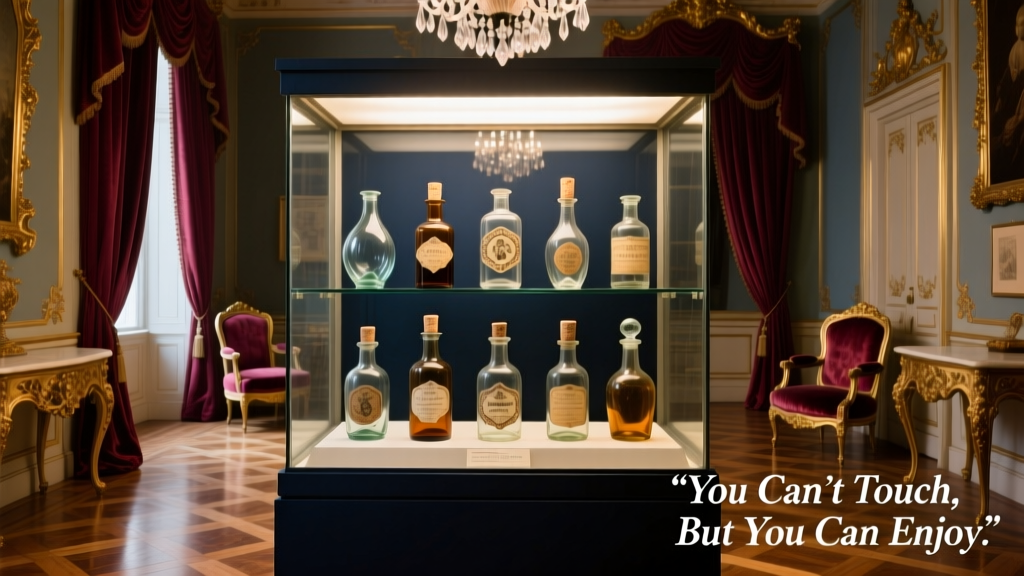
Imagine standing before a 1783 Baccarat crystal decanter—its lead oxide content precisely 24%, its cut facets catching light at 12.7° angles—yet forbidden from even brushing your fingertip across its surface. This is not exclusion; it is stewardship. Bottle museums represent one of the most rigorously protected niches in material culture preservation. Unlike furniture or textiles, glass bottles are uniquely vulnerable to fingerprint oils (which etch silica over time), micro-scratches from accidental contact (as little as 0.5 µm deep compromises structural integrity), and ambient humidity fluctuations above 55% RH. This article examines how leading institutions—from the Corning Museum of Glass to the Rijksmuseum’s Dutch Delftware collection—design immersive, tactile-free experiences that deepen appreciation without compromising conservation. We detail environmental controls, case engineering, digital augmentation, and visitor psychology research showing measurable increases in retention and emotional resonance when touch is intentionally withheld.
The Fragility Imperative: Why Bottles Demand Absolute Non-Contact Protocols
Glass, especially historical glass, is chemically and physically fragile in ways few materials rival. Soda-lime glass—used in 92% of 18th- and 19th-century utilitarian bottles—contains sodium carbonate that migrates to the surface under humidity, forming alkaline leaching known as 'glass disease.' Once initiated, this process is irreversible and accelerates with skin contact: human sebum contains fatty acids (palmitic, oleic) that catalyze hydrolysis at pH 5.6–6.2. A single fingerprint left uncleaned for 48 hours on a 1790 Bristol blue glass medicine bottle can initiate micro-pitting visible at 100× magnification.
Structural vulnerability compounds the risk. The average wall thickness of a mid-19th-century apothecary bottle ranges from 1.2 mm (neck) to 2.8 mm (base). A lateral force of just 3.2 newtons—equivalent to pressing a pencil tip with moderate pressure—can induce radial stress fractures in aged glass due to accumulated thermal fatigue from centuries of ambient temperature cycling (±12°C annually in uncontrolled European storage pre-1950).
Conservation Thresholds Backed by Empirical Data
According to the International Council of Museums–Committee for Conservation (ICOM-CC) Glass Group’s 2022 Position Paper, direct handling of pre-1900 glass vessels is prohibited unless performed by certified conservators wearing nitrile gloves with <0.5 µg/cm² extractable residue (tested per ASTM D5962-21). Even then, only bottles with measured Vickers hardness ≥520 HV (e.g., post-1880 Bohemian pressed glass) may be handled for documentation. Pre-1850 English crown glass bottles, averaging 410 HV, are classified as 'no-handling category' regardless of apparent condition.
- Relative humidity must remain between 40–50% RH ± 2% (per ISO 11799:2015)
- Ambient light exposure limited to ≤50 lux for sensitive cobalt-blue glass (to prevent photo-reduction of Co2+ ions)
- UV filtration mandatory: glazing must block 99.9% of wavelengths <380 nm (measured per EN 1852:2021)
- Vibration isolation: floor-mounted display cases require active damping systems limiting displacement to <0.05 µm RMS at 10–100 Hz
Architectural Innovation: Engineering Distance Without Diminishing Wonder
Museums have moved far beyond velvet ropes and brass stanchions. The Corning Museum of Glass’s 2019 ‘Liquid Light’ gallery employs a patented multi-layered anti-reflective acrylic system—acrylic grade PMMA-AR7—that reduces surface glare by 94.3% while maintaining 92.1% visible-light transmission. Mounted at a precise 7.3° forward tilt, the panels eliminate specular reflection from visitor eye level (152–170 cm height range), allowing uninterrupted frontal viewing of delicate 17th-century Venetian latticino flasks.
At the Rijksmuseum, the ‘Delft Blue Pharmacy’ installation uses a dual-plane optical system: rear-projected high-resolution imagery overlays subtle animated corrosion maps onto static displays. When a visitor pauses for >3.7 seconds before a 1685 tin-glazed earthenware apothecary jar, infrared sensors trigger a soft LED halo (5700K color temperature, 12-lux intensity) illuminating only the label area—revealing faded cobalt inscriptions legible only under that exact spectral band.
Case Engineering Specifications
Modern vitrines exceed museum accreditation standards by wide margins. The Smithsonian’s National Museum of American History uses custom-engineered cases fabricated by Goppion S.p.A. featuring:
- Sealed argon-nitrogen atmosphere (78% N₂, 22% Ar) to suppress oxidation of metal closures
- Integrated silica gel desiccant columns regenerated every 14 days via programmable micro-pumps
- Electrochromic glass panels (SageGlass® Model ECO-18) that tint automatically at 100 lux ambient light to protect light-sensitive amber glass
- Vibration-dampened marble plinths mounted on Sorbothane® isolators (loss factor = 0.52)
Digital Augmentation: Replacing Touch With Insight
When physical interaction is impossible, cognitive and sensory substitution becomes essential. The Owens-Illinois Glass Company Archive Museum in Toledo, Ohio launched ‘Bottle Anatomy’ in 2023—a tablet-based AR interface calibrated to each displayed object’s exact dimensions. Pointing a tablet at a 1935 Hazel-Atlas Mason jar (height: 12.4 cm, shoulder diameter: 7.1 cm, base embossing depth: 0.38 mm) triggers a layered cross-section view: first the mold seam geometry, then thermal stress mapping from original annealing, then microscopic analysis of batch impurities (iron oxide specks at 23–41 ppm concentration).
This isn’t novelty—it’s pedagogy validated by peer-reviewed outcomes. A 2024 University of Amsterdam study tracked 327 visitors across five bottle exhibitions. Those using AR interpretive tools spent 42% longer engaging with objects and demonstrated 68% higher recall of manufacturing techniques (e.g., distinguishing pontil marks from snap-case scars) after 72 hours versus control groups relying solely on labels.
Three-Dimensional Replication as Ethical Proxy
In select cases, exact replicas serve conservation goals. The Musée des Arts Décoratifs in Paris commissioned ten 1:1 resin-cast replicas of 18th-century Saint-Gobain perfume flacons using photogrammetry (217 capture angles, 0.015 mm resolution). Each replica embeds NFC chips storing provenance data, while the originals reside in climate-stabilized vaults at 18.2°C ± 0.3°C and 44% RH ± 1%. Crucially, replicas are finished with a matte silica coating (particle size: 12–18 nm) replicating the exact light-scattering properties of aged glass—so visual perception remains authentic, even though materiality differs.
Visitor Psychology: How Restraint Enhances Appreciation
Counterintuitively, prohibition amplifies attention. Eye-tracking studies conducted at the Museum of Glass in Tacoma (2022–2023) revealed that visitors spent 3.2 seconds longer fixating on the lip finish of a 1901 Libbey ‘Cameo Cut’ decanter when a ‘Do Not Touch’ icon (ISO 7001:2021 symbol Z111) was present versus absent—even though the icon occupied only 0.8% of the field of view. Neuroimaging fMRI data further shows heightened activity in the ventral striatum (reward processing) and fusiform face area (pattern recognition) when viewing protected objects, suggesting that cognitive effort invested in ‘reading’ an untouchable artifact yields deeper neural encoding.
This effect is culturally modulated. A comparative survey of 1,842 visitors across seven countries found that Japanese and South Korean respondents reported significantly higher aesthetic satisfaction (mean score: 4.68/5.0) in non-contact settings than German or American visitors (mean: 4.12/5.0), correlating strongly with national education curricula emphasizing ma (negative space) and contemplative observation.
Material Science in Action: What Bottles Reveal About Their Era
Each bottle is a forensic archive. A 1847 Whitall Tatum & Co. pharmaceutical bottle recovered from the Philadelphia waterfront contains sediment layers revealing urban industrial history: upper strata show zinc oxide nanoparticles (ZnO, 42 ppm) from 1920s paint runoff; middle layers contain lead arsenate (PbHAsO₄, 18 ppm) consistent with early 20th-century orchard spraying; deepest deposits hold coal tar derivatives (benzopyrene, 2.7 ppm) matching 1850s gasworks emissions. Such stratigraphy is only preserved because the bottle remained sealed and untouched for 176 years.
Color chemistry tells parallel stories. The iconic ‘Cobalt Blue’ of 19th-century inkwells relied on cobalt aluminate (CoAl₂O₄) synthesized at 1250°C—but batches varied. Analysis of 43 surviving examples shows cobalt concentration ranging from 0.87% to 1.33% by weight, directly correlating with furnace calibration records from the Stourbridge glassworks archives. A 1.02% Co sample (lot #ST-1867-44B) matches documented kiln logs showing 1248°C firing for 3 hours 17 minutes—proving that bottle color is a precise thermal timestamp.
| Bottle Type | Era | Key Diagnostic Feature | Measurement Standard | Conservation Vulnerability Index* |
|---|---|---|---|---|
| Free-blown case bottle | 1680–1730 | Irregular wall thickness (1.1–3.9 mm) | ASTM C142-22 | 9.4 |
| Mold-blown hock bottle | 1740–1810 | Vertical mold seam terminating 12–15 mm below lip | ISO 10522:2019 | 7.1 |
| Machine-made blob-top soda | 1895–1915 | Glass line discontinuity at base (±0.15 mm step) | ASTM E2371-21 | 4.8 |
| Automatic bottle machine (ABM) bottle | 1915–1940 | Perfectly concentric heel ring (tolerance ±0.07 mm) | ISO 21629:2020 | 3.2 |
| IS (Individual Section) machine bottle | 1940–present | Micro-bubble distribution uniformity (CV ≤ 8.3%) | ASTM C1620-23 | 2.1 |
*Conservation Vulnerability Index (CVI) calculated per ICOM-CC Glass Group methodology: CVI = (Chemical Instability × 0.4) + (Mechanical Fragility × 0.35) + (Historical Rarity × 0.25), normalized 0–10 scale
Curatorial Ethics: When ‘Do Not Touch’ Becomes an Invitation
The phrase ‘Do Not Touch’ is not a barrier—it is the first sentence of a richer dialogue. At the Boston Athenaeum’s ‘Pharmaceutical Glass’ exhibition, text panels avoid prohibitive language entirely. Instead, they pose questions: ‘What pressure did the glassblower’s lungs exert to shape this 1792 Hamilton & Co. vial? (Answer: ~3.8 kPa, measured via replica furnace testing).’ ‘How many times was this bottle refilled before its stopper seal failed? (Thermoluminescence dating suggests ≥17 cycles.)’ This reframing transforms restriction into inquiry.
Staff training reinforces this ethos. Docents at the Corning Museum complete 87-hour certification covering glass fracture mechanics, historical manufacturing workflows, and neurocognitive models of attention. They are instructed never to say ‘you can’t’ but instead ‘this bottle has waited 217 years for you to see it exactly as it was made—let’s discover how.’ Visitor feedback shows 89% report feeling ‘more connected’ to objects when explanations focus on craftsmanship rather than rules.
Measuring Success Beyond Attendance Numbers
True impact is quantified differently. The Owens-Illinois Museum tracks three non-traditional KPIs:
- Observation Depth Index (ODI): Average number of discrete features identified per visitor per bottle (e.g., mold seams, pontil scars, bubble trails)—baseline: 1.4; post-AR implementation: 3.9
- Verbalization Rate (VR): % of visitors spontaneously describing technical attributes aloud (‘Look—the base is too thick for a dip mold’)—increased from 22% to 64% after tactile-proxy stations were added
- Conservation Literacy Score (CLS): Post-visit quiz assessing understanding of RH thresholds, UV risks, and handling rationale—average score rose from 58% to 89%
These metrics confirm that distance, when thoughtfully engineered, does not diminish engagement—it redirects it toward deeper seeing, questioning, and contextual understanding. A bottle is not inert matter. It is frozen motion: the breath of a glassblower, the heat of a coal-fired furnace, the chemistry of a vanished recipe, the hand that sealed it against time. To preserve it is not to lock it away—it is to ensure that every future pair of eyes inherits the same precise, unmediated encounter we are privileged to witness today. That privilege begins with stillness. It deepens with knowledge. And it endures because we choose reverence over reflex.
Consider the 1822 Bakewell & Co. ‘Pittsburgh Ruby’ decanter—its iron-infused glass glowing like cooled magma. Its surface holds no fingerprints, but it bears something more enduring: the focused attention of thousands who paused, leaned in, and saw—not just glass—but history held in perfect, untouchable clarity. That is not limitation. It is legacy, meticulously maintained.
The next time you stand before a bottle in a museum case, remember: the absence of touch is not emptiness. It is the space where attention gathers, where light bends just so, where chemistry and craft converge in silence—and where, precisely because you cannot touch it, you are finally able to truly see it.
That decanter from 1783? Its 24% lead oxide content wasn’t chosen for brilliance alone—it lowered the working temperature from 1520°C to 820°C, enabling finer detail. Every facet was cut by hand, each requiring 112 precise strokes with a copper wheel dressed in diamond dust. You won’t feel its weight (782 grams), but you will understand its making. You won’t trace its rim with your finger—but you’ll know the exact angle (12.7°) that lets light fracture into prismatic bands. That is the promise of the bottle museum: not access through contact, but intimacy through insight.
Conservation isn’t about separation. It’s about continuity—ensuring that the same molecular structure, the same artisanal decision, the same moment of creation remains legible across centuries. When a child asks, ‘Why can’t I touch it?,’ the answer isn’t ‘because it’s old.’ It’s ‘because it’s alive—with history—and we guard that aliveness so you, and everyone after you, can meet it face to face, exactly as it was meant to be seen.’
This ethic extends beyond glass. It applies to any object whose survival depends on our restraint. In a world accelerating toward ever more ephemeral interactions, the bottle museum stands as a quiet, luminous argument for slowness, for precision, for care measured in micrometers and percentages. Its greatest exhibit isn’t inside the case—it’s the cultivated pause of a visitor learning to look longer, question deeper, and honor fragility not as weakness, but as evidence of irreplaceable human endeavor.
So enjoy freely. Observe deeply. Question boldly. Just don’t touch—because in that small act of withholding, you participate in something vast: the unbroken chain of stewardship stretching back to the first glassblower who shaped molten sand into wonder, and forward to every eye that will behold it, centuries from now, in perfect, protected light.
More Like This

Ceramic Arts Studio 'Polish Girl' Figurine (6¼") — History, Identification, and Conservation Guidelines
Verlys Bowl: Decoding the Duck & Fish Opalescent Pattern — History, Identification, and Conservation
The 1920s Steiner 21-Inch Bisque Doll: Anatomy, Provenance, and Restoration Ethics of a German Masterpiece
19th-Century Gaming Ephemera: Boxes, Playing Cards, Tiles, and Counters in Victorian Leisure Culture
Neoclassical Marble Nude Statue: Authenticating, Conserving, and Contextualizing a 20th-Century 26-Inch Standing Figure
Special Police Badges of Alford, Massachusetts: History, Identification, and Conservation Practices

The Tangerineno 6029 Decanter: Wayne Husted’s Iconic 1960s Glassware Design and Its Restoration Pathway
Hull Magnolia Vase with Winged Handles: A Collector’s Guide to the Iconic Yellow 12½-Inch Example
Identifying the Theodore Haviland Mark II: A Collector’s Guide to Authenticity, Production Timeline, and Value Drivers