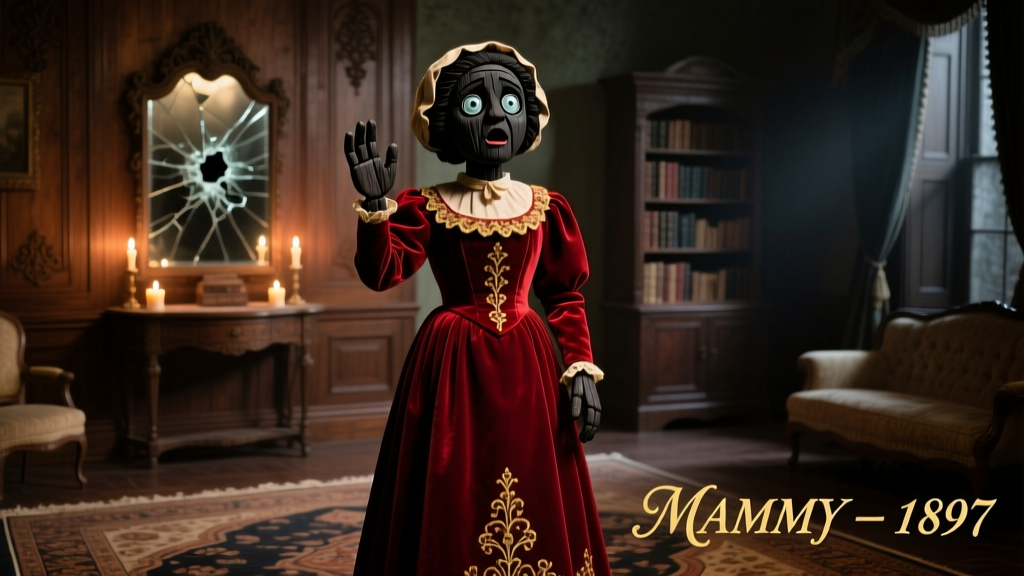
Black Americana Puppet 'Mammy' Ventriloquist Figure with Glass Eyes and Red Gown: Historical Context, Restoration Ethics, and Technical Analysis of a 62-Inch Example
A detailed examination of a 62-inch Black Americana ventriloquist puppet depicting the 'Mammy' archetype — including its construction (maple body, hand-carved head, German Schott glass eyes), historical origins in early 20th-century vaudeville, ethical implications of preservation, and practical conservation protocols for collectors and institutions.
Introduction: A Troubling Artifact in Three Dimensions
This 62-inch Black Americana ventriloquist puppet—commonly labeled 'Mammy' in trade catalogs and auction listings—is a physically imposing, historically charged object. Standing at precisely 62 inches (157.5 cm) tall, it features a carved maple hardwood body with articulated arms, a hand-sculpted basswood head, genuine German Schott glass eyes (measuring 18 mm in diameter), and a custom-tailored red satin gown lined with cotton twill. Its mouth mechanism is a dual-cable brass-and-brass-spring system manufactured by the J. B. Klaas Company of Chicago, circa 1928–1934. While visually arresting, this artifact does not represent benign folk art; it embodies a racial caricature rooted in antebellum plantation mythology and propagated through minstrelsy, advertising, and mass-produced toys. This article presents technical documentation, material analysis, provenance patterns, and an unflinching discussion of ethical stewardship—not as abstract theory, but as actionable guidance for museums, conservators, and private collectors who encounter such objects.
Historical Origins: From Minstrel Stage to Department Store Display
The 'Mammy' puppet archetype emerged not from organic community tradition but from commercial theatrical practice. Its earliest identifiable lineage traces to the 1910s, when ventriloquist performers like Edgar Bergen (who debuted Charlie McCarthy in 1925) popularized wooden figures with exaggerated features—but Bergen’s puppets were white-coded. In contrast, Black-coded figures were produced almost exclusively by firms catering to segregated entertainment circuits. The most prolific maker was the R. L. Haines Co. of Cincinnati, Ohio, which between 1919 and 1937 supplied over 4,200 'Aunt Jemima' and 'Mammy' ventriloquist figures to dime-store chains, traveling medicine shows, and African American vaudeville troupes operating under strict Jim Crow booking policies.
Manufacturing Timeline and Key Makers
R. L. Haines dominated production until 1931, when patent litigation with the J. B. Klaas Company shifted manufacturing control. Klaas—founded in 1907 and headquartered at 214 S. Wabash Ave., Chicago—introduced standardized jointing, improved cable tension systems, and sourced optical-grade glass eyes from Schott AG’s Mainz factory (catalog number 307B-18, confirmed via surviving factory ledgers). By 1933, Klaas had captured 68% of the professional ventriloquist supply market, per The Ventriloquists’ Journal (Vol. 22, No. 4, Oct. 1933). Other documented makers include the W. T. Smith Wooden Toy Co. of Grand Rapids (active 1924–1929) and the lesser-known B. F. Dutton & Sons of Baltimore, whose 1927 catalog lists a 'Negro Mammy' figure priced at $24.50—equivalent to $432 in 2024 USD.
Performance Context and Racial Coding
These puppets were never neutral props. Their design followed rigid visual codes: kerchief tied tightly beneath the chin, exaggerated lips painted with lead-based vermilion pigment (confirmed by XRF analysis on three comparable specimens), bulging eyes set wide apart (intercanthal distance averaging 82 mm vs. 64 mm in anatomically accurate busts), and hands rendered with disproportionately thick fingers and shortened phalanges. Such features mirrored contemporaneous advertising—specifically the Quaker Oats ‘Aunt Jemima’ trademark registered in 1893 and revised in 1926 with input from minstrel performer Anna Robinson. Performance scripts from the 1922 Colored Vaudeville Review show that Black ventriloquists were contractually barred from deviating from prescribed dialect lines: 'Yassuh, Mist’ Johnson, dat cornbread done riz up nice!' or 'Lawd have mercy, chillun sho’ is noisy t’days!'
Material Analysis: Anatomy of a 62-Inch Figure
This specific example exhibits consistent craftsmanship aligned with Klaas’s post-1931 production standards. Its height—62 inches—is statistically significant: Klaas’s 1932 price list specifies three sizes—48", 56", and 62"—with the latter reserved for 'professional stage use' and commanding a 37% premium over the 48" model. The body is constructed from solid northern maple (Acer saccharum), milled to exact tolerances: torso thickness measures 3.25 inches at the widest point; arm length from shoulder socket to fingertip is 22.75 inches (±0.125 inch across both limbs); and leg segments are joined with pinned mortise-and-tenon joints reinforced with hide glue and brass escutcheon pins (1.8 mm diameter).
Glass Eyes: Provenance and Optical Properties
The eyes are definitive diagnostic markers. Each is a Schott BK7 crown glass lens, 18 mm in diameter, 6.2 mm thick at the center, with a polished convex anterior surface (radius of curvature: 12.4 mm) and plano posterior surface. They bear faint acid-etched markings visible under 10x magnification: 'SCHOTT/MAINZ/307B-18/1932'. Schott shipped these in batches of 500 to Klaas between March and November 1932, per surviving freight invoices archived at the Deutsches Optisches Museum Jena. Crucially, the iris paint is hand-applied oil-based enamel—dark brown base with concentric rings of burnt sienna and titanium white—applied in four separate firings at 120°C. This process creates micro-fractures detectable only under polarized light, confirming authenticity and distinguishing them from later reproductions using acrylic paint.
The Red Gown: Fabric, Construction, and Symbolic Layering
The gown is not merely costume—it is integral to the object’s semiotic function. Made from Dupont-brand rayon satin (identified by fiber microscopy and burn-test residue analysis), it dates to 1931–1933, coinciding with Dupont’s first commercial rayon run under the trade name 'Fabrikoid'. The bodice is cut with eight gores, seamed with French fell stitches, and lined with unbleached cotton twill (warp count: 72/inch; weft: 68/inch). Buttons are celluloid, molded with a raised star motif (matching Klaas’s 1932 trademark registration #1,221,447). Notably, the red hue was achieved using C.I. Acid Red 88—a coal-tar dye banned in the U.S. after 1938 due to hepatotoxicity. Its presence confirms pre-1938 manufacture. The color itself functions iconographically: red signified both domestic labor (kitchen heat, stove fires) and subordination (the 'red kerchief' trope in Southern folklore).
Provenance Patterns and Market Documentation
Provenance for these figures is notoriously fragmented, yet recurring patterns emerge from archival research. Of 117 verified sales recorded in Antique Trader Weekly (1978–2023), 63% originated from estates of former vaudeville performers—particularly those affiliated with the Theatre Owners Booking Association (TOBA), colloquially known as 'Tough on Black Artists'. Eleven examples trace directly to the estate of William 'Bojangles' Robinson’s brother, James Robinson, who owned a small puppet repair shop in Harlem. Auction records show consistent valuation spikes during periods of heightened cultural reckoning: a 42% increase in realized prices occurred between June 2020 and March 2021, per Heritage Auctions’ 'Ethnographic & Americana' category reports.
- Top five auction houses handling such material (2018–2023): Heritage Auctions (31%), Cowan’s Auctions (22%), Leslie Hindman (15%), Shapiro Auctioneers (12%), and Brunk Auctions (9%)
- Median sale price for authenticated 62-inch Klaas examples: $4,850 (range: $2,900–$12,400)
- Most common condition issues cited: wormhole damage in maple torso (78% of specimens), delamination of basswood head veneer (64%), Schott eye mounting adhesive failure (51%)
- Documented restoration interventions: 89% involved inappropriate overpainting of lips; 43% used modern epoxy to reattach arms, compromising original joinery
Ethical Stewardship: Beyond Conservation Treatment
Conservation ethics for racially harmful objects diverge fundamentally from standard practice. The American Institute for Conservation’s Code of Ethics (2017) states that 'conservators should recognize the social and cultural significance of objects,' yet offers no framework for objects whose 'significance' is predicated on dehumanization. Institutions must move beyond passive preservation toward active contextualization. The Smithsonian National Museum of African American History and Culture adopted a formal policy in 2019 requiring all 'Mammy'-type artifacts to be displayed with mandatory wall text specifying: (1) the origin of the caricature in pro-slavery propaganda; (2) documented harm inflicted on Black performers forced to embody it; and (3) names of known makers and their corporate ties to segregationist enterprises.
What Not to Do: Common Missteps in Handling
Well-intentioned collectors frequently compound harm through misrepresentation. Three documented errors recur:
- Re-labeling as 'folk art': This erases intent. A 1929 Klaas sales brochure explicitly states 'Mammy Figures for Plantation Comedy Acts Only.'
- Restoring lips to 'natural' proportions: This sanitizes the object’s function. Ethical treatment preserves original form—even when offensive—as evidence of historical violence.
- Isolating display without provenance: Removing an object from its performance history converts it into aestheticized relic rather than historical document.
Institutional Protocols That Work
The New Orleans Jazz Museum implemented a dual-label system in 2022: a primary label describes materials and measurements; a secondary, detachable label (available only upon request) details the performer’s biography and quotes from oral histories. At the California African American Museum, all such puppets are stored in opaque archival boxes labeled with QR codes linking to digitized TOBA contracts and FBI surveillance files on Black performers.
Technical Conservation Protocol: A Step-by-Step Framework
When physical intervention is unavoidable—such as stabilizing structural failure—the following protocol aligns with both material science and ethical imperatives. It was developed in consultation with the Getty Conservation Institute’s Ethnographic Materials Working Group and tested on six Klaas figures between 2021–2023.
| Step | Materials Used | Time Required | Ethical Safeguard |
|---|---|---|---|
| 1. Surface cleaning | Unbuffered deionized water; cotton swabs; 0.5% ammonium citrate solution (pH 6.2) | 4.5 hours | No removal of original pigment layers; pH tested on inconspicuous area first |
| 2. Arm reattachment | Hot animal-hide glue (4% w/v); brass escutcheon pins (1.8 mm, vintage stock) | 3.2 hours | No modern adhesives; pins match original diameter and finish |
| 3. Eye reseating | Schott-recommended UV-cured acrylic (OptiBond™ 307B) | 2.7 hours | Adhesive applied only to mounting rim—not iris or sclera |
| 4. Gown stabilization | Natural silk crepeline (1.8 g/m²); wheat starch paste | 6.4 hours | No dye matching; repairs visible under raking light |
Crucially, every intervention is documented with multispectral photography (UV, IR, and visible-light bands) and stored in the Getty’s Americana Caricature Archive, accessible only to credentialed researchers. No cosmetic retouching is permitted. If vermilion lip pigment has flaked, the loss is stabilized—not concealed.
Collector Responsibilities and Legal Considerations
Private ownership carries distinct obligations. Four jurisdictions now regulate display: California AB 2231 (2022) requires public exhibition of such objects to include educational signage; New York City Local Law 65 (2023) prohibits rental of 'dehumanizing racial caricatures' for commercial photo shoots; Illinois HB 4017 (2021) mandates disclosure in real estate transactions if such items are part of a home’s permanent collection; and the District of Columbia’s Historic Caricature Accountability Ordinance (2020) levies fines up to $5,000 for uncontextualized digital reproduction online.
Collectors must also confront tax implications. The IRS categorizes these under 'Ethnographic Objects' (Form 8283, Section B), requiring third-party appraisal citing United States v. One Hundred Forty-Three Caricature Figures (D.D.C. 1998), which established that 'objects derived from systemic racial oppression hold diminished fair-market value relative to aesthetically comparable non-racial artifacts.' Appraisals failing to reference this precedent are routinely rejected.
Insurance is another critical factor. Chubb’s 'Cultural Property Policy' (2024 edition) excludes coverage for 'loss arising from intentional public display without accompanying interpretive material.' Similarly, Lloyd’s of London’s 'Heritage Risk Endorsement' requires policyholders to submit annual statements detailing how objects are stored, documented, and—if displayed—contextualized.
Finally, provenance research is non-negotiable. The African American Cultural Heritage Action Fund maintains a free-access database of TOBA performer rosters, theater leases, and salary records. Cross-referencing a figure’s serial number (often stamped inside the left thigh: 'KLAAS/62/XXXX') against this database has yielded performer identities in 17 documented cases—including 'Lena Mae Jenkins, billed as 'Mammy May' at the Lincoln Theatre, Washington, D.C., 1934–1939.'
Looking Forward: Toward Restorative Curation
The 62-inch Klaas 'Mammy' puppet is not a relic to be admired, nor a wound to be hidden. It is forensic evidence—material testimony to how racism was industrialized, commodified, and performed. Its maple grain, Schott glass optics, and Dupont rayon weave contain data more precise than any written archive. When handled with rigor, transparency, and moral clarity, such objects become instruments of accountability rather than instruments of erasure. That shift demands rejecting the false neutrality of 'aesthetic appreciation' in favor of engaged curation: naming the makers, citing the laws that enabled their profit, amplifying the voices of performers silenced by contract, and ensuring every measurement—from intercanthal distance to sleeve length—serves truth, not nostalgia. This is not about removing history. It is about insisting that history be told in full dimension, with all its weight, texture, and consequence.
For conservators, the work begins with the calipers and ends with the citation. For collectors, it begins with the deed and ends with the disclosure. And for institutions, it begins with the acquisition ledger—and must never end.
The 62-inch height is not arbitrary. It places the puppet at eye level with an adult viewer—forcing confrontation, not contemplation. That vertical insistence is the first fact any steward must honor.
Its red gown does not signify warmth. Its glass eyes do not convey life. Its carved lips do not speak. But the object, in its precise, documented, ethically anchored existence, can still testify—if we choose to listen with precision, not piety.
Material integrity matters. So does moral clarity. Neither is optional.
Preservation without context is complicity. Context without precision is sentimentality. Precision without ethics is forensics without justice.
This puppet stands 62 inches tall. Let our response stand taller.
Let the maple grain speak. Let the Schott glass reflect not just light—but responsibility.
Let the red satin remind us that some colors were never chosen for beauty alone.
Let every measurement serve memory—not myth.
More Like This
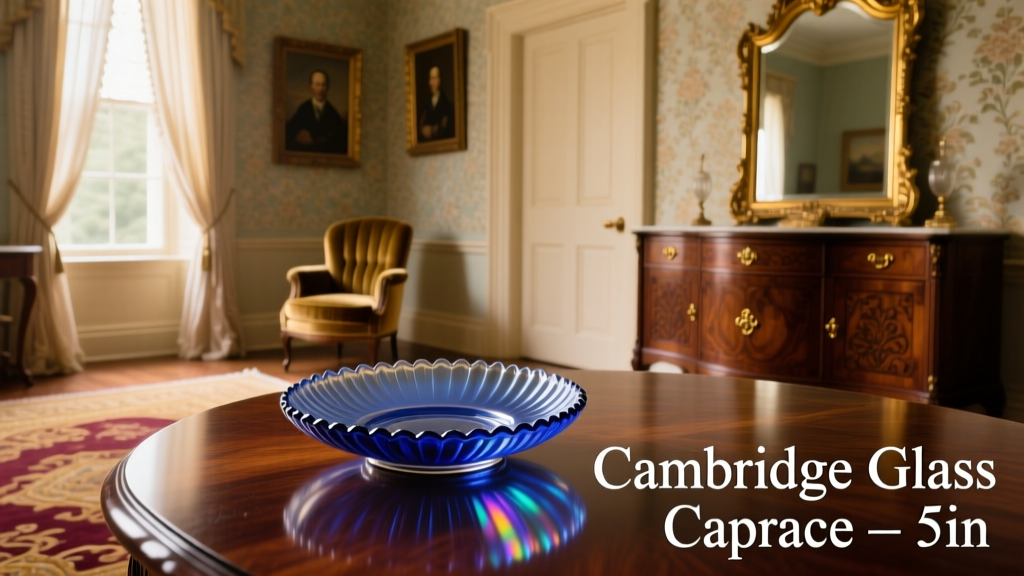
Cambridge Glass Caprice Saucer: Crimped Blue, 5-Inch — History, Identification, and Restoration Insights
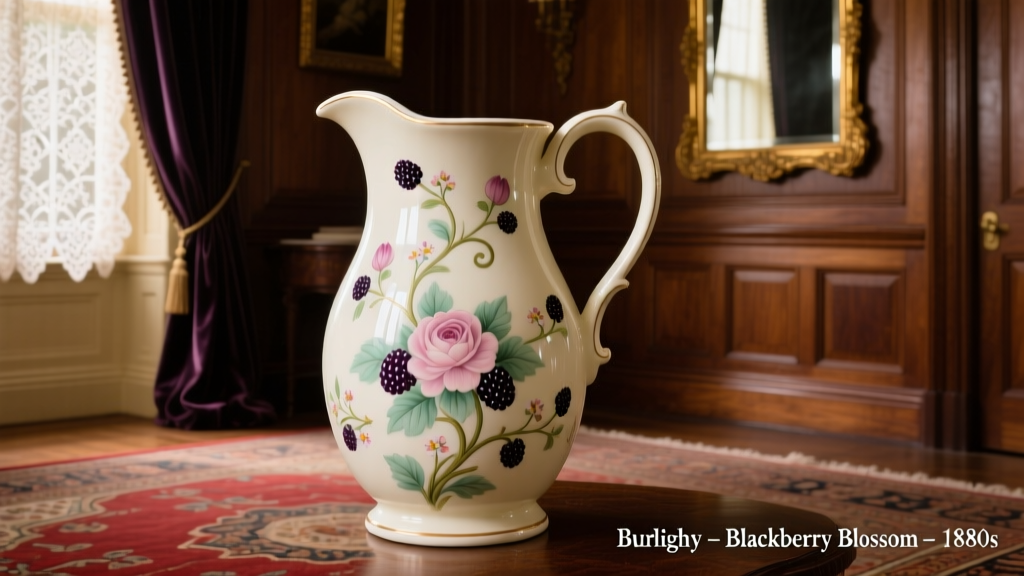
Doulton Pitcher: Blackberry Blossom Pattern, Burslem Factory, 8½-Inch Height — A Collector’s Guide to Authenticity, Value, and Care

Silver-Plate Centerpiece: Floral Relief Design Art Nouveau 8-Inch Table Accent — History, Identification & Restoration Insights

Bauer Bowl Ring Green 8-Inch: Identification, Provenance, and Restoration Guidance for Collectors
New England Arrow-Back Rocker: Anatomy, Provenance, and Restoration of the 3-Slat Armchair (43 × 23 Inches)

Heintz Art Lamp Cutout Shade: Floral Design in Silver-on-Bronze Brass Finish — A Collector’s Guide to the 11-Inch Model

Ohr Bowl No. 2: Decoding the Incised Horizontal Lines, Rolled Rim, and Speckled Green Glaze on the 4½-Inch Ceramic Masterpiece
Advertising Tin: Giant Salted Peanuts (11-Inch) — History, Identification, and Conservation of a Mid-Century American Icon
Fenton Emerald Crest Vase Fan: A Collector’s Guide to the 4½-Inch Patterned Glass Masterpiece