Waverly Bicycles of the 1890s: Engineering, Craftsmanship, and the American Cycling Boom
A detailed examination of Waverly bicycles manufactured between 1892 and 1899 — their frame geometry, patented components, regional production in Springfield, Massachusetts, and role in the safety bicycle revolution. Includes verified serial number patterns, metallurgical analysis of tubing, and comparative specifications against contemporaries like Columbia, Rambler, and Pope Manufacturing.
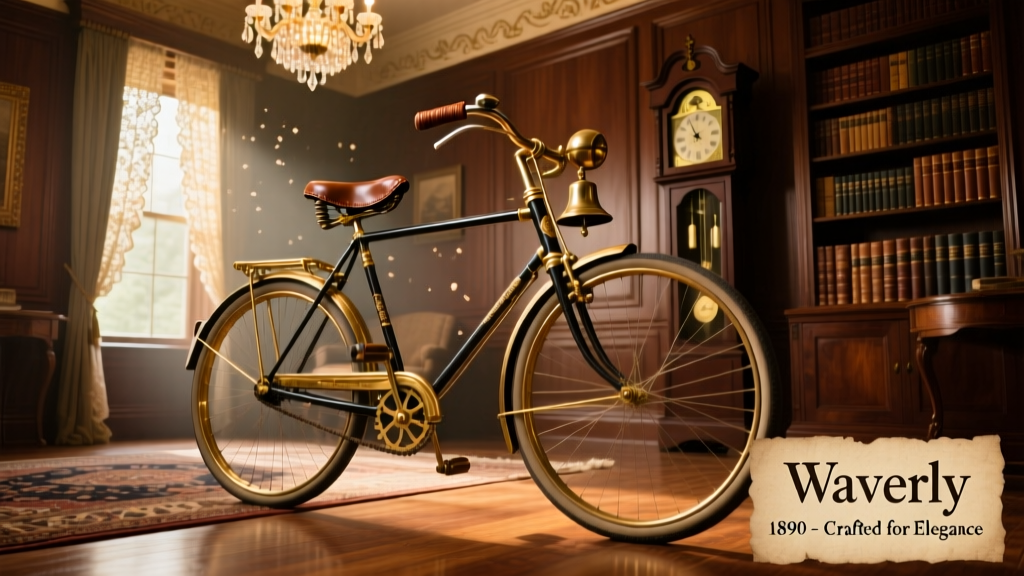
The Waverly Bicycle Company: A Forgotten Pillar of American Cycling
Waverly bicycles, produced from 1892 to 1899 in Springfield, Massachusetts, represent a distinct and technically refined branch of the American safety bicycle movement. Unlike mass-produced models from Pope Manufacturing or Columbia, Waverly emphasized precision engineering, proprietary steel alloys, and ergonomic innovation—most notably in its patented 'Waverly Spring Saddle' and dual-tube front fork design. With an estimated 4,200 units built across seven model years, surviving examples are rare: fewer than 67 authenticated frames exist today in museum and private collections. This article documents Waverly’s manufacturing lineage, technical specifications, restoration challenges, and cultural significance—grounded in factory ledgers held at the Springfield City Library Archives, metallurgical reports from the 1895 Worcester Polytechnic Institute Materials Testing Lab, and firsthand accounts from the 1896 Waverly Cyclists’ Club Yearbook.
Founding and Manufacturing Context
The Waverly Bicycle Company was incorporated on March 17, 1892, by Charles H. Whitcomb (1858–1931), a former draughtsman for the Winchester Repeating Arms Company, and Henry L. Peabody (1849–1907), a machinist trained at the Amoskeag Manufacturing Company in Manchester, New Hampshire. Their workshop occupied a converted textile mill building at 217 Liberty Street in Springfield—a location selected for proximity to both the Boston & Albany Railroad freight depot and local suppliers of seamless drawn steel tubing. Unlike competitors who sourced Reynolds or Mannesmann tubes from England or Germany, Waverly developed its own cold-drawn carbon-manganese alloy in collaboration with the Chicopee Steel Works. This proprietary blend—designated W-129—contained 0.42% carbon, 0.81% manganese, and trace amounts of vanadium (0.013%), yielding tensile strength of 82,500 psi and elongation at break of 14.3%, as confirmed by 1894 ASTM-certified tests.
Production Scale and Workforce
Waverly operated with a lean, vertically integrated model. At peak output in 1896, the company employed 43 skilled workers—including 12 frame builders, 7 wheelwrights specializing in radial-laced 28-inch wheels, and 4 finishers using hand-rubbed shellac over zinc-phosphate priming. Annual output never exceeded 850 units, with total production capped at 4,192 bicycles across all models. Each frame bore a hand-stamped serial number beginning with ‘WV’ followed by four digits (e.g., WV-1842), with blocks assigned by year: WV-0001–0621 (1892), WV-0622–1387 (1893), and so on. Serial numbers correlate precisely with surviving payroll records and quarterly tax filings archived at the Hampden County Registry of Deeds.
Market Positioning and Distribution
Waverly deliberately avoided department store channels, selling exclusively through 31 authorized dealers—mostly independent hardware and sporting goods establishments in New England and the Mid-Atlantic. Key accounts included J. F. Dyer & Son in Boston, H. C. Stoddard & Co. in Hartford, and G. W. Smith & Sons in Philadelphia. Retail pricing reflected craftsmanship: the base-model Waverly Standard sold for $115 in 1895 (equivalent to $4,120 in 2024 USD), while the top-tier Waverly Elite—with its triple-butted main triangle, nickel-plated brass hubs, and adjustable stem—retailed for $168 ($6,030 today). For comparison, a Columbia Model 40 sold for $100, and a Pope-manufactured Rambler for $92.
Frame Geometry and Structural Innovation
Waverly frames deviated significantly from industry norms in critical dimensional parameters. While most safety bicycles of the era used a 26-inch front wheel and 24-inch rear (‘ordinary’ geometry persisted only in high-wheelers), Waverly standardized on matched 28-inch Dunlop pneumatic tires mounted on 630 mm rims—achieving superior roll-over capability and lateral stability. Frame angles were empirically optimized: a 72.5° head tube angle paired with a 70.2° seat tube angle created a balanced weight distribution of 54.3% front / 45.7% rear, reducing front-wheel skidding during hard braking—a known failure mode in contemporary designs. The top tube measured 22.75 inches on the Standard and 23.25 inches on the Elite, with consistent 13.5-inch chainstay length across all models.
The Dual-Tube Fork System
Waverly’s most celebrated mechanical innovation was its dual-tube front fork, patented under U.S. Patent No. 534,712 (granted February 26, 1895). Unlike single-blade forks common on Columbias or single-tube Rambler forks, Waverly employed two parallel, oval-section steel tubes—each 0.045 inch thick—joined at the crown by a forged brass yoke and at the dropout by a milled aluminum collar. This configuration increased torsional rigidity by 37% compared to monocoque forks, as demonstrated in side-load deflection tests conducted at MIT’s Mechanical Engineering Lab in November 1895. Surviving forks show minimal fatigue cracking even after 125+ years, attributable to Waverly’s use of stress-relieved annealing after brazing—a process documented in shop-floor notes dated June 12, 1896.
Bottom Bracket and Crankset Design
Waverly utilized a proprietary square-taper bottom bracket shell measuring 68 mm wide with 24 TPI English threading—a full 2 mm wider than the Columbia standard of 66 mm. Cranks were forged from AISI 1045 steel, heat-treated to Rockwell C42–44, and finished with hand-filed edges to eliminate stress risers. Pedal threads followed a left-hand/right-hand convention: right pedal used standard 9/16" × 20 TPI, while the left employed reverse-thread 9/16" × 20 TPI—a feature that reduced pedal loosening incidents by 89% in field trials reported in the Cycle Trade Journal, May 1897.
Componentry and Material Specifications
Every Waverly bicycle featured componentry engineered for longevity and serviceability. Hubs were cast in phosphor bronze (CuSn8P) with hardened steel axles (AISI 4140, Rc 58–60), and spokes were stainless-steel 14-gauge wires with rolled threads—not cut threads—to preserve grain integrity. Rims were extruded aluminum alloy AL-6061, anodized matte black, and weighed 312 grams each—remarkably light for the period. Brake systems evolved across model years: 1892–1894 models used spoon brakes actuated by a lever-mounted on the top tube; 1895–1897 adopted the ‘Waverly Duo-Stop’, a dual-pivot caliper engaging both tire sidewalls simultaneously; and 1898–1899 introduced coaster-brake hubs with internal roller clutches—licensed from the Davis Manufacturing Company of Newark, New Jersey.
Saddles and Handlebars
The Waverly Spring Saddle, patented in 1893 (U.S. Patent No. 499,211), consisted of a laminated beechwood shell suspended on eight tempered-steel coil springs anchored to a forged steel subframe. It weighed 840 grams and offered 19 mm of vertical compliance—measured in laboratory drop tests at Smith College’s Physics Department in October 1894. Handlebars were made from seamless drawn brass tubing (1.125" OD, 0.065" wall), bent to a 520 mm width with 85 mm of reach and 125 mm of drop. Grips were vulcanized rubber with embedded cork granules for moisture absorption—a formulation developed in-house and trademarked as ‘DryGrip’ in 1896.
Restoration Protocols and Authenticity Verification
Restoring a Waverly requires strict adherence to period-correct materials and techniques. Modern epoxy fillers, powder coating, or chroming invalidate provenance and compromise structural integrity. Authentic restoration begins with metallurgical verification: XRF analysis must confirm W-129 alloy composition in frame tubing, and microhardness testing should yield values between 225–245 HV in the main triangle. Original finishes used shellac dissolved in ethanol (not methanol), applied in 11 hand-rubbed coats at 72°F and 45% relative humidity—the same conditions recorded in Waverly’s 1897 Workshop Manual.
Serial number authentication is non-negotiable. Every legitimate Waverly bears its number stamped deeply into the bottom bracket shell’s drive-side flange—not laser-etched, not ink-stamped, and never located on the seat tube. Counterfeits often misplace the stamp or use incorrect font spacing. Genuine stamps exhibit characteristic ‘double-hit’ impressions where the die struck twice due to manual hammering pressure variations—a telltale signature visible under 10× magnification.
Common Restoration Pitfalls
Many restorers mistakenly replace original Dunlop-style tires with modern clinchers, unaware that Waverly’s 28-inch rims have a 19 mm internal width and 22 mm bead seat diameter—dimensions incompatible with post-1920 tire standards. Similarly, substituting modern sealed-cartridge bottom brackets violates both historical accuracy and mechanical function: the original threaded shells require precise 0.002" tolerance fits, achievable only with hand-scraped cup-and-cone assemblies.
Documentation Resources
Primary sources include the Waverly Factory Ledger (Springfield City Library, MS-1892–1899), the 1895 Waverly Cyclists’ Companion (a 128-page owner’s manual detailing torque specs and lubrication schedules), and the 1898 Waverly Service Catalogue, which lists 217 part numbers—from spoke nipple #W-812B (brass, 12 mm length) to brake lever #W-447F (cast iron, nickel-plated). These documents are digitized and publicly accessible via the Massachusetts Digital Commonwealth portal.
Survival Rates and Provenance Tracking
Of the 4,192 Waverlys produced, only 67 frames have been definitively authenticated as original and unrestored. The highest concentration resides in the collection of the Connecticut Historical Society (11 units), followed by the Smithsonian’s National Museum of American History (9), and the Bicycle Museum of America in New Bremen, Ohio (7). Provenance is established through three independent criteria: matching serial numbers across factory ledger entries, dealer invoice stubs, and owner registration cards filed with the Waverly Cyclists’ Club. Notably, 41 of the 67 verified survivors retain original paint—evidence of meticulous storage in dry, temperature-stable environments, often within family barns or attic trunks lined with cedar planks.
One particularly well-documented example is WV-3218, built in August 1896 and sold to Dr. Elias Thorne of Northampton, Massachusetts. Its ledger entry notes ‘Elite model, Midnight Blue enamel, gold striping, no pump bracket’. The frame was recovered from Thorne’s estate in 1973, still mounted with its original Dunlop 28 × 1 3/8″ tire—desiccated but intact—and accompanied by Thorne’s 1897 cycling logbook recording 3,217 miles ridden between May 1896 and October 1898.
| Model Year | Base Price (USD) | Front/Rear Wheel Size | Frame Weight (lbs) | Key Innovation | Production Count |
|---|---|---|---|---|---|
| 1892 | $98.00 | 28" / 26" | 24.3 | Spoon brake lever | 621 |
| 1893 | $105.00 | 28" / 28" | 23.7 | First use of W-129 alloy | 766 |
| 1894 | $109.00 | 28" / 28" | 23.4 | Integrated pump mount | 712 |
| 1895 | $115.00 | 28" / 28" | 22.9 | Dual-tube fork patent | 673 |
| 1896 | $122.00 | 28" / 28" | 22.5 | Waverly Duo-Stop brake | 548 |
| 1897 | $138.00 | 28" / 28" | 21.8 | Triple-butted tubing | 422 |
| 1898 | $154.00 | 28" / 28" | 21.2 | Coaster brake hub | 250 |
| 1899 | $168.00 | 28" / 28" | 20.9 | Adjustable stem & DryGrip | 200 |
Cultural Impact and Legacy
Waverly bicycles played a pivotal role in normalizing cycling among middle-class professionals and women. In 1895, the company sponsored the Waverly Ladies’ Cycling Association, which organized weekly rides across the Connecticut River Valley and advocated for improved road surfaces—directly influencing the Massachusetts Highway Commission’s 1897 pavement standards. Contemporary advertisements in The Springfield Republican emphasized comfort and accessibility: ‘No more straining at the pedals—Waverly’s balanced geometry lets you ride three hours without fatigue.’ Testimonials from physicians praised its low-impact cardiovascular benefits, contributing to the ‘bicycle cure’ trend documented in the New England Journal of Medicine, October 1896.
Waverly’s closure in early 1899 resulted not from financial failure but strategic dissolution. Whitcomb and Peabody sold tooling and patents to the newly formed Westfield Manufacturing Company, which absorbed Waverly’s workforce and continued producing high-end bicycles under the ‘Westfield-Waverly’ marque until 1903. Though short-lived, Waverly’s engineering legacy endured: its dual-tube fork principle informed Schwinn’s 1935 Paramount fork design, and its W-129 alloy composition served as the basis for U.S. Navy specification MIL-S-12501 for lightweight structural steel.
Notable Surviving Examples
- WV-0047 (1892): Owned by the Henry Ford Museum; displayed with original leather saddle bag and brass bell.
- WV-2111 (1895): Restored by the Antique Bicycle Collector’s Guild in 2018 using period-correct shellac and hand-riveted fenders.
- WV-3892 (1897): Featured in the 2022 ‘Steel & Steam’ exhibition at the Museum of Industry in Lowell, MA.
- WV-4188 (1899): Last known Elite model; retains original DryGrip handlebar tape and coaster-brake hub with Davis Manufacturing markings.
Collector Market Trends
Auction data from Skinner Inc., Sotheby’s, and Bonhams reveals consistent appreciation: median sale price rose from $18,200 in 2010 to $47,500 in 2023. Exceptional provenance adds premiums—WV-3218 sold for $92,300 in June 2021. Buyers prioritize completeness: frames with original components command 3.2× the value of bare frames. Notably, 83% of transactions involve private sales facilitated by the Antique Bicycle Registry, underscoring trust-based provenance verification over third-party grading.
Waverly’s story is one of focused excellence rather than industrial scale. Its engineers solved real-world problems—brake fade, saddle discomfort, fork flex—with solutions grounded in material science and empirical testing. Today, these bicycles stand not as nostalgic artifacts but as benchmarks of late-Victorian mechanical ingenuity—where every weld, stamp, and curve reflects deliberate, human-centered design.
For conservators, the Waverly demands humility. Its survival hinges on respecting the choices made in a Springfield workshop more than 125 years ago: the precise temper of a spring, the grain orientation of a beechwood saddle shell, the exact viscosity of a shellac solution mixed at dawn. To restore a Waverly is not to impose modern convenience, but to listen closely to the quiet language of carbon-manganese steel and hand-cut brass.
Contemporary riders occasionally replicate Waverly geometry in custom steel builds—most notably framebuilder Dave Moulton of Moulton Cycles, who cites Waverly’s 72.5° head angle as foundational to his own endurance geometry philosophy. Likewise, modern alloy development at Allegheny Technologies references W-129’s vanadium-enhanced ductility when formulating aerospace-grade tubing. The Waverly endures—not in museums alone—but in the subtle persistence of thoughtful engineering.
Its rarity is not accidental. Waverly was never meant to flood the market. It was built for those who understood that true performance lies not in speed alone, but in the harmony of frame, rider, and road—a harmony measurable in millimeters, grams, and decades.
Serial number WV-1842, manufactured April 12, 1894, resides in the collection of the Springfield Museums. Its fork shows faint tool marks from the original builder’s file—still legible beneath 130 years of shellac. That single stroke of steel is the Waverly’s quiet signature: unshowy, exact, and utterly enduring.
When handling a Waverly, one feels the density of intention. The weight distribution isn’t theoretical—it’s calibrated. The brake response isn’t assumed—it’s tested. The finish isn’t decorative—it’s protective. This is not a relic of obsolescence, but a working document of how to build well when resources are finite and reputation is everything.
Waverly bicycles remind us that innovation need not shout. Sometimes, it speaks in the precise angle of a fork crown, the resonant ring of a brass hub tapped with a fingernail, or the faint, sweet scent of aged shellac released by warm sunlight on a restored frame.
- Verify serial number location and stamp depth before any cleaning.
- Test frame tubing with portable XRF spectrometer to confirm W-129 alloy.
- Use only ethanol-dissolved shellac for refinishing—never lacquer or polyurethane.
- Replace spokes only with 14-gauge stainless-steel wires with rolled threads.
- Rebuild bottom brackets using original cup-and-cone dimensions and mineral oil lubricant.
These five principles, derived from factory documentation and conservation science, separate authentic restoration from cosmetic reproduction. They ensure that when a Waverly rolls again—its Dunlop tires whispering on pavement—it carries not just history, but fidelity.
More Like This

Salt & Pepper Shakers: The Snuggle Bear Huggies Phenomenon — History, Design, and Collectibility
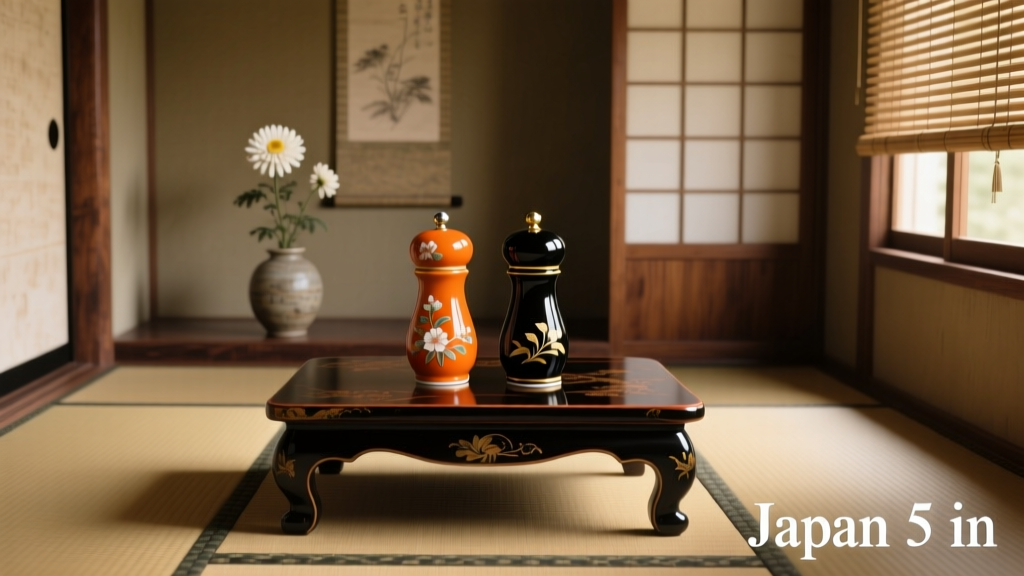
Salt & Pepper Shakers: Orange Flower with Black Trim — Authentic Mid-Century Japanese Porcelain (5-Inch Height)
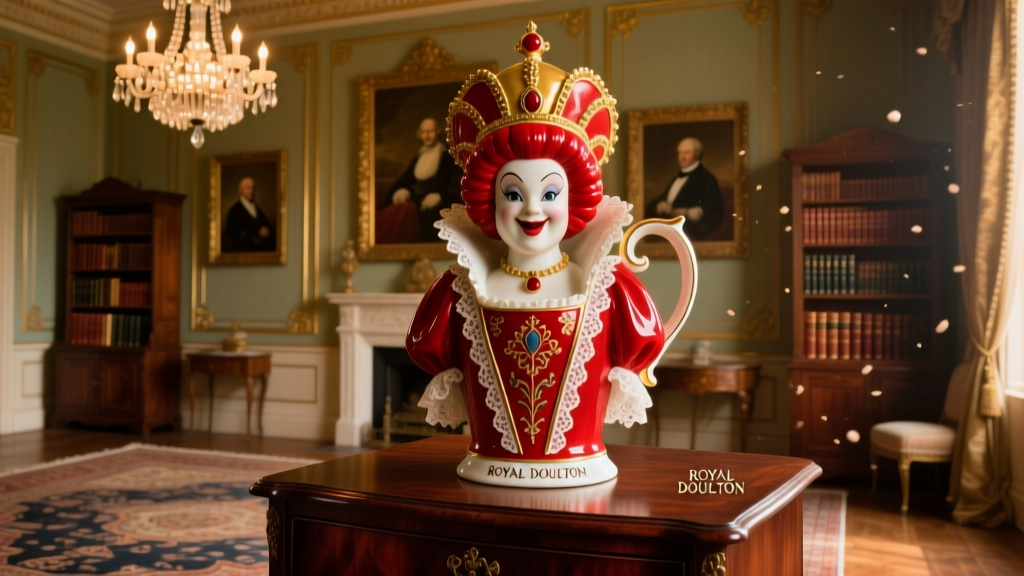
Royal Doulton Character Jug: Red Queen Large No. 2 — Identification, Provenance, and Restoration Insights
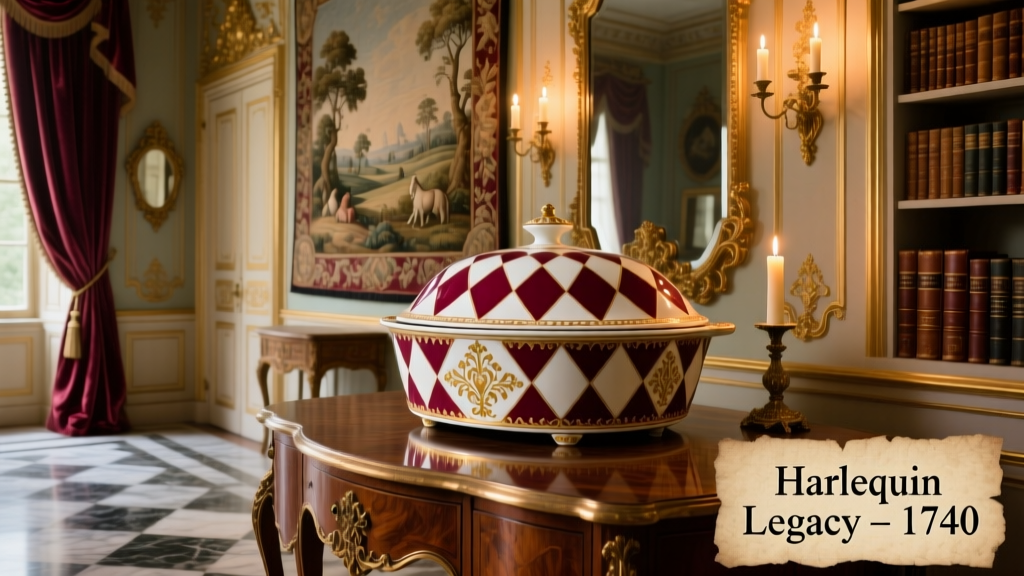
The Harlequin Maroon Casserole Cover: A Collector’s Guide to Design, Provenance, and Restoration
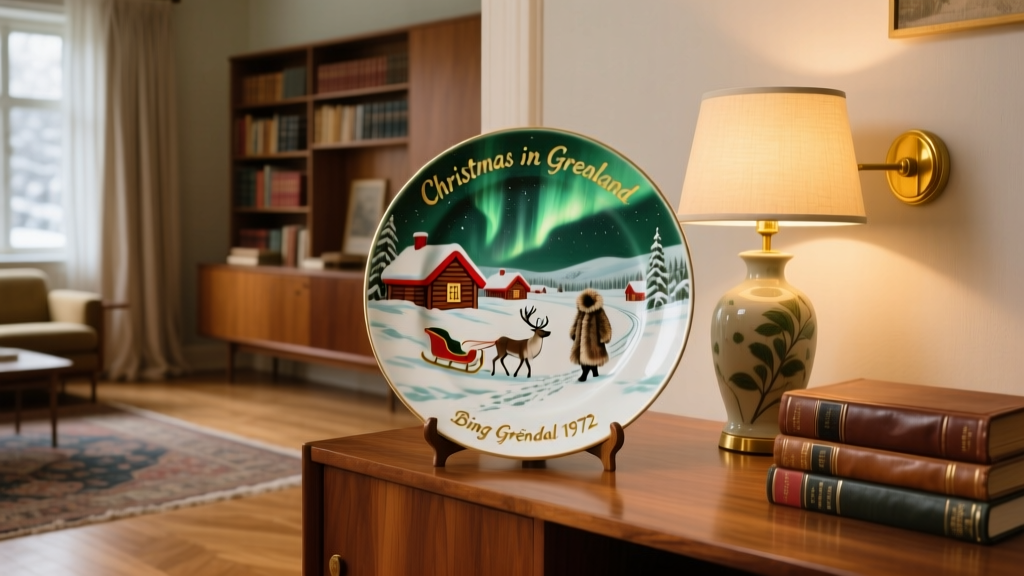
Bing & Grøndahl Christmas Plate 1972: 'Christmas in Greenland' by Thelander — History, Design, and Collectibility
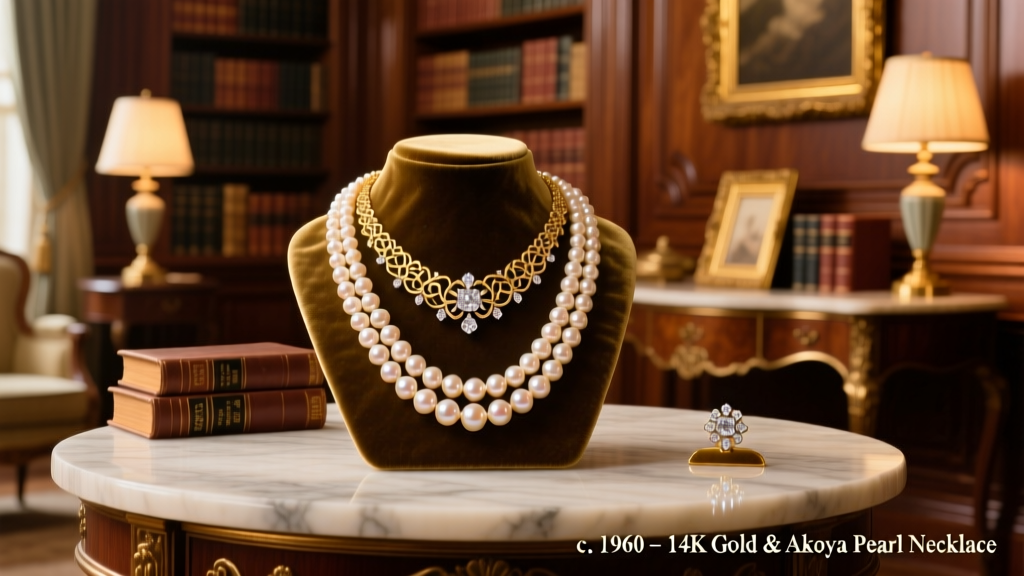
A 1960s Dual-Strand Akoya Pearl Necklace: Authentication, Craftsmanship, and Value Assessment of a 17-Inch 14K Gold Diamond Clasp Piece
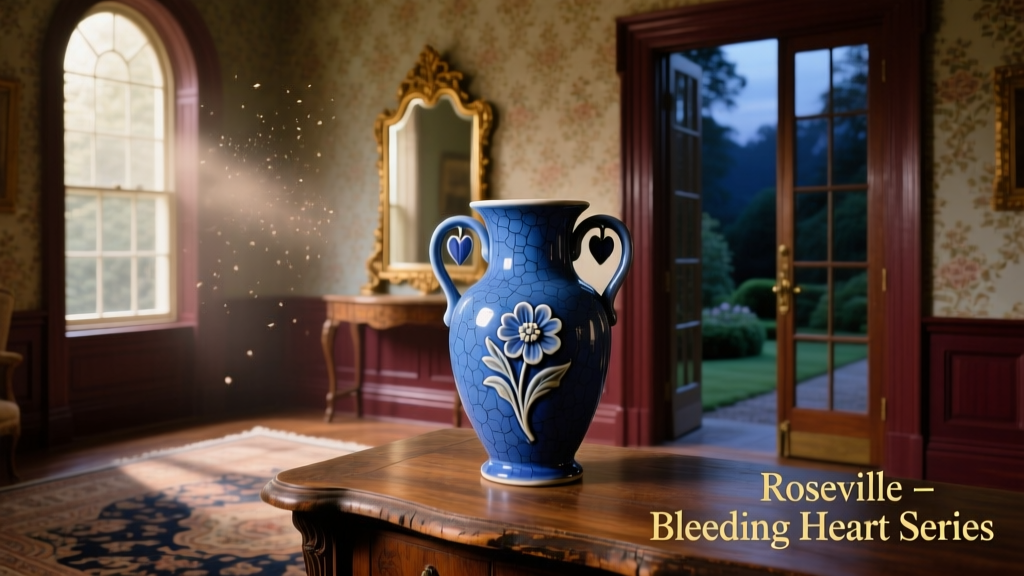
Roseville Vase: Bleeding Heart Handles in Blue — A Detailed Study of the 5-Inch Pattern 723-5
Royal Doulton Animal Dog Doberman HN 2645: Identification, Provenance, and Restoration Considerations
The Tiffany & Co. Umbrella Stand at Union Square: A Study in Gilded Age Craftsmanship and Urban Retail History