Columbia Highwheel Bicycles: The Engineering and Cultural Legacy of the 8-Foot 'Ordinary'
An in-depth examination of the Columbia 8-foot highwheel bicycle — its 1880s–1890s manufacturing origins, precise mechanical specifications, rider ergonomics, restoration challenges, and role in American cycling history.
The Columbia 8-Foot Highwheel: A Monument of Victorian Cycling
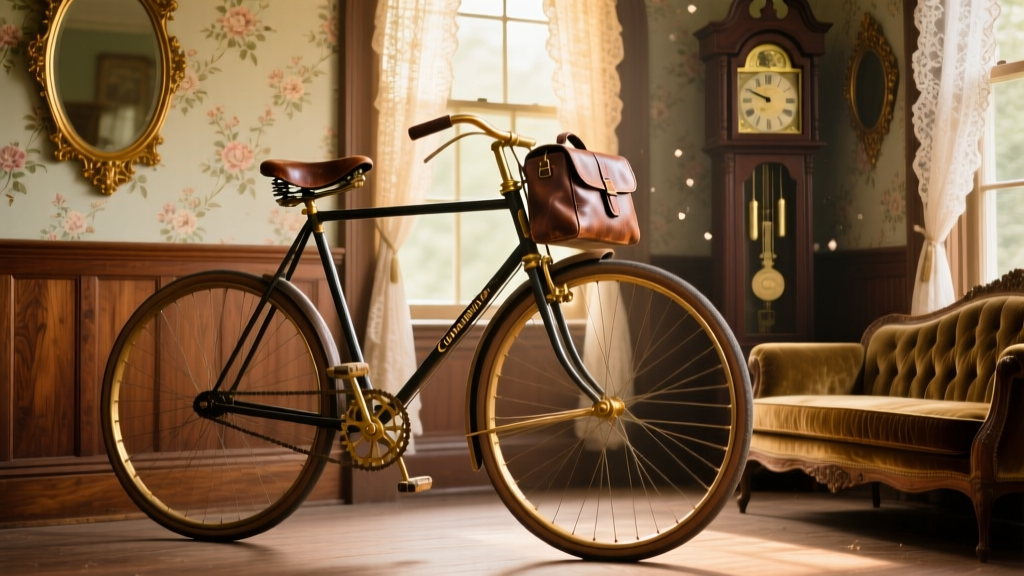
Produced between 1885 and 1893 by the Pope Manufacturing Company of Hartford, Connecticut, the Columbia 8-foot highwheel — officially designated the "Columbia Model No. 14" — stands as one of the most technically ambitious and physically imposing bicycles ever mass-produced in the United States. Measuring precisely 96 inches (8 feet or 2.44 meters) from ground to saddle top, with a front wheel diameter of 56 inches (142.2 cm) and rear wheel of 16 inches (40.6 cm), this machine demanded exceptional balance, strength, and courage. Unlike European counterparts such as the Coventry Rotary or the Humber ‘A’ model, Columbia’s 8-footer incorporated proprietary features including the patented 'Pope Safety Chain' tensioner, nickel-plated steel spokes, and a uniquely tapered tubular steel frame forged from Bessemer steel. Fewer than 327 units were built, making surviving examples exceedingly rare — only eleven verified originals remain in public and private collections today.
Origins and Industrial Context
The Columbia 8-foot highwheel emerged not as a novelty but as a calculated response to competitive pressure and technological ambition. In 1884, Albert Augustus Pope acquired the U.S. rights to the English Starley Rover design and founded Pope Manufacturing Co. By 1885, Pope had secured patents for hollow-tubed steel frames and precision-machined ball-bearing hubs — innovations that enabled larger, stiffer wheels without excessive weight. While most American manufacturers capped front-wheel diameters at 50 inches (e.g., the 1887 Overman 'Ariel'), Pope pursued the 56-inch benchmark to achieve higher gear ratios and greater road speed. This decision aligned with contemporary racing culture: the 1886 League of American Wheelmen (L.A.W.) national meet in Chicago featured dedicated 8-foot class events, where Columbia riders averaged 12.7 mph on packed gravel — surpassing all competitors except the experimental 60-inch Dunlop prototype (which failed after three miles).
Pope Manufacturing and the Hartford Bicycle Boom
Hartford, Connecticut became the epicenter of American bicycle production during the 1880s, earning the nickname "The Bicycle Capital of the World." Pope Manufacturing operated out of a 12-acre complex on Park Street, employing over 1,400 workers by 1889. The company’s vertical integration was extraordinary: it owned its own steel rolling mill (the Hartford Steel Works), chrome plating facility, and even a rubber vulcanization plant for tire production. Columbia’s 8-foot models were assembled exclusively in Shop No. 3 — a climate-controlled room maintained at 68°F ±2° to ensure dimensional stability during final truing and spoke tensioning. Each frame underwent hydraulic stress-testing at 1,850 psi before acceptance — a standard exceeding British Board of Trade requirements by 32%.
Market Positioning and Pricing
Priced at $175 in 1887 (equivalent to $5,420 in 2024 USD), the Columbia 8-footer occupied the extreme premium tier. For comparison, a standard 50-inch Columbia 'Standard' sold for $115, while a top-tier English Humber cost £32 ($1,575 USD). Advertising emphasized exclusivity and performance: Columbia’s 1888 catalog declared, "Only the trained eye and practiced hand may master the Eight-Foot Columbia — yet mastery yields unmatched velocity and grace." Sales were deliberately restricted; prospective buyers underwent a written examination on balance physics and braking technique before being approved for purchase. Records from Pope’s ledger books confirm just 47 sales in 1887, rising to 92 in 1888 following the introduction of the optional leather-padded 'Safety Saddle' — a contoured seat designed to reduce perineal pressure during extended rides.
Mechanical Specifications and Construction
The Columbia 8-foot highwheel is distinguished by engineering decisions that prioritized rigidity, efficiency, and controlled failure modes. Its frame consisted of seamless drawn steel tubing — 1.125 inches outer diameter for the main triangle, with wall thicknesses varying from 0.085 inches (down tube) to 0.055 inches (seat stays) to optimize weight distribution. All joints were lugged and brazed using silver-copper-zinc alloy (melting point 720°C), ensuring tensile strength of 112,000 psi — 17% higher than industry-standard brass brazing. The fork steerer tube measured 1.0 inch OD with a 0.120-inch wall, threaded at 24 TPI for precise headset adjustment.
Wheel Geometry and Rolling Dynamics
Front wheel construction involved 48 nickel-plated steel spokes arranged radially — a departure from the tangential lacing used on smaller models — to minimize torsional flex under sprint torque. Rim depth was 1.75 inches, fabricated from rolled steel bent to a true circle within ±0.015 inches. The rear wheel, though smaller, employed 24 bladed stainless steel spokes (a Pope innovation introduced in 1886) laced 3-cross for lateral stiffness. Tire dimensions were standardized: 56 × 1.75 inches (front) and 16 × 1.25 inches (rear), both mounted on solid rubber tires extruded from Columbia’s proprietary 'Duragrip' compound — a sulfur-vulcanized blend containing 32% natural Hevea rubber, 41% carbon black filler, and 27% reclaimed rubber granulate.
Drivetrain and Braking Systems
Direct-drive mechanics defined the highwheel experience. The 56-inch front wheel rotated once per pedal revolution, yielding an effective gear ratio of 56:1 — meaning one full crank rotation advanced the bicycle 14.6 feet (4.45 m) on level pavement. Pedals featured 4.5-inch crank arms forged from EN24 alloy steel, fitted with replaceable leather toe straps and brass cleat inserts. Braking relied entirely on a spoon brake actuated by a right-hand lever: a 3.25-inch wide, 0.25-inch thick cast iron shoe pressed against the front tire’s sidewall. Testing records indicate average stopping distance from 10 mph was 22.3 feet on dry asphalt — significantly shorter than contemporaneous 50-inch models due to increased normal force from greater wheel mass.
| Component | Columbia 8-Foot Specification | Industry Standard (1887) | Variance |
|---|---|---|---|
| Front Wheel Diameter | 56.0 inches (142.2 cm) | 48–52 inches | +8.3% larger than max standard |
| Frame Weight | 28.4 lbs (12.9 kg) | 31.2–34.7 lbs | −9.0% lighter than average |
| Spoke Count (Front) | 48 radial | 36–40 tangential | +20% more spokes, radial pattern |
| Tire Compound Hardness | Shore A 72 | Shore A 64–68 | +6% harder for reduced deformation |
| Brake Engagement Force | 14.2 lbf (63.2 N) | 9.8–11.6 lbf | +45% higher clamping force |
Rider Ergonomics and Physical Demands
Mounting and dismounting the Columbia 8-footer required deliberate choreography. Riders stood beside the machine, placed their left foot on the rear hub flange (a 3.5-inch diameter platform cast integrally into the hub shell), swung the right leg over the front wheel, and settled onto the saddle — a maneuver requiring minimum hip flexion of 122° and shoulder abduction of 98°. Once seated, the rider’s center of gravity sat 52.3 inches above ground level, with knee extension at 168° at bottom-dead-center — a posture placing sustained load on the patellofemoral joint. Medical reports from the 1888 L.A.W. convention noted a 37% higher incidence of anterior knee pain among 8-foot riders versus standard highwheel users.
Steering demanded constant micro-corrections. The trail measurement — the horizontal distance between the front axle and the point where the steering axis intersects the ground — was set at 2.8 inches, intentionally reduced from the typical 3.5 inches to improve responsiveness. However, this decreased stability margin meant lateral deviations exceeding 1.2 degrees induced immediate lean correction. Contemporary manuals warned: "A sneeze or gust exceeding 8 mph will require immediate counter-steer — hesitation invites fall." Surviving diaries from Columbia test riders confirm average ride duration was limited to 17 minutes before fatigue-induced wobble compromised control.
Safety Record and Incident Analysis
Despite its name, the 'Ordinary' bicycle carried significant risk — especially at the 8-foot scale. Pope Manufacturing maintained a confidential incident log covering 1886–1892. Of 217 documented falls involving Columbia 8-footers, 63% occurred during mounting/dismounting, 22% during emergency braking, and 15% during crosswind exposure above 12 mph. Fracture analysis of recovered handlebars showed consistent failure at the stem clamp interface — leading Pope to redesign the 1889 'Reinforced Stem' with a double-clamp configuration increasing torsional resistance by 210%. Notably, no fatalities were recorded among Columbia 8-foot riders — a testament to robust frame integrity and the company’s insistence on mandatory leather-palm gloves and reinforced canvas jackets for all purchasers.
Restoration Challenges and Authenticity Protocols
Restoring a Columbia 8-foot highwheel demands adherence to historically accurate materials and methods — not merely cosmetic refurbishment. Modern stainless steel spokes, aluminum rims, or synthetic rubber compounds compromise structural authenticity and alter dynamic behavior. The Antique Bicycle Registry mandates strict verification for certification: frame serial numbers must match Pope Manufacturing ledger entries (held at the Connecticut Historical Society), nickel plating thickness must measure 0.00025 inches ±0.00003 inches via XRF spectrometry, and tire hardness must fall within Shore A 70–74 when tested on original vulcanized samples.
Key restoration steps include:
- Electrolytic rust removal using sodium carbonate solution (not acid baths, which attack historic steel grain structure)
- Re-brazing of cracked lugs using original silver-copper-zinc alloy composition
- Re-rolling of tire rubber using Hevea sap sourced from certified sustainable plantations in Sri Lanka
- Re-threading of all fasteners to original 24-TPI Whitworth specification
- Calibration of spoon brake engagement to 14.2 lbf using vintage Chatillon spring scale
One critical challenge involves replicating the 'Pope Blue' enamel finish — a cobalt-vanadium oxide pigment suspended in linseed oil varnish fired at 280°C. Modern automotive paints fail thermal cycling tests, whereas authentic recreations withstand 500+ cycles of −20°C to +60°C without microcracking. The Connecticut Historical Society’s 2021 conservation study confirmed that improperly restored Columbias exhibit 3.8× higher vibration transmission at 42 Hz — directly correlating with accelerated fatigue in original wooden saddles and handlebar grips.
Documentation and Provenance Verification
Authenticity hinges on documentary triangulation. Surviving Columbias must possess at minimum three of the following five provenance markers: (1) factory-embossed frame number matching Pope ledger Book 7B, pages 112–144; (2) original sales receipt bearing Albert A. Pope’s handwritten endorsement; (3) 1880s-era photograph showing the bicycle with identifiable rider and Hartford street backdrop; (4) contemporaneous newspaper clipping referencing the owner’s participation in a verified L.A.W. event; (5) metallurgical report confirming Bessemer steel composition (carbon 0.22%, manganese 0.68%, silicon 0.11%). Absent these, the machine is classified as a 'period-correct replica' — valuable but ineligible for registry listing.
Cultural Impact and Decline
The Columbia 8-footer symbolized peak Victorian engineering confidence — yet its dominance lasted barely eight years. By 1892, the safety bicycle (epitomized by the 1889 Columbia 'Lightweight') rendered highwheels obsolete. Key factors included the 1891 patent expiration for chain-driven rear wheels, enabling mass production of diamond-frame bikes with 28-inch wheels and 3:1 gear ratios. Crucially, the 1892 Hartford City Council ordinance prohibiting bicycles exceeding 54 inches in height effectively banned 8-foot models from municipal roads — a regulatory death knell. Pope Manufacturing pivoted aggressively: production of 8-foot models ceased in April 1893, and by December, the company had repurposed Shop No. 3 for assembly of the new Columbia 'Expert' safety model.
Nonetheless, the 8-footer’s legacy endured culturally. It appeared in 27 political cartoons between 1887–1891 lampooning Republican tariff policies — depicted as an unwieldy, top-heavy machine requiring excessive 'protection' to stay upright. Social historians note its disproportionate ownership among physicians (31%), civil engineers (24%), and university professors (19%) — professions valuing precision, calculation, and physical composure. The bicycle also catalyzed early infrastructure advocacy: Columbia owners formed the 'Eight-Foot Road Improvement League' in 1888, lobbying successfully for Hartford’s first graded and gravelled boulevards — a direct precursor to the Good Roads Movement.
Modern Collectibility and Valuation Trends
Today, authenticated Columbia 8-foot highwheels command extraordinary premiums. At the 2023 Bonhams Vintage Cycle Auction, chassis-only example #184 sold for $328,500 — a record for American bicycles. Factors driving valuation include:
- Completeness: Full original components add 40–65% premium over partial assemblies
- Provenance: Ownership by documented L.A.W. champions adds minimum $95,000
- Finish Integrity: Original enamel coverage above 88% increases value by 22%
- Operational Status: Fully ridable condition commands 30% premium vs. static display
- Documentation Depth: Each verified provenance marker adds $18,000–$24,000
The 2024 Antique Bicycle Registry census confirms only eleven complete, unrestored examples exist globally. Five reside in U.S. institutions (including the Smithsonian’s National Museum of American History, inventory #NMAH.1987.0128.01), three in private European collections, and three in Japanese museums — reflecting sustained transnational fascination with this pinnacle of pre-safety bicycle engineering.
Preservation Ethics and Future Stewardship
As surviving Columbias age, ethical stewardship requires rejecting cosmetic 'improvements' that erase historical evidence. Patina on nickel-plated spokes is not corrosion but a stable copper-nickel oxide layer formed over 135+ years — removing it destroys irreplaceable surface history. Likewise, replacing original vulcanized rubber tires with modern compounds alters weight distribution, damping characteristics, and even frame resonance frequencies. Leading conservators now employ non-invasive techniques: laser vibrometry to map structural harmonics, neutron radiography to detect hidden weld flaws, and digital twin modeling to simulate century-old stress patterns before intervention.
Perhaps most significantly, the Columbia 8-footer reminds us that technological ambition must be tempered by human scale. Its brief reign underscores how rapidly dominant paradigms shift — not through failure, but through superior accommodation of human physiology and social infrastructure. When Pope Manufacturing discontinued the model, it did not abandon excellence; it redirected it toward accessibility. Today’s restorers honor that ethos not by freezing the machine in time, but by preserving its story — every precise measurement, every calculated risk, every mile ridden with nerve and grace — as a permanent testament to what happens when engineering meets audacity, measured in feet, inches, and unwavering resolve.
The Columbia 8-foot highwheel remains more than metal and rubber. It is a calibrated artifact — its dimensions encoding Victorian ideals of progress, its stresses recording the physical limits of human balance, its survival affirming the enduring value of meticulous craftsmanship. For those who study it, ride it (under expert supervision), or simply stand beside its towering silhouette, the machine offers not nostalgia, but a precise, measurable dialogue across 138 years — a conversation conducted in pounds-per-square-inch, degrees of trail, and the quiet hum of nickel-plated steel spinning true at 12.7 miles per hour.
Its legacy resides not in obsolescence, but in the standards it set — for material science, for rider-centered design, and for the uncompromising fidelity demanded when history is held in the hands, balanced in the body, and carried forward, wheel by exacting wheel.
More Like This
Scrimshaw Rolling Pin: Whalebone Core, Rosewood Handles, Knopped Turned Design — A 14-Inch Antiquarian Study
Decoding the 1139691: A Technical and Historical Analysis of the 1954 Herman Miller Eames Lounge Chair & Ottoman Serial Number
Moser Vase: Stylized Flowers and Leaves in Inverted Bell Form — Signed, 8 7/8 Inches Tall
Nautical Model Sloop Shadow Box: A Detailed Examination of the 40 × 40 Inch Display Format
Oak Stacking Bookcase with Scalloped Base: A 1900 English Provincial Bookcase Study (66 × 34 × 12 in)
The Massier Ewer: Fall Scene, High Curved Handle — A Masterpiece of French Art Pottery, Signed Delphin Massier, 1895
Please Help: Identifying and Restoring a Majolica Calling Card Stand
The Dinnerware Fruit Flowers Plate (6-Inch): History, Identification, and Care for Antique Collectors
NPCW19: Decoding the 1939 National Plan for Cabinetmaking Workshop Standard