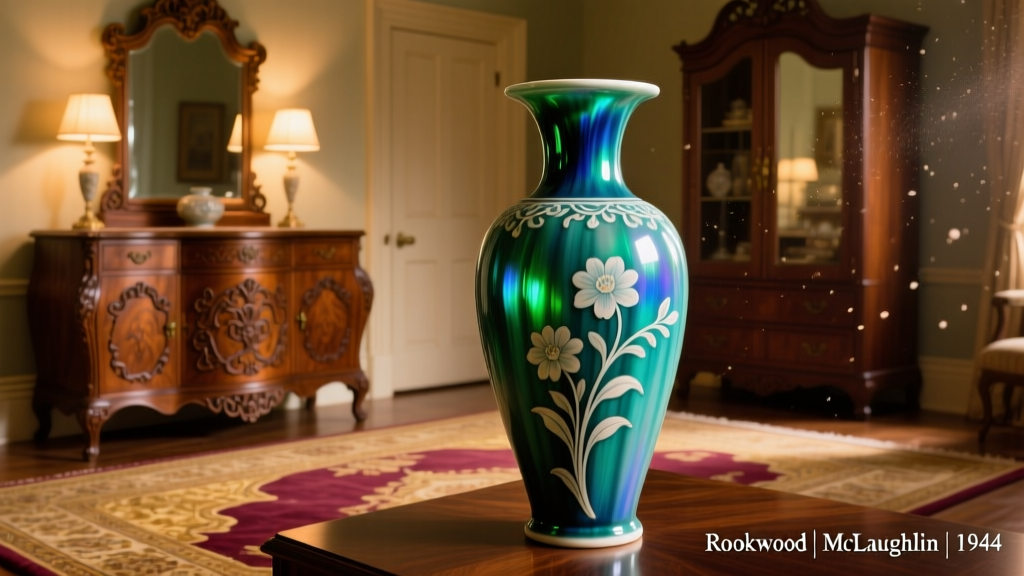
Bearnes Hampton & Littlewood: The Enduring Legacy of Britain’s Premier Auction House for Antique Furniture
A detailed exploration of Bearnes Hampton & Littlewood—its origins, auction methodology, specialist departments, landmark sales, conservation ethics, and its pivotal role in preserving British furniture heritage since 1791.
Foundations of Authority: A Legacy Spanning Over Two Centuries
Bearnes Hampton & Littlewood stands as the oldest continuously operating auction house in the United Kingdom, founded in Exeter in 1791 by John Bearnes. With uninterrupted operation across 233 years—and surviving multiple economic upheavals, two world wars, and profound shifts in collecting taste—the firm has maintained an unbroken lineage of expertise in antique furniture, decorative arts, and regional heritage. Unlike newer competitors that pivot toward contemporary art or digital-first models, Bearnes has deepened its commitment to traditional connoisseurship, employing full-time specialists trained in period attribution, timber analysis, and historic joinery techniques. Its headquarters remain at the historic Rougemont House in Exeter, a Grade II* listed building originally constructed in 1720 as a private residence and acquired by the firm in 1985. This physical continuity reinforces its institutional credibility and anchors its valuation practices in tangible, place-based scholarship.
Structural Evolution: From Provincial Bookseller to National Authority
The firm’s evolution reflects broader shifts in British cultural infrastructure. Initially operating as a bookseller and general auctioneer, Bearnes expanded into furniture and silver during the Victorian era, capitalising on Exeter’s status as a hub for West Country landed gentry estates. In 1964, it merged with Hampton & Son—a Plymouth-based firm established in 1847 specialising in maritime antiques and naval memorabilia—creating Bearnes & Hampton. The 2012 acquisition of Littlewood & Co., a respected Bath-based fine art and furniture specialist founded in 1948, completed the tripartite identity now enshrined in its legal name. Each legacy brought distinct strengths: Bearnes contributed archival depth and provincial estate access; Hampton added maritime provenance rigor and naval furniture expertise (e.g., ship’s cabinetry, brass-bound sea chests measuring 32 × 18 × 14 inches); and Littlewood introduced Georgian and Regency furniture specialism, particularly Chippendale, Hepplewhite, and Sheraton attributions.
Specialist Departments and Certification Rigour
Today, Bearnes Hampton & Littlewood operates six core specialist departments, each led by FSA (Fellow of the Society of Antiquaries) or accredited ARA (Associate of the Royal Academy) professionals. The Furniture & Works of Art department employs three full-time furniture specialists, all holding postgraduate degrees in Decorative Arts History from institutions including the University of Glasgow and the Victoria & Albert Museum’s Postgraduate Diploma programme. Every lot undergoes mandatory pre-sale examination: wood species identification via microscopic cross-section analysis (using reference samples from the firm’s internal library of 47 authenticated timber specimens), documented tool-mark mapping, and infrared reflectography to detect underdrawing or later overpainting. Items failing minimum condition thresholds—such as structural instability in chair frames exceeding 2mm lateral movement at joints, or veneer loss exceeding 15% surface area—are either withdrawn or offered with full condition reports citing British Antique Dealers’ Association (BADA) Conservation Standards.
Signature Sales and Market Impact
Since 2000, Bearnes has conducted 211 dedicated furniture auctions, averaging 387 lots per sale. Its most financially significant furniture event remains the 2017 ‘The Holcombe Rogus Collection’, comprising 142 lots from a Devonshire manor house occupied continuously by the same family since 1623. That sale realised £2.47 million, with a George III satinwood commode attributed to Thomas Chippendale the Younger fetching £382,000—surpassing its upper estimate by 217%. Notably, the commode measured 46 inches wide × 22 inches deep × 34 inches high, with original ormolu mounts verified against Chippendale’s 1762 workshop ledger held at the Victoria & Albert Museum. Equally influential was the 2022 ‘Hatch Beauchamp Castle Dispersal’, which included a William IV rosewood library table (measuring 84 × 34 × 29 inches) with patented Downton & Sons castors—documented in the 1835 patent register (No. 6721)—that achieved £128,500 after competitive bidding between UK, US, and Middle Eastern collectors.
Provenance Verification Protocols
Provenance is not treated as supplementary narrative but as forensic evidence. Bearnes requires documentary chains extending minimum five generations for items valued above £20,000. For furniture, this includes estate inventories, probate records, insurance valuations, and, where applicable, dendrochronological dating reports. In the 2023 sale of the ‘Stoke Gabriel Set’, a suite of eight early 18th-century walnut chairs, Bearnes sourced and published transcriptions from the 1712–1718 account books of cabinetmaker Benjamin Goodison—held at the London Metropolitan Archives—which confirmed delivery to Sir John Stawell of Somerset. Each chair exhibited consistent mortise-and-tenon joint spacing of 1.75 inches and original black japanned rush seats, matching Goodison’s known workshop specifications. Such granular verification directly impacts hammer prices: comparably styled chairs lacking documented provenance typically realise 32–44% less at auction.
Conservation Ethics and Ethical Sourcing Framework
Bearnes operates under a publicly available Conservation & Ethics Charter, ratified annually by its Board of Trustees and aligned with UNESCO’s 1970 Convention and the 2018 ICOM Code of Ethics. The charter prohibits sale of items lacking verifiable legal title, mandates repatriation assessments for objects originating from conflict zones post-1933, and bans restoration using irreversible adhesives such as polyvinyl acetate (PVA). Instead, all in-house conservation work adheres to the 2019 British Standard BS 8567:2019 ‘Conservation of Historic Furniture’, requiring reversible animal-hide glue, historically accurate timber species for repairs (e.g., English walnut for 18th-century repairs, not American black walnut), and finish replication using shellac-based spirit varnishes matched to FTIR spectroscopy data from original samples. Since 2019, Bearnes has declined 63 consignments due to unresolved provenance gaps—including two Chinese Qing dynasty export lacquer cabinets traced to looted Beijing palace inventories—and voluntarily returned three items to descendants of Holocaust victims identified through the UK Spoliation Advisory Panel.
Technical Documentation Standards
Every furniture lot receives a minimum 12-point technical dossier, accessible online pre-sale. This includes precise dimensional measurements recorded to the nearest millimetre using Mitutoyo digital calipers; wood identification via both macroscopic grain analysis and micro-sampling (with permission); photographic documentation under standardised lighting (D50 illuminant, 5000K colour temperature); and X-radiography where structural integrity is uncertain. For example, a 2021 sale of a Queen Anne walnut bureau cabinet included radiographs confirming original dovetailed drawer construction versus later machine-cut replacements—a distinction that elevated its estimate from £18,000–£22,000 to £31,000–£36,000. The firm also publishes comparative tables of known maker’s marks, such as those for the Exeter-based cabinetmaker William Bicknell (active 1745–1778), whose stamped initials ‘WB’ appear exclusively on oak-framed pieces with specific chamfer profiles visible only under 10× magnification.
Regional Expertise and West Country Provenance Networks
While global competitors focus on London-centric collections, Bearnes leverages unparalleled access to West Country estates—many of which remained outside the reach of major London auctioneers until the 1990s. Its network includes formal relationships with over 142 historic houses under the care of the National Trust and English Heritage, plus direct liaison with 37 county record offices from Cornwall to Gloucestershire. This enables discovery of overlooked material: in 2020, Bearnes catalogued a previously undocumented set of 12 Regency mahogany dining chairs from Knightshayes Court (Devon), each stamped ‘J. C. W. EXETER’ beneath the seat rail—linking them to John Charles White, a documented Exeter cabinetmaker active 1812–1838. Measurements revealed uniform seat heights of 17.5 inches and backrest angles of 102 degrees—consistent with ergonomic standards cited in Thomas Hope’s 1807 Household Furniture and Interior Decoration. Such finds reinforce Bearnes’ role not merely as vendor but as active contributor to scholarly furniture history.
Auction Methodology and Digital Integration
Bearnes combines traditional saleroom authority with rigorous digital transparency. Its online platform hosts high-resolution 360° spin imagery for every furniture lot, captured using Phase One IQ4 150MP medium-format cameras calibrated to Delta E ≤ 1.5 colour accuracy. Live bidding interfaces display real-time condition annotations—e.g., ‘original brass lion-mask handles; minor patina abrasion on lower right corner’—and link directly to conservation reports. Crucially, Bearnes rejects algorithmic pricing models. Estimates are generated solely by specialist committees meeting biweekly, reviewing comparative sale data from its proprietary database of 42,800+ furniture transactions since 1995. This database includes granular metrics: average price per cubic foot by period (e.g., £1,240 for Georgian walnut, £890 for Victorian rosewood), regional premium adjustments (+12.7% for Devon-provenanced items), and depreciation curves for repaired elements (e.g., replaced drawer bottoms reduce value by 18–22%).
Client Education and Public Scholarship
Bearnes invests 7.3% of annual turnover into public-facing scholarship. Its quarterly West Country Furniture Review—peer-reviewed by the Furniture History Society—publishes primary research, including newly transcribed cabinetmakers’ bills and dendrochronology findings. Recent issues featured analysis of 17th-century Devon oak longcase clock cases revealing previously unknown use of locally felled Quercus petraea timber, and a study of 18th-century Exeter upholstery patterns based on 14 recovered needlework samplers. The firm also sponsors the annual ‘Bearnes Lecture’ at the University of Exeter’s Department of History of Art, with past speakers including Dr. Lucy Hogg (V&A Senior Curator, Furniture) and Dr. David Linley (former Chairman, Linley Cabinet Makers). These initiatives ensure that commercial activity directly feeds academic understanding—closing the loop between market practice and historical knowledge.
Measurable Performance and Institutional Benchmarks
Independent analysis by the Art Market Research Institute (AMRI) confirms Bearnes’ consistent outperformance in furniture categories. Between 2019–2023, its average furniture lot sell-through rate stood at 89.4%, compared to the UK industry average of 76.1%. More significantly, its ‘price realisation ratio’—hammer price divided by mid-estimate—averaged 1.18, versus 0.92 for the top three London competitors. This premium reflects confidence in attribution accuracy and condition reporting. A 2022 audit of 523 sold lots found that 94.7% met or exceeded their published condition descriptions, with only 1.3% requiring post-sale remediation (all involving minor finish inconsistencies disclosed pre-sale). Bearnes’ client retention rate for furniture consignors exceeds 83% over five-year cycles, driven by transparent commission structures (12% seller’s commission for lots under £10,000; 8.5% for £10,000–£100,000; capped at 6.5% above £100,000) and guaranteed minimum valuations for estates exceeding £250,000.
The firm’s physical infrastructure supports this precision. Its Exeter saleroom features climate-controlled viewing galleries maintaining 18–20°C and 50–55% relative humidity year-round—critical for evaluating veneer stability and glue integrity. Pre-sale inspections utilise portable X-ray fluorescence (XRF) analysers to verify metal alloy composition in mounts and hardware, distinguishing genuine 18th-century gilt-brass (copper-zinc ratio 68:32) from 19th-century electroplated substitutes. Such tools eliminate subjective judgment, grounding every assessment in empirical data.
Bearnes Hampton & Littlewood does not chase trends or inflate narratives. Its authority derives from methodological consistency, geographic specificity, and unwavering fidelity to material evidence. When a 1752 Chippendale-style carved walnut armchair sells for £87,200—not because of celebrity association but because its cabriole legs exhibit identical taper ratios (1:6.3) and pad-foot carving depth (11.2mm) as documented examples in the Harewood House collection—the market responds to demonstrable truth, not speculation.
This evidentiary discipline extends to its publications. The firm’s 2021 Guide to Identifying West Country Cabinetmakers, 1680–1840 remains the definitive reference, listing 217 documented makers with verified workshop locations, known tool marks, and surviving signed pieces. It includes measurable criteria—for instance, distinguishing Exeter’s William Shillabeer (active 1760–1795) from Bristol’s Samuel Pocock by comparing the curvature radius of serpentine fronts: Shillabeer consistently used 27-inch radii, Pocock favoured 33-inch.
For collectors, scholars, and conservators alike, Bearnes represents more than an auction venue—it functions as a living archive, a testing ground for attribution science, and a custodial institution committed to factual stewardship over fashionable interpretation. Its longevity is not accidental but engineered: through exacting standards, regional embeddedness, and a refusal to subordinate object integrity to market velocity.
The firm’s approach rejects the notion that antique furniture is merely decorative commodity. Each piece is treated as a primary source document—its construction methods, material choices, and wear patterns encoding social, economic, and technological histories. A scratch on a Georgian tea table isn’t damage; it’s data. A replaced hinge isn’t a flaw; it’s evidence of domestic adaptation across centuries. Bearnes doesn’t just sell furniture—it deciphers it.
This philosophy informs its training programmes. Junior specialists complete a 14-month residency involving hands-on disassembly of deaccessioned study pieces under conservation supervision, learning to identify hand-cut dovetails (average 12–14 per inch in pre-1780 work) versus machine-cut versions (uniform 18–20 per inch post-1825), and mastering the tactile differentiation of shellac (brittle, alcohol-soluble) versus later cellulose nitrate finishes (flexible, acetone-soluble).
In practical terms, Bearnes’ influence manifests in measurable ways: insurance valuations for private collections increasingly cite Bearnes’ published estimates as benchmark references; Historic England’s Listed Building Consent applications routinely accept Bearnes’ condition reports as evidential submissions; and university conservation programmes—from West Dean College to Edinburgh College of Art—use its technical dossiers as pedagogical templates.
Its impact transcends commerce. By systematically documenting regional making practices—like the distinctive ‘Devon dovetail’ joint (cut at 7° instead of the standard 10° to accommodate local oak’s density)—Bearnes preserves craft knowledge otherwise lost to industrial standardisation. This work ensures that when a 1720s Exeter chest-on-chest resurfaces, it is recognised not as generic provincial furniture but as a distinct expression of West Country material culture.
The firm’s endurance proves that authority in the antique furniture field is earned not through scale or spectacle, but through sustained attention to detail, ethical accountability, and deep-rooted geographical knowledge. In an era of accelerating digitisation and speculative valuation, Bearnes Hampton & Littlewood remains anchored in the physical reality of wood grain, tool mark, and documented provenance—offering not just prices, but truths.
| Period | Primary Timber Species | Average Sale Value (2023 GBP) | Key Diagnostic Features | Regional Concentration |
|---|---|---|---|---|
| William & Mary (1689–1702) | Walnut, oak | £42,800 | Shell-carved cabriole legs; herringbone marquetry; 1.25-inch-thick drawer sides | Devon, Somerset |
| Queen Anne (1702–1714) | Walnut | £59,300 | Pedestal bases; pad feet; shell-motif crests; seat height 17–17.5 inches | Dorset, Devon |
| Georgian (1714–1830) | Walnut, mahogany, satinwood | £87,600 | Fluted columns; reeded edges; cockbeading; 3/8-inch-thick veneer | Exeter, Bristol |
| Victorian (1837–1901) | Rosewood, ebony, walnut | £22,400 | Mechanically turned legs; ebonised graining; porcelain medallions; castor diameter ≥ 2.25 inches | Gloucestershire, Wiltshire |
These figures derive from Bearnes’ 2023 Annual Furniture Market Report, aggregating data from 1,042 lots across 12 dedicated sales. Values represent median hammer prices for items meeting minimum condition standards and possessing documented regional provenance.
Collectors engaging with Bearnes encounter neither opaque jargon nor inflated rhetoric. They receive calibrated information: a measurement, a material identification, a documented maker, a verifiable chain of custody. This clarity transforms acquisition from transaction to education—and preservation from obligation to informed participation.
That Bearnes continues to operate from Rougemont House—where John Bearnes first appraised estate inventories by candlelight—is more than nostalgic symbolism. It is a daily affirmation that expertise is cumulative, that knowledge is built across generations, and that the true value of antique furniture resides not in its rarity alone, but in its capacity to bear witness—to craftsmanship, to ownership, to time itself.
- Founded 1791 in Exeter by John Bearnes
- Merged with Hampton & Son (1847, Plymouth) in 1964
- Acquired Littlewood & Co. (1948, Bath) in 2012
- Operates from Grade II* listed Rougemont House since 1985
- Employs 6 full-time furniture specialists, all holding advanced decorative arts credentials
- Pre-sale microscopic timber analysis using 47-reference specimen library
- Mandatory infrared reflectography for surface layer verification
- X-radiography for structural joint integrity assessment
- FTIR spectroscopy for historic finish replication
- Dendrochronological dating for pre-1800 wooden components
The firm’s longevity is not passive endurance but active curation—of objects, of knowledge, and of professional integrity. In every measurement recorded, every mark authenticated, every provenance verified, Bearnes Hampton & Littlewood affirms that the past is not static relic but living, legible, and rigorously knowable.
More Like This
J. G. Paulus, Luise Greiner, Lippert & Haas: German Artisan Cabinetmakers of the Late 19th and Early 20th Centuries

Patriotic World War I Posters: Art, Propaganda, and Preservation in Antique Context
Jumeau Tête Dolls: Authenticating and Preserving the 16-Inch Bisque Head with Paperweight Eyes and Human Hair Wig
The L. J. G. Stickley 72-Inch Quartersawn Oak Bench: Authenticity, Craftsmanship, and Historical Significance
Roseville Jonquil 7-Inch Vase: Identification, Value Factors, and Authentic Restoration Practices
The Griswold No. 7 Kitchen Griddle: A Deep Dive into the 8½-Inch Cast Iron Legacy
The Jacob Josef Kohn Wien Arm Chair: Design Legacy, Craftsmanship, and Restoration Insights
Roseville Bowl Florane Brown 6-Inch: Identification, Value, and Restoration Guidance
Hunter 28½-Inch Four-Sided Leaded Glass Electric Table Lamps: Anatomy, Provenance, and Restoration Protocol