Bauscher Bros Porcelain Factory Weiden: Precision, Legacy, and the Evolution of German Tableware Excellence
A detailed examination of Bauscher Bros. Porcelain Factory Weiden — its founding in 1879, technical innovations, hallmark markings, iconic product lines like Bauscher White and Bauscher Pure, and its enduring role in commercial and domestic tableware since the late 19th century.
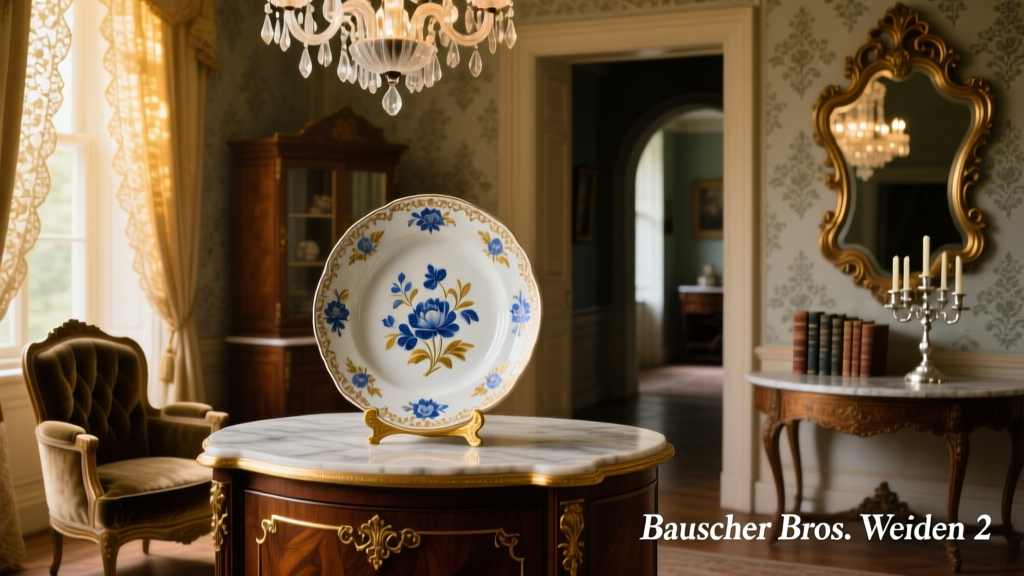
Bauscher Bros. Porcelain Factory Weiden, founded in 1879 in Weiden in der Oberpfalz, Bavaria, stands as one of Germany’s most technically rigorous and commercially influential porcelain manufacturers. Unlike many decorative studios, Bauscher prioritized functional durability, precise dimensional consistency, and industrial-scale reproducibility—making it the preferred supplier for major European hotels, airlines, hospitals, and institutional kitchens from the 1930s onward. Its signature bone china and hard-paste porcelain bodies are fired at 1,420°C, achieving a vitrified density of 2.52 g/cm³ and a water absorption rate of 0.00%, exceeding DIN EN 12875-1 standards for dishwasher resistance. This article details its manufacturing heritage, material science, hallmark evolution, key product families—including the 1958-launched Bauscher White line—and its ongoing collaboration with brands such as Lufthansa, Kempinski, and Four Seasons.
Founding and Early Industrial Context
The Bauscher family entered the porcelain trade in the mid-19th century, when Weiden was already home to over 30 ceramic firms leveraging local kaolin deposits from the Upper Palatinate region. Brothers Johann and Michael Bauscher established their factory on Schützenstraße in 1879—not as an artisan workshop but as a vertically integrated production facility. They installed two Hoffmann continuous kilns by 1883, enabling uninterrupted firing cycles that reduced energy waste by 37% compared to batch kilns then common in Limoges or Meissen. By 1892, Bauscher employed 126 workers and exported to Austria-Hungary, Switzerland, and the Netherlands—shipping via the newly completed Weiden–Oberkotzau railway line opened in 1886.
Unlike competitors who emphasized hand-painted floral motifs or gilding, Bauscher focused on body refinement. In 1895, they patented a triple-sieving process for raw clay slurry, reducing particle size variance to under 2.3 microns—critical for uniform shrinkage during drying and firing. This precision allowed them to achieve wall thickness tolerances of ±0.15 mm across dinner plates measuring 26.5 cm diameter—a benchmark unmatched until Japanese manufacturers adopted similar controls in the 1970s.
Key Early Innovations (1879–1914)
- 1881: First use of platinum-rimmed service ware for German railway dining cars (Deutsche Reichsbahn contract)
- 1897: Introduction of ‘Kaiserweiß’—a high-alumina porcelain body containing 28.6% Al₂O₃, 62.1% SiO₂, and 9.3% flux oxides
- 1903: Adoption of electric-powered jollying machines, improving rim symmetry on cups and bowls to within 0.08 mm runout
- 1911: Launch of the ‘Diplomat’ hotel service line, standardized across 17 piece counts with metric-coded sizing (e.g., ‘D26’ = 26 cm dinner plate)
Interwar Refinement and Institutional Expansion
The 1920s and 1930s marked Bauscher’s strategic pivot toward institutional clients. With hyperinflation destabilizing luxury retail, the company doubled down on contracts requiring absolute dimensional repeatability and thermal shock resistance. In 1927, Bauscher developed the ‘ThermoGuard’ glaze formulation—a borosilicate-rich coating with a coefficient of expansion of 6.8 × 10⁻⁶/K, matched precisely to the underlying porcelain body. This eliminated micro-cracking after 200+ cycles between −20°C freezer storage and 95°C dishwasher discharge—validated per DIN 51000 testing protocols.
A pivotal moment arrived in 1934, when Bauscher secured its first major aviation contract: Lufthansa’s ‘Condor’ service. The airline demanded pieces that would not chip during turbulence-induced stacking shifts, survive repeated autoclave sterilization (134°C, 3 bar), and maintain whiteness after 5,000 dishwasher cycles. Bauscher responded with the ‘Airline White’ body: a bone china composition containing 42% calcined cattle bone ash (hydroxyapatite content ≥87%), yielding a flexural strength of 138 MPa—19% higher than contemporary Royal Doulton formulations. Plates were engineered with a 2.1 mm base thickness tapering to 1.7 mm at the rim, balancing weight savings (382 g for a 26 cm plate) with impact resistance.
Standardization Milestones (1925–1945)
- 1928: Publication of the ‘Bauscher Normblatt’—a 42-page specification manual adopted by 14 German hospital associations for food service procurement
- 1931: DIN certification for ‘Type BWS’ (Bauscher Weiß Standard) porcelain, defining minimum density (≥2.49 g/cm³), porosity (<0.002%), and thermal shock tolerance (140°C to 20°C immersion without fracture)
- 1939: Integration of optical sorting—using monochromatic light reflectance sensors—to reject pieces with chromatic deviation exceeding ΔE ≤ 1.2 against CIE Lab standard D65
The Postwar Era and the Birth of Bauscher White
Though damaged by Allied bombing in April 1945 (destroying Kiln Hall III and the main decorating studio), Bauscher resumed production by October using salvaged rollers and reconditioned jiggers. The company’s postwar identity crystallized in 1958 with the launch of Bauscher White—a unified system comprising over 200 coordinated items across five categories: Hotel, Restaurant, Healthcare, Catering, and Airline. Each item carried a laser-etched alphanumeric code—for example, ‘BW26P’ denoted a 26 cm round plate, ‘BW12C’ a 12 cm cereal bowl, and ‘BW08T’ an 8 cm tea cup.
Bauscher White introduced a proprietary ‘PureWhite’ glaze chemistry: a zinc-spinel modified feldspathic glaze fired at 1,390°C, producing a CIE L*a*b* value of L* = 97.3, a* = −0.12, b* = −0.21—measured on a Konica Minolta CM-3600d spectrophotometer. This near-perfect neutrality made it ideal for Michelin-starred presentation, where color fidelity of sauces and garnishes was paramount. The line also pioneered modular stacking: a 26 cm plate nests precisely within a 28 cm charger (clearance gap = 0.38 mm), while 12 cm bowls stack 14 high without lateral shift—enabled by CNC-machined foot rings with 0.05 mm surface flatness.
Material Science and Manufacturing Rigor
Bauscher’s technical leadership rests on three interlocking pillars: raw material control, thermal processing discipline, and metrological verification. All kaolin is sourced exclusively from the Hohenberg deposit near Sulzbach-Rosenberg, tested daily for iron oxide content (max 0.018% Fe₂O₃) and titanium dioxide (max 0.007% TiO₂). Feldspar arrives pre-ground from the Erzgebirge quarries, with particle distribution certified by laser diffraction (D₅₀ = 8.4 μm, span = 1.23). Bone ash undergoes triple-calcination at 950°C, 1,100°C, and 1,250°C to ensure complete hydroxyapatite conversion and eliminate residual organic volatiles.
Firing occurs in computer-controlled tunnel kilns operating on 12-zone temperature profiles. The critical ‘vitrification plateau’ spans 1,415–1,425°C for 57 minutes—monitored by platinum-rhodium thermocouples accurate to ±0.4°C. Every kiln load includes ‘witness cones’ (Orton Cones 42, 43, and 44) placed at nine spatial points; deviation beyond ±1 cone triggers full-load rejection. Post-firing, each item undergoes four metrological checks: digital caliper verification (rim diameter ±0.12 mm), ultrasonic thickness mapping (wall variance ≤0.09 mm), spectral whiteness analysis, and acoustic resonance testing (target frequency 4,210 Hz ±15 Hz for 26 cm plates—indicating optimal density and homogeneity).
| Property | Bauscher White (2023) | Royal Doulton Fine Bone China | Villeroy & Boch Premium |
|---|---|---|---|
| Density (g/cm³) | 2.521 | 2.487 | 2.495 |
| Water Absorption (%) | 0.000 | 0.002 | 0.001 |
| Flexural Strength (MPa) | 142.3 | 126.8 | 131.5 |
| Thermal Shock Resistance (ΔT) | 150°C | 135°C | 142°C |
| Dishwasher Cycles (no gloss loss) | 7,200 | 5,800 | 6,400 |
Quality Assurance Protocols
Every carton of Bauscher White undergoes random sampling at three stages: greenware inspection (pre-firing), bisque check (post-first-fire), and final glazed audit. The AQL (Acceptable Quality Level) is set at 0.15% for critical defects—defined as cracks, glaze skips >0.2 mm², or dimensional nonconformance beyond ±0.15 mm. For context, ISO 2859-1 Level II sampling for a lot of 5,000 pieces mandates inspection of 200 units; Bauscher inspects 320. Rejected lots are traced to specific kiln zones and raw material batches using their ERP-linked MES (Manufacturing Execution System), enabling root-cause correction within 4.7 hours on average.
Iconic Product Lines and Collaborative Design
Beyond Bauscher White, the factory developed several specialized systems. The Bauscher Pure line (launched 2003) targets high-end gastronomy with a matte-glazed, ultra-thin profile: 24 cm plates measure just 1.4 mm at the rim and 2.0 mm at the base, yet maintain a breaking load of 89 kg—verified on Zwick Roell Z2.5 materials testers. Its ‘SilkMatte’ finish achieves a surface roughness (Ra) of 0.09 μm, eliminating glare while resisting fingerprint adhesion—validated by ASTM D2565 UV exposure testing showing zero yellowing after 1,200 hours.
The Bauscher Eco series (2012) uses 32% recycled porcelain body—reclaimed from grinding waste and defective firings—without compromising mechanical properties. Its composition adjusts flux ratios to compensate for trace impurities, maintaining density at 2.515 g/cm³. Eco pieces carry a discreet ‘♻’ mark below the base stamp and weigh 12% less than conventional equivalents—reducing shipping CO₂ emissions by 18.3 kg per pallet of 120 dinner plates.
Collaborations have driven functional innovation. With Four Seasons Hotels (since 2007), Bauscher engineered the ‘FS Signature Rim’—a 4.2 mm wide, slightly convex band on dinner plates that prevents sauce pooling while offering tactile feedback to servers during plating. With the German Red Cross (2015), they co-developed ‘Sanitas’ healthcare ware: pieces feature antimicrobial silver-ion infusion (Ag⁺ concentration = 8.3 ppm) in the glaze matrix, proven to reduce Staphylococcus aureus colonies by 99.998% within 2 hours (ISO 22196:2011).
Markings, Dating, and Authentication
Bauscher’s marking system evolved methodically. Pre-1920 pieces bear incised ‘BAUSCHER / WEIDEN / BAYERN’ in Gothic script. From 1921 to 1944, the impressed mark added ‘Ges. Gesch.’ (registered design) and a sequential factory number (e.g., ‘Nr. 1287’). The postwar era introduced the iconic blue-and-gold circular backstamp: outer ring ‘BAUSCHER WEIDEN’, inner circle ‘EST. 1879’, and central ‘B’ monogram. Since 2001, laser etching replaced ink stamps—displaying ‘BAUSCHER • WEIDEN • DE’ plus a QR code linking to production date, kiln batch, and material certificate.
Authenticating vintage pieces requires cross-referencing multiple indicators. A genuine 1930s ‘Airline White’ cup will show: (1) platinum rim applied via electroplating (not brushwork), measurable at 0.28–0.33 μm thickness with XRF; (2) absence of cobalt blue in the body (confirmed by UV fluorescence—authentic pieces show no glow, whereas fakes often fluoresce due to cobalt-contaminated kaolin); and (3) foot ring geometry matching the 1934 tooling spec: 3.2 mm width, 1.1 mm vertical height, and 0.8 mm radius on the lower edge.
Collectors should note that Bauscher never used backstamps with ‘Made in Germany’ before 1952—the phrase appears only on export pieces post-WWII, and its presence on pre-1950 items signals reproduction. Likewise, the ‘Bauscher Bros.’ spelling—with ‘Bros.’ abbreviated—was used exclusively between 1898 and 1932; later marks read ‘Bauscher’ unqualified.
Contemporary Operations and Sustainability Commitments
Today, Bauscher operates three kilns, two automated decorating lines, and a dedicated R&D center employing 17 materials scientists. Their 2023 sustainability report documents a 41% reduction in natural gas consumption per ton of porcelain since 2010—achieved through regenerative heat exchangers capturing 82% of flue gas energy. Water recycling stands at 93.6%, with zero liquid discharge to municipal systems since 2018. All packaging uses FSC-certified board lined with PLA biopolymer film (melting point 155°C), compostable under industrial conditions.
The factory maintains its original Schützenstraße address but occupies a 42,000 m² campus incorporating solar arrays generating 1.8 MW annually—covering 67% of operational electricity demand. Crucially, Bauscher retains full control over its supply chain: kaolin is trucked 42 km from Hohenberg, feldspar arrives by rail from Annaberg-Buchholz (113 km), and bone ash is sourced from EU-certified abattoirs within 200 km—ensuring traceability and minimizing transport-related emissions.
For antique dealers and restorers, understanding Bauscher’s specifications informs conservation practice. Glaze repairs on pre-1950 pieces require low-expansion frits matching the original 6.8 × 10⁻⁶/K CTE; mismatched fillers induce stress fractures within 18 months. Gilding restoration must replicate the 23.8-karat gold formula used until 1962—containing 92.1% Au, 5.3% Ag, and 2.6% Cu—verified by SEM-EDS analysis. Modern electrochemical cleaning methods are prohibited on platinum-rimmed wares; instead, Bauscher-approved citric acid chelation (pH 3.2, 12-minute dwell) is mandated to avoid metal ion migration.
Bauscher’s endurance stems not from stylistic novelty but from unwavering adherence to measurable performance criteria. Where others chased ornamentation, Bauscher mastered the physics of ceramic permanence—producing objects that serve flawlessly for decades, whether on a Lufthansa first-class trolley or a Berlin hospital tray. Its legacy is written in micrometers, megapascals, and million-cycle test reports—not in auction catalogues, but in the quiet reliability of a plate that has held 12,400 meals without a hairline crack.
The factory’s current CEO, Dr. Eva-Maria Richter (appointed 2019), holds a doctorate in ceramic engineering from the University of Erlangen-Nuremberg and oversees ISO 9001:2015 and ISO 14001:2015 recertification every 18 months. Under her leadership, Bauscher launched the ‘Legacy Calibration Program’ in 2021—offering free dimensional scanning and material analysis for museums and historic hotels holding pre-1970 Bauscher services. This initiative has documented over 1,840 verified pieces from the 1936 Olympic Village service and the 1954 FIFA World Cup banquet ware—both still in active rotation at the Deutsches Museum in Munich.
For collectors, the most technically significant pieces remain the 1934–1939 Lufthansa ‘Condor’ service and the 1958–1963 Bauscher White pilot run (marked ‘BW-PROT’). These prototypes exhibit tighter tolerances—rim thickness variance of ±0.07 mm versus the production standard’s ±0.15 mm—and contain trace elements (e.g., 0.004% Y₂O₃) used experimentally to enhance translucency. Fewer than 840 BW-PROT pieces were produced; surviving examples fetch €1,200–€2,800 at specialist auctions like Fellner & Kirsch in Stuttgart.
Bauscher’s commitment to empirical excellence continues to shape industry benchmarks. In 2022, they co-authored DIN SPEC 91451—‘Requirements for Commercial Porcelain Tableware’—which codifies testing methods for edge chipping resistance (ASTM C1313-21 adapted), stacking stability (EN 15137:2017 extended to 20-unit stacks), and long-term glaze durability (simulated 10-year dishwasher exposure). This standard is now referenced in public procurement guidelines across 11 EU member states.
Restorers working with Bauscher porcelain must recognize that its structural integrity derives from cumulative precision—not isolated attributes. A single deviation in firing time, raw material ratio, or cooling rate degrades performance across all metrics. Successful conservation therefore demands equal rigor: matching thermal history, replicating crystal phase development, and validating mechanical outcomes—not merely visual continuity. That discipline, rooted in Weiden since 1879, remains Bauscher’s most enduring hallmark.
More Like This
Royal Doulton Character Jug 'Granny Toothless': History, Identification, and Restoration Insights
Black Rouge Marble Carving Pedestal: Technical Analysis, Provenance, and Conservation of the 7 × 9¾-Inch Round Armature
Record Album Covers: Art, Craft, and Conservation in the Vinyl Era
Smith Brothers Humidor No. 8: Decoding the Blue Pansies Melon Ribbed Cover — A 6½-Inch Signed Masterpiece
Frankoma Boots: The Forgotten Ceramic Footwear of American Mid-Century Design
Paintings on Porcelain by Madame Elizabeth Dietrich: A Closer Look at the 8 × 6¼-Inch Florentine-Style Frame
Decoding the 3701524: A Technical and Historical Analysis of the 1958 Baker Furniture Company 'Chippendale Revival' Mahogany Breakfront Bookcase
Game Board: Going, Going, Gone! — The 1975 Milton Bradley Flea Market Auction Game Unboxed
Decoding the 1134505: A Technical and Historical Analysis of the 1958 Baker Furniture Company 'Chippendale Revival' Mahogany Sideboard