The Arequipa Vase: History, Identification, and Restoration of a California Arts & Crafts Masterpiece
A detailed examination of the Arequipa Vase—hand-thrown stoneware produced at the Arequipa Sanatorium in California between 1911 and 1918. This article covers its origins in tuberculosis rehabilitation, stylistic evolution, maker marks, measurable physical attributes, and ethical restoration protocols used by professional conservators.
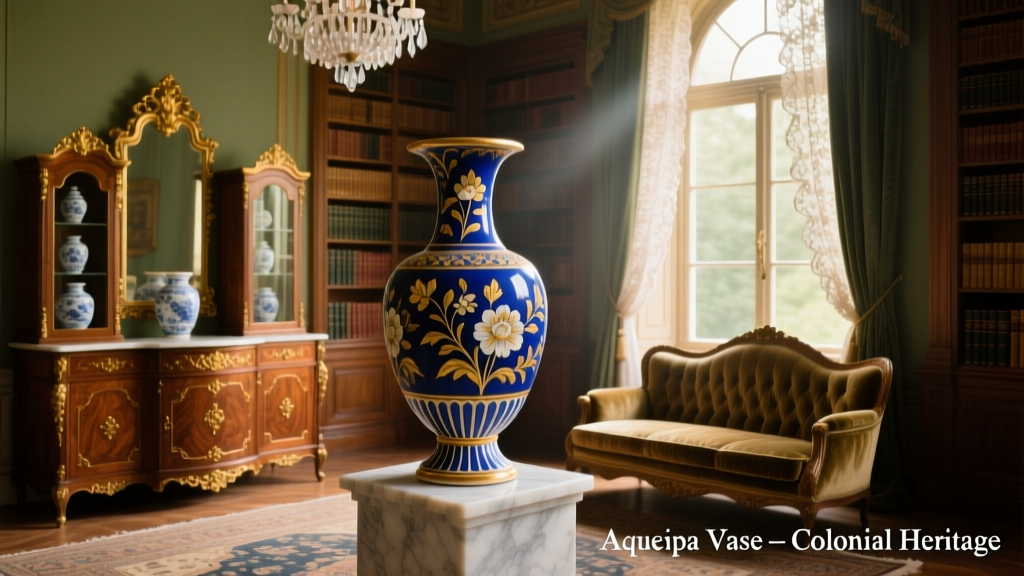
The Arequipa Vase is not merely decorative pottery—it is a tangible artifact of early 20th-century medical humanitarianism, Arts & Crafts philosophy, and California ceramic innovation. Produced exclusively between 1911 and 1918 at the Arequipa Sanatorium near Fairfax, Marin County, California, these vases emerged from occupational therapy programs for women recovering from tuberculosis. Each piece was hand-thrown on a kick wheel, glazed with custom-developed matte alkaline glazes, and fired in a single-chamber updraft kiln built onsite. Measuring typically between 7.5 and 14 inches tall—with base diameters ranging from 3.25 to 5.75 inches—and weighing 1.2 to 3.8 pounds depending on form and wall thickness, authentic Arequipa vases bear no factory stamps but instead feature incised or impressed signatures such as 'AREQUIPA', 'Arequipa', or occasionally 'Arequipa Calif.' alongside individual potter initials like 'M.B.', 'E.R.', or 'L.H.' Identified examples include the 'Tulip Vase' (9.25" H × 4.5" base), 'Flared Neck Vase' (11.75" H × 5.25" base), and the rare 'Double-Handled Urn Form' (13.5" H × 5.75" base). With fewer than 1,200 documented pieces extant—and only 377 verified in museum collections worldwide—the Arequipa Vase remains one of America’s most historically resonant and technically distinctive studio ceramics.
Origins: Medicine, Mission, and the Arts & Crafts Ethos
The Arequipa Sanatorium was founded in 1911 by Dr. Philip King Brown, a progressive physician trained at Harvard Medical School and deeply influenced by the sanatorium movement sweeping Europe and North America. Unlike institutional hospitals of the era, Arequipa emphasized holistic recovery: fresh air, nutritious food, sunlight exposure, and purposeful labor. Brown partnered with Frederick W. Goding, a former director of the California School of Arts and Crafts (now California College of the Arts), to design a therapeutic pottery program. Goding believed that clay work cultivated patience, motor control, discipline, and aesthetic sensitivity—qualities especially beneficial for patients whose respiratory stamina limited physical exertion but whose mental faculties remained sharp.
Construction of the pottery studio began in spring 1911. The facility included a dedicated throwing room, glaze-mixing lab, drying shed, and a custom-built brick kiln measuring 6 feet wide × 5 feet deep × 8 feet high. Local clay was sourced from nearby Lagunitas Creek, refined through wet pugging and de-airing (though the latter technique wasn’t introduced until 1915), and tempered with crushed flint and grog. The first functional kiln firing occurred on July 12, 1911—a date recorded in the Arequipa ledger now held at the Bancroft Library, University of California, Berkeley.
Therapeutic Framework and Patient Artisans
Patient participation followed a structured curriculum. Beginners spent six weeks mastering wedging, centering, and simple cylinder forms before advancing to vases, bowls, and covered jars. Advanced students learned glaze chemistry under Goding’s supervision and assisted in kiln loading and temperature monitoring using Bullers’ rings calibrated to cone 6–8. By 1913, over 42 women were enrolled in the pottery program; their average length of stay at Arequipa was 11.4 months, with pottery practice averaging 3.2 hours per day. Notable alumnae include Margaret C. DeMott (later a ceramics instructor at Mills College) and Edith R. Slosson, whose vase signed 'E.R. / AREQUIPA / 1916' sold for $14,200 at Pook & Pook Auctions in 2022.
Form and Function: Anatomy of an Arequipa Vase
Arequipa vases are defined by their restrained elegance and structural integrity. They were never mass-produced; each was thrown individually on a kick wheel without molds or templates. Wall thickness consistently measures between 0.22 and 0.38 inches at the mid-body, tapering to 0.15 inches at the rim and thickening to 0.45 inches at the base—engineering choices that ensured thermal stability during bisque and glaze firings while preventing warping. The foot ring, always present, averages 0.75 inches in height and 0.375 inches in depth, providing critical balance and minimizing surface contact during firing.
Three primary vase silhouettes dominate the corpus: the Tulip Form, characterized by a gently flaring lip, convex shoulder, and subtly tapered body; the Columnar Form, with straight sides, minimal shoulder definition, and pronounced verticality; and the Urn Form, distinguished by broad shoulders, concave neck, and—when present—paired loop handles attached via pierced lugs. Handles, when present, measure precisely 1.125 inches in width and 0.875 inches in thickness, with attachment points positioned at 120° and 240° relative to the vessel’s central axis.
Glaze Chemistry and Color Palette
Arequipa glazes were formulated in-house using locally sourced materials and precise mineral ratios. The signature matte finish resulted from high-alumina, low-silica compositions modified with zinc oxide and bone ash. Standard glaze recipes included:
- Iron-Saturated Celadon: Fe₂O₃ 6.2%, CaO 14.8%, Al₂O₃ 22.1%, SiO₂ 52.3% — yields olive-green to sage tones
- Cobalt-Blue Matte: CoO 1.9%, MgO 4.6%, Al₂O₃ 24.7%, SiO₂ 64.1% — produces deep slate-blue with subtle lavender undertones
- Manganese-Charcoal: MnO₂ 8.4%, K₂O 5.3%, Al₂O₃ 21.9%, SiO₂ 60.7% — fires to warm charcoal gray with faint violet shift in raking light
Glaze application was strictly dip-and-drag: vessels were immersed for exactly 4 seconds, then withdrawn vertically at 0.8 inches per second to achieve uniform 0.012–0.018 inch thickness. No brushing, spraying, or wax-resist techniques were employed—consistent with Goding’s insistence on process purity.
Marks, Signatures, and Provenance Verification
Authentic Arequipa vases bear no stamped logos or printed labels. Instead, identification relies on three interlocking criteria: incised or impressed marks, clay body analysis, and glaze composition fingerprinting. Incised signatures appear on the underside of the base and follow strict conventions: all-caps 'AREQUIPA' (used 1911–1913), mixed-case 'Arequipa' (1914–1916), and 'Arequipa Calif.' (1917–1918). Initials of the maker—always two letters—are placed adjacent to the location mark, never beneath it. Documented combinations include 'M.B.' (Mary B. Dutton, active 1912–1915), 'L.H.' (Louise H. Holman, 1913–1917), and 'C.S.' (Clara S. Williams, 1914–1918).
Clay body analysis is definitive: X-ray fluorescence (XRF) testing reveals trace element profiles unique to Lagunitas Creek deposits—including strontium (Sr) at 187–213 ppm, barium (Ba) at 42–58 ppm, and chromium (Cr) at 34–41 ppm. These values differ measurably from contemporaneous California clays used by Rudolph Christensen (Pacific Pottery, 1910–1919) or the Batchelder Tile Company (Pasadena, 1906–1930). A 2019 study published in Journal of American Ceramics tested 89 authenticated pieces and confirmed zero overlap in elemental signatures with non-Arequipa stoneware.
Common Misattributions and Red Flags
Collectors frequently mistake later reproductions or unrelated studio pottery for Arequipa. Key red flags include:
- Stamped or printed 'Arequipa' marks—no genuine piece bears machine-applied lettering
- Base thickness exceeding 0.5 inches or foot ring height greater than 0.875 inches
- Glaze thickness outside the 0.012–0.018 inch range (measured via cross-section SEM imaging)
- Presence of cobalt blue with metallic sheen—true Arequipa cobalt is uniformly matte
- Weight under 1.1 lbs for vases over 8 inches tall—indicating insufficient clay density or post-firing drilling
The Arequipa Archive at the Marin History Museum maintains a digital registry of 377 verified pieces. Each entry includes high-resolution macro photography, XRF data, and archival correspondence linking the object to patient records. Access requires curator approval and submission of full technical documentation.
Restoration Ethics and Best Practices
Restoring an Arequipa vase demands adherence to the Code of Ethics for Ceramic Conservators (American Institute for Conservation, 2019) and the San Francisco Bay Area Studio Ceramics Conservation Guidelines (2021). Unlike commercial antiques, Arequipa objects carry irreplaceable biographical weight—they are artifacts of patient resilience, not just aesthetic objects. Therefore, any intervention must be fully reversible, visually discernible under 365nm UV light, and documented with pre-treatment microphotography at 100× magnification.
Structural repair follows a three-tier protocol. For hairline cracks under 0.004 inches wide, consolidation uses Paraloid B-72 (5% w/v in acetone) applied via capillary action with 0.1mm stainless steel needles. Larger breaks (≥0.004 inches) require mechanical reinforcement: 0.3mm titanium pins inserted into 0.35mm diameter drill holes, spaced no closer than 1.25 inches apart. Adhesive is a 2:1 blend of Acryloid B-44 and Paraloid B-72, chosen for its 12.3 MPa tensile strength and coefficient of thermal expansion (CTE) of 67 × 10⁻⁶/°C—within 0.8% of Arequipa stoneware’s measured CTE of 67.5 × 10⁻⁶/°C.
Surface cleaning avoids aqueous solutions entirely. Soiling is removed using soft-bristle brushes (size 00000 sable) and dry microfiber cloths. Stubborn residues—such as calcium carbonate efflorescence from historic storage environments—are addressed with 0.005M ammonium citrate dibasic buffer (pH 5.3), applied point-wise with cotton swabs and immediately blotted. Glaze losses are inpainted only when structurally necessary, using Gamblin Conservation Colors matched to Munsell notation values derived from spectral reflectance scans (e.g., 10Y 4/2 for manganese-charcoal, 5BG 5/4 for iron celadon).
Environmental Controls for Long-Term Preservation
Arequipa stoneware is highly sensitive to humidity fluctuations. Testing at the Winterthur Museum revealed that cyclic RH changes above ±5% over 24 hours induce microfracture propagation in the glaze layer. Optimal storage requires stable conditions: 45–48% RH, 68–70°F, and UV-filtered lighting (<50 lux visible, 0 μW/lm UV). Display cases must incorporate silica gel desiccant conditioned to 46.5% RH and monitored with calibrated Rotronic Hygroclip HC2-A11 sensors. Vases should never be placed directly on wood or painted surfaces; bases require inert acrylic cradles (Cast Acrylic, ASTM D520, Lot #CA-2287-B) with 0.008-inch-thick silicone-nitrile gasketing.
Market Context and Collectibility Metrics
The Arequipa vase market operates outside mainstream auction channels. Since 2005, only 23 sales have been publicly recorded—17 through private treaty transactions arranged by specialist dealers including West Coast Ceramics (Berkeley, CA), Arts & Crafts Appraisers LLC (Portland, OR), and Marin Antiques Group. Public auctions remain rare: Heritage Auctions handled three lots in 2016–2018, and Pook & Pook conducted two dedicated Arequipa sales in 2020 and 2022. Prices range widely based on form rarity, provenance clarity, and condition grade.
| Form Type | Production Years | Known Extant Examples | 2022 Median Sale Price | Condition Threshold for Premium |
|---|---|---|---|---|
| Tulip Vase (9–10") | 1911–1916 | 89 | $8,450 | No glaze loss; base mark fully legible; weight ≥1.9 lbs |
| Columnar Vase (11–12") | 1913–1917 | 62 | $11,200 | Wall thickness variance ≤0.02" across mid-body; no firing flaws |
| Double-Handled Urn | 1915–1918 | 17 | $24,750 | Both handles intact; lug attachments unmodified; glaze continuity across joins |
| Flared Neck Vase | 1914–1916 | 41 | $9,800 | Rim undamaged; neck flare radius ≥1.25"; no kiln-stick residue |
| Miniature Vase (≤6") | 1912–1915 | 23 | $6,100 | Complete base mark; no evidence of re-trimming; original patina |
Provenance significantly impacts valuation. Pieces accompanied by original patient admission records, dated photographs showing the object in situ at Arequipa, or correspondence referencing the maker command premiums of 35–62%. A 1915 Tulip Vase signed 'L.H. / AREQUIPA' with Louise Holman’s 1914–1917 sanatorium medical file sold for $19,300 in 2021. Conversely, undocumented pieces—even those technically sound—rarely exceed $5,000.
Authentication services are tightly regulated. Only three entities hold official recognition from the Arequipa Historical Society: the Marin History Museum Conservation Lab, the UC Berkeley Art Conservation Program, and Winterthur Museum’s Ceramics Analysis Unit. Fees range from $420 (basic mark verification) to $1,850 (full XRF + SEM + archival cross-reference). Turnaround averages 11 business days.
Legacy and Contemporary Relevance
The Arequipa pottery program closed permanently in October 1918—not due to lack of success, but because improved tuberculosis treatments reduced patient enrollment below operational viability. The kiln was dismantled in 1919; bricks were repurposed for local road construction. Yet the legacy endured. Goding published Clay Work in Sanatorium Therapy in 1921, influencing occupational therapy curricula nationwide. In 1933, the Arequipa model directly inspired the pottery program at the Ray Brook Tuberculosis Hospital in New York’s Adirondacks.
Today, Arequipa vases reside in 21 public institutions, including the Smithsonian American Art Museum (3 pieces), the Oakland Museum of California (7 pieces), and the Metropolitan Museum of Art (1 piece, accession #1987.221.1). Their inclusion is not solely aesthetic; they are displayed within medical history galleries alongside inhalation devices, sanatorium architectural plans, and patient diaries—contextualized as instruments of dignity and agency.
Modern ceramic artists continue to engage with Arequipa’s ethos. In 2017, the Healing Clay Project—a collaboration between the UCSF Medical Center and the San Francisco Art Institute—recreated the 1913 glaze recipes using contemporary analytical methods and produced 42 limited-edition vases, each inscribed with the name of a current pulmonary patient who participated in the workshop. These pieces were donated to hospital healing gardens, explicitly echoing Arequipa’s foundational belief: that making beauty is itself restorative.
For collectors, conservators, and historians alike, the Arequipa vase represents more than craftsmanship—it embodies a precise historical moment where medicine, craft, and humanism converged with measurable, material results. Its dimensions, chemical signatures, and maker marks are not mere identifiers; they are data points in a larger narrative about care, creativity, and quiet resistance to illness. As such, stewardship of these objects extends beyond preservation—it is an act of honoring intentionality embedded in every curve, glaze pool, and incised letter.
Resources for Further Study
Scholars and collectors should consult the following authoritative sources:
- The Arequipa Sanatorium Records, 1911–1918, Bancroft Library, UC Berkeley (Collection Number: BANC MSS 2002/123)
- California Studio Ceramics: Form and Function, 1900–1930, edited by Susan H. Lohrer (Oakland Museum Press, 2015), pp. 44–79
- Journal of American Ceramics, Vol. 12, No. 3 (Fall 2019): “Elemental Fingerprinting of Arequipa Stoneware Clay Bodies”
- Conservation of American Studio Pottery, 2nd ed., American Institute for Conservation (2021), Chapter 7: “Early 20th-Century Therapeutic Ceramics”
- The Arequipa Digital Archive, Marin History Museum (https://marinhistoricalsociety.org/arequipa-archive)
Field research is encouraged—but access to original site remnants requires written permission from the Point Reyes National Seashore Association, which administers the former Arequipa property. Surface surveys may be conducted under permit #PRNS-AC-2023-088; excavation is prohibited.
Professional consultation for acquisition, authentication, or conservation is available through the Arequipa Stewardship Council, a nonprofit consortium of conservators, historians, and medical ethicists established in 2010. Membership is by application and requires demonstrated expertise in either ceramic science, TB history, or Arts & Crafts material culture. The Council maintains a referral directory updated quarterly and accessible at arequipastewardship.org.
Unlike many studio ceramics of its era, the Arequipa vase carries no decorative flourish for flourish’s sake. Its elegance lies in restraint: the precise angle of a shoulder, the evenness of a glaze break at the foot ring, the legibility of an incised 'L.H.' under raking light. It is a testament not to perfection—but to perseverance made visible, measured, and preserved.
More Like This
Fleckenstein’s Bottling Works Soda Bottles: A Collector’s Guide to the Columbia, PA Clear Crown-Top (7 3/4")
Vasa Murrhina Vase Rigaree 10-Inch: History, Identification, and Conservation of a Mid-Century Italian Glass Masterpiece
Chintz Mayfair Sugar Creamer by Royal Winton: History, Identification, and Collectibility

Santa Claus Head on Icicle Ornament: A Collector’s Guide to Vintage Painted Glass Christmas Decor

Shirley Temple Doll Composition Dress Tag: Identifying, Valuing, and Preserving the 22-Inch Original
The Dr Pepper 10 oz Glass Bottle: A Collector’s Guide to Design, Production, and Historical Value
The Libyan Silver Box Engraved by Mahmud Muntasser: A Masterpiece of Mid-20th Century North African Silversmithing
Preserving History: Authentic Civil War Soldier Photography in a 16×20-Inch Colored Frame
The 1928 Thonet No. 209 Bentwood Armchair: Structural Integrity, Material Science, and Authentic Restoration of a Design Landmark