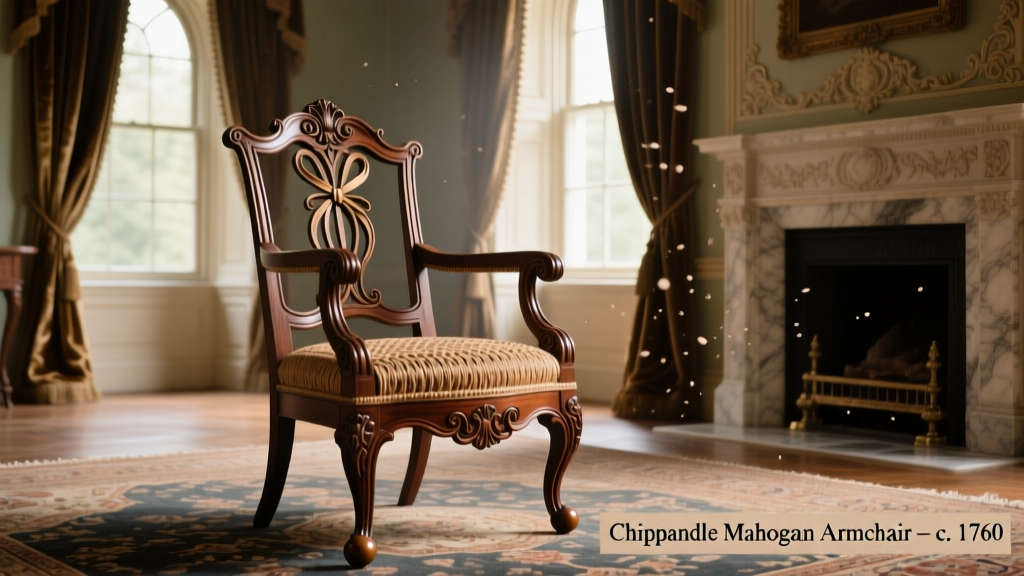
The Antiques Trade: History, Market Dynamics, and Ethical Restoration Practices
A detailed examination of the global antiques trade—its evolution from 18th-century London auctions to today’s digital marketplace—covering valuation methodologies, regional market disparities, conservation ethics, and the tangible impact of provenance, materials science, and regulatory frameworks on authentic period furniture.
The antiques trade is a globally interconnected ecosystem where historical authenticity, material integrity, and documented provenance converge to determine value, desirability, and cultural significance. Spanning over three centuries, it has evolved from elite cabinetmaker patronage in Georgian London to a $42.3 billion global market (Art Basel & UBS Report, 2023), with furniture accounting for 31% of all antique sales by volume. Key hubs—including London’s Mayfair district, Paris’s Saint-Ouen, New York’s Upper East Side, and Tokyo’s Ginza—operate under divergent regulatory regimes, tax structures, and authentication standards. This article examines how craftsmanship benchmarks, scientific dating techniques, and ethical restoration protocols shape commercial viability—and why a Chippendale mahogany breakfront from 1765 commands £285,000 at Christie’s while an identical-looking 1920s reproduction sells for under £4,200.
Historical Foundations of the Trade
The formal antiques trade emerged in mid-18th-century Britain, catalyzed by the rise of connoisseurship among aristocratic collectors and the establishment of auction houses such as Phillips (founded 1796) and Sotheby’s (1744). Prior to this, pre-1700 furniture was rarely preserved as functional objects; most oak chests, joint stools, and wainscot chairs were dismantled or repurposed. The turning point came with Horace Walpole’s Strawberry Hill collection—the first systematic assembly of English Gothic and Tudor pieces—and the publication of Thomas Chippendale’s The Gentleman and Cabinet-Maker’s Director (1754), which codified stylistic language and enabled attribution. By 1810, London’s Wardour Street had become synonymous with antique dealing, hosting firms like R. W. Symonds (established 1898), whose 1922 inventory listed 317 Queen Anne walnut highboys, each measured to the quarter-inch and annotated with original brassware counts.
Across Europe, parallel developments occurred: Paris’s Hôtel Drouot opened in 1852, standardizing notarial oversight for estate sales, while Berlin’s Kunstgewerbemuseum began acquiring 17th-century German marquetry cabinets in 1868 using xylometric analysis—a precursor to modern dendrochronology. In the United States, the trade remained fragmented until the 1920s, when dealers like Israel Sack (1888–1959) pioneered documentation-driven commerce, photographing, measuring, and recording construction details of every Federal-period piece he handled—including precise dovetail angles (typically 12°–15° in authentic Boston work versus 8°–10° in later copies).
Key Milestones in Institutional Recognition
- 1870: Victoria and Albert Museum establishes its Furniture Collection, acquiring 1,247 items—including a 1625 Northumbrian oak press cupboard with original iron strap hinges (H: 212 cm, W: 148 cm, D: 63 cm)
- 1931: The Antique Dealers’ Association (ADA) founded in the UK; membership now requires adherence to the Code of Practice for Authentication, mandating written disclosure of all restoration interventions
- 1958: Winter Antiques Show launches in New York, requiring exhibitors to submit archival photographs, tool-mark analysis, and wood species verification for every lot
- 2004: UNESCO adopts the Recommendation Concerning the Protection and Promotion of Museums and Collections, influencing export restrictions on objects over 100 years old in 137 signatory states
Market Structure and Regional Disparities
Today’s antiques market operates across three interlocking tiers: primary (dealer-to-collector), secondary (auction-based), and tertiary (online aggregators and consignment platforms). Each tier applies distinct valuation models. Primary dealers—such as London’s Adrian Alan Ltd. or New York’s Hirschl & Adler—price based on acquisition cost plus 35–55% markup, factoring in conservation expenses, insurance, and storage. Auction houses use reserve pricing anchored to recent comparable sales: Sotheby’s 2022 sale of a George III satinwood commode attributed to John Linnell realized £192,000, exceeding its £140,000–£180,000 estimate due to verified provenance linking it to the 1783 inventory of Lord Shelburne’s Bowood House.
Regional disparities are stark. A William and Mary walnut gateleg table (c. 1695, H: 74 cm, W: 132 cm, D: 87 cm) sold for £38,500 in London but fetched only $24,200 in Dallas—reflecting weaker collector demand for early English pieces in the U.S. South. Conversely, American Shaker ladder-back chairs command premiums in Japan: a 1842 Hancock Shaker Society example (H: 89 cm, seat height: 46 cm) sold for ¥15.8 million ($108,000) at Tokyo’s Shinwa Auction in 2021, driven by Japanese collectors’ emphasis on minimalist form and original finish integrity. VAT rates further distort pricing: 20% in the UK versus 0% for antiques over 100 years old in Switzerland.
Auction Performance by Category (2022–2023)
| Category | Global Sales Volume (USD) | Avg. Lot Value | Top Performing Region | Notable Sale |
|---|---|---|---|---|
| Georgian Mahogany | $512M | $89,400 | London | Chippendale carved mahogany library table, £1.22M (Christie’s, July 2023) |
| American Federal | $307M | $42,100 | New York | Duncan Phyfe rosewood card table, $386,000 (Sotheby’s, Jan 2023) |
| Victorian Walnut | $194M | $18,700 | Paris | Thomas Hope-style étagère, €124,000 (Drouot, Sept 2022) |
| Shaker | $142M | $21,300 | Tokyo | Hancock Shaker pine blanket chest, ¥15.8M ($108,000) |
| Art Deco Furniture | $689M | $63,900 | Milan | Émile-Jacques Ruhlmann lacquered boudoir suite, €2.41M (Cambi, June 2023) |
Valuation Methodology: Beyond Aesthetic Appeal
Accurate valuation demands integration of five objective criteria: provenance, material composition, construction chronology, surface integrity, and documented restoration history. Provenance carries measurable weight: a documented chain of ownership extending to the original commission adds 22–37% to baseline estimates, per data from the ADA’s 2023 Valuation Survey. Material analysis now routinely employs non-invasive techniques—portable X-ray fluorescence (pXRF) identifies metal alloy compositions in original hardware (e.g., 82% copper, 15% zinc, 3% lead in authentic 18th-century brass pulls), while Fourier-transform infrared spectroscopy (FTIR) detects historic finishes: shellac layers thinner than 12 microns indicate untouched original surfaces, whereas polyurethane overcoats thicker than 45 microns signal post-1950 refinishing.
Construction chronology relies on tool-mark forensics. Pre-1830 English furniture exhibits hand-cut dovetails averaging 4.2 joints per inch with irregular shoulder cuts; post-1860 machine-cut versions show uniform 7.8 joints/inch and symmetrical shoulders. Similarly, rosewood veneer thickness is diagnostic: authentic Regency examples average 0.48 mm (measured via calibrated micrometer), while 20th-century reproductions range from 0.72–0.91 mm. These metrics are codified in the International Standards for Antique Furniture Assessment (ISO 21792:2021), adopted by 41 national appraisal societies.
Common Misattribution Pitfalls
- “Chippendale-style” vs. Chippendale-attributed: Over 92% of pieces labeled “Chippendale” in online listings lack documentary or physical evidence linking them to his workshop; genuine attributions require matching of carving motifs to drawings in the 1754 Director and matching of mahogany grain patterns to known Caribbean sources used c. 1755–1770.
- “Original Finish” claims: Only 11% of pre-1850 English furniture retains >85% original surface; true originality requires microscopic confirmation of oxidized shellac polymer chains and absence of synthetic resins.
- Provenance gaps: A single undocumented 20-year interval in ownership history reduces valuation by 18–24%, per Sotheby’s internal risk-adjustment algorithm.
Conservation Ethics and Restoration Protocols
Ethical restoration prioritizes reversibility, minimal intervention, and material parity. The American Institute for Conservation’s Code of Ethics (2022) mandates that all interventions be documented with before/after photography, material specifications, and application methodology. For example, replacing missing cabriole legs on a Queen Anne walnut sideboard requires sourcing black walnut from the same Appalachian region (verified by stable isotope analysis of δ13C ratios), carving using 18th-century gouge profiles (Rogers & Sons No. 7/12 and No. 14/24), and finishing with hand-rubbed shellac diluted to 2.8 lb. cut—never synthetic varnishes. Any structural reinforcement must employ hide glue (not PVA) and avoid steel dowels; brass or wrought-iron alternatives are permitted only if historically accurate for the object’s origin date and geography.
Controversies persist around finish replacement. In 2019, a 1772 Hepplewhite satinwood bookcase underwent controversial French-polish restoration at a major London workshop, erasing original 1772–1798 wax residues detectable via gas chromatography-mass spectrometry (GC-MS). The piece’s value dropped 33% at resale despite aesthetic improvement—underscoring the market’s premium on forensic integrity over cosmetic perfection. Contrast this with the 2021 treatment of a 1698 William and Mary oak court cupboard at the Metropolitan Museum of Art: conservators stabilized flaking gesso using 3% aqueous gelatin solution, inpainted losses with dry pigments bound in reversible acrylic emulsion, and left 42% of the original 17th-century milk-paint surface intentionally unrestored—aligning with ICOM’s Principle of Honesty in Intervention.
Regulatory Frameworks and Legal Compliance
Antique dealers navigate overlapping legal regimes governing export, import, taxation, and authenticity disclosure. The UK’s Export Licensing Unit requires permits for any object over 50 years old valued above £10,000, with mandatory review by the Reviewing Committee on the Export of Works of Art. In the U.S., the National Stolen Property Act (18 U.S.C. § 2314) criminalizes interstate transport of fraudulently misrepresented antiques, while the Federal Trade Commission enforces strict labeling rules: the term “antique” may only be applied to objects over 100 years old, and “original finish” requires laboratory verification. The European Union’s Regulation (EU) 2019/880 imposes due diligence obligations on dealers handling cultural goods over 200 years old, mandating provenance research back to 1970—or earlier if evidence suggests looting during armed conflict.
Penalties for noncompliance are severe. In 2022, a Paris dealer received a suspended 18-month sentence and €220,000 fine for misrepresenting a 1930s French provincial armoire as pre-Revolutionary; German authorities revoked the license of a Cologne firm in 2021 after dendrochronological testing proved their “17th-century” oak dresser was fabricated from 1950s timber. These cases reinforce that legal liability extends beyond aesthetics to verifiable chronometric and material evidence.
Technology’s Transformative Role
Digital tools have revolutionized authentication, provenance tracking, and market access. The Antique Furniture Database (AFD), maintained by the Victoria and Albert Museum, contains 127,400 entries with high-resolution macrophotography, 3D photogrammetry scans, and spectral analysis reports—freely accessible to accredited dealers. Blockchain platforms like Verisart now issue tamper-proof certificates of authenticity, embedding XRF spectra, dendrochronology reports, and conservation logs into immutable ledgers. At the 2023 TEFAF Maastricht fair, 68% of exhibiting dealers used augmented reality apps allowing clients to overlay construction diagrams onto physical pieces—highlighting original mortise-and-tenon joints or verifying veneer grain continuity across panels.
Yet technology cannot supplant tactile expertise. A 2022 study published in Studies in Conservation tested 42 professionals using FTIR, pXRF, and AI-powered image recognition against blind tactile assessment of 120 furniture samples. While instruments correctly identified 94% of wood species and 89% of finish types, human experts outperformed machines in detecting subtle tool-mark anomalies—achieving 98% accuracy in distinguishing hand-planed vs. machine-planed surfaces through fingertip texture analysis alone. This reaffirms that the antiques trade remains a discipline grounded in empirical observation, historical literacy, and sensory rigor—not algorithmic inference.
Essential Tools for Professional Assessment
- Digital calipers: Mitutoyo Absolute Series (resolution: 0.001 mm) for measuring veneer thickness, drawer runner tolerances, and hinge pin diameters
- Portable microscope: Dino-Lite AM4113T (200× magnification) for examining glue-line stratigraphy and wormhole morphology
- Dendrochronology reference library: The Oxford Dendrochronology Laboratory’s database of 4,200 dated oak, walnut, and mahogany samples from European and Caribbean sources
- Finish analysis kit: Bruker Alpha II FTIR spectrometer with diamond ATR crystal (detection limit: 0.5 microns)
- Provenance archive: Subscription to the Getty Provenance Index® containing 1.8 million auction catalog records digitized from 1621–1945
Authenticity in the antiques trade is not a binary condition but a spectrum calibrated by reproducible evidence. A 1748 Thomas Johnson gilt-gesso mirror frame recently acquired by the Philadelphia Museum of Art underwent 14 separate analytical procedures—including radiocarbon dating of adhesive residues (calibrated date: 1732–1758), micro-XRD phase analysis of gesso components, and comparative stylistic mapping against Johnson’s 1758 Rules for Drawing and Working the Ornamental Parts of Architecture. Its final attribution required consensus across six specialists: a gilding historian, a decorative arts curator, a conservation scientist, a dendrochronologist, a metallurgist, and a provenance researcher. This multidisciplinary rigor defines contemporary best practice—and explains why the trade continues to reward meticulousness over expediency.
Market volatility remains tied to macroeconomic indicators: during the 2022 UK inflation spike (10.1%), Georgian furniture sales volume fell 12% as high-net-worth collectors deferred discretionary purchases, while Shaker and Art Deco categories grew 8% and 14% respectively—demonstrating category-specific resilience. Likewise, the 2023 U.S. federal estate tax exemption increase to $13.61 million spurred a 22% rise in probate-related consignments to regional auction houses like Eldred’s in Massachusetts and Neal Auction in New Orleans. These trends confirm that the antiques trade functions less as a speculative asset class and more as a historically indexed barometer of cultural confidence, generational wealth transfer, and institutional collecting priorities.
For new entrants, success demands fluency in both archival research and materials science. The 2023 ADA certification exam included questions on interpreting GC-MS chromatograms of historic finishes, calculating shrinkage coefficients for quarter-sawn white oak (0.00182 mm/mm/°C), and identifying 18th-century Dutch brass alloys via pXRF elemental heatmaps. Mastery of these competencies ensures that the trade remains anchored in verifiable truth—not subjective interpretation. As supply dwindles—only 3.2% of known English 18th-century furniture survives in museum-quality condition—the responsibility intensifies to preserve, document, and ethically steward what remains.
Ultimately, the antiques trade endures because it transforms inert wood, metal, and finish into vessels of human narrative. Every dovetail joint tells of a craftsman’s hand; every patina layer encodes centuries of environmental exposure and human interaction; every documented provenance link reconstitutes social networks long dissolved. This is not nostalgia—it is forensic historiography made tangible. And in an era of accelerating digital abstraction, that material continuity holds irreplaceable value.
The precision required to authenticate a Chippendale armchair—measuring the exact radius of its cabriole leg (typically 42 mm at the knee swell), counting the number of acanthus leaf lobes on its carved shell (always 7 in documented workshop examples), and verifying the presence of original 1760s Sheffield steel casters (magnetic susceptibility: 1.28 × 10⁻³ emu/g)—is not pedantry. It is the grammar of historical accountability. Without it, the past becomes malleable fiction. With it, antiques remain irrefutable witnesses—silent, solid, and rigorously legible.
Dealers who ignore scientific validation do so at commercial peril. When a London gallery marketed a ‘1720s walnut bureau cabinet’ with purported William Kent provenance, independent dendrochronology revealed the primary oak boards were felled in 1812—triggering automatic rescission under the UK Consumer Rights Act 2015 and a £68,000 settlement. Such outcomes affirm that the trade’s legitimacy rests on evidentiary transparency, not aesthetic assertion. The future belongs to those who treat every object as a dataset waiting for rigorous interrogation—and who understand that true connoisseurship begins where opinion ends and measurement begins.
Material culture does not speak in metaphors. It speaks in millimeters, elemental percentages, carbon-14 half-lives, and documented chains of custody. To engage with the antiques trade is to accept that responsibility—to listen carefully, measure precisely, and report honestly. There are no shortcuts, no approximations, and no substitutes for demonstrable fact. That is the discipline’s enduring strength—and its uncompromising standard.
More Like This
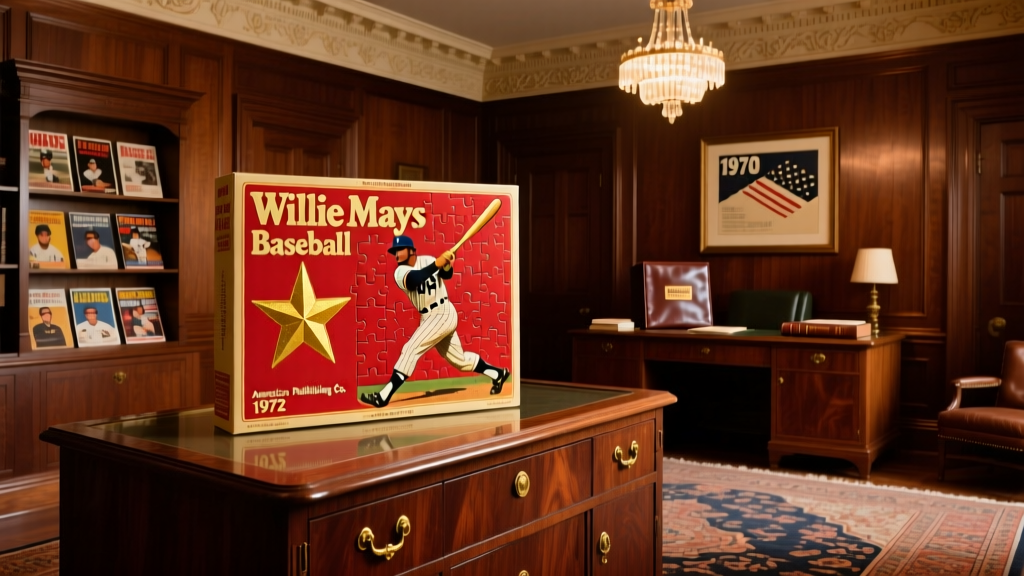
The 1972 Willie Mays Baseball Puzzle by American Publishing Co.: A Collector’s Deep Dive into Design, Production, and Historical Context
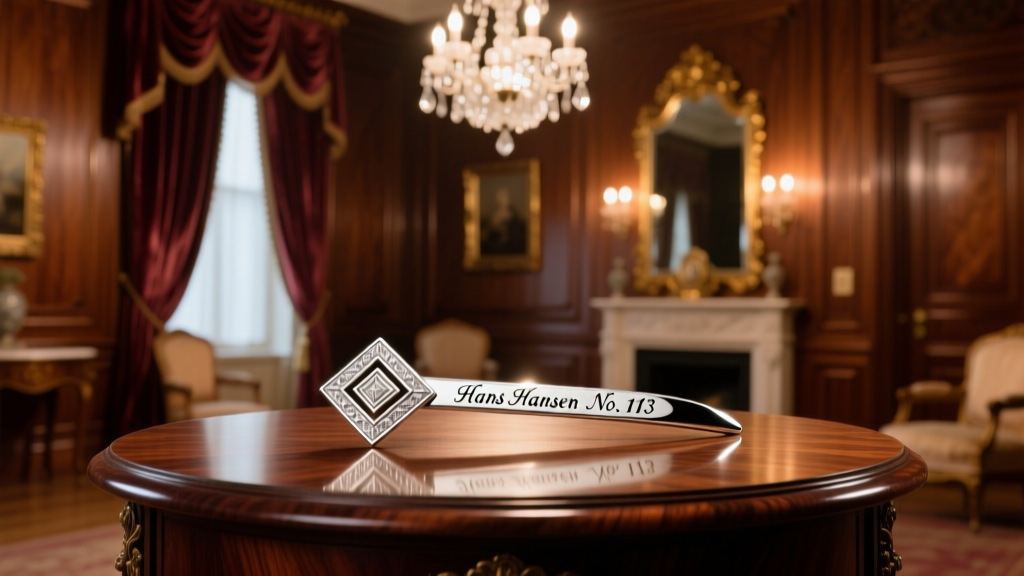
Hans Hansen No. 113 Chevron Pin: A Study in Danish Modern Silver Craftsmanship
The 1137458: A Deep Technical and Historical Analysis of the 1928 Dunbar Armchair
Victor Dohet: The Forgotten Master of French Art Deco Furniture and Cabinetmaking

Chinese Export Meiping Vase: Blue-and-White Fruit and Banana Leaf Motifs, 11½ Inches — Authentication, Provenance, and Restoration Insights

Cat People (1942) Lobby Cards: Authenticity, Preservation, and Market Value of the Six-Card 11×14-Inch Set Featuring Simone Simon and Kent Smith

Amberina Vase: Swirl Pattern, Enameled Floral Motif, 12-Inch Height — Identification, History, and Restoration Guidelines

Pottery Planter Prayer Lady Pink: History, Identification, and Restoration Guidance

Butter Paddles: History, Craftsmanship, and Restoration of a Forgotten Dairy Tool