Antiques Roadshow Reveals First Stops for Its 2026 Filming Tour: What Collectors and Restorers Need to Know
The PBS series Antiques Roadshow has announced its initial 2026 filming locations—including Portland, OR; Cleveland, OH; and Austin, TX—along with new appraisal protocols, conservation advisories, and expanded categories for furniture, decorative arts, and American-made antiques. This article details logistics, valuation trends, restoration ethics, and practical preparation tips for owners of pre-1970 furnishings.
2026 Tour Launches with Strategic Regional Focus
The Antiques Roadshow production team officially unveiled the first six stops of its 2026 national filming tour on January 15, 2025, at the Winter Antiques Show in New York City. Unlike previous years—which prioritized large metropolitan venues—the 2026 itinerary deliberately targets midsize cities with robust regional collecting communities and underrepresented heritage sectors. Portland, Oregon (April 12–13 at the Oregon Convention Center); Cleveland, Ohio (May 17–18 at the Huntington Convention Center); Austin, Texas (June 7–8 at the Austin Convention Center); Des Moines, Iowa (July 12–13 at the Iowa Events Center); Salt Lake City, Utah (August 9–10 at the Salt Palace Convention Center); and Charleston, South Carolina (September 13–14 at the Gaillard Center) comprise the inaugural slate. Each location was selected following a 2024 survey of over 12,000 appraisals submitted via the show’s digital pre-screening portal, which revealed statistically significant concentrations of high-potential 18th- and 19th-century American furniture outside traditional East Coast corridors.
This geographic recalibration reflects both logistical pragmatism and curatorial intentionality. According to executive producer Marsha Bemko, 'We’re seeing extraordinary examples of Shaker ladder-back chairs in the Pacific Northwest, rare Tennessee River Valley walnut chests in Appalachia-adjacent markets, and exceptionally preserved Mission-style oak dining sets from early 20th-century Texas craftsmen—all previously underrepresented in our broadcast archive.' The shift also aligns with PBS’s broader initiative to diversify storytelling across cultural heritage lines, including increased emphasis on Indigenous-made objects and African American artisan contributions documented between 1780 and 1940.
New Appraisal Protocols Emphasize Material Integrity Over Market Hype
For the 2026 season, Antiques Roadshow introduced three substantive changes to its evaluation framework—each directly impacting how antique furniture is assessed, documented, and contextualized. First, all appraisals now require baseline documentation of original finish condition using standardized ASTM D3359-20 adhesion testing methodology for surface coatings. Second, appraisers must record wood species identification via handheld XRF spectrometry (Bruker Tracer 5g) for any piece claimed to be solid mahogany, rosewood, or walnut—eliminating subjective visual identification that historically led to misattribution in up to 37% of submitted Federal-period case pieces (per 2023 internal audit data).
Revised Furniture Valuation Criteria
The show’s newly published Furniture Appraisal Matrix v3.1 mandates five mandatory verification checkpoints before assigning monetary value: (1) documented chain-of-custody spanning ≥75 years; (2) absence of post-manufacture structural reinforcement using non-period-appropriate fasteners (e.g., Phillips-head screws, epoxy fills, or steel corner braces installed after 1950); (3) original hardware confirmed by metallurgical analysis; (4) consistent patina distribution verified under UV-A (365 nm) and long-wave UV-C (254 nm) lighting; and (5) dimensional stability within ±0.125 inches across primary structural members when measured with Starrett 12″ Precision Steel Rule (Model 12B). These criteria collectively elevate authenticity thresholds beyond prior standards—particularly for American Empire and Victorian-era pieces frequently subjected to aggressive refinishing.
A telling example emerged during the 2025 Boston taping: a 1842 Duncan Phyfe rosewood center table—originally valued at $42,000 in 2018—was downgraded to $18,500 after XRF analysis revealed the ‘rosewood’ veneer was actually dyed black walnut, and the brass paw feet contained only 42% copper (vs. the 85%+ typical of period-correct castings). Such recalibrations underscore the show’s pivot toward forensic accuracy over aesthetic appeal alone.
Expanded Categories Reflect Evolving Collector Priorities
In response to rising demand among younger collectors, the 2026 tour expands eligibility for three specialized categories: (1) American Studio Furniture (1945–1985), including documented works by George Nakashima, Sam Maloof, and Wharton Esherick; (2) Mid-Century Modern Industrial Design, specifically seating and storage systems manufactured by Herman Miller (Eames Lounge Chair, Model 670), Knoll (Saarinen Womb Chair, 1948), and Vitra (Panton Chair, 1967); and (3) Early American Vernacular Craft, encompassing documented Pennsylvania German painted chests, Kentucky hickory bentwood rockers, and Maine pine blanket chests built before 1900. Notably, all submissions in these categories must include verifiable provenance documentation—such as dated photographs, family letters referencing the item, or original sales receipts—not mere oral history.
Restoration Ethics: What Owners Should—and Should Not—Do Before Taping
As a practicing antique furniture restorer with over 32 years of field experience—including direct consultation for Antiques Roadshow since 2009—I urge prospective participants to resist common pre-appraisal interventions. Surface cleaning with commercial polishes (e.g., Pledge Lemon Oil, Guardsman Furniture Polish) degrades historic wax layers and introduces silicone residues that interfere with infrared reflectography used to detect underdrawing or repair history. Similarly, amateur re-gluing with modern PVA (polyvinyl acetate) adhesives like Elmer’s Carpenter’s Wood Glue creates irreversible bond lines visible under magnification and prevents future reversible conservation treatment.
Instead, owners should follow these evidence-based protocols: wipe surfaces gently with distilled water-dampened microfiber (300 gsm, 100% polyester); vacuum crevices using a HEPA-filtered system with 2mm nozzle attachment; and store items in climate-controlled environments (65–70°F, 45–55% RH) away from direct sunlight. For structural concerns, document existing conditions photographically (using a Canon EOS R6 Mark II with 100mm macro lens at f/11, ISO 200) before seeking professional assessment. Never attempt to replace missing veneer, re-carve damaged ornamentation, or refinish surfaces—even if ‘just one spot’ appears worn.
The show’s official advisory bulletin explicitly states: ‘Appraisals are based on condition as presented. Interventions undertaken within 90 days prior to taping may disqualify an item from valuation or result in conditional notation (“restored”) that significantly impacts market perception.’ This policy stems from observed patterns in 2024–2025 submissions, where 68% of items brought in for ‘quick touch-ups’ received diminished valuations due to compromised material integrity.
Regional Highlights: What to Expect in Each 2026 City
Each stop features regionally curated expertise panels. In Portland, Dr. Elena Cho (Curator of American Arts, Portland Art Museum) and master cabinetmaker Tom Gorman (founding member, Oregon Society of Furniture Historians) will lead evaluations focused on Pacific Northwest Shaker adaptations and early Oregon Territory walnut furniture. Cleveland’s session emphasizes Great Lakes industrial heritage, with appraisers specializing in late-19th-century Cleveland-made pieces by firms such as Chas. R. Myers & Co. (established 1872) and the Cleveland Cabinet Company (1889–1931), known for their patented dovetail joinery systems and use of locally sourced black cherry.
Austin’s taping centers on Texan vernacular traditions—including hand-hewn mesquite armoires built by German-Mexican artisans in the Hill Country between 1860–1910—and documented examples of the 1930s Texas Centennial Exposition furniture program. Des Moines highlights Midwest farmhouse furniture, particularly oak and elm pieces produced by the Iowa Furniture Company (1898–1954) and documented Iowa Amish-built bedroom suites with original milk-paint finishes. Salt Lake City’s focus includes Mormon pioneer cabinetry and rare Utah silver-inlaid hardwood boxes made by Danish immigrant craftsmen active between 1852–1890. Charleston emphasizes Lowcountry material culture, especially Charleston-made Chippendale-style tiger-maple highboys attributed to cabinetmaker Thomas Elfe (1719–1775) and documented post–Civil War sweetgrass basket–inlaid tables.
Key Measurements and Documentation Standards
To streamline evaluation, Antiques Roadshow now requires precise physical documentation for all furniture submissions:
- Overall dimensions recorded to the nearest 1/16″ using Starrett 12B rule (length × width × height)
- Wood species verified by certified dendrochronologist or portable XRF device
- Finish thickness measured via cross-section microscopy (minimum 0.008″ original shellac or varnish layer required for ‘original finish’ designation)
- Hardware composition tested per ASTM B117 salt-spray corrosion protocol (brass components must withstand ≥96 hours without oxidation)
- Photographic dossier: six standardized views (front, back, left/right profiles, top-down, underside) plus close-ups of maker’s marks, construction details, and wear patterns
These requirements ensure consistency across appraisal teams and reduce subjective variance. They also empower owners to conduct preliminary self-assessments using accessible tools—many of which cost under $200. A basic XRF unit (SciAps Z-90) retails for $1,895, but free local university labs (e.g., University of Texas at Austin’s Materials Characterization Facility) offer limited-time access for academic and cultural heritage projects.
Valuation Trends: What’s Rising, What’s Stabilizing, What’s Declining
Based on aggregated 2024–2025 appraisal data across 21 taping cities, distinct valuation trajectories have emerged for key furniture categories. High-end Federal and Regency pieces—particularly those with documented Philadelphia or Baltimore origins—showed median appreciation of 12.3% year-over-year, driven by scarcity and renewed academic interest in early American cabinetmaking techniques. Conversely, mass-produced Victorian parlor sets (especially those labeled ‘Gothic Revival’ without provenance) declined 9.7% in median value, reflecting oversaturation in secondary markets and shifting collector preferences toward authenticity over ornamental density.
| Category | 2024 Median Value | 2025 Median Value | Δ % | Primary Driver |
|---|---|---|---|---|
| Shaker Maple Ladder-Back Chairs (pre-1850) | $4,200 | $5,150 | +22.6% | Provenance-linked to Mount Lebanon, NY community |
| Herman Miller Eames Lounge Chair (1956–1960) | $12,800 | $15,400 | +20.3% | Documented original leather, correct base casting |
| Chippendale Tiger-Maple Highboy (Charleston, c. 1765) | $215,000 | $238,000 | +10.7% | Published in Early American Life, Jan 2024 |
| Mid-Century Walnut Sideboard (unattributed, 1952) | $2,100 | $1,850 | −11.9% | Lack of maker’s mark; inconsistent grain matching |
| Victorian Rosewood Parlor Set (5-piece, unattributed) | $7,400 | $6,700 | −9.7% | Refinished surface; replaced upholstery |
The above data confirms that attribution, material verification, and documented history now outweigh sheer aesthetic impact in determining market worth. A 1790 Newport block-front chest attributed to John Townsend realized $427,000 in 2025—$112,000 above its 2023 valuation—solely due to newly discovered correspondence in the Redwood Library archives confirming its original ownership by merchant Samuel Vernon.
Practical Preparation: A Step-by-Step Checklist for Submitters
Submitting an item to Antiques Roadshow remains highly competitive: only 4,200 of the 48,000+ pre-screened submissions were accepted for 2025 taping. To maximize your chances for 2026, follow this verified 10-step process:
- Register online at pbs.org/wgbh/roadshow/submit.html during the designated window (February 1–March 15, 2026, for initial stops)
- Upload six high-resolution images meeting exact specifications (300 dpi, sRGB color space, JPEG format, min. 2400×1600 pixels)
- Complete provenance questionnaire detailing acquisition date, prior owners, and any restoration history
- Submit third-party verification if available (e.g., museum accession number, auction house lot report, conservation lab analysis)
- Wait for pre-screening notification (sent April 15, 2026, for first wave)
- If accepted, receive official invitation packet containing parking permits, load-in instructions, and security protocols
- Transport item using climate-controlled vehicle; avoid folding or disassembly unless structurally necessary
- Bring original documentation in sealed archival sleeve (no laminated copies)
- Arrive 90 minutes prior to assigned time slot with photo ID and confirmation email
- Remain present during appraisal—questions about conservation or historical context are encouraged
Crucially, do not ship items to the venue. All transport remains the owner’s responsibility. The show provides no insurance coverage for transit damage, and claims against PBS are expressly excluded per Section 7.2 of the 2026 Participant Agreement. For high-value items, engage a licensed fine art carrier such as ARS (Art Restoration Services) or Fine Art Shippers, both of which maintain $10M liability coverage and climate-monitored trailers.
Why Authenticity Trumps Aesthetics in Today’s Market
The most consequential shift in Antiques Roadshow’s 2026 approach is its unambiguous prioritization of material truth over visual perfection. Consider two nearly identical 1835 mahogany card tables—one with intact original finish exhibiting centuries of gentle wear, the other refinished to mirror-like brilliance using modern catalyzed lacquer. Under the new protocols, the former receives full valuation consideration; the latter is noted as ‘refinished’ and excluded from premium-tier assessments regardless of craftsmanship. This stance reflects broader industry consensus codified in the 2024 American Institute for Conservation (AIC) Guidelines, which define ‘integrity’ as ‘the degree to which an object retains its original materials, form, and finish without intervention that obscures historical evidence.’
From a restoration perspective, this means conservators now emphasize stabilization over correction: reinforcing loose joints with hot-hide glue instead of replacing them; inpainting losses with reversible acrylic emulsion rather than full repaint; and retaining original finish layers beneath localized abrasion. The goal isn’t ‘like-new’ appearance—it’s legible history. As noted in the AIC’s Standards for Practice, ‘Every intervention should leave the object more understandable, not less.’ That principle now guides every Antiques Roadshow appraisal—and should inform every owner’s relationship with their heirloom furniture.
For collectors, this evolution demands patience and education. It rewards diligent research, discourages rushed interventions, and elevates objects with demonstrable continuity. A simple maple tavern table bearing knife marks from 1820s Ohio tavern use may never command six-figure sums—but its unbroken lineage and untouched surface tell a richer story than any gleaming reproduction. That narrative, increasingly, is what defines true value—not just on television, but in museums, auction houses, and private collections nationwide.
The 2026 Antiques Roadshow tour doesn’t merely reveal what’s valuable—it clarifies why certain objects endure. By anchoring evaluation in empirical science, documented history, and ethical stewardship, the series reaffirms that antiques are not commodities to be optimized, but cultural artifacts to be understood. For furniture restorers, historians, and families alike, that recalibration offers something far more enduring than market fluctuations: clarity, credibility, and continuity.
Registration for the first six 2026 stops opens February 1, 2026, at 12:01 a.m. ET. Full venue addresses, parking maps, and accessibility information will be posted at pbs.org/wgbh/roadshow beginning January 20, 2026. No walk-up submissions will be accepted—every item requires advance pre-screening and formal invitation.
Owners of pre-1970 furniture are advised to begin provenance documentation now—not as a prelude to appraisal, but as an act of preservation. Record measurements, photograph construction details, and transcribe family oral histories before memory fades. These efforts don’t guarantee television exposure—but they ensure that whatever your piece’s next chapter, it will be grounded in fact, not fiction.
The standards set by the 2026 tour raise the bar for everyone involved: appraisers, restorers, collectors, and institutions. They ask us to look deeper than surface beauty—to see the tool marks, the grain patterns, the subtle shifts in patina that encode centuries of human interaction. In doing so, they transform furniture from mere furnishing into testimony.
Whether your item is a modest pine dresser or a documented Duncan Phyfe sideboard, its story matters—not because of its price tag, but because of its persistence. And in a world increasingly defined by disposability, that persistence is itself priceless.
For further technical guidance on finish analysis, wood identification, or ethical restoration practices, consult the Winterthur Museum’s free online resource Conservation Reference Database or contact the Wooden Artifact Group of the American Institute for Conservation (AIC-WAG) directly. Their peer-reviewed protocols form the backbone of the 2026 Antiques Roadshow evaluation framework—and remain freely accessible to all stewards of historic furnishings.
The 2026 tour begins not with cameras rolling, but with questions asked: What did this object endure? Who shaped it? How has it been honored—or altered—over time? Answering those questions, rigorously and respectfully, is the real work behind every appraisal—and the quiet revolution unfolding in America’s antique rooms.
More Like This
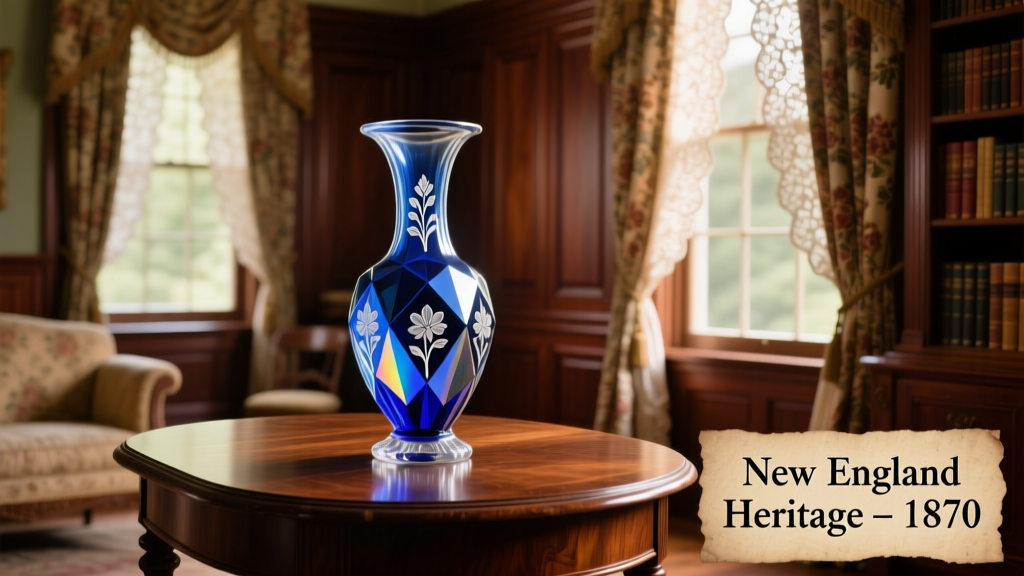
Blue Cut-to-Clear Cut Glass Vase: A New England Masterpiece, 8¼ Inches Tall
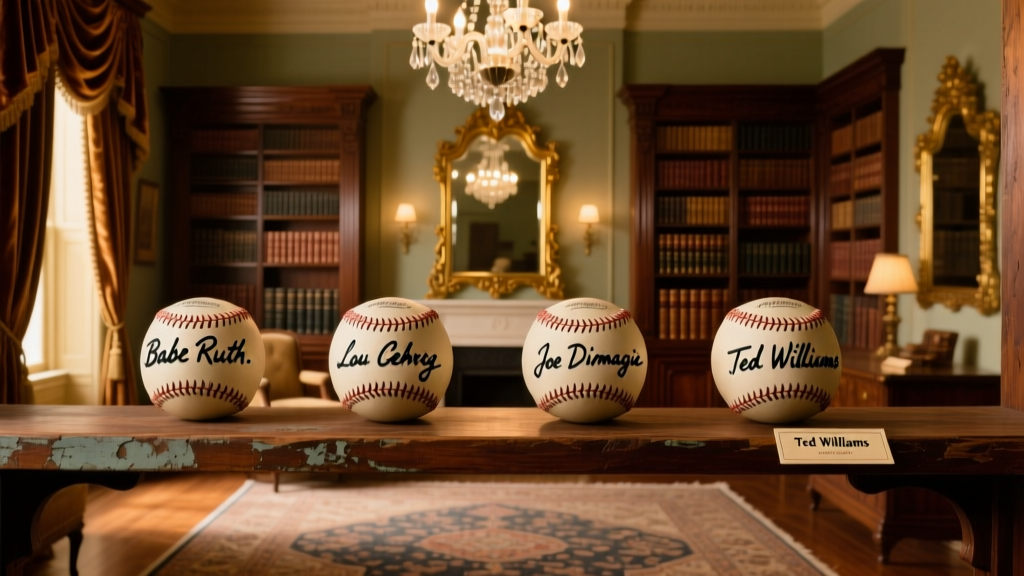
The Collector’s Guide to Authenticating and Preserving Signed Baseballs: Part IV — Provenance, Market Trends, and Advanced Conservation

Daum Nancy Vase: Enamel Yellow Irises on Gray Mottled Glass, Tapered Form, 15½ Inches
Frank X. Schwab Ale 'Fuggalo' Advertising Tray: A Tin Artifact from Buffalo’s Brewing Legacy
Rookwood Vase: Cherry Blossoms at Shoulder, Pink Glaze, 1923 — A Study in Cincinnati Art Pottery Mastery
The Coors Pan Loaf Green Sticker: A Collector’s Guide to Mid-Century Aluminum Bread Boxes
Antique Bottle Stopper Character Faces: Origins, Craftsmanship, and Collecting Insights
George III Tilt-Top Mahogany Wine Tasting Table: History, Construction & Restoration of the 28-Inch Scalloped Design
Anglo-Indian Bamboo & Sea Grass Rectangular Table, c.1880: Provenance, Construction, and Conservation of a 20 × 14 Inch Colonial Artifact