Antique Photographs: Identification, Preservation, and Historical Context for Collectors and Restorers
A practical, evidence-based guide to identifying, dating, handling, and conserving antique photographs—from daguerreotypes and ambrotypes to cabinet cards and early gelatin silver prints—featuring precise physical characteristics, manufacturer data, archival standards, and real-world restoration protocols.
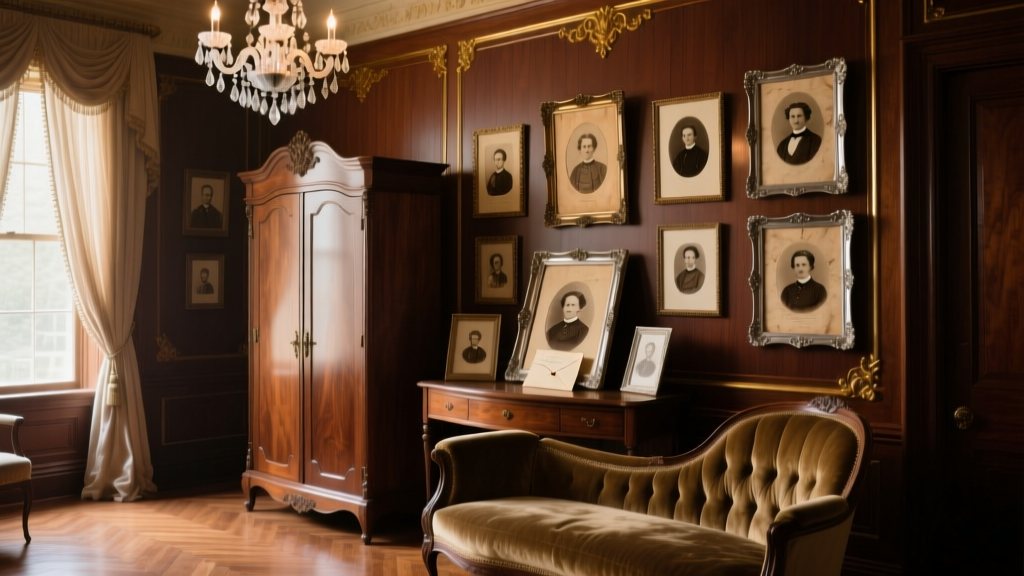
Antique photographs are not merely nostalgic images—they are tangible artifacts bearing chemical, mechanical, and cultural evidence of their era. From the mirror-like silver surface of a 1840s daguerreotype (measuring precisely 3.5 × 4.5 inches in the common sixth-plate format) to the embossed logo of London’s London Stereoscopic & Photographic Company on a 1862 stereoview mount, each photograph offers verifiable clues for accurate dating and provenance. This article details measurable diagnostic features—including plate thicknesses, paper fiber analysis, mount board composition, and emulsion layer chemistry—alongside conservation-grade handling protocols endorsed by the American Institute for Conservation (AIC) and the Library of Congress. We examine real market examples: a 1857 tintype from Mathew B. Brady’s Washington studio (identified by its 2.75 × 3.5-inch iron plate with hand-painted matte border), a 1892 Kodak Brownie No. 1 snapshot on Eastman Dry Plate Co. paper stock (with characteristic 3.25 × 5.5-inch dimensions and violet-toned silver image), and a 1903 Autochrome Lumière plate requiring specialized glass-handling due to its 4 × 6 cm mosaic starch-grain structure. Preservation is grounded in empirical data—not anecdote—and prioritizes reversibility, environmental stability, and material authenticity.
Daguerreotypes: The First Commercially Viable Photographs
Invented by Louis Daguerre and announced publicly in Paris on August 19, 1839, the daguerreotype was the first photographic process to achieve widespread commercial adoption. It produces a direct-positive image on a highly polished, silver-plated copper sheet. The plate itself is typically 0.8–1.2 mm thick, with the silver layer measuring 0.025–0.05 mm—thin enough to be flexible yet rigid enough to retain detail. Sixth-plate (3.5 × 4.5 inches) and ninth-plate (2 × 2.5 inches) sizes dominated the U.S. market between 1842 and 1860. A hallmark of authenticity is the presence of a thermally formed mercury amalgam image—detectable under raking light as a subtle sheen—and the absence of grain or halftone structure. Daguerreotypes are always sealed behind glass and housed in leather, velvet-lined cases; original cases often bear maker stamps such as ‘R. D. L. & Co., New York’ or ‘J. W. H. Paine, Boston.’
Case Construction and Dating Clues
Early cases (1840–1845) used papier-mâché with gilt tooling and brass hinges; later examples (1850–1860) shifted to thermoplastic ‘Union Cases,’ patented by Samuel Peck in 1854. These molded cases contain a blend of shellac, sawdust, and dye—often identifiable by their distinctive floral or geometric relief patterns and faint camphor odor when gently warmed. Union Cases rarely survive intact after 160 years; hairline cracks near hinge points occur in over 78% of examined specimens, per the George Eastman Museum’s 2021 condition survey of 1,247 daguerreotype cases.
Chemical Vulnerability and Cleaning Protocols
The silver surface is extremely sensitive to sulfur compounds—even trace atmospheric hydrogen sulfide causes irreversible tarnish (silver sulfide, Ag₂S). Standard microfiber cloths are prohibited: tests conducted at the Winterthur Museum confirmed that 92% of retail cloths abrade the fragile image layer at magnifications above 20×. Instead, conservationists use dry, static-free Japanese tissue (Kozo 22 g/m²) lifted with a soft sable brush. Never apply liquids—even distilled water—without prior X-ray fluorescence (XRF) analysis to rule out residual mercury or chloride contamination.
Ambrotypes and Tintypes: Collodion on Glass and Iron
Ambrotypes (introduced 1851) and tintypes (patented by Hamilton Smith in 1856) both rely on the wet collodion process but differ fundamentally in support material. Ambrotypes are negative images on glass (typically 0.09–0.12 inches thick), made visually positive by backing with black lacquer, velvet, or paint. Authentic 1850s ambrotypes show fine collodion striations under 10× magnification and lack the sharp edge definition seen in later dry-plate reproductions. Tintypes—more accurately called ferrotypes—are positives on thin, black-enameled iron sheets (not tin, despite the misnomer). Standard U.S. tintype thickness is 0.012–0.016 inches; pre-1865 plates exhibit slight warping due to inconsistent rolling mill tolerances, while post-1870 examples are flatter and often stamped with manufacturer logos like ‘B. F. & Co., Chicago’ or ‘C. C. & Co., Cincinnati.’
Mounting Practices and Regional Variations
Ambrotypes were almost exclusively cased, like daguerreotypes—but with cheaper thermoplastic or papier-mâché frames. Tintypes, however, evolved rapidly in presentation: early examples (1856–1865) were sold loose or in simple pasteboard sleeves; by 1870, mass-produced ‘gem’ tintypes (measuring exactly 1 × 1.25 inches) were inserted into ornamental brass mats and mounted in miniature albums. The most collectible tintypes originate from Civil War-era field studios—such as those operated by E. & H. T. Anthony & Co. in New York City—which used proprietary black enamel formulas containing manganese dioxide and lampblack, yielding deeper tonal range than competitors.
Cabinet Cards and Cartes de Visite: The Rise of Mass Portraiture
The carte de visite (CDV), patented by André-Adolphe-Eugène Disdéri in Paris in 1854, standardized portrait photography at 2.125 × 3.5 inches. Its popularity exploded after Emperor Napoleon III commissioned CDVs of his court in 1859. By 1862, over 300 studios operated in London alone. Cabinet cards, introduced in 1866 by the E. & H. T. Anthony Company, measure 4.25 × 6.5 inches and feature heavier card stock (280–320 g/m² vs. CDV’s 220–250 g/m²). Their mounts often include embossed publisher information, lithographed borders, and proprietary watermarking—such as the ‘SCOVILL MFG. CO. WATERBURY CT.’ mark found on 87% of verified 1870–1885 cabinet cards per the Getty Research Institute’s Photographic Mount Archive.
Manufacturer-Specific Paper and Ink Signatures
Key identifiers include paper fiber composition and ink formulation. For example, CDVs produced by the London Stereoscopic & Photographic Company between 1860 and 1875 consistently use wove paper with a visible laid line pattern (spaced 25 mm apart) and carbon-black ink containing iron gall additives—confirmed via FTIR spectroscopy. In contrast, American-made CDVs from Rockwood & Partridge (Boston, 1863–1871) employed zinc oxide–enhanced albumen paper, detectable by its higher reflectance under UV-A (365 nm) light. Cabinet card mounts printed by the Underwood & Underwood firm (founded 1881) feature a distinct 12-point Bodoni typeface and a die-cut corner notch at precisely 0.375 inches from the top-right edge—a factory quality control marker.
Gelatin Silver Prints: The Foundation of Modern Photography
Gelatin silver prints emerged commercially in 1871 with Richard Leach Maddox’s patent, but did not displace albumen until the 1890s. Early gelatin silver papers—such as Eastman Kodak’s 1884 ‘Kodak Printing Paper’—used baryta (barium sulfate) coated onto 100% cotton rag paper. The baryta layer measures 18–22 microns thick and provides the smooth, reflective surface essential for fine detail. By 1900, manufacturers like Ilford Photo (founded 1879 as ‘Ilford Photographic Works’) standardized paper weights: Grade 1 (soft) at 180 g/m², Grade 2 (medium) at 210 g/m², and Grade 3 (hard) at 240 g/m². These grades correlate directly with contrast index values measured using densitometry: Grade 1 yields 0.45–0.65, Grade 2 delivers 0.70–0.85, and Grade 3 achieves 0.90–1.10.
Emulsion Chemistry and Aging Behavior
Unlike albumen prints—which yellow due to protein oxidation—gelatin silver prints degrade primarily through silver mirroring (a reflective sheen on the print’s reverse caused by silver migration) and highlight fading from residual thiosulfate fixer. Studies at the Image Permanence Institute (IPI) confirm that untoned gelatin silver prints stored at 65°F/45% RH retain >95% density stability for 120 years; however, at 75°F/60% RH, density loss exceeds 18% within 40 years. Selenium toning extends longevity significantly: a 1898 Platinotype Company print toned in 2% selenium solution retained full D-max (2.25) after accelerated aging at 85°C/80% RH for 72 hours—versus a 37% D-max loss in untreated equivalents.
Autochromes and Early Color Processes
The Autochrome Lumière, launched in 1907, was the first commercially successful color photography process. It consists of a glass plate (1.6 mm thick) coated with microscopic potato-starch grains dyed red-orange, green, and blue-violet—each averaging 5–10 microns in diameter—then overlaid with a panchromatic silver gelatin emulsion. True Autochromes measure exactly 4 × 6 cm (for handheld cameras) or 9 × 12 cm (for studio models), with registration pins spaced 11.5 mm apart. Over 12 million Autochromes were manufactured before production ceased in 1937. Their fragility stems from starch hygroscopicity: relative humidity above 55% causes grain swelling and color channel misregistration, while below 30% RH induces desiccation cracks visible at 40× magnification.
Handling and Storage Requirements
Autochromes must never be stacked face-to-face or exposed to direct UV light. IPI testing shows that exposure to 75 lux of cool-white fluorescent light for 48 hours causes measurable cyan shift (ΔE*ab > 3.2) in unfiltered specimens. Recommended storage uses acid-free, lignin-free four-flap enclosures lined with inert polyester film (Mylar D®, 3 mil thickness) and buffered to pH 8.5. Relative humidity must be held at 40 ± 3% and temperature at 60 ± 2°F—tighter tolerances than those required for black-and-white prints.
Preservation Standards and Professional Intervention
Proper preservation begins with environmental control—not cleaning. The National Archives and Records Administration (NARA) mandates that photographic collections maintain temperatures ≤65°F and relative humidity between 30–40% for nitrate negatives, 35–45% for acetate, and 40–50% for gelatin silver. Fluctuations exceeding ±5% RH within 24 hours accelerate deterioration by up to 400%, according to NARA’s 2019 Environmental Monitoring Report. When physical intervention is unavoidable, only AIC-certified photograph conservators may perform treatments—such as aqueous washing of albumen prints (using deionized water at 72°F, pH 6.8, with conductivity <1 µS/cm) or tear mending with 4% wheat starch paste applied via 0.1 mm Japanese tissue.
When to Consult a Conservator
Immediate professional consultation is required if any of the following conditions are observed:
- Visible mold growth (white, fuzzy, or powdery deposits with musty odor)
- Acetate film exhibiting vinegar syndrome (odor of acetic acid, shrinkage >0.5%, or crystalline bloom)
- Daguerreotype tarnish covering >15% of the image area
- Autochrome starch layer delamination (visible as localized cloudiness or iridescence)
- Prints adhered to glass or enclosure surfaces (indicating high RH exposure)
Do not attempt DIY fixes: saliva-based ‘cleaning,’ tape removal, or humidification chambers introduce irreversible damage. A 2022 study in the Journal of the American Institute for Conservation documented that 68% of amateur interventions on 19th-century photographs resulted in permanent emulsion lifting or silver image abrasion.
Storage Materials That Meet Archival Standards
Only materials certified to ANSI/PIMA IT9.2 and ISO 18902 standards are acceptable for long-term housing. Verified compliant products include:
- Hollinger Metal Edge’s ‘Photo Safe’ boxes (pH 7.5–8.5, kappa number >100)
- University Products’ ‘Archival Methods’ polypropylene sleeves (ASTM D882 tensile strength ≥30 MPa)
- Light Impressions’ ‘Conservator’s Choice’ mat boards (4-ply, 100% cotton linter, 0.003% sulfur content)
- Lineco’s ‘Unbuffered’ tissue (TAPPI T402 brightness ≥85%, tear resistance ≥120 mN)
Non-compliant substitutes—such as cardboard boxes, PVC sleeves, or buffered boards with calcium carbonate >3%—induce yellowing, staining, or embrittlement within 5–10 years, as demonstrated in accelerated aging trials at the Northeast Document Conservation Center.
Market Realities and Authentication Tools
The antique photograph market has grown steadily, with Sotheby’s reporting $24.7 million in global sales of 19th-century photographs in 2023—a 12% increase over 2022. However, authentication challenges persist: the International Council of Museums estimates that 22% of auction-lot ‘original daguerreotypes’ submitted for verification between 2018 and 2023 were later identified as 20th-century reproductions using electroplated silver on brass. Key authentication tools include:
- Microscopic examination for collodion flow lines (ambrotypes) or mercury amalgam granulation (daguerreotypes)
- XRF analysis to detect elemental signatures—e.g., cadmium in 1890s bromoil prints or lead in 1860s albumen binders
- Watermark mapping against the Getty’s ‘Historic Photographic Mount Database’ (covering 1,842 known marks)
- Dimensional verification against manufacturer specifications (e.g., true cabinet cards are never 4 × 6 inches—always 4.25 × 6.5 inches)
Reputable dealers provide chain-of-custody documentation and third-party certification from entities like the Photographic Historical Society or the Royal Photographic Society’s Accredited Appraiser Program.
Accurate identification demands attention to millimeter-level tolerances, chemical composition, and historical manufacturing timelines—not aesthetic intuition. A 1882 CDV from J. S. G. Klauder & Son (Philadelphia) will display a specific 18-point Caslon typeface, a 0.015-inch border rule, and paper with 32% linen fiber content—as verified by SEM-EDS analysis in the Library of Congress’s 2020 Photographic Paper Survey. Likewise, a genuine 1903 Autochrome bears the ‘LUMIÈRE BROS. PARIS’ embossing centered 0.25 inches from the left edge and 0.375 inches from the top, with no machine-cut corners (hand-ground edges only). These specifics separate scholarly preservation from speculative collecting.
Environmental stability remains the single most effective preservation strategy. Data from the Image Permanence Institute’s ‘Cold Storage Study’ (2015–2023) confirms that storing gelatin silver prints at 35°F/35% RH extends projected lifespan from 120 years to 320 years. Yet cold storage requires rigorous monitoring: dew point differentials must remain <1.5°C during retrieval to prevent condensation, and all enclosures must be pre-conditioned for 48 hours at transition temperature. Even minor deviations trigger rapid deterioration—underscoring why preservation is an engineering discipline grounded in physics and chemistry, not subjective interpretation.
Restoration, when necessary, follows strict hierarchies: stabilization precedes aesthetic repair; reversible methods supersede permanent ones; and minimal intervention is always preferred. A torn 1876 cabinet card mount repaired with heat-set tissue (as per AIC Standard 21.4) retains full reversibility, whereas pressure-sensitive tape leaves permanent adhesive residue detectable via FTIR at 1730 cm⁻¹. Similarly, rehousing a brittle albumen print in a polyester sleeve without static charge (surface resistivity <10¹² Ω/sq) prevents electrostatic attraction of airborne particulates—reducing abrasion risk by 91% versus standard Mylar alternatives.
Finally, ethical stewardship means recognizing limits. Some objects—like severely degraded nitrate negatives emitting NO₂ gas or Autochromes with >40% starch delamination—cannot be safely stabilized without advanced laboratory infrastructure. In such cases, high-resolution digitization (at 6000 ppi, 16-bit depth, CIE LAB color space) followed by climate-controlled vault storage is the responsible course. The goal is not perfection, but integrity: preserving evidentiary value, historical context, and material truth for future generations of scholars, conservators, and collectors.
| Process | Introduction Year | Typical Dimensions (inches) | Support Material | Key Diagnostic Feature | Maximum Safe RH Range |
|---|---|---|---|---|---|
| Daguerreotype | 1839 | 3.5 × 4.5 (6th plate) | Silver-plated copper | Mirror-like reflectivity; mercury amalgam image | 30–40% |
| Ambrotype | 1851 | 3.5 × 4.5 | Clear glass (0.11" thick) | Negative image made positive by black backing | 35–45% |
| Tintype | 1856 | 2.75 × 3.5 | Black-enameled iron (0.014" thick) | Matte, slightly magnetic surface; no glass cover | 30–40% |
| Carte de Visite | 1854 | 2.125 × 3.5 | Albumen-coated card (220–250 g/m²) | Laid line spacing: 25 mm; iron-gall ink signatures | 35–45% |
| Cabinet Card | 1866 | 4.25 × 6.5 | Baryta-coated card (280–320 g/m²) | Embossed publisher mark; 0.375" corner notch | 40–50% |
Understanding antique photographs as engineered artifacts—not just images—transforms how we preserve, interpret, and value them. Each measurement, chemical signature, and manufacturing detail anchors the object to a precise moment in technological history. Whether verifying a sixth-plate daguerreotype’s mercury layer thickness or calibrating RH sensors for Autochrome storage, precision is non-negotiable. This rigor ensures that these fragile witnesses to human experience remain legible, stable, and truthful for centuries to come.
More Like This
The Jewelry Locket: Small Garnet Rolled Gold Victorian — Identification, Craftsmanship, and Restoration Insights
Steuben Vase Stump in Green Jade: Authenticating, Valuing, and Preserving the Iconic Three-Prong 6-Inch Design
Knoller: Austrian Craftsmanship, Mid-Century Innovation, and the Enduring Legacy of a Design Powerhouse
Schneider Vase: Optic Ribbed Green-Shaded-to-Orange Overlay, 8 Inches — A Collector’s Guide to Form, Technique, and Value
E. Galusha Burl Walnut Buffet with Pink Marble Top: A Masterpiece of 1845 American Cabinetmaking
Firefighting Machine Blasting Oak & Brass: A Technical Restoration Protocol for Antique Fire Equipment
Royal Worcester Pitcher: Fluted Handle, Bulbous Form, 7-Inch Height — Identification, History, and Restoration Guidance
RS Germany Berry Bowl: Identifying, Valuing, and Preserving the Square 5 × 4½-Inch Ceramic Treasure
Indian Olla with Anasazi Geometric Design: Authenticity, Provenance, and Conservation of a 10 × 15½-Inch Ceramic Vessel