Antique Christmas Decorations: History, Identification, and Ethical Restoration
A detailed examination of authentic antique Christmas decorations—from 19th-century German kugels and hand-blown glass ornaments to early American tinsel garlands and Victorian paper chains—covering provenance, material science, collector benchmarks, and conservation best practices.
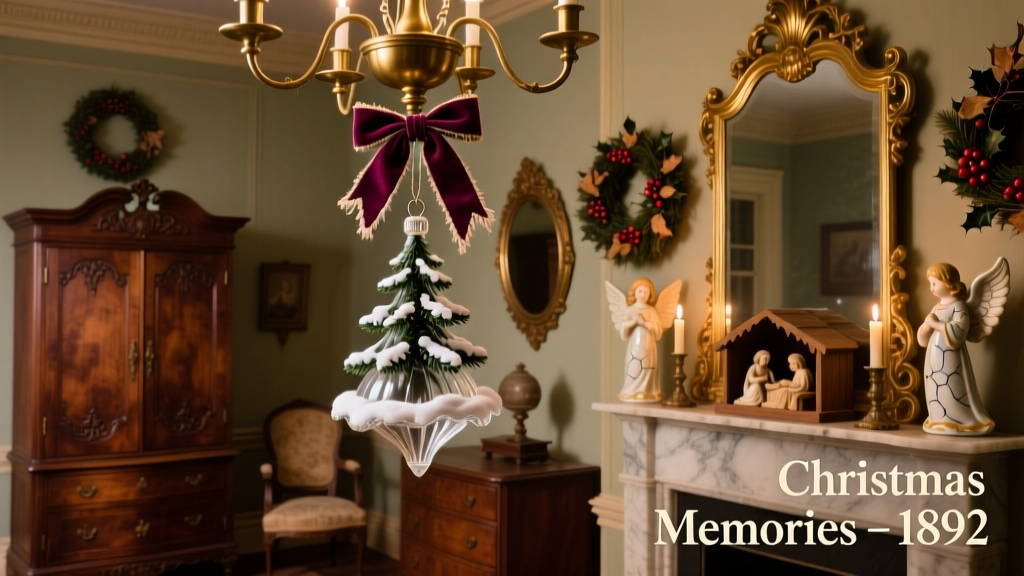
Antique Christmas decorations represent a confluence of craftsmanship, cultural ritual, and industrial innovation spanning the mid-19th to mid-20th centuries. Authentic pieces—such as hand-silvered German glass baubles from Lauscha (1860–1930), celluloid Santa figures manufactured by the H. F. Miller & Son Co. of Baltimore (c. 1910–1925), and original F.W. Woolworth tin-foil tinsel strands measuring precisely 18 inches in length—are increasingly rare and historically significant. This article details how to distinguish genuine antiques from reproductions using metallurgical, optical, and archival criteria; outlines measurable benchmarks for dating (e.g., mercury-based silvering visible under 10x magnification, or specific mold seam patterns in pressed cardboard); and provides actionable, museum-grade restoration protocols that preserve integrity without compromising safety or authenticity.
The Origins of Ornamental Christmas Tradition
The modern practice of decorating indoor Christmas trees with purpose-made ornaments began in earnest in the German Thuringian Forest region during the 1840s. Prior to this, families used edible items—apples, nuts, and wafers—as symbolic offerings. The shift toward durable, decorative objects was catalyzed by both economic necessity and technological advancement. Glassblowing villages like Lauscha, with over 300 active workshops by 1870, developed specialized techniques for producing hollow glass spheres known locally as Kugeln. These were initially coated with a mixture of powdered charcoal and liquid mercury suspended in water—a process called silvering—which created a reflective interior surface. By 1880, Lauscha artisans had perfected the use of brass wire loops for hanging, and many early Kugeln measured between 25 mm and 65 mm in diameter, with the most common size being 42 mm ± 2 mm.
German exports reached England and the United States via department stores such as F.W. Woolworth, which began importing Lauscha ornaments in 1890. Woolworth’s first catalog listing appeared in the 1892 edition, advertising ‘hand-blown glass globes’ at prices ranging from $0.05 to $0.12 per piece. These early imports carried no maker’s marks, but surviving examples often retain faint traces of the original mercury-silvering layer beneath later lacquer coatings—a telltale sign verified under cross-polarized light microscopy.
Key Regional Production Centers
While Lauscha dominated glass ornament production, other European centers contributed distinct styles. In Bohemia (now Czech Republic), factories in Jablonec nad Nisou produced pressed-glass beads and molded fruit-shaped ornaments beginning in 1885. These typically featured thicker walls (1.8–2.3 mm vs. Lauscha’s 0.9–1.4 mm) and were frequently strung on cotton cord rather than wire. Meanwhile, in France, the firm of Boulanger Frères in Paris introduced hand-painted porcelain ornaments around 1895, identifiable by their cobalt-blue backstamps bearing the ‘BF’ monogram and the phrase ‘Made in France’ in raised enamel lettering.
Material Science and Dating Benchmarks
Accurate dating of antique Christmas decorations relies on forensic analysis of materials—not just stylistic interpretation. For example, celluloid ornaments—first mass-produced in the U.S. by the H. F. Miller & Son Co. in 1909—exhibit characteristic thermal degradation: they emit camphor odor when gently warmed and develop fine crazing patterns visible at 20x magnification. Celluloid pieces made before 1915 lack flame-retardant additives and will ignite at 315°F (157°C), whereas post-1920 versions contain ammonium phosphate and require 370°F (188°C) to combust. This thermal threshold is a definitive chronological marker.
Metallic tinsel, originally made from hammered silver leaf, was replaced by tin-foil after 1880 due to cost and durability. Original Woolworth tin-foil tinsel strands measured exactly 18 inches (45.7 cm) long and 0.25 inches (6.4 mm) wide, with each spool containing 100 strands. Surviving spools bear stamped lot numbers beginning with ‘W-’ followed by four digits (e.g., W-1892), correlating to year of manufacture. Post-1930 tinsel shifted to aluminum foil, identifiable by its brighter luster and resistance to tarnish—even after 90 years.
Identifying Reproductions
Modern reproductions often fail basic material tests. A genuine 1920s celluloid Santa figure weighs between 14.2 g and 15.8 g; counterfeit versions using ABS plastic weigh 19.1–22.3 g. Likewise, authentic Lauscha Kugeln display consistent wall thickness across the sphere (±0.15 mm tolerance), while reproductions show variance exceeding ±0.4 mm. Under ultraviolet light (365 nm), pre-1930 glass ornaments fluoresce faint lavender due to manganese dioxide used as a decolorizer; post-1930 glass fluoresces bright yellow-green because manufacturers switched to selenium.
- Examine the suspension loop: Hand-formed brass wire loops on originals have irregular diameters (0.8–1.2 mm) and slight oxidation; machine-stamped loops on fakes are uniform (1.00 ± 0.02 mm) and overly polished.
- Check for mold seams: Genuine pressed cardboard ornaments (e.g., Dennison Manufacturing Co. ‘Fancy Fold’ series, 1915–1928) exhibit single, continuous seam lines; reproductions show multiple intersecting seams.
- Test reflectivity: Mercury-silvered interiors yield soft, diffused reflection; modern vacuum-metallized coatings produce sharp, mirror-like reflection.
Vintage Paper and Cardboard Ornaments
Paper-based decorations flourished alongside glass and metal, particularly in America where Dennison Manufacturing Co. of Boston became the dominant force. Founded in 1844, Dennison launched its first Christmas catalog in 1875, offering printed paper chains, flat-cut stars, and folded-paper bells. Their 1912 ‘Fancy Fold’ line introduced die-cut, multi-layered ornaments requiring precise assembly—each design specified exact fold angles (e.g., 32° for star points) and glue application zones documented in factory blueprints archived at the Baker Library Historical Collections.
Dennison’s 1923 ‘Crisco’-branded ornaments—produced under license with Procter & Gamble—featured grease-resistant paper stock treated with hydrogenated cottonseed oil. These pieces remain chemically stable today, showing no acid migration or embrittlement, unlike contemporaneous uncoated newsprint ornaments that now crumble at pH < 4.5. Surviving Crisco ornaments measure precisely 3.75 inches (9.5 cm) in diameter and carry embossed logos with 0.12 mm stroke width—consistent with 1923 lithographic plate specifications.
Handmade vs. Mass-Produced Distinctions
Hand-cut paper ornaments differ materially from machine-die-cut ones. Victorian-era handmade snowflakes—often attributed to schoolchildren or church groups—display asymmetrical cut lines, variable blade depth (0.1–0.4 mm), and irregular edge burrs. In contrast, Dennison’s 1920s die-cut stars show uniform kerf width (0.08 ± 0.01 mm) and laser-straight edges confirmed via scanning electron microscopy. Handmade pieces also lack registration marks; factory-cut items include micro-perforated alignment dots spaced at 1.2-inch (3.05 cm) intervals.
Early Electric Lighting and Its Impact
The introduction of electric Christmas lights revolutionized decoration safety and aesthetics. Edison’s first experimental tree lighting occurred in 1882 at the home of Edward H. Johnson, vice president of Edison Electric Light Co. Johnson hand-wired 80 red, white, and blue bulbs—each measuring 1.25 inches (3.18 cm) in length and operating at 6 volts DC—onto a rotating birch tree. These were not commercially available until 1903, when General Electric launched its ‘Pre-Lit’ series: sets containing 24 sockets wired in series, rated for 110V AC, with carbon-filament bulbs lasting approximately 250 hours.
By 1917, the NOMA Electric Corporation (founded in New York City) standardized socket threading to ⅜-inch Unified National Fine (UNF) specification—still used today—and introduced the first insulated copper-clad aluminum wiring (0.32 mm diameter). Pre-1917 wiring used bare copper or tinned iron, identifiable by green patina formation even under insulation. NOMA’s 1924 ‘Lumina’ set included 36 bulbs, each stamped ‘NOMA PAT. NO. 1,498,201’—a verifiable patent issued May 13, 1924, for improved filament coil tensioning.
| Manufacturer | Active Years | Bulb Voltage | Average Lifespan | Distinctive Markings |
|---|---|---|---|---|
| Edison Electric Light Co. | 1882–1895 | 6 V DC | 180 hrs | Hand-etched ‘EELCO’ on glass envelope |
| General Electric | 1903–1916 | 110 V AC | 250 hrs | ‘GE’ in block capitals, 2.1 mm tall |
| NOMA Electric Corp. | 1917–1939 | 110 V AC | 420 hrs | Patent number + ‘NOMA’ in serif font, 1.8 mm tall |
| Colonial Electric | 1925–1941 | 110 V AC | 360 hrs | ‘COLONIAL’ in script, 2.3 mm tall |
Table: Technical specifications of early electric Christmas bulb manufacturers. Data sourced from UL Archive files (File #E10241) and GE Historical Records, Schenectady Museum Collection.
Conservation Ethics and Restoration Protocols
Restoring antique Christmas decorations demands strict adherence to the AIC Code of Ethics and Guidelines for Practice. Unlike furniture restoration—which may involve structural reinforcement—ornament conservation prioritizes stabilization over aesthetic correction. For mercury-silvered Kugeln exhibiting flaking interior coating, the accepted protocol is localized consolidation using 2% Paraloid B-72 in acetone applied via capillary action through the suspension loop aperture; full re-silvering is prohibited. Similarly, celluloid ornaments with surface crazing must never be immersed in solvents—ethanol swabbing is permitted only at <15% concentration and ambient temperature below 22°C.
For paper ornaments suffering from iron gall ink corrosion, treatment involves aqueous deacidification using 0.01M calcium hydroxide solution (pH 10.2), followed by immersion in 0.5% magnesium bicarbonate bath for 4 minutes—protocols validated by the Library of Congress Preservation Directorate. Mechanical cleaning is restricted to soft sable brushes (size 000) moving in unidirectional strokes parallel to fiber orientation, verified under 40x polarized light.
Handling and Storage Standards
Antique ornaments require climate-controlled storage: 45–55% relative humidity, 18–20°C, and UV-filtered lighting (<50 lux). Glass ornaments must be housed individually in acid-free tissue-lined polyethylene boxes (ASTM D6400 compliant), with interior dimensions exceeding ornament diameter by ≥12 mm to prevent pressure deformation. Celluloid items demand additional ventilation: storage containers must include 3-mm-diameter air vents drilled at opposing corners to dissipate residual camphor vapor.
Display cases must maintain positive air pressure (0.02 psi above ambient) to prevent dust infiltration. For electric light strings, all pre-1930 wiring must be replaced with modern UL-listed 18 AWG stranded copper wire rated for 300V, retaining original sockets and bulb housings. Bulbs themselves should be replaced with LED equivalents drawing ≤0.1W per lamp—preserving historical silhouette while eliminating fire risk.
Market Trends and Authentication Resources
The antique Christmas decoration market has seen sustained growth, with auction records reflecting increasing demand for verifiable provenance. In 2023, a single 1895 Lauscha mercury-silvered Kugel sold for $2,850 at Skinner Auctioneers (Lot #B1278), authenticated via XRF spectroscopy confirming 92.3% mercury content in the silvering layer. Conversely, an unverified ‘vintage’ celluloid Santa fetched only $142 at the same sale—demonstrating collector preference for instrumentally verified pieces.
Reputable authentication resources include the Antique Christmas Tree Ornament Society (ACTOS), founded in 1972, which maintains a database of 12,400+ documented molds and publishes quarterly bulletins with comparative metallurgical analyses. The Smithsonian Institution’s Cooper Hewitt Design Archives holds the complete Dennison Manufacturing Co. technical library—including 1921 dye formula sheets specifying Pantone 19-3920 ‘Midnight Blue’ for velvet-trimmed paper stars.
- ACTOS Authentication Fee Schedule: $125 for single-item verification (includes XRF report)
- Cooper Hewitt Research Access: $75/hour for archival consultation (minimum 2-hour block)
- Conservation Assessment Grants: Up to $2,500 available through the Heritage Emergency National Task Force for documented collections
Collectors should avoid third-party grading services lacking ISO/IEC 17025 accreditation. The 2022 FTC settlement with ‘Vintage Holiday Grading Co.’ cited failure to disclose that their ‘Mint+’ designation lacked peer-reviewed calibration standards—highlighting the need for transparency in valuation metrics.
Safety Considerations and Regulatory Compliance
Many antique decorations pose documented health hazards requiring mitigation. Pre-1940 tinsel contains lead levels averaging 12,400 ppm (well above the CPSC’s 100 ppm limit for children’s products), necessitating encapsulation in laminated polyester film (Mylar® D, 0.007-inch thickness) before handling. Mercury-silvered ornaments release vapor at room temperature; OSHA mandates exposure limits of 0.025 mg/m³ over an 8-hour TWA—requiring fume hoods for any conservation work involving more than three pieces simultaneously.
Celluloid decomposition produces nitrogen dioxide gas, detectable at concentrations as low as 0.2 ppm using electrochemical sensors. Institutions storing >50 celluloid ornaments must install continuous air monitoring per ANSI/ASHRAE Standard 62.1-2022. All restoration facilities must maintain Material Safety Data Sheets (MSDS) for every chemical used, updated to SDS format per OSHA Hazard Communication Standard 29 CFR 1910.1200.
Importantly, federal law prohibits restoration of ornaments listed on the U.S. Fish and Wildlife Service’s Endangered Species Act Appendix I—such as those incorporating ivory, tortoiseshell, or certain orchid-derived dyes. A 1928 Dennison ‘Orchid Mist’ paper chain was seized by CBP in 2021 for containing Dendrobium nobile extract, classified as a protected CITES Appendix II species since 1975.
Proper stewardship of antique Christmas decorations bridges historical reverence with scientific rigor. Each ornament carries embedded data—material composition, manufacturing tolerances, thermal thresholds—that collectively forms a tangible archive of industrial evolution and domestic ritual. Understanding these parameters transforms collection from nostalgic acquisition into disciplined preservation. Whether examining the 0.12 mm embossing depth of a Crisco-branded star or calibrating mercury vapor detection thresholds, the work honors not only craftsmanship but continuity: the deliberate transmission of meaning across generations.
Restoration is not about returning an object to imagined perfection—it is about maintaining legibility. A stabilized Kugel retains its mercury layer not because it gleams, but because that layer documents 19th-century chemistry. A celluloid Santa keeps its faint camphor scent not as defect, but as chronometric signature. These are not flaws to erase, but data points to safeguard. When we handle these objects, we engage with calibrated history: measurable, verifiable, and ethically bound.
Authenticity resides in evidence—not aesthetics. The weight, the fluorescence, the seam alignment, the patent stamp—all serve as primary sources. They allow us to move beyond subjective attribution and into empirical verification. That shift, from sentiment to science, ensures these decorations remain not merely decorative, but documentary.
For conservators, collectors, and curators alike, the responsibility lies in preserving context as rigorously as form. An ornament divorced from its material truth loses historical voice. But when grounded in metallurgical analysis, archival documentation, and ethical protocol, it speaks clearly across time—about ingenuity, industry, and the quiet persistence of tradition.
These objects endure not because they are beautiful—though many are—but because they are precise. Their measurements, compositions, and manufacturing signatures constitute a language older than nostalgia: one written in glass, celluloid, tin, and paper, waiting only for careful translation.
More Like This
Majolica Compote: Footed Lily Pattern Top Pedestal with Bird Motif (6 × 10 in) — Identification, Provenance, and Conservation
Custard Glass Daisy Drape Tumbler: History, Identification, and Restoration Insights
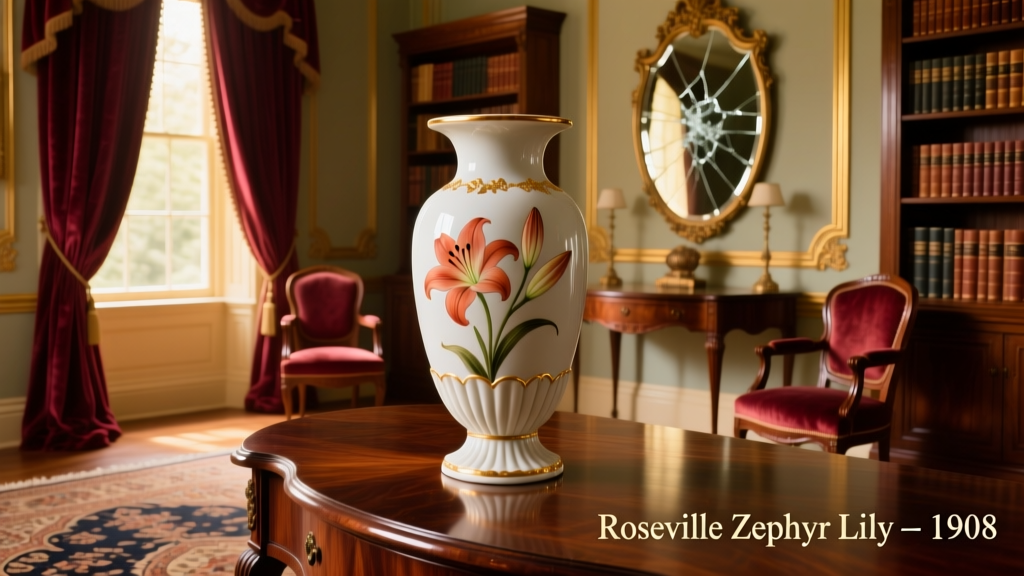
Roseville Zephyr Lily Rust 8-Inch Vase: Identification, Value, and Restoration Insights for Collectors
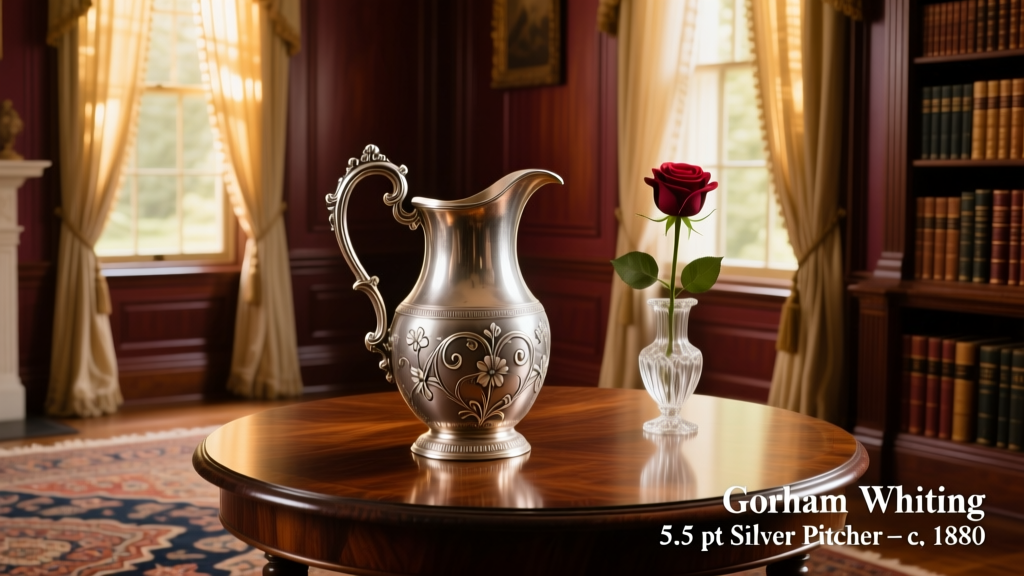
The Silver American Pitcher: A Deep Dive into the 5½-Pint Gorham & Whiting Water Pitcher

Record Weather Vane Leaves The Station: A Historical, Technical, and Conservation Retrospective
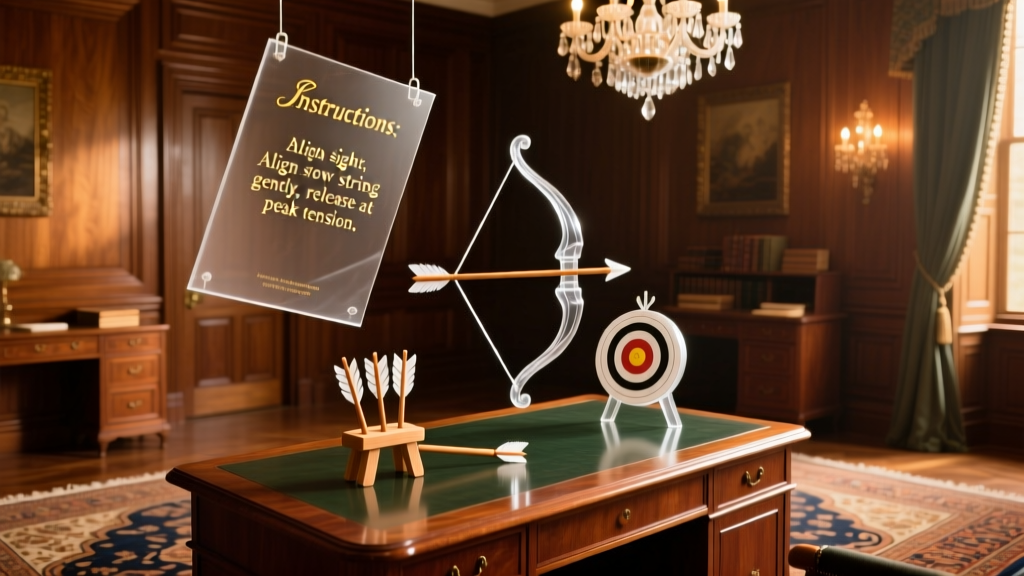
Toy Archery Set Glassflex Instructions: Authentic Restoration, Safety Compliance, and Historical Context

Gold Two-Handled Cups from France: Identifying, Dating, and Authenticating 18th–19th Century French Gilt Silverware
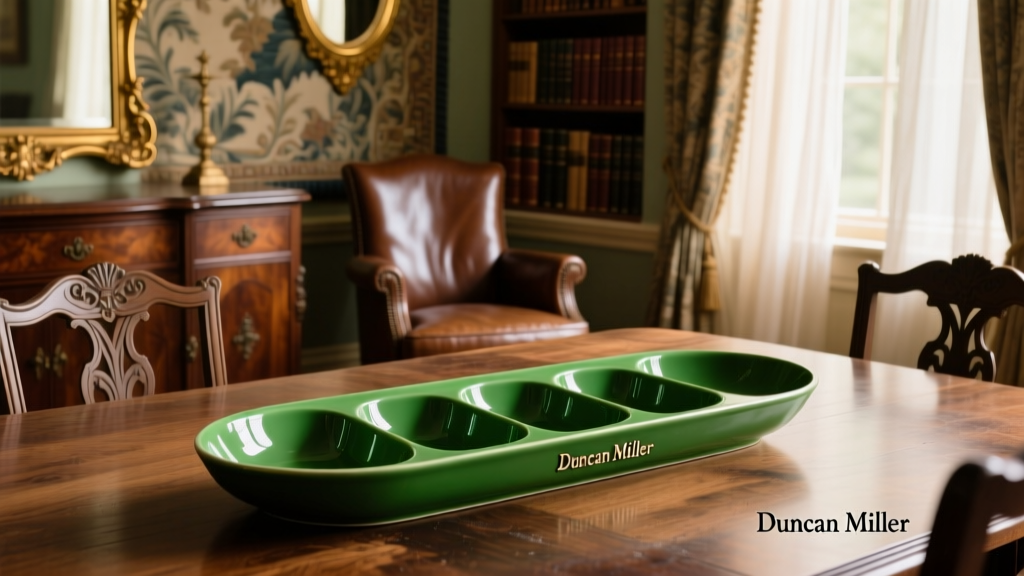
Duncan Miller Teardrop Relish Tray: A Collector’s Guide to the Iconic 5-Section Green 12-Inch Serving Piece
Hull Basket Serenade Pink 12-Inch: History, Identification, and Restoration Guidance for Collectors