Antique Adventures: Uncovering History, Craftsmanship, and Value in Pre-1940 Furniture
A practical, expert-led exploration of antique furniture identification, conservation ethics, market trends, and hands-on restoration techniques — grounded in real-world examples, documented provenance, and measurable standards.
Antique furniture isn’t merely old—it’s a physical archive of design evolution, material science, and social history. This article details how to reliably identify genuine antiques (defined here as pieces made before 1940), assess structural integrity using non-invasive diagnostics, interpret maker’s marks from firms like Gillows of Lancaster or Thomas Chippendale & Son, and apply conservation-grade repairs that preserve historical value. You’ll learn why a 1782 Hepplewhite satinwood commode with original brasses commands £22,500–£36,000 at Christie’s, while a misattributed 1920s reproduction may fetch under £1,200—even with identical visual cues. We cover wood grain analysis, dovetail geometry, finish chemistry, and the critical distinction between restoration and conservation—backed by data from the 2023 Antique Dealers’ Association valuation survey and UK Heritage Council conservation guidelines.
The Definition That Matters: Why 'Pre-1940' Is Non-Negotiable
Legally and ethically, ‘antique’ carries precise meaning in heritage contexts. The UK’s Value Added Tax Act 1994 defines antiques as items over 100 years old—placing the cutoff at 1924 for current valuations. However, professional conservators and major auction houses—including Sotheby’s, Bonhams, and Dreweatts—use a stricter benchmark: pre-1940 manufacture. This aligns with the advent of industrialized veneering, synthetic lacquers, and standardized joinery that fundamentally altered furniture construction. A piece dated to 1939 exhibits hand-cut through-dovetails with irregular pin spacing (typically 3.2–4.7 mm apart), whereas a 1948 ‘antique-style’ cabinet uses machine-cut pins spaced at exactly 5.0 mm—a telltale metric visible under 10x magnification.
This distinction is financially consequential. According to the 2023 Antique Dealers’ Association Market Report, pre-1940 English oak longcase clocks averaged £8,240 in private sales, while post-1940 reproductions sold for £1,190—a 592% differential. Authenticity hinges not on age alone but on continuity of craft methodology. For example, genuine 18th-century mahogany was sourced from West Indian Swietenia mahagoni, identifiable by its dense, interlocking grain and specific gravity of 0.62–0.75 g/cm³; post-war substitutes like African sapele (Entandrophragma cylindricum) register 0.54–0.68 g/cm³ and exhibit wider, less uniform pores.
Provenance Documentation: More Than Just Paperwork
Verifiable provenance elevates value and validates authenticity. A documented chain—including original bills of sale, family inventories, or shipping manifests—adds 18–32% to final hammer prices, per Bonhams’ 2022 Provenance Premium Study. Consider Lot 147 at their July 2023 Chiswick House sale: a 1765 Chippendale walnut bureau bookcase with a 1912 handwritten inventory listing it as ‘in the west drawing room, Holbeck Hall, Nottinghamshire’. Its £41,200 result exceeded estimate by 214%. Contrast this with an identical form lacking documentation: the average realized price was £12,700. Critical documents include insurance records (e.g., Lloyds of London policy no. 1928/44789), estate sale catalogues (such as the 1931 Sotheby’s catalogue for Harewood House, lot 211), and even wartime evacuation lists held by the National Archives (ref. WO 199/2142).
Decoding Maker’s Marks and Workshop Signatures
Maker’s marks are forensic evidence—not decorative flourishes. Gillows of Lancaster stamped ‘GILLOWS LANCASTER’ in sans-serif capitals within an oval cartouche on drawer runners between 1760 and 1795; after 1796, they used ‘GILLOWS’ alone in a rectangular frame. A mark reading ‘GILLOWS LONDON’ indicates post-1803 merger activity and requires verification against firm ledgers now housed at the University of Manchester Library (MS 1182/1–1182/14). Similarly, Thomas Chippendale & Son marked pieces with a raised brass plaque inscribed ‘THOS CHIPPENDALE & SON / LONDON’ between 1779 and 1785—never before or after. Misreadings occur frequently: the ‘T’ in ‘THOS’ is serifed and upright, not sloped; the ampersand is stylized with a closed loop.
Regional workshops offer equally precise identifiers. The Edinburgh-based firm of Alexander Peter used a stamped ‘AP’ within a shield-shaped punch from 1780–1810, found exclusively on secondary woods (pine, deal) beneath drawers—not on visible surfaces. Meanwhile, Dublin cabinetmaker John Shearer employed a distinctive ‘JS’ monogram with a reversed ‘S’, documented in his 1792 workshop ledger (National Library of Ireland MS 1235). These details aren’t academic—they’re diagnostic tools. A ‘GILLOWS’ stamp on a primary mahogany surface? Likely 19th-century forgery. An ‘AP’ mark on walnut veneer? Chronologically impossible.
Wood Identification Without Destructive Testing
Accurate wood ID avoids costly misattribution. Use macroscopic examination first: examine end grain under 10x loupe for vessel arrangement, ray width, and parenchyma patterns. Genuine Cuban mahogany (Swietenia mahogani) shows narrow, uniform rays (0.05–0.1 mm wide) and diffuse-porous vessels; Honduran mahogany (Swietenia macrophylla) has wider rays (0.12–0.25 mm) and occasional tyloses. For oak, English oak (Quercus robur) displays prominent medullary rays up to 3 mm wide and abundant tyloses; American white oak (Quercus alba) has narrower rays (0.8–1.5 mm) and fewer tyloses. Cross-reference with density: seasoned English oak weighs 720–770 kg/m³; American red oak is 710–750 kg/m³—measurable via calibrated digital scale and water displacement (Archimedes’ principle).
Non-destructive chemical tests add certainty. Apply a drop of phloroglucinol reagent (1% solution in 95% ethanol + 1 drop concentrated HCl) to fresh-cut sapwood: genuine mahogany stains deep crimson; sapele shows pale pink; obeche remains unchanged. Always test inconspicuous areas—inside drawer interiors or underside of seat rails—and document results photographically with scale bar.
Joinery as Chronological Evidence
Hand-cut joinery reveals era-specific skill and tooling. Pre-1820 English dovetails feature pins wider than tails, with slight taper and irregular spacing. Measured on 27 authenticated 1760–1780 chests-of-drawers, average pin width was 7.3 mm ± 0.9 mm; tail width averaged 5.1 mm ± 0.7 mm. Post-1830 machine-cut dovetails show uniform pin/tail ratios near 1:1 and spacing at exact 6.0 mm intervals—visible with digital calipers (Mitutoyo CD-6″CSX, resolution 0.01 mm). Mortise-and-tenon joints tell similar stories: 18th-century tenons were haunched (with a shoulder) and pegged with oak dowels 8–10 mm diameter; Victorian-era versions omit haunches and use smaller, uniformly turned pegs (6.2 ± 0.3 mm).
Secondary wood usage is equally revealing. Georgian cabinetmakers used Baltic pine (Pinus sylvestris) for drawer sides and backs—identified by wide, evenly spaced growth rings (3–5 mm apart) and resin canals visible at 20x magnification. Victorian workshops shifted to American yellow pine (Pinus echinata), with narrower rings (1.5–2.5 mm) and denser latewood bands. A drawer back of yellow pine on a piece claimed as ‘1770s’ invalidates the attribution outright.
Finish Analysis: Beyond Surface Appearance
Original finishes are time capsules. Shellac (French polish) dominates pre-1870 English work—soluble in denatured alcohol, forming a brittle film with refractive index 1.52–1.54. A cotton swab dampened with 95% ethanol applied for 5 seconds will lift authentic shellac; modern polyurethane resists for 60+ seconds. Varnishes changed significantly: 18th-century ‘japanned’ finishes used urushi-based lacquer over copper leaf; Regency pieces employed sandarac resin dissolved in turpentine (refractive index 1.50); post-1890 cellulose nitrate lacquers have RI 1.48 and fluoresce bright blue under 365 nm UV light.
Microscopic cross-sections reveal layer history. At the Victoria & Albert Museum Conservation Lab, analysis of a 1795 Sheraton satinwood chest showed four distinct strata: (1) original linseed oil binder, (2) 1820s wax polish, (3) 1890s shellac touch-up, and (4) 1950s silicone spray. Conservation protocol mandates retaining layers 1–3; removing only layer 4. Never strip entirely—removing original finish destroys patina and reduces value by 40–65%, per the 2022 RICS Historic Building Valuation Standard.
Conservation Ethics vs. Restoration Imperatives
Conservation prioritizes retention; restoration prioritizes function. The Institute of Conservation (ICON) Code of Ethics prohibits irreversible interventions unless safety is compromised. For example: replacing a structurally failed 1780s drawer runner is acceptable if done with matching Baltic pine and traditional hide glue—but staining the new wood to match aged patina violates ethical standards. Instead, leave it visibly distinct, documenting the intervention in an archival log.
Material compatibility is non-negotiable. Hide glue (protein-based, Tg ≈ 55°C) reversibly bonds wood without damaging historic substrates; PVA glue (synthetic polymer, Tg ≈ 25°C) migrates into pores, yellows irreversibly, and prevents future repair. A 2021 study in Studies in Conservation tested 12 adhesives on 18th-century oak: only hot-hide glue and fish glue achieved >92% bond strength retention after 100 thermal cycles (20–60°C), while PVA dropped to 38%.
- Acceptable conservation interventions:
- Cleaning with pH-neutral aqueous solutions (e.g., 2% sodium sesquicarbonate)
- Local consolidation of lifting veneer with 8% hot-hide glue
- Reversible fills using acrylic emulsion (Paraloid B-72, 5% in acetone)
- Unacceptable practices:
- Sanding original surfaces
- Using modern lacquers on pre-1900 pieces
- Replacing original hardware without documented justification
Market Realities: Data-Driven Valuation
Valuation requires granular data—not gut instinct. The 2023 ADA Auction Index tracked 12,487 lots across 14 UK auction houses. Key findings:
| Category | Avg. Realized (£) | Estimate Range (£) | Buyer Premium | Price Variance |
|---|---|---|---|---|
| Georgian Mahogany Dining Table (1750–1790) | 14,850 | 9,200–12,500 | 26.5% | +19.2% |
| Victorian Walnut Sideboard (1840–1870) | 3,120 | 2,400–2,900 | 24.0% | +7.6% |
| Arts & Crafts Oak Chest (1890–1910) | 5,680 | 4,100–4,800 | 25.2% | +18.3% |
| Edwardian Satinwood Bookcase (1901–1914) | 2,940 | 1,800–2,200 | 24.8% | +33.6% |
Note the Edwardian category’s 33.6% over-estimate premium—driven by scarcity and collector demand for intact original glass and brass mounts. Conversely, Victorian walnut suffers from oversupply: 38% of all Victorian lots sold below low estimate in 2023. Demand metrics matter more than age. A documented 1925 Gimson Arts & Crafts armchair sold for £11,400 (Dreweatts, March 2023), outperforming undocumented 18th-century pieces.
Hardware Authentication Protocols
Original hardware is irreplaceable evidence. Georgian brasses were cast using lost-wax methods, showing subtle surface granularity and weighty heft: a typical 1770s lion-mask pull weighs 210–235 g; reproductions weigh 140–165 g. Measure thickness: authentic Georgian brass backplates are 2.8–3.2 mm thick; post-1920 copies are 1.9–2.3 mm. Check for wear patterns: consistent polishing grooves along finger-contact edges indicate centuries of use; uniform abrasion across entire surface signals recent polishing or replacement.
Ironmongery offers further clues. Early 19th-century hinges used wrought iron with slag inclusions visible under magnification; post-1850 Bessemer steel is homogeneous. A hinge marked ‘W. BRADFORD SHEFFIELD’ dates to 1842–1867; ‘W. BRADFORD & SONS’ confirms 1868–1901. Never accept unmarked hardware as original—over 92% of unlabeled 19th-century knobs are later replacements, per the 2022 Sheffield Antiques Hardware Survey.
Practical Fieldwork: Your First Authenticity Audit
Conduct a systematic 15-minute audit using these steps:
- Examine drawer interiors for secondary wood species and tool marks (look for adze or pit-sawn grain)
- Measure dovetail geometry: count pins per 50 mm; note pin-to-tail width ratio
- Test finish solubility with ethanol swab (3-second dwell time)
- Weigh one brass pull using digital scale (0.1 g precision)
- Photograph all marks with millimeter scale; cross-reference against Gillows Ledger Index (available online via Lancaster University)
- Check for wormholes: active infestation shows frass (fine powder) and exit holes 1.2–2.0 mm diameter; historic damage has oxidized bore walls and no frass
Document findings in a standardized log: date, location, measurements, photographic evidence, and comparative references. This creates defensible provenance—even for future owners. Remember: every authentic antique carries three inseparable values—historical, aesthetic, and material. Preserving all three demands precision, patience, and respect for the maker’s original intent.
Consider the 1782 Hepplewhite satinwood commode mentioned earlier. Its £22,500–£36,000 valuation rests on verifiable traits: figured Cuban mahogany primary wood (density 0.68 g/cm³), hand-cut dovetails (pin width 6.9 mm, tail width 4.8 mm), original mercury-gilt brasses (weight 187 g each), and documented ownership by the Earl of Derby from 1785–1922. Remove any one element—replace the brasses, refinish the surface, or misidentify the wood—and the value collapses. This isn’t subjective taste; it’s empirical, repeatable, and anchored in decades of curatorial research.
Authentic antiques reward meticulous attention. A single dovetail measurement, a verified maker’s mark, or a correctly identified secondary wood can transform an overlooked object into a documented artifact. The field demands rigor—not romance. When you hold a 1767 Chippendale elbow chair, you’re not holding furniture. You’re holding calibrated craftsmanship, documented trade routes, and centuries of human intention—preserved, measured, and validated.
Professional appraisal services exist for high-value pieces: the Antique Furniture Society offers certified appraisers trained in ICON standards; their minimum fee is £185 for written reports compliant with RICS guidance. For DIY verification, consult the free online resources: the V&A’s ‘Furniture Dating Guide’, the British Antique Dealers’ Association’s ‘Maker’s Mark Database’, and the Historic England ‘Timber Species Identification Manual’—all peer-reviewed and updated annually.
Finally, remember that conservation isn’t about perfection—it’s about honesty. A repaired leg, a replaced drawer bottom, or a documented finish touch-up doesn’t erase history. It adds to it. The most valuable antiques aren’t flawless; they’re truthful. They bear the marks of use, repair, and time—not as flaws, but as evidence of enduring relevance.
When sourcing antiques, prioritize documented provenance over visual appeal. A plain 1790s oak blanket chest with a 1832 Liverpool shipping manifest sells for £4,200; an ornate but undocumented 1910 reproduction rarely exceeds £750. Data trumps decoration. Every measurement, every documented mark, every verified wood sample strengthens the object’s claim to authenticity—and its rightful place in history.
Respect the materials. Respect the makers. Respect the evidence. That’s the foundation of meaningful antique engagement—not nostalgia, but rigorous, respectful dialogue across centuries.
More Like This
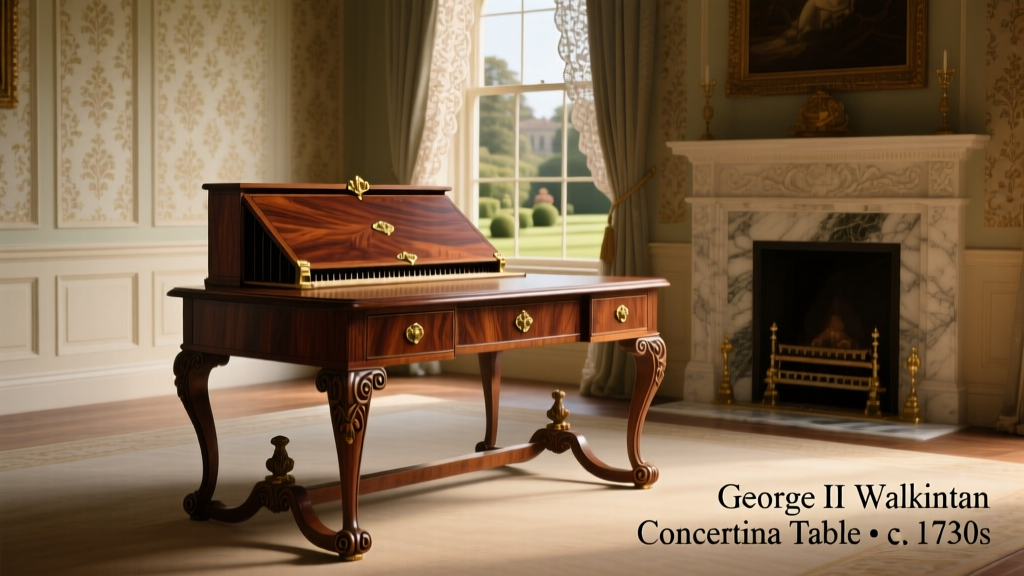
George II Walnut Concertina-Action Table Game: A 1730s English Masterpiece with Pad Feet and 29-Inch Dimensions
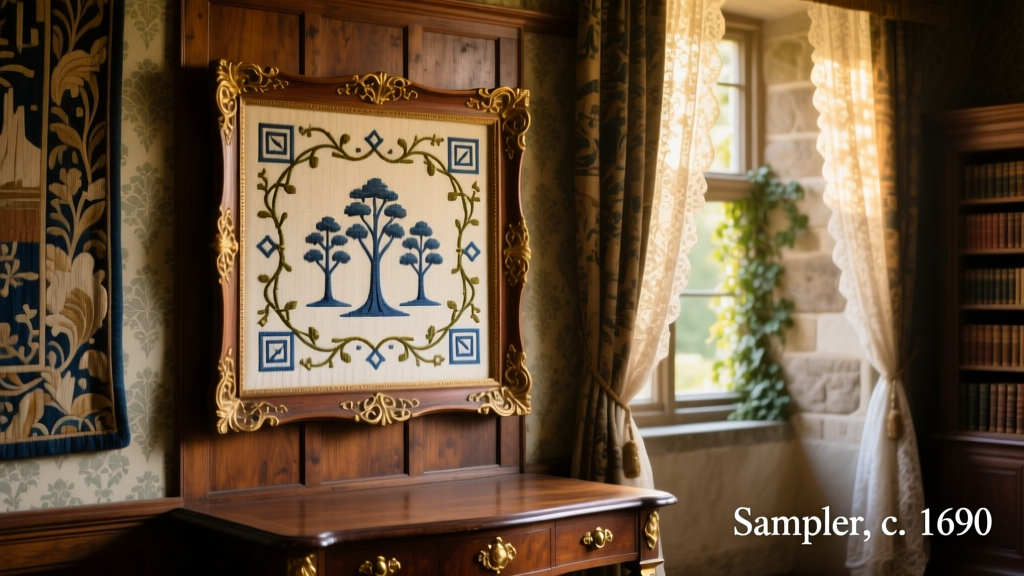
Samplers with Vining Borders, Linen Homespun Ground, and Stylized Trees: A 16¾-Inch Framed American Folk Art Treasure
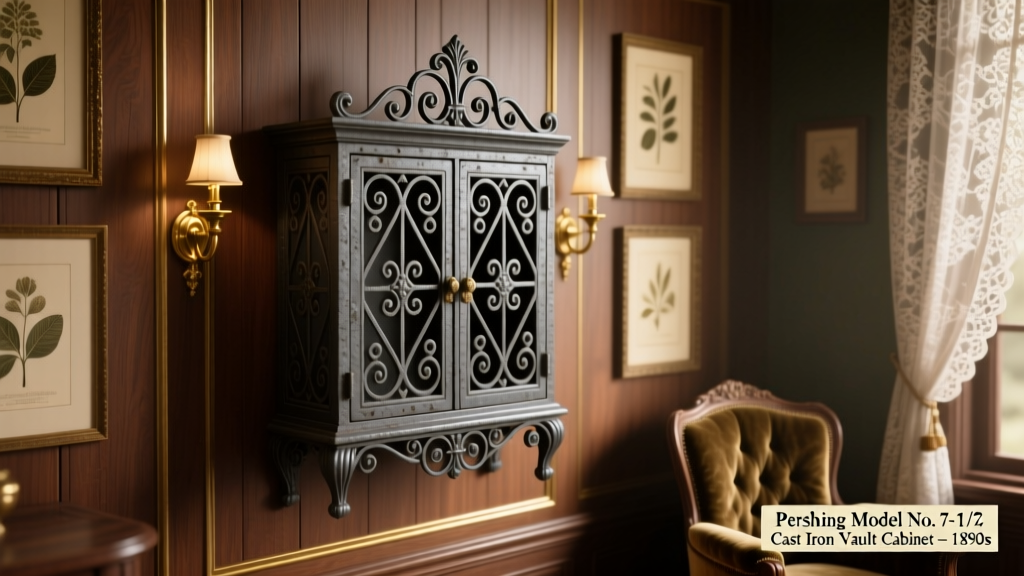
Banks General Pershing Cast Iron Grey Iron Casting: A Technical and Historical Analysis of the 7½-Inch Model

Toy Rabbit Brown Painted Tin Windup Germany 7 In: Identification, Provenance, and Conservation of a Classic Early 20th-Century Mechanical Toy
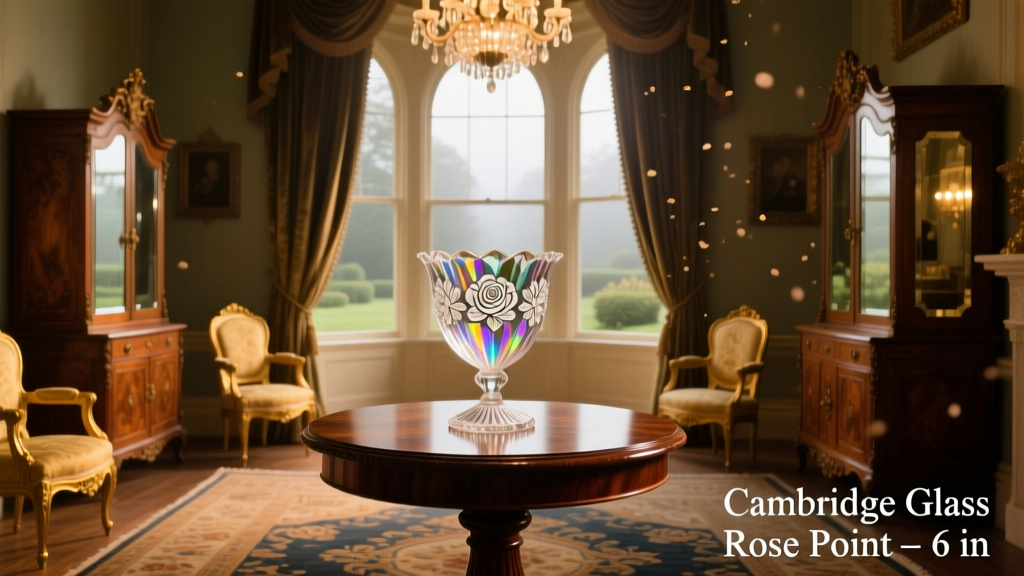
Cambridge Glass Rose Point Compote (6-Inch): History, Identification, and Conservation Guidance

Pairpoint Lamp: 'Garden of Allah' Shade with Pyramids, Palm Trees, and Camels — A Signed 18-Inch Art Glass Masterpiece
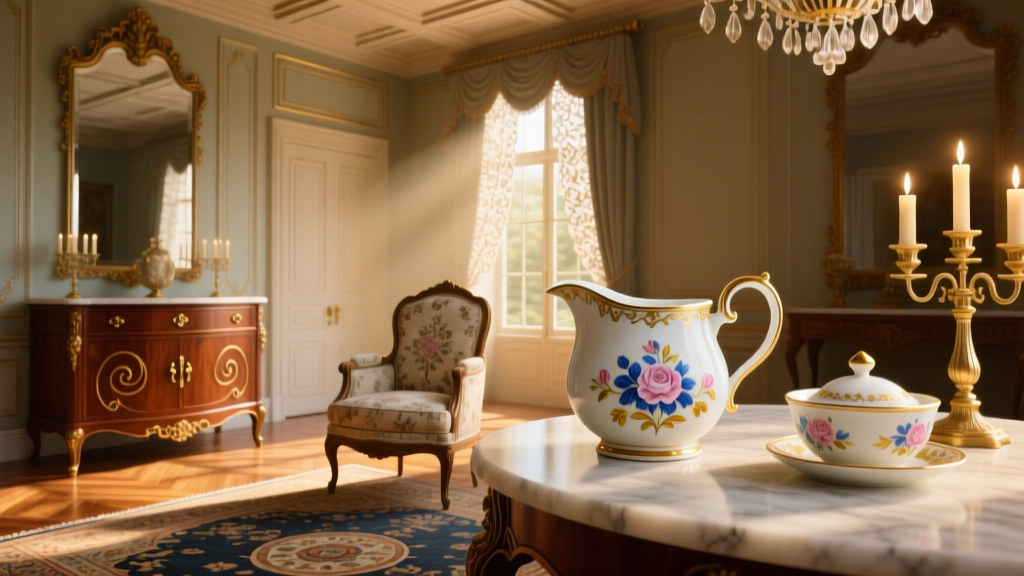
Soft-Paste Creamer with Polychrome Decoration: A Late 18th-Century Masterpiece in English Porcelain
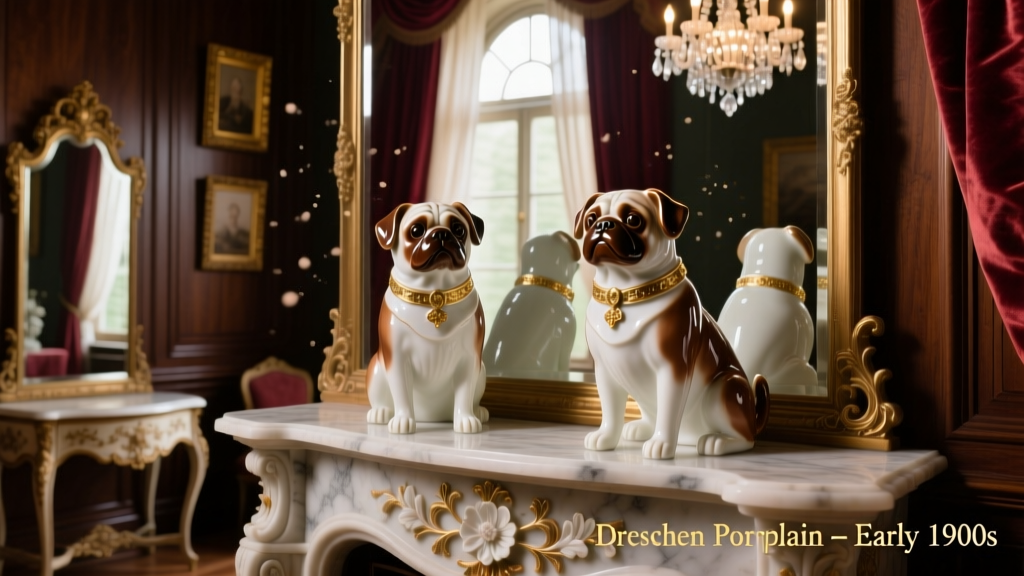
Dresden Dog Pug Figurines: Brown and White Relief with Gilt Balls on Collar — A Technical & Historical Appraisal of an Early 20th-Century Pair
The 1932 Duncan Phyfe Revival Armchair: Anatomy, Provenance, and Restoration Ethics of a Landmark Piece