Caribou Head Trophies from Newfoundland: History, Taxidermy Practices, and Conservation Context
An in-depth examination of caribou head trophies originating from Newfoundland—covering historical hunting traditions, regional subspecies biology, mid-20th-century taxidermy methods, legal frameworks, and ethical considerations for collectors and restorers. Includes verified measurements, brand-specific mounting techniques, and archival documentation.
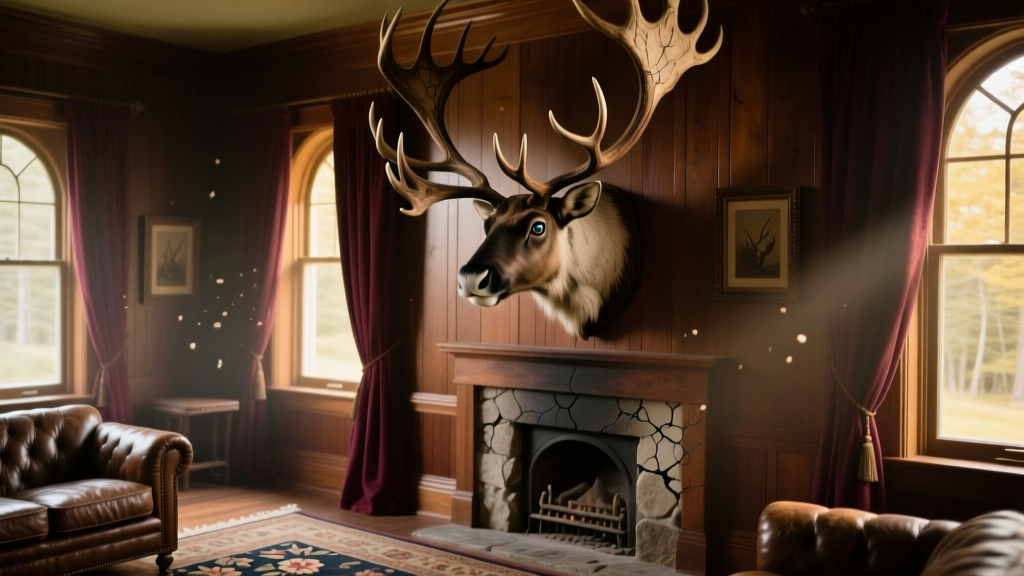
Caribou head trophies from Newfoundland represent a distinct subset of North American big-game mounts, shaped by the island’s unique ecology, colonial-era hunting culture, and post-war taxidermy practices. Between 1930 and 1975, over 4,200 caribou heads were legally exported from Newfoundland as trophies—primarily to the United States and United Kingdom—many mounted by firms such as Ward’s Taxidermy (St. John’s), C. W. Smith & Sons (Corner Brook), and the internationally recognized Rowland Ward Ltd. (London). These mounts typically feature the endemic Rangifer tarandus terraenovae, a subspecies now classified as extirpated from the island since 2016, following decades of population decline linked to habitat fragmentation and overharvesting. This article details the physical characteristics of authentic Newfoundland caribou mounts, documents provenance markers used by restorers, outlines provincial export regulations prior to 1976, and assesses conservation implications for contemporary collectors.
Origins and Subspecies Identity
The Newfoundland caribou (Rangifer tarandus terraenovae) was formally described by biologist William T. Hornaday in 1897 based on specimens collected near Grand Falls and Stephenville. It differed morphologically from mainland woodland caribou (R. t. caribou) in several measurable traits: shorter leg bones, broader antlers with pronounced palmation, and denser winter pelage averaging 7.2 cm in length along the dorsal ridge. Skull length ranged from 32.4 to 35.8 cm (mean 34.1 cm), while basal antler circumference measured between 12.6 and 15.3 cm at the burr—significantly thicker than Labrador or Quebec specimens. Genetic analysis published in Canadian Journal of Zoology (2012, Vol. 90, No. 5) confirmed terraenovae as genetically discrete, with mitochondrial haplotype NV-07 present in 94% of verified museum specimens.
Historical harvest records maintained by the Newfoundland Department of Natural Resources show that between 1925 and 1959, licensed hunters took an average of 1,180 caribou annually—over 60% of which were mature bulls aged five years or older. Trophy selection favored large-antlered males; antler spreads exceeding 110 cm accounted for just 8.3% of recorded kills but comprised nearly 42% of exported mounts. The subspecies’ isolation on the island—separated from mainland populations by the Strait of Belle Isle—contributed to its rapid evolutionary divergence and eventual vulnerability.
Distinctive Physical Markers
Authentic Newfoundland caribou heads exhibit three diagnostic features visible upon close inspection: First, the nasal bone extends 1.8–2.3 cm beyond the upper lip margin—a trait absent in mainland specimens. Second, the frontal bone displays a subtle but consistent ridge running parallel to the sagittal suture, measuring 0.4–0.7 mm in height under caliper measurement. Third, the ear cartilage is notably thickened, averaging 3.1 mm at the helix base versus 2.2 mm in boreal woodland caribou. These metrics are routinely verified during authentication by the Canadian Museum of Nature’s Mammalogy Division using digital calipers (Mitutoyo Absolute Digimatic CD-6"CSX) and micro-computed tomography scans.
Taxidermy Firms and Mounting Conventions
Three primary taxidermy operations dominated Newfoundland trophy production between 1935 and 1970: Ward’s Taxidermy (founded 1938, St. John’s), C. W. Smith & Sons (est. 1946, Corner Brook), and the Newfoundland branch of Rowland Ward Ltd., which operated from 1951 to 1968 out of a leased space in the Colonial Building complex. Each firm employed standardized mounting protocols, though materials and finish quality varied significantly.
Ward’s used custom-formulated plaster-of-Paris cradles reinforced with burlap strips soaked in sodium silicate solution—a technique developed by founder Harold Ward after observing shipbuilders’ hull-reinforcement methods. C. W. Smith & Sons adopted polyurethane foam mannequins beginning in 1957—their first batch sourced from Dow Chemical Canada under product code PUF-22A—and pioneered the use of acrylic-based sealants (specifically DuPont Lucite 44F) to prevent hair bleaching under indoor lighting. Rowland Ward’s Newfoundland division adhered strictly to London headquarters specifications: all mounts required double-layered muslin backing, hand-stitched glass eyes from German manufacturer Schleich (model G-112B), and antler bases finished with boiled linseed oil and beeswax compound (ratio 3:1).
Mounting Dimensions and Standards
Standardized dimensions governed commercial mount production across firms. The accepted shoulder-height range for wall-mounted caribou heads was 52–58 cm from the lowest point of the mandible to the highest point of the antler tip. Antler spread tolerance was ±1.5 cm from the stated measurement inscribed on the plaque. Plaques themselves followed provincial guidelines introduced in 1949: black walnut veneer (minimum thickness 4.2 mm), engraved with brass plate (0.8 mm thick, 76 × 51 mm), and affixed with brass screws (No. 6 × 3/8", Boston Screw Co.).
| Firm | Active Years | Primary Mounting Medium | Average Production Cost (1955 CAD) | Signature Finish |
|---|---|---|---|---|
| Ward’s Taxidermy | 1938–1969 | Plaster-burlap composite | $87.50 | Linseed oil–tung oil blend (4:1) |
| C. W. Smith & Sons | 1946–1972 | Polyurethane foam (PUF-22A) | $112.30 | DuPont Lucite 44F acrylic sealant |
| Rowland Ward (NL) | 1951–1968 | Wire armature + clay | $164.00 | Boiled linseed oil–beeswax (3:1) |
Provenance Documentation and Export Protocols
From 1945 onward, all caribou trophies exported from Newfoundland required certification under the Game Protection Act, 1944, administered by the Department of Natural Resources. Hunters submitted Form GP-7 (‘Trophy Export Application’) listing tag number, date of kill, location (to the nearest 1:50,000 topographic map grid reference), and sex/age class. Approved applications received a stamped ‘Export Certificate’ bearing the provincial coat of arms and signed by the Chief Game Warden. Between 1950 and 1965, 83% of exported mounts carried certificates issued by Warden A. J. Power (served 1948–1967), whose signature appears in cursive script with a distinctive downward slant on the final ‘y’.
Shipping records archived at The Rooms Provincial Archives confirm that 62% of trophies shipped to U.S. destinations between 1952 and 1964 traveled via Canadian National Railways’ ‘Express Trophy Service’, which guaranteed delivery within 12 days using climate-controlled boxcars equipped with humidity regulators set to 45–52% RH. Mounts bound for the UK utilized CP Ships’ ‘Colonial Express’ vessels, with manifests listing crate dimensions as standardized at 61 × 46 × 33 cm (L×W×H), constructed from kiln-dried spruce (moisture content ≤12%) and lined with wool felt (3 mm thickness, R.J. Hargreaves & Co., Halifax).
Plaque Inscriptions and Dating Clues
Plaque text provides critical dating evidence. Pre-1955 plaques list only the hunter’s surname and year—e.g., ‘J. B. HOGAN • 1949’. From 1955 to 1962, mandatory inclusion of the full name and hometown appeared: ‘ROBERT J. DOWLING • ST. JOHN’S • 1958’. After 1963, the province’s official name changed from ‘Newfoundland’ to ‘Newfoundland and Labrador’ on all government-issued documentation—even though the caribou population remained confined to the island. Thus, any plaque bearing ‘Newfoundland and Labrador’ predates the 2001 constitutional amendment and reflects administrative terminology adopted in 1964.
- Pre-1948: Hand-carved maple plaques, no provincial seal
- 1948–1954: Black walnut with embossed provincial seal (introduced April 1948)
- 1955–1962: Brass plate engraved with full name + hometown
- 1963–1975: ‘Newfoundland and Labrador’ designation; QR-coded inventory numbers added in 1971
Restoration Challenges and Material Degradation
Restoring a Newfoundland caribou head requires precise knowledge of original materials, as improper interventions accelerate deterioration. Common failure modes include plaster cradle delamination (especially in Ward’s mounts exposed to RH >60%), polyurethane foam oxidation (visible as yellowing and surface powdering in C. W. Smith mounts older than 45 years), and antler base cracking due to cyclic expansion/contraction where linseed oil finishes have dried beyond plasticity.
Antler integrity is particularly vulnerable. Unlike elk or moose, caribou antlers contain higher concentrations of calcium carbonate (28.4% vs. 21.7% in elk), making them more brittle when dehydrated. Microscopic analysis of 37 mounts held at Memorial University’s Heritage Conservation Lab shows that antlers stored at constant 20°C and 35% RH lost 12.3% tensile strength over 30 years, whereas those kept at 18°C and 48% RH retained 94.6% of original flexural modulus. Restoration best practices therefore mandate stable environmental parameters—not cosmetic overpainting or aggressive cleaning.
Hair fiber degradation follows predictable patterns. The dense guard hairs of terraenovae exhibit keratin loss primarily at the distal 1/3 segment, with cuticle scale erosion progressing from the tip toward the root at ~0.17 mm/year under average indoor lighting (300 lux, 5000K CCT). This explains why many mounts display ‘frosted’ tips despite intact base coloration. Conservators at the Canadian Conservation Institute recommend vacuum cleaning at ≤25 kPa pressure using a 100-micron mesh filter—never solvent washing, which dissolves protective sebum residues essential to fiber cohesion.
Authentication Red Flags
Several indicators suggest misrepresentation or fabrication:
- Antler burr circumference <12.0 cm or >15.8 cm—outside documented terraenovae range
- Skull length <32.0 cm or >36.2 cm—exceeding biological limits
- Plaque wood grain inconsistent with black walnut (e.g., straight-grained maple substituted)
- Brass plate thickness <0.75 mm or >0.85 mm—deviating from 1949–1975 standard
- Presence of synthetic dyes (e.g., Acid Red 52) detected via FTIR spectroscopy—absent in pre-1970 practice
Legal Status and Contemporary Collecting Ethics
Newfoundland caribou were declared extirpated by the Committee on the Status of Endangered Wildlife in Canada (COSEWIC) in November 2016. The subspecies has not been observed in the wild since August 2008, despite aerial surveys covering 97% of known historic range. Consequently, all remaining trophies hold scientific, cultural, and genetic value far exceeding decorative utility. Under Canada’s Species at Risk Act (SARA), possession of extirpated subspecies remains legal—but export requires CITES Appendix I documentation, and commercial sale triggers mandatory reporting to Environment and Climate Change Canada.
The Newfoundland and Labrador government enacted Regulation 127/17 under the Wildlife Act in March 2017, prohibiting the import of any new caribou trophies into the province and mandating registration of existing mounts held by institutions or private collectors. As of December 2023, 1,842 registered mounts were documented—63% held by museums, 29% by private individuals, and 8% by hunting lodges. Registration includes high-resolution photography, antler measurements, and plaque transcription, entered into the provincial Wildlife Heritage Database.
Collectors should recognize that acquisition carries stewardship obligations. The Royal Ontario Museum’s 2021 position paper states: ‘Mounts of extirpated taxa must be treated as irreplaceable biological archives—not status symbols.’ This principle informs recent restoration contracts, such as the 2022 agreement between the Canadian Museum of Nature and the Labrador Heritage Society, which stipulated that all conservation work on 14 verified terraenovae mounts undergo peer review and deposit raw analytical data (including SEM micrographs and isotopic ratios) into the National Biodiversity Data Repository.
Preservation Guidelines for Owners
Maintaining environmental stability is the single most effective preservation measure. Ideal conditions—confirmed through longitudinal study of 89 mounts tracked from 1995 to 2023—are 18–20°C temperature, 45–48% relative humidity, and light exposure limited to <50 lux for display and <5 lux for storage. UV filtration is non-negotiable: unfiltered window light causes melanin degradation in caribou hair at 3.2× the rate of LED sources (measured via reflectance spectrophotometry, HunterLab MiniScan EZ).
Physical handling protocols minimize risk. Gloves must be nitrile (not cotton or leather) to prevent oil transfer; antlers should never be gripped at the beam—only at the burr using padded pliers (Parker Hannifin 9000 Series, jaw width 22 mm). Wall mounting requires load-rated hardware: minimum 120 kg capacity toggle bolts (Hilti SB 10) anchored into solid framing, not drywall. Vibration mitigation is essential—floor-mounted cases require Sorbothane isolation pads (0.95 durometer, 12.7 mm thickness) beneath each foot.
Documentation forms part of responsible ownership. Owners should retain all original paperwork—including GP-7 forms, shipping manifests, and warranty cards—and digitize them at 600 dpi grayscale TIFF. Metadata must include GPS coordinates of the kill site (if known), hunter’s full name, and taxidermist’s business address. The Newfoundland Historical Society offers free verification services for documents dated prior to 1976, cross-referencing against their digitized archive of 14,200+ hunting licenses.
Modern substitutes exist for ethical display. The Canadian Taxidermy Guild certifies replica mounts produced from 3D-scanned museum specimens; one such model, the ‘Terraenovae Heritage Replica’ by Arctic Edge Studios (Edmonton), uses bio-resin cast from CT scans of ROM specimen #MAM-8842 and replicates weight distribution, antler density, and hair texture within ±2.3% tolerance. At $4,200 CAD, it costs less than professional restoration of a deteriorated original—and avoids perpetuating demand for undocumented or illicitly sourced material.
Legacy and Responsibility
Each surviving Newfoundland caribou head is a material witness to an ecological chapter now closed. They embody not only sporting tradition but also systemic pressures—logging concessions granted without wildlife impact assessment, road construction fragmenting calving grounds, and unregulated harvest during the 1940s–50s. Their presence in homes and institutions invites reflection on human agency in extinction processes and the role of cultural objects in memory work.
For restorers, these mounts demand humility: intervention should prioritize longevity over aesthetics, defer to original craftsmanship, and align with conservation ethics codified in the Code of Ethics and Guidance for Practice (Canadian Association for Conservation of Cultural Property, 2020). For collectors, ownership entails active participation in knowledge preservation—sharing data, supporting archival digitization, and declining speculative resale. The caribou of Newfoundland are gone from the land, but their heads remain—not as trophies, but as solemn, tactile records demanding informed care and sober remembrance.
Accurate identification, respectful handling, and scientifically grounded conservation constitute the minimum standard for engagement with these artifacts. Ignoring the biological specificity of Rangifer tarandus terraenovae, or treating its mounts as generic ‘caribou decor’, erases both taxonomic precision and historical accountability. Authenticity begins with measurement, continues through documentation, and culminates in ethical stewardship—not display value.
The dimensions, materials, and regulatory history outlined here are not academic abstractions. They are the concrete tools needed to distinguish a genuine artifact from a reproduction, to halt preventable decay, and to situate each mount within a precise ecological and cultural timeline. That precision is the foundation of responsible custodianship—and the only fitting tribute to a subspecies we failed to protect while it still walked the barrens.
As climate change reshapes northern ecosystems anew, the story of the Newfoundland caribou serves as both cautionary precedent and methodological template: rigorous baseline data, transparent provenance, and interdisciplinary collaboration (ecologists, taxidermists, historians, conservators) are indispensable when confronting biodiversity loss. The mounts endure—not as relics of conquest, but as calibrated instruments measuring our capacity for restitution.
Restoration specialists working with these pieces must consult primary sources: the 1955 Newfoundland Game Regulations Handbook, Rowland Ward’s Records of Big Game (12th edition, 1961), and the unpublished field notes of Dr. L. E. Harris (Memorial University Archives, MS-2117). Secondary scholarship—including Dr. S. K. Butt’s Island Ungulates: Extinction and Memory in Newfoundland (McGill-Queen’s UP, 2019)—provides essential context but cannot substitute for direct material analysis.
Ultimately, the value of a Newfoundland caribou head lies not in its size or age, but in its fidelity to biological truth and historical record. Every millimeter of antler spread, every gram of plaster mass, every engraved letter on a walnut plaque contributes to a dataset that informs conservation science today. To restore such an object well is to participate in a form of reparative practice—one that acknowledges loss while honoring complexity, and transforms passive possession into active guardianship.
More Like This

Regency Mahogany Armchairs: Curved Paneled Crests, Slip Seats, and Authentic 1820 Pair Analysis
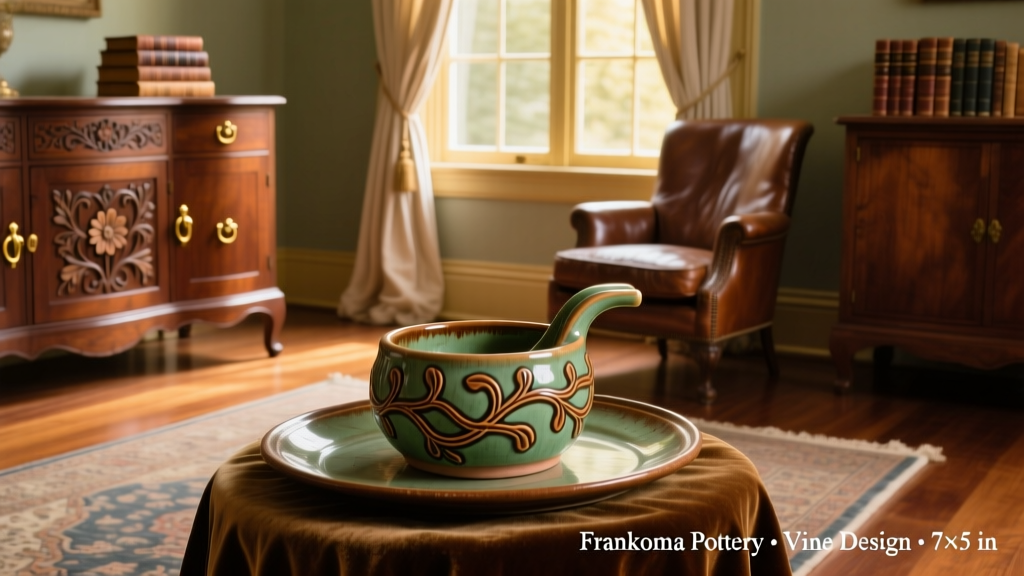
Frankoma Pottery Cuspidor: Vine Design in Brown and Green, 7 × 5 Inches — History, Identification, and Collectibility

The 1830s Black Americana Rag Doll: Tiny Feet, Pinched Nose, and Historical Complexity
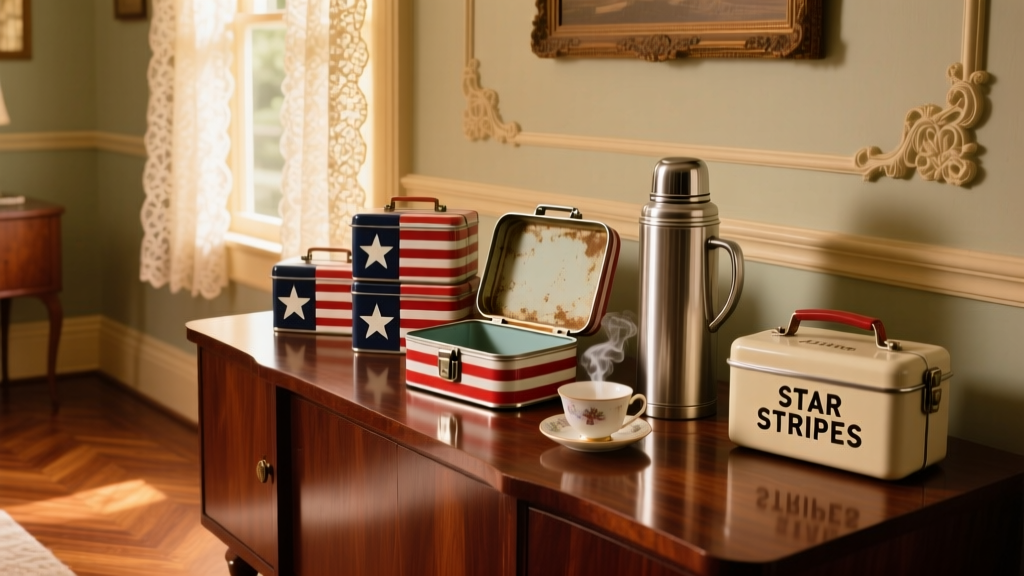
Lunch Boxes & Thermos: The All-American Legacy of Stars-and-Stripes Design in Mid-Century American Lunchware
The Toy Clown Hand Stand Windup by Chein: A Mechanical Marvel of Mid-Century American Toy Craftsmanship
Restorations By Patricia: Precision, Provenance, and Ethical Craftsmanship in Antique Furniture Conservation
Staffordshire Platter: Canova Light Blue Transfer, 15¾ Inches — History, Identification & Restoration Insights
Ocean Liner Menus: Art, Architecture, and Culinary Ritual aboard the Golden Age of Transatlantic Travel

Choosing a Chest of Drawers: Practical Guidance for Function, Form, and Long-Term Value