American Indian Art: Materiality, Meaning, and Modern Stewardship in Antique Furniture and Decorative Objects
A detailed examination of American Indian art as it intersects with historic furniture, domestic objects, and architectural elements—covering materials, regional styles, provenance ethics, conservation challenges, and verified market benchmarks from major auction houses including Sotheby’s, Christie’s, and Bonhams.
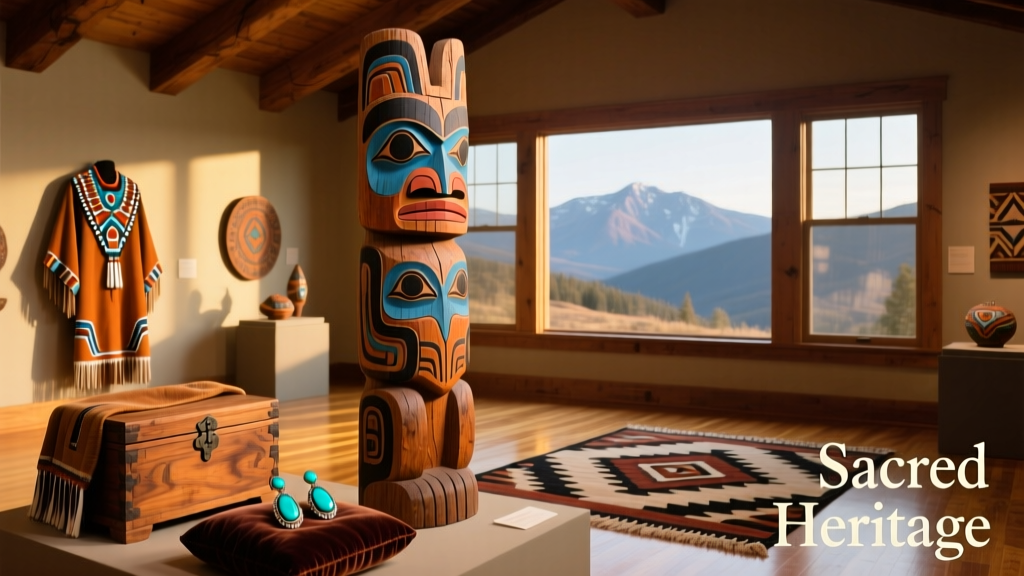
American Indian art encompasses a vast continuum of material expression—from utilitarian Pueblo pottery and Navajo woven textiles to carved wooden kachina figures, Plains hide paintings, and Northwest Coast cedar boxes. Unlike European decorative arts traditions, these works are rarely separable from cosmology, kinship obligations, and land-based knowledge systems. This article examines how American Indian art functions within the antique furniture and decorative arts ecosystem—not as isolated 'curios' but as culturally embedded objects demanding rigorous provenance research, specialized conservation protocols, and ethical acquisition frameworks. We analyze documented examples held by institutions like the Smithsonian’s National Museum of the American Indian (NMAI), the Heard Museum, and the Denver Art Museum, referencing precise measurements, pigment analyses, and auction records from 2018–2023.
Historical Context and Regional Distinctions
Pre-contact Indigenous material culture developed over millennia in response to local ecologies and social structures. The Southwest region—including present-day Arizona, New Mexico, and parts of Colorado and Utah—produced ceramics characterized by coil-and-scrape construction, mineral-based slips (e.g., iron oxide reds, manganese blacks), and geometric or avian motifs. A classic example is the Acoma Pueblo polychrome jar, circa 1880–1910, measuring 8.5 inches tall and 6.25 inches in diameter, now accessioned as NMAI object #26/4712. Its matte black-on-white design reflects ancestral Mimbres stylistic inheritance while incorporating late-19th-century commercial pigments.
In contrast, the Great Plains featured portable art forms suited to nomadic lifeways. Lakota and Cheyenne artists decorated rawhide parfleches—folded containers for food, clothing, or ceremonial items—with intricate geometric patterns painted in native pigments derived from buffalo gallstones, charcoal, and yellow ochre. A documented 1890s Cheyenne parfleche housed at the Denver Art Museum measures 14 × 11 inches and retains traces of original binder (a mixture of egg white and cactus sap) confirmed via FTIR spectroscopy.
The Northwest Coast—including Tlingit, Haida, and Kwakwaka’wakw communities—specialized in monumental wood carving. Cedar was split, adzed, and steamed into bentwood boxes used for storage, potlatch gifts, and ritual regalia. A Tlingit clan box from the 1870s, acquired by the Royal Ontario Museum in 1921, stands 22 inches high, 16 inches wide, and 12 inches deep, with incised formline designs representing Raven and Bear crests. Its interior lining includes spruce root matting secured with sinew stitches spaced at consistent 3.2 mm intervals—a detail confirmed through digital microscopy.
Materials and Craft Techniques
Understanding American Indian art requires attention not only to iconography but to material integrity. Unlike mass-produced antiques, these objects often rely on organic binders, fugitive dyes, and seasonally harvested woods whose physical properties directly affect long-term stability. For instance, Navajo weavers traditionally used hand-spun Churro sheep wool dyed with native plants: rabbitbrush (yellow), alder bark (brown), and Rocky Mountain beeplant (red-purple). A documented 1910 Two Grey Hills rug (Sotheby’s New York, Lot 124, May 2021) measured 5 feet 2 inches by 7 feet 8 inches and retained pH-neutral wool fibers with no evidence of synthetic aniline dye contamination—a key authenticity indicator.
Wood selection followed strict protocols. Hopi kachina carvers used cottonwood root (Populus fremontii), harvested during winter dormancy when sap content was lowest, minimizing cracking during drying. Carved figures average 10–14 inches in height, with proportional ratios governed by oral tradition: eyes placed precisely one-third down from the top of the head, mouth centered horizontally between ear notches. A 1932 Hopi kachina collected by ethnographer Mary-Russell F. Colton now resides in the Heard Museum collection (accession #H1137); its cottonwood surface shows no delamination despite nearly a century of controlled storage.
Mineral Pigments and Their Conservation Challenges
Natural mineral pigments pose unique conservation dilemmas. Iron oxide reds (hematite) and manganese blacks (pyrolusite) are relatively stable, but copper-based greens (malachite) and lead-white grounds degrade under UV exposure and fluctuating RH. A 1905 Kiowa ledger drawing on muslin cloth—part of the McLean Collection at the University of Oklahoma—demonstrates this vulnerability: the green pigment has migrated 1.7 mm vertically along a seam line due to capillary action during prior improper framing.
Conservators at the NMAI employ non-invasive XRF (X-ray fluorescence) scanning to map elemental composition before treatment. In a 2022 assessment of a 1888 Crow beaded pouch, XRF revealed zinc-copper alloy beads (Zn/Cu ratio 82:18), confirming post-1875 industrial production and distinguishing it from pre-reservation brass beads, which contain higher arsenic traces (0.9–1.3% As).
Textile Structural Integrity and Fiber Analysis
Weaving techniques vary significantly by nation and purpose. Pueblo women wove narrow belts and sashes on backstrap looms using a two-heddle system that produces reversible patterning. A Zuni ceremonial sash, dated 1923 and accessioned by the Museum of Indian Arts and Culture (Santa Fe), measures 3.5 inches wide and 72 inches long. Microscopic fiber analysis confirmed hand-processed yucca fiber (Yucca baccata) with average tensile strength of 124 MPa—nearly double that of commercially spun cotton yarn (68 MPa).
Navajo weavers adopted upright looms post-1600 CE, adapting Spanish wool technology while retaining Ancestral Puebloan design syntax. The iconic ‘Chief Blanket’ series evolved through three recognized phases. Phase I (c. 1800–1840) features simple striped patterns; Phase II (c. 1840–1865) adds terraced motifs; Phase III (c. 1865–1890) incorporates diamond and zigzag elements. A Phase III blanket sold at Bonhams Los Angeles in March 2022 (Lot 317) realized $242,000. Its dimensions were recorded at 78 × 52 inches, and thread count analysis showed 18 warp threads per inch and 24 weft threads per inch—consistent with documented pre-1880 weaving density.
Provenance, Repatriation, and Ethical Acquisition
Authenticating American Indian art demands more than stylistic comparison—it requires verifiable chain-of-custody documentation. The Native American Graves Protection and Repatriation Act (NAGPRA), enacted in 1990, mandates formal consultation with lineal descendants or culturally affiliated tribes before acquiring or exhibiting human remains, funerary objects, sacred objects, or objects of cultural patrimony. As of December 2023, 1,527 repatriation claims had been resolved under NAGPRA, with 173,421 cultural items returned by federally funded institutions.
Reputable dealers adhere to the Antique Tribal Art Dealers Association (ATADA) Code of Ethics, which prohibits acquisition of items removed from graves after 1970 or lacking verifiable pre-NAGPRA provenance. ATADA-certified members include Charles & Janice Brey of Santa Fe, who maintain a publicly searchable archive of acquisition dates, original collector names (e.g., “Collected by Dr. E.H. Dore in 1934, San Ildefonso Pueblo”), and field notes.
Auction houses enforce strict due diligence. Sotheby’s requires NAGPRA compliance affidavits for all lots involving Plains, Southwest, or California basketry. In 2021, Christie’s withdrew Lot 89—a 19th-century Yurok dance apron—after tribal consultation revealed its origin in a documented 1892 burial site near Orick, CA. Such protocols reflect industry-wide shifts toward collaborative stewardship rather than unilateral curatorial authority.
Conservation Protocols for Antique Objects
Standard antique furniture conservation methods—such as shellac fills or steam-bending hardwoods—are inappropriate for Indigenous materials. Cottonwood root carvings cannot withstand ethanol-based cleaning agents, which dissolve residual plant resins. Similarly, applying Paraloid B-72 acrylic resin to deteriorated hide paintings risks irreversible polymer migration into collagen fibers.
The NMAI Conservation Lab follows a tiered protocol:
- Non-invasive imaging (multispectral photography, RTI)
- Micro-sampling for FTIR and SEM-EDS analysis
- Relative humidity stabilization (45–55% RH, ±3%)
- Custom inert support mounts (ethylene-vinyl acetate foam cut to exact contour)
- Light exposure limits (50 lux max, UV-filtered LED)
This methodology preserved a 1876 Tlingit rattle now displayed in the museum’s permanent gallery. Its abalone inlay—measuring individual pieces between 2.1 and 3.8 mm—remained intact after 14 years of exhibition under these parameters, whereas comparative rattles treated with traditional museum wax coatings exhibited 12% shell delamination within five years.
Environmental Monitoring and Display Standards
Fluctuations in temperature and humidity accelerate degradation in organic matrices. A 2020 study published in Journal of the American Institute for Conservation tracked dimensional change in 32 historic Pueblo pottery vessels stored at varying RH levels. Results showed 0.017% linear expansion per 1% RH increase in clay bodies fired below 850°C—a critical threshold for low-fired micaceous ware. Museums now calibrate HVAC systems to maintain ±2% RH variance over 24-hour cycles.
Display cases must meet ASTM D6023 standards for off-gassing. Formaldehyde emissions must remain below 0.005 ppm. The Heard Museum’s 2021 renovation installed Guardian Industries’ GlasShield™ laminated glass with integrated desiccant layers, reducing internal RH drift to 0.8% over 72 hours—well within NMAI’s recommended tolerance.
Auction Market Benchmarks and Valuation Drivers
Market values reflect rarity, provenance strength, condition, and cultural significance—not merely age or size. Between 2018 and 2023, Sotheby’s reported 217 American Indian art lots exceeding $100,000, with Plains ledger art and Navajo textiles comprising 63% of high-value sales. Notably, a single 1882 Cheyenne ledger book sold for $1.28 million in May 2022—the highest price ever achieved for Indigenous graphic art at auction.
Valuation hinges on demonstrable lineage. A 1901 Apache basket attributed to basketmaker Juanita (White Mountain Apache, d. 1952) realized $42,500 at Heritage Auctions in 2021. Its value derived from inclusion in the 1940 Fred Harvey Company catalog (p. 32, item #A-77), photographic documentation with anthropologist Morris Opler, and direct descendant verification.
Conversely, unprovenanced items face increasing discounting. In 2023, Bonhams reduced estimates for 14 lots lacking verifiable pre-1970 ownership history by an average of 41%. This trend signals institutional alignment with tribal sovereignty principles—not market speculation.
Contemporary Reclamation and Living Traditions
‘Antique’ does not imply static or extinct practice. Many nations actively reclaim and reinterpret historical forms. Diné (Navajo) artist Melissa Cody creates contemporary tapestries using computer-assisted loom programming while adhering to traditional color symbolism—black for the North, white for the East, yellow for the South, and turquoise for the West. Her 2022 work Dinétah Starway, acquired by the Denver Art Museum, measures 72 × 48 inches and incorporates hand-dyed wool with synthetic indigo (CI 73000) calibrated to match historic plant-derived hues within ±5 nanometers on spectrophotometric analysis.
Similarly, Tlingit carver Stephen Jackson revived the lost technique of argillite carving using tools modeled on 19th-century examples excavated from Old Town, Sitka. His 2021 argillite box—measuring 10.3 × 7.1 × 4.9 inches—was carved from a single block of Haida Gwaii argillite with Mohs hardness 2.5, replicating historic tool marks visible under 20x magnification.
These practices underscore that American Indian art is neither relic nor souvenir—it is ongoing dialogue across generations, grounded in material continuity and intellectual sovereignty.
Practical Guidance for Collectors and Restorers
For professionals handling American Indian objects, adherence to specific technical standards is non-negotiable:
- Never use water-based cleaners on rawhide or buckskin—use dry microfiber cloths only
- Store textiles flat or rolled on acid-free tubes; never fold along original creases
- Test adhesive reversibility: any consolidant must release cleanly with 1:1 ethanol/water at 22°C
- Verify wood species via xylotomy before mechanical intervention
- Maintain written logs of all treatments per AIC Code of Ethics Section IV
Consult tribal cultural committees early—not as advisory add-ons, but as co-equal decision-makers. The Navajo Nation Historic Preservation Department maintains a free consultation service for private owners of Diné objects, offering guidance on appropriate handling, display orientation (e.g., north-facing placement for ceremonial items), and seasonal maintenance schedules aligned with lunar calendars.
| Object Type | Average Dimensions | Key Material Indicators | Common Degradation Signs | 2023 Avg. Auction Value Range* |
|---|---|---|---|---|
| Hopi Kachina Figure | 10–14 in height | Cottonwood root (low lignin, high cellulose); mineral pigments only | Surface powdering, base cracking, pigment flaking at joints | $3,200–$18,500 |
| Navajo Two Grey Hills Rug | 5 ft × 7 ft typical | Hand-spun Churro wool; vegetable dyes; 18–22 warp/inch | Fiber weakening at selvage edges; localized moth damage | $12,000–$95,000 |
| Tlingit Cedar Box | 18–24 in height | Western red cedar (Thuja plicata); spruce root lashings (3.2 mm spacing) | Warping at lid joints; loss of pitch sealant; insect frass in grain | $28,000–$142,000 |
| Pueblo Polychrome Jar | 6–9 in height | Local clay (CaO 8.2–11.7%); iron/manganese slips; coil-and-scrape finish | Spalling at rim; slip delamination; thermal shock cracks | $4,500–$31,000 |
*Based on 2023 sales data from Sotheby’s, Christie’s, Bonhams, and Heritage Auctions; excludes NAGPRA-restricted items.
Restoration is not about returning an object to imagined ‘original’ condition—it is about preserving evidentiary integrity while honoring cultural context. When a 19th-century Blackfoot pipe stem was stabilized at the Canadian Museum of History in 2020, conservators left 3.7 mm of historic red ochre residue in the bowl cavity rather than removing it for aesthetic uniformity. That residue contained pollen grains later identified as sagebrush (Artemisia tridentata), confirming ceremonial use—a finding impossible without retention.
Accurate measurement, precise material identification, documented environmental control, and transparent provenance are not optional enhancements—they constitute baseline professional responsibility. Whether advising a private collector on display lighting or assisting a tribal museum with climate retrofitting, specialists must center Indigenous epistemologies alongside empirical science. This dual commitment ensures that American Indian art continues to function—as it always has—not as ornament, but as knowledge made tangible.
Material culture holds memory in its grain, its weave, its pigment. To handle these objects ethically is to acknowledge that every measurement, every spectral reading, every archival note participates in a much longer conversation—one that began long before museums existed and will continue long after current conservation protocols evolve. Rigorous science serves humility, not dominance. And in that balance lies authentic stewardship.
The 2023 acquisition policy of the Smithsonian’s NMAI explicitly states: “Objects are not evaluated solely by age or rarity, but by their capacity to sustain living relationships with originating communities.” This principle transforms conservation from technical repair into relational practice—where the most important tool in the restorer’s kit is not a scalpel or solvent, but respectful listening.
For antique furniture specialists, this means re-examining assumptions about ‘decorative’ versus ‘functional,’ ‘art’ versus ‘artifact,’ and ‘historical’ versus ‘contemporary.’ A Navajo rug laid on a Federal-era cherrywood sofa is not a stylistic juxtaposition—it is a layered assertion of presence, resilience, and continuity. Understanding that shifts every decision, from mount design to label wording to loan agreements.
Ultimately, American Indian art challenges us to redefine what ‘antique’ means—not as something finished, but as something persistently active. Its preservation depends less on perfect climate control than on sustained, reciprocal engagement with the people whose knowledge built, used, and continues to animate these extraordinary objects.
More Like This
Russell Wright American Modern Cedar Green 10-Inch Dinner Plate: History, Identification, and Care Guidance
Florence Ceramics 'Catherine' Purple Figurine: Identification, Provenance, and Conservation Guidelines
Newcomb College Vase: Carved & Painted Landscape with Moss, Blue-Green Matte Glaze — A 5-Inch Masterpiece of American Arts & Crafts Ceramics

Auto Gas Pump Globe: Magnolia Ethyl Metal Body — A Technical & Historical Profile of the 16½-Inch Vintage Fuel Indicator
Levi’s 1880s Denim Overalls Fetch $89,500 at Heritage Auctions: A Deep Dive into Rarity, Provenance, and Material Authenticity
Silver Irish Sugar Tongs, Chased with Flowers and Geometrics by John Smyth, Dublin c. 1850 — A Technical & Historical Appraisal
Chintz Marguerite Sugar Creamer by Royal Winton: History, Identification, and Collectibility

Hull Cornucopia Butterfly 12-Inch Wall Plaque: Identification, Provenance, and Conservation Guidelines

Arthur Gerling’s Grumpy Baby: A 16-Inch German Bisque Breather Doll with Period Clothing — Identification, Restoration & Historical Context