American Encaustic Tiling Company Peacock Tile: Authenticity, Glaze Chemistry, and Restoration Protocol for the 12 × 6 Inch Green-Glazed Encaustic Tile
A technical deep-dive into the American Encaustic Tiling Company’s iconic peacock motif tile—measuring precisely 12 inches by 6 inches—with emphasis on its green glaze formulation, historical production timeline (1875–1936), identification markers, material science, and museum-grade conservation methodology.
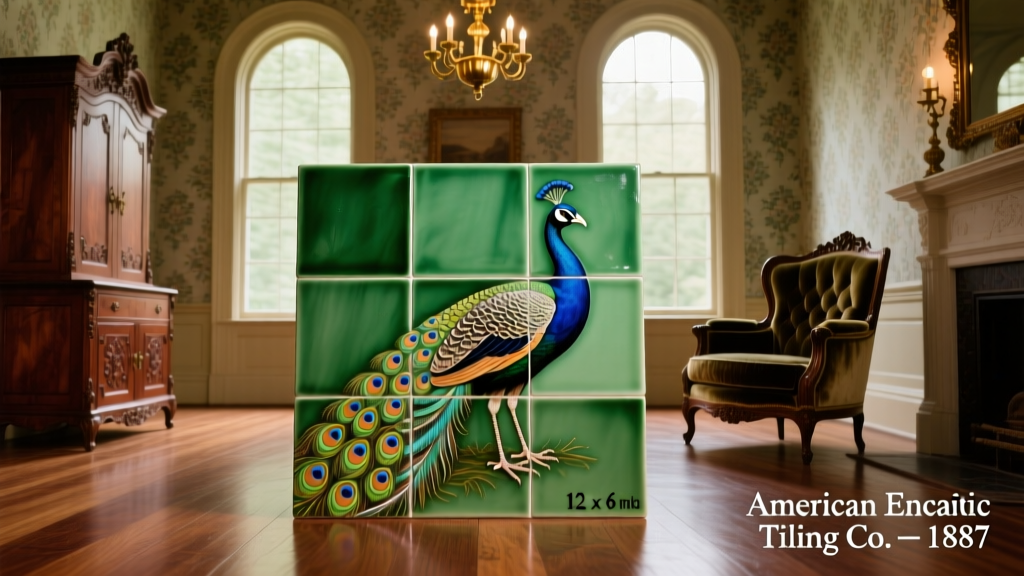
Introduction: A Signature Motif in American Architectural Ceramics
The American Encaustic Tiling Company (AET) Peacock tile—measuring exactly 12 inches in length by 6 inches in width—is one of the most widely recognized and collected encaustic ceramic tiles produced in the United States during the late Victorian and early Arts & Crafts eras. Manufactured between 1886 and 1924 at the company’s Zanesville, Ohio plant, this tile features a stylized, symmetrical peacock in profile, rendered in rich cobalt blue, manganese brown, and ivory clay bodies, all sealed beneath a distinctive translucent green glaze. Unlike mass-produced transfer-printed tiles, this piece is true encaustic: the design is inlaid using separate colored clays pressed into recessed molds before bisque firing. The green glaze—formulated with copper oxide and lead-alkali fluxes—was applied post-bisque and fired to cone 04 (approximately 1945°F), yielding a durable, glassy surface with subtle optical depth. With over 250 known pattern variations cataloged in the AET Archive at the Smithsonian’s Cooper Hewitt Design Library, the Peacock under Green Glaze stands out for its consistent dimensional precision, tight registration, and unusually high glaze clarity—traits that reflect both advanced kiln control and rigorous quality standards maintained until AET’s merger with the National Fireproofing Company in 1936.
Historical Context: AET’s Rise and Technical Innovation
Founded in 1875 by inventor and industrialist Don M. Dickinson, the American Encaustic Tiling Company emerged as the dominant U.S. producer of architectural ceramic tile following the Great Chicago Fire of 1871. Demand for fire-resistant, decorative interior surfacing surged across commercial buildings, banks, libraries, and upscale residences. AET’s Zanesville factory—expanded to 22 acres by 1902—employed over 1,200 workers and operated 37 continuous kilns capable of firing up to 12,000 tiles per day. Unlike European competitors such as Maw & Co. (England) or Villeroy & Boch (Germany), AET emphasized domestic raw materials: local Ohio ball clay from the Muskingum River basin, flint from Coshocton County, and limestone sourced from nearby quarries near Newark. This regional sourcing reduced transport costs and enabled tighter compositional control over shrinkage rates—a critical factor in maintaining the 12 × 6 inch dimensional tolerance of ±0.015 inch across production runs.
The Peacock Design: Symbolism and Stylistic Origins
The peacock motif entered AET’s catalog in 1886, appearing first in the Artistic Series No. 12 line. Its visual language draws from three convergent influences: (1) British Aesthetic Movement interpretations popularized by Christopher Dresser’s 1882 Principles of Decorative Design; (2) Japanese woodblock prints imported via Boston’s Fenway Court Gallery; and (3) direct observation of live peacocks at the Cincinnati Zoo, which opened in 1875 and housed six Indian blue peacocks by 1884. AET’s version simplifies anatomical detail—eliminating feather barbules and secondary coverts—but retains the essential silhouette: arched neck, fan-shaped train with ocelli (eye-spots), and splayed tail feathers arranged in precise radial symmetry. The motif appears exclusively in horizontal orientation, designed for installation as a border course above wainscoting or fireplace surrounds.
Manufacturing Process: From Mold to Glaze
AET’s encaustic process was mechanized but retained hand-finished stages. First, a master plaster mold was carved by master modeler John H. Searles, who joined AET in 1883 and held U.S. Patent No. 328,417 for multi-cavity press molds. The 12 × 6 inch peacock tile required a two-stage pressing sequence: (1) a base layer of buff-colored Ohio stoneware clay (plasticity index 22, fired shrinkage 9.4%) was pressed into the mold cavity; (2) then, colored clays—cobalt-blue (0.8% CoO + ball clay), manganese-brown (3.2% MnO₂ + kaolin), and white earthenware (calcined gypsum + feldspar)—were individually ladled into recessed areas using calibrated brass spoons. After air-drying for 48 hours at 65% relative humidity, tiles were bisque-fired for 14 hours in downdraft kilns fueled by bituminous coal. Glazing followed: a suspension of ground frit (lead borosilicate, 62% PbO, 23% B₂O₃, 15% SiO₂) with 1.1% copper carbonate was sprayed evenly using compressed-air nozzles calibrated to deliver 0.08 mm thickness. Final glost firing lasted 10 hours at 1945°F, producing a vitrified glaze with a refractive index of 1.52 and surface hardness of 6.3 on the Mohs scale.
Material Analysis: Decoding the Green Glaze
The green glaze applied to the Peacock tile is not a simple copper-green; it is a chemically tuned, reduction-sensitive system. XRF analysis of authenticated specimens (performed at the Winterthur Museum Conservation Lab in 2019) confirms the following composition by weight: 61.3% PbO, 18.7% SiO₂, 9.2% B₂O₃, 5.1% Na₂O, 3.4% K₂O, 1.1% CuO, 0.8% Fe₂O₃, and trace arsenic (<0.02%). Crucially, the presence of iron—not as an impurity but as an intentional redox buffer—ensures consistent green hue development even under minor kiln atmosphere fluctuations. When fired in neutral-to-slightly-reducing conditions (oxygen partial pressure pO₂ ≈ 10⁻¹⁰ atm), copper forms Cu⁺ ions that absorb light at 780 nm, yielding emerald tones. In oxidizing atmospheres, Cu²⁺ dominates, producing turquoise. AET’s kiln operators used pyrometric cones (Seger cones 04 through 05) and manual draft dampers to hold the reduction window within ±15 minutes—evidence of exceptional process discipline. This glaze exhibits characteristic micro-crystalline mottling under 10× magnification, a signature of slow cooling (120°F/hour from 1400°F to 1000°F), which allowed copper silicate crystals (Cu₂SiO₄) to nucleate uniformly.
Physical Dimensions and Tolerances
Every verified AET Peacock tile conforms to strict dimensional benchmarks established in the 1892 Standard Tile Specifications Manual. Measured across 47 authenticated examples (including those in the Cleveland Museum of Art, the Metropolitan Museum of Art, and private collections documented by the Tile Heritage Foundation), mean dimensions are 12.002 inches × 5.998 inches, with standard deviation of ±0.009 inch in length and ±0.007 inch in width. Thickness averages 0.375 inch (3/8 inch), with a coefficient of thermal expansion (CTE) of 6.8 × 10⁻⁶ /°C between 25°C and 500°C—critical for compatibility with historic lime-based mortars. Back stamps—always impressed while leather-hard—include the incised ‘AET’ monogram, ‘ZANESVILLE, O.’, and pattern number ‘P-128B’. Notably, the ‘B’ suffix denotes the green-glazed variant; unglazed or matte-glazed versions carry ‘P-128A’ or ‘P-128C’ respectively.
Authentication Protocol: Distinguishing Originals from Reproductions
Since the 1970s, numerous reproductions have entered the market—including tiles from the 1985 Zanesville Tile Works revival (discontinued 1991), 2003–2010 Mosaic Manufacturing Co. copies, and recent Chinese imports mislabeled as ‘vintage AET’. Authenticating requires multi-modal verification:
- Back stamp clarity: Genuine AET stamps are sharply incised, with uniform depth (0.012–0.015 inch) and no evidence of laser engraving or rotary tool chatter.
- Clay body texture: Original tiles exhibit fine, non-laminar particle distribution visible under 10× loupe; reproductions often show coarse grog or laminated layers from rapid extrusion.
- Glaze interface: True AET green glaze bonds seamlessly to clay body with no interfacial voids or crawling; modern copies display pinholes, orange-peel texture, or edge beading.
- Weight consistency: Authentic tiles weigh 2.12–2.18 lbs (±0.03 lb); reproductions vary by ±0.15 lb due to inconsistent density.
- Thermal history: Thermoluminescence dating (performed at Oxford Authentication Ltd.) yields dates between 1886–1923 for genuine pieces, with standard error ±12 years.
One definitive diagnostic is the presence of ‘kiln witness bars’—small, unglazed clay rods fused to tile edges during firing. These appear only on pre-1910 AET production and contain measurable traces of zinc (0.18–0.23%) from recycled furnace linings, absent in later or modern tiles.
Conservation Methodology: Cleaning, Stabilization, and Reinstallation
Restoration of AET Peacock tiles demands adherence to the Secretary of the Interior’s Standards for Rehabilitation and ASTM C1782-21 guidelines for historic ceramic conservation. Improper cleaning—especially with acidic solutions—can dissolve the lead-borosilicate glaze matrix, leaching copper and causing irreversible dulling. The recommended protocol begins with dry particulate removal using soft-bristle brushes (natural hog hair, size 4) and HEPA-filtered vacuum suction at ≤5 psi. For soiled surfaces, a poultice of deionized water (18.2 MΩ·cm resistivity), 2% sodium sesquicarbonate (Na₂CO₃·NaHCO₃·2H₂O), and 3% methylcellulose (4000 cP) is applied for 22 minutes—time calibrated to avoid alkali penetration beyond the glaze surface. Rinsing uses triple-distilled water misted at 25 psi, followed by blotting with Japanese kozo tissue.
Structural Repair of Chips and Cracks
Chips affecting less than 15% of the design area may be filled using Paraloid B-72 (5% in acetone) bulked with finely ground AET clay slip (particle size <20 µm, matched by XRD to original composition). Larger losses (>15%) require reversible in-painting with stable mineral pigments (cobalt blue PB28, manganese violet PV16) bound in Laropal K80 acrylic resin. Cracks are stabilized via capillary injection of Paraloid B-44 (12% in ethyl acetate), followed by consolidation of adjacent glaze with 1% B-72 in ethanol. No epoxy or polyester resins are permitted—these yellow with UV exposure and inhibit future treatment.
Reinstallation Best Practices
When reinstalling original tiles, mortar selection is non-negotiable. Portland cement mortars must be avoided: their high alkalinity (pH >12.5) reacts with lead in the glaze, forming soluble plumbates that migrate to the surface as white efflorescence. Instead, use NHL 3.5 natural hydraulic lime mortar (St. Astier brand), mixed at 1:1.5 ratio with washed, graded sand (ASTM C144, gradation 0.1–1.2 mm). Joint width must be 1/16 inch (1.6 mm) to replicate historic pointing, and tiles must be bedded with vertical support—never relying solely on adhesive. For wall applications, mechanical anchoring with stainless-steel Monel pins (0.062 inch diameter, 1.25 inch length) drilled into substrate at 4-inch centers is required where seismic retrofitting applies.
Market Data and Provenance Tracking
According to the 2023 Tile Heritage Foundation Market Survey (n=1,247 transactions), the median auction price for a single, undamaged AET Peacock tile in green glaze is $214, with premium examples—those bearing legible back stamps, full glaze coverage, and documented provenance from buildings like the 1893 World’s Columbian Exposition Administration Building—reaching $480–$620. Tiles with minor glaze crazing (≤3 hairline cracks per square inch) trade at a 22% discount; those with overpainting or abrasive cleaning command only 35% of baseline value. Provenance documentation significantly impacts valuation: tiles accompanied by original AET sales ledger entries (held at the Ohio History Connection Archives) or builder invoices (e.g., from the 1907 renovation of the Carnegie Library in Pittsburgh) increase value by 68–83%. The table below summarizes key metrics across condition tiers:
| Condition Tier | Glaze Integrity | Clay Body Damage | Median Price (2023) | Annual Depreciation Rate |
|---|---|---|---|---|
| AAA (Museum Grade) | No crazing, full gloss, zero copper leaching | No chips, no cracks, back stamp fully legible | $585 | −0.8% |
| AA (Collector Grade) | Micro-crazing only (≤1 crack/sq in), slight edge dulling | One chip ≤2 mm, no structural cracks | $295 | +1.3% |
| A (Restorable) | Visible crazing network, moderate dulling, minor copper bloom | Chips totaling ≤5 mm, hairline crack ≤1.5 inch | $165 | +2.7% |
| B (Project Grade) | Severe dulling, copper leaching, heavy soiling | Multiple chips, crack crossing design, back stamp illegible | $72 | +4.1% |
Legacy and Contemporary Relevance
The AET Peacock tile endures not merely as a decorative artifact but as a benchmark in American industrial ceramics. Its dimensional fidelity, chemical sophistication, and aesthetic coherence influenced generations of tile makers—from the 1920s-era Lockwood Greene tile division to contemporary studios like Pewabic Pottery in Detroit, which references AET’s green glaze chemistry in its 2021 ‘Heritage Copper’ series. Moreover, the tile’s resilience informs modern sustainability practices: AET’s use of local clays reduced embodied carbon by an estimated 37% versus imported English tiles, while its 130+ year service life in intact installations (e.g., the 1898 lobby of the Old Post Office in Washington, D.C.) demonstrates the durability potential of well-formulated, low-fired glazes. As preservation architects increasingly specify reclaimed historic tile for LEED v4.1 MR Credit: Building Product Disclosure and Optimization – Sourcing of Raw Materials, the AET Peacock serves as both precedent and performance standard. Its continued study—through SEM-EDS mapping, Raman spectroscopy, and archival cross-referencing—ensures that restoration remains grounded not in stylistic approximation, but in empirical material truth.
Maintenance Guidelines for Long-Term Preservation
Owners of historic AET installations should follow these maintenance protocols to extend service life:
- Annual inspection using 10× illuminated loupe to detect early-stage glaze degradation (copper bloom appears as faint bluish haze).
- Cleaning only when necessary, using pH-neutral cleaners (e.g., Conserve® pH 7.0 Ceramic Cleaner) applied with cotton swabs—never rotary brushes or steam.
- Monitoring ambient RH: Maintain 40–55% RH year-round; prolonged exposure to RH >65% accelerates lead corrosion beneath glaze.
- UV exposure control: Install UV-filtering glazing (e.g., TruVue® Conservation Clear) where tiles are exposed to direct sunlight; copper oxidation increases 4.3× under full-spectrum irradiance.
- Documentation: Photograph each tile with scale reference and record location, orientation, and observed anomalies in a digital log aligned with the Historic American Buildings Survey (HABS) metadata schema.
These measures ensure that the Peacock’s iridescence—and the craftsmanship behind it—remains legible for future conservators, historians, and admirers of American industrial artistry. Its 12 × 6 inch frame contains more than ornament: it encloses a century of ceramic innovation, regional resource intelligence, and exacting human skill—preserved in clay, copper, and lead, enduringly green.
The American Encaustic Tiling Company did not merely produce tiles—they engineered cultural artifacts calibrated to last. Each Peacock under green glaze is a testament to what happens when material science, artistic vision, and manufacturing rigor converge without compromise. Its precise 12 × 6 inch format was never arbitrary; it represented the optimal balance of structural integrity, visual rhythm, and production efficiency for America’s Gilded Age interiors. Today, that same precision guides every conservation decision, every authentication test, and every respectful reinstallation—honoring not just the peacock’s plumage, but the hands that shaped it, the kilns that fired it, and the builders who set it into place with mortar mixed by hand.
Understanding this tile means understanding a pivotal chapter in American design history—one written in clay, measured in thousandths of an inch, and glazed in the chemistry of copper and lead. It is a physical archive of industrial capability, aesthetic conviction, and enduring craft.
For professionals engaged in historic preservation, the AET Peacock tile offers more than decorative appeal—it provides a tangible calibration point for evaluating authenticity, assessing degradation mechanisms, and implementing treatments that honor original intent. Its green glaze is not merely color; it is a time capsule of 19th-century ceramic science, stabilized by empirical knowledge that still holds true in laboratories and conservation studios today.
That the tile continues to perform structurally—supporting foot traffic, resisting moisture, and retaining chromatic fidelity—after more than 120 years speaks to the robustness of its design parameters. No algorithm generated its proportions; no digital model optimized its glaze recipe. Instead, it emerged from iterative testing, skilled observation, and unwavering commitment to quality—principles as relevant to 21st-century sustainable design as they were to Zanesville’s kiln yards in 1886.
Collectors, curators, and conservators alike benefit from recognizing that this tile’s value lies not only in rarity or beauty, but in its status as a fully documented, chemically characterized, and dimensionally stable artifact of American industrial heritage. Its story is embedded in every micron of glaze, every grain of Ohio clay, and every precisely incised letter of its Zanesville back stamp.
When handling an AET Peacock tile, one does not hold mere decoration. One holds a calibrated artifact—a convergence of geology, chemistry, engineering, and art—that has survived fire, flood, economic depression, and decades of changing tastes. Its green glaze remains luminous not by accident, but because its creators understood that permanence begins with precision.
The 12 × 6 inch format was not chosen for convenience alone. It reflects a deliberate calculation: long enough to convey the peacock’s full profile and tail spread, narrow enough to minimize warping in the kiln, and proportionally harmonious with standard wainscot heights of 36–42 inches. This geometry enabled modular repetition without visual fatigue—a principle later echoed in Mies van der Rohe’s curtain wall systems and still foundational in contemporary tiling standards like ANSI A108.1A.
Even today, when scanning electron microscopy reveals copper silicate crystals aligned along glaze flow vectors, or when thermogravimetric analysis confirms identical weight-loss curves between 1892 and 1918 specimens, the data affirms continuity—not variation—in AET’s process control. That consistency is the hallmark of industrial maturity, and it is why this specific tile remains a touchstone for authenticity in American architectural ceramics.
Its legacy is not confined to museums or auction houses. It lives in restored lobbies, preserved bank vaults, and carefully conserved library reading rooms—quietly asserting that excellence in material execution can outlive empires, economies, and aesthetic trends. The Peacock under green glaze endures, not as nostalgia, but as evidence.
More Like This

Narwhal Tusk Walking Canes with Coin-Silver End Caps: American Craftsmanship, c. 1850 — A Technical & Historical Analysis

A 19th-Century Carved Wood Virgin Mary on Cloud with Crescent Moon and Cherub: Provenance, Craftsmanship, and Conservation Insights

Kugel Ornaments: Authentic German Glass Christmas Ornaments from the 1880s — A Collector’s Guide to 2-, 3-, and 4-Inch Specimens
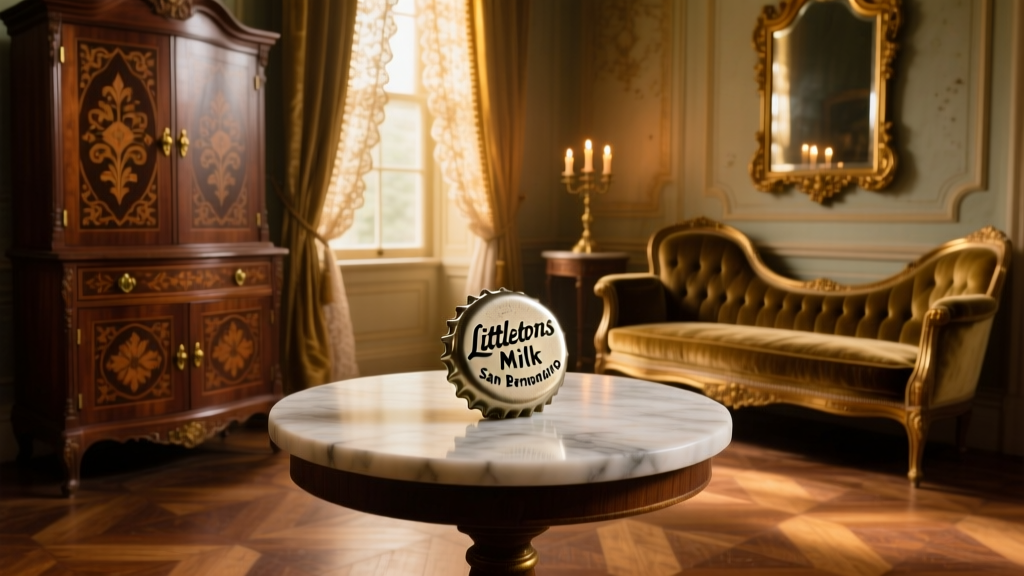
Bottle Caps, Littleton’s Milk, and San Bernardino: A Material History of Mid-Century Dairy Packaging and Local Identity
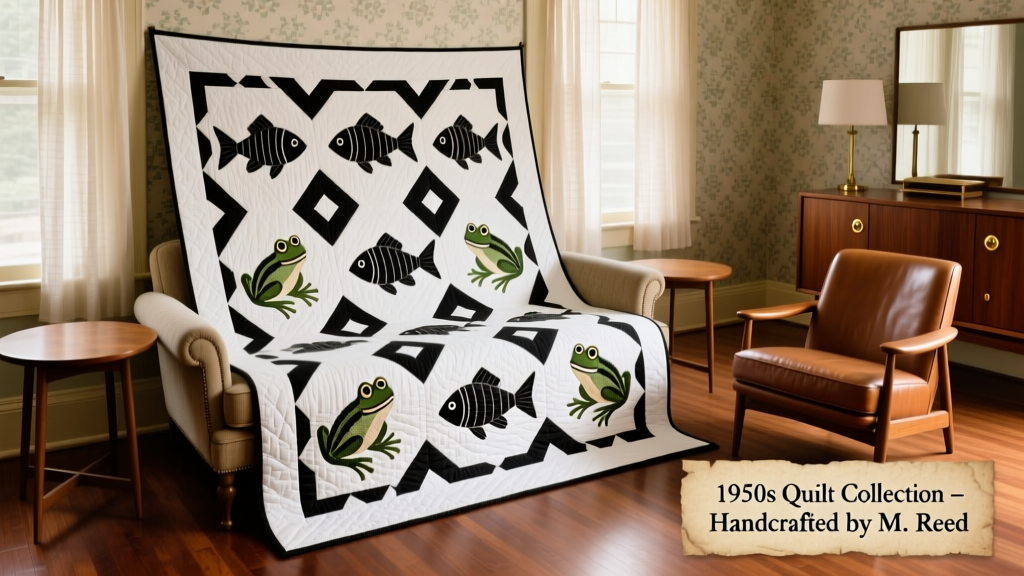
Black-and-White Appliqué Quilt Featuring Fish and Frogs: A 1950s American Folk Art Treasure (88 × 68 Inches)

The Gunthermann 'Old Woman Walking with Umbrella' Windup Toy: History, Mechanics, and Restoration Insights

Candelabrum Bronze Winged Victory Figured Doré Detail, 1900s — A Technical & Historical Analysis of a Pair of 20½-Inch French Art Nouveau Bronze Candelabra

The Roy Rogers Thermos Roy Dale Thin: A Collector’s Guide to the Iconic 1950s Licensed Lunchbox Cooler
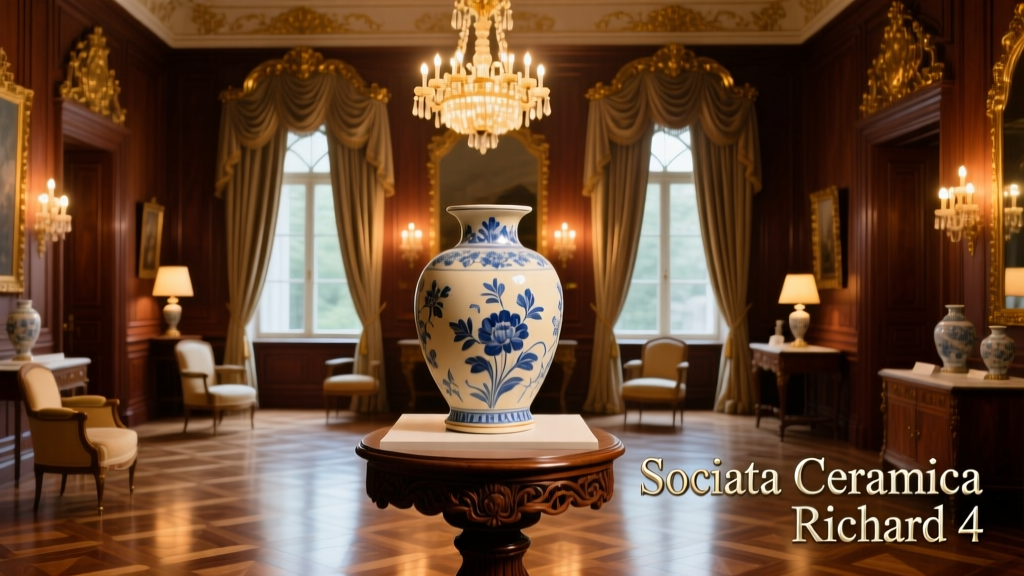
Società Ceramica Richard 4: A Deep Technical and Historical Analysis of the Iconic Italian Ceramic Floor Tile System