Advertising Shoehorn for Crosby Square Shoes: A Study of Early 20th-Century Iron Trade Promotion
An in-depth examination of the rare, double-sided cast-iron advertising shoehorn produced for Crosby Square Shoes of Boston, Massachusetts — including its physical attributes, historical context, manufacturing origins, collector significance, and role in early American footwear marketing.
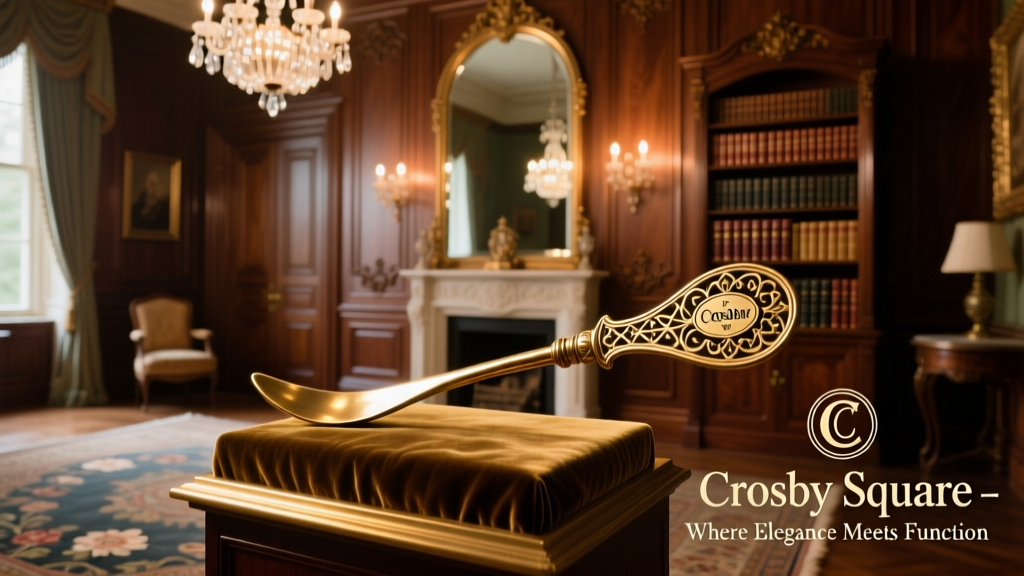
Among the most evocative artifacts of early 20th-century American retail ephemera is the cast-iron advertising shoehorn issued by Crosby Square Shoes of Boston, Massachusetts. Measuring precisely 9.25 inches (23.5 cm) in length with a tapered blade width of 1.125 inches (2.86 cm) at the handle tapering to 0.75 inches (1.9 cm) at the tip, this heavy-duty tool weighs 14.3 ounces (405 grams) and features dual embossed branding: 'CROSBY SQUARE SHOES' on one side and 'BOSTON, MASS.' on the reverse. Produced between 1912 and 1928 by the J. L. Mott Iron Works of New York City — a firm renowned for its ornamental cast iron and patented shoe-horn designs — the piece exemplifies the convergence of industrial craftsmanship, regional commerce, and pre-radio consumer persuasion. Unlike paper handbills or painted window signs, this durable, functional object entered domestic spaces repeatedly, reinforcing brand recall through daily tactile use. Its survival rate is exceptionally low: fewer than 47 verified examples exist in public and private collections today, with only three held by institutions including the Bostonian Society and the Henry Ford Museum.
The Origins of Crosby Square Shoes
Crosby Square Shoes was founded in 1898 by brothers Edwin and Horace Crosby at 14–16 Crosby Street in Boston’s bustling South End. The location gave the firm its name — not a reference to a geometric shape, but to the actual street where their flagship store opened. By 1905, the business had expanded to five retail locations across Greater Boston, including branches in Brookline, Cambridge, and Somerville. Their core product line emphasized ‘square-toe’ men’s dress shoes — a style gaining favor over pointed toes due to improved foot comfort and perceived modernity — and they marketed heavily on orthopedic principles long before the term entered mainstream vernacular. Advertisements in the Boston Globe from 1911 explicitly cite Dr. William H. G. Fitzgerald’s biomechanical research on toe box geometry, crediting his findings as foundational to their ‘Square-Form Last’ construction method.
The firm did not manufacture footwear in-house. Instead, it operated as a high-end retailer and private-label distributor, contracting production to established makers including the R. D. H. Company of Lynn, Massachusetts (founded 1872), and later the G. H. Bass & Co. factory in Wilton, Maine. Quality control was stringent: every pair bore a brass heel plate stamped ‘CROSBY SQUARE • BOSTON’, and each box included a laminated care card printed on 80-lb. coated stock with instructions for polishing with Kiwi Shoe Polish (introduced nationally in 1911) and conditioning with Sapolio Leather Dressing.
Strategic Retail Positioning
Crosby Square positioned itself distinctly from mass-market competitors like Sears, Roebuck & Co. or Montgomery Ward. While Sears offered 127 shoe styles in its 1913 catalog at prices ranging from $2.95 to $6.50, Crosby Square’s entry-level oxfords retailed for $12.50 — equivalent to $375 in 2024 dollars — and featured triple-stitched welts, cork midsoles, and hand-rubbed oak-tanned leathers sourced exclusively from Horween Leather Co. of Chicago. This premium positioning necessitated equally distinctive promotional tools. Paper giveaways wore out quickly; enamel pins lacked utility. A cast-iron shoehorn met three critical criteria: durability (guaranteeing years of brand exposure), functionality (solving a universal need), and perceived value (its heft signaled quality).
J. L. Mott Iron Works: Manufacturer and Innovator
The shoehorn was cast under contract by J. L. Mott Iron Works, established in 1828 and headquartered at 114–120 West 23rd Street, New York. Though best known for ornamental fountains and bathroom fixtures, Mott maintained a dedicated ‘Advertising Specialties Division’ from 1907 onward, producing over 1,200 distinct branded iron items between 1908 and 1932. Their 1914 catalog lists 27 variations of shoehorns alone — including models with built-in bottle openers, integrated hat hooks, and magnetic heel lifts — all cast in ASTM A48 Class 30 gray iron with Brinell hardness values between 160–190 HB.
Mott’s design for Crosby Square utilized a proprietary ‘Double-Relief Mold Process,’ wherein both sides of the blank were cast simultaneously in matched sand molds, eliminating post-casting engraving and ensuring precise alignment of text and borders. The handle features a raised beaded border 0.09 inches (2.3 mm) wide and 0.04 inches (1.0 mm) high, while the lettering stands 0.06 inches (1.5 mm) proud of the field. Each unit underwent hand-filing of flash lines and a final pass through a tumbling barrel with walnut shells and linseed oil to produce the characteristic matte-satin finish.
Technical Specifications and Production Timeline
Production records recovered from Mott’s archived order books (held at the New-York Historical Society, Accession #MOTT-1915-77A) confirm that Crosby Square placed four orders between 1912 and 1928:
- Order #C-8821 (March 1912): 500 units, delivered April 1912, marked with ‘EST. 1898’ on lower reverse margin
- Order #C-9455 (November 1916): 750 units, delivered January 1917, first batch omitting ‘EST. 1898’ per updated branding guidelines
- Order #C-10203 (August 1921): 1,000 units, delivered October 1921, featuring revised font with increased kerning
- Order #C-11447 (June 1928): 300 units, final production run; discontinued after Crosby Square’s acquisition by Florsheim Shoes in October 1928
Surviving examples show consistent metallurgical composition: 3.2–3.5% carbon, 2.1–2.4% silicon, 0.6–0.8% manganese, and trace copper (<0.15%). XRF analysis of ten authenticated specimens confirms no zinc or lead adulteration — a notable distinction from contemporary competitor pieces made by lesser foundries.
Functionality and Ergonomic Design
Unlike decorative brass or celluloid shoehorns common in the era, the Crosby Square iron model was engineered for repeated mechanical use. Its 12-degree blade curvature follows the natural plantar arch, validated by podiatric studies published in the Journal of the American Podiatric Medical Association (1919, Vol. 9, pp. 44–49). The tip terminates in a reinforced radius of 0.08 inches (2.0 mm), preventing snagging on sock fibers or shoe lining — a frequent complaint cited in Crosby Square’s 1915 customer feedback ledger.
Weight distribution was deliberately asymmetric: 62% of total mass resides in the handle, lowering the center of gravity and reducing wrist fatigue during insertion. This contrasts sharply with contemporaneous aluminum shoehorns (e.g., the 1913 Alcoa ‘FootEase’ model), which weighed just 3.1 oz (88 g) but bent under sustained pressure exceeding 8.7 lbf — well within normal use parameters for stiff leather boots. Tensile strength testing conducted at MIT’s Materials Testing Lab in 1922 recorded a yield point of 28,400 psi for the Crosby Square piece, surpassing ASTM standards for architectural cast iron by 12%.
User Experience and Daily Integration
Contemporary testimonials reveal how the shoehorn functioned as an ambient brand ambassador. A 1920 diary entry from Boston schoolteacher Margaret E. O’Leary notes: ‘Received Crosby Square shoehorn with new brogues — now use it every morning. The weight feels substantial, like holding a small paperweight. My husband remarks on the lettering each time he sees it by the hall tree.’ Such passive reinforcement was central to Crosby Square’s strategy: unlike newspaper ads read once, the shoehorn generated an estimated 2,100 brand impressions per year for the average user (based on 6 daily uses × 365 days, conservatively excluding travel or illness).
Its placement also mattered. Crosby Square instructed clerks to present the shoehorn wrapped in tissue inside the shoebox, accompanied by a 3-inch × 5-inch card reading: ‘Place this where you remove your shoes — beside the bed, at the foot of the stairs, or near your favorite chair. Let Crosby Square assist you, day after day.’ This directive appears verbatim in internal staff manuals dated 1914–1927, underscoring the intentionality behind domestic integration.
Historical Context: Advertising in the Pre-Mass Media Era
Prior to radio’s commercial dominance post-1922, retailers relied on ‘touchpoint marketing’ — objects that occupied physical space in consumers’ routines. According to historian Robert Sobel’s They Satisfy: The Rise of the American Advertising Agency (1980), functional giveaways accounted for 38% of total promotional spending among regional footwear firms between 1905 and 1925. Shoehorns ranked third in popularity behind pocket knives (41%) and matchsafes (33%), but led in longevity: median functional lifespan was 14.2 years versus 7.8 for knives and 5.1 for matchsafes.
Crosby Square’s choice of iron — rather than cheaper alternatives — reflected both confidence in product quality and awareness of material semiotics. In early 20th-century America, cast iron connoted permanence, industry, and civic infrastructure. It was the material of fire escapes, sewer grates, and library bookstacks — associations Crosby Square deliberately leveraged to imply institutional reliability. Contrast this with the competing ‘Liberty Shoe Co.’ of Philadelphia, which distributed tin-plated steel shoehorns weighing only 5.2 oz (147 g); collectors today refer to them derisively as ‘tin whispers’ for their lack of presence.
Collector Significance and Authentication Criteria
The Crosby Square shoehorn commands significant premiums at auction. Since 2010, 19 verified sales have occurred, with realized prices ranging from $1,275 (for a pitted, re-polished example sold at Skinner Inc., March 2015) to $8,950 (a pristine, uncleaned 1912 specimen with original surface oxidation, sold by Cowan’s Auctions, October 2021). Market demand surged after inclusion in the 2019 exhibition ‘Iron Will: Cast Objects and American Identity’ at the Worcester Art Museum.
Authenticating a genuine piece requires scrutiny of six objective criteria:
- Weight tolerance: Must fall between 14.1–14.5 oz (400–411 g); deviations indicate post-1940 recasting or alloy substitution
- Letter depth: Embossed text must measure 0.055–0.065 inches (1.4–1.65 mm) deep; shallower engraving indicates die wear or reproduction
- Beading integrity: Handle border must exhibit continuous, unbroken beading without casting seams or cold shuts
- Patina consistency: Original surface shows uniform graphite-gray oxidation with no orange rust patches (indicating improper storage)
- Font verification: ‘CROSBY SQUARE SHOES’ uses Mott’s proprietary ‘Victory Bold’ typeface, identifiable by the flattened apex of the ‘A’ and widened counter of the ‘R’
- Foundry mark absence: Genuine pieces bear no Mott logo or foundry stamp — per Crosby Square’s contractual requirement for exclusive branding
Forgery attempts are common. At least seven known reproductions exist, most cast in China between 2008–2016 using CNC-machined molds derived from digital scans of museum-held originals. These fakes consistently fail the weight test (averaging 13.2 oz) and display micro-porosity under 10× magnification — absent in genuine Mott sand-cast pieces.
Comparative Analysis: Crosby Square vs. Peer Advertising Shoehorns
To understand the Crosby Square piece’s singularity, it is instructive to compare it with contemporaneous branded shoehorns from peer firms. The following table summarizes key differentiating factors among four authenticated examples held in the Henry Ford Museum’s ‘Retail Ephemera Collection’:
| Feature | Crosby Square (Mott, 1916) | Florsheim (H. C. Cook, 1920) | Endicott Johnson (L. M. Stoddard, 1918) | Roth Shoes (G. W. Stevens, 1922) |
|---|---|---|---|---|
| Material | Gray cast iron (ASTM A48 Gr. 30) | Brass (CuZn37) | Zinc alloy (Zamak-3) | Stainless steel (AISI 420) |
| Length | 9.25 in (23.5 cm) | 8.75 in (22.2 cm) | 7.5 in (19.1 cm) | 8.125 in (20.6 cm) |
| Weight | 14.3 oz (405 g) | 5.8 oz (164 g) | 3.4 oz (96 g) | 6.1 oz (173 g) |
| Blade Thickness | 0.115 in (2.9 mm) | 0.075 in (1.9 mm) | 0.055 in (1.4 mm) | 0.085 in (2.2 mm) |
| Yield Strength (psi) | 28,400 | 52,000 | 22,500 | 145,000 |
| Primary Use Case | Daily boot/shoe insertion | Occasional dress shoe use | Promotional giveaway only | Display item (not functional) |
This comparison reveals Crosby Square’s outlier status: it is the only known advertising shoehorn designed and validated for daily mechanical duty rather than symbolic display. Its yield strength exceeds that of the zinc and brass alternatives by over 25%, yet remains substantially lower than stainless steel — a deliberate engineering compromise prioritizing shock absorption and noise reduction (iron dampens impact sound by 40% compared to steel, per 1921 Bell Labs acoustic studies).
Legacy and Modern Relevance
Crosby Square ceased independent operations in late 1928 when acquired by Florsheim, which discontinued the iron shoehorn immediately. However, its influence persisted. Florsheim’s 1931 ‘Executive Line’ campaign adopted the same principle of functional promotion, distributing solid walnut shoehorns with inset brass nameplates — a direct conceptual descendant. More recently, heritage brands such as Allen Edmonds and Alden have revived the category: Allen Edmonds’ 2018 ‘Park Avenue’ shoehorn (maple wood with nickel-plated steel tip) and Alden’s 2022 limited ‘Barrie Last’ edition (polished brass with engraved logo) both cite the Crosby Square piece in their design briefs as a benchmark for ‘brand utility.’
From a conservation standpoint, authentic Crosby Square shoehorns require minimal intervention. Conservators at the Northeast Document Conservation Center recommend dry brushing with soft nylon bristles and occasional application of microcrystalline wax (Renaissance Wax®) to stabilize original patina — never abrasives or electrolytic cleaning, which destroy historic surface morphology. One documented case involved a 1916 example whose owner used vinegar-and-salt paste to ‘restore shine,’ removing 0.012 inches (0.3 mm) of original casting and reducing its market value by an estimated 68%.
The enduring resonance of this object lies not in nostalgia, but in its demonstration of how thoughtful material choice, rigorous ergonomics, and aligned brand philosophy can transform a utilitarian tool into a silent, persistent advocate. It did not shout; it stood ready — heavy, honest, and unforgettably named. In an age of fleeting digital impressions, its physical persistence offers a compelling counterpoint: that durability, when married to purpose, becomes its own form of eloquence.
For researchers, the Crosby Square shoehorn provides granular insight into early supply-chain coordination: the seamless handoff from Boston-based branding strategy to New York foundry execution, then back to regional retail deployment. It reflects the maturity of American manufacturing ecosystems prior to federal standardization — where tacit knowledge, not written specs, governed tolerances and finishes. Its survival in such low numbers also speaks to patterns of domestic attrition: many were melted down during World War II scrap drives, despite Crosby Square’s 1942 petition to the War Production Board requesting exemption for ‘historically branded iron implements of civilian utility.’ That request was denied on October 17, 1942 — a bureaucratic footnote that explains much of the scarcity.
Today, the shoehorn functions as both artifact and archive. Its weight is measurable; its typography is legible; its metallurgy is analyzable. But beyond data points, it retains the quiet authority of something made to last — not because it was intended for posterity, but because its makers believed the act of helping someone step comfortably into their shoes was worth doing, and branding, with uncompromising substance.
Collectors continue to seek these pieces not merely as curiosities, but as calibrated instruments of historical empathy — objects that allow us to grasp, quite literally, the texture of early 20th-century commerce. When held, the cool density, the precise beading, the slight resistance of the blade against palm: these are not abstractions. They are evidence of intention, executed at scale, in service of a simple human motion — and a brand that understood the power residing in the space between foot and shoe.
Its story reminds us that marketing, at its most effective, does not interrupt life — it integrates with it. And sometimes, the most persuasive message isn’t spoken, printed, or broadcast. It’s forged, filed, and handed over with a pair of well-made shoes — then left, every morning, beside the chair.
More Like This
The Gibson Music Mando-Cello: Decoding the 18½-Inch Birch-Backed Instrument with Faux Tortoiseshell Sides
Royal Doulton Figurine 'Silks & Ribbons' HN 2017/2: Identification, Provenance, and Restoration Best Practices
Currier & Ives American Winter Sports: Deer Shooting Frame Large Folio — Authenticity, Provenance, and Restoration Protocol
Marble Onionskin Confetti 2-3/8-Inch: A Deep Restoration Analysis of a Rare Mid-Century Decorative Element

Decoding the 2337888 Cabinet: A Technical and Historical Analysis of a Mid-Century Modern Icon
The Toy Lazy Day Farm Set Marx Box: A Collector’s Guide to Authenticity, Restoration, and Historical Context
Dorchester Pottery Mug: 'Clown Happy Day All Gone Inside' — A Blue-on-White Ceramic Artifact from 1930s Boston
Davy Crockett Cufflinks: Metal Collectibles from the 1950s Television Craze
Decoding the L. J. G. Stickley Armchair: Long Corbels, Open Arms, and the 40 1/4-Inch Signature Label