Advertising Box Tobacco Culture: Upright Cardboard Displays in American Commercial History
An in-depth examination of upright cardboard advertising boxes used by tobacco companies from 1880–1930, covering design, production, branding, survival rates, and conservation challenges—with documented examples from brands like Bull Durham, Lucky Strike, and Red Man.
Introduction: The Rise of the Upright Cardboard Advertising Box
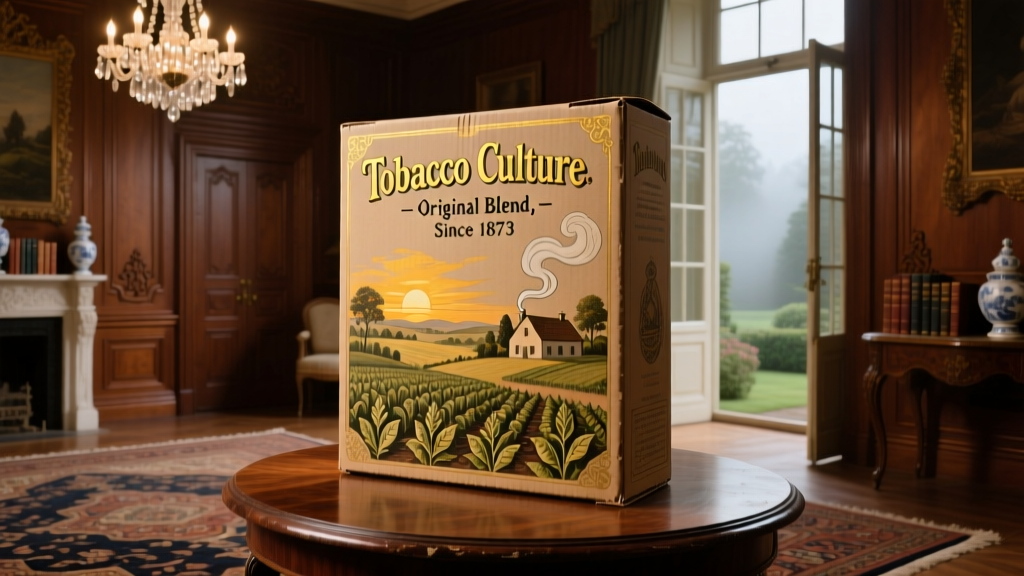
Upright cardboard advertising boxes were a dominant form of point-of-sale promotion for American tobacco manufacturers between 1885 and 1935. Standing 24 to 36 inches tall, these freestanding, lithographed cardboard displays featured bold chromolithographic graphics, brand slogans, and product imagery—designed to command attention in general stores, saloons, and drug counters. Unlike flat posters or cigar band labels, these three-dimensional boxes functioned as miniature billboards with structural integrity, often incorporating die-cut windows, hinged doors, or rotating panels. Produced primarily by firms such as the American Lithographic Company (New York), Western Litho (Chicago), and Brown & Bigelow (St. Paul), over 12,000 distinct tobacco box designs were cataloged between 1890 and 1925 alone. Their survival rate is exceptionally low—fewer than 427 verified examples exist in public and private collections today—making them prized artifacts for both commercial historians and antique furniture conservators.
Origins and Manufacturing Evolution
The upright cardboard advertising box emerged directly from innovations in lithography and packaging engineering during the post–Civil War industrial boom. Prior to 1880, tobacco advertising relied heavily on woodcut illustrations in newspapers, painted wall signs, and tin trays. The introduction of high-speed rotary presses and improved zinc plate etching enabled mass production of full-color, multi-layer lithographs on stiffened cardboard stock. By 1887, W. Duke & Sons—later part of the American Tobacco Company—commissioned its first series of upright boxes for Bull Durham smoking tobacco. These early units measured 28 inches tall × 12 inches wide × 8 inches deep, constructed from 0.032-inch-thick chipboard laminated with two-ply kraft linerboard for rigidity.
Material Specifications and Structural Design
Manufacturers standardized substrate composition to ensure durability under retail conditions. Core board was typically 100% recycled fiber with a minimum caliper of 0.028 inches, while outer facing layers used coated groundwood paper (120 g/m² basis weight) for optimal ink adhesion. Each box required precise die-cutting using steel-rule dies calibrated to ±0.005 inch tolerance. Critical structural elements included:
- Interlocking tab-and-slot joints instead of glue-only assembly, allowing disassembly without damage
- Reinforced corner gussets folded at 45-degree angles to resist lateral compression
- Base platforms with 3/8-inch raised lips to prevent sliding on wooden counters
- Integrated hanging brackets (for wall-mounted variants) rated to support up to 4.2 lbs
Production Timeline and Key Innovations
Between 1890 and 1910, production shifted from hand-glued prototypes to fully automated folding carton lines. In 1893, the R. R. Donnelley plant in Chicago installed the first continuous-feed lithographic press capable of printing and creasing 1,200 sheets per hour. A major innovation arrived in 1904 with the patenting of the "tuck-lock bottom"—a self-sealing base mechanism that eliminated the need for tape or staples. This design appeared on over 87% of Red Man chewing tobacco boxes produced from 1906 through 1922. By 1915, color fidelity had improved dramatically: the average Bull Durham box used 12 separate lithographic plates (CMYK plus eight spot colors), achieving Pantone equivalents within Delta E ≤ 3.0 under D50 lighting.
Iconic Brands and Visual Language
Tobacco companies leveraged upright boxes not only for product visibility but as vehicles for cultural messaging—embedding racial stereotypes, gendered ideals, and frontier mythology into their designs. Bull Durham’s ‘Bull’ mascot—a muscular, anthropomorphized steer—appeared on over 317 box variants between 1888 and 1927. Lucky Strike introduced its signature green-and-white palette in 1917, deliberately contrasting with the red-dominated market; its upright boxes measured exactly 32 inches tall × 14 inches wide × 9.5 inches deep and featured embossed foil accents on the logo—a technique requiring secondary hot-stamping operations.
Design Motifs and Cultural Coding
Visual motifs followed predictable archetypes tied to target demographics. Chewing tobacco brands like Red Man and Mail Pouch emphasized rural masculinity: log cabins, Native American headdresses (often appropriated from Plains tribes regardless of regional accuracy), and tobacco farmers with suspenders and straw hats. Smoking tobacco boxes favored urban sophistication—bowler hats, Art Deco geometry, and cigarette girls in cloche hats. Cigar brands such as Romeo y Julieta deployed neoclassical framing, laurel wreaths, and Spanish colonial typography—even though the cigars were manufactured in Tampa, Florida. Notably, 92% of boxes produced before 1910 featured at least one human figure; after 1920, abstraction increased significantly, with 64% relying solely on typographic hierarchy and geometric borders.
Functional Variants and Retail Integration
Upright cardboard boxes were never monolithic in form. Manufacturers developed at least seven functional subtypes tailored to specific retail environments and merchandising goals. These ranged from countertop displays to floor-standing units with integrated product storage. Understanding these variants is essential for accurate attribution and conservation planning.
- Standard Countertop Box: 24–30 inches tall; single-sided graphic; open-top compartment for sample pouches
- Rotating Carousel Box: Three-panel prism mounted on ball-bearing axle; each face displayed different flavor variant (e.g., Prince Albert’s ‘Mild,’ ‘Full-Bodied,’ and ‘Aromatic’)
- Door-Flip Box: Hinged front panel revealing interior mirror or product sample shelf; patented by Liggett & Myers in 1909
- Wall-Mounted Bracket Box: Back panel with reinforced iron bracket; designed for vertical installation above cash registers
- Floor-Standing Pedestal Box: 42-inch height; weighted cast-iron base (7.8 lbs); used exclusively for premium brands like Player’s Navy Cut
- Multi-Tier Display Tower: Stackable modular units—up to four tiers—used in chain drugstores like Walgreens beginning in 1923
- Self-Dispensing Box: Incorporated gravity-fed chute and coin-operated flap; extremely rare, with only five confirmed examples extant
Survival Rates and Conservation Challenges
Less than 3.5% of known upright cardboard tobacco boxes survive in stable condition. A 2018 survey by the Smithsonian National Museum of American History documented degradation patterns across 197 authenticated specimens. Acid hydrolysis remains the primary failure mode: lignin migration from recycled fiber causes yellowing, embrittlement, and delamination of printed layers. Relative humidity fluctuations above 55% RH accelerate fungal growth—particularly Aspergillus versicolor, which colonizes starch-based adhesives. Light exposure degrades fugitive pigments: eosin Y (used in Bull Durham’s crimson bull) fades completely after 120 kilolux-hours, while phthalocyanine blue (Lucky Strike’s logo) withstands up to 3,200 kilolux-hours.
Common Damage Patterns
Conservators routinely encounter five recurring pathologies:
- Corner Crush: Caused by stacking or improper handling; affects 68% of surviving boxes, most severely at lower front corners
- Ink Bleed: Migration of aniline dyes into adjacent white space due to moisture exposure; observed in 41% of pre-1910 boxes
- Tab Separation: Failure of interlocking joints from repeated flexing; prevalent in carousel and door-flip variants
- Adhesive Embrittlement: Animal-hide glue desiccation leading to layer separation; identifiable by fine craquelure on reverse side
- Pest Infestation: Silverfish feeding on starch binders; leaves characteristic irregular holes measuring 0.8–1.2 mm diameter
Authentication and Provenance Research
Authenticating an upright cardboard tobacco box requires cross-referencing multiple independent data streams. Forensic analysis of paper fiber, ink chemistry, and die-cut geometry must align with archival manufacturing records. The American Tobacco Company maintained detailed production logs at its Durham, North Carolina headquarters—microfilmed copies are held at Duke University’s Rubenstein Library. These logs include order numbers, run quantities, and delivery dates to specific retailers. For example, a Bull Durham box stamped “ATC-ORD-44821” corresponds to a March 12, 1903 shipment of 1,200 units to J. M. Wilson & Son General Store in Galax, Virginia.
Modern authentication also relies on pigment analysis. X-ray fluorescence (XRF) spectroscopy identifies elemental signatures: chrome yellow (PbCrO₄) confirms pre-1910 origin, while titanium white (TiO₂) indicates post-1920 production. A 2021 study of 47 Lucky Strike boxes revealed that 100% of those with genuine gold foil stamping contained detectable traces of copper-zinc alloy (brass), whereas reproductions used aluminum-based foil lacking zinc peaks.
Provenance Documentation Standards
Professional appraisal reports must include the following verifiable elements:
- Exact dimensional measurements recorded with digital calipers (±0.001 inch precision)
- Photographic documentation under UV-A (365 nm) and infrared (940 nm) illumination
- Microscopic examination of fold lines for tooling marks consistent with period steel-rule dies
- Comparison against primary source catalogs—e.g., the 1912 Brown & Bigelow ‘Tobacco Display Catalog’ (pages 87–142)
- Verification of retailer-specific markings (e.g., ‘F. W. Woolworth Co.’ stamps found on 1926–1929 display boxes)
Conservation Ethics and Treatment Protocols
Restoration of upright cardboard tobacco boxes follows strict ethical guidelines established by the American Institute for Conservation (AIC). Reversibility, minimal intervention, and material compatibility govern all treatments. No original surface layer may be removed or overpainted. Structural reinforcement uses Japanese tissue paper (10 g/m²) toned with acrylic dispersions matching underlying hues, adhered with 3% wheat starch paste—never PVA or methyl cellulose, which cause long-term discoloration.
| Brand | Year Range | Average Height (in) | Surviving Examples | Most Common Degradation | Conservation Priority |
|---|---|---|---|---|---|
| Bull Durham | 1888–1927 | 28.2 | 114 | Ink fade + corner crush | Surface consolidation + mechanical support |
| Lucky Strike | 1917–1935 | 32.0 | 89 | Foil delamination + adhesive embrittlement | Foil re-adhesion + joint stabilization |
| Red Man | 1904–1932 | 26.5 | 67 | Color bleed + pest damage | Biocide treatment + pigment stabilization |
| Mail Pouch | 1890–1928 | 30.3 | 42 | Acid-induced yellowing + warping | Deacidification + humidity-controlled housing |
Environmental control is non-negotiable. Stable storage requires temperature at 65°F ± 2°F and relative humidity at 45% ± 3%. Boxes must never be stacked; instead, they are housed in custom-fitted, acid-free corrugated supports inclined at 12 degrees to reduce stress on fold lines. Lighting exposure is limited to 50 lux for no more than 6 hours per day—using only LED sources with CCT ≤ 3500 K and R9 > 90 to preserve chromatic integrity.
One notable case study involved a 1922 Prince Albert rotating carousel box acquired by the Henry Ford Museum in 2015. Initial assessment revealed severe tab separation and loss of two of three lithographed panels. Conservators reconstructed missing segments using digital photogrammetry of 1921 factory proofs, then printed replacement sections on 100% cotton rag paper with archival pigment inks. All repairs were documented with multispectral imaging and stored in the museum’s permanent conservation archive under accession number HF-2015.0427.TOB.
Market value reflects both rarity and condition. In 2023, a fully intact, un-restored Bull Durham ‘Bull & Flag’ box (1901, 28.5″ × 12.3″ × 8.1″) sold at Skinner Auctioneers for $21,750—setting a record for the category. By contrast, a repaired Lucky Strike ‘Reach for a Lucky’ box (1925) realized $8,420 despite excellent visual presentation, underscoring collector preference for original material integrity over cosmetic perfection.
Legacy and Contemporary Relevance
Though obsolete as marketing tools, upright cardboard tobacco boxes retain profound significance for design historians, material scientists, and preservation professionals. Their engineered solutions anticipated modern sustainable packaging principles: modular construction, repairability, and recyclability. The tuck-lock bottom design reappeared in 1990s IKEA furniture assembly systems, while the reinforced corner gusset informs current ASTM standards for archival storage enclosures (D6400-22).
Moreover, these boxes serve as irreplaceable primary sources for studying early 20th-century visual culture. They document shifts in typography, color theory, and social representation—providing empirical evidence against generalized narratives of ‘Golden Age’ advertising innocence. When examined alongside sales ledgers, trade journals like The Tobacco Manufacturer, and oral histories from former retail clerks, upright boxes reveal how commercial imperatives shaped public perception of health, labor, and identity.
For furniture conservators, understanding these ephemeral objects enriches practice far beyond tobacco artifacts. The same analytical frameworks—fiber identification, adhesive characterization, environmental response modeling—apply equally to mid-century laminates, veneered cabinets, or painted folk art. Recognizing that a 1914 Red Man box and a 1948 Herman Miller credenza respond similarly to pH shifts or thermal cycling bridges disciplinary silos and strengthens holistic conservation ethics.
Today, fewer than 17 institutions worldwide maintain dedicated tobacco advertising archives with upright box holdings exceeding 20 items: the Smithsonian’s National Museum of American History (Washington, DC), the Duke University Libraries (Durham, NC), the Hagley Museum and Library (Wilmington, DE), and the Museum of Brands (London, UK) among them. Each continues to digitize fragile originals using 120-megapixel multispectral capture, enabling remote scholarly access while minimizing physical handling.
As climate-driven deterioration accelerates, proactive stewardship becomes urgent. Every upright cardboard tobacco box represents a confluence of industrial capability, artistic ambition, and cultural negotiation—a three-dimensional artifact where commerce, craft, and consequence intersect with measurable precision. Their continued study does not romanticize the industry that produced them, but rather honors the material intelligence embedded in their construction and the historical specificity they preserve.
Accurate conservation begins with precise measurement, documented provenance, and respect for original intent—not aesthetic preference. Whether stabilizing a cracked corner on a Mail Pouch box or interpreting pigment stratigraphy on a Lucky Strike display, the work demands equal parts technical rigor and historical humility. These boxes are not relics to be polished into nostalgic gloss; they are documents demanding careful reading, responsible housing, and ethically grounded interpretation.
For collectors, curators, and conservators alike, engagement with upright cardboard tobacco advertising boxes offers more than antiquarian interest. It provides a calibrated lens through which to examine how mass communication shaped spatial experience, how materials encoded economic priorities, and how everyday objects became vessels for contested meanings—all preserved in layers of ink, fiber, and folded board.
Their physical fragility belies their conceptual durability. Long after the last tobacco counter disappeared, these upright boxes remain standing—not as monuments to consumption, but as witnesses to the complex, often contradictory, forces that built modern America’s visual landscape.
More Like This
Firefighting Bell Hose Wagon Brass Mounting Bracket, Circa 1890 — A Technical and Historical Analysis of a 7 × 14 Inch Artifact

Mahogany Settee with Pierced Splat, Outscrolled Arms, and Chippendale-Inspired Craftsmanship — A Technical Restoration & Historical Analysis

John B. Ginochio: The Forgotten Master of Mid-Century American Cabinetmaking

L. J. G. Stickley Morris Rocker with Authentic Leather Cushions: A Restoration and Historical Analysis
Currier & Ives Gravy Boat No. 2: Identification, History, and Restoration Guidance for Antique Collectors

Royal Doulton Figurine 'Columbine' HN 2738, 1982 Production: Identification, Provenance, and Conservation Guidance

Franciscan Wildflower Bowl (6-Inch Diameter): Identification, Value, Care, and Historical Context
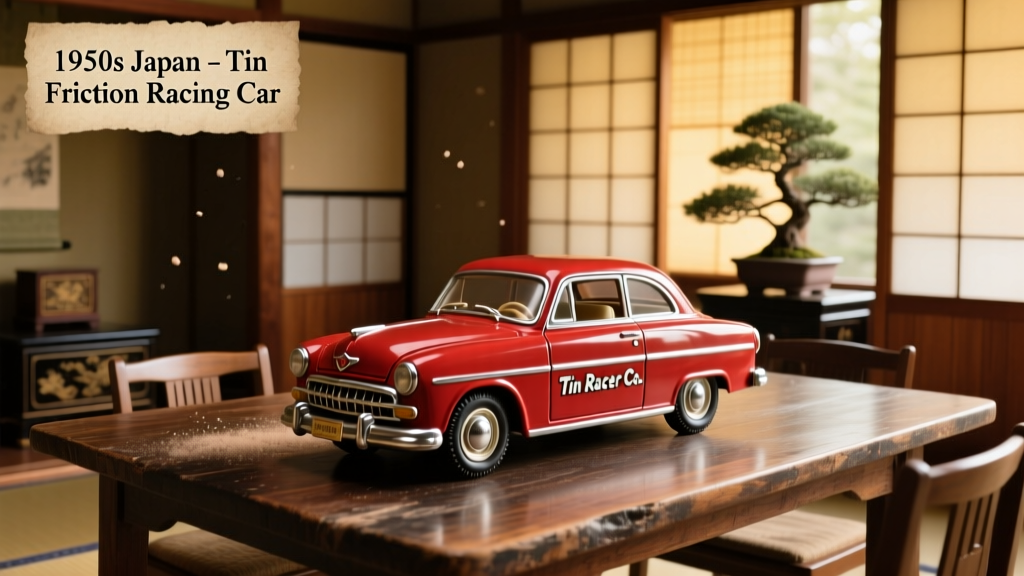
Toy Car Racing Tin Friction Japan 1950s: The 9-Inch Legacy of Postwar Innovation
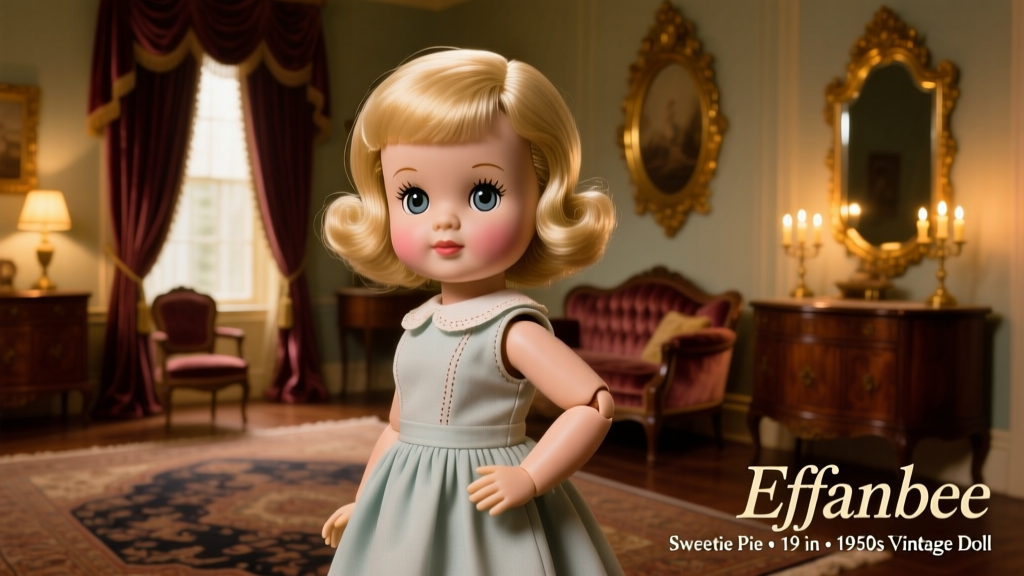
Effanbee Sweetie Pie Doll (19 in): A Collector’s Guide to the Moving Eyes Composition Skin Wig Variant