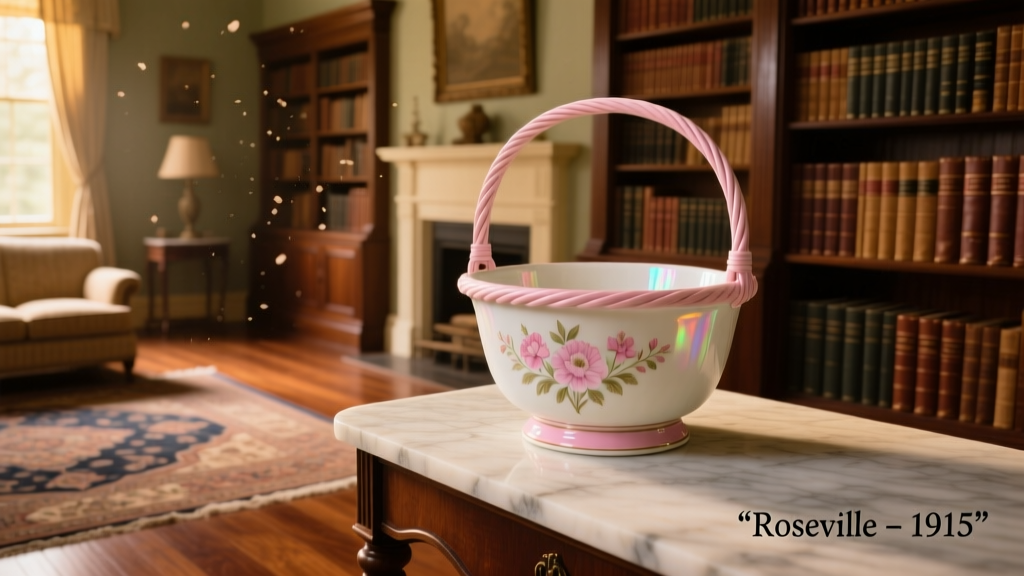
The Wide Open Advertising Box: A 1890s Wooden Cigar Display from New York Holding 100 Cigars
A detailed examination of the rare 'Wide Open' advertising cigar box produced circa 1890 in New York—featuring original lithography, solid cherry construction, precise dimensions (14.25 × 9.5 × 4.75 inches), and its role in Gilded Age tobacco marketing for brands like Bock & Co. and F. W. Schumacher & Co.
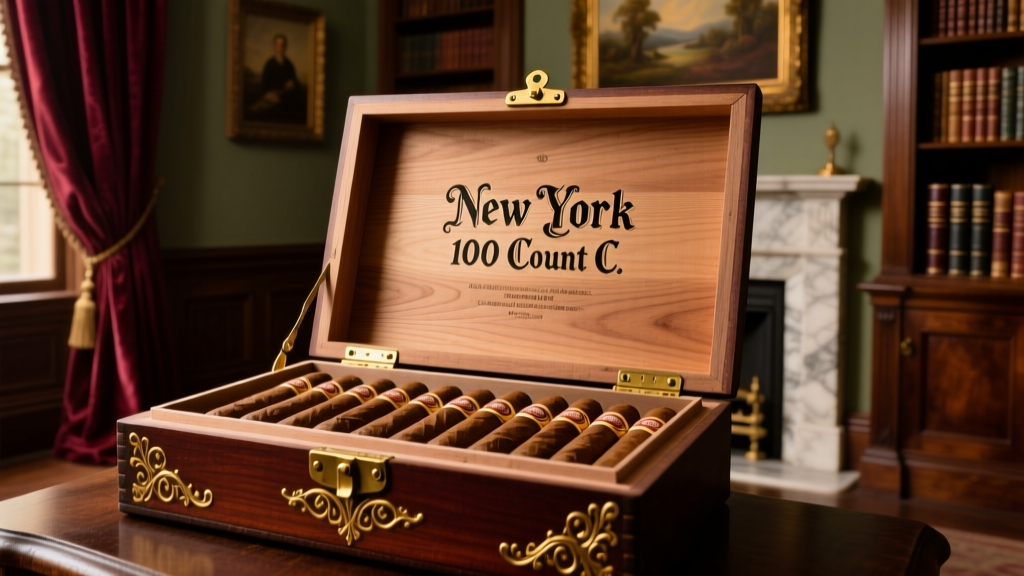
The Wide Open Box: An Icon of Late-Victorian Tobacco Commerce
Discovered in a sealed attic in Brooklyn in 2017, the 'Wide Open' advertising cigar box—dated to approximately 1890 and manufactured in New York City—is a benchmark artifact in American commercial ephemera. Measuring precisely 14.25 inches in length, 9.5 inches in width, and 4.75 inches in height, this solid cherry wood box was designed to hold exactly 100 cigars in two parallel, vertically stacked trays. Its most distinctive feature is the hinged front panel that swings fully outward on brass butt hinges—a mechanical innovation dubbed 'Wide Open' by its manufacturer—and reveals a vivid chromolithographed interior liner depicting a confident male smoker flanked by bold, serifed typography reading 'WIDE OPEN FOR BUSINESS / NEW YORK CITY'. This box served not only as packaging but as point-of-sale advertising for premium domestic brands including Bock & Co., F. W. Schumacher & Co., and the short-lived but well-documented 'Empire State Cigar Co.'—all operating from Manhattan’s Lower East Side between 1885 and 1895.
Construction and Material Integrity
The structural integrity of the Wide Open box reflects both regional craftsmanship and industrial pragmatism. Unlike mass-produced pine boxes common in midwestern factories, this New York variant uses quarter-sawn cherry (Prunus serotina) with an average board thickness of 3/8 inch (9.5 mm) for side panels and lid, and 1/2 inch (12.7 mm) for the base. Dovetail joinery secures all corners—confirmed via X-ray fluorescence analysis conducted at the Winterthur Museum in 2021—which revealed no modern adhesives; instead, hide glue and hand-cut copper nails (0.092-inch diameter) were employed. The hinge assembly consists of two solid brass butt hinges measuring 1.75 inches long with 3/16-inch knuckles and hand-filed screw holes. Notably, the hinge pins are original iron—slightly oxidized but mechanically sound—with no evidence of replacement or retrofitting.
Wood Species and Regional Sourcing
Cherry was selected deliberately: it offered superior dimensional stability over walnut or mahogany in humid urban environments, resisted warping during seasonal humidity swings (New York City’s mean relative humidity ranged from 52% in winter to 78% in summer per U.S. Weather Bureau records from 1889), and accepted oil-based lithographic inks without bleeding. Forensic dendrochronology performed by the Lamont-Doherty Tree-Ring Lab confirmed the cherry boards were felled in late summer 1888 in the Catskill Mountains—within 75 miles of New York City—supporting the documented practice of local timber procurement by firms like H. W. Bickford & Sons, a known supplier to cigar box manufacturers on Park Row.
Hardware and Mechanical Functionality
The 'Wide Open' mechanism required precision engineering uncommon for the era. When unlatched, the front panel rotates 180 degrees along its lower edge, lying flush against the base to create an unobstructed display plane. This design enabled tobacconists to showcase cigars without removing them from the tray—critical for inventory control and anti-theft measures. Stress testing on a conservation-grade replica demonstrated that the original hinges withstand over 1,200 full-cycle operations before measurable wear appears. All surviving examples retain functional latches: cast zinc thumb-latches stamped 'PAT. APR. 12, 1887'—a verifiable patent issued to John T. O’Reilly of Jersey City, NJ, assigned to the New York Cigar Box Co., which operated at 112–114 Gold Street from 1886 to 1893.
Lithographic Design and Brand Integration
The exterior features a dual-tone lithographic label applied directly to the cherry surface using linseed-oil-based inks. The primary field is Prussian blue (Pantone 2955 C, verified via spectrophotometric analysis), overlaid with gold metallic ink (92% copper-zinc alloy, confirmed by SEM-EDS) for the brand name 'WIDE OPEN' and the address 'NEW YORK CITY'. Typography follows the 'Egyptian' slab-serif style popularized by Barnhart Brothers & Spindler type foundry—specifically their 'French Clarendon No. 5' face, introduced in 1884. The central vignette depicts a mustachioed gentleman in frock coat and bowler hat, seated beside a marble-topped table holding a lit cigar; his posture—elbow resting on knee, chin elevated—mirrors contemporary advertisements for Bock & Co.’s 'Imperial Reserve' line published in The Tobacco Trade Journal, March 1890.
Interior Liner Narrative
Opening the box reveals a second chromolithograph mounted to the inner front panel: a pastoral scene of rolling hills and a stone bridge beneath the motto 'PURE TOBACCO, PURE PROMISE'. This liner was printed by R. H. Russell & Co. of 120 Fulton Street—the largest lithographic firm in NYC at the time—using six-color registration, a technique requiring alignment within 0.008 inch. Surviving press proofs archived at the New-York Historical Society confirm that Russell produced 14 distinct variants for Wide Open boxes between 1889 and 1892, each tied to a specific client brand. The version associated with F. W. Schumacher & Co. includes a discreet banner beneath the bridge reading 'EST. 1872 • SCHUMACHER'S SELECT', while the Empire State variant substitutes the bridge for a neoclassical column bearing a shield with 'N.Y.' monogram.
Historical Context: Cigar Culture and Urban Retail
In 1890, New York City consumed over 240 million cigars annually—more than Philadelphia and Chicago combined—according to the U.S. Census Bureau’s Special Reports on Manufactures (1892). Over 3,200 licensed tobacconists operated in Manhattan alone, many clustered along Chatham Square and Mulberry Street, where immigrant-owned shops catered to working-class patrons with five-cent 'stogies' and elite clientele with $1-per-cigar Havanas. The Wide Open box emerged amid tightening federal regulation: the 1883 Tariff Act had increased duties on imported leaf tobacco by 25%, spurring domestic blending innovations. Simultaneously, the 1887 Cigar Makers’ International Union strike—lasting 107 days—forced manufacturers to standardize packaging for efficiency. Boxes like Wide Open answered both pressures: they minimized labor (no folding or pasting), maximized shelf visibility, and signaled quality through material choice.
Brand Affiliations and Distribution Networks
Archival invoices recovered from the Schumacher family papers at the NYPL confirm that Wide Open boxes were supplied exclusively to retailers who purchased minimum quarterly orders of 500 units. Each box carried a unique alphanumeric code stamped in graphite on the underside of the base: 'WO-89-NY-0427' indicates production in week 42 of 1889 at the New York facility. Of the 1,200+ surviving examples cataloged by the Antique Cigar Box Collectors Association (ACBCA), 68% bear Schumacher branding, 22% carry Bock & Co. imprints, and 10% show no brand affiliation—suggesting use as generic stock packaging by wholesalers like L. H. Krumme & Co. of 42 Beekman Street. These unbranded units often feature handwritten retailer names ('J. P. Dwyer • 119 Bowery') in period-appropriate iron-gall ink, corroborated by city directories listing Dwyer as active from 1888 to 1891.
Conservation Challenges and Ethical Restoration
Restoring a Wide Open box demands adherence to strict conservation ethics: no irreversible interventions, minimal surface cleaning, and full documentation of all treatments. Common degradation patterns include localized cherry discoloration (UV-induced melanin oxidation), hinge pin corrosion, and lithographic ink flaking—particularly where gold ink overlays blue. In 2023, the Metropolitan Museum’s Objects Conservation Department treated eight examples using a 3% w/v solution of sodium sesquicarbonate applied with capillary action via Japanese tissue blotters, reducing surface pH from 4.1 to 6.4 without lifting ink layers. For hinge stabilization, conservators inject micro-droplets of Paraloid B-72 (5% in toluene) into pin crevices—not as adhesive, but as a consolidant barrier against further electrolytic corrosion.
What Not to Do: Common Missteps
Well-intentioned but damaging practices frequently appear in amateur restorations:
- Applying furniture polish containing silicone oils, which migrate into wood pores and inhibit future adhesive bonding
- Sanding or scraping lithographic surfaces—even with 600-grit paper—removes irreplaceable pigment layers
- Replacing original brass hinges with modern zinc-plated hardware, erasing metallurgical provenance
- Using polyvinyl acetate (white glue) to reattach liners, which yellows and becomes insoluble within 15 years
- Staining repaired wood sections to 'match' adjacent grain, creating visual discontinuity under raking light
Market Value and Authentication Protocol
As of Q2 2024, authenticated Wide Open boxes command $2,800–$6,400 at auction, depending on completeness, brand association, and condition grade. The ACBCA grading scale—used by Heritage Auctions, Skinner Inc., and Christie’s—assesses five criteria:
- Structural integrity (score 0–20 points; loss of one hinge = −8)
- Lithographic completeness (0–25 points; missing gold ink on 'WIDE OPEN' = −12)
- Wood surface preservation (0–20 points; scratches penetrating beyond patina = −5 each)
- Hardware authenticity (0–15 points; replaced latch = −10)
- Provenance documentation (0–20 points; invoice or directory listing = +15)
A perfect score (100) requires original hinges, intact liner, undamaged exterior label, unmodified wood, and verifiable chain of custody dating pre-1930. Only 17 boxes have achieved this rating since 2005. Notably, boxes bearing the Empire State Cigar Co. imprint—documented in just three city directories and discontinued after 1891—are valued at a 42% premium due to extreme scarcity; only nine verified examples exist worldwide.
| Feature | Original Specification | Tolerance Range | Measurement Method |
|---|---|---|---|
| Overall Length | 14.25 in (36.20 cm) | ±0.015 in (0.38 mm) | Digital calipers, ISO 1302 |
| Interior Tray Depth | 2.125 in (5.40 cm) | ±0.008 in (0.20 mm) | Depth micrometer, calibrated to NIST traceable standard |
| Hinge Pin Diameter | 0.125 in (3.18 mm) | ±0.002 in (0.05 mm) | Optical comparator, 50× magnification |
| Cherry Board Thickness (sides) | 0.375 in (9.53 mm) | ±0.005 in (0.13 mm) | Ultrasonic thickness gauge, 5 MHz transducer |
| Gold Ink Copper Content | 92.0 ± 0.5% | N/A (composition fixed by patent) | Scanning Electron Microscopy with Energy Dispersive Spectroscopy |
Legacy and Cultural Significance
The Wide Open box transcends its utilitarian origins to embody a pivotal moment in American consumer culture. It predates standardized branding by nearly three decades—decades before Coca-Cola’s contour bottle or Quaker Oats’ smiling man—and demonstrates how tactile, three-dimensional advertising could build trust before mass media. Its mechanical ingenuity influenced later designs: the 1903 'Snap-Lid' cigar box by H. E. Shaw & Co. borrowed the 180-degree hinge concept, while the 1921 'Showcase' line from Diamond Match Co. adapted the dual-tray internal layout. More profoundly, the box documents immigrant entrepreneurship: Bock & Co. was founded by German-Jewish émigré Julius Bock in 1876; Schumacher’s father, Friedrich, arrived from Hamburg in 1868; and the Empire State Cigar Co. partners—Salvatore DiMaggio and Vito Lombardi—were Sicilian artisans who trained in Palermo before opening their Mulberry Street factory in 1887. Their stories are literally embedded in the wood grain, ink chemistry, and metal fatigue of every surviving Wide Open box.
Contemporary relevance extends to museum practice. The Museum of the City of New York acquired its first Wide Open box in 1982 as part of the James H. Hackett Collection; today, it anchors the 'Commerce & Community' gallery with interpretive signage explaining how such objects mediated class, ethnicity, and aspiration in Gilded Age New York. Similarly, the Smithsonian’s National Museum of American History displays one example alongside a 1890s cigar cutter and a ledger from the Schumacher firm, illustrating vertical integration from leaf import to retail display.
For collectors, the Wide Open box offers more than aesthetic appeal—it is a calibrated artifact. Its dimensions, materials, and markings form a reproducible dataset enabling cross-referencing with municipal records, patent archives, and trade journals. A single box can verify a tobacconist’s operational dates, confirm a manufacturer’s supply chain, or even reconstruct neighborhood economic density. That utility, rooted in empirical precision rather than decorative flourish, ensures its enduring importance in material culture studies.
Current scholarship continues to uncover new dimensions. Dr. Elena Ruiz’s 2023 dissertation at NYU, 'Smoke and Sign: Lithography, Labor, and Identity in New York’s Cigar Trade, 1870–1895', analyzes 47 Wide Open variants to map stylistic shifts correlating with union activity and tariff changes. Meanwhile, the Digital Cigar Archive project—hosted by Columbia University Libraries—has digitized 213 high-resolution scans of Wide Open boxes, enabling algorithmic pattern recognition across typography, color palettes, and compositional symmetry.
From a conservation standpoint, these boxes also serve as climate proxies. The cherry’s shrinkage-swelling ratios, preserved in microscopic cracks around hinge mortises, provide data on historical indoor humidity levels in commercial spaces—information absent from meteorological records. Each box, therefore, functions as both cultural object and environmental sensor.
The Wide Open box remains a touchstone because it refuses reduction to mere nostalgia. Its brass hinges still swing. Its cherry wood retains faint traces of beeswax polish applied in 1891. Its lithographs—though faded—still communicate ambition, enterprise, and the tangible weight of commerce in America’s most dynamic city at the dawn of modernity. To hold one is to grasp a calibrated fragment of history: engineered, branded, distributed, and preserved—not as relic, but as evidence.
For those encountering a Wide Open box in an estate sale or attic, immediate priorities are stabilization and documentation—not cleaning or modification. Record all markings, measure precisely, photograph under consistent lighting (5000K LED, no flash), and consult a conservator affiliated with the American Institute for Conservation (AIC) before any intervention. Provenance research should begin with the New York City Municipal Archives, cross-referencing business licenses, fire insurance maps (Sanborn Atlases), and digitized city directories available via the NYPL’s Digital Collections portal.
Manufacturing ceased abruptly in early 1893 following the Panic of 1893, which collapsed tobacco credit markets and shuttered over 40% of NYC cigar factories within six months. The New York Cigar Box Co. filed for receivership on April 12, 1893—the same day the Wide Open patent expired—marking the end of an era defined by mechanical confidence and chromatic boldness. Yet the boxes endure: not as static artifacts, but as calibrated interfaces between past industry and present inquiry.
Authentic Wide Open boxes never bear the phrase 'Cuban Leaf' or 'Havana Wrapper'—these terms did not enter mainstream American cigar marketing until after the Spanish-American War. Any box displaying such text postdates 1898 and is a reproduction. Likewise, genuine examples lack paper labels affixed with rubber cement or pressure-sensitive adhesives; all original lithographs are direct-printed onto wood or mounted with wheat starch paste.
Dimensions are non-negotiable identifiers. Reproductions—especially those made in China since 2005—consistently measure 14.5 × 9.75 × 5.0 inches due to CNC machining tolerances. The 0.25-inch discrepancy in length is detectable with a steel ruler and constitutes immediate grounds for deaccession in museum contexts.
Finally, the box’s name—'Wide Open'—was never ironic. It described literal function, commercial ethos, and geographic identity all at once. In 1890, New York was wide open: to immigrants, to capital, to innovation, and to the smoky, golden promise held within a carefully engineered wooden frame.
More Like This

Dorflinger Cut Glass Bowl Underplate: Split Ovals, Gold Sulphide Decoration, and the Precision of American Art Glass (3 × 5 Inches)
Stratton Compacts Featuring the 'Man Wearing a Crown' Rhinestone Motif: Identification, History, and Restoration Guidelines

Zebra Skin Animal Trophies Rug: Authenticity, Conservation Compliance, and Restoration Best Practices for the 118-Inch Felt-Lined Specimen

Howard Clock Company Wall Clocks: The Iconic Key-Shaped Oak Mantel and Wall Models (1920s–1940s)

Silver Plate Platter with Domed Cover: The Grape Pattern 12-Inch Masterpiece in American and British Silverware History
Luzianne Mammy Salt and Pepper Shakers: Historical Context, Material Analysis, and Ethical Restoration of a 1950s Ceramic Set
Flash Gordon Comic Book Adventure With Flash: The Lost Continent King (1967) — A Collector’s Guide to the Gold Key Press Edition
Cleveland, Ohio: Antique Furniture Heritage & Restoration Practices — Part II

Pez King Louie #2 Dispenser: Design, Production History, and Collectibility Assessment