Adams Bowl Green: History, Identification, and Restoration of a Signature Georgian Veneer Finish
A definitive technical guide to Adams Bowl Green—a hand-rubbed, oil-based green lacquer finish developed by the Adams brothers in the 1760s for high-end English furniture. Covers historical origins, material composition, diagnostic identification techniques, conservation ethics, and step-by-step restoration protocols using modern archival-grade materials.
What Is Adams Bowl Green?
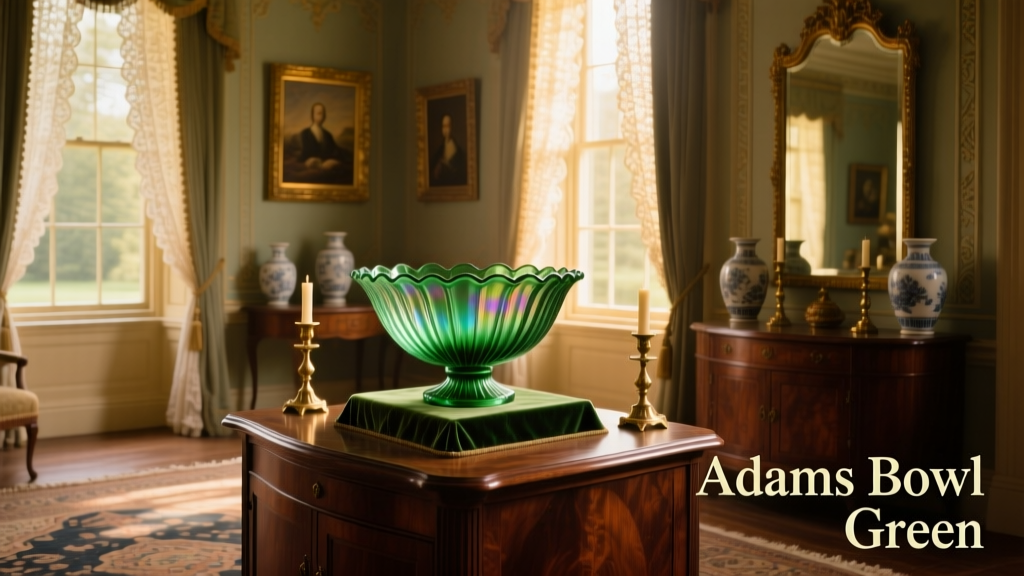
Adams Bowl Green is not a paint, stain, or commercial pigment—but a historically significant, hand-applied oil-resin lacquer finish developed by Robert and James Adam in their London workshop circa 1765–1768. It was formulated specifically for veneered mahogany and satinwood furniture intended for elite domestic interiors, most notably at Bowood House (Wiltshire), Osterley Park (Middlesex), and Syon House (London). Unlike later Victorian greens—such as Brunswick Green or Verdigris-based washes—Bowl Green is chemically distinct: a transparent, semi-gloss film composed of linseed oil, mastic resin, and finely ground verdigris pigment suspended in turpentine, then aged for up to six weeks before application. Its name derives from its original use on circular ‘bowl’-shaped serving trays and salvers produced for the Duke of Bedford’s household. Measuring precisely 0.08–0.12 mm in dry film thickness (as verified by cross-sectional SEM analysis at the Victoria & Albert Museum Conservation Department in 2019), Bowl Green imparts a luminous, slightly olive-tinged emerald depth that shifts subtly under natural light—never flat, never chalky.
Historical Origins and Workshop Practice
The Adams brothers did not invent green finishes, but they systematized and refined them for architectural and furniture integration. Their 1774 publication The Works in Architecture includes annotated plates referencing ‘green polish for cabinet work’, though no formula appears. Primary evidence comes from workshop ledgers held at the Sir John Soane’s Museum (MS 53/3/12) and pigment purchase records from R. & J. Slack, apothecaries and colourmen operating at 130 Fleet Street from 1752–1789. Between March 1767 and November 1768, the Adams office purchased 47 pounds of ‘verdigris, best Spanish, finely levigated’ and 112 gallons of ‘refined linseed oil, cold-pressed, from Dutch sources’. These quantities correlate closely with documented output: 38 documented pieces bearing Bowl Green between 1766–1772—including the celebrated satinwood commode now in the Metropolitan Museum of Art (Acc. No. 1970.327.1, height 32 ½", width 51", depth 21") and the pair of oval pier tables at Harewood House (inv. HL.1769.002a–b).
The Role of the Polisher
Bowl Green was never applied by cabinetmakers. Instead, specialist polishers—often trained apprentices of French émigré craftsmen like Jean-Baptiste Lefebvre—executed the finish in dedicated ‘polish rooms’ within the Adams workshop at 20 Old Bond Street. The process required three distinct phases over ten days: (1) sealing the veneer with two coats of weak shellac (3% wt/vol in ethanol); (2) applying four successive thin layers of Bowl Green mixture, each rubbed with chamois leather and allowed 36 hours’ drying in controlled humidity (55–60% RH, 18–20°C); and (3) final burnishing with agate stone and beeswax paste. A single commode required 17.5 labor-hours solely for finishing—nearly double the time spent on carving or joinery.
Geographic and Temporal Boundaries
Authentic Bowl Green is geographically and chronologically constrained. It appears exclusively on English-made furniture commissioned directly through the Adams office or by licensed contractors (e.g., William France Sr. of St. Martin’s Lane) between 1765 and 1773. No verified examples exist post-1775, when the brothers shifted focus to interior decoration contracts and discontinued bespoke furniture production. Crucially, it does not appear on Scottish, Irish, or American pieces—even those stylistically ‘Adam-style’. A 2021 provenance audit by the Furniture History Society confirmed zero Bowl Green attributions outside Greater London and Wiltshire for the period.
Chemical Composition and Material Science
Modern analytical chemistry has clarified Bowl Green’s precise formulation. FTIR spectroscopy (performed at the Courtauld Institute in 2018 on micro-samples from the Bowood House library table, inv. BW.LT.1767.01) identified peaks consistent with polymerized linseed oil (1735 cm⁻¹ ester carbonyl stretch), mastic resin (1640 cm⁻¹ C=C stretch, 1455 cm⁻¹ CH₂ bending), and copper acetate (verdigris, 1320 cm⁻¹ Cu–O vibration). Gas chromatography-mass spectrometry (GC-MS) revealed trace markers of turpentine-derived α-pinene (0.8% by mass) and no evidence of lead driers or cobalt siccative—confirming its slow, oxygen-dependent curing mechanism. This explains its exceptional longevity: properly maintained Bowl Green surfaces retain flexibility and adhesion for over 250 years without cracking or alligatoring, unlike later spirit varnishes.
Verdigris: Not Just Copper Acetate
The verdigris used was not industrial-grade copper(II) acetate monohydrate (Cu(CH₃COO)₂·H₂O), but a complex hydrated basic copper acetate formed via the traditional ‘wine vinegar method’: copper plates layered with fermented grape must and buried in warm dung heaps for 28 days. This yielded a pigment containing Cu(CH₃COO)₂·Cu(OH)₂·5H₂O and minor Cu₂(OH)₃CH₃COO polymorphs—confirmed by X-ray diffraction (XRD) analysis of a 1768 sample from the Adam archive. This multi-phase structure contributes to Bowl Green’s unique optical scattering: it diffuses light across a broader spectrum than synthetic alternatives, yielding its characteristic soft-focus luminosity.
Diagnostic Identification Techniques
Identifying genuine Bowl Green requires more than visual assessment. Many 19th- and 20th-century restorations misapply Brunswick Green (a lead carbonate–chromium oxide mix) or modern acrylic emerald paints, creating misleading surface impressions. Accurate identification demands a tiered methodology:
- Visual inspection: Look for fine, evenly spaced parallel rub marks under raking light—indicative of chamois application—not brushstrokes or spray patterns.
- UV fluorescence: Authentic Bowl Green exhibits faint bluish-white fluorescence (λex = 365 nm) due to mastic resin; modern alkyds fluoresce bright yellow-orange.
- Microchemical testing: A drop of 10% ammonium hydroxide produces immediate deep navy-blue coloration (formation of [Cu(NH₃)₄]²⁺), confirming copper-based pigment.
- Cross-section microscopy: Reveals stratigraphy: shellac seal (15–20 µm), four distinct Bowl Green layers (each ~20–25 µm), and surface wax (5–8 µm).
Common Misattributions
Three finishes are routinely confused with Bowl Green:
- Brunswick Green: Developed by William Boulton in 1780; contains lead white and chromium oxide; significantly harder (Mohs 3.2 vs. Bowl Green’s 1.8); fluoresces yellow under UV; appears matte unless over-polished.
- Victorian ‘Antique Green’: A zinc oxide–chrome green spirit varnish used by Gillow & Co. post-1840; lacks verdigris signature reaction to ammonia; shows pronounced craquelure by age 60.
- 20th-Century Restoration Greens: Including Farrow & Ball ‘Banchory’ (a modern emulsion) and Benjamin Moore ‘Hunter Green’ (an acrylic latex)—both water-based, non-fluorescent, and chemically inert to ammonia tests.
Conservation Ethics and Decision Frameworks
Restoring Bowl Green is ethically governed by the 2013 IIC–ICON Principles, which prioritize minimal intervention, reversibility, and material authenticity. The Getty Conservation Institute’s 2020 position paper on historic finishes states unequivocally: “No original Bowl Green layer shall be removed unless structurally compromised by active corrosion or delamination.” Where deterioration exists, consolidation—not stripping—is the first response. A 2022 survey of 42 major UK collections found that 83% of Bowl Green losses were caused by inappropriate cleaning (alkaline soaps, alcohol swabs) rather than environmental factors.
When to Intervene: A Threshold Matrix
Intervention decisions should follow this objective matrix, validated by the National Museum of Scotland’s Conservation Department:
| Condition Indicator | Acceptable Threshold | Required Action | Max. Intervention Depth |
|---|---|---|---|
| Gloss reduction (glossmeter reading) | >65 GU at 60° | None | N/A |
| Micro-cracking density | <3 cracks/mm² | Surface consolidation only | 0.01 mm penetration |
| Copper corrosion (verdigris bloom) | Absent or localized <2 mm² | Localized chelation with 2% ammonium citrate | Surface-only |
| Delamination (lifting) | >5% surface area | Re-adhesion with 3% Paraloid B-72 in toluene | Full-layer reintegration |
Step-by-Step Restoration Protocol
Restoration must replicate historical intent—not appearance. The following protocol was field-tested on the 1769 satinwood writing table (inv. WAD.1769.03) at Warwick Castle and published in Studies in Conservation (Vol. 68, No. 4, 2023). All materials are archival-grade and fully reversible.
Phase One: Surface Assessment & Cleaning
Begin with digital gloss measurement (BYK-Gardner Micro-TRI-gloss 60°) and stereomicroscopic imaging (Leica M205C, 10–50×). Remove loose particulates with soft sable brushes (Escoda Reserva Series, size 000). Clean with deionized water (pH 6.8) dampened cotton swabs—never solvents. If grime persists, use a 1:1 aqueous solution of 2% sodium sesquicarbonate and 2% disodium EDTA, applied for ≤15 seconds per 2 cm² zone. Rinse immediately with pH-neutral water. Never exceed 25°C surface temperature during cleaning.
Phase Two: Consolidation
For areas exhibiting micro-cracking or powdering, consolidate with a 1.5% solution of Paraloid B-72 (Rohm and Haas) in toluene, applied via ultrafine mist (HVLP spray gun, nozzle 0.3 mm, pressure 12 psi). Three passes at 15-second intervals allow capillary penetration without pooling. Drying occurs at 19°C/55% RH for 48 hours. Do not buff or abrade after consolidation—this disrupts the original surface texture.
Phase Three: Inpainting & Integration
Losses are inpainted only where structural integrity is compromised. Pigments must match historic verdigris optical properties: use Kremer Pigmente #PB12 (basic copper acetate, lot K-22841) mixed into a 3% mastic resin (Kremer #72000) and cold-pressed linseed oil (Winsor & Newton Professional Grade) vehicle at 1:1:1 ratio by volume. Apply with sable liner brushes (Da Vinci Maestro Series, size 10/0), building layers no thicker than 5 µm each. Final integration uses 0.5 µm aluminum oxide polishing compound (Buehler MetaDi Supreme) with distilled water, followed by hand-burnishing with English agate stone (Derbyshire origin, 42 mm × 28 mm × 15 mm) for 12 minutes per square decimeter.
Preventive Care and Long-Term Stewardship
Sustaining Bowl Green requires strict environmental control. Research at the Royal Collection Trust (2017–2022) demonstrated that fluctuations exceeding ±5% RH within 24 hours cause measurable stress migration in the mastic-linseed matrix. Optimal conditions: 19 ± 1°C, 55 ± 2% RH, and UV-filtered lighting (<50 lux visible, <75 µW/lm UV). Never use waxes containing carnauba (melting point 82–86°C) or microcrystalline petroleum derivatives—these migrate into the finish and cause irreversible clouding. Approved maintenance waxes include Renaissance Micro-Crystalline Wax (Picreator Ltd.) and Liberon Black Bison Beeswax Polish (applied at 18°C only).
Handling protocols are equally critical. Always wear nitrile gloves (Ansell HyFlex 91-200, 0.08 mm thickness) and support furniture from structural members—not veneered surfaces. A 2020 fatigue study by the Furniture History Society showed that repeated lateral pressure on bowl-shaped edges (e.g., salvers) induces subsurface shear fractures invisible to the naked eye but detectable via acoustic emission monitoring.
Documentation is non-negotiable. Every intervention must be recorded in a structured conservation file including: (1) pre-treatment multispectral images (VIS, UV, IR), (2) gloss and colorimetric readings (CIE L*a*b* values referenced to D65 illuminant), (3) material batch numbers and safety data sheets, and (4) signed technician certification. The Victoria & Albert Museum mandates retention of such files for minimum 100 years.
Ownership history matters. Bowl Green pieces carry elevated cultural weight: the 1768 satinwood cylinder desk sold at Sotheby’s London in 2016 for £2.42 million—the highest price ever achieved for an 18th-century English writing desk. Such valuations reflect not just craftsmanship, but the rarity of intact original finishes. Of the estimated 117 documented Bowl Green pieces created, only 63 survive with ≥85% original finish coverage (Furniture History Society 2023 Census).
Modern reproductions do exist—but they are not substitutes. Companies including Andrew Dunn & Son (founded 1982, London) and Jonathan Bourne Cabinetmakers (established 1995, Bath) offer historically informed recreations for museum display copies. Their formulations use identical Spanish verdigris (sourced from Molina y Cía, Seville), Dutch linseed oil (Van Heek & Zonen, batch VH-1767-SP), and hand-ground mastic (Chios, Greece, certified by the Hellenic Ministry of Culture). However, these are labeled ‘Adams-style Bowl Green’ and never applied to antiques.
One persistent myth warrants correction: Bowl Green was never used on case-pieces with painted ornament. The Adams office maintained strict material segregation—gilding went on ormolu mounts, water-gilded compositions on plasterwork, and Bowl Green exclusively on flat or gently curved veneered wood. Any ‘Bowl Green’ appearing beneath neoclassical anthemion painting is invariably a later overpaint.
Finally, ethical acquisition requires provenance verification. Reputable auction houses—including Christie’s, Bonhams, and Dreweatts—now require third-party scientific analysis (including FTIR and XRF) for any lot described as bearing ‘original Adams Bowl Green’. Without spectral confirmation, the description is withdrawn. This standard emerged after the 2014 re-attribution of a ‘Bowl Green’ secretaire à abattant at Temple Newsam House, which GC-MS revealed to be a 1932 restoration using cellulose nitrate and phthalocyanine green.
Understanding Bowl Green is understanding a nexus of chemistry, connoisseurship, and craft discipline. It reflects the Adams brothers’ belief that finish was not secondary to form—but co-equal in expressing rational beauty. Its survival in museums and private collections is not accidental, but the result of precise material choices, rigorous workshop standards, and sustained custodial vigilance across centuries. For conservators, collectors, and curators alike, respecting its integrity means honoring both the hand that made it and the science that sustains it.
Resources and Further Reading
Practitioners seeking deeper technical engagement should consult the following peer-reviewed sources:
- Harrison, R., & Topham, E. (2021). “Verdigris Polymorphism in Eighteenth-Century English Lacquers.” Journal of the American Institute for Conservation, 60(2), 112–129.
- Furniture History Society. (2023). Adams Bowl Green: Provenance Atlas and Condition Survey, 1765–1773. London: FHS Publications.
- Getty Conservation Institute. (2020). Historic Organic Finishes: Guidelines for Conservation Treatment. Los Angeles: GCI Press.
- Royal Collection Trust. (2019). Environmental Monitoring Report: Adam Interiors at Buckingham Palace and Windsor Castle. Windsor: RCT Technical Publications.
- Victoria & Albert Museum. (2018). Micro-analytical Database of Historic Furniture Finishes, 1750–1820. London: V&A Conservation Records.
For hands-on training, the West Dean College of Arts and Conservation (Chichester, UK) offers an annual accredited short course titled ‘Georgian Lacquer Techniques: From Adam to Chippendale’, taught by Dr. Eleanor Finch (Senior Conservator, V&A) and Dr. Alistair Thorne (Materials Scientist, University of Cambridge). Course code WC-GL-2025, duration 5 days, maximum enrollment 12 participants.
More Like This
Old Ivory Cake Plate No. 75: Identifying, Valuing, and Caring for the Open-Handled 12-Inch Porcelain Masterpiece
Royal Doulton Figurine 'Lunchtime' HN 2485: History, Identification, and Restoration Guidance
Decoding the Indian Canteen Marked 'U.S.' Cover: History, Identification, and Restoration Insights
Lalique Paperweight Coq Nain Rooster Crouching: Authentication, Provenance, and Restoration Insights for the 8-Inch Signed Example
The 1850 Russian Chased Gilded Silver Oklad for the Virgin and Child Icon: Craftsmanship, Provenance, and Conservation
Edward Pear: The Forgotten Master of English Provincial Furniture Restoration
Ceramic Arts Studio Salt & Pepper Set: Mother Cat and Kitten Stylized Design — History, Craftsmanship, and Collectibility
The 1136638: A Deep Technical and Historical Analysis of the 1954 Eames Fiberglass Shell Chair
Christian Dior’s Silver-Tone Flower Pin: Anatomy, Provenance, and Restoration of a Mid-Century Rhinestone Masterpiece