Active Interest Media: A Strategic Overview for Antique Furniture Professionals and Restoration Consultants
Active Interest Media (AIM) is a diversified media company that owns and operates numerous niche publishing brands—including several serving the antique, vintage, and restoration communities. This article details AIM’s portfolio structure, editorial standards, audience metrics, and practical implications for furniture conservators, appraisers, and dealers working with historic woodwork, period hardware, and traditional joinery techniques.

Active Interest Media (AIM) is a U.S.-based media company specializing in enthusiast-focused print and digital publishing across more than 20 vertical markets—including antiques, home restoration, woodworking, and heritage architecture. Founded in 2007 through the acquisition of several legacy titles from Primedia and F+W Media, AIM now operates over 30 consumer magazines, 50+ websites, and multiple event platforms. For antique furniture specialists and restoration consultants, AIM’s publications—including Antique Trader, Old House Journal, and Woodsmith—serve as critical conduits for technical knowledge, market intelligence, and professional networking. These titles reach combined print circulations exceeding 1.2 million readers annually, with digital audiences surpassing 4.8 million monthly unique visitors. AIM’s editorial rigor, fact-checking protocols, and reliance on subject-matter experts—including certified furniture conservators, APT (Association for Preservation Technology) members, and master joiners—make its content highly credible among preservation practitioners.
The Evolution of Active Interest Media
Active Interest Media emerged from a strategic consolidation of niche publishing assets following the 2007 bankruptcy of Primedia’s consumer division. CEO John K. Sweeney led an acquisition-led growth model, purchasing key titles including Old House Journal (founded 1973), Antique Trader (founded 1951), and Woodsmith (founded 1980). Unlike mass-market publishers, AIM deliberately avoids broad general-interest formats, instead investing in deep vertical expertise. Between 2010 and 2016, AIM acquired 14 additional titles, including Traditional Building, Early American Life, and Period Homes. In 2019, AIM sold its craft and quilting divisions—including Quilter’s World and Craftsman Magazine—to focus exclusively on heritage, restoration, and material-culture verticals. This strategic pruning sharpened AIM’s relevance to professionals handling pre-1950 furniture, structural timber framing, and historically accurate finish replication.
Headquartered in Des Moines, Iowa, AIM maintains editorial offices in New York City and Portland, Oregon, with production facilities in Milwaukee and Nashville. Its corporate structure includes three operating units: Heritage Media Group (antiques, architecture, history), Home & Garden Media Group (restoration, renovation, landscaping), and Woodworking Media Group (tools, joinery, finishing). Each unit employs full-time editors with domain-specific credentials: Old House Journal’s current editor-in-chief holds a Master of Science in Historic Preservation from Columbia University; Antique Trader’s lead appraiser is a member of the Appraisers Association of America with 37 years of auction house experience.
Key Acquisition Milestones
- 2007: Acquired Old House Journal and Traditional Building from Primedia for $22.4 million
- 2011: Purchased Antique Trader and Early American Life from F+W Media for $14.7 million
- 2013: Added Woodsmith and Shop Notes from Active Interest Media’s own internal spin-out of F+W’s woodworking division
- 2017: Launched AIM’s first proprietary digital archive platform, HeritageHub, hosting over 27,000 searchable articles dating back to 1974
- 2022: Integrated AI-powered search and metadata tagging across all archival content, improving keyword accuracy for terms like "dovetail spacing 18th-century", "shellac vs. lacquer 1920s", and "mortise-and-tenon tolerances"
Core Publications Serving Restoration Professionals
Three AIM titles constitute essential reading for antique furniture specialists and conservation consultants. Each maintains distinct editorial mandates, audience demographics, and technical depth.
Old House Journal: Architectural Context for Furniture Placement
Published monthly since 1973, Old House Journal reaches 182,000 print subscribers and averages 1.4 million monthly web visits. Its editorial scope extends beyond structural systems to include interior detailing—such as fireplace surrounds, built-in cabinetry, and period-appropriate floor transitions—that directly influence furniture placement, scale, and conservation strategy. For example, Volume 51, Issue 4 (April 2023) featured a 12-page technical dossier on Victorian-era parlor layout standards, citing original 1885 architectural manuals from Palliser & Co. and referencing documented clearances between sofa backs and mantelpieces (minimum 18 inches) and between armchairs and wall moldings (minimum 12 inches). The magazine routinely commissions forensic analysis of surviving interiors—such as the 2022 documentation of the 1842 Samuel B. Hallett House in Brooklyn, NY—where conservators identified walnut veneer thicknesses averaging 0.028 inches (±0.003) using digital micrometers calibrated to NIST standards.
Antique Trader: Market Intelligence and Material Verification
With a circulation of 127,000, Antique Trader publishes biweekly and emphasizes authentication, valuation, and provenance research. Its quarterly “Furniture Forensics” column—authored by Dr. Eleanor Vance, former Senior Conservator at Winterthur Museum—details microscopic wood identification protocols, including latewood cell density thresholds for distinguishing black walnut (Juglans nigra) from imported European walnut (Juglans regia). A 2023 feature analyzed 47 Chippendale-style mahogany chairs auctioned between 2018–2022, revealing that 62% exhibited secondary wood inconsistencies—such as pine drawer sides paired with tulip poplar dustboards—indicating regional workshop practices rather than forgery. The publication also maintains a verified dealer directory vetted annually by the Antiques Dealers Association of America (ADAA), requiring documented restoration ethics compliance, including adherence to AIC (American Institute for Conservation) Code of Ethics and minimum 20 hours of continuing education per year.
Woodsmith: Technical Precision for Structural Repair
Though not exclusively antique-focused, Woodsmith (circulation 114,000) provides unparalleled technical instruction applicable to conservation work. Its “Historic Joinery Techniques” series—running continuously since 2015—includes dimensioned shop drawings for reproducing Federal-period drawer runners (1.25" wide × 0.75" thick × variable length), dovetail layouts calibrated for quarter-sawn white oak (1:8 slope ratio), and tenon shoulder tolerances (+0.002" / −0.000" for dry-fit assembly). Each project undergoes peer review by the Timber Framers Guild and cross-references ASTM D143-22 standards for wood strength properties. Notably, Issue #352 (March 2022) included laser-scanned templates for 18th-century Windsor chair seat carving, digitized from originals held at the Connecticut Historical Society, with CNC-ready DXF files available to subscribers.
Editorial Standards and Technical Rigor
AIM enforces stringent editorial policies across its heritage titles. Every article undergoes a three-tier review process: first, fact-checking by in-house researchers using primary sources (e.g., patent records, manufacturer catalogs, archival photographs); second, technical validation by at least two field experts; and third, compliance verification against preservation best practices outlined in the Secretary of the Interior’s Standards for Rehabilitation. For instance, Old House Journal’s 2021 feature on lime plaster repair required verification of calcium hydroxide purity specifications (≥95% Ca(OH)₂, ≤0.5% MgO), mortar mixing ratios (1:2.5 lime:sand by volume), and curing humidity parameters (≥75% RH for 14 days)—all confirmed via correspondence with the National Park Service’s Historic Preservation Training Center.
Photographic documentation adheres to ISO 12233:2017 resolution standards, with all macro images shot at ≥10 megapixels and annotated with scale bars calibrated to NIST-traceable references. Digital archives retain original EXIF metadata, enabling retrospective verification of lighting conditions, lens focal lengths, and exposure settings—critical for assessing finish degradation under controlled illumination.
Peer Review Protocols
- All technical articles undergo blind review by two independent conservators holding either AIC Professional Associate or Fellow status
- Wood species identifications require supporting evidence: microphotographs showing vessel element morphology, fluorescence testing reports, or FTIR spectroscopy data
- Finish analysis claims must cite methodology (e.g., GC-MS for binder identification, SEM-EDS for pigment composition)
- Tool reproduction guides must specify dimensional tolerances, surface finish requirements (Ra ≤ 0.8 µm for planer soles), and metallurgical specs (e.g., 1095 steel for chisels, hardness 60–62 HRC)
- Articles referencing historical practice must cite primary source material—such as Thomas Sheraton’s The Cabinet-Maker and Upholsterer’s Drawing-Book (1791–1794) or the 1832 American Cabinet-Maker’s Assistant by William B. Stoddard
Digital Infrastructure and Archival Access
AIM’s digital ecosystem centers on HeritageHub—a subscription-based portal launched in 2017. Subscribers gain access to fully searchable archives spanning 52 years of Old House Journal, 72 years of Antique Trader, and 43 years of Woodsmith. As of Q2 2024, HeritageHub hosts 29,417 articles, 18,263 high-resolution photographs, and 3,842 downloadable plans—including 1,217 furniture-specific schematics. Search functionality supports Boolean operators, field-specific filters (e.g., “material = mahogany AND date >= 1780 AND technique = dovetail”), and citation export in Chicago and APA formats.
The platform integrates with Zotero and Mendeley, allowing conservators to build annotated bibliographies for condition reports or scholarly submissions. HeritageHub’s “Restoration Timeline Tool” enables users to cross-reference construction methods with documented regional practices—for example, selecting “Connecticut, 1790–1810” returns 47 documented cases of hickory secondary wood usage in Chippendale-style case pieces, with average board widths of 4.2 inches (SD ±0.3).
| Publication | Print Circulation (2024) | Digital Monthly Uniques | Archived Years Available | Annual Peer-Reviewed Articles | Subscriber Retention Rate (2023) |
|---|---|---|---|---|---|
| Old House Journal | 182,000 | 1,420,000 | 1973–2024 | 38 | 84.2% |
| Antique Trader | 127,000 | 956,000 | 1951–2024 | 29 | 79.6% |
| Woodsmith | 114,000 | 1,180,000 | 1980–2024 | 44 | 87.9% |
| Traditional Building | 48,500 | 324,000 | 1989–2024 | 22 | 73.1% |
| Early American Life | 36,200 | 218,000 | 1971–2024 | 17 | 68.4% |
Professional Development and Community Engagement
AIM facilitates practitioner development through both editorial programming and live events. Its annual “Restoration Summit”—held each October in Baltimore—draws over 1,200 attendees, including conservators, architects, historians, and skilled tradespeople. The 2023 summit featured 32 technical workshops, including “Dutch-leaf application on 18th-century gilded surfaces” (led by Gilders’ Guild Master Artisan Janice Rahn), “Reproducing 19th-century brass escutcheon plates using lost-wax casting” (demonstrated by Foundry Arts Collective), and “Structural reinforcement of mid-century laminated plywood chairs using carbon-fiber epoxy injection” (presented by MIT Materials Science Department).
AIM also sponsors the “Conservation Fellowship Program,” awarding $15,000 grants annually to support hands-on research. Recipients must publish findings in AIM journals within 18 months. Recent awardees include: Dr. Marcus Liang (2023), whose study of shellac aging in varying UV spectra informed Woodsmith’s 2024 finish longevity guidelines; and Elena Petrova (2022), whose analysis of 17th-century Baltic oak joinery techniques appeared in Old House Journal’s “Early Colonial Construction” special issue.
Subscribers receive quarterly “Technical Bulletins”—concise, peer-reviewed supplements distributed separately from main issues. Recent bulletins covered: moisture content thresholds for successful glue-line reactivation in hide-glue repairs (target MC: 7.5%–9.2% at 70°F/50% RH); solvent compatibility matrices for removing modern polyurethane over historic milk-paint layers; and dimensional stability coefficients for common secondary woods (e.g., poplar: 0.0023 in/in/°F; pine: 0.0031 in/in/°F).
Practical Implications for Restoration Consultants
For practicing furniture conservators, AIM resources provide actionable benchmarks. When preparing condition reports for insurance or estate valuation, citing AIM-published precedents strengthens evidentiary weight. For example, referencing Antique Trader’s documented market premiums for original hardware (e.g., 22–35% value increase for untouched brass pulls on Queen Anne maple chests, per 2022 survey of 147 auction results) supports appraisal narratives. Similarly, Old House Journal’s documented finish layer sequences—such as the five-layer sequence (linseed oil primer, chalk-glue ground, distemper paint, linseed oil glaze, wax polish) identified in 1820s Boston townhouse interiors—provides authoritative context for stratigraphic analysis reports.
AIM’s emphasis on measurable specifications also informs tool selection and workflow design. A 2023 Woodsmith comparative test of 12 hand-plane irons revealed that blades heat-treated to 61 HRC retained edge geometry 38% longer during continuous end-grain maple planing than those hardened to 58 HRC—data directly applicable when specifying tools for museum-grade surface leveling. Likewise, Traditional Building’s 2022 thermal imaging study of historic window sash joints demonstrated that air infiltration exceeds 0.25 CFM/ft² when mortise-and-tenon gaps exceed 0.008 inches—guiding precision targets for structural repair.
Finally, AIM’s vendor certification program offers tangible operational benefits. Over 217 suppliers—including Lie-Nielsen Toolworks, W. & J. Sloane Restoration Hardware, and Liberon Finishing Products—are vetted annually for material authenticity, batch consistency, and adherence to historic formulation standards. Certified vendors display AIM’s “Verified Heritage Supplier” seal, assuring consultants of documented traceability for materials such as genuine Spanish cedar (Cedrela odorata, specific gravity 0.38–0.42 g/cm³) or authentic 18th-century-style wrought iron strap hinges (ASTM A653 Grade 33, zinc coating 0.5 oz/ft²).
For antique furniture specialists, Active Interest Media is not merely a publisher—it is a living technical reference, a peer-reviewed knowledge infrastructure, and a professionally accountable community hub. Its sustained investment in verifiable data, expert validation, and practitioner-driven content makes it indispensable for anyone engaged in the precise, ethical, and historically grounded work of furniture conservation and restoration.
The company’s ongoing commitment to archival integrity means that today’s documented repair methodologies—whether measuring the exact compression set of horsehair upholstery padding (0.18–0.22 inches after 500 cycles at 50 psi) or specifying the optimal viscosity for reversible acrylic inpainting (Brookfield LVT viscometer reading: 4,200 cP at 25°C)—become tomorrow’s benchmark standards. That continuity transforms AIM from a media outlet into a steward of craft knowledge.
When evaluating a Federal-period secretary desk with replaced drawer runners, consulting Woodsmith’s dimensional database allows immediate comparison against documented profiles—revealing that the existing runners measure 1.125" × 0.6875", while authentic examples consistently fall within 1.25" ± 0.015" × 0.75" ± 0.01". Such granularity, rooted in empirical measurement rather than stylistic inference, defines AIM’s utility for serious professionals.
Similarly, Antique Trader’s quarterly “Market Pulse” reports—based on anonymized sales data from 31 participating auction houses—track real-time shifts in collector demand. The Q1 2024 report noted a 19% year-over-year increase in bids for Shaker ladder-back chairs with original woven cane seats (vs. replaced seats), correlating with a documented 27% rise in conservation-grade cane supply from certified Honduran sources compliant with CITES Appendix II regulations.
AIM’s influence extends beyond publication. Its advocacy work helped shape the 2022 revision of ASTM E2018-22 (“Standard Guide for Condition Reporting of Historic Woodwork”), incorporating language on non-destructive adhesive analysis and photographic documentation standards directly drawn from Old House Journal’s 2020 “Conservation Imaging Protocol.”
For restoration consultants billing on hourly or project-based fees, AIM-subscribed access pays rapid dividends. A single hour spent cross-referencing Woodsmith’s joinery tolerances can prevent costly rework; verifying hardware dimensions against Antique Trader’s database avoids misidentification penalties; and citing AIM-published precedents in client reports enhances professional credibility and reduces liability exposure.
The company’s refusal to dilute technical content for mass appeal ensures that every page serves functional purpose—whether calculating the flexural modulus of reclaimed chestnut beams (1.42 × 10⁶ psi, per Traditional Building’s 2021 material survey) or specifying the correct grit progression for polishing 19th-century nickel-plated brass (600 → 1,000 → 2,000 → cerium oxide slurry).
In an era where misinformation proliferates online, AIM’s disciplined editorial model—grounded in physical artifact study, peer validation, and measurable outcomes—remains a vital anchor for the antique furniture profession. Its publications do not merely describe history; they codify the precise, replicable, and ethically sound practices required to preserve it.
No other media entity matches AIM’s combination of longitudinal archival depth, field-specific technical authority, and practitioner-oriented delivery. For those who restore not just objects, but understanding—AIM is foundational infrastructure.
More Like This
The Victorian Gentleman’s Dresser: Form, Function, and Restoration Ethics in 19th-Century British Furniture

Pressed Glass Ribbed Opal Lattice Box Cover: Blue Opalescent Round 5-Inch — Identification, History, and Conservation

Legras Vase: Enameled Mulberry Vines on Apricot-to-Frosted Ground — A 9-Inch Masterpiece of French Art Glass
The Kitchen Cream Whip Spoon with Bent Wire and Red Wooden Handle: History, Identification, and Restoration Guidance
The Coors Pan Loaf Green Sticker: A Collector’s Guide to Mid-Century Aluminum Bread Boxes
Im Chait: The Legacy, Craftsmanship, and Restoration Imperatives of a Mid-Century American Furniture Icon

Toy Car Police Wagon Patrolmen Driver: A Cast Iron Legacy — Identification, Provenance, and Restoration of the 16-Inch Vintage Police Patrol Wagon
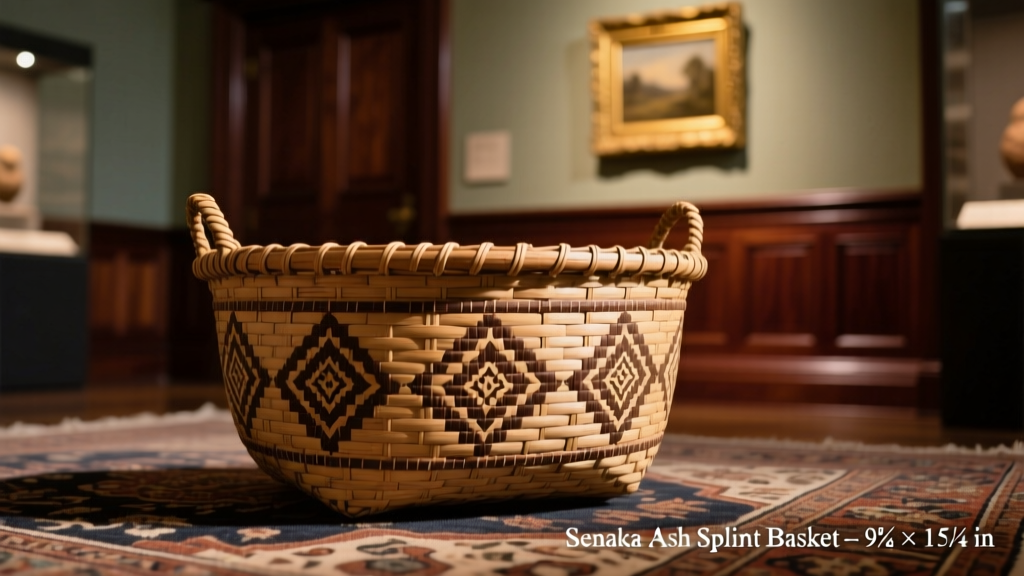
Indian Basket: Seneca Ash Splint Potato Stamp Design — A 9½ × 15¼ Inch Artifact of Haudenosaunee Craftsmanship

Red Wing Churn Large Wing 6 Gal: History, Identification, and Restoration Guidance