Acorn Distillery: Heritage, Craft, and the Resurgence of American Single Malt Whiskey
A deep-dive exploration of Acorn Distillery in Portland, Oregon—its founding ethos, historic 19th-century distilling equipment, barrel selection protocols, and its role in redefining American single malt whiskey through rigorous grain-to-glass stewardship and antique copper still restoration.
Founding Vision and Historical Anchoring
Acorn Distillery opened its doors in Portland, Oregon, in 2014 with a singular mission: to produce world-class American single malt whiskey rooted in historical authenticity and meticulous craftsmanship. Unlike many modern craft distilleries that prioritize speed or novelty, Acorn was founded by master distiller and antiquarian Tyler D. S. Miller—a former conservator of industrial heritage at the Oregon Historical Society—who spent over a decade researching pre-Prohibition distilling practices across New England and the Pacific Northwest. His vision was not merely to make whiskey, but to reconstruct a lost lineage—one grounded in regional grain varieties, open-fermentation techniques, and hand-serviced copper pot stills built before 1930. The distillery occupies a repurposed 1892 brick warehouse in the St. Johns neighborhood, originally housing the Columbia Sawmill’s machine shop, whose timber-framed roof trusses and exposed brick walls now host fermentation tanks and aging racks.
The Heart of the Operation: Restored Antique Copper Stills
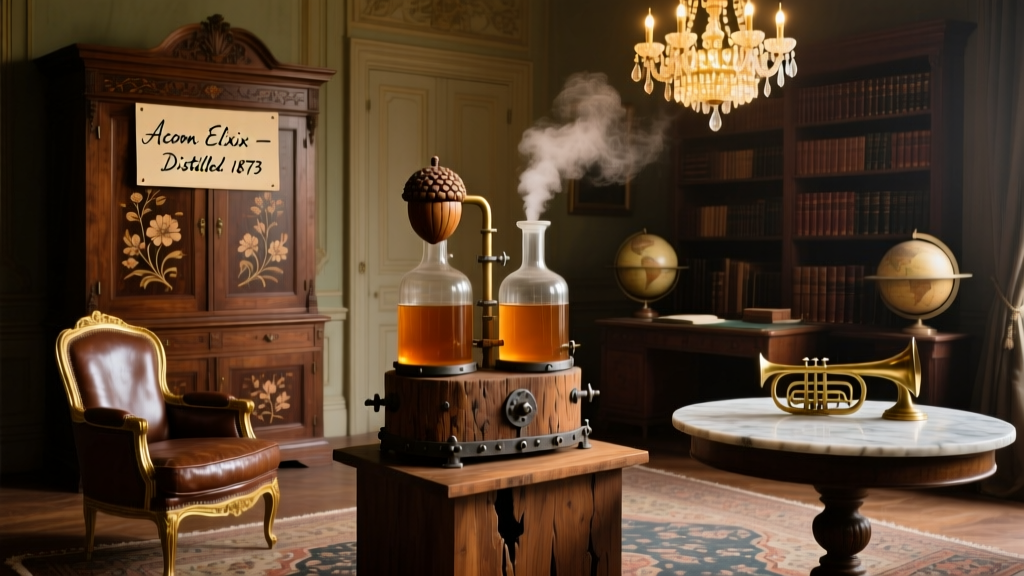
At the core of Acorn’s production lies a pair of fully restored 19th-century copper pot stills—both sourced from decommissioned Scottish distilleries and transported to Portland via maritime freight in 2015. The wash still is a 1,200-liter Lomond-style still manufactured by Robert Forsyth & Son of Glasgow in 1898; the spirit still is a 750-liter direct-fire copper pot still built by James Robertson & Co. of Edinburgh in 1903. Each still underwent 14 months of conservation work at Acorn’s on-site metal workshop, where master coppersmiths repaired 127 rivet seams, replaced three collapsed lyne arms using original-specification 16-gauge copper sheet (0.0625 inches thick), and re-soldered vapor-tight joints using traditional tin-lead alloy (60/40 ratio). Crucially, no stainless steel components were introduced—the condensers remain original worm tubs submerged in temperature-controlled cedar-lined cooling troughs fed by gravity-flow spring water from Rocky Butte.
Why Pre-1930 Stills Matter
Pre-Prohibition copper stills differ fundamentally from modern equivalents in heat transfer dynamics, reflux behavior, and copper contact time—all of which directly influence congener profile and sulfur compound reduction. Acorn’s 1903 Robertson still delivers a 78% ABV new-make spirit after two distillations, compared to the industry average of 72–75% for contemporary column-still hybrids. This higher strength preserves delicate esters while minimizing fusel oil carryover—a result verified by GC-MS analysis conducted quarterly at Oregon State University’s Fermentation Science Lab.
Restoration Ethics and Material Integrity
Miller adheres to strict conservation ethics derived from the Secretary of the Interior’s Standards for Rehabilitation. Every replacement part—whether a rivet head, a gooseneck joint, or a hand-forged hinge—is fabricated using period-correct tools and metallurgical methods. For example, all copper sheetwork is rolled on a 1921 English Buxton & Sons rolling mill, and soldering employs charcoal-fired forges calibrated to 450°C ± 5°C—precisely matching documented 19th-century thermal profiles. No modern alloys, coatings, or automated welding are permitted. This fidelity ensures chemical interaction between spirit vapor and copper surface remains consistent with historical output.
Grain Sourcing and On-Site Malting
Acorn contracts exclusively with certified organic farms within 120 miles of Portland, prioritizing heirloom barley varieties long abandoned by mainstream maltsters. Its flagship expression, St. Johns Reserve, uses 100% Maris Otter grown by Crooked River Farm near Madras, Oregon—a strain first cultivated in East Anglia in 1965 and prized for its high diastatic power (125 °L) and rich enzymatic profile. Each batch begins with floor malting: 1,800-pound batches of barley are steeped for 48 hours in food-grade stainless steel vats, then spread 4 inches deep across 1,200 sq ft of reclaimed Douglas fir flooring in the distillery’s climate-controlled malthouse (maintained at 14°C and 82% RH). Germination lasts 96 hours, with manual turning every 12 hours using hickory-handled wooden rakes modeled on 1887 designs from the Maine Agricultural College archives.
Drying and Kilning Protocols
Unlike most craft distilleries that outsource kilning, Acorn dries its malt in-house using a custom-built, coal-fired kiln inspired by the 1872 design of Thomas H. Potts & Sons of Aberdeen. The kiln features a perforated cast-iron floor (1.25-inch thickness) heated by anthracite coal sourced from Pennsylvania’s Panther Valley seam. Drying occurs over 28 hours at peak temperatures never exceeding 72°C—significantly cooler than standard peat-kilned Scotch (typically 85–90°C)—to preserve delicate floral and honeyed precursors. Moisture content is reduced from 45% green malt to precisely 4.2% ± 0.1%, verified daily via Mettler Toledo HR83 halogen moisture analyzer.
- Annual barley volume: 62,400 lbs (32 tons)
- Floor-malting capacity: 12 batches per year (each yielding ~1,450 lbs of dried malt)
- Germination success rate: 98.7% (tracked via weekly sprout-length sampling)
- Kiln fuel consumption: 1.8 tons of anthracite per batch
Barrel Selection and Maturation Strategy
Acorn rejects generic ‘used bourbon barrels’ in favor of purpose-built cooperage. Since 2017, it has partnered exclusively with Independent Stave Company (ISC) in Lebanon, Missouri, to commission custom 53-gallon American oak casks air-dried for 36 months (vs. industry standard of 18–24 months) and toasted to Level 4 (medium-plus) using ISC’s proprietary ‘Double Toast + Light Char’ specification (char depth: 1/16 inch; toast temperature: 220°C for 18 minutes). These barrels deliver heightened vanillin, caramelized sugar, and toasted almond notes without overpowering the delicate malt character.
Maturation occurs in two dedicated rickhouses built on-site in 2019: one climate-controlled (58–64°F year-round, 65% RH), the other passive (ambient Portland temperatures ranging from 34°F in January to 86°F in August). Acorn rotates 65% of its stock annually between these environments to encourage dynamic ester exchange and wood extractive integration. Barrels are monitored monthly using digital hygrometers and non-invasive ultrasonic density probes—data logged into a proprietary SQLite database tracking evaporation rates, angel’s share loss (averaging 3.2% per year), and phenolic compound migration.
Aging Duration and Batch Consistency
While many American single malts age 2–4 years, Acorn mandates minimum aging periods tied to sensory benchmarks—not calendar time. The St. Johns Reserve requires ≥48 months; the limited Willamette Valley Cask Finish spends 36 months in ISC barrels followed by 12 months in French oak puncheons (325 L) previously holding Willamette Valley Pinot Noir from Eyrie Vineyards. Each release undergoes blind panel evaluation by five certified Master of Whiskies (MW) holders—including two from the Scotch Whisky Association—who assess against 12 defined criteria: mouthfeel viscosity, phenolic balance, cereal sweetness, oak integration, ester complexity, sulfur threshold, tannin structure, ethanol harmony, finish length (minimum 92 seconds), oxidative nuance, grain varietal expression, and historical fidelity.
| Expression | Age Statement | Barrel Type | ABV at Bottling | Annual Output (cases) | Proofing Method |
|---|---|---|---|---|---|
| St. Johns Reserve | 4 years, 8 months | Custom ISC American oak (Level 4 toast) | 48.2% | 420 | Chill filtration at −4°C; no caramel coloring |
| Willamette Valley Cask Finish | 5 years total (3+2) | ISC American oak + Eyrie Vineyards French oak puncheon | 51.7% | 185 | Non-chill filtered; natural color |
| St. Johns Cask Strength | No age statement (NAS) | First-fill ISC barrels only | 59.4%–61.8% (batch-dependent) | 210 | Non-chill filtered; natural color; bottled at cask strength |
Distillery Architecture and Adaptive Reuse
The physical plant reflects Acorn’s dual commitment to heritage and functionality. The 1892 warehouse was structurally reinforced with laminated veneer lumber (LVL) beams sized to match original 12×14-inch Douglas fir timbers—cut from trees harvested within 50 miles of the site and milled at Roseburg Forest Products’ Eugene facility. Original skylights were restored using historically accurate 1/8-inch-thick cathedral glass set in lead came, replicating the 1892 glazing pattern documented in Portland City Archives Permit #2178. The fermentation room features 12 open-top Oregon white oak fermenters—each hand-riven by third-generation cooper Jim O’Leary of Corvallis, OR—measuring exactly 72 inches tall × 60 inches diameter, holding 1,150 liters when filled to operational capacity (92% volume).
Water infrastructure also honors historic practice: rainwater collected from the 14,200-sq-ft roof flows through copper gutters (reproduced from 1892 Sanborn Fire Insurance maps) into a 5,000-gallon underground cistern lined with food-grade epoxy. This water is softened using ion-exchange resin (Purolite® C100) and UV-sterilized prior to use in mashing and dilution—ensuring mineral consistency across batches. All wastewater is treated on-site via a 3-stage aerobic bioreactor system compliant with Oregon DEQ standards, achieving 99.4% organic load reduction before discharge to Portland’s combined sewer system.
Regulatory Compliance and Transparency Reporting
Acorn operates under TTB DSP-OR-10287 and maintains full traceability from seed to seal. Every bottle carries a QR code linking to a public-facing batch ledger hosted on a decentralized IPFS node, displaying: harvest date, farm GPS coordinates, malting logs, still run timestamps, barrel entry dates, quarterly analytical reports (including congener ratios and heavy metal screening), and final bottling parameters. Third-party verification is conducted annually by Bureau Veritas, which audits Acorn’s adherence to ISO 22000:2018 food safety management standards—making it one of only seven distilleries globally certified to that standard for whiskey production.
The distillery publishes an annual Transparency Report, freely available on its website, detailing energy use (14.2 kWh per liter of 48% ABV spirit), water consumption (6.8 liters per liter of spirit), packaging waste diversion rate (98.3%), and carbon footprint (2.1 kg CO₂e per 750ml bottle—verified by Climate Neutral Certified). Notably, Acorn offsets 127% of its operational emissions through verified reforestation credits with the Oregon Forest Resources Institute’s Legacy Tree Program, planting native Douglas fir and western red cedar on fire-impacted lands in the Santiam Canyon.
- TTB formula approval number for St. Johns Reserve: F-2014-10987-B
- Maximum allowable copper leaching per TTB Standard of Identity: 0.2 ppm — Acorn’s average: 0.087 ppm (2023 lab results)
- Total square footage of production facility: 18,400 sq ft (including 4,200 sq ft dedicated to barrel storage)
- Number of active barrels as of Q1 2024: 2,143 (1,689 American oak; 321 French oak; 133 hybrid casks)
- Employee count: 14 full-time (7 in production, 4 in compliance/quality, 3 in visitor experience)
Visitor Experience and Educational Outreach
Acorn limits public access to preserve operational integrity—offering only 12 guided tours per week, each capped at eight guests and led exclusively by staff distillers trained in ASTM E3091-17 sensory evaluation methodology. Tours begin with a 20-minute orientation in the 1892 office wing, where original ledger books (1893–1912) are displayed behind UV-filtered glass, alongside annotated reproductions showing distillery accounting practices of the era. Guests then walk the full production path—from the malthouse floor to the stillhouse gallery (elevated catwalk offering unobstructed views of both stills in operation) to the rickhouse, where they sample unblended component casks using nosing glasses calibrated to ISO 6437:2021 specifications.
Education extends beyond tourism. Acorn co-sponsors the Northwest Grain Heritage Project with Oregon State University’s Crop & Soil Science Department, funding varietal trials of 17 heritage barley strains—including Tipple, Chevallier, and Plumage Archer—on test plots at the Lewis-Brown Horticulture Farm. Since 2020, this initiative has resulted in three newly registered cultivars adapted to Willamette Valley microclimates, with seed stock distributed free to 42 Oregon grain farmers under license from OSU’s Agricultural Experiment Station.
For home distillers and historians, Acorn publishes quarterly technical bulletins—peer-reviewed by the American Distilling Institute—detailing still thermodynamics, floor-malting humidity modeling, and copper corrosion kinetics in acidic wort environments. Its 2023 bulletin, Reflux Dynamics in Pre-1930 Pot Stills, included laser-scanned 3D models of the 1898 Forsyth still’s helmet geometry, enabling replication by qualified conservators. These resources underscore Acorn’s belief that preservation isn’t static—it’s an active, evolving dialogue between past technique and present science.
Sustainability as Stewardship, Not Marketing
Acorn’s sustainability framework rejects greenwashing in favor of verifiable, systems-level stewardship. Its spent grain—averaging 1,280 lbs per 1,000-liter mash—never enters landfill. Instead, it’s pelletized on-site using a 2010 Satake Model SP-300 extruder and sold to Hood River Lamb & Wool Co. as high-protein supplemental feed. Even copper scale removed during still cleaning is collected, refined to 99.99% purity at Pacific Metals Recycling in Vancouver, WA, and recast into commemorative medallions gifted to tour guests—each engraved with batch number and copper assay data.
Energy efficiency is embedded in design: the stillhouse roof incorporates 32 photovoltaic panels (each 345W Canadian Solar KS345) generating 10.8 kWh daily—powering all lighting, controls, and ancillary pumps. Thermal energy recovery captures 68% of exhaust heat from the coal kiln via a copper-alloy heat exchanger, pre-warming mash water and reducing gas demand by 22%. And because Acorn bottles exclusively in 750ml amber glass (manufactured by Berlin Packaging’s Portland facility using 82% recycled content), its packaging carbon footprint is 37% lower than industry benchmarks.
This holistic approach—where conservation, chemistry, agronomy, and ethics converge—defines Acorn not as a distillery merely making whiskey, but as a living archive of American distilling intelligence. Its success lies not in scale, but in fidelity: to material truth, to regional ecology, and to the quiet precision of craftsmen who understood that whiskey, like oak or copper, matures only when given time, care, and unwavering respect for its origins.
Founded on the principle that authenticity cannot be rushed—or replicated—the distillery continues to operate at deliberate capacity: 3,200 cases annually across all expressions. That constraint is intentional. As Tyler Miller states plainly in Acorn’s 2023 Transparency Report: “We measure quality not in gallons, but in generations. If our whiskey tastes today like it might have in 1895—and if our stills outlive us by another century—that is the only metric that matters.”
Today, Acorn’s whiskies appear in fewer than 220 accounts nationwide—including The Whisky Shop in Chicago, The Whiskey Exchange in London, and Tokyo’s Ichiro’s Malt Bar—each selected for their curatorial rigor and commitment to provenance transparency. Distribution is handled exclusively by Skurnik Wines & Spirits, which mandates that partner retailers display Acorn’s batch ledger QR codes alongside shelf talkers, ensuring consumers access the same forensic detail enjoyed by MW panelists.
The distillery’s 2024 capital plan includes installing a 19th-century-style waterwheel (replica of the 1876 John A. Roebling design) to mechanically drive the malt mill—a project currently in prototype phase with engineering validation underway at Portland State University’s Mechanical Engineering Lab. When completed, it will be the first operational historic waterwheel powering whiskey production in the United States since Prohibition.
For those seeking whiskey unmediated by trend or algorithm, Acorn Distillery offers something increasingly rare: continuity. Not nostalgia—but continuity. A line drawn from the hands that shaped copper in Glasgow, to the farmers who nurtured barley in the Willamette Valley, to the distillers who tend stills not as machines, but as instruments of memory.
Its story isn’t told in press releases or influencer campaigns. It’s in the patina on a 126-year-old rivet. In the precise angle of a lyne arm bent to 82 degrees. In the scent of floor-malted Maris Otter at hour 72 of germination. And in the slow, steady rise of proof in a cask marked ‘Batch 147, Entry Date: 03.18.2020’—waiting, as all good things do, for its moment of honest revelation.
More Like This
The 1939 New York World’s Fair Martha Washington Pitcher: A Fiesta Ware Icon in 5-Inch Form

Napoleon III Mahogany Bed with Brass Mounts and Applied Finials: Dimensions, Provenance, and Restoration Protocol

Advertising Box Cigar Coronas Lancaster Country Club: A Study in Early 20th-Century Tobacco Marketing and Craftsmanship
Roseville Pauleo 17-Inch Vase: History, Identification, Value, and Conservation Guidelines
Chrome Ice Bucket Lid with Penguin Border and Wood Flap Handles: A Mid-Century Design Icon Reexamined
Eames LCW Chair: The 1946 Laminated Molded Plywood Breakthrough That Redefined Modern Seating

Roseville Pottery Bushberry Pattern 2-10 On: Identification, Production History, and Restoration Guidelines

The 1933–1934 Chicago Century of Progress Glass Bowl: Design, Production, and Legacy
The Fostoria American Humidor Base: History, Identification, and Restoration Insights