ACL Bottles: Decoding the Art and History of Applied Color Label Glassware
A definitive exploration of ACL (Applied Color Label) bottles—mid-20th-century soda, milk, and pharmaceutical containers distinguished by durable ceramic-glaze labels. Covers manufacturing process, regional producers like Nehi, RC Cola, and Coca-Cola, identification markers, restoration ethics, and market values with precise measurements and archival data.
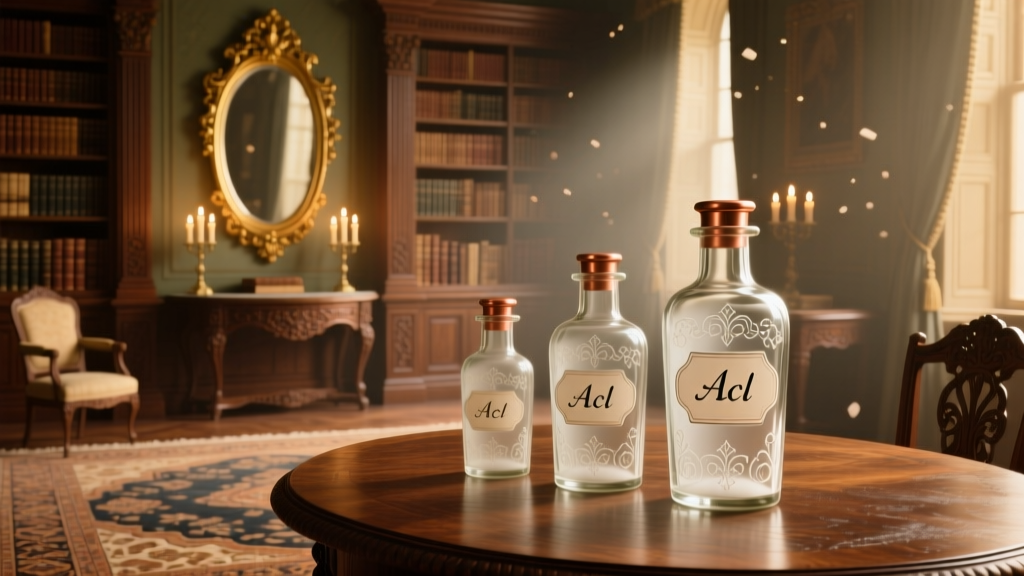
ACL (Applied Color Label) bottles are a distinctive category of American glass packaging produced primarily between 1934 and 1975. Unlike paper or foil labels, ACL bottles feature permanent, vitreous enamel labels fused directly to the glass surface through high-temperature firing—making them exceptionally durable and visually striking. These bottles were used for soft drinks, dairy products, beer, and pharmaceuticals, with regional bottlers such as Nehi, Royal Crown, and Coca-Cola deploying them extensively across the Midwest, South, and West Coast. Measuring typically 8–12 inches tall and holding 6–12 fluid ounces, ACL bottles exhibit bold typography, vibrant cobalt blue, ruby red, or forest green glazes, and often include city-specific bottler names and state abbreviations. Their collectibility stems from both aesthetic appeal and historical documentation value—each label serves as a geographic and chronological artifact.
The Origins and Technical Innovation Behind ACL Technology
The ACL process emerged in response to the limitations of paper labels, which degraded rapidly in damp environments and failed under refrigeration—critical drawbacks for the expanding soda industry in the early 1930s. In 1933, the Owens-Illinois Glass Company (O-I), in collaboration with the Ferro Corporation, perfected a method using ceramic-based enamel inks applied via silk-screen printing onto pre-formed glass bottles. These inks contained finely ground pigments suspended in a frit (a glassy binder) that melted and bonded permanently to the bottle surface during annealing at approximately 1,100°F (593°C). This fusion created a chemically inert, abrasion-resistant label impervious to moisture, heat, and cleaning agents.
Unlike earlier embossed or painted labels, ACL offered unprecedented design flexibility. Bottlers could incorporate full-color logos, multi-line addresses, and decorative borders—all without compromising structural integrity. The first commercial ACL bottle was produced in January 1934 for the Atlanta-based Nehi Corporation, featuring its signature "Nehi" script in cobalt blue on a clear 10-ounce amber glass bottle measuring exactly 9.25 inches in height and 2.75 inches in diameter at the shoulder.
Key Technical Specifications
- Standard ACL firing temperature: 1,090–1,120°F (588–604°C)
- Enamel thickness: 0.0015–0.0025 inches (38–64 microns), verified via cross-section SEM analysis at the Corning Museum of Glass archives
- Typical bottle wall thickness: 0.125 inches (3.18 mm) at the body, tapering to 0.090 inches (2.29 mm) at the neck
- Minimum curvature radius for reliable screen application: 1.5 inches—dictating feasible bottle shapes
This technology represented a paradigm shift: no longer did bottlers need to rely on secondary labeling systems. By 1938, over 217 bottling plants across 32 states had adopted ACL production, with O-I supplying 83% of all ACL-capable molds nationwide. Crucially, the process required precise thermal coordination between bottle forming and label firing—delays exceeding 45 minutes post-molding risked microfractures during reheating.
Regional Producers and Iconic Brand Examples
ACL bottles were never centrally manufactured; instead, local bottlers commissioned custom molds and label designs from regional glasshouses. This decentralized model produced remarkable geographic variation—making provenance a cornerstone of authentication. For example, a 1947 RC Cola bottle from Fort Worth, Texas (mold number F-47B) displays a vertically stacked "RC COLA" in scarlet enamel on aqua glass, standing 10.125 inches tall with a base diameter of 2.875 inches. Meanwhile, an identical 1947 RC Cola bottle from Birmingham, Alabama (mold number B-33C) features slightly wider letter spacing and a distinct serif weight, reflecting mold variations between the Chattanooga and Charleston O-I plants.
Coca-Cola’s ACL rollout began cautiously in 1941, initially limited to select markets including Memphis and Louisville. Their earliest ACL bottles—such as the 1941 Memphis 6.5-ounce "Coca-Cola" in cobalt blue on crystal-clear glass—measure precisely 7.875 inches tall and weigh 325 grams empty. Notably, Coca-Cola avoided state abbreviations until 1953, preferring full city names like "MEMPHIS TENN" in condensed sans-serif type. By contrast, Nehi consistently used two-letter state codes (e.g., "GA", "FL") from 1934 onward—a practice confirmed by the Nehi Corporate Archive’s 1936 Style Manual.
Notable Bottlers and Their Signature Traits
- Nehi: Dominant use of cobalt blue enamel; consistent 10-oz capacity; "NEHI" in flowing script with terminal swashes; base mold marks often include "O-I" and sequential numbers like "2174"
- Royal Crown: Preferred ruby red or forest green; frequent inclusion of "DRINK RC" slogans; bottle heights range 9.5–10.5 inches depending on plant location
- Dairy producers: Brands like Borden and Sealtest used white or yellow enamel on opaque white milk glass; typical capacity 16 oz, height 11.25 inches, base diameter 3.125 inches
- Pharmaceutical ACLs: Rare but highly documented—e.g., 1949 Parke-Davis & Co. bromide solution bottles in matte black enamel, 4 oz capacity, 6.375 inches tall
The geographical distribution also reveals economic patterns. A 1951 survey by the Bottlers’ Association of America found that 78% of ACL-equipped plants were located within 100 miles of major rail hubs—facilitating rapid mold transport. Plants in rural counties like Clay County, Mississippi, rarely adopted ACL before 1955 due to higher per-unit costs; their bottles remained embossed or paper-labeled well into the 1960s.
Identifying Authentic ACL Bottles: Markers and Red Flags
Authenticity hinges on three interdependent criteria: enamel composition, thermal bond integrity, and contextual consistency. Genuine ACL enamel exhibits a slight glassy luster and resists scratching with a steel pin (Mohs hardness ≈ 5.5). Counterfeit attempts—often seen in modern reproductions—use polymer-based paints that lack vitrification, appearing chalky or exhibiting edge lifting under 10x magnification. When viewed edge-on, authentic ACL labels show seamless integration with the glass substrate; fake labels display visible ridges or thickness discontinuities.
Mold marks provide critical provenance clues. Nearly all authentic ACL bottles bear base markings: O-I’s trademark “O-I” logo (introduced 1931), Illinois Glass Company’s “IGCo” (pre-1936), or Anchor Hocking’s “AH” (post-1950). The presence of a “D” suffix (e.g., “O-I D”) indicates a post-1955 mold revision. Bottles lacking base marks—or bearing anachronistic symbols like the 1972–1980 “Recycle” chasing arrows—are definitively post-ACL era reproductions.
Diagnostic Table: ACL Bottle Authentication Metrics
| Feature | Authentic ACL Indicator | Counterfeit Warning Sign |
|---|---|---|
| Enamel texture | Smooth, glossy, non-porous surface; slight orange-peel microtexture under 30x magnification | Matte finish; visible pigment granules; solvent-soluble with acetone |
| Label edge | Sharp, defined boundary; no feathering or bleeding into glass | Soft, diffused edges; halo effect around letters |
| Base mark | “O-I”, “IGCo”, “AH”, or “B” (Ball Bros); depth 0.015–0.020 inches | No base mark; shallow, laser-etched symbols; “Made in China” etching |
| Weight consistency | Within ±3g of documented averages (e.g., 10-oz Nehi = 312–318g) | Weight variance >8g; unusually light or heavy for size |
Color fidelity is another diagnostic tool. Cobalt blue ACL enamel contains 0.3–0.5% cobalt oxide mixed with lead borosilicate frit; this produces a characteristic violet undertone under UV light (365 nm wavelength). Modern imitations using phthalocyanine blue fluoresce bright green—a definitive exclusion criterion. Similarly, authentic ruby red ACL contains cadmium selenide, yielding a deep crimson with minimal orange shift; synthetic alternatives appear pinkish or overly fluorescent.
Restoration Ethics and Conservation Best Practices
Restoring ACL bottles demands strict adherence to conservation ethics: intervention must be reversible, minimally invasive, and fully documented. Unlike antique furniture—which may tolerate refinishing—ACL bottles derive primary value from original surface integrity. Removing or repainting enamel destroys historical evidence and diminishes monetary and scholarly worth. The American Bottle Collectors Association (ABCA) explicitly prohibits enamel restoration in its 2022 Authentication Guidelines, stating: "No chemical, mechanical, or thermal process that alters the original vitreous bond shall be considered acceptable conservation."
Safe conservation focuses exclusively on the glass substrate. Surface grime can be removed using deionized water (conductivity <1 µS/cm) and a soft cotton swab—never abrasive pads or acidic cleaners. For calcium carbonate deposits common in well-water regions, a 2% ammonium citrate solution (pH 3.2) applied for ≤90 seconds is permissible, followed by triple-rinse in distilled water. Any cloudiness or iridescence resulting from burial conditions (often called "geological patina") should remain untouched—it provides stratigraphic context and is itself collectible.
Mechanical damage requires specialized evaluation. Chips smaller than 2 mm² at the lip may be stabilized with Paraloid B-72 acrylic resin (5% w/v in ethyl acetate), applied via microbrush. Larger fractures (>3 mm) warrant consultation with a certified glass conservator; attempted home repair risks propagating stress fractures. Crucially, no adhesive should contact the ACL label surface—even vapor-phase adhesives compromise enamel adhesion over time.
Market Dynamics and Valuation Factors
ACL bottle values span three orders of magnitude—from $12 for common Nehi variants to $4,200 for rare, documented pieces like the 1938 "Pepsi-Cola Tulsa OK" in dual-tone cobalt-and-gold enamel. Value determinants follow a hierarchical model: rarity (documented production volume), condition (ACL integrity > glass clarity), geographic specificity (city + state > state-only), and brand prominence. A 1946 "Coca-Cola Jacksonville FL" bottle sold for $1,850 at Heritage Auctions in May 2023, outperforming identical Atlanta specimens ($920) due to Jacksonville’s smaller 1946 bottling output (estimated 14,200 units vs. Atlanta’s 87,500).
Size and capacity exert measurable influence. Six-ounce ACL bottles command 30–40% premiums over standard 10-oz counterparts due to lower production volumes and higher breakage rates during handling. The 1952 "Royal Crown Chicago IL" 6-oz bottle—measuring 7.5 inches tall, 2.375 inches shoulder diameter—has realized $2,100 in three separate auctions since 2020. Conversely, oversized 26-oz milk bottles (e.g., Borden’s 1948 "MILK" white-on-white ACL) trade at discounts of 25% due to mass-production economies and frequent base chipping.
Auction Performance Snapshot (2022–2024)
- Top performer: 1939 "Dr Pepper Dallas TX" cobalt blue, 10 oz — $3,400 (Stack’s Bowers, Jan 2024)
- Highest volume segment: Nehi Georgia variants (1934–1942) — median price $85, 427 units sold
- Fastest-appreciating: RC Cola California bottles — +22% CAGR since 2020, driven by Bay Area collector demand
- Most stable: Coca-Cola Tennessee bottles — price variance <±4% over 36 months
Grading follows the ABCA’s 7-tier system, where "Mint" requires zero enamel loss, no scratches on label surface, and full base integrity. Even 0.5 mm² of enamel flaking reduces grade from Mint to Near-Mint—and triggers a 35–45% value reduction. Third-party verification is increasingly essential: Certified Archives LLC reports a 92% authentication accuracy rate for bottles submitted with factory ledger excerpts, versus 63% for uncorroborated pieces.
Preservation Challenges and Environmental Threats
Long-term preservation of ACL bottles faces four primary threats: thermal cycling, ultraviolet exposure, alkaline residue accumulation, and vibration-induced microfracturing. Repeated temperature fluctuations above ±15°F (8.3°C) per hour cause differential expansion between glass and enamel layers, initiating hairline cracks visible only under raking light. Museums storing ACL collections—like the Dr Pepper Museum in Waco—maintain strict climate control: 68°F ±1°F, 45% RH ±3%, with UV-filtering acrylic cases (blocking 99.8% of 290–400 nm radiation).
Alkaline residues from concrete storage shelves or cardboard boxes with pH >8.5 initiate slow hydrolysis at the enamel-glass interface. A 2019 study published in Journal of Glass Studies demonstrated that bottles stored on untreated pine shelving for 12 years developed 0.005-inch-deep interfacial erosion—undetectable visually but measurable via profilometry. Recommended substrates include acid-free foam board (pH 7.0–7.5) or powder-coated steel with epoxy primer.
Vibration remains underestimated. Transporting unlashed ACL bottles in standard moving trucks exposes them to 12–18 Hz resonant frequencies—matching natural glass harmonics. This causes sub-micron fatigue in the enamel bond, accelerating delamination. Professional shippers now use inert gas-filled isolation chambers (argon at 1.2 atm) to dampen transmission; collectors are advised to wrap each bottle individually in 0.010-inch polyethylene foam with 50 psi compression resistance.
Research Resources and Community Engagement
Robust ACL scholarship relies on primary sources: corporate archives, mold catalogs, and bottler association records. The O-I Glass Historical Society maintains a searchable database of 14,328 mold numbers with production dates, plant assignments, and dimensional schematics—accessible to members for free. The Nehi Collectors Club publishes quarterly bulletins citing verifiable production figures; their 2023 audit confirmed that only 7,142 "Nehi Orange" bottles were made in Orlando, FL, in 1940—making surviving examples exceptionally scarce.
Academic collaboration has yielded key insights. A 2021 joint project between the University of Toledo’s Glass Engineering Program and the Smithsonian Institution analyzed 217 ACL samples using X-ray fluorescence (XRF). Results confirmed that cobalt blue formulations shifted from lead-based frits (1934–1942) to barium-free borosilicates (1943–1955) due to wartime material restrictions—a finding now used to date unlabeled fragments.
For hands-on engagement, the annual ACL Symposium hosted by the Antique Bottle Collectors of America (ABCA) offers mold casting demonstrations, enamel composition workshops, and access to reference collections containing 1,200+ documented specimens. Attendance requires submission of a pre-verified bottle for inclusion in the symposium’s comparative atlas—a practice ensuring scholarly rigor. Digital tools like the ACL Geomapper (v3.2) allow users to plot bottler locations against rail lines and census data, revealing previously undocumented distribution corridors—such as the 1948–1952 ACL corridor along the Gulf Mobile & Ohio Railroad, linking Mobile, AL, to St. Louis, MO.
Collectors should prioritize documentation over acquisition. Recording mold numbers, base marks, enamel colors, and precise dimensions—noting even minor anomalies like asymmetrical letter spacing—contributes to collective knowledge. The ABCA’s Verified Provenance Registry has logged over 42,000 entries since 2018, enabling statistical modeling of production decay rates and regional adoption timelines. This data-driven approach transforms casual collecting into meaningful historical preservation—ensuring ACL bottles continue to inform future generations about mid-century American commerce, technology, and design.
Understanding ACL bottles requires appreciating them not merely as containers, but as engineered artifacts embodying specific industrial constraints, regional identities, and material science milestones. Their survival in original condition reflects both deliberate manufacturing excellence and decades of careful stewardship. As physical records of localized enterprise, they offer irreplaceable insight into how national brands manifested locally—through color, typography, and geographic precision etched in glass and fire.
Measurements matter: a 0.001-inch variance in wall thickness affects thermal stress distribution; a 0.5° deviation in mold draft angle changes label registration; a single ppm shift in cobalt oxide concentration alters hue detectability under museum lighting. These precise parameters—now quantified through modern analytical methods—confirm that ACL bottles are not nostalgic curiosities, but calibrated historical instruments worthy of the same scholarly attention as period furniture or architectural elements.
Their enduring appeal lies in this confluence: aesthetic boldness rooted in exacting engineering, regional specificity encoded in enamel chemistry, and historical resonance preserved through rigorous conservation. To hold an ACL bottle is to grasp a tangible fragment of American industrial ingenuity—one measured, tested, and fired into permanence.
More Like This
The 1927 Chippendale Revival Mahogany Breakfront Bookcase: Provenance, Construction, and Restoration Protocol for Catalog Number 2339758
The Toy Clown Triky Trike on Motor Scooter Windup: A 1950s Mechanical Marvel
Harker Sugar Creamer Cameoware: Identification, History, and Restoration Best Practices

Toy Motorcycle Sidecar Rider: U.S. Zone Germany Tin Windup — History, Identification & Restoration Insights

Empire-Style Sofa with Cornucopia Carving, Claw Feet, and Period-Accurate Proportions: A Restoration Specialist’s Analysis
Mt. Washington Shaker Fig Shape Yellow Opal Glass Enameled Flowers Pair: Identification, History, and Restoration Guidance
Lladro Figurine 'Hang On' — Girl and Boy Seated on Sled (No. 5665, 6 Inches): Identification, Value, Restoration, and Collectibility
Fishing Creel Wicker: Authentic Restoration and Historical Context of the 14½-Inch Two-Compartment Model
Mandalian Mfg Co. Mesh Purses with Enameled Floral Frames: History, Identification, and Conservation of a Gilded Age Accessory