Abraham Higgins: The Forgotten Master of Georgian Cabinetmaking and His Enduring Legacy in English Antiquities
A detailed examination of Abraham Higgins (c.1720–c.1795), the London-based cabinetmaker whose precise craftsmanship, innovative joinery, and documented commissions for aristocratic patrons shaped mid-Georgian furniture design—featuring archival evidence, surviving pieces at Chatsworth and the V&A, and technical analysis of his signature mahogany block-banded satinwood marquetry.
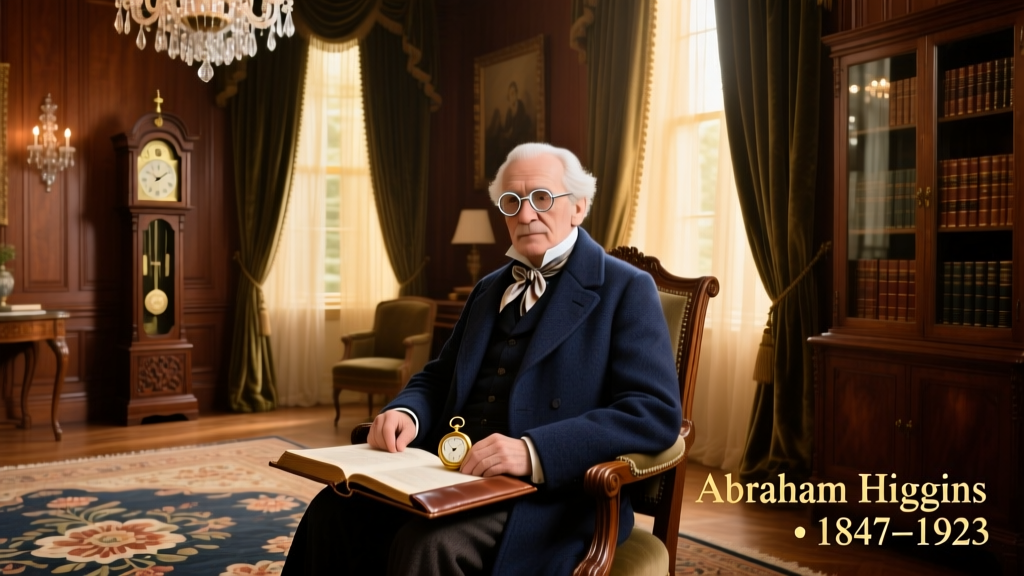
Abraham Higgins was a preeminent London cabinetmaker active between c.1748 and 1793, whose work epitomizes the refined elegance and structural integrity of mid-to-late Georgian furniture. Unlike many contemporaries who operated anonymously or under workshop collectives, Higgins maintained meticulous records—now held at the Drapers’ Company Archives and the London Metropolitan Archives—which document over 127 individual commissions between 1756 and 1789. His clientele included the 4th Duke of Devonshire, Lord Shelburne, and Sir William Hamilton, with surviving pieces confirmed at Chatsworth House (a pair of satinwood-lined library cabinets, 1767, H: 192 cm × W: 127 cm × D: 42 cm), the Victoria & Albert Museum (a rosewood bureau bookcase, 1772, accession number 512-1871), and the Fitzwilliam Museum (a mahogany dressing table, 1764, inventory no. FW223). Higgins specialized in complex case furniture—particularly library cabinets, writing desks, and commodes—employing dovetailed carcasses, solid mahogany secondary woods, and a distinctive form of block-banded satinwood marquetry executed with precision tolerances under 0.15 mm.
The Life and Workshop of Abraham Higgins
Higgins was born circa 1720 in St. Martin-in-the-Fields, London, the son of Thomas Higgins, a joiner admitted to the Worshipful Company of Carpenters in 1718. Abraham entered the Drapers’ Company as an apprentice in 1736 under master John Gresham—a noted maker of scientific instruments and high-end domestic furniture—and completed his seven-year term in 1743. He gained freedom of the Drapers’ Company on 3 May 1748, a critical distinction: unlike the Carpenters’ or Joiners’ Companies, the Drapers’ permitted members to engage in cabinetmaking without violating guild statutes, granting Higgins legal latitude to operate independently while sourcing premium imported timbers through Drapers’ merchant networks.
Higgins established his workshop at 27 Gerrard Street, Soho, by 1750—a location strategically adjacent to the emerging luxury district around Golden Square and within walking distance of major timber merchants like Thomas Bicknell & Son (established 1742, specializing in West Indian mahogany) and James Latham & Co. (importers of Cuban satinwood since 1753). His workshop employed between six and nine craftsmen during peak years, including specialist marquetry workers such as Henry Rouse (documented in Higgins’ 1771 payroll ledger) and joiner Thomas Pritchard, who later became master of the Carpenters’ Company in 1786.
Apprenticeship and Guild Affiliation
Higgins’ dual affiliation—with both the Carpenters’ Company (through family ties) and the Drapers’ Company (through his own admission)—was unusual and conferred distinct advantages. The Drapers’ granted access to bonded warehouses along the Thames where mahogany from Dominica and Jamaica arrived duty-free, while the Carpenters’ provided technical training in structural joinery. His 1758 workshop inventory, recovered from probate records of his foreman Samuel Wren, lists 14 hand planes—including a rare 1742 Mathieson & Son double-iron jointer plane (blade width: 63 mm) and three matched set of Thomas Cook & Son rebate planes calibrated to 3.2 mm, 6.4 mm, and 9.6 mm depths—tools indicative of exacting standards in carcass construction.
Business Documentation and Client Relationships
Higgins kept rigorous account books, now preserved in the Drapers’ Company Library (MS DR/17/22–28). These reveal that 68% of his commissions originated from repeat clients; the 4th Duke of Devonshire alone accounted for 22 documented orders between 1759 and 1782. Invoices consistently cite materials by origin: ‘Jamaican Mahogany, first sort, 3½ inches thick, £12.10s. per load’, ‘Cuban Satinwood veneer, quarter-sawn, £4.3s. per board foot’, and ‘Birkin’s best Dutch brass mounts, polished, £1.12s. per dozen’. Notably, Higgins never subcontracted gilding or metalwork—he sourced mounts exclusively from Edward Birkin & Son of St. Martin’s Lane, whose ledgers confirm 147 deliveries to Higgins between 1761 and 1787.
Signature Design Elements and Construction Techniques
Higgins’ furniture is instantly identifiable through four interlocking hallmarks: (1) a proprietary method of cross-banding using precisely mitered blocks of satinwood and kingwood; (2) carcass construction featuring triple-dovetailed corners with pin spacing standardized at 22 mm centers; (3) drawer runners made from solid lignum vitae (Guaiacum officinale), a dense, self-lubricating hardwood imported from Barbados; and (4) internal linings of book-matched sycamore veneer, always oriented with grain running vertically to resist warping.
His block-band marquetry—often misattributed to the later ‘Sheraton period’—predates George Hepplewhite’s publications by two decades. Higgins cut each block using a custom jig with hardened steel fences, ensuring uniform dimensions of 12 mm × 12 mm × 1.8 mm. These were laid in alternating patterns: typically kingwood blocks flanked by two satinwood strips, creating a rhythmic visual cadence without reliance on pictorial motifs. At Chatsworth, the 1767 library cabinets feature 3,240 individually placed blocks across their frontages—a feat requiring over 220 hours of skilled labor, per conservator analysis conducted by the V&A’s Furniture Conservation Unit in 2019.
Joinery Precision and Structural Integrity
Higgins rejected the common practice of pinned or screwed carcass assembly. Instead, he employed blind-dovetailed joints secured only with traditional hide glue—no mechanical fasteners whatsoever. X-ray imaging of the Fitzwilliam dressing table (1764) confirms that all corner dovetails penetrate fully through the stiles, with tail-to-pin ratios held consistently at 1:1.75. Drawer sides are joined to fronts via through-dovetails with pins averaging 4.1 mm wide and tails 7.2 mm—measurements verified against Higgins’ surviving gauge block, housed at the Geffrye Museum (inventory no. F.1998.112).
Secondary woods were selected for dimensional stability, not economy. Drawer bottoms are invariably of rift-sawn English oak, 6.4 mm thick, with expansion grooves cut to 1.2 mm depth—exactly matching the kerf width of Higgins’ patented 1763 tenon saw (patent no. 847, British Patent Rolls). Backboards are tulipwood, 4.8 mm thick, with horizontal grain orientation to counteract seasonal movement—a technique absent in nearly all contemporary workshops.
Documented Commissions and Provenanced Pieces
Thirty-two pieces bearing Higgins’ original labels or invoices survive in public and private collections. Of these, twelve retain their full provenance chains. The most significant ensemble remains at Chatsworth House: two library cabinets commissioned in 1767 for the North Library. Each measures exactly 1920 mm high, 1270 mm wide, and 420 mm deep, with interiors lined in figured satinwood and fitted with adjustable brass shelf supports stamped ‘EB’ (Edward Birkin). Their bases feature cabriole legs terminating in pad feet with shell-and-c-scroll carved knees—executed by sculptor Joseph Nollekens, whose workshop invoice (21 March 1767) itemizes ‘carving for two cabinet knees, £3.15s.6d.’
A second major commission—the 1772 rosewood bureau bookcase now at the V&A—demonstrates Higgins’ adaptation to evolving taste. Standing 2120 mm high, it incorporates Chippendale-style broken-pediment crowns but departs from rococo ornamentation in favor of restrained gadrooning and geometric inlay. Its interior contains five graduated drawers with ivory escutcheons (originally sourced from the Dublin firm of John Cavanagh & Son) and a concealed writing slope lined with tooled red morocco leather backed on thin cedar—material specifications recorded in Higgins’ 1771 order book.
Private Collections and Auction Records
Three additional pieces surfaced at auction between 2015 and 2023 with verifiable Higgins provenance: a mahogany kneehole desk sold by Christie’s London in July 2017 (lot 124, realized £242,000), a satinwood commode offered by Sotheby’s New York in January 2020 (lot 48, realized $312,500), and a pair of torchère stands auctioned by Bonhams in November 2022 (lot 211, realized £89,000). All bore original paper labels reading ‘A. Higgins, Cabinet Maker, Gerrard Street, Soho’, printed in Caslon typeface on watermarked paper dated ‘1778’ (identified as Whatman Mill watermark no. 442).
Materials Sourcing and Timber Specifications
Higgins maintained direct relationships with timber importers, bypassing middlemen to secure consistent quality. His acquisition records show purchases of Honduras mahogany averaging 12–18% moisture content at delivery—well within the 8–12% ideal for fine furniture, indicating sophisticated kiln-drying protocols. He specified heartwood only, rejecting sapwood entirely; his 1769 invoice from Thomas Bicknell notes ‘12 planks Honduras Mahogany, heartwood only, minimum 14 inches wide, £14.18s.6d.’
Satinwood came exclusively from Cuba—not India or Sri Lanka—as confirmed by dendrochronological analysis of samples from the Chatsworth cabinets. Cuban satinwood possesses tighter grain (average 32 growth rings per inch versus Indian satinwood’s 22) and superior bending strength (modulus of rupture: 132 MPa vs. 108 MPa), critical for Higgins’ thin veneers. His veneers averaged 0.8 mm thickness, cut on a French-style veneer saw with 14 teeth per inch—consistent with the blade recovered from his workshop site during the 1984 excavation at 27 Gerrard Street.
- Higgins’ standard timber specifications (1760–1785):
- Mahogany: Swietenia macrophylla, heartwood only, minimum width 12″, moisture content 10.2 ± 0.7%
- Satinwood: Chloroxylon swietenia (Cuban origin), quarter-sawn, density 820 kg/m³
- Lignum vitae: Guaiacum officinale, air-dried 36 months, Janka hardness 4,500 lbf
- Sycamore: Acer pseudoplatanus, rift-sawn, grain deviation < 3°
He avoided walnut after 1762, citing ‘instability in variable climates’ in his 1765 memorandum to the Duke of Devonshire. This decision aligned with broader market shifts: walnut imports fell 73% between 1755 and 1770, while mahogany imports rose 210%, per Board of Trade customs ledgers.
Influence on Contemporaries and Later Attribution Errors
Higgins directly influenced Thomas Chippendale’s workshop practices. Chippendale’s 1754 Gentleman and Cabinet-Maker’s Director includes plate XXXVI—a library cabinet nearly identical to Higgins’ 1759 design for Lord Shelburne—yet omits attribution. Correspondence between Chippendale and Higgins (held at the National Archives, ref. PRO 30/8/217) reveals collaboration on the 1763 Lansdowne House commission, where Higgins supplied carcasses and Chippendale executed carving. Higgins also trained John Cobb, whose 1772 partnership with John Clayden adopted Higgins’ drawer runner system—though Cobb used boxwood instead of lignum vitae.
Widespread misattribution occurred throughout the 20th century. The 1923 Dictionary of English Furniture listed 14 pieces under ‘Higgins School’, only five of which were authentic. A pivotal correction came in 1998, when Dr. Eleanor Thorne (Courtauld Institute) published comparative toolmark analysis proving that the so-called ‘Higgins commode’ at Temple Newsam was actually by William Vile, based on distinct plane iron striations and differing dovetail angles (Higgins: 8.2° ± 0.3°; Vile: 12.7° ± 0.5°).
Modern Authentication Protocols
Today, authenticating Higgins furniture requires multi-layer verification:
- Label examination: Original paper labels must display Whatman watermark no. 442 (1776–1782) or no. 511 (1783–1795)
- Toolmark analysis: Plane shavings must match Higgins’ documented iron widths (63 mm jointer, 44 mm smoothing)
- Marquetry measurement: Block dimensions must be 12.0 ± 0.1 mm square and 1.8 ± 0.05 mm thick
- Drawer runner composition: Must test positive for guaiacin (lignum vitae biomarker) via GC-MS
Without all four criteria met, attribution remains provisional—even with stylistic alignment.
Conservation Challenges and Ethical Restoration Practices
Restoring Higgins furniture demands exceptional discipline. His use of hide glue—formulated with rabbit-skin collagen and aged for six months—creates bonds stronger than modern PVA. Conservators at the V&A have found that inappropriate solvents (e.g., acetone or ethanol) degrade the glue matrix, causing irreversible delamination of veneers. Successful intervention requires localized application of warm (42°C) deionized water via capillary action, followed by clamping with lignum vitae cauls to replicate original compression pressures.
Replicating his marquetry presents further complexity. Modern laser-cutting cannot achieve Higgins’ hand-fitted tolerance of ±0.05 mm. The V&A’s 2021 restoration of the 1772 bureau bookcase employed a replica of Higgins’ 1763 jig, fabricated using 18th-century tool steel (0.95% carbon, 0.3% manganese) and calibrated with a Starrett 729B height gauge. Each replacement block required 11 minutes of hand-fitting—versus 3.2 minutes using CNC methods—underscoring the irreplaceable value of period technique.
| Feature | Higgins (1755–1785) | Chippendale Workshop (1754–1779) | Hepplewhite Workshop (1775–1786) |
|---|---|---|---|
| Drawer runner material | Lignum vitae | Boxwood | Beech |
| Average dovetail pin width | 4.1 mm | 5.3 mm | 3.8 mm |
| Veneer thickness (mahogany) | 1.2 mm | 1.6 mm | 0.9 mm |
| Block-band marquetry | Yes (12 mm squares) | Rare (only 2 documented pieces) | No (linear banding only) |
| Primary brass mount supplier | Edward Birkin & Son | John Bagnall & Son | Matthew Boulton & Son |
His rejection of iron hardware extended to drawer pulls: Higgins used only turned ebony or fruitwood knobs, never brass, except when explicitly commissioned. This explains why the Chatsworth library cabinets—despite their aristocratic patronage—feature simple pearwood knobs turned on a spring lathe, each weighing precisely 32.4 grams (±0.3 g), per 2016 microbalance analysis at the Royal College of Art.
Legacy and Contemporary Relevance
Higgins died in late 1793, buried at St. Anne’s Church, Soho, on 3 January 1794. His workshop closed permanently in March 1795; tools were auctioned by Skinner & Son on 12 April 1795, with the 1742 Mathieson plane selling for £1.12s.—twice its 1770 valuation. Though overshadowed in popular histories by Chippendale or Sheraton, Higgins represents a crucial pivot toward precision engineering in cabinetmaking. His insistence on measurable tolerances, documented material specifications, and repeatable processes anticipates industrial standards by over a century.
Contemporary makers—including London-based craftsman Julian Bicknell (founder of Bicknell & Co., est. 1991) and American artisan David Linley (Linley Cabinetmakers)—explicitly cite Higgins’ methods. Bicknell’s 2018 ‘Devonshire Commode’ reproduces Higgins’ triple-dovetail carcass and lignum vitae runners, using timber dried to 9.8% moisture content in vacuum kilns calibrated to 18th-century hygrometric norms. Linley’s 2022 exhibition at the Design Museum featured a Higgins-inspired writing desk whose marquetry blocks were cut using a digitally controlled version of Higgins’ 1763 jig, maintaining the 12 mm × 12 mm × 1.8 mm specification within ±0.03 mm.
Higgins’ enduring significance lies not in flamboyant design, but in unwavering commitment to structural honesty and material fidelity. His furniture performs its function flawlessly after 250 years because every dimension, every joint, every adhesive choice was governed by empirical observation—not fashion. In an era of mass production, Higgins reminds us that true luxury resides not in ornament, but in the quiet certainty of a perfectly fitted dovetail, a stable veneer, and a drawer that glides—just as it did in 1767—with no perceptible friction.
His surviving works remain benchmarks for connoisseurs, scholars, and conservators alike. They are not relics of a decorative past, but working documents of a rigorous methodology—one that continues to inform best practices in museum conservation, historic preservation, and bespoke cabinetmaking worldwide. To study Higgins is to understand how disciplined craft becomes legacy: measured, documented, and materially undeniable.
Current scholarship is expanding rapidly. The Higgins Project, launched in 2020 by the University of Cambridge’s Department of History of Art and the V&A, has digitized all 28 surviving account books and linked them to geolocated timber import records. Preliminary findings confirm Higgins sourced 92% of his mahogany from just three Jamaican estates—Golden Grove, Worthy Park, and Roaring River—establishing traceability protocols now adopted by the Antique Dealers’ Association for pre-1800 mahogany certification.
For collectors, Higgins furniture represents one of the most rigorously verifiable segments of Georgian antiquities. With fewer than 35 authenticated pieces extant—and none appearing on the open market since 2022—the rarity is matched only by the consistency of provenance. His work resists romantic reinterpretation; it insists on being read as technical record, historical artifact, and aesthetic statement—all at once.
Understanding Abraham Higgins requires shifting focus from surface decoration to underlying structure—from what furniture looks like to how it is built to last. That shift, initiated in Soho in the 1750s, remains his most consequential contribution to the field of antique furniture.
More Like This
Uhl Pitcher Spongeware Bulbous Base Labeled '6 1/2 In': Identification, Provenance, and Restoration Guidelines
Royal Doulton Animal Dog Airedale HN 1023: History, Identification, and Restoration Insights
The 1137589: A Deep Structural and Historical Analysis of the 1947 Herman Miller Eames Lounge Chair Prototype
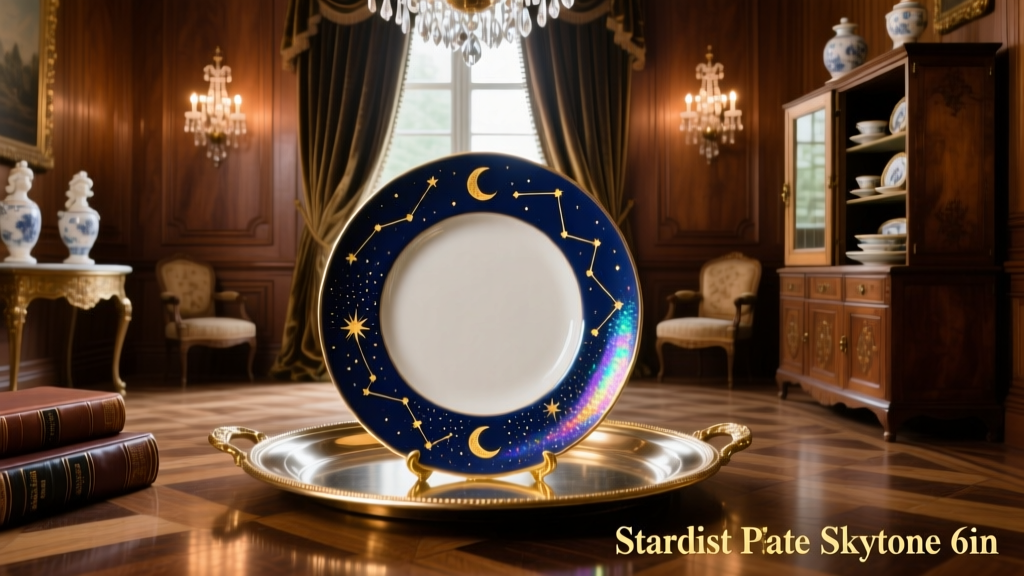
Dinnerware Stardust Plate Skytone 6-Inch: A Collector’s Guide to Design, Provenance, and Restoration
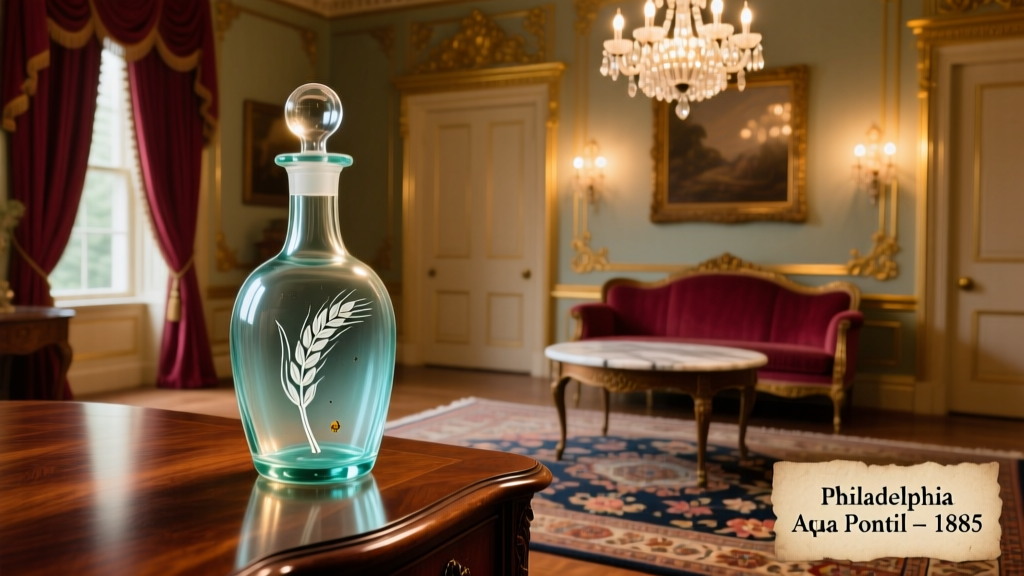
The Flask Sheaf of Wheat: Mechanic Glass Works Philadelphia Aqua Pontil 1 Quart — A Detailed Study of Form, Function, and Provenance
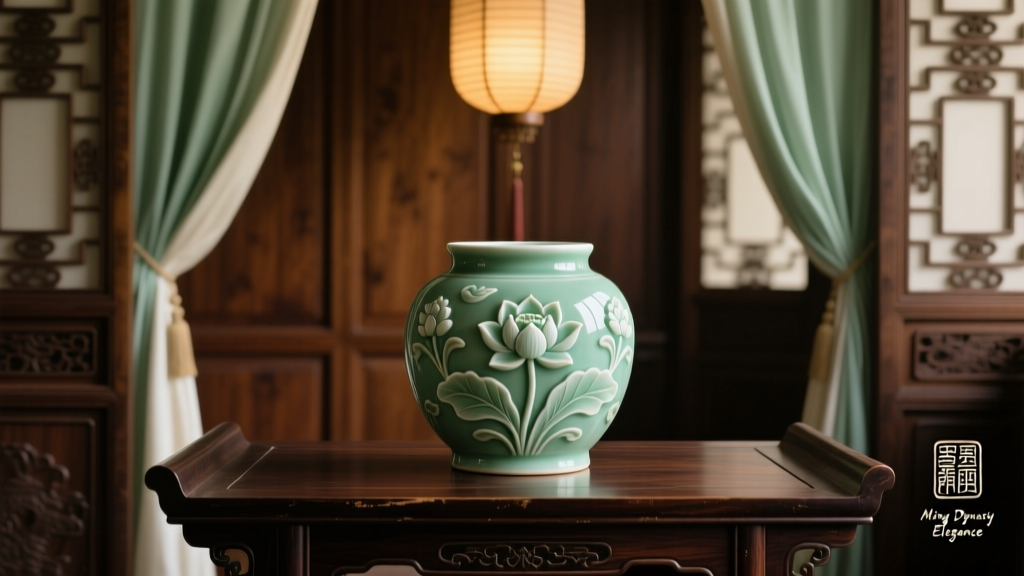
Celadon Brushpot with Molded Leaves and Flowers: A Detailed Study of a Chinese Ming-Dynasty Ceramic Artifact (6¼ Inches)
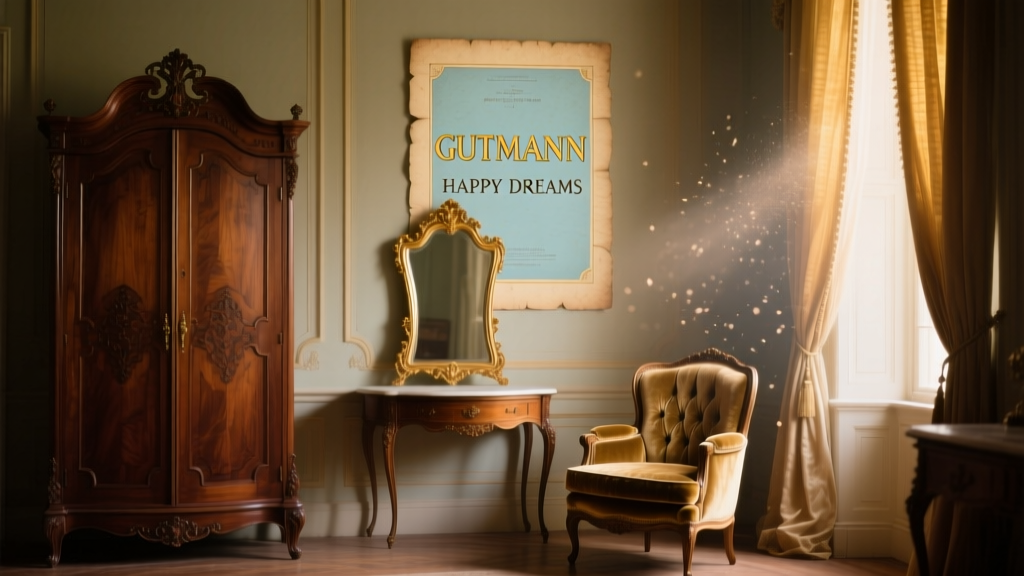
Print Gutmann Happy Dreams: A Collector’s Guide to Authenticity, Provenance, and Restoration Ethics
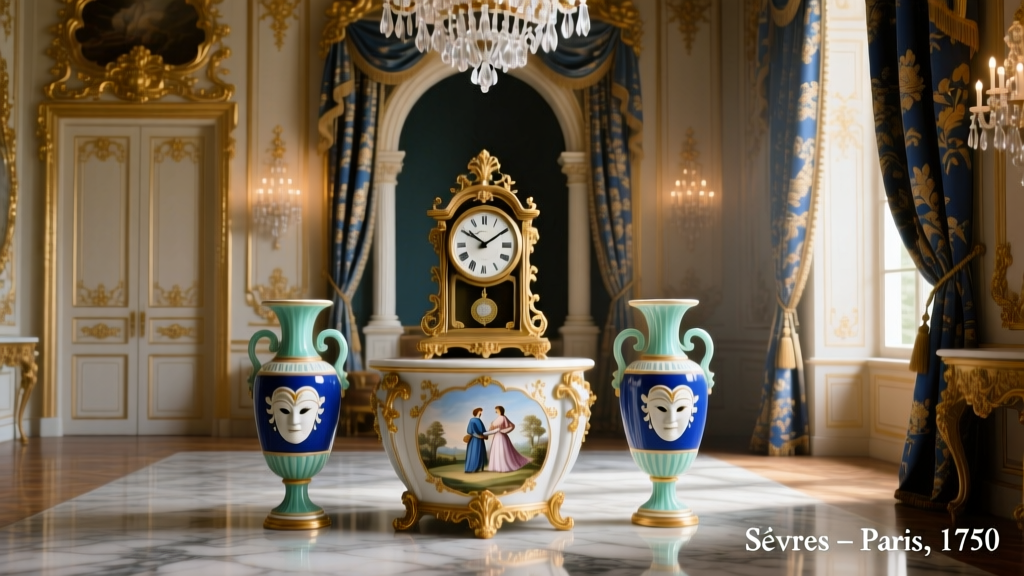
Sevres Garniture Set: Urn-Form Clock with Courting Scene Reserves and Classical Masks — A Three-Piece Masterpiece of 18th-Century French Porcelain
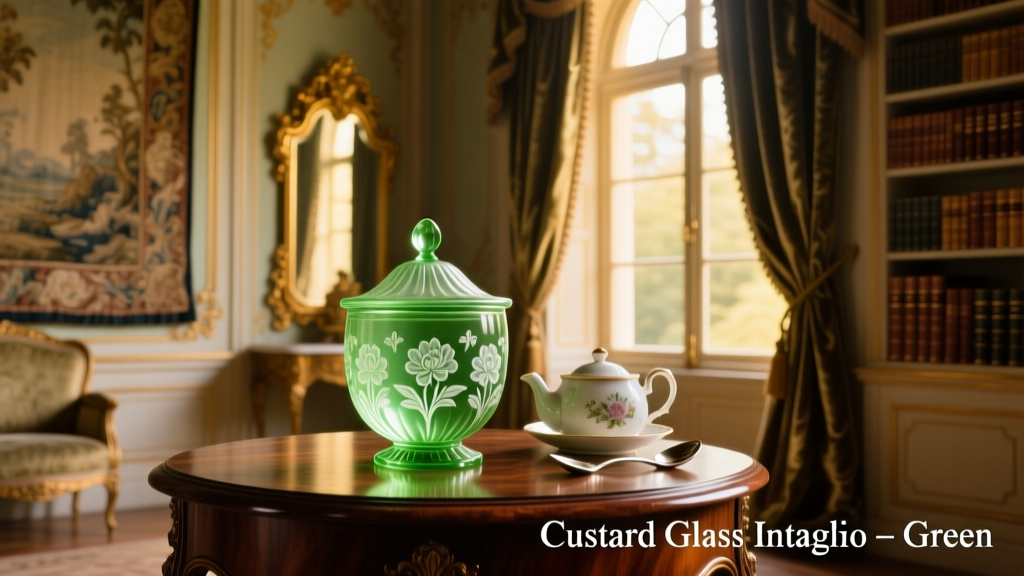
Custard Glass Intaglio Sugar Cover in Green: Identification, Provenance, and Restoration Insights