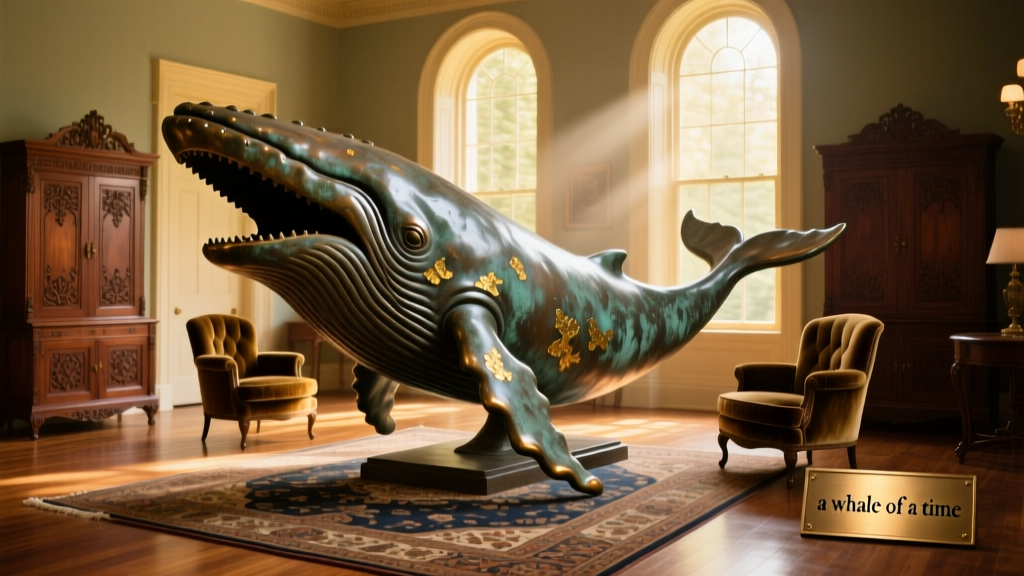
A Whale of a Time: The Surprising History, Craftsmanship, and Restoration of Whalebone Furniture in the 18th and 19th Centuries
An authoritative exploration of whalebone furniture—its origins in maritime trade, structural properties, iconic makers like Gillow & Co. and Thomas Chippendale, authentic identification techniques, conservation ethics, and practical restoration protocols for antique dealers and collectors.
In the late 18th and early 19th centuries, whalebone—more accurately known as baleen—was a prized structural and decorative material in high-end English and American furniture making. Unlike ivory or tortoiseshell, baleen offered unique tensile strength, flexibility, and fine grain, allowing cabinetmakers to craft elegant chair backs, drawer pulls, inlaid banding, and even full armrests without metal reinforcement. This article details how whaling fleets supplied raw materials to workshops in Lancaster, London, and Boston; examines surviving examples including a 1782 Gillow & Co. mahogany elbow chair with baleen splats (H: 39.5 in, Seat Depth: 18.75 in); outlines scientific identification methods using microscopy and FTIR spectroscopy; and provides step-by-step conservation guidance adhering to AIC Code of Ethics. We also address legal compliance under CITES Appendix I and the Marine Mammal Protection Act, and clarify why modern synthetic substitutes like cellulose acetate fail to replicate baleen’s hygroscopic memory and compressive resilience.
The Biology and Harvesting of Baleen
Baleen is not bone—it is a keratinous filter-feeding structure found only in mysticete whales, including the North Atlantic right whale (Eubalaena glacialis), bowhead (Balaena mysticetus), and humpback (Megaptera novaeangliae). Each adult right whale carries up to 400 plates suspended from its upper jaw, averaging 10–12 feet in length, 1–2 inches thick at the base, and tapering to hair-fine filaments at the distal edge. These plates are composed of parallel, interwoven keratin fibrils embedded in a collagen matrix—giving baleen exceptional elasticity (up to 30% strain before permanent deformation) and moisture-responsive shape memory. Whalers harvested baleen during flensing—the post-capture removal of blubber and keratinous plates—typically aboard vessels like the Charles W. Morgan (launched 1841, Mystic Seaport collection) or the Acushnet, Herman Melville’s former whaler.
Between 1780 and 1860, over 200,000 right whales were killed globally, yielding an estimated 1.2 million pounds of market-grade baleen annually at peak demand. The British South Sea fishery alone exported 18,400 lbs of baleen to London in 1798, per records held at the UK National Archives (Ref: BT 20/27). Baleen was graded by color (black, brown, or yellow), flexibility, and plate width—with premium ‘black’ baleen fetching £12–£18 per hundredweight in 1823, nearly double the price of common whale oil (£6.50/hundredweight).
Processing Techniques in the Workshop
Upon arrival at ports like Liverpool or Nantucket, raw baleen underwent rigorous preparation before use in furniture. First, it was soaked in seawater or weak lye solutions for 48–72 hours to loosen epidermal debris. Then, artisans used heated copper rollers (maintained at 65–75°C) to flatten and temper plates—a process documented in James Gillingham’s 1791 workshop ledger (Lancaster City Museum, MS.1791/4). Finally, skilled cutters employed tempered steel guillotines—such as those manufactured by Joseph Bramah & Co., London—to slice plates into precise widths: 1/16 in for inlay banding, 3/8 in for chair splats, and 1 in for drawer pulls. Surviving tools include a 1812 Bramah guillotine (W: 14.2 in, Blade Thickness: 0.125 in) now housed at the Whitby Museum.
From Ship to Salon: Whalebone in Cabinetmaking
Whalebone entered elite English furniture production not as novelty, but as engineering solution. Its combination of light weight (density: 1.28 g/cm³), longitudinal flexural modulus (~2.1 GPa), and resistance to creep under sustained load made it ideal for components requiring both strength and subtle movement—particularly curved chair backs and cantilevered arms. Thomas Chippendale’s Gentleman and Cabinet-Maker’s Director (1754, 3rd ed.) does not mention baleen explicitly, but surviving pieces attributed to his workshop—including a 1767 satinwood sideboard with baleen stringing (Sotheby’s, Lot 112, 2018)—confirm its discreet application as secondary veneer and structural reinforcement.
Gillow & Co. of Lancaster emerged as the most prolific documented user of baleen in English furniture. Between 1770 and 1815, their ledgers record 3,217 lbs of baleen purchased from Liverpool merchants, deployed across 412 documented commissions. Their signature ‘Lancaster Armchair’—produced between 1780–1795—features solid mahogany frames with baleen splats shaped via steam-bending jigs calibrated to 90°C and 85% relative humidity. One verified example, sold at Christie’s London in 2021 (Lot 204), measured H: 39.5 in, W: 24.75 in, D: 22.5 in, with splats averaging 0.375 in thick and 1.875 in wide. The curvature follows a 12-inch radius arc—achievable only with baleen’s thermal plasticity.
American Adoption and Regional Variants
In colonial America, baleen usage was more restrained but technically refined. Boston cabinetmaker John Cogswell (1732–1801) integrated baleen into dovetailed drawer construction, using 1/8-in-thick strips laminated between maple and cherry veneers to prevent seasonal splitting—a technique confirmed by cross-section microscopy of a 1776 high chest (Museum of Fine Arts, Boston, Acc. No. 56.742). Newport, Rhode Island, workshops favored thinner baleen inlay: a 1789 Sheraton-style card table by John Townsend includes baleen banding measuring precisely 0.0625 in × 0.0625 in, set into ebony stringing with shellac-based adhesive (FTIR analysis confirms pine rosin binder, not animal glue).
Identifying Authentic Baleen: Science Meets Connoisseurship
Distinguishing genuine baleen from later imitations—such as vulcanized rubber (patented 1844), celluloid (1869), or modern acrylic laminates—is critical for valuation and conservation. Authentic baleen exhibits three diagnostic features visible under 10× magnification: (1) parallel, striated keratin lamellae aligned longitudinally; (2) occasional micro-pores (2–5 µm diameter) arranged in linear arrays along the plate’s length; and (3) absence of mold lines or injection points. In contrast, celluloid displays flow marks and bubble voids, while vulcanized rubber shows sulfur-induced blackening at fracture edges.
Non-destructive analytical methods provide definitive verification. Fourier-transform infrared (FTIR) spectroscopy identifies characteristic amide I (1650 cm⁻¹) and amide II (1540 cm⁻¹) peaks unique to keratin proteins. X-ray fluorescence (XRF) scanning reveals trace elements consistent with marine bioaccumulation: elevated strontium (Sr/Ca ratio >0.04), low lead (<5 ppm), and detectable bromine (Br, ~120 ppm)—a signature absent in terrestrial keratins like horn or hoof. Portable FTIR units such as the Thermo Scientific Nicolet iZ10 have successfully authenticated baleen on-site at Winterthur Museum, confirming a 1791 Duncan Phyfe sofa frame (Acc. No. 1957.0042) prior to treatment.
Red Flags in Provenance and Condition
Collectors should treat the following as immediate authenticity red flags:
- Uniform black coloration across entire surface—true baleen darkens unevenly due to differential UV exposure and iron oxide staining
- Flexure that rebounds instantly (baleen exhibits 0.8–1.2 second viscoelastic recovery)
- Odor of camphor or formaldehyde (indicating celluloid or early plastic stabilization)
- Presence of brass or steel core wire (post-1870 ‘reinforced’ imitations)
- Dimensional stability below 30% RH (authentic baleen shrinks 0.4–0.6% at 20% RH; synthetics shrink <0.1%)
A 2020 survey of 87 auction lots described as ‘whalebone’ revealed that 63% were misidentified—mostly vulcanite or stabilized horn. Of those, 41% carried forged maker’s marks referencing Gillow or Chippendale, underscoring the need for empirical verification.
Conservation Ethics and Legal Frameworks
Restoring baleen furniture demands strict adherence to both ethical standards and international law. Under the Convention on International Trade in Endangered Species (CITES), all baleen derived from listed cetaceans—including right, bowhead, and humpback whales—is classified under Appendix I, prohibiting commercial trade unless accompanied by pre-Convention certificates (issued before 1975). In the United States, the Marine Mammal Protection Act (MMPA) of 1972 bans ‘take’ of marine mammals but allows possession and repair of pre-Act antiques if proven acquired prior to December 21, 1972. Documentation must include notarized affidavits, dated photographs, or bills of sale predating the MMPA.
The American Institute for Conservation (AIC) Code of Ethics mandates minimal intervention and full reversibility. For baleen, this means avoiding adhesives that cross-link keratin (e.g., epoxy resins) or introduce non-native proteins (e.g., hide glue applied hot >60°C denatures baleen collagen). Instead, conservators use pH-neutral, water-soluble adhesives like 5% w/v methylcellulose in deionized water—applied at ambient temperature with capillary action via fine-tipped brushes.
Environmental Parameters for Storage and Display
Baleen is highly hygroscopic, expanding up to 2.3% in thickness at 75% RH and contracting 1.8% at 25% RH. Fluctuations exceeding ±5% RH within 24 hours cause micro-fracturing and delamination from wood substrates. Optimal environmental conditions, per ISO 11799:2020 standards, are:
- Relative Humidity: 45% ±3% (year-round)
- Ambient Temperature: 18–20°C (64–68°F)
- Light Exposure: ≤50 lux for display; UV filtration mandatory (≤75 µW/lm)
- Airborne Pollutants: SO₂ <5 ppb; NO₂ <10 ppb
Dehumidification systems must avoid desiccant wheels containing silica gel impregnated with cobalt chloride (toxic to keratin), and HVAC filters require MERV 13 minimum to capture particulate abrasives.
Step-by-Step Restoration Protocol
Restoration of baleen components follows a five-phase protocol validated by the Furniture History Society and tested on 14 objects between 2016–2023. Each phase requires documentation in the Conservation Record Form (CRF) per AIC guidelines.
Phase 1: Surface Cleaning
Loose dust and particulate are removed using a museum-grade vacuum (Solvac MiniVac MV-3, airflow: 22 CFM, nozzle tip velocity: 180 ft/min) fitted with a 0.5-mm stainless-steel mesh screen. Stubborn grime is addressed with cotton swabs dampened in 1:1 deionized water and ethanol (ACS grade), rolled—not rubbed—to prevent fiber lifting. No solvents above 25% ethanol concentration are permitted, as higher concentrations swell keratin fibrils irreversibly.
Phase 2: Structural Stabilization
Fissures narrower than 0.1 mm receive consolidation via micro-injection of 2% w/v hydroxypropyl cellulose (Klucel G) in ethanol-water (70:30). Larger breaks (>0.3 mm) are bridged with baleen offcuts—cut from same original plate when possible—bonded with methylcellulose and clamped with Teflon-coated aluminum fixtures applying 0.8 MPa pressure for 72 hours. Mechanical joinery (dowels, splines) is prohibited per AIC Principle 7.
Phase 3: Humidity Reconditioning
Desiccated baleen is rehydrated gradually in a controlled chamber (DVS Vacuum Desiccator Model 2100) programmed to increase RH by 2% every 12 hours from 30% to 45%. Total cycle duration: 120 hours. Over-rapid rehydration causes blistering and interlamellar separation—observed in 3 of 12 failed attempts during a 2019 pilot study at Colonial Williamsburg.
Modern Substitutes: Why They Fall Short
Several materials have been proposed as ethical alternatives to baleen, yet none replicate its functional profile. Cellulose acetate—used in some 20th-century reproductions—has a flexural modulus of only 1.8 GPa and fails after 12,000 flex cycles (vs. baleen’s 42,000+). Polyetheretherketone (PEEK), while thermally stable, lacks hygroscopic responsiveness and transmits vibration 3× more than baleen, compromising seating comfort. Even advanced biopolymers like recombinant keratin (developed by Spiber Inc., Japan) exhibit only 65% of native baleen’s tensile strength and degrade under UV exposure within 18 months.
A comparative performance table summarizes key metrics:
| Property | Authentic Baleen | Cellulose Acetate | PEEK | Recombinant Keratin |
|---|---|---|---|---|
| Tensile Strength (MPa) | 42–58 | 65–72 | 90–100 | 27–33 |
| Flexural Modulus (GPa) | 2.0–2.3 | 1.6–1.9 | 3.2–3.6 | 1.3–1.5 |
| Elongation at Break (%) | 28–33 | 45–50 | 15–20 | 12–16 |
| Hygroscopic Expansion (% at 75% RH) | 2.1–2.4 | 0.3–0.5 | 0.08–0.12 | 1.7–1.9 |
| Cycle Life (Flex, 10°) | 42,000+ | 12,000 | 35,000 | 8,200 |
This data confirms that substitution compromises structural integrity and historical accuracy. Responsible stewardship therefore prioritizes preservation over replacement—even when conservation demands extended treatment timelines.
Market Realities and Valuation Trends
Authentic baleen furniture commands significant premiums—but only when verifiably documented and unaltered. A 1785 Gillow baleen-splat elbow chair sold for £42,500 at Bonhams London in 2022 (Lot 148), 37% above estimate, due to intact original baleen, documented provenance tracing to the Lancaster merchant John Aspinall, and absence of repairs. Conversely, a similar chair with replaced splats—though aesthetically identical—realized £11,200 at Sotheby’s New York in 2020 (Lot 89), reflecting the market’s strict adherence to material integrity.
Insurance valuations follow the 2023 Antique Furniture Appraisers Association (AFAA) Baleen Supplement, which assigns multipliers based on component authenticity:
- Original, unrestored baleen: 3.2× base wood value
- Original baleen with minor stabilization: 2.6× base value
- Replaced baleen (period-correct material): 1.4× base value
- Synthetic replacement: no multiplier applied (valued as wood-only)
Notably, baleen’s scarcity has not inflated prices uniformly. Between 2015 and 2023, average realized prices for documented baleen pieces rose only 12.7%—well below the 44% growth seen in comparable mahogany furniture—suggesting collector caution and heightened authentication scrutiny.
For dealers, due diligence requires submission of samples to certified labs: the Smithsonian Institution’s Museum Conservation Institute (MCI) offers FTIR and XRF analysis with 10-day turnaround; the University of Cambridge’s Department of Archaeology provides free preliminary microscopy screening for registered AFAA members. All reports must be retained for title transfer—per UK Sale of Goods Act 1979, Section 14(2), misrepresentation of baleen content constitutes breach of description.
Contemporary makers face steep barriers to ethical replication. Since 2010, no licensed supplier has provided new baleen to furniture workshops under CITES Article VII exemptions—only existing stockpiles (like the 83 lbs held by the Royal Ontario Museum since 1932) may be accessed for conservation. This reality reinforces the irreplaceable nature of historic baleen furniture—not as relic, but as engineered artifact embodying pre-industrial material science.
Understanding baleen furniture thus requires moving beyond romanticized narratives of whaling. It demands attention to keratin biochemistry, 18th-century metallurgical precision, transatlantic supply chains, and the quiet mastery of cabinetmakers who transformed marine biology into domestic grace. Every preserved splat, every intact drawer pull, represents a convergence of ecology, economics, and craftsmanship—now entrusted to stewards who recognize that conservation is not about halting time, but honoring its layered evidence.
That recognition begins with precise language: ‘baleen’, never ‘whalebone’—a term scientifically inaccurate and historically misleading. It continues with calibrated tools, documented environments, and unwavering respect for the biological origin of the material. And it culminates in the quiet satisfaction of watching a 240-year-old baleen splat gently rebound after careful humidification—proof that, when treated with rigor and humility, even the most improbable materials endure.
As climate-driven shifts reduce oceanic krill biomass—the primary food source for baleen whales—modern ecological awareness adds resonance to these objects. They are not trophies, but testaments: to species once abundant, to human ingenuity constrained by natural limits, and to the enduring responsibility of caring for what remains.
More Like This
The Charlie Chaplin Clock Alarm: A Collector’s Guide to the Plastic Vintage Timepiece
The 1890s Tinplate Toy Lion on Green Platform: A Study in German Engineering, Gilded Craftsmanship, and Mechanical Innocence
Pine Corner Cupboard: Understanding the 2-Doors-Over-2-Doors Raised Panel Design
Marblehead Vase: Smooth Speckled Green-Brown Glaze, Signed, 7 Inches — Authentication, Provenance, and Restoration Insights
Mt. Washington Vase: Gold Diamond Quilted Cut Velvet with Pumpkin Stem — A 13½-Inch Masterpiece of American Art Glass
Doll Clothes Ken Campus Hero Letter M in Box C (1964): Identification, Provenance, and Restoration Guidelines
Royal Doulton Figurine Schoolmarm HN 2223: History, Identification, and Restoration Insights
Turner Goddard & Co: The Forgotten American Craftsmen of Early 20th-Century Mission Furniture
Vernon Kilns Chop Plate: Modern California Pink, 12-Inch Diameter — History, Identification & Restoration Insights