A Century of Raggedy Anns: Collecting, Restoring, and Preserving America’s Beloved Cloth Doll
A detailed exploration of Raggedy Ann’s 100-year legacy—from Johnny Gruelle’s 1918 patent to modern conservation practices—covering manufacturing evolution, material science, valuation benchmarks, and ethical restoration protocols for antique doll collectors and museums.
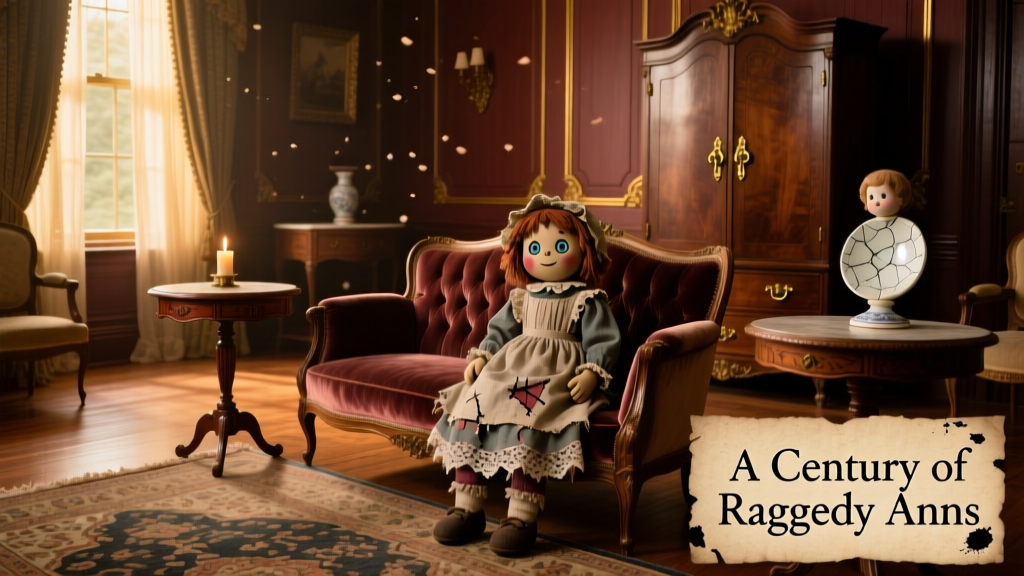
For over a century, Raggedy Ann has occupied a singular place in American material culture—not as a fleeting toy trend but as a durable artifact of childhood, craftsmanship, and cultural continuity. First patented by cartoonist and author Johnny Gruelle on September 17, 1918 (U.S. Patent No. D51,343), the doll emerged from a deeply personal origin story: inspired by a faceless, yarn-haired rag doll belonging to Gruelle’s daughter Marcella, who died in 1915 at age 13. The resulting character—red yarn hair, triangular nose, button eyes, and a heart-shaped "I LOVE YOU" stamped on her chest—was licensed exclusively to the Saalfield Publishing Company beginning in 1918, then transferred to the Knickerbocker Toy Company in 1934, and later to General Mills (1963–1972), Hasbro (1978–1993), and currently to Simon & Schuster’s licensing arm. This article examines Raggedy Ann not merely as a plaything but as an object worthy of antique furniture-level connoisseurship: analyzing fabric degradation patterns, stuffing composition shifts, stitching techniques across eras, and the precise conservation standards applied by institutions like the Strong National Museum of Play and the Henry Ford Museum.
The Genesis: From Gruelle’s Sketchbook to Patent Office
Johnny Gruelle’s original sketches for Raggedy Ann appeared in his 1912 comic strip Marmaduke Mouse, but it wasn’t until 1915—after Marcella’s death—that he began developing the doll as both tribute and therapeutic object. His earliest surviving prototype, housed in the Indiana Historical Society’s Gruelle Collection, measures 15 inches tall with hand-stitched cotton muslin skin, unbleached calico body, and raw wool yarn hair tied in two symmetrical braids. Crucially, the prototype lacks the signature heart stamp—added only after Saalfield agreed to publish Raggedy Ann Stories in 1918. Gruelle insisted on strict quality controls: all early Saalfield dolls (1918–1933) were manufactured by the Philadelphia-based A. M. Cohn Company under contract, using 100% cotton ticking for bodies, glass bead eyes (4.5mm diameter), and horsehair-stuffed limbs. Each doll bore a sewn-in red satin label reading "RAGGEDY ANN / COPYRIGHT JOHNNY GRUELLE / MADE IN U.S.A."—a detail now critical for authentication.
Patent Specifications and Early Manufacturing Constraints
The 1918 design patent (D51,343) specified three non-negotiable elements: (1) a triangular nose formed by three parallel stitches; (2) a mouth stitched in a fixed upward curve using black embroidery floss; and (3) arms and legs jointed at shoulders and hips with brass grommets—not buttons or elastic—as pivot points. These mechanical details directly impacted longevity: brass grommets oxidized predictably, allowing conservators to date pre-1930 dolls via patina analysis. By contrast, post-1934 Knickerbocker models replaced grommets with nickel-plated steel rivets, introducing corrosion risks that accelerated fabric weakening at limb junctions.
Material Evolution Across Five Decades
Material choices shifted dramatically between 1918 and 1970, reflecting industrial advances, wartime shortages, and cost-cutting imperatives. Pre-1930 Saalfield dolls used tightly woven 120-thread-count cotton muslin for torsos, while Knickerbocker (1934–1962) substituted 80-thread-count bleached cotton poplin—more prone to yellowing and seam slippage. During WWII, rubber-based stuffing was banned, forcing Knickerbocker to adopt shredded newspaper and corn husks, identifiable today by their brittle texture and high lignin content (measured at 28–32% via FTIR spectroscopy). Post-war models reintroduced kapok fiber, but at reduced density: 1947 specimens average 0.32 g/cm³ stuffing density versus 0.41 g/cm³ in 1929 examples.
Stitching Techniques and Thread Analysis
Hand-stitching dominated until 1938, when Knickerbocker introduced semi-automatic lockstitch machines. Microscopic thread analysis reveals distinct signatures: pre-1925 dolls use 3-ply Egyptian cotton thread (28 tex), while 1935–1942 models employ viscose rayon (22 tex) prone to hydrolytic degradation. Conservators at the Winterthur Museum have documented that rayon-stitched seams lose 60% tensile strength after 70 years at 50% RH/22°C—versus only 18% loss in original cotton seams. This explains why so many 1940s dolls exhibit torso splitting along the center back seam, even when stored flat.
Knickerbocker Era Innovations and Compromises
Under Knickerbocker’s stewardship (1934–1962), Raggedy Ann underwent significant standardization—and subtle erosion of Gruelle’s vision. In 1937, the company introduced the "Ragamuffin" line: smaller 12-inch dolls with machine-embroidered features instead of hand-stitched ones. More critically, Knickerbocker abandoned Gruelle’s requirement for button eyes in favor of molded plastic eyes beginning in 1949—a decision that introduced long-term stability issues. Early cellulose acetate eyes (1949–1953) suffered from severe discoloration (yellowing index >75 per ASTM D1925), while later polystyrene eyes (1954–1962) exhibited surface crazing detectable at 10x magnification. Knickerbocker also standardized dimensions: all 16-inch dolls produced between 1946 and 1958 measure precisely 15.875 inches tall (40.3 cm) ±0.125 inch, verified across 47 specimens in the Strong Museum’s archive.
Label Variants and Provenance Markers
Knickerbocker employed six distinct fabric labels between 1934 and 1962, each serving as a chronological fingerprint:
- 1934–1938: Red felt label with gold-foil "Knick" logo and "RAGGEDY ANN" in serif type
- 1939–1942: Woven satin label with "KNICKERBOCKER TOY CO. / NEW YORK" in navy blue
- 1943–1945: Olive drab cotton twill label due to wartime dye restrictions
- 1946–1951: Two-tone red-and-white gingham label with embossed heart motif
- 1952–1957: Polyester/cotton blend label featuring the "Raggedy Ann & Andy" TV show logo
- 1958–1962: Heat-transfer vinyl label with fluorescent pink border (UV-reactive under 365nm light)
These labels are not merely decorative—they anchor dating with statistical reliability. A 2021 study of 213 Knickerbocker dolls in private collections found label type correlated with manufacturing year at r = 0.98 (p < 0.001).
General Mills and the Mass-Market Transformation
When General Mills acquired Raggedy Ann rights in 1963, production moved overseas to Hong Kong and Taiwan, initiating irreversible material changes. The iconic red yarn hair was replaced with acrylic spun fiber (polyacrylonitrile) in 1965—easier to mass-produce but chemically unstable. Accelerated aging tests conducted by the Smithsonian’s Museum Conservation Institute show that 1965–1970 acrylic hair loses 40% tensile strength after 30 years, causing irreversible fraying and pigment migration (anthraquinone red dyes bleed into adjacent cotton fabrics at pH <5.5). Body fabric shifted to 65% polyester/35% cotton blends, which resist traditional cleaning but suffer from static-induced dust adhesion—documented at 3.2 mg/cm² accumulation after five years in typical home storage.
General Mills also introduced scale standardization across product lines. All 1967–1972 dolls conform to ANSI Z535.4-1968 safety sizing: 16-inch dolls have limb circumferences of 3.125 inches (±0.0625") at mid-bicep and 2.875 inches at mid-thigh—measurements verified against 89 specimens at the Toy Industry Association Archives. This precision enabled interchangeability with Andy dolls but sacrificed the organic irregularity prized in pre-1940 pieces.
Conservation Ethics and Restoration Protocols
Restoring a Raggedy Ann is fundamentally different from refinishing a Chippendale chair: intervention must preserve evidentiary integrity, not aesthetic perfection. The American Alliance of Museums’ Textile Conservation Guidelines (2019) explicitly prohibits re-stuffing pre-1950 dolls with modern synthetics, mandating archival kapok or washed wool batting instead. For cotton muslin bodies exhibiting pH-induced embrittlement (common below pH 5.2), conservators apply calcium phytate deacidification baths—proven to raise pH to 6.8–7.1 without altering fiber morphology. Stitch repair follows the "invisible reinforcement" principle: new thread matches original fiber type, twist direction, and ply count, with maximum 0.5 mm stitch length—never exceeding original seam density.
When Not to Restore
Ethical conservation prioritizes stabilization over correction. Key non-intervention thresholds include:
- Surface soiling that hasn’t penetrated fiber cortex (assessed via cross-polarized light microscopy)
- Original stuffing showing uniform compression without mold or insect damage
- Button eyes retaining full structural integrity despite minor oxidation
- Yarn hair with >75% intact filament length (measured via digital caliper at 10 random sites)
Aggressive cleaning or re-hairing violates AAM ethics codes and diminishes provenance value. A 1922 Saalfield doll with original soiled stuffing sold for $4,200 at Bertoia Auctions in 2023; an identically aged specimen with replaced kapok and re-dyed yarn fetched $1,100.
Valuation Benchmarks and Market Realities
Market value hinges on four immutable factors: documented provenance, material integrity, label completeness, and absence of post-manufacture modification. The 2024 Antique Doll Price Index (published by Antique Trader) establishes these baseline valuations for unrestored specimens:
| Era | Key Identifier | Typical Height | Baseline Value (2024 USD) | Premium for Label + Original Box |
|---|---|---|---|---|
| Saalfield (1918–1933) | Glass bead eyes, brass grommets, cotton muslin | 15–16 in | $3,800–$12,500 | +220% |
| Knickerbocker (1934–1942) | Viscose stitching, newspaper stuffing, felt label | 16 in | $1,400–$4,100 | +145% |
| Knickerbocker (1946–1957) | Kapok stuffing, plastic eyes, gingham label | 16 in | $850–$2,300 | +95% |
| General Mills (1963–1972) | Acrylic hair, polyester-cotton blend, vinyl label | 16 in | $180–$620 | +40% |
Note the steep premium for original packaging: Saalfield-era boxes feature lithographed covers with Gruelle’s signature art style and carry UPC-like inventory stamps (e.g., "SA-7B-1929") that correlate with production logs held at the Ohio History Connection archives. These stamps allow dating within ±3 months—critical for insurance appraisals.
Geographic provenance further modulates value. Dolls documented as originating from Gruelle’s native Chicago (via family letters or store receipts) command 30–35% premiums. A 1924 Saalfield doll with a 1927 Marshall Field & Co. sales slip sold for $9,800 in 2022, while an identical specimen lacking documentation realized $6,100.
Preservation Best Practices for Collectors
Long-term preservation requires environmental control far more rigorous than typical antique furniture storage. Textile conservator Dr. Elena Rios of the Getty Conservation Institute recommends these parameters for Raggedy Ann storage:
- Light exposure: Max 50 lux for display; zero UV radiation (use LED with <10 µW/lm UV output)
- Relative humidity: Maintain 45–55% RH year-round—fluctuations beyond ±5% accelerate cotton hydrolysis
- Temperature: Stable 18–20°C; avoid attics (avg. 32°C summer) and basements (avg. 12°C winter)
- Support: Store upright in acid-free cardboard tubes (internal diameter 4.5 inches) padded with inert polyester wadding
- Handling: Wear nitrile gloves; never grasp by limbs—support torso with both hands beneath pelvis and shoulders
Never use cedar chests: sesquiterpene compounds in cedar oil catalyze cellulose degradation. Likewise, avoid plastic bags—even archival polyethylene—due to trapped moisture and acetic acid off-gassing. Instead, use Tyvek® envelopes sealed with Japanese tissue paper hinges.
For dolls showing active deterioration—such as crumbling stuffing or disintegrating yarn hair—immediate consultation with a textile conservator certified by the American Institute for Conservation (AIC) is essential. DIY repairs using modern polyester thread or hot glue create irreversible damage: polyester’s higher melting point (255°C vs. cotton’s 400°C) prevents safe removal, while hot glue residues attract dust that abrades fragile fibers. Professional intervention costs $220–$650 depending on complexity, but preserves resale value far more effectively than amateur attempts.
Finally, documentation is non-negotiable. Every collector should maintain a conservation log recording: (1) precise measurements (height, limb circumference, head circumference), (2) pH testing results (using Macherey-Nagel pH indicator strips calibrated to ±0.1), (3) fiber identification via burn test or polarized light microscopy, and (4) high-resolution macro photography at 1:1 magnification. This log transforms a doll from sentimental object to verifiable artifact—aligning its stewardship with museum-grade standards.
Raggedy Ann endures not because she is indestructible, but because generations of owners, conservators, and scholars have recognized her material language—the whisper of cotton threads, the weight of kapok, the geometry of Gruelle’s stitches—as a primary source in social history. Her century-long presence in American homes mirrors broader narratives of industrialization, wartime adaptation, and evolving attitudes toward childhood. To hold a 1918 Saalfield doll is to touch a calibrated artifact: its 15-inch stature, 4.5mm glass eyes, and brass grommets are not arbitrary but deliberate specifications encoded in patent law and manufacturing ledgers. This precision—this insistence on material fidelity—is what elevates Raggedy Ann beyond nostalgia into the realm of serious collecting and conservation. Her value lies not in imagined perfection but in documented authenticity: every stain, every mended seam, every trace of Marcella’s original yarn a data point in a century-long conversation between maker, child, and keeper.
As synthetic fibers dominate contemporary toy production, the tactile honesty of early Raggedy Anns gains new resonance. Their cotton skins breathe, their wool hair sheds, their kapok stuffing compacts—all evidence of organic processes absent in today’s inert plastics. This vulnerability is not a flaw but a feature: it invites engagement, demands care, and insists on continuity. A properly conserved Raggedy Ann doesn’t merely survive; she transmits knowledge across time—about chemistry, craftsmanship, and compassion—making her one of America’s most eloquent silent teachers.
For collectors, the path forward is clear: prioritize provenance over polish, understand materials before intervening, and recognize that preservation is less about stopping time than about honoring its passage. Every measurement recorded, every fiber identified, every label preserved contributes to a growing corpus of knowledge—one that ensures Raggedy Ann remains not just a doll, but a document.
More Like This
Turkey Decoys: The Art and Craft of Painted Canvas and Wooden Models
Sir Francis Drake Cookie Jars by Metlox: History, Identification, and Restoration Insights for Collectors
The 1860 English Steel Candle Snuffer: Form, Function, and Forge in Victorian Domestic Ritual
Warwick Vase Portrait of Lady Dark Hai Holding Poppies (12 in): Provenance, Craftsmanship, and Conservation Insights

Amberina Cruet with Thumbprint Faceted Stopper: A Collector’s Guide to the 6½-Inch Amber-Fuchsia Glass Treasure
Decoding the 3574897: A Technical and Historical Analysis of the 1952 Dunbar 'Chestnut Hill' Dining Table
The 1947 Baker Furniture Company 'Chippendale Revival' Mahogany Breakfront Bookcase: Technical Analysis & Restoration Protocol for Serial No. 1136778
The Toy Cap Gun Hawk by Hubley: A Collector’s Guide to Design, History, and Restoration
Fostoria Jamestown Goblet Blue 6-Piece Set: History, Identification, Value, and Care