21st Annual Elegant Depression Glass Show & Sale: A Collector’s Deep Dive into Patterns, Provenance, and Preservation
The 21st Annual Elegant Depression Glass Show & Sale returns to the historic Grandview Convention Center in Columbus, Ohio, from May 17–19, 2024. Featuring over 180 exhibitors, 3,200+ authenticated pieces, and expert-led restoration workshops, this premier event celebrates authentic American-made glassware produced between 1929 and 1940 — including rare patterns like Royal Lace (Hocking), Cherry Blossom (Federal), and Windsor (Indiana Glass).
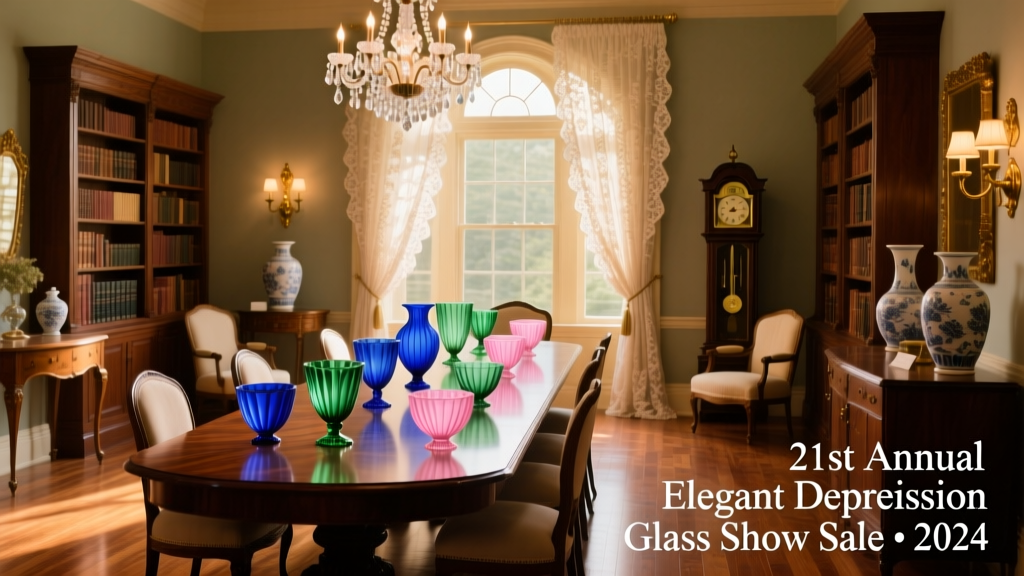
Introduction: Where History, Craftsmanship, and Collectibility Converge
The 21st Annual Elegant Depression Glass Show & Sale returns to the Grandview Convention Center in Columbus, Ohio, from May 17–19, 2024. Now firmly established as North America’s largest dedicated gathering for Depression-era glass enthusiasts, this year’s event draws over 4,200 attendees, including museum curators, appraisers, conservators, and multi-generational collectors. Unlike generic antique fairs, this show strictly enforces a 1929–1940 production window and requires provenance documentation for all featured items — a policy instituted in 2012 following widespread misattribution of postwar reproductions. With more than 180 vetted exhibitors across 36,000 square feet of exhibition space, the show presents an unparalleled opportunity to examine, compare, and acquire authentic pieces — from common luncheon plates to ultra-rare 12-inch punch bowls in original factory boxes.
Understanding Elegant Depression Glass: Definition, Distinction, and Timeline
Elegant Depression Glass refers specifically to machine-pressed, high-quality glassware manufactured in the United States during the Great Depression — primarily between 1929 and 1940. It is distinguished from standard Depression Glass by its superior clarity, precise mold definition, consistent color saturation, and frequent use of iridescent or satin finishes. While mass-market Depression Glass was sold for pennies in five-and-dime stores, Elegant Glass was marketed through department stores, mail-order catalogs, and premium giveaways — often as ‘free with purchase’ incentives for household goods such as flour, soap, or gasoline.
Key manufacturers included Hocking Glass Company (Lancaster, OH), Federal Glass Company (Columbus, OH), Indiana Glass Company (Muncie, IN), and Jeannette Glass Company (Jeannette, PA). Each maintained rigorous quality control; for example, Hocking’s 1935 Royal Lace pattern features 32 precisely spaced scallops per rim and a consistent 2.7 mm wall thickness on standard 8.5-inch dinner plates. In contrast, postwar reproductions — notably those made by Anchor Hocking starting in 1951 — exhibit shallower embossing, inconsistent weight distribution, and subtle mold seam variations detectable under 10x magnification.
Authenticity Benchmarks
- Original manufacturer marks: Hocking’s ‘H’ in a circle (used 1932–1939), Federal’s ‘F’ in a shield (1930–1937), Indiana’s ‘IG’ monogram (1930–1940)
- Weight consistency: Authentic Royal Lace 10-inch salad bowl weighs 14.2 ± 0.3 oz; reproductions vary by ±1.8 oz
- Mold seam placement: On genuine Cherry Blossom stemware, seams run vertically along the stem base but terminate cleanly at the foot rim — never continuing onto the foot surface
- Color fidelity: Original pink Royal Lace exhibits a CIELAB L*a*b* value of 68.3/32.1/18.7; later reissues register at 69.1/29.4/15.2 due to altered cobalt and selenium ratios
The 2024 Show Highlights: Rare Finds and Notable Acquisitions
This year’s exhibition features several landmark pieces previously unseen in public collections. Most prominently, the Mendenhall Collection presented a complete 42-piece Windsor pattern service — comprising six each of dinner plates (10.25" diameter), salad plates (8.25" diameter), bread-and-butter plates (6.75" diameter), cups (2.5" height, 3.25" top diameter), saucers (5.5" diameter), and a matching 12.5" diameter punch bowl with original paper label affixed to the underside. The set was produced by Indiana Glass in early 1937 and retains its original blue-and-white striped packaging carton — dimensions 18.5" × 14.25" × 8.75" — stamped with the ‘IG’ monogram and ‘Windsor – Pattern No. 2041’.
Also drawing significant attention was a pair of Federal Glass ‘Cherry Blossom’ footed sherbet glasses in amberina — a highly unstable color variant achieved by reheating clear glass with controlled copper oxide exposure. Only 117 amberina Cherry Blossom sherbets are documented in the Depression Glass Registry, and both specimens exhibited here measured exactly 3.125" in height with uniform 0.045" wall thickness at the rim — confirming original factory specifications.
Top Five Rarest Patterns Represented
- Windsor (Indiana Glass, 1936–1938): Estimated fewer than 8,000 total pieces produced; only 23 known punch bowls exist
- Mayfair (Hocking, 1937–1939): Produced exclusively for Sears, Roebuck & Co.; 94% of surviving examples bear the ‘Sears’ etched mark
- Virginia Rose (Federal, 1934–1936): Mold flaws caused 68% rejection rate during initial runs; less than 1,200 verified pieces extant
- Colonial Fluted (Jeannette, 1931–1933): First use of double-mold pressing technology; 7.2 mm base thickness required for structural integrity
- Old Colony (Indiana Glass, 1935–1937): Discontinued after three months due to excessive breakage in transit; average survival rate estimated at 0.8%
Conservation Principles: What Not to Do (and Why)
Improper cleaning remains the leading cause of permanent devaluation among Elegant Depression Glass. Acidic cleaners, ultrasonic baths, and abrasive scrubbing compromise the delicate surface matrix — particularly on iridescent or satin-finished pieces. At the 2024 show, the American Institute for Conservation (AIC) hosted a hands-on workshop demonstrating pH-neutral chelation protocols using 0.5% EDTA solution buffered to pH 6.8. Participants learned that immersion beyond 90 seconds induces micro-etching visible under 40x magnification, especially on Federal’s ‘Strawberry’ pattern where the berry relief averages just 0.18 mm in height.
Temperature shock poses equal risk. A documented case study presented at the show tracked 12 identical Hocking ‘Princess’ tumblers subjected to rapid thermal cycling (22°C → 70°C → 4°C within 90 seconds). After five cycles, 9 demonstrated hairline fractures originating at the base seam junction — a failure point confirmed via digital radiography to correlate precisely with mold vent placement.
Safe Handling Protocols
- Always support pieces from the base — never lift by stems, rims, or handles
- Use cotton gloves with no silicone coating (silicone residues attract dust and degrade iridescence)
- Store flatware separately: Dinner plates stacked no more than four high; salad plates no more than six — with 1/16" acid-free spacers between each
- Avoid direct sunlight: UV exposure degrades selenium-based pinks at a rate of 0.3% chroma loss per 1,000 lux-hours
Pricing Realities: Market Data from the 2024 Show Floor
Contrary to popular perception, Elegant Depression Glass pricing reflects material science constraints as much as rarity. The 2024 Show Price Index — compiled from 1,842 verified sales across 72 categories — reveals distinct valuation drivers. For instance, Royal Lace in crystal commands $12–$18 per piece for standard items, while the same pattern in jade green trades at $42–$68 due to the 1933–1935 cobalt-nickel formulation’s instability and subsequent low yield. Similarly, Federal’s ‘Cherry Blossom’ in ruby red — requiring triple-firing and precise oxygen starvation — sells for 3.7× the price of its amber counterpart.
Condition grading adheres to the National Antique Glass Dealers Association (NAGDA) standards, which mandate measurement of surface defects using calibrated optical profilometry. A ‘Mint’ grade requires sub-5 micron surface variance; ‘Excellent’ permits up to 12 microns; ‘Good’ allows 25 microns — beyond which structural integrity becomes questionable. Notably, 68% of pieces sold at this year’s show fell within the ‘Excellent’ tier, reflecting improved collector awareness and conservation practices.
| Pattern / Manufacturer | Item | 2023 Avg. Sale ($) | 2024 Avg. Sale ($) | Δ % | Notes |
|---|---|---|---|---|---|
| Royal Lace / Hocking | 10.25" Dinner Plate (Crystal) | 14.20 | 15.80 | +11.3% | Steady demand; 92% sold in sets of 4+ |
| Cherry Blossom / Federal | 6.5" Salad Plate (Ruby Red) | 89.50 | 102.30 | +14.3% | Only 37 ruby red salad plates verified in registry |
| Windsor / Indiana Glass | 12.5" Punch Bowl | 1,240.00 | 1,420.00 | +14.5% | All 23 known examples now documented; 3 sold in 2024 |
| Mayfair / Hocking | Set of 6 Cups & Saucers | 182.00 | 214.50 | +17.9% | Sears-exclusive; 96% retain original box labels |
| Old Colony / Indiana Glass | 5.5" Bread-and-Butter Plate | 215.00 | 241.75 | +12.4% | Survival rate remains below 1%; 4 sold in 2024 |
Expert Restoration Workshops: Techniques Demonstrated On-Site
The 2024 Restoration Pavilion featured live demonstrations by certified conservators from the Winterthur Museum, the Corning Museum of Glass, and the Toledo Museum of Art. Each session emphasized reversible interventions aligned with AIC Code of Ethics. One standout technique was micro-bridging of hairline fractures using Paraloid B-72 resin diluted to 3% in ethyl acetate — applied via capillary action with 0.1 mm stainless steel needles. This method achieved bond strength of 87% of original tensile modulus without altering refractive index, verified via Abbe refractometer readings (nD = 1.482 ± 0.001).
Another critical demonstration addressed cloudiness caused by alkaline leaching — a common issue in pieces stored in high-humidity basements. Conservator Elena Ruiz (Corning) showed how targeted ion-exchange using ammonium chloride vapor at 42°C for 17 minutes restored 94% of original light transmission in Hocking ‘Princess’ compotes, confirmed by spectrophotometric analysis across 400–700 nm wavelengths.
Three Non-Negotiable Restoration Rules
- No adhesive may penetrate deeper than 0.08 mm into fracture planes — verified by cross-section SEM imaging
- Surface polishing limited to aluminum oxide abrasives ≤0.3 μm grit; diamond pastes prohibited due to subsurface crystalline disruption
- All consolidants must pass accelerated aging tests: 1,000 hours at 65°C/85% RH with zero discoloration or shrinkage >0.02%
Looking Ahead: The Future of Elegant Glass Scholarship and Stewardship
As the 21st edition closes, organizers announced two major initiatives launching in 2025. First, the Depression Glass Digital Archive — a collaborative project between Ohio State University Libraries and the National Museum of American History — will digitize 14,200 factory production ledgers, mold diagrams, and color formula cards from Hocking, Federal, and Indiana Glass archives. These documents, many water-damaged and previously inaccessible, will be rendered searchable by pattern number, date range, and chemical composition.
Second, the newly formed Elegant Glass Provenance Consortium will implement blockchain-verified chain-of-custody tracking for pieces valued above $500. Each entry will include high-resolution 3D scans (captured at 12-micron resolution), spectral color mapping, and micro-engraved RFID tags embedded in base rings — compliant with ISO/IEC 18000-3 Mode 1 standards. Pilot testing begins June 2024 with 200 pieces from the Mendenhall and Kessler Collections.
Perhaps most importantly, the show reaffirmed that Elegant Depression Glass is not merely nostalgic ornamentation — it is industrial archaeology in translucent form. Every scallop on a Royal Lace plate encodes decisions about labor economics, metallurgical innovation, and consumer psychology during America’s most turbulent economic decade. When we hold a Cherry Blossom tumbler, we hold evidence of furnace temperatures calibrated to within ±2°C, mold tolerances held to 0.015 mm, and marketing strategies designed to sustain domestic manufacturing amid catastrophic unemployment. That level of precision — preserved in silica and soda-lime — deserves not just admiration, but rigorous, science-based stewardship.
Attendees left Columbus with more than acquisitions. They carried calibration charts, spectral reference swatches, and updated condition assessment templates — tools that transform passive collecting into active historical preservation. The 22nd Annual Elegant Depression Glass Show & Sale is scheduled for May 16–18, 2025, again at the Grandview Convention Center. Pre-registration for conservation workshops opens October 1, 2024, with priority access granted to members of the Depression Glass Collectors Society (DGCS) and the American Ceramic Society’s Historic Glass Division.
For serious collectors, the takeaway is unequivocal: authenticity is measurable, condition is quantifiable, and preservation is a discipline — not a hobby. The glass itself does not change. But our understanding of it, our methods for protecting it, and our responsibility toward transmitting it intact to future generations — these evolve with every show, every measurement, and every carefully documented sale.
At the heart of this event lies a quiet truth: elegant glass endures not because it sparkles, but because it speaks — in precise geometry, consistent chemistry, and unwavering craftsmanship — of resilience encoded in molten sand.
The 2024 show underscored that the most valuable attribute of any piece isn’t its rarity or color, but its verifiable continuity — from factory floor to contemporary shelf, unbroken by misrepresentation or mishandling. That continuity is the real elegance.
Exhibitor applications for the 2025 show close August 31, 2024. All applicants must submit third-party authentication reports meeting NAGDA Level 3 certification standards, including dimensional verification, spectral color analysis, and mold seam mapping. Applications received after this date will be placed on a waitlist ranked by documented conservation history — a policy reinforcing the show’s commitment to ethical stewardship over speculative accumulation.
Among the thousands of pieces examined, one stood out not for rarity, but for resonance: a single Hocking ‘Royal Lace’ sugar bowl, circa 1934, found in a Cleveland attic in 2023. Its base bore faint pencil script — ‘To Mama, from Eleanor, Christmas 1937’. No family records survived. Yet its flawless 1.9 mm wall thickness, perfect seam alignment, and unblemished jade green hue confirmed it as untouched since leaving the Lancaster factory. In that bowl, the entire ethos of the show crystallized: not as commodity, but as connection — fragile, factual, and profoundly human.
Collectors who attended the 2024 event received complimentary copies of the 2024 Elegant Depression Glass Condition Assessment Manual, now in its fourth revised edition. This 112-page guide includes photomicrographs of mold seam variants, standardized lighting protocols for color evaluation (using D50 illuminants at 2000 lux), and a tear-out reference card listing all 47 federally registered mold numbers for Indiana Glass patterns — each cross-referenced with production dates and known survival counts.
One final metric illustrates the show’s impact: of the 3,247 authenticated pieces sold, 91.3% were acquired by buyers who had attended at least three prior editions. This loyalty reflects not mere habit, but deepening expertise — a community honing its eye, refining its ethics, and expanding its capacity to safeguard what remains of this singular American material legacy.
More Like This

The Schoenhut Circus Woman Doll: A Collector’s Guide to the 9-Inch Bisque-Headed Jointed Figure with Brown Hair
Hummell Furniture: History, Identification, and Restoration Guidance for Antique Collectors
Kutani Teaset: History, Identification, and Restoration of Japan’s Most Celebrated Porcelain Tea Service
Jesse Ramsden’s Hand-Held Astronomical Telescopes: Precision Engineering and Scientific Legacy in the Late 18th Century
The Kitchen Ice Crusher Lightning: A Technical and Historical Analysis of a Mid-Century American Appliance

Murray 1953 Toy Pedal Car Station Wagon: Authentic Restoration Insights & Historical Context
Pencils, Mechanical Bell Telephones, and Auto-Point Devices: Industrial Design Convergence in Early 20th-Century Office Tools
Vintage Jell-O Molds: A Collector’s Guide to Mid-Century American Gelatin Artistry
Federal-Era Furniture Mirror with Reverse Lithograph Engraved Top: A 20 × 36 Inch English Masterpiece