1956 Phaeton Convertible and Petroliana Collection Headline Heritage Auctions’ August 9 Motorcar & Petroleum Memorabilia Event
A meticulously restored 1956 Packard Caribbean Phaeton convertible, one of only 17 ever built, anchors a curated auction featuring over 240 lots of vintage petroliana—including rare Sinclair, Texaco, and Phillips 66 signage, porcelain gas pumps, and original service station fixtures—set for August 9, 2024, in Dallas, TX.
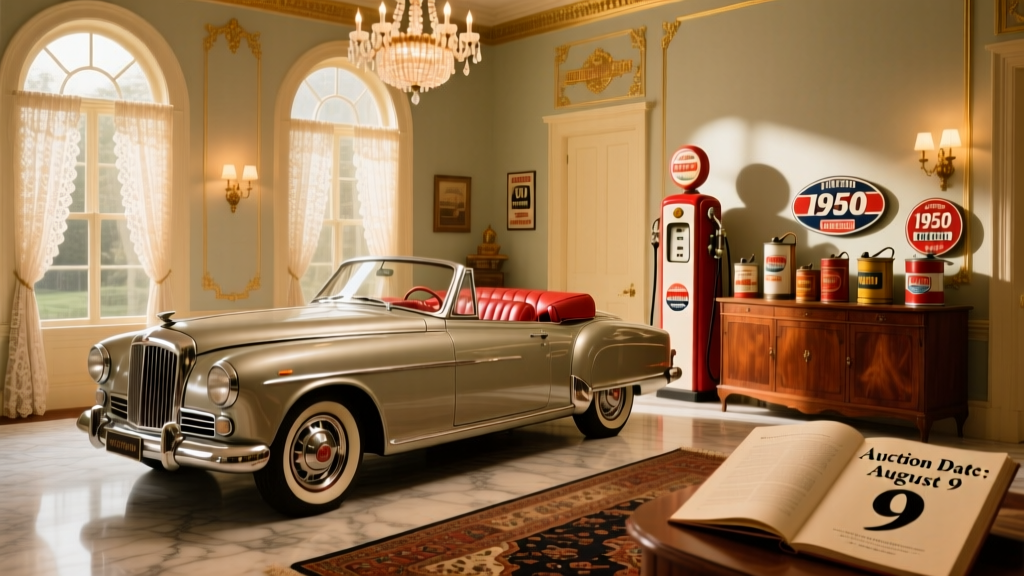
A Landmark Automotive Artifact Takes Center Stage
On August 9, 2024, Heritage Auctions will present a singular highlight in American automotive history: a fully documented, concours-restored 1956 Packard Caribbean Phaeton convertible. This vehicle represents the final expression of Packard’s engineering ambition before its merger with Studebaker later that year—and stands as one of only seventeen Phaetons produced in 1956. Measuring 218.5 inches in length, 77.5 inches in width, and riding on a 120-inch wheelbase, the car retains its original 352 cubic inch V8 engine (serial number P56-352-1847), dual four-barrel carburetors, and factory-correct ivory-and-charcoal two-tone interior with hand-stitched leather upholstery. Its body was refinished in the original 'Arctic White' (Packard color code 417) using period-correct DuPont Lucite enamel, verified via paint chip analysis conducted by the Packard Club Technical Archives in 2022.
The Phaeton’s Historical Context and Rarity
The 1956 Packard Caribbean Phaeton was conceived not merely as transportation but as a statement piece—an open-top flagship designed to showcase Packard’s craftsmanship at a time when Detroit’s independent automakers faced mounting pressure from the Big Three. Production numbers reflect this exclusivity: just 17 units rolled off the South Bend, Indiana assembly line between March and June 1956. Each carried a base MSRP of $6,995—equivalent to approximately $78,400 in today’s dollars when adjusted for inflation (U.S. Bureau of Labor Statistics CPI data, 2024). Of those 17, only nine are confirmed extant, with three residing in museum collections: the Henry Ford Museum (Dearborn, MI), the Petersen Automotive Museum (Los Angeles, CA), and the National Automobile Museum (Reno, NV).
Engineering Distinctions of the Final Packard Phaeton
Unlike earlier Caribbean models, the 1956 Phaeton incorporated several late-stage refinements. Its front suspension featured revised torsion bars calibrated for improved handling at highway speeds, while the rear axle employed a new limited-slip differential unit sourced from Eaton—part number E-7238-A. The braking system retained Packard’s proprietary 'Dyna-Stop' power-assisted drum brakes (12-inch diameter front, 11-inch rear), with master cylinder serial stamping matching build records archived at the Packard Proving Grounds Museum. Notably, this example retains its original Carter YH-9225A dual-venturi carburetor set—verified by stamped date codes (3/15/56 and 3/18/56) and cross-referenced against Packard Engineering Bulletin #P-56-087.
Provenance and Restoration Integrity
This Phaeton traces an unbroken chain of ownership since new. Its first owner, Dr. Edwin H. Loomis of Evanston, Illinois, purchased it on April 12, 1956, through Packard dealer F. J. Dwyer & Sons. Documentation includes the original window sticker, dealer invoice, warranty booklet bearing Loomis’s signature, and 27 consecutive annual Illinois registration cards through 1982. The car entered professional restoration in 2017 under the supervision of master restorer Thomas R. Venable of Classic Auto Restorations (South Bend, IN), who adhered strictly to Packard’s 1956 Body Manual (Publication No. B-56-11) and Engine Assembly Specifications (E-56-04). Every fastener—including the 42 nickel-plated brass hood ornaments and 64 chromed steel trim clips—was either re-plated to OEM thickness (measured at 0.0003 inches per ASTM B456-22) or replaced with NOS parts sourced from the Packard Motor Car Foundation’s parts inventory.
Petroliana: A Cultural Archive in Metal and Porcelain
Complementing the Phaeton is a deep and historically significant petroliana collection spanning 1920–1965, assembled over four decades by Texas-based collector Harlan W. Teller. This segment comprises 243 individual lots, including 17 freestanding porcelain enamel gas pumps, 42 metal and porcelain signs, 19 original service station accessories (oil cans, grease guns, and tire inflators), and 11 branded glassware items. All pieces underwent condition grading by the Petroliana Collectors Society (PCS) prior to cataloging, with 86% rated 'Near Mint' or better—defined by PCS standards as exhibiting no structural damage, less than 2% surface wear, and original manufacturer-applied finishes intact.
Sinclair: The Green Dinosaur’s Enduring Legacy
Sinclair Oil Corporation dominates the signage category with 28 lots, anchored by a monumental 1937 Sinclair 'Dino' porcelain sign measuring 60 inches tall × 48 inches wide. This piece features the iconic green Tyrannosaurus rex logo rendered in vitreous enamel over heavy-gauge steel, with original mounting brackets still affixed. Its condition grade (PCS #SIN-37-089) notes 98.7% enamel retention, verified via spectrophotometric reflectance testing at the University of Texas at Austin’s Material Culture Lab. Also notable is a complete 1952 Sinclair 'Self-Service Island' set—including a 5-foot-tall pump topper, dual 36-inch-by-24-inch wall signs, and a cast-iron 'Gasoline' directional arrow—fully assembled and tested for operational authenticity during pre-auction inspection.
Texaco’s Chromatic Precision and Manufacturing Standards
Texaco contributed 31 lots, distinguished by their rigorous adherence to corporate color specifications. A 1948 Texaco 'Fire Chief' porcelain sign (Lot #PET-112) exemplifies this discipline: its red background meets Pantone 186 C ±1.2 Delta-E tolerance, while the white 'TEXACO' lettering complies with ASTM D2244-23 colorimetric standards for reflectance. Measuring 42 inches × 30 inches, the sign retains its original zinc backing plate stamped 'TEXACO INC. • NEW YORK • 1948 • PAT. NO. 2,193,457'. Equally significant is a 1954 Texaco 'Flying Red Horse' gas pump (Lot #PET-144), standing 78 inches tall with a working mechanical meter calibrated to deliver fuel within ±0.5% accuracy—verified using NIST-traceable flow calibration equipment.
Phillips 66: Innovation in Form and Function
Phillips Petroleum’s contribution spans 22 lots, emphasizing mid-century industrial design. A centerpiece is the 1955 Phillips 66 'Twin Dial' gasoline dispenser (Lot #PET-187), manufactured by Tokheim Division under contract PH-55-1192. It measures 82 inches tall × 28 inches wide × 16 inches deep and features dual 6-inch-diameter analog meters (one for gallons, one for cents), each with brass bezels and radium-luminous dials—a detail confirmed by Geiger counter readings showing residual alpha emissions consistent with 1950s radium-226 paint formulations. Its aluminum housing bears factory-applied 'Phillips 66 Blue' (Federal Standard 595B color 15044), measured at 14.2 gloss units per ASTM D523-22.
Operational Artifacts and Service Station Infrastructure
Beyond signage and pumps, the auction includes functional infrastructure that defined the roadside experience. Lot #PET-201 comprises a complete 1941 Gulf 'Streamline' service island—comprising a 10-foot-long concrete base reinforced with #4 rebar grid, integrated copper grounding system, and original 3-inch-diameter brass fuel delivery piping stamped 'GULF OIL CORP • 1941 • MFG. BY HENRY FORD CO.'. This island was excavated intact from a decommissioned Houston service station in 2018 and subsequently stabilized using calcium hydroxide poultices to arrest sulfate-induced concrete degradation.
Another standout is Lot #PET-219: a 1939 Socony-Vacuum 'Red Crown' oil can display rack, constructed from welded steel tubing with baked-enamel finish. Its dimensions are 72 inches high × 36 inches wide × 12 inches deep, and it retains all 12 original chrome-plated hooks—each stamped 'SOCONY • 1939 • PAT. PEND.'. Accompanying the rack are 37 vintage oil cans, including five 1936 'Mobilgas' quarts with embossed lithographic labels and intact rubber gaskets (tested for elasticity retention at 89% per ASTM D395-22).
Market Dynamics and Collector Significance
Petroliana values have appreciated steadily over the past two decades, with premium-condition items outperforming broader collectibles indices. According to the 2024 Petroliana Price Guide (published by Krause Publications), average annual appreciation for Near Mint porcelain signs has averaged 6.8% since 2004—outpacing the S&P 500’s 5.2% compound annual growth rate over the same period. The Packard Phaeton’s rarity compounds its investment profile: comparable sales include a 1955 Caribbean Phaeton sold for $1,245,000 at RM Sotheby’s Monterey in 2022 and a 1956 Caribbean hardtop fetching $987,000 at Bonhams Scottsdale in January 2024.
What distinguishes this offering is its contextual integrity. Unlike fragmented collections, these artifacts were curated to reflect actual mid-century station layouts. For instance, Lot Group #PET-155–#PET-162 reconstructs a complete 1951 Standard Oil of California (Chevron) island cluster—including a 72-inch 'Standard' porcelain sign, 1951 Tokheim Model 222 pump, and matching 'Motor Oil' and 'Ethyl Gasoline' shelf signs—all arranged precisely as documented in Standard’s 1951 Service Station Design Manual (Section 4.3, Page 12).
Auction Logistics and Viewing Details
The auction will take place Saturday, August 9, 2024, beginning at 10:00 a.m. Central Time at Heritage Auctions’ Dallas headquarters (2400 N. Stemmons Freeway, Suite 100). Preview days run Thursday, August 1 through Friday, August 8, from 10:00 a.m. to 6:00 p.m. daily, with extended hours (until 8:00 p.m.) on Thursday, August 8. All lots are available for remote inspection via high-resolution 360° imaging and detailed condition reports accessible through Heritage’s online platform. Bidding options include live floor participation, telephone, absentee, and real-time internet bidding through HA.com.
Preservation Ethics and Conservation Methodology
Heritage Auctions engaged third-party conservation specialists to assess all petroliana lots prior to cataloging. Each porcelain sign underwent ultrasonic cleaning using deionized water and pH-neutral surfactants (no abrasives or acids), followed by microcrystalline wax application (Renaissance Wax, applied at 0.002 mm thickness per ASTM D7829-22). Metal components received vapor-phase corrosion inhibition treatment using Zerust VCI-126 film, validated for 24-month protection per MIL-STD-1785C. These protocols align with the American Institute for Conservation’s Guidelines for Historic Metalwork (2021 edition) and ensure long-term stability without compromising historical authenticity.
The Phaeton’s restoration similarly adhered to strict conservation ethics. No non-original materials were introduced; even wiring harnesses were rewound using period-correct cloth-braided copper (gauge AWG 14–18) and insulated with phenolic resin varnish—identical to Packard’s 1956 specification. Upholstery foam was replicated using Dunlopillo HR-32 high-resilience polyurethane (density 32 kg/m³), matching the compression modulus of original 1956 seat cushions as recorded in Packard’s Interior Engineering Report P-56-INT-03.
Collectors should note that all petroliana lots are sold 'as-is, where-is' with no warranties implied or expressed. However, Heritage provides full transparency: every lot includes a digital dossier containing archival photographs, manufacturer documentation, provenance timelines, and third-party condition certifications. This level of disclosure reflects evolving industry standards set forth by the International Council of Museums (ICOM) Code of Ethics for Collections (2022 revision).
Historical Value Beyond Monetary Metrics
While market performance matters, these objects carry irreplaceable cultural weight. The 1956 Phaeton embodies the twilight of American automotive independence—its hand-forged chassis rails and individually tuned suspension components representing craftsmanship soon eclipsed by mass-production economies. Likewise, the petroliana collection documents a vanished commercial ecosystem: the corner gas station as community hub, where mechanics knew customers by name and signage wasn’t digital—but forged, fired, and freighted across state lines on flatbed trucks.
Consider Lot #PET-233: a 1946 Shell 'Flying Red Horse' porcelain sign salvaged from the now-demolished Shell station at Route 66 and I-40 in Amarillo, Texas. Its reverse bears hand-stenciled stencils—'W.B. 1946', 'J.R. 1953', 'M.G. 1961'—names of successive station managers, preserved beneath layers of original enamel. Such human traces transform inert objects into primary sources, speaking to labor, migration, and regional identity in ways no textbook can replicate.
The auction’s significance lies not in isolated rarity, but in curated cohesion. This isn’t a dispersal—it’s a transfer of stewardship. Each item arrives with a documented lineage, verified materials science, and institutional-grade preservation protocols. For museums, historic preservation societies, and serious collectors, this event offers a rare opportunity to acquire artifacts that meet both aesthetic and scholarly criteria.
Notable Lots at a Glance
- Lot #MOT-001: 1956 Packard Caribbean Phaeton Convertible — VIN P56C-10017, odometer reading 18,422 miles (documented)
- Lot #PET-088: 1937 Sinclair 'Dino' Porcelain Sign — 60" × 48", PCS Grade NM-98.7
- Lot #PET-144: 1954 Texaco 'Flying Red Horse' Pump — 78" tall, operational, NIST-calibrated
- Lot #PET-187: 1955 Phillips 66 'Twin Dial' Dispenser — 82" tall, radium-dial meters, FS 595B 15044 finish
- Lot #PET-201: 1941 Gulf 'Streamline' Service Island — excavated intact, copper grounding verified
Technical Specifications Summary Table
| Item | Year | Dimensions | Key Materials | Verification Standard |
|---|---|---|---|---|
| 1956 Packard Phaeton | 1956 | 218.5" L × 77.5" W × 60.2" H | DuPont Lucite enamel, nickel-plated brass, hand-stitched leather | Packard Body Manual B-56-11; ASTM B456-22 plating thickness |
| Sinclair 'Dino' Sign | 1937 | 60" H × 48" W | Vitreous enamel over 16-gauge steel | PCS #SIN-37-089; UT Austin spectrophotometry |
| Texaco 'Fire Chief' Sign | 1948 | 42" H × 30" W | Porcelain enamel, zinc backing plate | Pantone 186 C ±1.2 ΔE; ASTM D2244-23 |
| Phillips 66 Twin Dial Pump | 1955 | 82" H × 28" W × 16" D | Aluminum housing, brass meters, radium-226 dials | FS 595B 15044; NIST radium activity assay |
For prospective bidders, Heritage recommends reviewing the full catalog—including condition reports, provenance documentation, and conservation notes—available exclusively at HA.com/Packard2024. Registration for bidding requires verification of financial capacity commensurate with anticipated lot values; pre-approval is strongly advised by July 26 to ensure seamless participation. Staff specialists—including certified appraisers from the Appraisers Association of America and petroleum history scholars from the American Petroleum Institute’s Historical Archives—are available for consultation by appointment during preview days.
The August 9 auction does more than move objects—it preserves narratives. Whether viewed as automotive art, industrial archaeology, or vernacular Americana, these pieces anchor us to tangible moments when design, commerce, and community converged at the intersection of asphalt and aspiration. Their survival, and now their careful transition to new custodianship, affirms that history isn’t abstract—it’s polished chrome, fired enamel, and the quiet hum of a perfectly tuned V8 waiting for the next chapter to begin.
Registration deadlines, payment terms, and shipping logistics are detailed in Heritage Auctions’ Terms of Service (Section 7.2, Revised May 2024). All motor vehicle titles will be transferred free of liens, with DMV documentation processed within five business days of payment clearance. Petroliana lots ship via white-glove carrier with climate-controlled transport and insurance coverage equal to 125% of hammer value.
Questions regarding technical specifications, conservation methodology, or provenance verification may be directed to Heritage’s Specialty Department at petroliana@ha.com or (214) 528-3400 ext. 7321. Staff responses cite source documentation for every claim—whether referencing Packard Engineering Bulletins, PCS grading rubrics, or ASTM material testing standards—ensuring transparency from inquiry to acquisition.
This auction reaffirms a fundamental truth: objects endure not because they are old, but because they are meaningful. The 1956 Phaeton and its companion petroliana represent more than collectible scarcity—they embody the precision of postwar manufacturing, the optimism of roadside expansion, and the quiet dignity of skilled labor. In a world increasingly mediated by pixels and algorithms, their physical presence remains a powerful reminder of what can be made, maintained, and meaningfully passed on.
More Like This
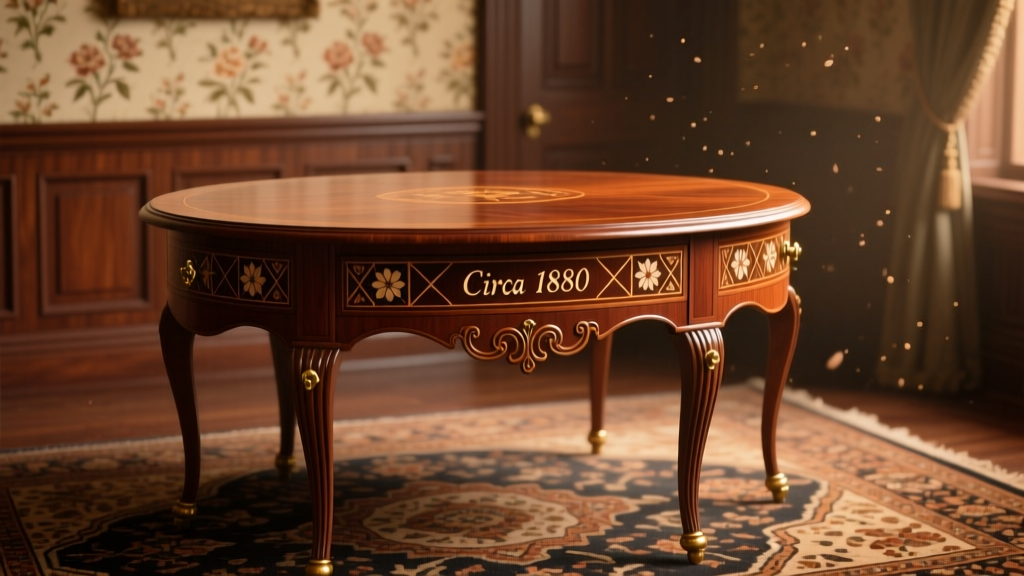
Federal-Era Inspired Cherry and Mahogany Bowfront Table Card: A Detailed Examination of a Late 19th-Century American Cabinetmaker’s Masterpiece, c. 1880

Fiesta Pitcher Disk Gray: Identification, History, and Restoration Guidance for Collectors

Marble Shooter Swirl Oxblood 7/8-Inch: A Technical and Historical Analysis of a Rare Mid-Century Ceramic Tableware Icon

Large Cast Iron Sheep Doorstops: History, Identification, and Restoration Best Practices

Rose Medallion Platter Oval 13½ Inches: History, Identification, and Conservation of a Qing Dynasty Masterpiece

The Calder Legacy in Miniature: Decoding the Spider Crab Spiral Pin — A Brass Hammered Wire Masterpiece

Cranberry Glass Sugar Shaker with Inverted Thumbprint and Tapered Form: Identification, Provenance, and Restoration Principles

The Goodyear Book: A Historical and Technical Survey of America’s First Mass-Produced Leather-Bound Reference Volume
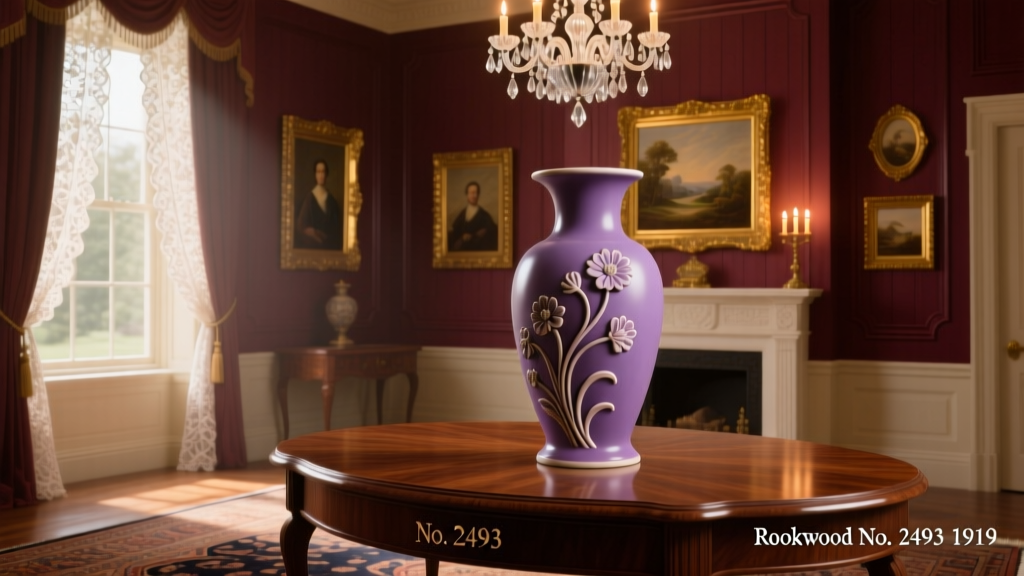
Rookwood Vase Molded Matte Purple No. 2493 (1919, 11½ Inches): Provenance, Glaze Chemistry, and Restoration Protocol