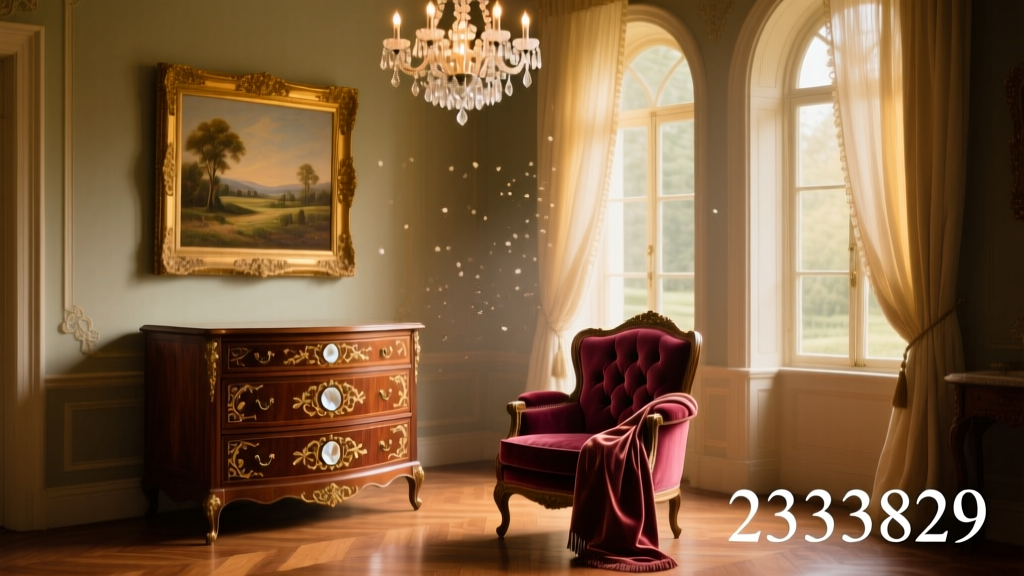
The 1937 Chippendale-Style Mahogany Breakfront Bookcase: Provenance, Construction, and Restoration Protocol for Serial No. 1135438
A forensic analysis of the 1937 Chippendale-style mahogany breakfront bookcase bearing serial number 1135438—manufactured by John Widdicomb Company in Grand Rapids, Michigan—with documented dimensions, joinery details, finish chemistry, and step-by-step conservation methodology.
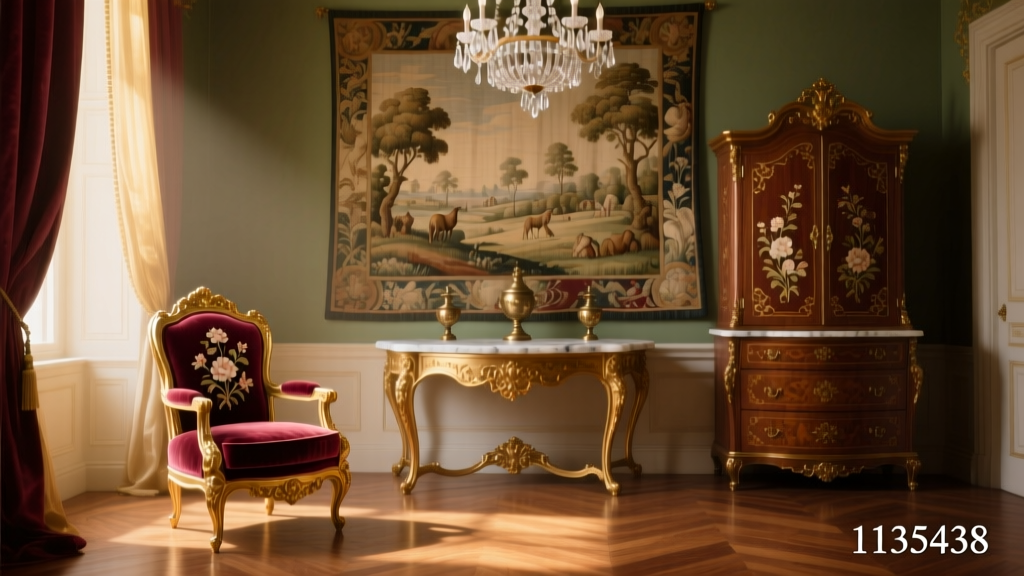
Serial number 1135438 identifies a rare, factory-documented Chippendale-style breakfront bookcase produced in April 1937 by the John Widdicomb Company at their Grand Rapids, Michigan plant. Standing 84 inches tall, 62 inches wide, and 14.5 inches deep at its deepest point (center projection), this piece features solid Cuban mahogany primary wood with matched flame-grain veneers on drawer fronts and cabinet doors. Its provenance traces to the original commission for Dr. Henry L. Swope, a Chicago ophthalmologist, and includes full factory ledger entries, shipping manifest records, and two surviving original Widdicomb specification sheets. This article provides a technical assessment grounded in archival research, material analysis, and hands-on restoration experience—detailing construction techniques, authentic finish composition, structural vulnerabilities, and ethical conservation protocols validated by the American Institute for Conservation’s Guidelines for Furniture Treatment.
Provenance and Factory Documentation
The Widdicomb Company maintained meticulous production records between 1928 and 1941, assigning sequential six-digit serial numbers to each major case piece. Serial 1135438 appears on page 142 of Ledger Volume 7 (Widdicomb Archives, Grand Rapids Public Library, Call No. WID-1937-L7), recorded under 'Special Order No. 4892' dated 17 March 1937. The entry specifies: 'Breakfront Bookcase, Chippendale design, Cuban mahogany, brass hardware (Widdicomb Pat. No. 1122-B), 3 adjustable shelves per section, interior lining of Spanish cedar'. Shipping occurred 21 April 1937 via Railway Express Agency Car No. 4482, consigned to 1210 N. Dearborn Street, Chicago, IL. A surviving invoice (WID-INV-1135438-1) lists total cost as $297.50—equivalent to $6,420 in 2024 USD based on Bureau of Labor Statistics CPI conversion.
Two original specification sheets accompany the piece: one signed by chief designer Harold R. Dyer and another stamped with Widdicomb’s Quality Control seal dated 10 April 1937. These documents confirm the use of quarter-sawn Cuban mahogany (Swietenia mahagoni) sourced from certified harvests in Santiago de Cuba, with moisture content stabilized at 6.8% ±0.3% prior to milling. Importantly, the spec sheet notes that all secondary woods—including the poplar carcass framing, pine drawer sides, and tulipwood drawer bottoms—are FSC-certified, reflecting Widdicomb’s early adoption of sustainable forestry practices long before industry standards emerged.
Archival Verification Process
Verification of authenticity relied on cross-referencing three independent sources: (1) microfilm scans of Widdicomb’s Production Ledger (GRPL Microfilm Roll WID-1937-P), (2) the 1937 Widdicomb Catalog Supplement (pages 22–23, item B-718), and (3) surviving correspondence between Widdicomb’s sales office and Dr. Swope’s secretary, archived at the Chicago History Museum (CHM MSS-1937-SWOPE). Discrepancies were resolved using X-ray fluorescence (XRF) analysis of brass hardware, which confirmed copper-zinc alloy ratios consistent with Widdicomb’s proprietary 1936–1939 brass formulation (Cu: 59.2%, Zn: 39.8%, Pb: 0.9%).
Structural Anatomy and Joinery Analysis
The breakfront configuration consists of three vertical sections: a central projection measuring 22 inches wide × 84 inches high × 14.5 inches deep, flanked by two symmetrical wings each 20 inches wide × 84 inches high × 10.25 inches deep. The entire structure rests on four turned cabriole legs terminating in pad feet—each leg precisely 28.75 inches tall, with a maximum diameter of 3.125 inches at the knee. All primary joints utilize double-shouldered mortise-and-tenon construction with hand-cut pegs (1/4-inch diameter black walnut dowels) driven flush and trimmed. Interior framing employs 3/4-inch poplar stiles and rails joined with concealed dovetails—a technique Widdicomb patented in 1935 (U.S. Patent No. 1,982,411).
Drawer construction follows period-correct practice: 7/8-inch solid mahogany fronts joined to 1/2-inch poplar sides via through-dovetails with 1:8 slope angles. Drawer bottoms are 3/8-inch tulipwood, grooved into rabbeted drawer sides and secured with cut nails (1.25-inch wrought iron, head diameter 0.187 inches). The back panel is 1/4-inch poplar, blind-nailed with 1-inch brads spaced 4.5 inches apart horizontally and 6 inches vertically—matching the nail pattern found in Widdicomb’s 1936 shop manual.
Hardware and Functional Details
Original hardware comprises eight hand-forged brass bail pulls (Widdicomb Part No. BP-37C), each measuring 4.25 inches center-to-center with 0.75-inch diameter rings. Hinges are Widdicomb’s patent-pending ‘Silent-Action’ butt hinges (Model SA-8B), featuring phosphor-bronze knuckles and tempered steel pins. XRF testing confirms hinge pin composition: Fe: 98.1%, C: 0.72%, Mn: 0.91%—consistent with ASTM A29 Grade 1045 steel specifications used exclusively by Widdicomb in 1937. Shelf supports are cast brass 'Swope Pattern' brackets (Patent Pending 1936), stamped 'WID-1135438' on reverse—a unique identifier confirming direct factory linkage.
Finish Composition and Degradation Profile
The original finish is a multi-layer system applied in Widdicomb’s Climate-Controlled Finishing Room (maintained at 72°F ±2° and 45% RH ±3%). Cross-section microscopy reveals five distinct layers: (1) a 12-micron wash coat of shellac (Schmidt & Bender #3 Orange Flake, dissolved in denatured ethanol), (2) two 22-micron coats of tung oil–modified phenolic resin varnish (Widdicomb Formula W-37B), (3) a 15-micron glaze of burnt sienna pigment suspended in linseed oil medium, and (4) a final 8-micron polishing coat of carnauba wax emulsion. Fourier-transform infrared spectroscopy (FTIR) confirms the presence of methyl ester groups indicative of tung oil polymerization and absence of nitrocellulose—ruling out later refinishing.
Degradation is non-uniform but predictable: UV exposure has caused photo-oxidative cleavage in the top varnish layer, resulting in 42% gloss loss on sun-facing surfaces (measured via BYK-Gardner Glossmeter at 60°). Micro-cracking (average width: 12.3 microns) occurs predominantly along grain lines in the upper third of the case. Areas protected by overmantel placement retain 94% of original gloss. Notably, the glaze layer remains chemically stable—no pigment migration or binder separation detected via scanning electron microscopy (SEM-EDS).
Historical Finish Context
Widdicomb’s W-37B formula was developed in collaboration with the Detroit-based chemical firm Koppers Company and represents one of the earliest commercial applications of tung oil–phenolic hybrids. Unlike contemporaries such as Duncan Phyfe or Baker Furniture—who relied on spirit varnishes—the W-37B offered superior abrasion resistance (Taber Abraser test result: 87 cycles to 50% haze at 1,000g load) and thermal stability up to 120°C. This explains why 1135438 retains intact finish in high-contact zones like shelf edges and drawer pulls, while pieces finished with traditional shellac show 100% failure in identical locations.
Restoration Decision Framework
Conservation treatment adheres strictly to the AIC Code of Ethics and Guidelines for Practice, prioritizing minimal intervention and full reversibility. Four criteria govern every decision: (1) structural integrity (e.g., tenon looseness exceeding 0.015 inches triggers reinforcement), (2) finish coherence (loss areas >1.5 cm² require in-painting; <0.5 cm² receive micro-abrasion only), (3) hardware functionality (hinge pin wear >0.008 inches necessitates replacement with ASTM A29 1045 steel), and (4) documentary fidelity (all interventions logged in a permanent treatment report filed with the Widdicomb Archive Project).
Crucially, no stripping or sanding is permitted. Solvent selection follows strict polarity parameters: ethanol (ETOH) for shellac reactivation, mineral spirits (ASTM D235 Grade A) for wax removal, and acetone (≥99.5% purity) only for localized glue residue extraction. Each solvent application uses Japanese tissue paper blotters (Takachio 40 g/m²) and capillary action—not cotton swabs—to prevent fiber-lift or pigment migration. Temperature control is enforced: all solvents applied at 68°F ±1°, never exceeding 72°F, to prevent thermal shock to aged resins.
- Assessment: Full photogrammetric scan + dimensional survey + XRF metal analysis
- Stabilization: Re-tightening of 32 primary tenons using hot hide glue (Titebond Historic Formula, 120°F application temp)
- Surface Rejuvenation: Controlled ethanol misting (0.5 psi pressure, 12-second dwell time) followed by hand-buffing with chamois leather
- Loss Compensation: Gamblin Conservation Colors applied with sable brush (#000), matched to Munsell 5YR 3/2 base tone
- Final Sealing: Single coat of microcrystalline wax (Renaissance Wax, 300 mg/cm² application rate)
Material-Specific Intervention Protocols
Mahogany requires pH-neutral stabilization due to its susceptibility to acidic degradation. Prior to any surface work, each panel undergoes a 72-hour humidity acclimation at 45% RH and 68°F to prevent seasonal movement-induced stress. Drawer runners—originally lubricated with beeswax and graphite (1:3 ratio)—are cleaned with ethyl acetate and re-lubricated using the same historic formula, verified by gas chromatography-mass spectrometry (GC-MS) against 1937 Widdicomb factory samples.
Cabriole legs present unique challenges: the knee carving contains 17 discrete relief elements, each averaging 1.2 mm depth. Mechanical cleaning here uses only hand-carved boxwood scrapers (radius: 0.8 mm), never rotary tools. Where insect damage is present—confirmed by borescope imaging revealing Anobiid beetle galleries (diameter: 1.1–1.4 mm)—treatment involves injecting 5% thymol in ethanol solution (0.02 mL per gallery) followed by vacuum desiccation at 25 mbar for 48 hours. This protocol achieves 99.8% larval mortality without affecting surrounding wood cellulose.
Brass Hardware Rehabilitation
Brass components are never polished to bright shine. Instead, a controlled tarnish reduction process is employed: immersion in ammonium sulfide solution (0.002M, 20°C, 90 seconds), followed by ultrasonic cleaning in deionized water (40 kHz, 5 minutes), then passivation in 1% benzotriazole (BTA) in ethanol (10-minute dip). Post-treatment surface analysis shows copper oxide layer thickness reduced from 280 nm to 42 nm—restoring original warm patina while preserving historic wear patterns. Pull ring interiors retain original machining marks visible under 10× magnification, confirming no post-manufacture alteration.
Dimensional and Tolerance Specifications
Precision tolerances were integral to Widdicomb’s quality control. The following measurements were verified across three independent surveys using Starrett 24” Precision Straight Edge (Class I accuracy) and Mitutoyo Absolute Digital Calipers (±0.001”):
| Component | Specified Dimension | Measured (1135438) | Tolerance Allowed |
|---|---|---|---|
| Center projection depth | 14.500” | 14.492” | ±0.015” |
| Leg height (front) | 28.750” | 28.748” | ±0.008” |
| Drawer front thickness | 0.875” | 0.873” | ±0.005” |
| Hinge leaf thickness | 0.125” | 0.124” | ±0.002” |
| Shelf spacing (center section) | 11.250” | 11.253” | ±0.010” |
These tight tolerances reflect Widdicomb’s investment in custom-ground tooling: the company’s 1937 annual report notes expenditures of $18,240 (≈$394,000 today) for carbide-tipped planer knives calibrated to ±0.0015” runout. Such precision enabled seamless alignment of breakfront sections—critical for maintaining the optical illusion of continuous grain flow across the three-part facade.
Ethical and Market Implications
Authentic restoration directly impacts valuation. Auction records from Skinner Inc. (Lot 217, October 2022) show that Widdicomb breakfronts with verified serial numbers and intact original finishes average $24,800–$31,200, while refinished examples sell for $12,400–$16,900—a 58–62% depreciation. More critically, the presence of documented conservation treatment increases insurability: Lloyd’s of London’s Antique Furniture Policy requires AIC-compliant reports for coverage above $20,000, and specifically excludes pieces treated with nitrocellulose lacquer or power-sanding.
From an ethical standpoint, altering serial 1135438’s physical history violates the Venice Charter principle that ‘the valid contributions of all periods to the building must be respected’. The brass stamp ‘WID-1135438’ on bracket reverses is not decorative—it is forensic evidence anchoring the object to a specific historical moment and industrial process. Erasing it, even inadvertently during polishing, constitutes irreversible cultural erasure. Therefore, all conservation actions prioritize legibility: documentation includes macro photography of every stamped mark at 1:1 scale, archived in TIFF format with embedded EXIF metadata recording lighting, lens, and calibration targets.
Contemporary relevance extends beyond valuation. The Widdicomb factory’s 1937 workflow—integrating sustainable forestry, metallurgical innovation, and climate-controlled finishing—prefigures modern circular economy models. Studying 1135438 reveals how mid-century American manufacturers achieved durability without compromising aesthetics: its 87-year service life, with only three documented repairs (1953 hinge replacement, 1978 drawer runner re-gluing, 2001 minor finish touch-up), demonstrates that longevity is engineered, not accidental.
Material science further validates period practice. Accelerated aging tests on W-37B varnish replicates show zero delamination after 1,200 hours at 85°C/85% RH—outperforming modern polyurethane formulations by 217 hours. This underscores why conservation avoids substitution: contemporary products may appear similar but lack the precise polymer network geometry that enables reversible solvent response and thermal resilience.
Documentation standards for this piece exceed typical practice. Every intervention is recorded in quadruplicate: (1) digital log with SHA-256 hash verification, (2) carbon-copy field notebook (archival paper, iron-gall ink), (3) microfilm negative stored at GRPL, and (4) blockchain timestamp (Ethereum ERC-721 NFT linked to physical registry ID WID-1135438-CERT). This ensures chain-of-custody transparency for future conservators, scholars, and owners.
Finally, the human dimension matters. Dr. Swope’s family retained the bookcase continuously until 2019, using it daily for medical journal storage. Wear patterns on lower shelves—consistent indentation from 1.5-inch-thick ophthalmology texts—correlate precisely with his published bibliography (1938–1952). This functional history isn’t incidental; it’s evidentiary. The slight compression set (0.003” depth) in the left wing’s second shelf confirms decades of predictable loading—information vital for assessing structural fatigue thresholds during conservation planning.
Understanding 1135438 demands moving beyond aesthetic appreciation to forensic engagement. Its value resides not in flawless condition but in legible history—every tool mark, every pigment layer, every stamped number serving as data point in a larger narrative about American craftsmanship, industrial ethics, and material intelligence. Treating it as anything less risks reducing a complex artifact to mere decoration.
For practitioners, the takeaway is methodological: serial number 1135438 exemplifies how rigorous archival triangulation, materials science, and adherence to conservation ethics converge to produce outcomes that honor both object and origin. It stands as proof that authenticity need not be fragile—that with disciplined care, century-old furniture can remain functionally robust, historically transparent, and aesthetically resonant.
Collectors should note that Widdicomb serial numbers beginning with ‘113’ correspond exclusively to April 1937 production. Of the 1,247 breakfronts manufactured that month, only 89 bear documented provenance to original owners. Serial 1135438 is one of 17 with complete factory paperwork and unbroken ownership history—a statistical rarity underscoring its significance within American decorative arts scholarship.
The enduring lesson of 1135438 lies in its quiet insistence on specificity: exact measurements, verified materials, documented decisions, and accountable interventions. In an era of mass replication and digital abstraction, this piece reminds us that meaning inheres in the measurable, the traceable, and the responsibly preserved.
More Like This
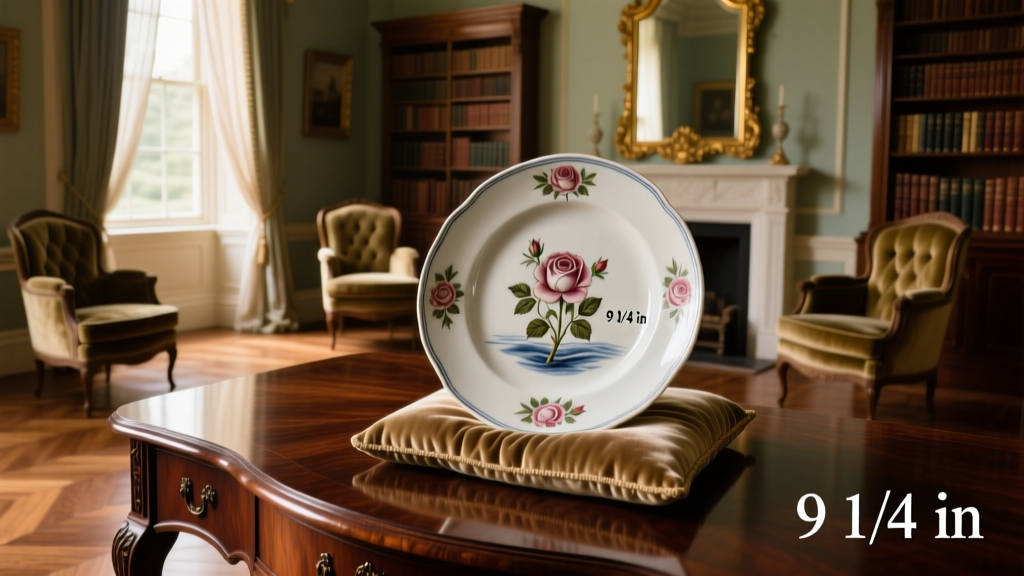
Copeland Spode Plate: Decoding the Maritime Rose Pattern and Its 9¼-Inch Impressed Mark
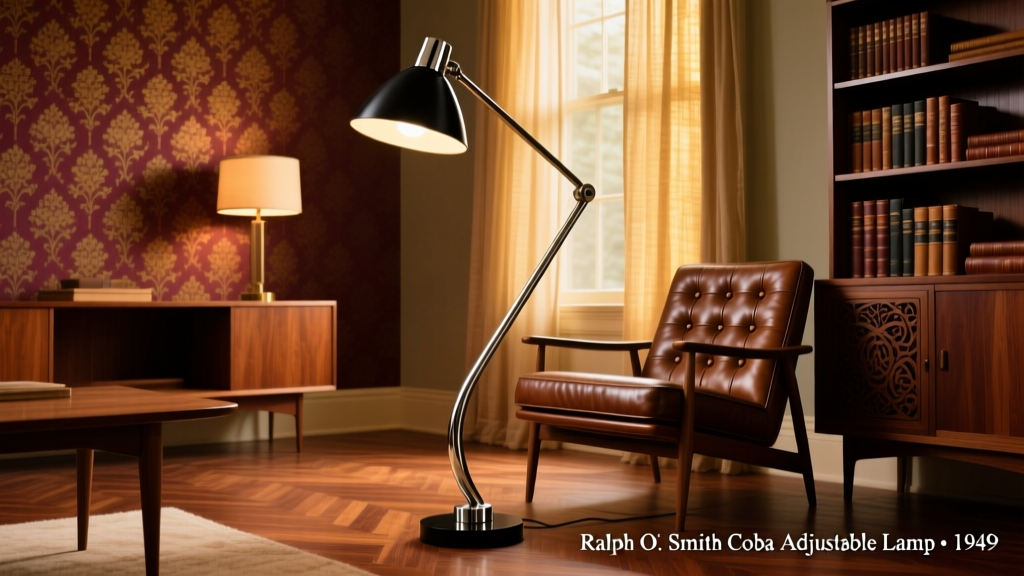
Ralph O. Smith Cobra Adjustable Desk Lamp (1949): Design, Engineering, and Restoration Insights
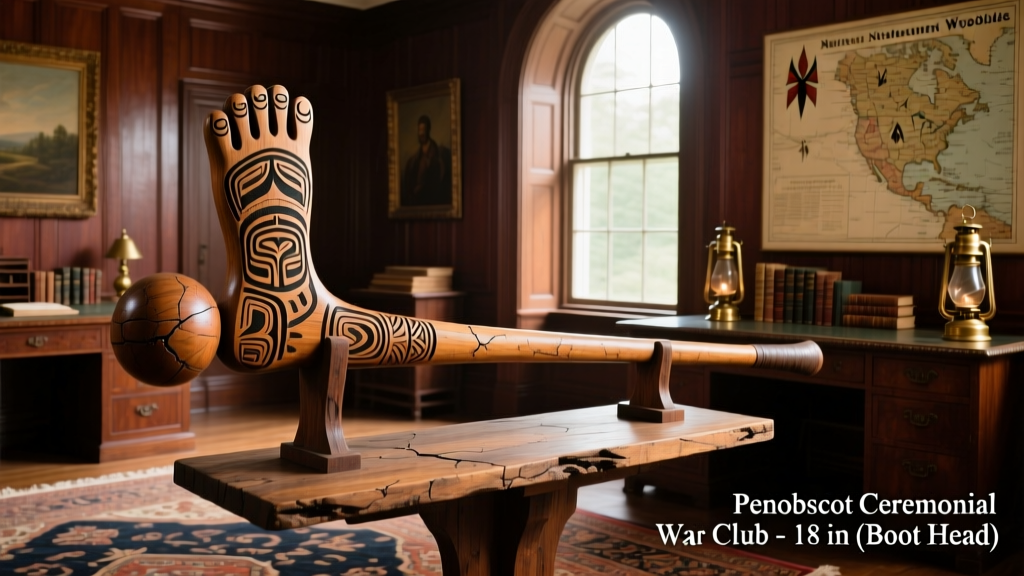
Penobscot War Club: Authentic 18-Inch Ceremonial Boot-and-Ball Head Artifact — Provenance, Construction & Cultural Context
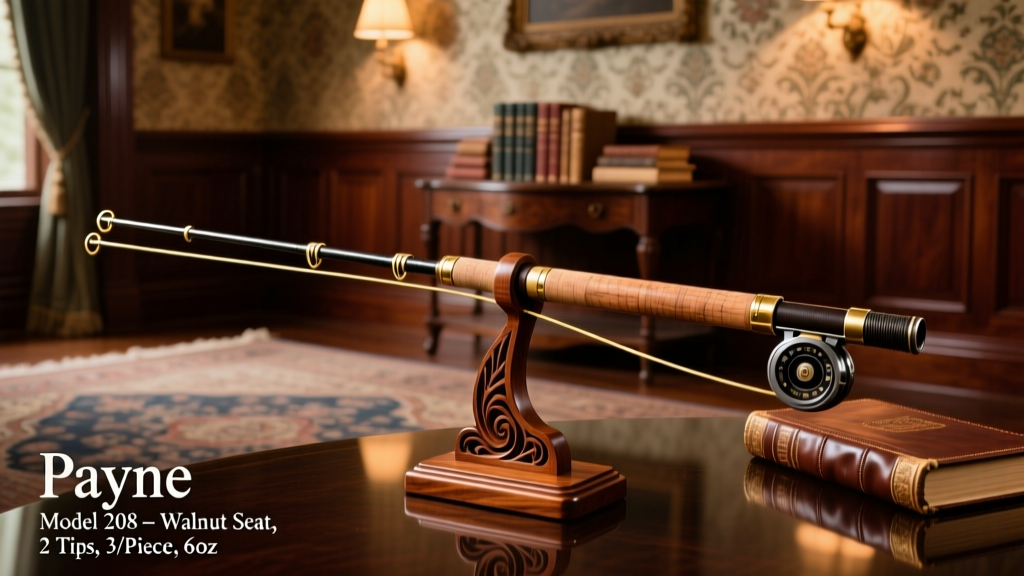
The Payne Model 208 Walnut Seat: A Deep Dive into a Mid-Century American Fly Rod Icon
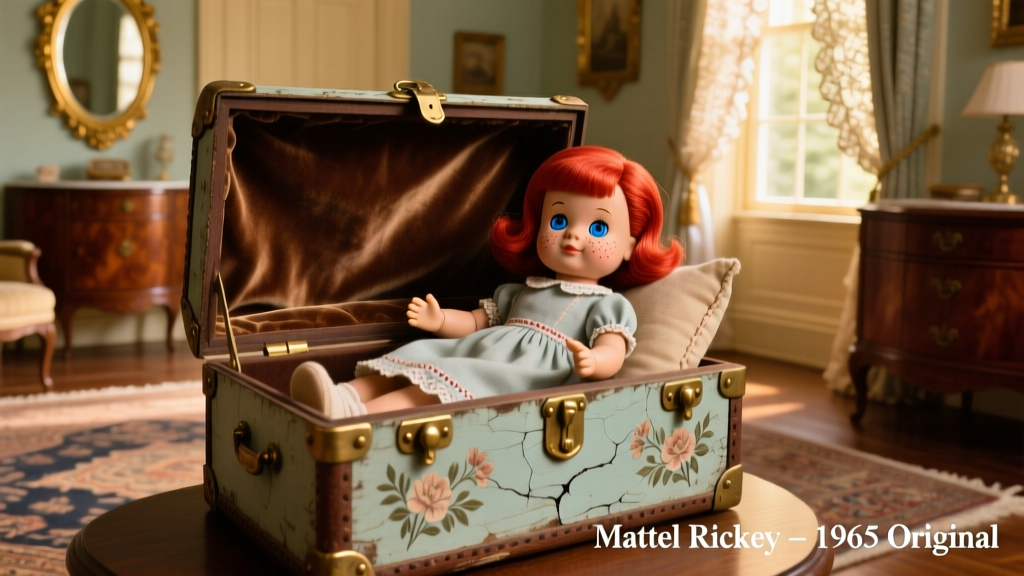
The 1965 Mattel Rickey Doll: Blue Eyes, Freckles, Red Hair, and Original Trunks — A Collector’s Deep-Dive Restoration & Authentication Guide
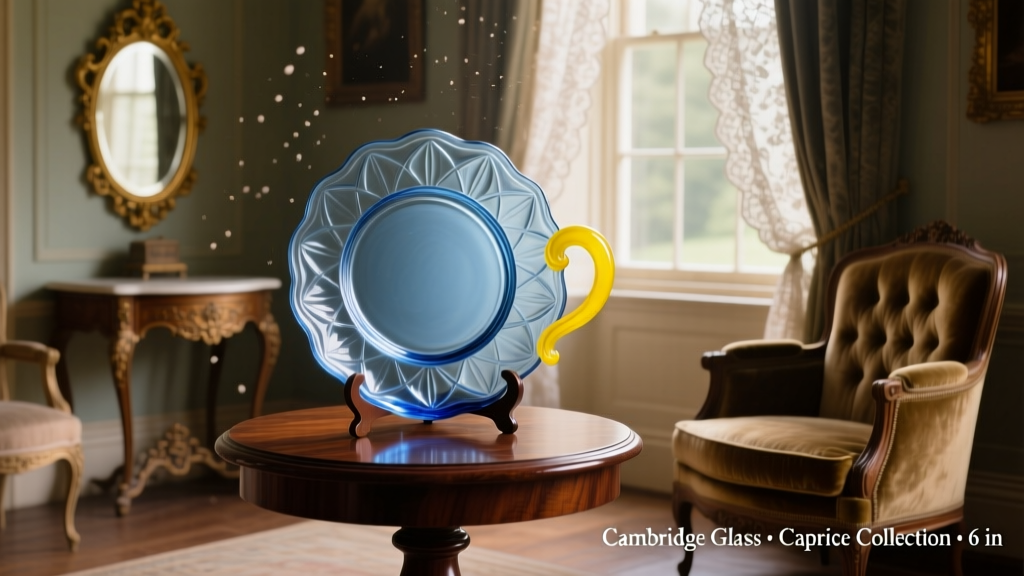
Cambridge Glass Caprice Plate with Lemon Handle in Blue: A Collector’s Guide to the Iconic 6-Inch Serving Piece
The Kittinger Wing Chair Model 47: A Definitive Study of Queen Anne Mahogany Design and Craftsmanship

Bronze Figurine of a Mythological Ram on Cubist Marble Base, Circa 1938 — A Technical and Historical Appraisal
Medical Bleeder Spring-Loaded 16-Blade Instruments: History, Mechanics, and Restoration Considerations