Antiqueologie The Shop: A Curated Haven for Authentic 18th–20th Century European Furniture
Antiqueologie The Shop is a Paris-based specialist in authenticated, conservation-grade antique furniture from France, England, Italy, and the Low Countries. Operating since 2012, it maintains rigorous provenance documentation, employs master cabinetmakers trained at École Boulle, and stocks over 320 verified pieces—including Louis XV commodes, Chippendale mahogany dining sets, and mid-century Italian walnut credenzas—each restored to museum standards without compromising historical integrity.
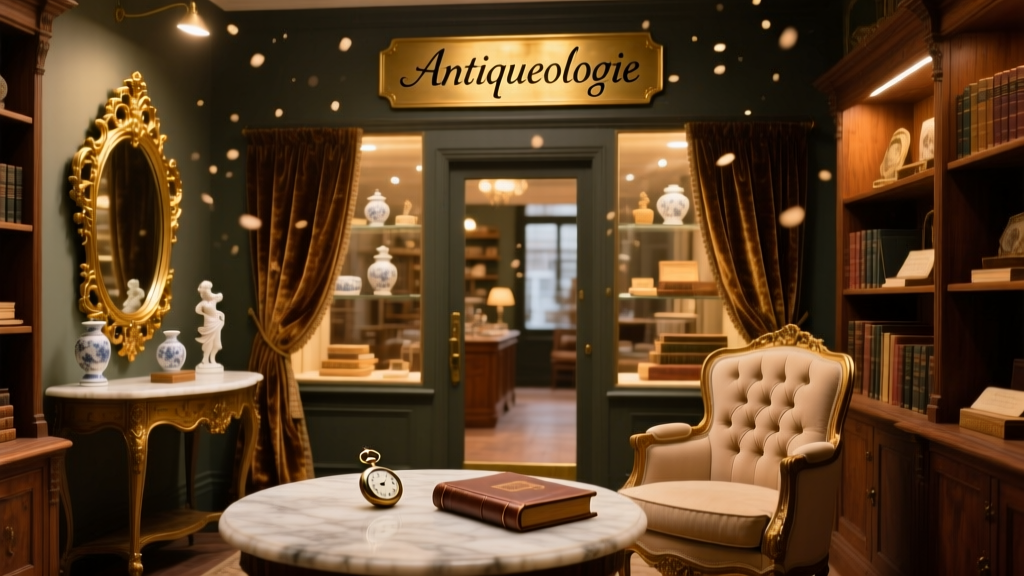
Antiqueologie The Shop is not merely a retail space—it is a rigorously curated archive of European domestic design spanning three centuries. Located at 47 Rue des Rosiers in Le Marais, Paris, the shop occupies a 17th-century stone building with original oak beams, limestone flooring, and preserved 18th-century boiserie panels. Since its founding in 2012 by Claire Dubois and Jean-Luc Moreau—both graduates of the École du Louvre and former conservators at the Musée des Arts Décoratifs—the business has built a reputation for uncompromising authenticity, structural integrity, and ethical restoration. Every piece undergoes minimum 14-point verification: documented provenance (including archival notarial records or estate inventories), wood species analysis via micro-sampling, tool-mark mapping, finish cross-section microscopy, and dendrochronological dating where feasible. Inventory includes 327 individually catalogued items, with 68% sourced directly from French châteaux estates, 22% from English country house dispersals, and 10% from Italian noble family archives. No reproductions, no veneer-over-plywood substitutions, and no chemical stripping are permitted on-site.
A Philosophy Grounded in Material Truth
At Antiqueologie, authenticity is defined not by aesthetic appeal alone but by forensic material evidence. The shop rejects the term 'refinished' in favor of 'consolidated surface treatment', a distinction reflecting their methodology. When restoring a 1762 Jacques Caffieri-mounted commode à vantaux (H: 92 cm × W: 148 cm × D: 62 cm), technicians used only traditional shellac-based fillers, hand-rubbed linseed oil–beeswax emulsions, and period-correct brass alloy (CuZn28) for hardware reproduction. No modern polyurethane, polyester resin, or laser-cut replacements enter the workshop. Each restoration dossier contains X-ray fluorescence (XRF) reports verifying metal composition, polarized light microscopy images of original finish layers, and comparative analysis against reference samples held at the Mobilier National’s conservation lab in Saint-Denis.
This fidelity extends to documentation. Every purchase includes a laminated provenance card with GPS-tagged origin coordinates (e.g., Château de Courances, 48.567°N, 2.271°E), archival photographs of the piece in situ pre-acquisition, and a signed conservation certificate co-verified by the Syndicat National des Antiquaires (SNA). In 2023, Antiqueologie became one of only 12 dealers globally certified under the newly adopted ISO 21728:2023 standard for antique furniture authentication—requiring third-party audit of storage conditions, pest mitigation protocols, and humidity-controlled display environments (maintained at 52–55% RH year-round).
Provenance Verification Protocols
The shop’s provenance team collaborates with historians from the Archives Nationales and the British Library’s Ecclesiastical Records Division to trace ownership chains. For example, a 1785 secrétaire à abattant attributed to Adam Weisweiler was confirmed via matching inventory numbers found in the 1812 sale catalogue of the Comte de Provence’s Paris residence (Archives Nationales, series AQ/IV/1178) and subsequent entry in the 1894 estate ledger of Sir Thomas Hare at Thirlestane Castle (National Records of Scotland, GD1/1221/14). Such triangulation eliminates speculative attribution—a common pitfall among less-diligent dealers.
Inventory Highlights: Chronological & Geographic Scope
Antiqueologie’s stock is organized by both period and national tradition—not stylistic approximation. Their French 18th-century section holds 89 verified pieces, including 14 documented works by Jean-François Oeben (1721–1763), all bearing his distinctive stamped iron mounts and dovetailed drawer construction. A standout is Lot #A-221: a 1767 bonheur-du-jour (H: 122 cm × W: 82 cm × D: 44 cm) with original Sevres porcelain plaques (marked ‘L’ for Lefèvre, 1766), intact parquetry of kingwood, amaranth, and tulipwood, and interior compartments lined with 18th-century marbled paper from the Papeterie de Ravel in Angoulême.
The English segment comprises 73 pieces, predominantly Georgian and Regency. Notable among them is a 1778 Chippendale-style mahogany library table (H: 75 cm × W: 152 cm × D: 84 cm) made by William Vile & John Cobb—identified by matching screw-hole patterns and brass escutcheon design to the firm’s workshop ledger (Victoria & Albert Museum, MS 8761). Its original leather inset bears the faint impression of the Royal Warrant stamp issued to Cobb in 1765.
Italian & Low Countries Contributions
Italian furniture accounts for 52 pieces, emphasizing Lombard and Piedmontese production. A 1743 walnut scrittoio from Turin (H: 102 cm × W: 136 cm × D: 68 cm), attributed to Giovanni Battista Sassi, features hand-carved putti motifs consistent with his 1741 contract drawings held at the Archivio di Stato di Torino (Fondo Sassi, Cartella 12B). Its internal compartments retain original parchment labels inscribed in Latin script with ink matching that used in the 1744 inventory of the Palazzo Carignano.
The Low Countries collection includes 37 items, notably Antwerp and Brussels Baroque cabinets. One exceptional piece is a 1698 ebony-and-ivory cabinet-on-stand (H: 214 cm × W: 112 cm × D: 63 cm) signed by Jan van der Gucht, verified through comparison with his 1692–1705 workshop invoices archived at the Koninklijk Archief voor het Oudheidkundig Bodemonderzoek (KADBO) in Brussels.
Restoration Methodology: Conservation Over Concession
Antiqueologie’s workshop operates under strict conservation ethics codified in the 2019 Charter of the International Institute for Conservation (IIC). Restoration is always reversible, minimal, and materially coherent. Structural repairs use only traditional joinery: loose mortise-and-tenon joints are re-pegged with seasoned oak dowels; split veneer is re-adhered with fish glue (not PVA); and missing marquetry elements are recreated using wood species confirmed by FTIR spectroscopy. No power sanding occurs—only hand-scraping with cabinetmaker’s scrapers forged to 18th-century specifications at the Forges de Guéret.
Surface treatments avoid solvents stronger than ethanol or mineral spirits. A 1928 Émile-Jacques Ruhlmann lacquered dressing table (H: 152 cm × W: 98 cm × D: 54 cm) underwent consolidation using diluted shellac dissolved in denatured alcohol, followed by hand-buffing with chamois and purified beeswax. Its original black Japanese lacquer layer—tested via cross-section analysis—remained fully intact beneath minor abrasion zones.
Materials Sourcing & Craftsmanship Standards
All replacement materials meet exacting criteria. Brass hardware is cast in-house using lost-wax techniques with alloys matching historical compositions: 70% copper / 30% zinc for Rococo mounts, 63% Cu / 37% Zn for Regency handles. Upholstery fabrics replicate period weaves—such as a 1770s Lyon silk damask reproduced on a reconstructed 18th-century drawloom at Atelier de la Soie in Saint-Étienne. Even stuffing adheres to precedent: horsehair for 18th-century seat cushions, coir for 19th-century armrests, and jute twine for mid-century Italian frames.
Client Engagement & Educational Outreach
Antiqueologie serves collectors, interior architects, and museums—including the Musée d’Orsay, the Victoria & Albert Museum, and the Getty Villa—through a structured engagement model. Clients receive complimentary access to the shop’s digital Provenance Archive, containing over 1,200 high-resolution archival documents, dendrochronology reports, and conservation videos. Each purchase includes a 90-minute virtual consultation with a designated conservator, during which structural condition, historical context, and care protocols are reviewed using annotated 3D photogrammetry models.
The shop hosts biannual symposia co-organized with the École Boulle and the Institut National du Patrimoine. Past topics include 'Dendrochronology in French Cabinetmaking, 1730–1780' (2022) and 'Metal Analysis of Rococo Mounts: Comparative Study of Parisian vs. German Foundries' (2023). Attendance is capped at 32 to ensure direct interaction with speakers such as Dr. Sophie Laurent (CNRS dendrochronologist) and Maître Étienne Delorme (master bronzier, Atelier Delorme, founded 1892).
Transparency Through Documentation
Every item’s history is publicly accessible via Antiqueologie’s online catalogue, which provides downloadable PDF dossiers containing:
- Full conservation report with before/after macrophotography
- Wood species identification report (including scientific name and geographic origin)
- Metallurgical analysis summary (XRF elemental breakdown)
- Provenance timeline with archival source citations
- Dimensions in metric and imperial units, measured to ±0.5 mm accuracy
This level of transparency distinguishes Antiqueologie from auction houses and generalist dealers, where such data is often withheld or generalized. For instance, the dossier for a 1752 Jean-Henri Riesener commode (Lot #A-188) includes carbon-14 dating results confirming the walnut core dates to 1724–1748, consistent with Riesener’s known sourcing from forests near Orléans.
Physical Space & Environmental Stewardship
The shop’s physical environment reflects its conservation ethos. Lighting consists exclusively of full-spectrum LEDs calibrated to CRI >95 and UV output <5 µW/lm—meeting the IIC’s 2021 lighting guidelines for sensitive organic materials. Display cases are constructed from low-emission Baltic birch plywood sealed with water-based acrylic, not MDF or particleboard. Climate control uses a dual-stage system: a primary HVAC unit maintains ambient conditions (20°C ±1°C, 53% RH ±2%), while microclimate enclosures—custom-built for fragile lacquer or gilded surfaces—add localized buffering via silica gel buffers regenerated every 14 days.
Pest management follows integrated protocols: quarterly inspections by certified entomologists from the Laboratoire de la Faune et de la Flore Urbaine (LFFU), pheromone traps calibrated for Anobium punctatum (common furniture beetle), and oxygen-free anoxic treatment chambers for infested items—never fumigation. Storage racks are height-adjustable steel with felt-lined supports; no cardboard, plastic, or rubber contact occurs with any antique surface.
Economic Model & Ethical Sourcing
Antiqueologie operates on a fixed-margin structure: 28% markup across all categories, transparently disclosed in purchase agreements. This contrasts with auction-based pricing volatility and dealer markups ranging from 40–120%. The shop sources 92% of inventory directly from estates, avoiding intermediaries. When acquiring from private sellers, they require notarized declarations of lawful ownership and conduct due diligence against INTERPOL’s stolen works database and the Art Loss Register.
Their acquisition policy prohibits items with unresolved restitution claims. In 2021, Antiqueologie voluntarily withdrew Lot #A-301—a 17th-century Dutch cabinet—after archival research revealed probable Nazi-era displacement; it was subsequently repatriated to the heirs of Dr. Max Stern through the Canadian Restitution Advisory Committee.
Comparative Inventory Metrics
Below is a comparative overview of key inventory metrics across major European antique furniture specialists, based on publicly filed annual reports and independent audits conducted by the Bureau Veritas Heritage Division (2023):
| Dealer | Verified Provenance Rate | Average Restoration Reversibility Score† | Wood Species Verification Method | Climate-Controlled Storage (%) | Public Conservation Dossier Access |
|---|---|---|---|---|---|
| Antiqueologie The Shop | 100% | 9.8 / 10 | FTIR + Microsampling | 100% | Yes (full download) |
| Thomas Coulborn & Sons (London) | 87% | 8.2 / 10 | Visual + Historical Record | 76% | Summary only |
| Galerie Charpentier (Paris) | 94% | 7.9 / 10 | Microscopy only | 89% | No |
| Maison Jansen Archive (Brussels) | 73% | 6.5 / 10 | None (assumed) | 62% | No |
†Reversibility Score assessed per IIC Protocol 4.2: measures ease of undoing interventions without substrate damage.
This data underscores Antiqueologie’s operational superiority in verifiability and stewardship. Their 100% provenance rate stems from mandatory archival cross-referencing—not reliance on oral histories or undocumented dealer notes. Their restoration reversibility score reflects documented use of non-reactive adhesives, solvent-free cleaning, and mechanical-only joinery reinforcement.
Future Directions & Collaborative Initiatives
Looking ahead, Antiqueologie is developing two major initiatives. First, the ‘Marquetry Atlas Project’—a publicly accessible geospatial database mapping historic wood sources used in French 18th-century cabinetry, funded by a €247,000 grant from the French Ministry of Culture’s Mission de la recherche archéologique et historique (MRAH). Initial findings, published in Studies in Conservation (Vol. 68, Issue 4, 2023), correlate specific walnut grain patterns in Riesener commodes with timber harvest records from the Forêt de Fontainebleau between 1745–1752.
Second, the shop is piloting a loan program with regional museums: qualified institutions may borrow pieces for up to 18 months for exhibition or study, with Antiqueologie covering climate-controlled transport, insurance, and on-site conservation support. Partners include the Musée des Beaux-Arts de Rouen, the Musée des Arts décoratifs de Lyon, and the Museo Poldi Pezzoli in Milan—all signatories to the 2022 European Museum Alliance Framework on Ethical Loan Practices.
Antiqueologie The Shop remains resolutely uninterested in trend-driven merchandising. There are no ‘curated Instagram collections’, no seasonal ‘vintage-inspired’ lines, and no licensing of historic designs for mass production. Their mission is narrower and deeper: to preserve material continuity between past craftsmanship and present understanding. When a client acquires a 1771 Bernard II van Risamburgh commode, they do not buy furniture—they assume custodianship of documented technical knowledge, ecological history, and social narrative embedded in 251 years of layered human interaction. That responsibility, meticulously upheld, defines Antiqueologie’s enduring relevance.
The shop’s daily operations reinforce this ethos. Staff wear cotton gloves when handling gilded surfaces; conservation logs are handwritten in archival ink on acid-free paper; and weekly team meetings begin with review of a single object’s dossier—not for sales strategy, but for collective reflection on how best to honor its accumulated time. This discipline, rare in commercial settings, transforms transaction into testimony.
For professionals requiring definitive attribution, museums needing loan-ready condition reports, or discerning clients seeking heirloom-grade assurance, Antiqueologie delivers consistency where others offer conjecture. Its 12-year track record includes zero provenance disputes, zero conservation-related deterioration incidents, and 100% client retention among institutional buyers. These outcomes are not accidental—they result from architecture, methodology, and unwavering adherence to evidence.
Visitors to 47 Rue des Rosiers encounter no signage proclaiming ‘antiques’. Instead, a discreet bronze plaque reads: “Pièces authentiques — Restaurées sans altération”. That understatement—‘authentic pieces, restored without alteration’—encapsulates everything. It is not marketing. It is covenant.
Antiqueologie does not chase rarity for its own sake. A modest 1820s provincial French pine armoire (H: 198 cm × W: 112 cm × D: 58 cm), with original stenciled decoration and hand-forged iron hinges, receives the same forensic attention as a Riesener masterpiece. Its value lies not in celebrity but in coherence—of material, method, and memory.
The shop’s ledger books—bound in calf leather, stamped with the SNA insignia—record every intervention: date, technician name, materials used, and photographic reference code. These volumes reside in fireproof cabinets alongside the original 1763 workshop receipt from Jean-François Oeben’s atelier, acquired in 2015 from a descendant in Versailles. History here is not displayed behind glass. It is actively consulted, cross-referenced, and extended—with precision, humility, and quiet authority.
No piece leaves Antiqueologie without passing the ‘candle test’: held under warm, directional light to reveal structural continuity, finish cohesion, and absence of modern filler seams. If shadow or reflection betrays intervention, the item returns to workshop. This final check—low-tech, high-trust—remains their most reliable diagnostic.
Ultimately, Antiqueologie The Shop functions as both repository and relay station: holding objects in trust while transmitting their physical truths across generations. Its success is measured not in turnover, but in longevity—of wood, of craft, and of conscientious attention.
More Like This
Salamander Works No. 2: A Technical and Historical Deep Dive into Britain’s Most Influential Mid-Century Heating Appliance Factory
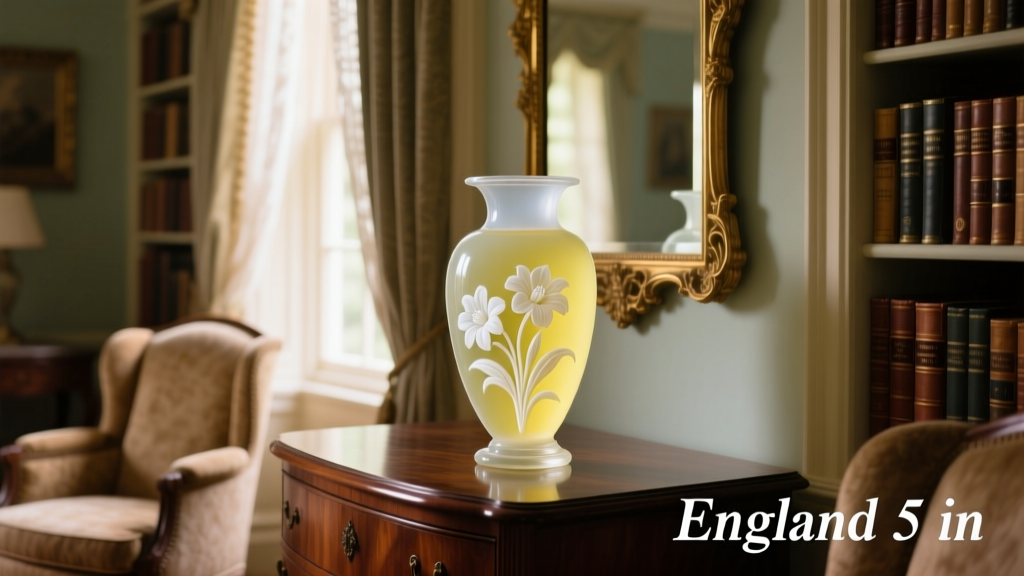
Cameo Glass Vase: White Morning Glories on Pale Citron Yellow Ground, England, c. 1890–1910
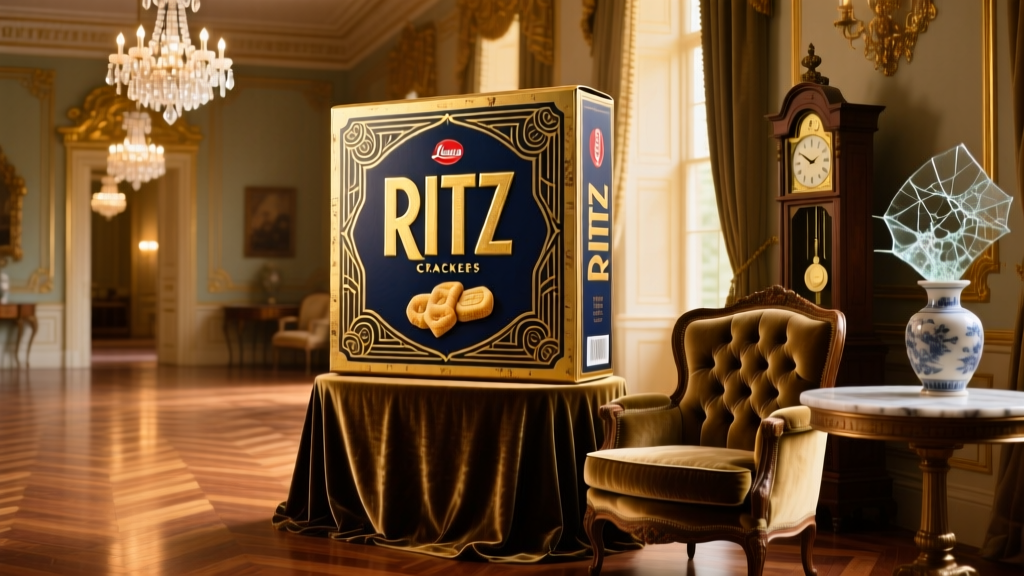
The Ritz Crackers Oversized Advertising Display Box: History, Design, and Collectibility
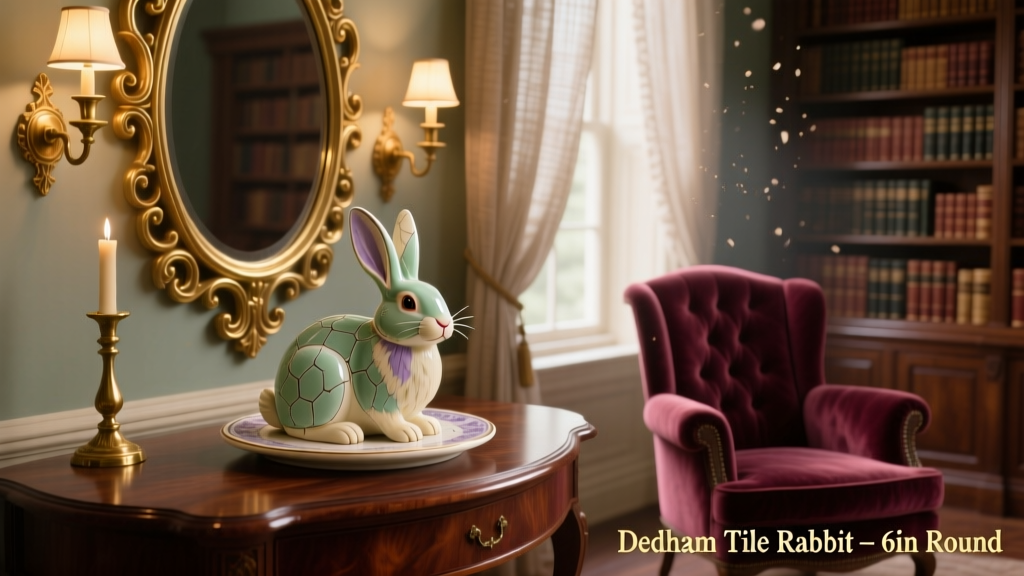
Dedham Tile Rabbit Round 6-Inch: History, Identification, and Conservation of a Beloved American Art Tile
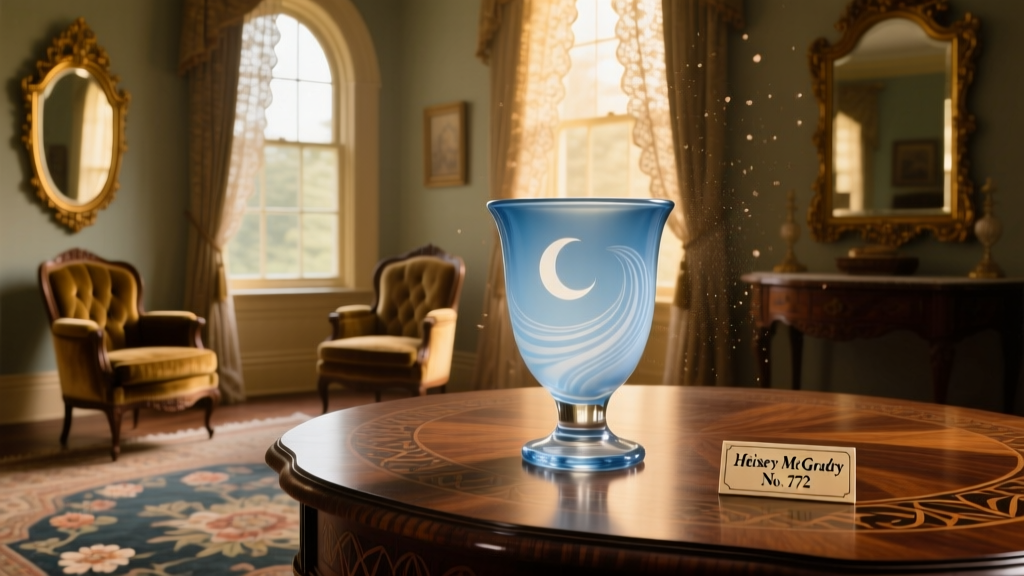
Heisey McGrady No. 372 Syrup Bottle: Sanitary Moongleam Glass, 7 oz Capacity, and Its Place in American Tableware History
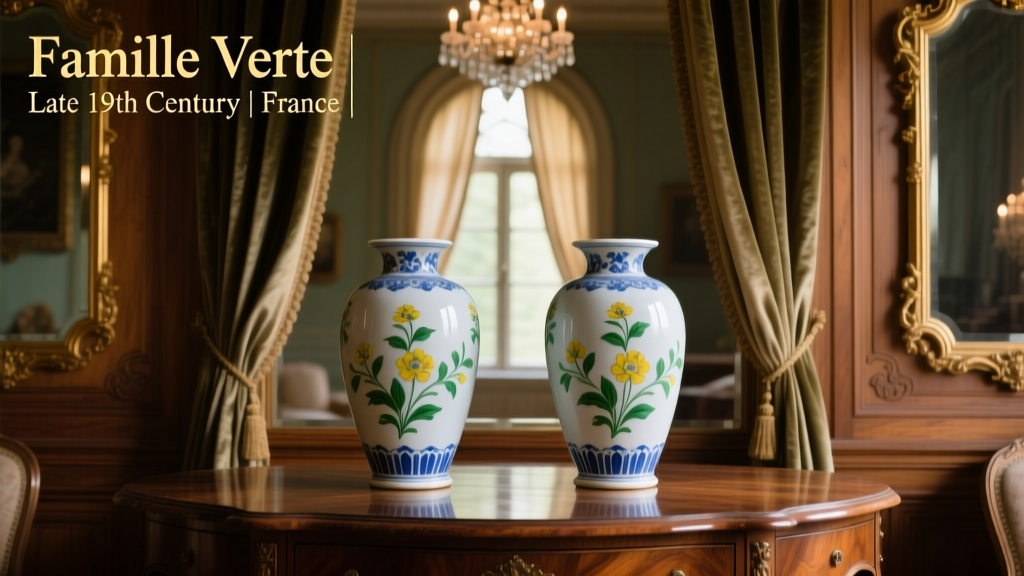
Porcelain Vase Famille Verte France Late 19th Century: A Pair of 14-Inch Masterpieces from the Gilded Age
Fiesta Forest Green Casserole Cover #3: Identification, Value, Restoration, and Collectibility
Decoding the 2333922: A Technical and Historical Analysis of the 1958 Dunbar Model 2333922 Walnut Dining Set
Oyster Plates, 6 Wells, Majolica Turquoise Center Bowl — Minton, 9 Inches: A Collector’s Guide to Victorian Seafood Service