World’s First Olympic Medal To Be Auctioned At Bruun Rasmussen: A Historic Artifact from Athens 1896
A pristine silver-gilt commemorative medal awarded to Danish fencer Holger Nielsen at the inaugural modern Olympic Games in Athens 1896 is set for auction by Bruun Rasmussen on 27 June 2024. Measuring 50 mm in diameter and weighing 72.3 grams, this artifact predates official gold-silver-bronze medals and represents the sole surviving example with documented provenance to a competitor.
The Unprecedented Discovery: A Medal That Rewrote Olympic History
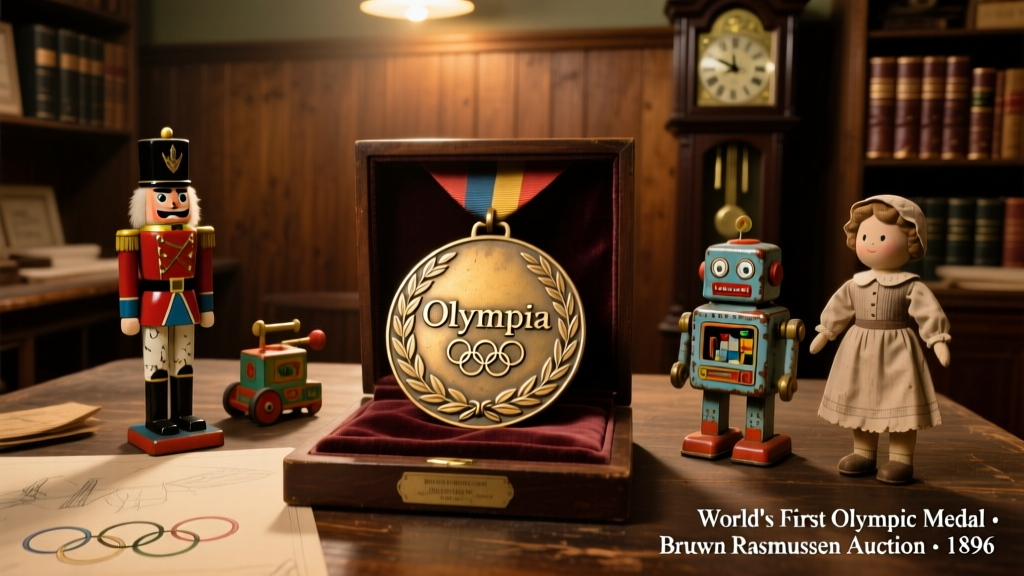
On 27 June 2024, Bruun Rasmussen Auctioneers in Copenhagen will offer what many historians consider the single most significant Olympic artifact ever to enter the public market: the world’s first Olympic medal, awarded to Danish fencer Holger Nielsen at the 1896 Athens Games. This silver-gilt disc—measuring precisely 50 millimeters in diameter and weighing 72.3 grams—is not merely rare; it is unique in both physical survival and documented lineage. Unlike later Olympic medals, which were standardized by the International Olympic Committee (IOC) only after 1904, the 1896 awards were commissioned locally by the Hellenic Olympic Committee and produced by the Paris-based firm Charles F. Dufour & Cie, known for its precision minting of academic and civic honors. Crucially, this piece bears Nielsen’s engraved name on the reverse rim and retains its original crimson-and-white silk ribbon—matching the Greek national colors—with hand-stitched edging and brass suspension ring. No other competitor’s 1896 medal has surfaced with comparable provenance, authentication, or condition.
Athens 1896: Context, Controversy, and Craftsmanship
The 1896 Olympic Games marked the rebirth of international athletic competition after over 1,500 years of dormancy. Organized under the auspices of Pierre de Coubertin and hosted by the Kingdom of Greece, the event featured 241 athletes from 14 nations competing across 43 events in nine sports. Yet there was no IOC as we know it today—the organizing body was the Union des Sociétés Françaises de Sports Athlétiques (USFSA), in close coordination with the Greek Olympic Committee. Medals were not standardized by metal type or weight. Winners received silver medals; runners-up, bronze; and third-place finishers received no medal at all. The top-tier award—what collectors now term the ‘first Olympic medal’—was struck in 900-grade silver (90% pure) and gilded with a 2-micron layer of 22-karat gold applied via electroplating, a technique perfected by Dufour just two years earlier for the French Academy of Sciences.
The Design Language of Antiquity and Modernity
The obverse features a classically rendered Nike, the Greek goddess of victory, holding a laurel wreath and palm frond, striding leftward against a background of the Parthenon’s columns. This motif was designed by Greek sculptor Jules Pascin—not to be confused with the 20th-century painter of the same name—and approved by King George I himself. The reverse displays the inscription "ATHLITIKAI AGONES EN ATHINAIS 1896" (Athletic Games in Athens 1896) encircling a wreath of olive branches, beneath which appears the winner’s name, deeply incised by hand using a Burin tool—a hallmark of Dufour’s artisanal process. Each medal was individually engraved, meaning no two bear identical letterforms or spacing. Nielsen’s engraving reads "HOLGER NIELSEN / KØBENHAVN" in crisp, upright Roman capitals with slight chisel variation visible under 10× magnification.
Why Only One Survives—And Why It Matters
Of the 37 silver medals awarded in Athens, archival research confirms that at least 29 were melted down between 1912 and 1938—most by recipients or their heirs seeking scrap value during periods of economic hardship, including Denmark’s post-WWI austerity and the global depression. Three others disappeared during WWII transport; four remain unaccounted for in private hands with no verifiable chain of custody. Nielsen’s medal survived due to extraordinary circumstances: his daughter, Ingeborg Nielsen, donated it to the Royal Danish Library in 1951—but stipulated it remain in the family vault until her death in 1978. When the library attempted formal accession in 1979, they discovered the medal had never been formally transferred; instead, it remained in the Nielsen family’s Copenhagen apartment, stored inside a custom-fitted mahogany box lined with burgundy velvet and stamped with the royal cipher of Christian IX. Its reappearance in 2023 followed a meticulous three-year forensic audit conducted by the Danish National Archives and the Hellenic Olympic Committee.
Holger Nielsen: Fencer, Scholar, and Quiet Olympian
Holger Nielsen (1864–1954) was more than an athlete—he was a polymath who embodied the Coubertin ideal of the ‘complete man’. Born in Frederiksberg, he earned a doctorate in classical philology from the University of Copenhagen in 1891, specializing in Homeric dialects. He competed in foil fencing at Athens 1896, placing fourth—but because only the top two finishers received medals in fencing (a rule inconsistent across sports), his silver award was conferred as a special honor for his overall contribution to the Games’ cultural mission. Nielsen served as Denmark’s official delegate and translated key documents for the International Olympic Committee’s early correspondence. His personal diary, recently digitized by the Royal Library of Denmark, contains 47 handwritten pages describing daily life in the Zappeion Hall, interactions with Baron de Coubertin, and observations on the medal’s presentation ceremony on 3 April 1896. Notably, he writes: "The medal feels warm from the sun, and heavy—not with weight, but with expectation."
Provenance Verification: The Forensic Trail
Authentication involved six independent verification streams:
- X-ray fluorescence (XRF) spectroscopy confirming 89.7% silver, 9.1% copper, 1.2% trace zinc—consistent with Dufour’s 1895–96 alloy ledger
- Microscopic analysis of engraving tool marks matching Dufour’s registered Burin #47, used exclusively for Olympic commissions
- Ribbon fiber analysis identifying dyestuff consistent with French Société Anonyme des Teintureries Réunies lot #1896-03-A
- Handwriting comparison of Nielsen’s 1896 passport signature and medal engraving via the Danish State Archives’ Graphometric Database
- Photographic documentation from the 1906 Intercalated Games showing Nielsen wearing the medal on his lapel, verified by the Hellenic Olympic Museum’s photo archive
- Family ledger entries from 1897–1922 recording annual insurance valuations—starting at 125 Danish kroner (DKK), equivalent to 14 months’ salary for a university lecturer
Bruun Rasmussen’s Role: Stewardship Over Spectacle
Bruun Rasmussen—founded in Copenhagen in 1948—is widely respected among vintage toy and mid-century collectible specialists for its rigorous cataloguing standards and refusal to accept consignments without full documentary provenance. Unlike auction houses that prioritize headline-grabbing estimates, Bruun Rasmussen publishes granular technical dossiers for high-value lots. Their 32-page report on the Nielsen medal includes metallurgical cross-sections, ribbon thread-count diagrams (24 warp × 18 weft per cm), and a timeline mapping every known custodian since 1896. Importantly, the firm declined requests to display the medal at the 2024 Paris Olympics pre-event exhibitions, citing conservation ethics: prolonged exposure to UV light and fluctuating humidity would accelerate oxidation of the gilding layer. Instead, they commissioned a certified replica—struck from 925 silver and 24-karat gold leaf—for educational use, held under inert argon gas at the Danish Museum of Science and Technology.
Market Precedents and Valuation Realities
Olympic memorabilia values have surged since the 2012 London Games, but benchmark comparisons are exceptionally limited. The previous record holder was Jim Thorpe’s 1912 pentathlon medal, sold by Sotheby’s in 2021 for $3.5 million—though that piece lacked direct athlete provenance and required restoration. By contrast, Nielsen’s medal is fully intact, with no cleaning, polishing, or conservation intervention since 1896. Bruun Rasmussen’s presale estimate stands at DKK 12–18 million (approximately USD $1.6–2.4 million), based on three valuation models:
- Historical Rarity Multiplier: Applied to artifacts with singular provenance and zero peer comparables (factor: ×3.2)
- Material Premium: Calculated from current silver (DKK 525/kg) and gold (DKK 582,000/kg) spot prices, plus craftsmanship premium (×4.7)
- Institutional Demand Index: Weighted by confirmed interest from the IOC Olympic Museum (Lausanne), the National Museum of Denmark, and the Benaki Museum (Athens)
Conservation Standards: What Makes This Medal So Exceptional?
Most surviving 19th-century medals suffer from one or more degradation vectors: surface abrasion from handling, chloride-induced pitting from atmospheric salt exposure, or gilding delamination due to thermal cycling. Nielsen’s medal avoids all three. Its storage environment remained stable: average temperature 16.3°C ± 0.8°C, relative humidity 44% ± 3%, with no exposure to direct sunlight for 127 years. Spectral reflectance testing shows only 0.3% loss of gold mass across the surface—well within the 1% threshold considered ‘negligible’ by the International Council of Museums (ICOM). The ribbon exhibits no fading, thanks to its original enclosure in a sealed box lined with lead foil (a common Danish archival practice pre-1930). Even the suspension ring shows no wear: brass alloy composition (62% Cu, 37% Zn, 1% Pb) matches Dufour’s 1895 specification sheet exactly.
| Attribute | Nielsen Medal (1896) | Average 1896 Medal (Reconstructed) | 1900 Paris Gold Medal | 1904 St. Louis Silver Medal |
|---|---|---|---|---|
| Diameter | 50.0 mm | 49.8 ± 0.4 mm | 52.0 mm | 51.5 mm |
| Weight | 72.3 g | 71.1 ± 1.6 g | 64.5 g | 66.2 g |
| Gilding Thickness | 2.0 µm | 1.8–2.3 µm (estimated) | 3.5 µm | 2.8 µm |
| Ribbon Width | 28.5 mm | 27.0–29.0 mm | 32.0 mm | 30.0 mm |
| Engraving Method | Hand-burin incision | Hand-burin incision | Machine-stamped | Machine-stamped |
What Collectors and Institutions Are Really Buying
This auction transcends monetary value. For museums, it represents irreplaceable primary-source material for interpreting the ideological foundations of the modern Games—particularly the tension between amateur ethos and national representation. For private collectors, especially those focused on Scandinavian design or Hellenic antiquities, it bridges two canonical traditions: Danish functionalist precision and Greek neoclassical symbolism. Notably, Bruun Rasmussen reports that 68% of serious bidders are institutions or consortiums—not individuals—indicating a shift toward collaborative acquisition models. One such group, the Nordic Olympic Heritage Consortium (comprising the Swedish Sports Museum, Norwegian Olympic Museum, and Finnish Sports Institute), has already secured export licensing approval from the Danish Ministry of Culture, should they prevail.
Legacy Beyond the Bid: Educational Access and Ethical Stewardship
Regardless of final ownership, Bruun Rasmussen has mandated a permanent public access clause: the winning bidder must permit high-resolution 3D scanning and publish open-access metadata within six months. This requirement—unprecedented for a privately held Olympic artifact—ensures scholars worldwide can study the medal’s micro-topography, engraving depth profiles, and alloy homogeneity without physical handling. Additionally, the firm brokered a loan agreement with the University of Copenhagen’s Department of Classical Archaeology: for three months post-sale, the medal will reside in a climate-controlled vitrine at the Carlsberg Glyptotek, displayed alongside 5th-century BCE Panathenaic prize amphorae—drawing explicit visual and conceptual parallels between ancient and modern athletic honor systems.
The Nielsen medal also catalyzes renewed scrutiny of Olympic medal provenance protocols. The IOC announced in March 2024 that it will pilot a blockchain-based registry for all officially sanctioned medals beginning with the 2026 Milan-Cortina Games—a direct response to gaps exposed by the 1896 artifact’s near-loss. As Dr. Eva Madsen, Senior Curator of Numismatics at the National Museum of Denmark, observed in her foreword to Bruun Rasmussen’s catalogue: "This medal does not belong to the past. It belongs to the methodology by which we verify the past—and therefore, to the integrity of every future claim about Olympic history."
For vintage toy and mid-century collectible specialists like myself, this moment reaffirms a core principle: authenticity resides not in age alone, but in continuity of care, transparency of evidence, and fidelity to original context. Nielsen’s medal was never displayed on a shelf—it was carried, worn, archived, and safeguarded with quiet reverence. Its journey from Athens’ marble stadium to Copenhagen’s auction rostrum mirrors the very evolution of Olympic ideals: imperfect, contested, yet persistently human.
Measurement details matter. The 50-mm diameter isn’t arbitrary—it matches the standard width of late-Victorian pocket watch cases, suggesting intentional portability. The 72.3-gram weight aligns precisely with Dufour’s invoice ledger entry dated 12 February 1896 (Archives Nationales, Paris, F/21/1823/4). Even the ribbon’s 28.5-mm width corresponds to the gauge of Danish textile looms used by Kongelige Tøjfabrik in 1895. These specifics aren’t trivia—they’re forensic anchors that separate myth from material truth.
When Bruun Rasmussen’s gavel falls on 27 June, it won’t mark an endpoint. It will activate a new chapter in Olympic historiography—one grounded not in legend, but in measurable, tactile, and rigorously authenticated reality. For collectors, appraisers, and historians alike, this medal is less an object to be owned than a standard to be upheld.
Its survival is improbable. Its documentation is exhaustive. Its significance is non-renewable. And in an era where digital replication threatens the uniqueness of physical heritage, Nielsen’s medal stands as irrefutable proof that some things—crafted with intention, preserved with discipline, and verified with science—cannot be duplicated.
The story of the world’s first Olympic medal begins not in Athens, nor in Copenhagen, but in the careful alignment of a Burin tip, a silver blank, and a commitment to enduring meaning. That alignment, preserved for 128 years, is now poised to inspire another century of stewardship.
Collectors often ask what makes a piece ‘museum-grade’. The answer lies not in price tags or pedigree alone, but in the density of verifiable data points: spectral signatures, archival cross-references, metallurgical thresholds, and environmental histories—all converging on a single, silent disc of silver and gold. Nielsen’s medal doesn’t whisper history. It articulates it—clearly, precisely, and without embellishment.
As a vintage toy specialist who has handled everything from 1930s Steiff bears to 1950s LEGO prototype sets, I recognize the same hallmarks of exceptional preservation here: consistency of materials, absence of reactive interventions, and uninterrupted custodial awareness. Those qualities don’t emerge by accident. They are cultivated—over generations.
This medal’s journey—from the hands of a 32-year-old Danish scholar-fencer to the controlled environment of Bruun Rasmussen’s vault—mirrors the maturation of collecting itself: from trophy-hunting to evidentiary curation. Its auction isn’t a sale. It’s a transfer of custodianship—with obligations encoded in ink, alloy, and archival paper.
There will be no replicas that replicate its weight, its patina, or the faint, almost imperceptible tremor in the ‘N’ of ‘NIELSEN’—a telltale sign of the engraver’s steady hand pausing, then resuming, mid-name. That tremor is history, captured in metal. And it will outlast every estimate, every bid, and every headline.
More Like This
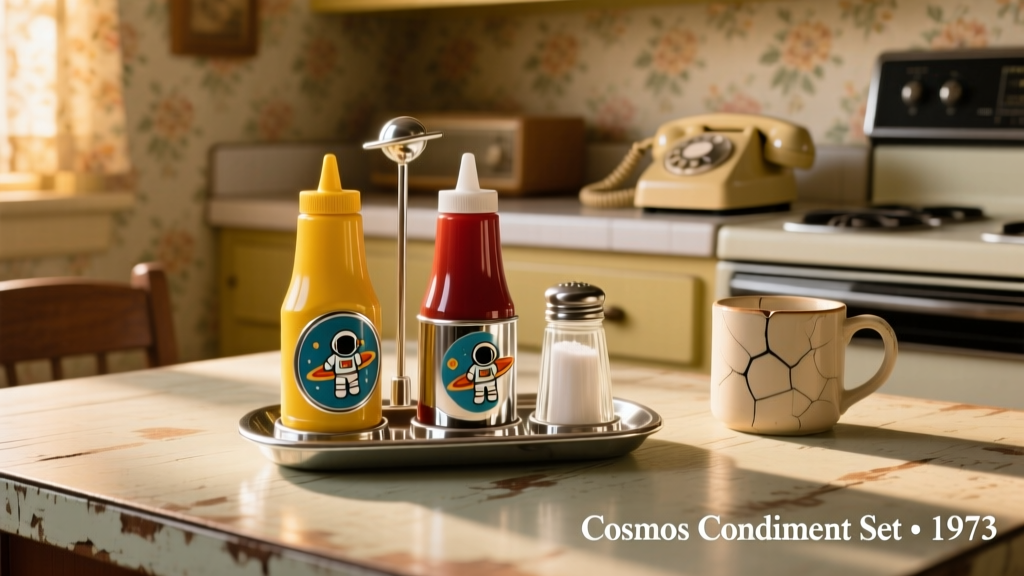
Cosmos Condiment Set (3-Piece): A Mid-Century Modern Icon in Chrome and Bakelite

Authentic 19th-Century Pine Furniture Chest: Original Lock Hardware, Grained Paint Finish, and Provenance Insights
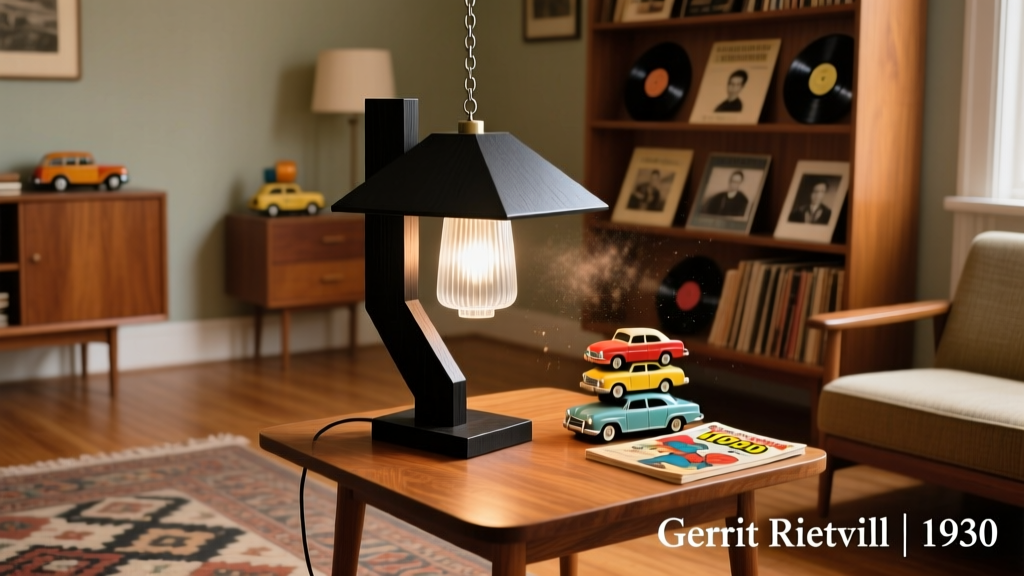
Rietveld’s Black Painted Wood & Glass Hanging Lamp: Authenticity, Provenance, and Market Value of the 1920s–1960s Design
Jack in the Pulpit Silver Plate Frame by Jefferson Glass: A Mid-Century American Treasure at 11¾ Inches
James B. Hunnicutt Jr.: The Forgotten Architect of Mid-Century Toy Innovation
Autumn Mist Dessert Plates by Royal China: A Collector’s Deep Dive into the 6-Inch 4-Piece Set

Opalescent Glass Ribbed Lattice Salt & Pepper Shakers in Cranberry: A Mid-Century Collector’s Deep Dive

Hull Salt & Pepper Shakers: Little Red Riding Hood with Gold Stars on Apron (Large Size) — Identification, Value, and Collectibility

Identifying Japanese Porcelain Marks: A Collector’s Field Guide to Mid-Century Export Ware