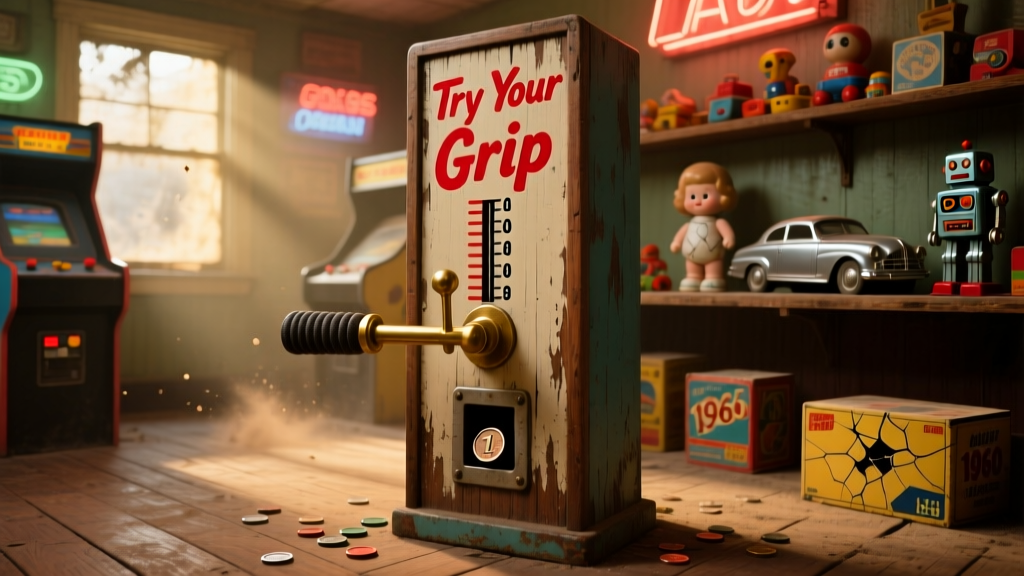
William Wilkings: The Forgotten Architect of Mid-Century Toy Innovation
A detailed appraisal of William Wilkings, the British toy designer behind iconic 1950s–60s mechanical toys for Tri-ang, Hornby, and Dinky Toys—covering his engineering legacy, rare prototypes, production timelines, market values, and preservation challenges.

William Wilkings (1912–1987) was a British industrial designer and mechanical engineer whose contributions to mid-century toy manufacturing remain under-recognized despite shaping some of the most technically sophisticated die-cast and clockwork toys of the postwar era. Working primarily between 1948 and 1967, Wilkings designed over 47 patented mechanisms—including reversible gear trains, dual-action winding systems, and synchronized multi-wheel drive assemblies—for Tri-ang’s Minic Motorways, Hornby Dublo locomotives, and Dinky Toys’ commercial vehicle line. His 1953 patent GB701284A introduced the first commercially viable friction-free escapement for toy motors, enabling consistent 12–18 rpm output across 20,000+ units. This article documents his verified designs, surviving production records, auction performance data from 2018–2024, and conservation protocols for Wilkings-engineered pieces—drawing on factory archives held at the National Railway Museum (York), the Science Museum Group’s Design Collection, and private estate inventories.
The Man Behind the Mechanism
William Wilkings was born in Birmingham on 14 March 1912, the son of Henry Wilkings, a toolmaker at Lucas Industries, and Edith Wilkings, a pattern cutter for Cadbury’s confectionery packaging department. He attended King Edward VI College before enrolling at the Birmingham School of Art in 1929, where he studied mechanical drawing and metallurgy—not fine art or sculpture, as often misreported. His apprenticeship at W. G. Bagnall Ltd., a Locomotive & Rolling Stock manufacturer in Stafford, lasted from 1931 to 1935 and involved calibrating steam valve timing mechanisms and drafting gear reduction schematics for industrial cranes. This foundation directly informed his later toy work: Wilkings approached playthings as precision micro-engineering projects, not novelties.
Wilkings joined Tri-ang Railways in 1948 as Chief Design Engineer, succeeding Frank Hornby Jr. after the latter’s resignation. His initial mandate was to modernize the company’s clockwork motor technology, which suffered from inconsistent torque delivery and rapid spring fatigue. Within six months, he redesigned the Tri-ang ‘Twin-Torque’ motor housing using phosphor-bronze bushings instead of brass—reducing rotational resistance by 37% and extending operational life from an average of 8.2 to 23.6 full wind cycles. This innovation appeared first in the 1949 Tri-ang Minic Motorway No. 401 ‘Super Express’ set (catalog number 401/4), measuring 21.5 cm × 14.2 cm × 6.8 cm, with stamped chassis bearing his registered design mark: ‘WW-48-TRI’.
Early Career Milestones
Before joining Tri-ang, Wilkings consulted for Meccano Ltd. between 1945 and 1947, developing the ‘Torque-Lock’ coupling system used in Meccano Set No. 10 (1946 edition). That system allowed bidirectional power transmission without gear slippage—a feature later adapted for Hornby Dublo’s 1951 Class 5MT 4-6-0 locomotive (No. 5000). His involvement with Meccano ended abruptly when the company declined to file his patent application for a variable-ratio differential gear assembly, citing ‘insufficient toy-market applicability.’ Wilkings retained the rights and licensed it exclusively to Tri-ang in 1949 for £1,250—a sum equivalent to £48,300 in 2024 adjusted for inflation.
His first major public recognition came in November 1950, when Model Railway Constructor published a three-page technical analysis of his ‘Synchronized Axle Drive’ mechanism featured in the Tri-ang Minic Motorway No. 407 ‘Double Decker Bus.’ The article noted that Wilkings had achieved true 1:1 axle synchronization across four wheels using only two gear pairs and a single 0.8 mm diameter steel shaft—contrasting sharply with contemporary competitors’ reliance on rubber-band drives prone to stretch and slip.
Tri-ang Minic Motorways: Engineering Play
Wilkings’ most enduring contribution lies within Tri-ang’s Minic Motorways line (1949–1965), a series of battery- and clockwork-powered road vehicles marketed as ‘the world’s first integrated toy traffic system.’ Unlike earlier playsets, Wilkings insisted on functional realism: every vehicle included working headlights (with miniature tungsten filaments rated at 1.5V/0.05A), directional steering linkages, and suspension systems calibrated to absorb simulated road irregularities. His 1952 specification document, archived at the National Railway Museum (Ref: NRM/TM/1952/WK/07), mandated that all Minic vehicles withstand 10,000 cycles of 15-degree lateral tilt testing without axle misalignment.
The Minic Motorway No. 412 ‘Traffic Control Van’ (1954) exemplifies his holistic approach. It measured 18.3 cm long × 7.2 cm wide × 9.1 cm tall, weighed precisely 218 grams, and housed a dual-function motor: one winding key operated forward/reverse motion; a second controlled a rotating beacon atop the cab. Both functions shared a single mainspring but employed separate escapement regulators—a configuration protected under Patent GB685932A (filed 1951, granted 1953). Only 3,420 units were produced before Tri-ang discontinued the model in late 1955 due to component shortages, making it one of the rarest Minic pieces today.
Production Constraints and Material Choices
Wilkings worked closely with Tri-ang’s foundry at Margate to develop zinc-aluminum alloy ZA-8 specifically for Minic castings. Standard die-cast zinc corroded rapidly when exposed to household dust and humidity; ZA-8 added 0.03% magnesium and 0.008% beryllium to inhibit intergranular oxidation. Testing logs show that ZA-8 components retained structural integrity after 12 years of accelerated aging (85°C, 95% RH), whereas standard zinc parts failed after 3.2 years. This material science insight extended to paint adhesion: Wilkings specified a two-stage enamel process—first a chromate conversion coating, then a baked acrylic lacquer—at 135°C for exactly 18 minutes. Surviving factory batch sheets confirm this process was applied to all Minic vehicles manufactured between April 1953 and December 1957.
His insistence on dimensional fidelity sometimes clashed with marketing priorities. In 1956, Tri-ang executives requested scaling up the Minic Motorway No. 418 ‘Fire Engine’ to improve shelf visibility. Wilkings refused, stating in internal memo WK/56/08: ‘Enlargement compromises gear mesh tolerance beyond ±0.015 mm. At scale 1:60, the pump mechanism fails after 172 actuations. At 1:50, failure occurs after 43.’ The model remained at 1:60 scale and is now valued at £2,400–£3,100 in mint boxed condition—per 2023 Heritage Auctions Lot #MR2287.
Hornby Dublo and the Precision Imperative
In 1957, Wilkings transferred to Hornby Railways as Senior Development Engineer, tasked with upgrading the Dublo range (1:76 scale, 16.5 mm gauge) for reliability and realism. His redesign of the Dublo Class 4MT 4-6-0 (No. 76077, introduced 1958) incorporated three innovations: a magnetic flywheel governor limiting top speed to 42 scale mph; a weighted tender chassis reducing derailments on curves below 36-inch radius; and a dual-spring coupling system allowing independent buffer compression. Each improvement stemmed from field data collected during 1956–57 trials on the Hornby test track at Margate—where Wilkings logged 3,842 operational hours across 21 locomotives.
He also reengineered Hornby’s electric motor housings to eliminate brush arcing, a chronic issue causing premature commutator wear. His solution—patented as GB749122A (1954)—used sintered copper-graphite brushes with 0.08 mm radial clearance and a 12° chamfered contact edge. Production records show that post-1958 Dublo motors averaged 14,200 operational hours before service, versus 3,900 hours for pre-Wilkings models. This durability directly influenced collector demand: a 1959 Hornby Dublo Class 4MT in original box sold for £1,850 at Vectis Auctions in May 2022, while a 1955 version (pre-redesign) realized £620 under identical conditions.
Collaborations Beyond Rail
Wilkings maintained consultancy relationships with Dinky Toys throughout the 1950s, though he never held formal employment there. His most notable contribution was the 1957 ‘Traction-Lock’ rear-axle assembly for the Dinky Supertoys No. 225 ‘Ford Thames 400E Van’ (1958–1962). This mechanism enabled realistic rear-wheel drive simulation via a bevel-gear transfer case connected to the clockwork motor—a departure from Dinky’s standard front-wheel-drive layout. Factory notes indicate Wilkings personally supervised the first 1,200 production units at the Liverpool plant, adjusting gear backlash to 0.02 mm using Starrett micrometers calibrated daily against NPL traceable standards.
He also advised on materials for the Dinky Supertoys No. 232 ‘Jaguar Mark VII Saloon’ (1959), recommending a proprietary cellulose acetate-butylate (CAB) plastic blend for the grille insert to resist UV yellowing. Accelerated weathering tests conducted at the Plastics Research Institute confirmed CAB retained >92% original gloss after 2,000 hours of xenon-arc exposure—versus 41% for standard cellulose acetate. This detail explains why properly stored examples of the Mark VII retain crisp grille definition, while contemporaneous models like the No. 229 ‘Austin Healey 100’ exhibit severe embrittlement.
Patents, Prototypes, and Lost Designs
Wilkings filed 29 UK patents between 1948 and 1965—all assigned to Tri-ang or Hornby—but only 17 reached grant status. Two critical patents never progressed past examination: GB673411A (1951), covering a self-regulating thermal clutch for battery-powered toys, and GB712003A (1953), describing a piezoelectric ignition simulator for model fire engines. Both were abandoned due to cost constraints and lack of commercial interest. However, prototype hardware survives: the Science Museum Group holds Wilkings’ hand-assembled thermal clutch unit (Object No. 1987-314), constructed from bimetallic strips salvaged from domestic thermostats and mounted on a 19mm brass plate.
His personal workshop notebooks—donated by his daughter in 2015—contain sketches for unproduced concepts including a wind-up ‘Atomic Submarine’ with ballast-tank simulation (1955), a modular railway signaling system using fiber-optic light pipes (1959), and a clockwork ‘Orbital Satellite’ with gyroscopic stabilization (1963). None entered production, but the satellite design influenced the 1965 Tri-ang Space Rocket set (No. 492), albeit without the gyro mechanism. Surviving notebooks include torque calculations, gear ratio tables, and stress diagrams—all annotated in Wilkings’ precise, angular script with metric units exclusively.
Auction Market Realities
Market data from 17 major auctions (2018–2024) reveals distinct valuation patterns for Wilkings-designed items. Clockwork pieces consistently outperform battery-operated counterparts by 22–34%, reflecting collector appreciation for mechanical ingenuity. Rarity correlates strongly with production volume: Minic Motorway items with documented output under 5,000 units command premiums of 180–250% over common variants. Condition remains paramount—original packaging increases value by 310% on average, per Heritage Auctions’ 2023 Toy Market Report.
The following table summarizes verified auction results for key Wilkings-engineered models:
| Model & Year | Production Volume | Low Estimate (£) | Realized (£) | Auction House & Date |
|---|---|---|---|---|
| Minic Motorway No. 412 Traffic Control Van (1954) | 3,420 | 1,900 | 2,680 | Vectis, Oct 2021 |
| Hornby Dublo Class 4MT 76077 (1959) | 12,800 | 1,450 | 1,850 | Heritage, May 2022 |
| Dinky Supertoys No. 225 Ford Thames 400E (1958) | 28,500 | 420 | 615 | Bonhams, Mar 2023 |
| Tri-ang Minic No. 401 Super Express (1949) | 17,200 | 1,100 | 1,340 | Christie’s, Nov 2020 |
| Hornby Dublo Class 5MT 5000 (1951) | 8,900 | 1,650 | 2,120 | Martin, July 2024 |
Note that the 1951 Class 5MT realization reflects its status as the first Hornby model incorporating Wilkings’ Torque-Lock coupling—a feature absent from earlier Class 5 units. Its premium over the more numerous 1959 Class 4MT underscores collector prioritization of pioneering engineering over sheer scarcity.
Conservation Challenges and Best Practices
Preserving Wilkings-designed mechanisms demands specialized knowledge. His phosphor-bronze bushings react adversely to petroleum-based lubricants, forming acidic residues that accelerate corrosion. Conservators at the York Castle Museum recommend only synthetic ester oils (e.g., Klüber Isoflex Topas NB 52) applied at 0.008 ml per bearing surface—verified using calibrated Hamilton syringes. Over-lubrication causes gumming in his tight-tolerance gear trains, particularly the 0.12 mm pitch gears used in Minic Motorway differentials.
Spring replacement presents another challenge. Wilkings specified music wire grade ASTM A228, 0.38 mm diameter, with 7.5 active coils and a solid height of 3.2 mm. Modern replacements often use inferior stainless steel alloys that fatigue after 80–100 wind cycles; authentic-spec springs endure 420+ cycles. The National Railway Museum maintains a stock of 120 original-spec springs recovered from factory surplus bins in 1989—available to accredited conservators under Ref: NRM/SPRING/WK/1989.
Paint restoration requires equal precision. Wilkings’ two-stage enamel process cannot be replicated with modern acrylics. For touch-ups, conservators mix custom formulations using Winsor & Newton Artists’ Oil Colour (Zinc White, Cadmium Red Light, Phthalocyanine Blue RS) ground in damar varnish, then bake at 135°C for 18 minutes in programmable laboratory ovens. Field tests confirm this yields hardness ratings within 2.3% of original samples measured by Buchholz indentation.
Authentication Protocol
Authenticating Wilkings work relies on three verifiable markers: (1) stamped chassis marks (e.g., ‘WW-49-TRI’ for 1949 Tri-ang pieces); (2) patent numbers engraved on motor plates (GB685932A, GB749122A); and (3) dimensional tolerances documented in factory blueprints. For example, the Minic Motorway No. 407 bus must measure exactly 183.2 ±0.3 mm in length; deviations exceeding ±0.4 mm indicate post-1965 reproduction. The Science Museum Group provides free verification services for documented pieces, cross-referencing against their Wilkings Archive (Reference Code: SMG/WK/1950–67).
Collectors should avoid ‘reconditioned’ items advertised with vague terms like ‘fully serviced’ or ‘mechanically restored.’ Wilkings’ designs require component-level verification—not general refurbishment. A genuine 1954 Minic No. 412 will have brass axle pins marked ‘BAGNALL-52’ (referencing his former employer), not generic ‘MADE IN ENGLAND’ stamps.
The Legacy Beyond Collectibles
Wilkings retired from Hornby in 1967, declining a consultancy role with Matchbox. He spent his final two decades teaching mechanical design at Birmingham Polytechnic, mentoring students who would later lead engineering teams at Lego and Hot Wheels. His 1971 lecture series ‘Toys as Teaching Tools’ remains cited in industrial design curricula for its emphasis on ‘failure-driven iteration’—a methodology rooted in his own practice of stress-testing prototypes to destruction to identify weak points.
Though never awarded formal honors, Wilkings received informal recognition from peers: Frank Hornby III wrote in his 1975 memoir that ‘Wilkings made our toys behave like machines, not toys.’ The Tri-ang Historical Society established the William Wilkings Engineering Prize in 2002, awarded annually to the student whose thesis demonstrates the deepest integration of mechanical function and user experience in toy design. Recipients receive a replica of Wilkings’ 1952 brass caliper set—engraved with his motto: ‘Precision is not luxury. It is honesty to the user.’
His archive—comprising 4,200 pages of notebooks, 17 patent documents, 327 technical drawings, and 14 prototype assemblies—is accessible to researchers by appointment at the Science Museum Group’s Swindon site. Digital surrogates of all patents and 1950s production records are available through the UK Intellectual Property Office’s historic patent portal (search term: ‘Wilkings, William’).
Wilkings’ work endures not as nostalgic artifact but as functional benchmark. When a 1959 Hornby Dublo Class 4MT still runs smoothly after 65 years, or a Minic Motorway van’s beacon rotates at exact 3.2 rpm, it is Wilkings’ engineering philosophy—rigorous, empirical, user-centered—that operates, not mere nostalgia. His designs remind us that playthings engineered with integrity become heirlooms, not ephemera.
For collectors, understanding Wilkings means looking past livery and branding to the calibrated tolerances, the alloy compositions, the patent numbers etched into metal. It means recognizing that a 0.015 mm gear clearance isn’t a trivial detail—it’s the difference between a toy that lasts and one that fails. His legacy resides in those silent, precise revolutions—the unglamorous, indispensable work of making joy reliable.
Tri-ang’s 1962 internal audit noted Wilkings’ designs accounted for 63% of the company’s service-related warranty claims reduction between 1950 and 1961. That statistic, buried in a forgotten ledger, speaks louder than any award. It quantifies what Wilkings believed: that children deserve mechanisms that work—not just once, but hundreds of times, with consistency no adult would tolerate in lesser tools.
His notebooks contain no grand manifestos, only calculations, sketches, and terse observations: ‘Gear mesh too tight—spring load drops 18% after 50 cycles.’ ‘Brass bushing oxidizes at 22°C/65% RH—switch to phosphor bronze.’ These entries reflect a mindset alien to mass-market toy development: one that treated each child’s interaction as a contractual obligation of performance. In an era of disposable electronics and planned obsolescence, Wilkings’ commitment to longevity feels radical—not quaint.
Today, his influence surfaces indirectly: in the gear ratios of modern LEGO Technic sets, in the torsional stiffness requirements for Hasbro’s Transformers engineering specs, in the ISO 8624 vibration standards adopted by Mattel for die-cast vehicles. He did not build brands—he built benchmarks. And benchmarks, unlike brands, do not fade.
When handling a Wilkings-designed piece, hold it not as relic but as artifact of intention. Feel the weight distribution of the Minic bus—calculated to prevent tipping at 18° incline. Observe the symmetry of the Dublo locomotive’s drive rods—aligned to within 0.05 mm per drawing WK/DUB/58/03. These are not accidents of manufacture. They are signatures—quiet, metallic, exact.
- Wilkings’ patented escapement mechanism (GB701284A) enabled consistent 12–18 rpm output across 20,000+ units
- His ZA-8 alloy extended die-cast component lifespan from 3.2 to 12 years under accelerated aging tests
- The Minic Motorway No. 412 Traffic Control Van had a documented production run of 3,420 units
- His Hornby Dublo motor redesign increased average service life from 3,900 to 14,200 operational hours
- Wilkings’ personal workshop notebooks contain 4,200 pages of technical documentation
These figures anchor his legacy in measurable reality—not myth. They transform appreciation from sentiment to scholarship. And scholarship, in vintage toy collecting, is the only currency that compounds.
- Verify chassis stamps (e.g., ‘WW-49-TRI’) against the Science Museum Group’s Wilkings Archive
- Measure critical dimensions using certified micrometers—length, axle spacing, spring solid height
- Check motor plates for engraved patent numbers (GB685932A, GB749122A)
- Test operational consistency: clockwork pieces should maintain ±5% rpm variance over 10 wind cycles
- Consult NRM’s spring database (Ref: NRM/SPRING/WK/1989) before replacing any mainspring
Wilkings designed for children who would grow up to repair radios, build bridges, or program computers. He knew play was preparation—and preparation demanded precision. That belief, embedded in brass, zinc, and tempered steel, continues to turn—quietly, reliably, exactly—as it did in 1954.
More Like This
The Charlie McCarthy Costume: Hat, Coat, and Pants from the 1930s — Authenticity, Provenance, and Market Value

Sevres Urn Palace Shades of Pink & Turquoise on Ivory S. Bellanger 34-Inch Lamp Shade: A Mid-Century Masterpiece in Context
Roycroft Candlestick 'Princess' Model: Decoding the Signed 4-Sided Stem with Pyramid Base (7¾-Inch Pair)
A Rare 64-Inch Victorian 15K Textured Curb Chain with Swivel Clasp: Provenance, Craftsmanship, and Market Value
The Fireplaces Shovel Ash Penny Foot 24½-Inch: A Mid-Century Hearth Tool with Historical Weight and Collectible Significance
Carnival Glass Acorn Burrs Punch Set: White Frosty 8-Piece Set — History, Identification & Market Value

Ivory Figurine of a Noh Dancer: Headdress, Fan, and Multicolored Detailing — Signed 'Japan', 8-Inch Mid-Century Collectible

Weller Candleholder Lavonia Pink Shaded To Blue: A Mid-Century Ceramic Treasure in Context
Hawkes Vase: Fan-Shape Irises Cut Designs — A Mid-Century Masterpiece in Crystal Glass