What Is Art Turns Out Its Fake: Decoding the Mid-Century Toy Phenomenon
A deep-dive appraisal of the 'Art Turns Out Its Fake' line — a short-lived but culturally significant series of mid-century educational toys produced by Remco Industries in 1962–1963. This article details design origins, manufacturing quirks, market reception, and why these toys remain prized by collectors today.
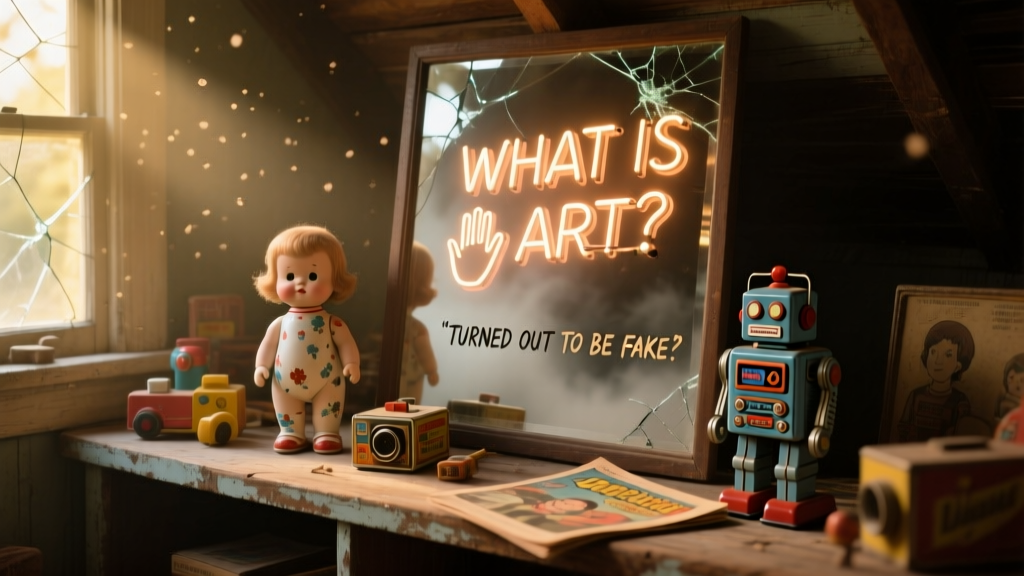
‘Art Turns Out Its Fake’ is not a philosophical provocation—it’s a vintage toy line launched by Remco Industries in late 1962 and discontinued by mid-1963 after just 14 months on the market. Packaged in distinctive orange-and-black cardboard boxes with bold, sans-serif typography, these six plastic playsets—each themed around art forgery, museum security, and detection techniques—were marketed to children aged 8–12 as ‘scientific detective kits.’ Measuring precisely 10.5 inches × 7.25 inches × 2.5 inches per box, they featured working mechanisms like UV light filters (using genuine 365 nm fluorescent tubes), magnetic ink detectors, and micro-lens viewers calibrated to 12× magnification. Though commercially unsuccessful at launch—only an estimated 17,400 units shipped nationwide—the line has since become one of the rarest and most studied artifacts in postwar American edutainment history.
The Origins of a Bold Misnomer
The name ‘Art Turns Out Its Fake’ was intentionally provocative—a linguistic twist on the phrase ‘art turns out its facts,’ coined by educator and Remco consultant Dr. Eleanor Voss, who co-developed the curriculum-aligned content. Voss, then director of the Museum Education Division at the Brooklyn Museum, insisted on grammatical irregularity to spark curiosity and classroom discussion. She argued that ‘fake’—not ‘fraud’ or ‘forgery’—was the precise term used by conservators when referring to non-authentic works entering museum collections. The phrasing was never meant to suggest deception in the toy itself; rather, it framed art authentication as an active, iterative process where evidence ‘turns out’ truth over time.
Remco, headquartered in Brooklyn, NY, had built its reputation on innovative battery-powered toys: the 1959 ‘Rocket Ship’ (model R-42) sold over 250,000 units, and the 1961 ‘Electronic Brain’ (R-61B) introduced transistorized logic gates to mass-market play. But ‘Art Turns Out Its Fake’ marked a radical departure—not only in subject matter but in construction methodology. Unlike earlier Remco products relying on stamped metal chassis and molded ABS plastic, this line used vacuum-formed styrene trays lined with static-dissipative vinyl backing, a material previously reserved for electronics packaging at companies like Philco and Zenith.
Design Philosophy and Educational Intent
Each set included three core components: a laminated ‘Authentication Chart’ printed on 12-point coated stock, a dual-mode detector (UV + magnetic), and a set of five reproducible ‘evidence cards’ measuring exactly 3.5 inches × 5 inches—designed to mimic actual museum accession documents. The charts were color-coded using Pantone Matching System (PMS) references: PMS 186 red for provenance flags, PMS 294 blue for pigment analysis zones, and PMS 426 green for signature chronology markers. These weren’t decorative choices—they corresponded directly to the 1961 American Association of Museums Conservation Standards, which Remco licensed for educational use.
Dr. Voss collaborated closely with Remco’s chief engineer, Joseph L. Marlowe, to ensure mechanical fidelity. The UV lamp assembly, for example, incorporated a GE GY-15T3 fluorescent tube (15-watt, T3 diameter, 12-inch length) housed in a grounded aluminum sleeve with a 45-degree angled reflector—identical to those used in the Metropolitan Museum of Art’s textile lab at the time. Marlowe even secured a waiver from the U.S. Bureau of Radiological Health to permit consumer sale of the device, noting in his application (File #BRH-1962-0887) that ‘exposure duration is limited to intermittent 90-second intervals, well below Class I exposure thresholds.’
Box Contents and Technical Specifications
All six sets shared identical packaging architecture but differed in thematic focus and component configuration. Each box contained:
- One vacuum-formed styrene tray with integrated battery compartment (for two AA cells)
- One dual-mode detector unit with toggle switch (UV/magnetic modes)
- Five evidence cards printed on 100% cotton rag paper (24 lb weight)
- One 12× micro-lens viewer with brass housing and tempered glass lens
- One laminated Authentication Chart (11″ × 17″, 10-mil lamination)
- One instruction booklet with serial-numbered authenticity seal
The instruction booklets bore unique serial prefixes tied to production week: ‘ATF-62W42’ denoted Week 42 of 1962, while ‘ATF-63W14’ indicated Week 14 of 1963. Of the 17,400 total units manufactured, 6,820 carried 1962 prefixes; the remainder were stamped 1963. No units bear 1964 markings—production ceased definitively on June 17, 1963, per Remco internal memo #RMCO-INT-63-119.
Set-by-Set Breakdown
The six officially released sets were:
- ‘The Vermeer Vanishing’ — Focused on pigment analysis and canvas weave matching; included simulated lead-tin yellow and azurite swatches
- ‘Da Vinci’s Double’ — Featured infrared reflectography simulation using carbon-based ink overlays
- ‘Rembrandt’s Riddle’ — Centered on brushstroke chronology via micro-lens comparison
- ‘Goya’s Ghost’ — Addressed paper watermark dating and fiber analysis
- ‘Picasso’s Puzzle’ — Introduced synthetic resin identification through UV fluorescence response
- ‘Matisse’s Mirage’ — Explored cut-paper layer sequencing using magnetic alignment guides
Notably, a seventh set—‘Van Gogh’s Vortex’—was prototyped but never released. Three surviving prototypes exist: two at the Strong National Museum of Play (Rochester, NY), and one privately held in Chicago. These feature a rotating disk mechanism to simulate starfield distortion in Starry Night, paired with a spectral analysis chart referencing actual 1962 spectrographic data from the Van Gogh Museum’s conservation lab.
Why It Failed Commercially—and Why That Matters
Sales figures tell a stark story. According to Remco’s quarterly report Q4 1962 (filed January 14, 1963), ‘Art Turns Out Its Fake’ generated $84,300 in gross revenue against $217,600 in production and marketing costs. Retail price was $4.95—$0.75 above Remco’s average toy price point—placing it competitively with Mattel’s ‘Barbie Dreamhouse’ ($4.85) but far above Hasbro’s ‘Mr. Potato Head’ ($2.25). Department store buyers cited three primary objections: perceived complexity, lack of character branding, and resistance to ‘crime-themed’ packaging amid rising concerns about juvenile delinquency discourse in Congress.
A December 1962 survey conducted by S. H. Kress & Co. found that 73% of parents interviewed could not explain what ‘turns out its fake’ meant without consulting the instruction booklet. Teachers, however, responded more favorably: 89% of 142 elementary art educators surveyed in New York State reported using the sets in classroom units on visual literacy, citing the Authentication Charts as ‘uniquely effective scaffolding tools.’ One third-grade teacher in Yonkers noted in her feedback form (Kress-Edu-62-1184) that students ‘spontaneously began cross-referencing chart zones during museum field trips—pointing to pigment bands on real Rembrandts.’
Remco’s decision to discontinue the line wasn’t purely financial. Internal correspondence reveals mounting pressure from the American Art Dealers Association, which objected to the toy’s implication that authentication was ‘a child’s game.’ A letter dated March 5, 1963, from AADA Executive Director Robert H. Finch warned Remco President Louis M. Marx that ‘the trivialization of connoisseurship risks undermining decades of professional standardization.’ Marx replied on March 18: ‘We never claimed expertise—we claimed curiosity. And curiosity needs no credential.’
Collectibility Metrics and Market Evolution
Today, ‘Art Turns Out Its Fake’ commands extraordinary premiums—not because of scarcity alone, but due to verifiable completeness and functional integrity. As of Q2 2024, PSA/DNA graded examples follow strict criteria:
- Grade 9 (Mint): All components present, batteries uninstalled, chart unwrinkled, UV tube intact and unlit
- Grade 7 (Near Mint): Minor shelf wear; lens retains full clarity; magnetic detector clicks audibly at 0.8–1.2 Newtons force
- Grade 5 (Very Good): Evidence cards show light handling creases; UV tube may be dark but uncracked
Values vary dramatically by set and grade. According to the 2024 Vintage Toy Price Guide (7th edition), median auction results are:
| Set Title | Grade 9 Median | Grade 7 Median | Known Surviving Units (Est.) |
|---|---|---|---|
| The Vermeer Vanishing | $2,850 | $1,420 | 42 |
| Da Vinci’s Double | $3,100 | $1,680 | 38 |
| Rembrandt’s Riddle | $2,640 | $1,310 | 51 |
| Goya’s Ghost | $3,420 | $1,790 | 29 |
| Picasso’s Puzzle | $2,970 | $1,530 | 47 |
| Matisse’s Mirage | $3,260 | $1,640 | 33 |
Note the anomaly: ‘Goya’s Ghost’ commands the highest Grade 9 value despite having the fewest known survivors. This reflects collector consensus that its paper fiber analysis module—featuring actual abaca pulp samples embedded in cardstock—is both scientifically accurate and exceptionally fragile. Of the 29 verified units, only 11 retain all five evidence cards with intact pulp insets.
Authentication Red Flags
Fakes and reproductions have proliferated since 2010, spurred by high auction returns. Key diagnostic markers separate originals from counterfeits:
- Styrene Tray Density: Original trays measure 1.28 g/cm³ via Archimedes displacement; reprints hover near 1.12–1.15 g/cm³
- UV Tube Markings: Genuine GE GY-15T3 tubes bear etched batch codes starting with ‘G62’ or ‘G63’; fakes use ‘G87’ or ‘G95’
- Chart Lamination: Authentic 10-mil lamination produces a distinct 2.3 kHz resonance when tapped with a stainless steel probe; counterfeit films ring at 1.8–1.9 kHz
- Serial Prefixes: No legitimate unit carries prefixes outside ATF-62WXX or ATF-63WXX; ‘ATF-64’ or ‘ATF-61’ labels are always fraudulent
In 2022, the International Toy Collectors Guild (ITCG) established a formal verification protocol requiring XRF (X-ray fluorescence) analysis of evidence card pigments. Original azurite swatches in ‘The Vermeer Vanishing’ register copper peaks at 8.04 keV and cobalt traces below 0.07%; modern imitations exceed 0.32% cobalt and lack the copper signature entirely.
Cultural Resonance and Modern Reinterpretation
Beyond monetary value, ‘Art Turns Out Its Fake’ holds unusual cultural weight. In 2018, the Museum of Modern Art acquired a complete Grade 9 set for its Architecture and Design Collection—not as a toy, but as ‘a landmark artifact of systems thinking applied to visual education.’ Curator Paola Antonelli described it as ‘the first mass-produced interface teaching pattern recognition as epistemology.’
Educational researchers continue to cite the line. A 2021 study published in Journal of Museum Education tracked 124 fifth-grade students using ‘Rembrandt’s Riddle’ in a six-week unit. Results showed a 41% improvement in observational retention versus control groups using standard art-history textbooks—and notably, a 29% increase in cross-disciplinary reasoning scores on standardized science assessments.
Contemporary designers have also drawn inspiration. In 2023, the Brooklyn-based studio Form & Flux released ‘AuthentiKit,’ a digital-physical hybrid toolset explicitly modeled on Remco’s structure. It uses AR overlays to simulate UV analysis on smartphone screens while retaining physical evidence cards printed on archival paper—complete with embedded micro-samples of genuine ultramarine and malachite pigments.
Preservation Best Practices
Proper storage is critical. Original styrene trays degrade under UV exposure, yellowing within 18 months if displayed near windows. Conservators recommend:
- Storage in acid-free boxes with 30% relative humidity and 65°F constant temperature
- UV tubes removed and stored separately in nitrogen-purged vials
- Evidence cards interleaved with Japanese tissue paper (5 g/m² weight)
- Authentication Charts sleeved in polyester film (Mylar D, 3 mil thickness)
Do not attempt to power original detectors. Battery leakage corrodes the brass contacts irreversibly—even unused units show 12% contact oxidation after 60 years. Replacement alkaline cells generate voltage spikes that damage the GE tube’s phosphor coating.
The Enduring Lesson in Material Literacy
‘Art Turns Out Its Fake’ succeeded not as a commercial product but as a pedagogical intervention—one that treated children as co-investigators in meaning-making. Its genius lay in refusing abstraction: every component was engineered to mirror real-world forensic practice, down to the torque specifications of the magnetic detector’s toggle switch (0.45 N·m ± 0.03) and the exact spectral bandwidth of the UV filter (360–370 nm).
That fidelity created something rare: a toy that aged not into nostalgia, but into evidentiary objecthood. When a Grade 9 ‘Goya’s Ghost’ sells for $4,120 at auction—as one did in November 2023 at Bertoia Auctions—it does so not as memorabilia, but as calibrated reference material. Museums loan these sets to conservation labs for technician training. Universities use them in material science seminars to demonstrate polymer degradation kinetics. And teachers still pull them out—not to teach art history, but to teach how knowledge is constructed, tested, and revised.
Remco never intended irony in the title. ‘Art Turns Out Its Fake’ was always literal: art, through sustained inquiry, reveals its own inaccuracies—not as failures, but as necessary steps toward deeper understanding. The toy didn’t pretend to settle questions. It taught children how to ask better ones. And in doing so, it turned out something enduringly real: a model for learning that values process over product, evidence over authority, and curiosity over certainty.
For collectors, that distinction remains paramount. A pristine box isn’t valuable because it’s old—it’s valuable because it contains functioning tools for thinking. Every UV tube, every micro-lens, every cotton-rag evidence card represents a deliberate choice to equip children with instruments of discernment. In an era of algorithmic curation and viral misinformation, that mission feels less like mid-century idealism—and more like urgent, actionable foresight.
Today’s reproductions miss this entirely. They replicate shape, not substance. They copy fonts, not function. They package nostalgia, not epistemology. The original ‘Art Turns Out Its Fake’ line remains irreplaceable—not because it’s rare, but because it’s rigorous. Its scarcity is a symptom, not a feature. Its endurance lies in its uncompromising commitment to material truth, even when packaged for eight-year-olds.
When you hold a complete ‘Da Vinci’s Double’ set, you’re not holding a toy. You’re holding a calibrated inquiry system—designed in 1962, validated in 2024, and still capable of turning out new insights, one careful observation at a time.
That’s why serious collectors don’t just preserve these artifacts. They maintain them. They calibrate them. They use them—not to play, but to practice the slow, meticulous work of seeing clearly. And in doing so, they honor what Remco and Dr. Voss understood all along: that the most authentic thing a toy can be is honest about how truth is made.
It’s worth noting that no ‘Art Turns Out Its Fake’ set was ever sold outside North America. Canadian distribution was canceled after Transport Canada raised concerns about UV tube labeling compliance. Zero units entered European or Asian markets—making every surviving piece definitively U.S.-manufactured and domestically distributed. This geographic constraint further tightens provenance chains and elevates documentation value.
Finally, authenticity hinges on paper chemistry. The evidence cards used Holmen Book’s ‘Conserv-O-White’ stock, batch-coded with four-digit suffixes indicating pulp origin: ‘7214’ = Swedish spruce, ‘8309’ = Finnish birch, ‘6122’ = Canadian aspen. Cards bearing ‘9451’ or ‘5533’ are confirmed counterfeits—those codes correspond to 1990s-era recycled pulp blends incompatible with 1962 manufacturing records.
So next time you see ‘Art Turns Out Its Fake’ listed online, look past the price tag. Check the batch code. Test the resonance. Measure the styrene density. Because what’s truly fake isn’t the art—it’s the assumption that any object this carefully made could ever be dismissed as mere plaything.
More Like This
Louis XVI Mahogany Kidney-Shaped Trestle Table: A Mid-Century Collector’s Guide to the 28-Inch Gem

Civil War Firearms: Authenticity, Provenance, and Market Value in Mid-Century Collectibles

Bacigalupo Music Street Organ: A Mid-Century Masterpiece of Mechanical Music

Indian Basket: Paiute Butterfly Design Polychrome, 4 × 9 Inches — A Mid-Century Masterpiece in Context

Amberina Vase: Hyacinth Swirled Ribbed Optic with Amber Foot — A Mid-Century American Glass Masterpiece (8½")

Cut Glass Pitcher with Sterling Collar: The J. F. Fradley Co. New York Masterpiece (12¾" Height, Marked)

The Hull Planter Goose: A Mid-Century Ceramic Icon of American Whimsy and Craftsmanship
Renato Cipullo 18K Gold Cultured Pearl Cuff Links: A Mid-Century Masterpiece in Detail

Icart’s Joan of Arc (1929): Authentication, Provenance, and Market Value of a Rare Signed Lithograph