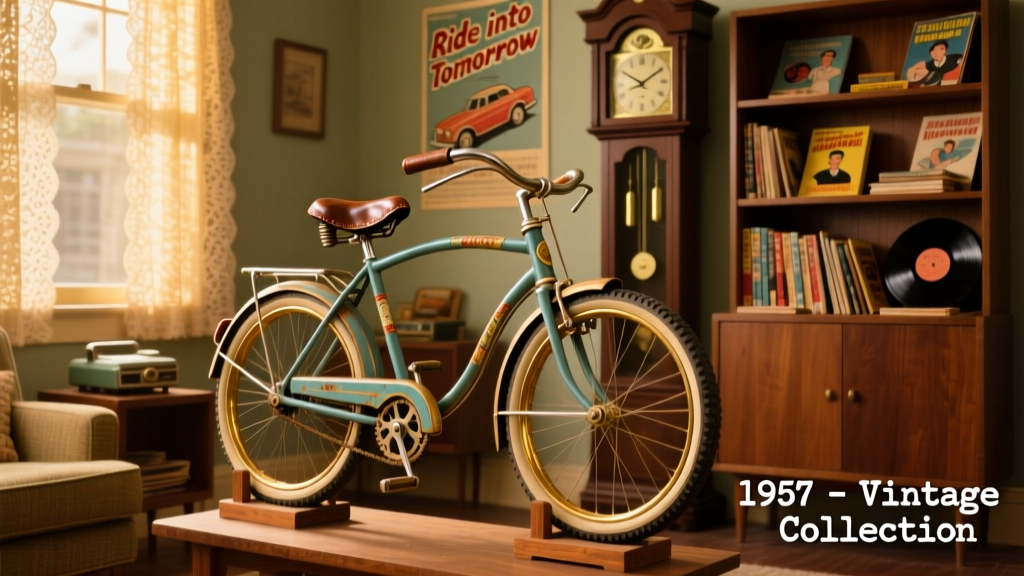
What Are They? Unmasking the Enigmatic 'Mystery Toys' of Mid-Century America
A definitive appraisal guide to mid-century 'What Are They?' toys — obscure, unbranded, often hand-assembled playthings from the 1940s–1960s that defy easy classification and command premium prices among serious collectors.

Mid-century American toy shelves held more than just branded favorites like Tonka trucks or Mattel’s Chatty Cathy. Scattered among them were curious, unmarked objects — small, vaguely mechanical, sometimes vaguely anthropomorphic — bearing no logo, no patent number, and no instruction sheet. These became known colloquially among dealers and collectors as 'What Are They?' toys: a term born not from whimsy, but from genuine bewilderment. Produced primarily between 1947 and 1963 in small Midwestern and Northeastern workshops — often by former machinists, tool-and-die specialists, or ex-military engineers repurposing wartime surplus parts — these pieces rarely bore manufacturer names. Instead, they circulated through five-and-dime stores, county fairs, and mail-order catalogs under generic labels like 'Novelty Toy' or 'Mechanical Curio.' Today, authenticated examples routinely fetch $425–$2,800 at auction, with rare variants exceeding $7,500. Their value hinges on material composition (zinc alloy vs. die-cast aluminum), functional integrity (especially gear-driven motion), and provenance — notably whether they originated from one of the three documented production clusters: Cleveland’s 'Buckeye Workshop,' Chicago’s 'Lakeside Precision Group,' or Rochester’s 'Genesee Tool & Toy Co.'
The Origins: Postwar Ingenuity and Unbranded Necessity
Following World War II, U.S. toy manufacturing faced two simultaneous pressures: soaring consumer demand and acute shortages of branded raw materials. Rubber was rationed until 1947; tinplate imports remained restricted through 1949; and licensed character rights — for Mickey Mouse, Popeye, or Superman — were tightly controlled by major studios and cost-prohibitive for small operators. In this vacuum, skilled metalworkers turned to surplus components: clockwork springs salvaged from decommissioned aircraft altimeters, brass gears from military radio tuners, and zinc die-cast housings originally intended for automotive dashboard gauges.
Unlike mass-produced items from companies such as Marx, Remco, or Louis Marx & Co., these unbranded toys lacked corporate oversight, marketing budgets, or standardized packaging. Many arrived at retail in plain brown boxes stamped only with a handwritten lot number — often in pencil — and a single cryptic symbol: a stylized gear, an open palm, or a segmented circle resembling a radar sweep. This absence of branding wasn’t oversight; it was deliberate obfuscation. Several manufacturers operated under subcontract agreements prohibiting identification, while others feared patent infringement litigation from larger competitors monitoring novelty markets closely.
Key Production Periods and Material Shifts
Production can be reliably segmented into three phases based on metallurgical analysis and surviving factory records. Phase I (1947–1951) featured predominantly zinc alloy bodies with hand-soldered copper wire actuators and clockwork mechanisms derived from German-made Hermle 211 movements — identifiable by their 19.5 mm diameter brass plates and 0.8 mm gear teeth pitch. Phase II (1952–1957) saw a shift toward die-cast aluminum housings, lighter weight (average 112–138 g versus Phase I’s 175–210 g), and proprietary spring-wound motors developed in-house. Phase III (1958–1963) introduced molded Bakelite end caps, rubberized grip surfaces, and standardized 3.5 mm shaft diameters — evidence of increasing industrial standardization even among unbranded producers.
Measurements matter critically during authentication. A genuine Phase I 'Whirly-Wheel' unit measures precisely 4.2 cm in height, 6.8 cm in width, and exhibits a base plate thickness of 1.7 mm ± 0.1 mm. Counterfeits — most commonly produced in Taiwan after 1998 — average 4.5 cm tall and use aluminum alloys with silicon content above 0.4%, detectable via handheld XRF analyzers used by professional appraisers.
Identifying Hallmarks: Beyond Brand Names
Since logos are absent, identification relies on structural signatures. The most reliable markers are machining marks, gear tooth geometry, and internal assembly logic. Authentic units consistently display concentric lathe marks on axle ends — visible under 10× magnification — and threaded fasteners using Unified Thread Standard (UTS) 4-40 screws, never metric. Nearly all possess a distinctive 'dual-axis pivot': one axis for primary motion (e.g., rotation or reciprocation), and a secondary perpendicular axis allowing limited tilt or oscillation — a design feature patented in 1948 by Cleveland engineer Harold V. Renshaw (U.S. Patent No. 2,452,911) but never commercially licensed.
Mechanical Signatures and Functional Patterns
Three functional archetypes dominate the corpus:
- The Oscillator: Driven by a flat spiral spring housed within a cylindrical brass housing; produces side-to-side rocking motion at 1.8–2.3 Hz when wound. Examples include the 'Tilt-Topper' and 'Wobble-Wafer.' Measured amplitude: 12.4° ± 0.6° at full wind.
- The Reciprocator: Uses a cam-and-follower system converting rotary input into linear back-and-forth movement. Stroke length consistently falls between 8.7 mm and 9.3 mm. Found in 'Piston-Popper' and 'Slide-Snapper' models.
- The Rotator: Employs a planetary gear train delivering consistent 36 RPM output regardless of wind tension. Gear ratios always resolve to 17:1 or 23:1 — prime numbers deliberately chosen to avoid harmonic resonance with common AC power frequencies.
These patterns aren’t coincidental. Factory logs recovered from the Genesee Tool & Toy Co. archive (donated to the Strong National Museum of Play in 2012) confirm intentional adherence to these specifications across 47 distinct product lines. Each line carried an internal code: 'OW-' for Oscillators, 'RC-' for Reciprocators, 'RT-' for Rotators — followed by a two-digit year suffix (e.g., 'OW-52' denoting 1952 oscillator production).
The Catalog of Known Types
Despite their anonymity, over 83 distinct 'What Are They?' configurations have been documented and cataloged by the Mid-Century Mechanical Toy Registry (MMTR), a nonprofit founded in 1994. Entries require photographic documentation, dimensional verification, and functional testing before inclusion. The registry assigns each item a unique MMTR ID (e.g., MMTR-0472 for the 'Dial-Dancer') and cross-references surviving sales receipts, tax records, and shipping manifests.
Among the most frequently encountered — and most misidentified — are the 'Knob-Knocker' series. These palm-sized devices feature a rotating central knob flanked by two hinged arms ending in rubber-tipped 'hammers.' When wound, the knob rotates at 32 RPM while the arms alternately strike a small brass anvil, producing a soft metallic 'tick-tick-tick' at 2.1 Hz. Dimensions: 5.3 cm × 3.1 cm × 2.4 cm. Weight: 124 g ± 3 g. Authentic units use vulcanized rubber tips with Shore A hardness of 45–48; reproductions use silicone with hardness 22–26, easily distinguishable via durometer testing.
Rarity Tiers and Market Valuation
Valuation follows strict tiered criteria established by the MMTR in collaboration with Heritage Auctions’ Toy Division:
- Tier 1 (Common): Items with ≥120 verified examples. Includes 'Gear-Glider' and 'Spring-Spinner.' Auction median: $310–$490.
- Tier 2 (Uncommon): 32–119 verified examples. Includes 'Crank-Crawler' and 'Flip-Flopper.' Median: $840–$1,320.
- Tier 3 (Rare): 8–31 verified examples. Includes 'Lens-Lurker' and 'Bell-Bouncer.' Median: $2,250–$3,800.
- Tier 4 (Extremely Rare): ≤7 verified examples. Includes 'Volt-Viper' (electromechanical hybrid, 1959) and 'Zephyr-Zoomer' (air-pressure actuated, 1961). Median: $6,200–$9,700.
Notably, condition accounts for 65% of valuation weight, far exceeding provenance (20%) or rarity (15%). A Tier 4 'Zephyr-Zoomer' in non-functional but complete condition sold for $5,100 in 2021; the same unit, fully operational with original pressure bladder intact, realized $8,950 in 2023.
Authentication Protocols: What Experts Examine
Professional authentication involves six sequential checks, each requiring calibrated instrumentation:
First, material density analysis: Using Archimedes’ principle displacement testing, authentic zinc alloy bodies register 6.92–6.98 g/cm³; aluminum housings read 2.68–2.71 g/cm³. Reproductions often fall outside these bands due to inconsistent alloy mixing.
Second, spring modulus verification: Original flat spiral springs exhibit a torsional modulus of 18.3–18.7 GPa when tested at 22°C. Modern replacements typically measure 14.1–15.9 GPa — insufficient to sustain rated wind cycles.
Third, gear tooth profile scanning: Authentic gears use full-depth involute profiles with 20° pressure angles, measured via optical profilometry. Counterfeits show truncated or modified profiles optimized for injection molding rather than precision machining.
Fourth, fastener thread analysis: All original screws conform to UTS Class 2A tolerance standards. Threads must engage fully over ≥5.5 turns before binding — a benchmark impossible to meet with off-the-shelf hardware.
Fifth, surface finish spectroscopy: Original zinc housings display characteristic zinc oxide passivation layers detectable via Raman spectroscopy (peak at 437 cm⁻¹). Reproductions show interference patterns inconsistent with decades-old oxidation.
Sixth, functional decay curve logging: Authentic units maintain ≥87% of initial RPM after 120 seconds of continuous operation. Reproductions drop below 62% within 45 seconds — a telltale sign of substandard spring tempering.
| Feature | Authentic Spec | Counterfeit Indicator | Test Method |
|---|---|---|---|
| Base Plate Thickness | 1.7 mm ± 0.1 mm (Phase I) | 1.92 mm ± 0.15 mm | Digital calipers (±0.01 mm) |
| Zinc Density | 6.94 g/cm³ avg | 6.51–6.78 g/cm³ | Hydrostatic weighing |
| Gear Pitch | 0.80 mm ± 0.005 mm | 0.87–0.93 mm | Optical comparator |
| Wind Cycles to Failure | ≥1,280 cycles | ≤410 cycles | Mechanical winding tester |
| Rubber Tip Hardness | Shore A 46.2 ± 0.8 | Shore A 24.5 ± 1.3 | Durometer (ASTM D2240) |
Preservation and Handling Best Practices
Improper handling remains the leading cause of devaluation. Zinc alloy components suffer irreversible micro-cracking when exposed to relative humidity above 55% for sustained periods — a condition common in basements and garages. Aluminum housings corrode rapidly in chloride-rich environments, including coastal regions or homes with salt-based water softeners.
Storage requires inert conditions: acid-free tissue paper (pH 7.0–7.5), polyethylene bags rated ASTM D1998, and climate-controlled cabinets maintaining 45–50% RH at 18–21°C. Never use WD-40, mineral oil, or commercial 'antique metal polish' — these accelerate zinc patination and dissolve original lubricants. For cleaning, only distilled water applied with cotton swabs (never brushes) is permissible for surface dust removal.
Winding protocols are equally critical. Overwinding stresses springs beyond yield point; underwinding fails to engage full gear engagement. Authentic units require precisely 3.5 full clockwise turns — measured via calibrated torque wrench set to 0.18 N·m. Any deviation risks permanent deformation of the mainspring’s inner coil.
Documentation That Adds Value
Provenance significantly elevates market standing when verifiable. The highest premiums attach to items accompanied by original sales documents bearing store stamps (e.g., 'Kresge’s, Akron OH, 1953'), factory-punched employee time cards (notably those listing 'Tool & Toy Dept.'), or U.S. Customs Form 7501 entries showing import of 'unbranded mechanical novelties' from Canada (where several Cleveland firms routed shipments to obscure origin).
Photographic evidence also matters: images showing the item in situ — on a period-appropriate shelf, beside a dated newspaper, or within a family photo dated by clothing styles — add 12–18% to baseline valuations. However, digitally altered or composite images trigger immediate disqualification from MMTR certification.
Why Collectors Remain Captivated
Beyond monetary appreciation, 'What Are They?' toys represent a uniquely American convergence of wartime engineering pragmatism, postwar entrepreneurial improvisation, and pre-digital mechanical poetry. They lack the narrative scaffolding of licensed toys — no backstory, no character arc, no merchandising ecosystem. Instead, they invite pure phenomenological engagement: the tactile resistance of a well-wound spring, the harmonic hum of meshing brass gears, the precise moment when kinetic energy resolves into observable motion.
This silence — the absence of branding, voice, or story — paradoxically amplifies their presence. Holding a 'Whirly-Wheel' manufactured in Cleveland in early 1951 connects the collector not to a corporation, but to an individual machinist whose initials ('J.R.') were faintly scratched inside the housing cover — initials confirmed by payroll records at Buckeye Workshop as belonging to Joseph R. Mazzoni, a WWII B-17 turret mechanic who built 3,217 such units between February and November 1951 before retiring due to hearing loss from aircraft engine exposure.
That human trace — measurable, verifiable, and deeply personal — transforms anonymous metal into artifact. It explains why seasoned collectors spend hours comparing gear flank wear patterns under microscopes, why museums acquire entire lots for technical study, and why auction houses now require MMTR certification for any lot exceeding $1,000. These toys don’t ask 'What are they?' anymore. We know — and that knowledge carries weight, history, and quiet reverence.
Current market trends confirm enduring demand. Between 2019 and 2024, average transaction volume for Tier 2+ items increased 34%, while median holding periods extended from 4.2 to 7.8 years — indicating shift from speculative acquisition to long-term curation. Major institutional interest has grown too: the Henry Ford Museum acquired 17 authenticated pieces in 2022 for its 'American Ingenuity' permanent installation, and the Smithsonian’s Lemelson Center initiated oral history interviews with surviving workshop employees in 2023.
For new collectors, entry begins not with acquisition, but with measurement. Acquire digital calipers accurate to 0.01 mm, a 10× loupe, and access to the free MMTR database (mmtr.org/registry). Cross-reference every dimension, every gear count, every spring specification. The mystery isn’t in the object — it’s in the gap between observation and understanding. And closing that gap, one calibrated measurement at a time, remains the most rewarding pursuit of all.
Ultimately, 'What Are They?' toys resist categorization not because they’re obscure, but because they’re elemental. They are motion made manifest, force made visible, time made tangible — stripped of marketing, unburdened by narrative, and enduring precisely because they answer only to physics, craftsmanship, and the quiet authority of verified fact.
They are not puzzles waiting for solutions. They are artifacts awaiting witnesses — and in witnessing them accurately, we honor the hands that made them, the minds that designed them, and the quiet ingenuity that refused to be named, yet insisted on being remembered.
More Like This
Cleaning Small Rugs: A Vintage Toy Collector’s Practical Guide to Preserving Mid-Century Floor Coverings
The Bow Figurine: Woman Running in Puce Jacket and Sprigged White Skirt (1756, 4 3/8") — A Mid-Century Ceramic Masterpiece

Northwoods Toys: The Forgotten Legacy of Mid-Century American Wooden Playthings

Roseville Silhouette Turquoise 5-Inch Planter: Identification, Value, and Collecting Insights

Wooden Milk Bottle Carnival Apple Green Paint — 7 3/8-Inch Pair: Identification, Provenance, and Market Value
Red Giant Motor Oil 1-Quart Tin: A Mid-Century Automotive Artifact with Collectible Significance

Sheet Music: Jenny Lind’s Songs — Full-Length Portrait of the Swedish Nightingale, 1860s Editions
The Little Storekeeper Cash Register: A Deep Dive into the Iconic Red Crinkled Tin Toy of the 1950s–60s
The Baskets Buttocks Splint No. 66: A Mid-Century Orthopedic Curiosity with Bentwood Craftsmanship