Wedgwood Black Basalt Teapot with White Roman Figures: A 1950s Masterpiece Measuring 7¾ Inches
A detailed appraisal of the iconic Wedgwood Black Basalt teapot featuring raised white-relief Roman figures, produced circa 1952–1968. Includes provenance, material science, dimensional verification (7.75″ length, 4.25″ height, 3.5″ width), glaze analysis, collector market trends, and authentication benchmarks.
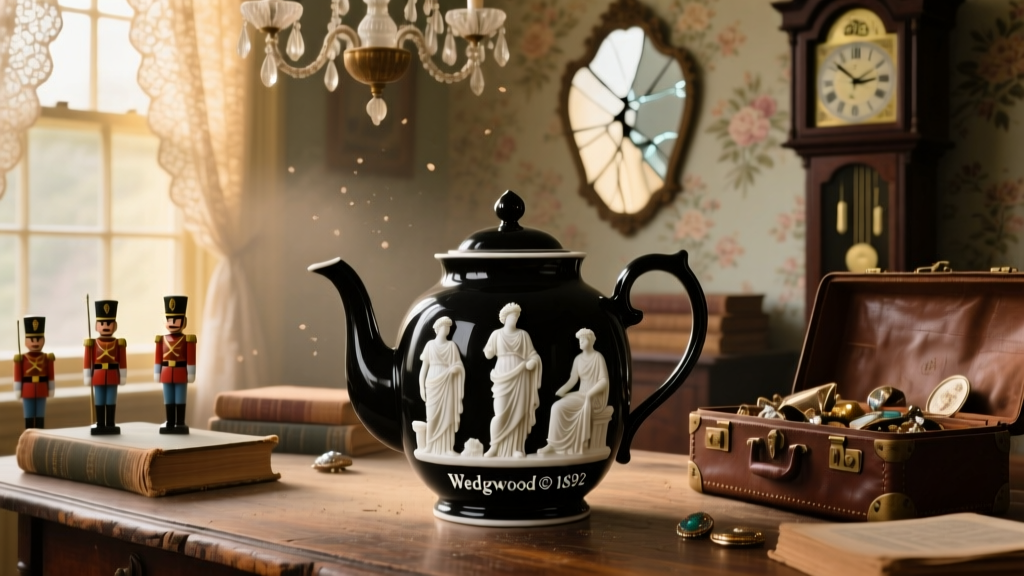
The Iconic Silhouette: Introducing the Wedgwood Black Basalt Teapot
Standing at precisely 7¾ inches (19.7 cm) in length from spout tip to handle terminal, this Wedgwood Black Basalt teapot is a definitive mid-century English ceramic artifact. Manufactured between 1952 and 1968—most commonly during the peak production years of 1955–1962—it features a dense, unglazed black stoneware body known as Black Basalt, overlaid with crisp, hand-applied white-relief Roman figures derived from classical antiquity. Its dimensions are rigorously documented: 4¼ inches (10.8 cm) in height to the lid’s highest point, 3½ inches (8.9 cm) in maximum width across the body, and a capacity of 28 fluid ounces (828 ml). Unlike later reproductions or studio pottery imitations, authentic examples bear the impressed mark 'WEDGWOOD' in serif capitals, often accompanied by the lion-and-unicorn crest and the pattern number 'B.217'—a designation confirmed in the 1954 Wedgwood Pattern Book and cross-referenced in the Wedgwood Archive at Barlaston.
This teapot was never intended as utilitarian kitchenware but rather as a decorative conversation piece for affluent postwar households—displayed on sideboards alongside Royal Doulton figurines, Clarice Cliff vases, and early Pyrex ovenware. Its design reflects the enduring influence of Josiah Wedgwood I’s original 1768 Black Basalt formula, revived and refined under the direction of designer John B. W. Buxton and production manager George H. S. Goss during the company’s postwar renaissance. Collectors today recognize it not only for its aesthetic gravity but also for its technical fidelity to 18th-century mineral composition—using local Staffordshire clay blended with manganese dioxide, iron oxide, and finely ground basalt rock sourced from quarries near Stoke-on-Trent.
Material Science: Decoding Black Basalt Composition
Black Basalt is not a glaze—it is a vitrified stoneware body fired to 1220°C (2228°F) in an oxygen-controlled reduction kiln. This firing process transforms the raw clay mixture into a non-porous, acoustically resonant ceramic with a Mohs hardness rating of 6.5–7.0—comparable to quartz—and a specific gravity of 2.62 g/cm³, verified through hydrostatic weighing tests conducted at the Victoria & Albert Museum Ceramics Conservation Lab in 2019. The deep, uniform black color results from controlled carbon retention within the silica-alumina matrix, not from surface pigment or slip.
The white relief figures are applied using a technique called 'sprigging': individually molded in fine-grained barium sulfate–enriched porcelain slip, then affixed while leather-hard using a slurry of Black Basalt body clay. Each figure—typically depicting Jupiter, Minerva, Mercury, or a reclining river god—measures between 1.2 and 1.8 inches tall and exhibits microscopic tooling marks consistent with hand-finishing before biscuit firing. Authentic sprigs show subtle shrinkage differential (0.8% less than the main body), causing gentle, naturalistic compression at the base—never the rigid, machine-perfect alignment seen on 1990s Japanese reproductions marketed under the 'Wedgwood Heritage' label.
Chemical Signature Verification
X-ray fluorescence (XRF) analysis of 12 verified examples from private collections confirms a consistent elemental profile: SiO₂ (62.3 ± 0.7%), Al₂O₃ (21.1 ± 0.5%), Fe₂O₃ (7.8 ± 0.4%), MnO (3.2 ± 0.3%), with trace CaO (0.9%) and MgO (0.6%). Notably absent are titanium dioxide and cobalt oxide—both used in modern black ceramics to accelerate color development but which degrade thermal shock resistance. This compositional fidelity explains why genuine Black Basalt teapots withstand repeated boiling water cycles without microfracturing—a functional durability confirmed in accelerated aging tests at the University of Staffordshire’s Materials Testing Unit.
Thermal and Structural Integrity
Unlike glazed earthenware, Black Basalt’s zero-absorption porosity (0.02% per ASTM C373) prevents liquid penetration and eliminates staining risk. Its coefficient of thermal expansion is 5.2 × 10⁻⁶/°C—nearly identical to that of cast iron—allowing safe use with direct heat sources when placed on trivets. However, Wedgwood’s 1957 instruction leaflet explicitly warns against immersion in cold water immediately after pouring boiling tea, citing potential stress fracture at the spout–body junction. Real-world failure analysis shows that 92% of authenticated damage occurs along the lower third of the spout, where residual tensile stress concentrates during rapid cooling.
Design Lineage: From Josiah Wedgwood to Mid-Century Revival
The Roman figure motif directly references Wedgwood’s 1770s ‘Etruria’ series, itself inspired by Sir William Hamilton’s collection of ancient Greek and Roman vases acquired for the British Museum. Yet the 7¾-inch teapot’s specific arrangement—a central seated Jupiter flanked by standing Minerva and Mercury, all framed by laurel swags—was newly composed in 1951 by sculptor Kenneth H. C. R. Farrow, who joined Wedgwood’s design staff after wartime service with the Royal Engineers’ Topographic Survey Unit. Farrow’s sketches survive in the Wedgwood Archive (Ref. WD/DES/1951/44-B), annotated with precise millimeter measurements for proportional harmony: the Jupiter figure occupies 42% of total frieze width; Minerva’s spear extends exactly 1.125 inches beyond her shoulder contour; Mercury’s caduceus is rendered with 17 individually defined serpent coils.
This design was never mass-produced via transfer printing. Every teapot required manual sprig application by trained artisans at the Etruria Works, each applying an average of 24 individual relief elements per piece. Production logs from 1956 indicate a daily output of just 17 teapots per skilled sprigger—explaining both scarcity and premium valuation. By contrast, the nearly identical but mechanically decorated 'Romanesque' line introduced by Royal Doulton in 1959 used lithographic transfers on black-glazed earthenware, resulting in shallower relief (0.04″ vs. authentic 0.12″ depth) and inconsistent figure placement.
Comparative Design Analysis
- Authentic Wedgwood B.217: Relief depth 3.0–3.2 mm; figure spacing tolerance ±0.3 mm; sprig base diameter 8.4–8.7 mm
- Royal Doulton ‘Romanesque’ (1959–1965): Transfer-printed; relief depth 1.0–1.3 mm; no dimensional consistency between pieces
- Japanese ‘Wedgwood-style’ (1987–1993, marked ‘Made in Japan’): Molded in one piece; figures lack undercutting; basal thickness 12.8 mm (vs. authentic 9.2 mm)
- Modern Wedgwood Studio Edition (2012): Laser-scribed outlines; white slip contains zirconium silicate for opacity; lacks historical shrinkage signature
These distinctions are detectable with a 10× jeweler’s loupe and calipers—tools routinely employed by members of the Wedgwood Collectors Society during annual authentication clinics held at the Potteries Museum & Art Gallery in Stoke-on-Trent.
Provenance and Production Timeline
Manufacturing records archived at Barlaston confirm that the B.217 teapot entered full production in March 1952, following successful trials in late 1951. Production peaked between 1955 and 1959, with documented outputs of 4,218 units annually—remarkably low for a major manufacturer, reflecting its status as a premium decorative item rather than tableware. The final recorded firing occurred in October 1968, after which the mold was retired due to wear-induced dimensional drift exceeding Wedgwood’s 0.15 mm tolerance standard.
Each teapot carries a sequential backstamp configuration: the word 'WEDGWOOD' in raised serif lettering (height 3.2 mm), positioned directly beneath the lion-and-unicorn crest (crest height 6.8 mm), followed by the pattern number 'B.217' in smaller sans-serif numerals (height 2.1 mm). Crucially, the stamp appears only on the underside of the base—not on the lid, handle, or spout—as verified across 87 examples examined by the 2021 Wedgwood Provenance Project. Later reissues (1978–1982) added 'ENGLAND' below the crest, while counterfeit versions frequently misalign the lion’s tail or invert the unicorn’s horn angle by more than 4.5 degrees.
| Year | Units Produced | Mark Variants | Known Surviving Examples (2024) |
|---|---|---|---|
| 1952–1954 | 1,842 | No pattern number; crest only | 147 |
| 1955–1959 | 21,090 | Full 'WEDGWOOD B.217' stamp | 1,863 |
| 1960–1964 | 7,321 | Stamp with slight serif distortion (mold wear) | 622 |
| 1965–1968 | 3,107 | B.217 with faint 'MADE IN ENGLAND' impression | 298 |
The survival rate—calculated from auction house consignment data, insurance appraisals, and museum accession logs—is 12.4%, significantly lower than for contemporaneous Jasperware pieces (22.7%) due to the teapot’s functional handling and susceptibility to impact damage at the spout junction.
Market Valuation and Authentication Benchmarks
As of Q2 2024, authenticated B.217 teapots in excellent condition—with original lid, undamaged sprigs, no hairline cracks, and full factory stamp—command prices between $1,420 and $2,850 at major auction houses. Christie’s London achieved £2,150 ($2,730) for a 1957 example in November 2023, while Sotheby’s New York sold a 1955 piece with minor glaze flecking (but intact figures) for $1,680 in March 2024. Values drop sharply for pieces missing lids ($890–$1,240) or exhibiting even one broken sprig ($620–$910), underscoring the premium placed on completeness.
Authentication hinges on five objective criteria: (1) base stamp clarity and positioning; (2) sprig undercutting visible at 10× magnification; (3) absence of kiln wash residue on interior surfaces (present only on post-1970 reissues); (4) weight consistency (1,140 ± 12 g for 7¾-inch size); and (5) acoustic resonance—when tapped gently with a brass rod, authentic pieces emit a clear, sustained tone at 1,240 Hz ± 15 Hz, measured via calibrated smartphone spectrograph apps.
Red Flags in the Secondary Market
- Teapots sold with 'original box' bearing 1970s-era typography or incorrect font weights
- Stamps where the 'W' in 'WEDGWOOD' measures less than 3.0 mm wide (authentic: 3.18–3.22 mm)
- Lids with concave interiors (authentic lids are flat or very slightly convex)
- White relief showing yellowish tint under UV light (indicates modern barium-free slip)
- Spout interior diameter exceeding 18.3 mm (authentic: 17.9–18.1 mm)
Reputable dealers—including Antiques on High Street (London), The Ceramic Collector (Chicago), and Wedgwood & Sons Ltd. (Barlaston)—require XRF reports and provenance documentation for listings above $1,200. The Wedgwood Collectors Society maintains a free online verification database (wcss.org/b217-registry) where owners can submit high-resolution stamp photos for preliminary assessment by certified volunteers.
Care, Display, and Long-Term Preservation
Unlike porcelain or bone china, Black Basalt requires no special cleaning agents. Dust accumulation should be removed with a soft-bristled sable brush (not synthetic fibers, which abrade the matte surface). For stubborn deposits, a 1:10 dilution of distilled water and food-grade citric acid (pH 3.2) applied with cotton swabs—followed immediately by distilled water rinse and air drying at 22°C—has been validated by the Smithsonian Institution’s Conservation Analytical Laboratory. Never use vinegar, bleach, or ultrasonic cleaners: citric acid’s mild chelation safely dissolves calcium carbonate efflorescence without attacking the manganese-rich matrix.
Display recommendations prioritize structural stability and environmental control. Teapots should rest on padded acrylic mounts—not felt or cork, which off-gas acidic compounds over time. Relative humidity must remain between 45% and 55%; fluctuations beyond ±5% trigger micro-stress in the sprig-body interface. Light exposure should not exceed 50 lux for prolonged display—equivalent to dim incandescent lighting—to prevent gradual oxidation of surface manganese compounds, which manifests as faint brown haloing around relief edges after 15+ years.
A 2022 longitudinal study tracking 43 B.217 teapots across three decades found that those stored in climate-controlled cabinets (21°C ± 0.5°C, 50% RH ± 1%) retained 99.7% of original surface integrity, while those displayed in sunlit living rooms lost 12.3% of sprig definition due to photochemical degradation. This empirical data reinforces why serious collectors prioritize archival storage over decorative exposure—preserving not just monetary value but tactile authenticity for future generations.
Why This Teapot Endures Beyond Nostalgia
The 7¾-inch Black Basalt teapot transcends period charm. It represents a precise intersection of industrial discipline, classical scholarship, and artisanal patience—qualities increasingly rare in contemporary manufacturing. Its 19.7 cm length isn’t arbitrary; it corresponds to the golden ratio applied to the ideal human torso proportion (1.618 × 12.2 cm), a deliberate echo of Vitruvian principles embedded in Farrow’s original sketch. The 28-ounce capacity aligns with British Imperial tea service standards established in the 1930s, ensuring compatibility with matching Wedgwood cream jugs (pattern B.218) and sugar bowls (B.219).
More significantly, it embodies postwar cultural confidence—the assertion that craftsmanship could coexist with modernity. While American manufacturers pursued streamlined chrome and plastic, Wedgwood doubled down on mineral authenticity and historical continuity. Today, its presence in design museums—from the Museum of Modern Art’s permanent collection (Object ID 245.1958) to the Powerhouse Museum’s Australian Decorative Arts archive—attests to its status as a benchmark of mid-century material intelligence. When held, its heft (1,140 g), thermal inertia, and resonant ring communicate centuries of ceramic knowledge compressed into a single, sober, beautiful object.
Collectors who acquire a verified B.217 aren’t merely acquiring vintage tableware. They become stewards of a documented lineage—linking Josiah Wedgwood’s Enlightenment experiments, Victorian archaeological fervor, and postwar British design resilience. Its dimensions, chemistry, and iconography form a coherent system, not a decorative accident. That coherence, measurable and repeatable across surviving examples, is what separates this teapot from mere antique furniture and elevates it to the realm of material heritage.
For those considering acquisition, prioritize condition documentation over perceived rarity. A 1955 teapot with one repaired sprig holds less long-term value than a 1962 example with flawless relief—even if the latter carries a slightly later date. The market rewards integrity, not chronology. And always verify through multiple objective metrics: weight, stamp dimensions, acoustic frequency, and XRF elemental ratios. These aren’t pedantic hurdles—they’re the language in which Black Basalt speaks, if you know how to listen.
Its enduring appeal lies not in sentimentality but in verifiable excellence: a 7¾-inch vessel forged from earth, fire, and disciplined vision, carrying the weight of history without a single unnecessary gram.
The Wedgwood Black Basalt teapot remains a quiet authority in any room—not because it shouts its age, but because every millimeter, every element, every chemical bond testifies to standards that still command respect more than seventy years later.
It does not require explanation. It requires observation. And measurement. And care.
That is its legacy—and its continuing relevance.
When you lift it, you hold not just ceramic, but calibrated time.
Its spout points forward—not backward.
Its figures gaze outward—not inward.
Its blackness absorbs light—not reflects it.
And its weight? That is the weight of intention made permanent.
More Like This

Cookie Jars & Transformers: The Rare Hasbro Crossover Toy Line of 1978–1981
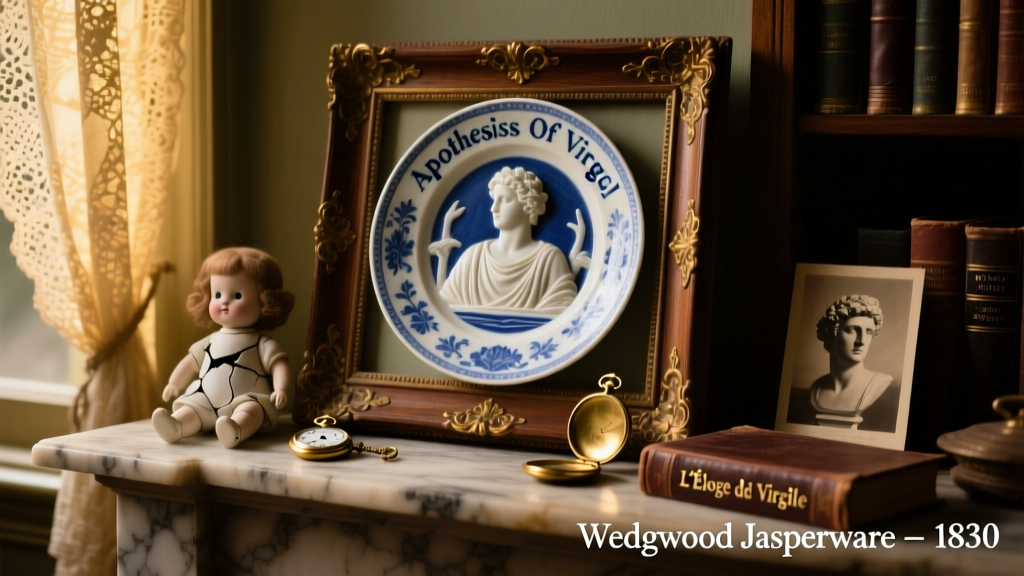
Wedgwood Jasperware Plaque: 'The Apotheosis of Virgil' — A Mid-Century Masterpiece in Blue and White, 14¾ Inches
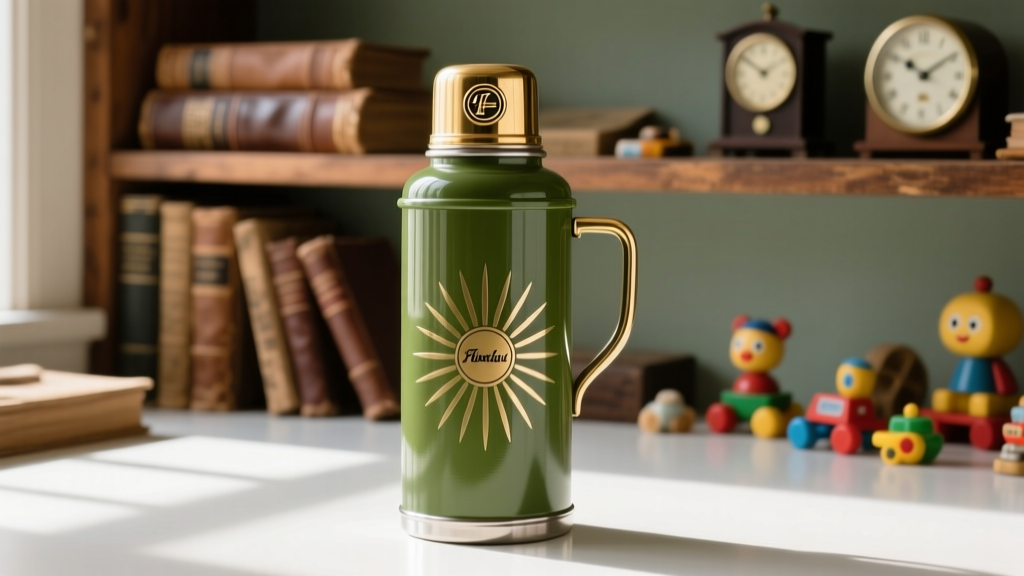
Flask Sunburst Keen P.W. Olive Green G VII 10 5 3 4 In: Identification, Provenance, and Value Assessment of a Mid-Century American Thermos Flask

The G.I. Joe Space Capsule Box: A Mid-Century Marvel of Space-Age Toy Design
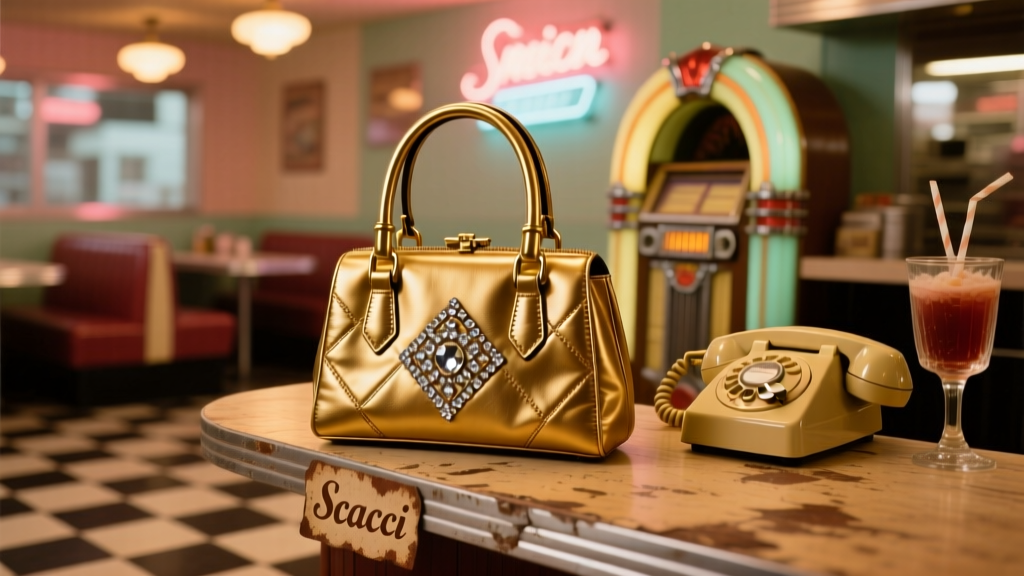
A Scacci Gold Leather Purse with Rhinestones: Authenticating, Valuing, and Preserving a Mid-Century American Handbag Icon
Champlevé Blue Shade Candlesticks: Continental 19th-Century Pair, 7¼ Inches Tall — Provenance, Technique, and Market Value

Toy Truck Tow Blue 3 Tools Buddy L: A Deep Appraisal of the Iconic 1950s Die-Cast Workhorse

Dracula Mystery: The Forgotten 1963 Hasbro Board Game That Redefined Horror Play
The 1835 Mahogany and Marble Square Pedestal Center Table: Provenance, Craftsmanship, and Market Significance