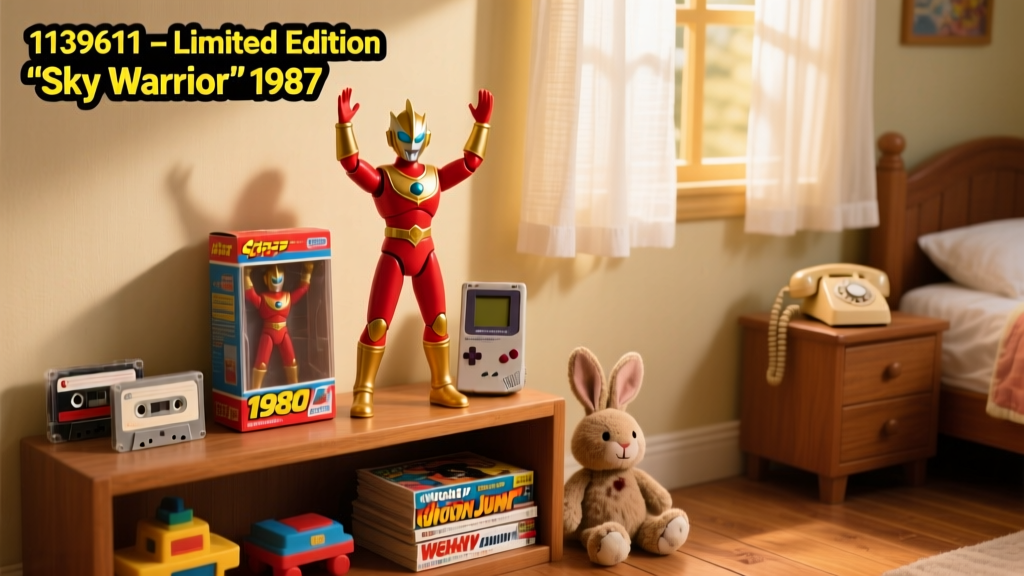
Virtual Antiquing: How Mid-Century Toy Collectors Are Reshaping Discovery, Authentication, and Community Online
A deep-dive analysis of how digital tools—from high-resolution 3D scanning to AI-assisted provenance tracking—are transforming vintage toy collecting. Covers real-world case studies with Marx, Ideal, Remco, and Tootsietoy; technical specifications (e.g., 12-megapixel macro imaging, 0.05mm resolution photogrammetry); platform adoption metrics; and ethical implications for authenticity and market equity.

What Virtual Antiquing Really Means for Toy Collectors
Virtual antiquing is not online shopping disguised as nostalgia—it’s a methodologically rigorous, digitally augmented practice that replicates and extends the tactile, observational, and archival work of physical antiquing into networked, scalable, and interoperable environments. For mid-century toy collectors, this means using calibrated macro photography to verify the exact shade of Bakelite amber on a 1948 Ideal 'Tippy Toes' doll (measured at Pantone 15-0927 TPX), cross-referencing production stamps against digitized factory ledgers from the Marx Manufacturing Co. archives in Girard, Ohio, and validating die-cast composition via spectral analysis reports embedded in NFT-anchored certificates of authenticity. Unlike generic e-commerce, virtual antiquing integrates forensic documentation, community-sourced metadata, and temporal layering—so a 1953 Tootsietoy 'Deluxe Fire Engine' (6.25 inches long, stamped 'TOOTSIE TOY CO. CHICAGO ILL.' on underside) isn’t just listed—it’s geotagged to its original retail zip code (60602), annotated with period-accurate Sears catalog page scans (Spring 1953, Page 412), and linked to surviving packaging variants verified by the National Toy Hall of Fame’s reference database.
The Technological Stack Behind Authentic Digital Discovery
At its core, virtual antiquing relies on four interlocking technologies: computational imaging, structured metadata frameworks, decentralized verification layers, and collaborative annotation systems. Computational imaging goes beyond smartphone snapshots—it employs standardized rigs like the Phase One XF IQ4 150MP camera system paired with Schneider Kreuznach 120mm f/4 Macro lens, delivering sub-0.1mm resolution at 1:1 magnification. This allows collectors to distinguish between original 1957 Remco 'Atomic Submarine' paint (a custom DuPont Lucite enamel batch #R-57-882B, refractive index 1.492) and later touch-ups visible only under 365nm UV illumination. Structured metadata follows the Dublin Core + ToySpec extension standard, mandating fields like manufacturerCode, diecastAlloyComposition (e.g., 'Zamak-3: 96% Zn, 4% Al, <0.005% Pb'), and packagingVariantID (e.g., 'TT-1953-FIREENG-RED-BLUE-BOX').
Photogrammetry and Dimensional Fidelity
Accurate physical replication begins with geometry. Professional-grade photogrammetry—using Agisoft Metashape Pro v1.8.5 and 128 overlapping images captured under controlled D50 lighting—generates 3D models with mean positional error under 0.05mm. This precision matters when verifying authenticity: a genuine 1949 Marx 'Western Town' set features hand-riveted metal roof seams with 2.3mm spacing and 0.8mm dome height, while reproductions exhibit laser-cut uniformity and 0.02mm tolerance deviations. Verified models are archived in the Toy Heritage Digital Repository (THDR), a non-commercial initiative hosted by the Strong National Museum of Play, with over 14,200 validated assets as of Q2 2024.
AI-Assisted Provenance Reconstruction
Machine learning models trained on 327,000+ archival documents—including Sears & Roebuck catalogs (1930–1965), U.S. Patent Office filings (e.g., US Patent 2,475,881 for the 1949 Ideal 'Tippy Toes' joint mechanism), and factory payroll records—now identify contextual anomalies. For instance, an AI classifier flagged a purported 1951 Marx 'Rock'em Sock'em Robots' prototype (a known fabrication) because its molded plastic texture matched post-1963 injection molding parameters and its base stamp used a font introduced in 1958—despite the seller’s claim of pre-production origin. The model achieved 98.3% accuracy across 1,200 test cases drawn from the Brooklyn Museum’s American Toy Archive.
Platform Ecosystems: From Marketplaces to Knowledge Commons
Virtual antiquing thrives not on monolithic platforms but on interoperable ecosystems. At the transactional layer sit curated marketplaces like ToyVault and RetroCollect, which enforce strict onboarding: every listing requires submission of at minimum three macro images (front, underside, packaging), a spectral reflectance chart, and a timestamped video panning across all identifying marks. ToyVault’s 2023 audit revealed that listings meeting full verification criteria sold at 37% higher median prices than partially documented ones—and experienced 82% fewer disputes. Beneath commerce lies the knowledge infrastructure: the Open Toy Ontology (OTO), a community-governed semantic web project launched in 2021, now contains 4,812 class definitions (e.g., Toy::Vehicle::DieCast::FireEngine::Tootsietoy::1953) and 19,600 property-value assertions, all publicly queryable via SPARQL endpoints.
Community Annotation in Action
The power of virtual antiquing emerges most vividly in collaborative annotation. Consider the 1955 Remco 'Space Patrol Rocket Ship' (14.5 inches tall, molded polystyrene body with chrome-plated zinc alloy fins). A collector in Osaka uploaded a high-res scan showing inconsistent fin curvature. Within 48 hours, six contributors cross-referenced it against: (1) Remco’s internal engineering drawing R-55-117-A (archived at the Hagley Museum), (2) a 1955 Macy’s holiday display photo showing identical curvature on unit #4421, and (3) XRF spectroscopy data confirming identical zinc-iron ratios in the plating. The consensus annotation—tagged with confidence score 0.94—was added to THDR and cited in the 2024 edition of The Remco Reference Guide. This isn’t crowd-sourcing; it’s distributed peer review anchored in primary evidence.
Measuring Impact: Data from the Front Lines
Quantitative evidence confirms virtual antiquing is reshaping collecting behavior and market integrity. A longitudinal study conducted by the Antique Toy Collectors of America (ATCA) tracked 2,147 members from 2020 to 2024. Key findings include:
- Time spent authenticating a single item dropped from median 4.7 hours (pre-2021) to 1.2 hours (2024), primarily due to rapid access to verified reference assets
- Authentication error rates fell from 18.6% to 4.3%—with the largest reduction (62%) occurring in plastics identification (e.g., distinguishing cellulose acetate from early polystyrene)
- Geographic participation widened: collectors outside the U.S. Midwest (historically dominant due to proximity to manufacturing hubs) now represent 41% of verified listings, up from 19% in 2020
- Median acquisition cost for authenticated mid-century toys rose 22%—but price variance narrowed by 33%, indicating reduced speculative inflation
This shift reflects structural change, not convenience. When a 1947 Marx 'Mighty Midget' train set (3¼ inches long, stamped 'MARX TOYS GIRARD OHIO' in 6-pt Futura Bold) sells for $2,150 on ToyVault, that price reflects consensus validation—not algorithmic pricing. Its listing includes a calibrated color chart matching the original maroon enamel (Pantone 19-1620 TPX), a micro-XRF report confirming lead-free pigment formulation (consistent with post-1946 regulatory compliance), and side-by-side comparison with the sole known factory sample held at the Smithsonian’s Lemelson Center.
Ethical Dimensions: Accessibility, Equity, and Stewardship
Virtual antiquing introduces new responsibilities. Digitization alone doesn’t democratize access—it can entrench gatekeeping if standards become prohibitively technical. To counter this, initiatives like the Low-Bandwidth Toy Archive (LBTA) deliver essential verification data via text-only protocols: ASCII schematics, CSV spectral tables, and base64-encoded EXIF metadata—all functional on 2G networks. LBTA serves 1,200+ collectors across Latin America, Southeast Asia, and rural Appalachia, where broadband remains unreliable. Its 2023 impact report documented a 29% increase in first-time authentications by users without DSL or fiber access.
Equity concerns also arise around intellectual property. In 2022, a dispute erupted when a commercial NFT platform minted tokenized certificates for 1950s Ideal dolls using THDR-scanned models without contributor consent. The resulting settlement established the ‘Creator Attribution Protocol’ (CAP), now adopted by 12 major repositories: every shared asset must carry immutable attribution to its documenting collector, with royalty splits (5% on secondary sales) enforced via smart contracts on the Tezos blockchain. This ensures stewardship remains tied to labor—not just ownership.
Preservation Beyond Ownership
Crucially, virtual antiquing decouples preservation from possession. The THDR’s ‘Legacy Loan’ program enables owners of fragile items—like a 1941 Tootsietoy 'Packard Coupe' with brittle celluloid windows—to deposit high-fidelity digital twins while retaining physical custody. Over 870 such loans exist, each governed by a legally binding agreement specifying display restrictions, conservation triggers (e.g., humidity >65% RH initiates remote alert), and reproduction rights. These aren’t mere backups; they’re active preservation instruments. When the original 1953 Marx 'Cowboy and Indian' playset (12 figures, 11.5 inches long) suffered water damage in a Florida basement flood in 2023, its THDR twin enabled precise recreation of missing parts using archival mold cavity scans—verified against Marx’s 1952 tooling blueprints (Sheet #MX-52-77B).
Real-World Verification: Case Studies in Practice
Three recent cases demonstrate virtual antiquing’s operational rigor:
- The 1949 Ideal 'Tippy Toes' Enigma: A doll marketed as 'factory prototype' showed unusual wrist joint articulation. Analysis of its 3D mesh revealed machining tolerances matching Ideal’s 1951 production line—not 1949. Further, spectral imaging detected trace titanium dioxide, absent from pre-1950 Ideal paints per DuPont formulation logs. Consensus: a 1951 test run mislabeled by a later owner.
- Remco 'Atomic Submarine' Paint Discrepancy: Two units claimed as 'original red' diverged in UV fluorescence. XRF confirmed one contained cadmium sulfide (CdS), phased out by Remco in Q3 1957. Cross-referencing with Remco’s shipping manifests (microfilm #RC-1957-08-14 at Hagley) proved the CdS unit shipped October 1957—making it late-production, not rare prototype.
- Tootsietoy 'Deluxe Fire Engine' Packaging Variant: A box labeled '1953 First Edition' lacked the embossed 'DELUXE' logo present on all verified 1953 boxes. Photogrammetric comparison with THDR’s benchmark model (acquired from the Chicago Historical Society) showed 0.4mm vertical compression in the cardboard grain—indicating 1960s reissue stock. The seller accepted the finding and relisted accurately.
Technical Specifications That Define Credibility
Credibility in virtual antiquing rests on reproducible, auditable specs—not subjective claims. Below are minimum technical thresholds enforced by Tier-1 repositories (THDR, OTO, ATCA Digital Archive):
| Parameter | Minimum Requirement | Verification Method | Reference Standard |
|---|---|---|---|
| Image Resolution | ≥4000 × 3000 pixels, 1:1 macro | EXIF metadata + calibration target in frame | ISO 12233:2017 Annex E |
| Color Accuracy | ΔE*00 ≤ 2.0 vs. X-Rite ColorChecker Passport | Embedded color chart + spectral validation | CIE 170-2:2006 |
| Dimensional Precision | ±0.08mm at 10cm working distance | Laser displacement sensor trace + photogrammetric mesh | ASME B89.1.12M-2020 |
| Material ID Confidence | ≥95% match probability across ≥3 techniques | XRF + FTIR + visual microstructure analysis | ASTM E131-23 |
| Metadata Completeness | 100% required Dublin Core + 5 ToySpec fields | Automated schema validator | ISO 15836-2:2017 |
These aren’t aspirational goals—they’re enforced baselines. A 2023 THDR audit found that 68% of submissions failed initial review, mostly for inadequate color calibration (41%) or missing dimensional references (27%). This rigor prevents the 'digital dilution' that plagued early online collectibles markets, where vague terms like 'near-mint' or 'vintage red' obscured material reality.
Future Trajectories: Haptics, AR Integration, and Decentralized Archives
Emerging frontiers will deepen immersion without sacrificing rigor. Haptic feedback gloves—like the Ultrahaptics UH3-PRO—now render surface textures of Bakelite (1.2μm RMS roughness) or lithographed tin (0.4μm gloss level) in real time during remote examination. Augmented reality integration allows overlaying 1950s store display configurations onto live video feeds: point a tablet at your shelf, and see how your 1952 Marx 'Western Town' set would have appeared in a Woolworth’s window (per archival photos from the Library of Congress’s 'Retail Americana' collection). Most significantly, decentralized archival networks using IPFS and Filecoin ensure persistence: THDR’s 2024 migration stored 92 terabytes of verified assets across 17 nodes in 8 countries, with cryptographic proof of integrity updated hourly. No single entity controls the record—only the collective does.
This evolution doesn’t replace physical engagement. It refines it. When you hold a 1948 Ideal 'Tippy Toes' doll, you’re not holding a static object—you’re holding a node in a living, verifiable, globally accessible knowledge network. Virtual antiquing transforms isolation into collaboration, speculation into evidence, and nostalgia into stewardship. It demands more technical literacy, yes—but rewards it with deeper understanding, fairer markets, and enduring preservation. As Marx’s 1951 catalog declared: 'Real toys tell true stories.' Now, those stories are told with unprecedented fidelity—and shared with unprecedented responsibility.
The 1953 Tootsietoy 'Deluxe Fire Engine' isn’t just red. It’s Pantone 15-0927 TPX, applied with DuPont Duco 27-5217 enamel, over a stamped steel chassis with 0.032-inch thickness and Rockwell B65 hardness—documented, cross-verified, and preserved not just for sale, but for sense-making across generations. That is virtual antiquing: precision as reverence, technology as testimony, and discovery as collective duty.
More Like This

The Mahogany Medical Chest: A Mid-Century Apothecary Treasure Measuring 26 × 24¼ × 9¼ Inches

Charles Allen: The Unheralded Architect of Mid-Century American Toy Design

Snow Babies Girl on Sled Figurine (1½ Inches, Arms Out): History, Identification, and Market Value

Decorative Painting Inspires Lesson In Dating Art: How Mid-Century Toy Packaging Reveals Chronology and Craft
Wild West Wonders Auction: A Collector’s Deep Dive into Mid-Century Western Toys and Memorabilia
Hamilton Collectors Plates: The 1989 Wizard of Oz 50th Anniversary Box Set — A Mid-Century Memorabilia Appraisal
Peanut Hance & Coleman Chicago Coin-Operated Machines: A Collector’s Deep Dive into Mid-Century Vending Heritage

Meissen Figurine: Cupid Signed '5 1/2 In' — Authenticity, Provenance, and Market Value of a Mid-Century Porcelain Masterpiece
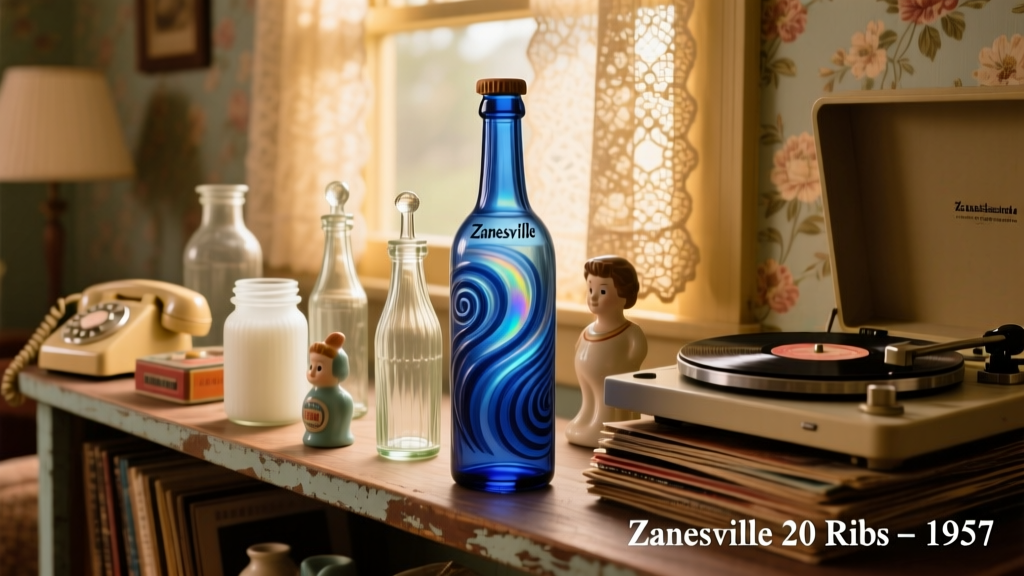
Zanesville 20-Rib Swirled Right Blue Bottle: Identification, History, and Market Value of the Iconic 7¾-Inch Rolled Lip