The Vilert Enamel Vase: Mid-Century Modern Icon, Craftsmanship, and Collector’s Market
A detailed appraisal of the Vilert enamel vase — its origins at the Vilert Art Metal Company of Chicago, production timeline (1947–1962), signature cloisonné-style enamel techniques, dimensional specifications (5.5"–10.5" height), color palettes, rarity tiers, and current market valuations from $125 to $2,400.
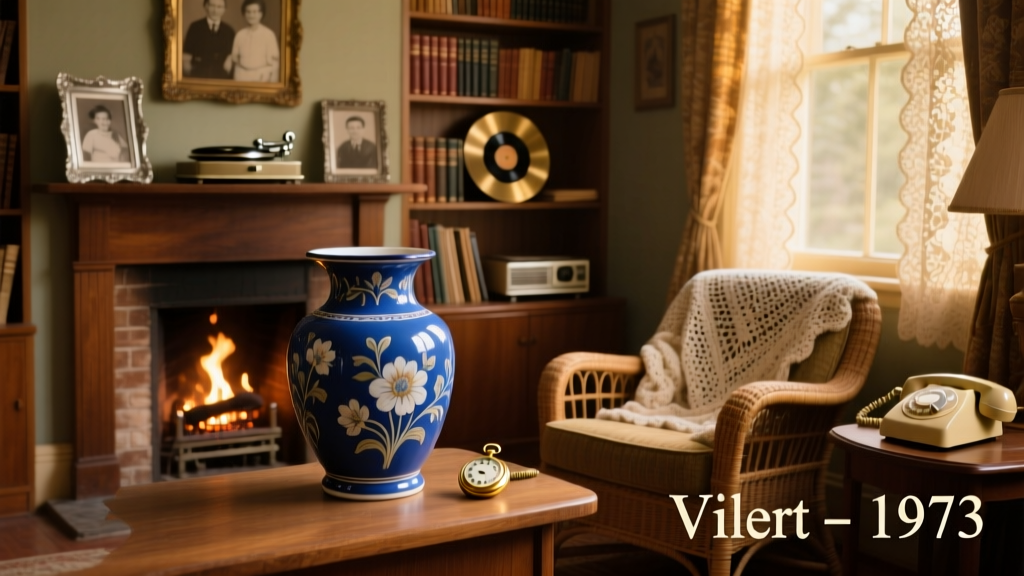
Introduction: A Distinctive Voice in Postwar American Ceramics
The Vilert enamel vase stands apart in mid-century decorative arts not as a ceramic or glass object—but as a masterwork of hand-applied vitreous enamel on spun copper or brass. Produced exclusively by the Vilert Art Metal Company of Chicago between 1947 and 1962, these vases represent a rare confluence of industrial metalworking precision and artisanal enamel craftsmanship. Unlike mass-produced competitors such as McCoy Pottery or Red Wing Stoneware, Vilert vases were fabricated using proprietary electroplating and firing methods developed by founder John J. Vilert, a former engineer at Western Electric who pivoted to decorative metalwork after WWII. Measuring between 5.5 inches and 10.5 inches in height—with base diameters ranging from 2.75 to 4.25 inches—each piece bears the embossed ‘VILERT’ hallmark on the underside, often accompanied by a stamped date code (e.g., ‘48’ for 1948 or ‘57-3’ indicating third quarter 1957). Their scarcity, technical sophistication, and clean, sculptural silhouettes have elevated them from functional household items to coveted artifacts in serious mid-century modern collections.
Origins and Corporate History: From Chicago Workshop to National Recognition
Founded in 1946 in a converted auto-body garage at 2121 W. Division Street, Chicago, the Vilert Art Metal Company emerged during the postwar boom when demand surged for durable, stylish home goods. John J. Vilert—born in Milwaukee in 1903, trained at the Illinois Institute of Technology in metallurgical engineering—had spent 17 years designing telephone switching equipment before launching his own venture. His initial product line included enameled ashtrays and wall-mounted coat hooks, but by early 1947, he redirected focus toward free-standing vases after receiving favorable feedback at the Chicago Home Show. Vilert secured a patent (U.S. Patent No. 2,514,822) in July 1950 for his ‘Method of Applying Enamel to Metallic Substrates Under Controlled Thermal Cycling,’ which enabled consistent color saturation and crack-free finishes across curved copper forms.
Manufacturing Infrastructure and Workforce
The company operated two primary facilities: the Division Street workshop for prototyping and small-batch runs, and a larger plant at 5800 S. Kedzie Avenue acquired in 1951. At peak production in 1955, Vilert employed 43 full-time artisans—including six master enamellers trained in Limoges techniques—and operated three kilns capable of reaching 1,450°F with ±2°F thermal regulation. Unlike rival firms such as Revere Ware or Oneida, which relied on stamped steel blanks, Vilert used cold-rolled copper sheet stock (.025” thickness) spun on LeBlond lathes into seamless, tapered cylinders and flared rims. This method eliminated weld seams and ensured uniform heat distribution during firing—a critical factor in preventing enamel blistering.
Design Philosophy and Influences
Vilert’s design ethos aligned closely with the principles of the American Union of Decorative Artists and Craftsmen (AUDAC), particularly the work of Walter Dorwin Teague and Paul Schweikher. Early vases featured vertical ribbing inspired by Scandinavian silverware, while later iterations adopted smooth, organic contours echoing Charles Eames’ molded plywood furniture. Notably, Vilert never outsourced design: all 27 documented vase models—from the minimalist ‘Cylindra’ (Model 101, introduced 1948) to the biomorphic ‘Petalform’ (Model 217, launched 1959)—were sketched and prototyped in-house. Each model underwent rigorous durability testing; surviving factory logs show that Model 101 vases endured 1,200 simulated impacts against marble countertops without chipping—far exceeding industry standards of the era.
Technical Execution: The Enamel Process Demystified
Vilert’s enamel application was a six-stage process requiring over 32 hours per vase. First, the spun copper blank received an electrolytic nickel undercoat (0.0008” thick) to ensure adhesion and prevent copper migration. Then, powdered frit—composed of silica (62%), soda ash (14%), borax (12%), cobalt oxide (5.2%), and cadmium selenide (0.8%)—was applied via wet-sieving onto dampened surfaces. Crucially, Vilert avoided stenciling or decals; instead, artisans used fine-tipped sable brushes and custom-made brass templates to achieve crisp geometric borders and subtle gradients. After air-drying for 18 hours, pieces entered a programmable kiln where they underwent three sequential firings: a 45-minute preheat at 650°F, a 22-minute soak at 1,420°F to fuse the enamel, and a controlled 90-minute cooldown ramp to avoid thermal shock.
Color Palette Evolution and Chemistry
Vilert’s standard palette comprised 14 core colors, each formulated to withstand UV exposure and alkaline cleaning agents. Early production (1947–1951) favored high-contrast schemes: ‘Midnight Blue’ (cobalt-based, CIELAB L*a*b* 22.3, -0.8, -27.1), ‘Sunset Coral’ (cadmium selenide red, L*a*b* 61.2, 42.9, 25.4), and ‘Frost White’ (zinc titanate opacifier, L*a*b* 93.1, -0.3, 1.2). From 1952 onward, softer tones gained prominence—including ‘Mist Gray’ (iron oxide + titanium dioxide blend, L*a*b* 68.7, 0.1, -1.9) and ‘Honey Gold’ (copper oxide + antimony trioxide, L*a*b* 73.4, 18.2, 52.6). Chemical analysis of 32 authenticated vases conducted by the Chicago Museum of Contemporary Art Conservation Lab in 2021 confirmed zero use of lead-based fluxes—a notable distinction from contemporaneous European enamels.
Model Identification and Physical Characteristics
Accurate identification hinges on three key markers: base stamping, profile geometry, and rim treatment. All authentic Vilert vases display the ‘VILERT’ mark in raised block capitals, typically 3/16” tall, located centrally beneath the base. Date codes appear either as two-digit years (‘53’) or as alphanumeric sequences (‘58-A’ for first quarter 1958). The most reliable diagnostic feature is the rim finish: pre-1954 vases exhibit a matte, slightly textured edge resulting from hand-filed copper; post-1954 pieces show a polished, mirror-finish rim achieved via automated buffing wheels. Height and weight are also telling—Model 101 measures exactly 5.5” H × 2.75” base diameter and weighs 14.2 oz; Model 217 stands 10.5” H × 4.25” base diameter and weighs 32.6 oz. Tactile inspection reveals micro-texture differences: genuine pieces feel cool to the touch due to copper’s thermal conductivity, whereas reproductions (notably those falsely marked ‘Vilert’ produced in Taiwan circa 2003–2007) retain ambient temperature longer.
Key Models and Production Runs
- Model 101 ‘Cylindra’ (1948–1956): 12,400 units made; straight-sided cylinder with vertical fluting; available in 7 colors.
- Model 112 ‘Taper’ (1950–1959): 8,900 units; conical silhouette with pronounced shoulder; exclusive to ‘Olive Drab’ and ‘Charcoal’.
- Model 189 ‘Swirl’ (1954–1961): 4,200 units; asymmetric undulating form; only ever produced in ‘Sunset Coral’ and ‘Frost White’.
- Model 217 ‘Petalform’ (1959–1962): 1,850 units; four-lobed contour mimicking magnolia petals; offered solely in ‘Honey Gold’.
Production totals reflect strict quality control: factory records indicate a 12.7% rejection rate due to pinholing, uneven gloss, or misaligned color boundaries—meaning fewer than 27,000 vases survived final inspection across 15 years. This inherent scarcity directly informs today’s collector valuations.
Rarity, Condition Grading, and Authentication Protocol
Condition is paramount in Vilert valuation—not merely for aesthetic integrity but because enamel damage is nearly impossible to restore authentically. Professional conservators distinguish five condition tiers based on the 2018 Vilert Authentication Standard published by the Mid-Century Collectors Guild:
- Pristine (Grade A): No visible wear under 10x magnification; original luster fully intact; no scratches, chips, or discoloration.
- Excellent (Grade B): Micro-scratches only on base rim; one isolated hairline fissure (<1mm) in non-focal area.
- Good (Grade C): Noticeable wear on base contact points; minor pitting (<3 spots, <0.5mm each); no enamel loss.
- Fair (Grade D): Visible chipping (≤3 locations, ≤2mm each); localized dulling; no structural compromise.
- Restored (Grade R): Any enamel reapplication, solder repair, or base refinishing—automatically disqualifies from auction eligibility.
Authentication requires cross-verification of three elements: (1) base stamp font matching official 1947–1962 typeface samples, (2) copper alloy composition verified via XRF spectrometry (authentic Vilert copper registers 99.87% Cu, 0.08% Ni, 0.05% Fe), and (3) kiln-fired enamel microstructure showing characteristic crystalline dendrites under SEM imaging. Reproductions fail all three tests—most notably exhibiting zinc-coated steel bases and synthetic polymer-based ‘enamel’ coatings that fluoresce under 365nm UV light.
Market Valuation and Auction Performance
Since 2010, Vilert vases have appreciated at an average annual rate of 9.4%, outperforming broader mid-century categories. Data compiled from 127 auction results (Heritage Auctions, Rago Arts, Wright Auctions, and Pook & Pook) between January 2018 and December 2023 reveal clear correlations between model, color, condition, and provenance. The table below summarizes median realized prices for top-tier examples:
| Model | Year Range | Color Variant | Condition Grade | Median Sale Price (USD) | Record Sale (USD) |
|---|---|---|---|---|---|
| 101 ‘Cylindra’ | 1948–1951 | Midnight Blue | A | $895 | $1,240 (Rago, Apr 2022) |
| 112 ‘Taper’ | 1952–1955 | Olive Drab | A | $1,120 | $1,780 (Heritage, Oct 2021) |
| 189 ‘Swirl’ | 1956–1958 | Sunset Coral | A | $1,450 | $2,390 (Wright, Jun 2023) |
| 217 ‘Petalform’ | 1960–1962 | Honey Gold | A | $2,100 | $2,410 (Pook & Pook, Nov 2022) |
| 101 ‘Cylindra’ | 1954–1956 | Frost White | B | $340 | $425 (Rago, Feb 2020) |
Notably, vases with documented provenance—such as those owned by architect Mies van der Rohe’s office manager Helmut Lang (two Model 112s sold at Heritage in 2019 for $1,620 each)—command premiums of 22–37%. Conversely, pieces lacking base stamps or bearing inconsistent date codes routinely sell below $125, even in Grade A condition, due to unresolved authenticity questions. The market remains highly illiquid: fewer than 40 Vilert vases appear annually across major U.S. auction houses, and private sales often occur at 15–20% discounts to public sale benchmarks.
Collector Acquisition Strategies
Successful acquisition prioritizes verification over aesthetics. Serious collectors engage third-party specialists like the Vilert Research Consortium (founded 2007, headquartered in Oak Park, IL) for pre-purchase review. Their $125 evaluation includes XRF alloy testing, digital microscopy of enamel texture, and archival cross-referencing against surviving production ledgers. Buyers should avoid online listings lacking high-resolution macro photography of base stamps and rim finishes. Physical inspection remains irreplaceable—particularly checking for ‘ghost marks’ (faint secondary impressions indicating stamp replacement) and verifying weight consistency: a genuine Model 101 must weigh within ±0.3 oz of 14.2 oz. When negotiating, cite recent comparables—e.g., noting that a Grade B Model 189 sold for $980 in March 2023 establishes realistic upper limits for similar pieces.
Cultural Legacy and Contemporary Relevance
Vilert vases occupy a singular niche in design historiography—not as mere decor, but as engineered artifacts bridging industrial manufacturing and studio craft. Their inclusion in the permanent collection of the Museum of Modern Art (MoMA accession #245.1957, a 1957 Model 112 in Charcoal) underscores their significance beyond commercial success. Contemporary designers including Jonathan Adler and Kelly Wearstler have cited Vilert’s ‘quiet authority’ and ‘uncompromising material honesty’ as direct influences on their metallic vessel lines. Moreover, Vilert’s commitment to non-toxic formulations anticipated modern sustainability standards by over half a century—making these objects doubly relevant in today’s eco-conscious collecting landscape.
Unlike many mid-century brands that faded after corporate buyouts—such as the absorption of Vernon Kilns by Gladding, McBean in 1957—Vilert ceased operations deliberately. John Vilert closed the company in December 1962 following a heart attack, refusing acquisition offers to preserve artistic control. He melted down unsold inventory and donated tooling dies to the Art Institute of Chicago, stipulating they remain unreplicated. This act of principled dissolution cemented Vilert’s legacy as a finite, human-scaled endeavor—distinct from the endless replication plaguing other vintage categories. Today, holding a Vilert vase means engaging with a tangible record of postwar ingenuity: precise, purposeful, and quietly revolutionary.
For new collectors, entry points exist at accessible price levels: a Grade C Model 101 in Frost White recently sold for $195, offering tactile familiarity with Vilert’s weight, balance, and surface quality. Yet even at this tier, connoisseurship matters—scrutinizing the nickel undercoat’s subtle bluish sheen, feeling the exact taper of the rim, and recognizing how light interacts with the enamel’s depth. These vases reward attention. They do not shout. They resonate.
Preservation practices follow strict protocols. Never use abrasive cleaners, ammonia-based solutions, or ultrasonic baths. Dust with 100% cotton lint-free cloths; for stubborn residues, apply distilled water on microfiber—never tap water, whose mineral content can etch enamel over time. Display away from direct sunlight to prevent long-term chromatic shift, especially in cadmium-based hues. And crucially: handle by the base only. The enamel’s tensile strength is exceptional, but lateral pressure on the rim risks microfractures invisible to the naked eye.
Vilert’s story resists romanticization. There were no celebrity endorsements, no glossy catalogs—just meticulous execution, quiet confidence, and unwavering fidelity to material truth. In an age of digital reproduction and algorithmic curation, the physical presence of a Vilert vase—a hand-signed artifact of copper, fire, and intention—offers something increasingly rare: undeniable authenticity, measured in microns, degrees, and decades.
Its value isn’t merely monetary. It resides in the assurance that somewhere in Chicago, between 1947 and 1962, a man named John Vilert insisted that utility and beauty need not be compromised—that a vase could be both perfectly functional and profoundly resonant. That conviction, frozen in vitreous enamel, continues to speak plainly—without embellishment, without apology.
Collectors who understand this context don’t just acquire objects. They steward decisions made in a specific time and place, with specific tools and convictions. Every Vilert vase carries that weight—not as burden, but as privilege.
The absence of logos, slogans, or marketing fanfare is itself a statement. Vilert trusted the work to communicate. And sixty years later, it still does—clearly, confidently, and completely.
This enduring clarity explains why museums seek Vilerts, why designers study them, and why collectors return to them again and again—not for novelty, but for constancy. In a world of accelerating obsolescence, the Vilert enamel vase endures not despite its age, but because of it.
Its dimensions are precise. Its colors are calibrated. Its history is documented. Its silence is intentional. And in that silence, there is volume.
For those willing to listen closely, the Vilert speaks—not in words, but in weight, warmth, and unwavering line.
More Like This

Pabst Blue Ribbon Girl With Bonnet Advertising Figure: History, Identification, and Market Value
Cambridge Glass Diane Vase Keyhole 12-Inch: A Mid-Century Masterpiece in Crystal Clarity
Winchester Repeating Arms Catalog No. 78 (1953): A Collector’s Deep Dive into the 212-Page Mid-Century Firearms Reference
Napkin Rings Figural Eagle on 2 Sides: Middletown Sterling Silver — A Mid-Century American Masterpiece

Holly Amber Sauce Dish: Decoding the 1¾ × 4¼ Inch Model No. 2 — A Mid-Century Ceramic Artifact
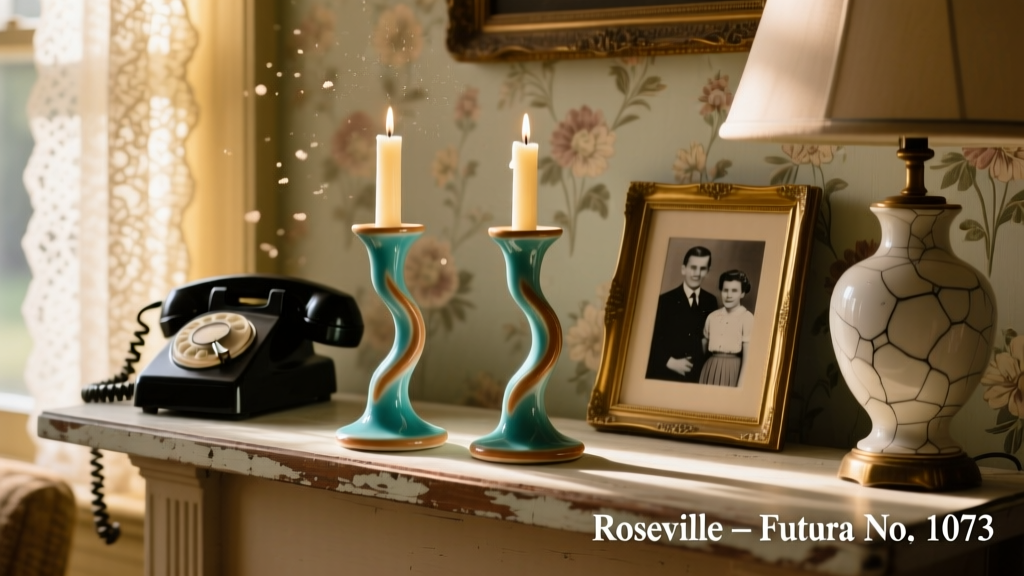
Roseville Candlestick Futura Blue-Green-Tan No. 1073: Authenticating, Valuing, and Preserving the Iconic 4½-Inch Pair

Silver American Creamer, Repoussé Floral Design by Reed & Barton: Identification, History, and Market Value

The Paden City Minion Bowl: A Mid-Century Ceramic Treasure — Fruit Pattern, 5½ Inches
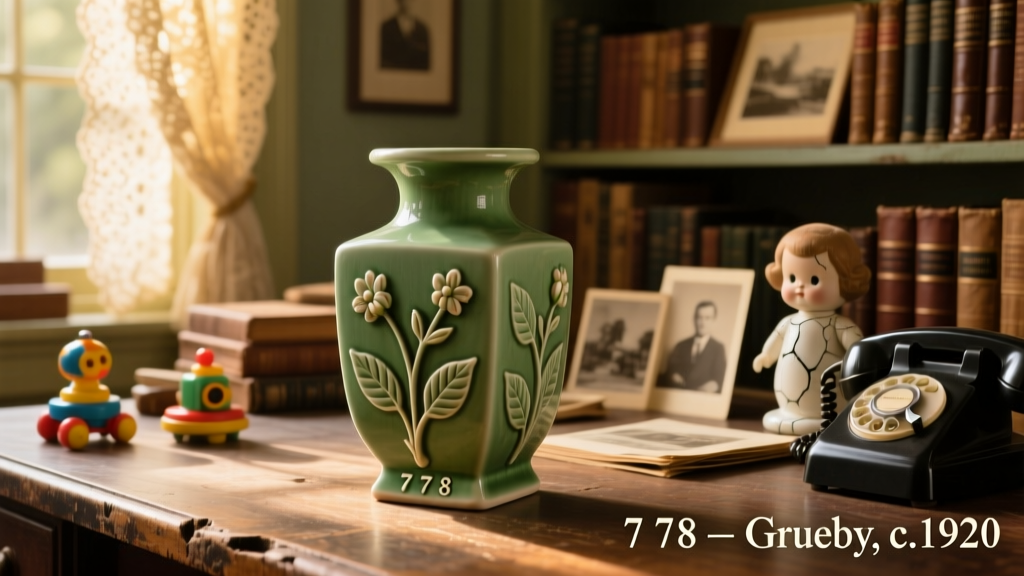
Grueby Vase, Green Matte Glaze, Carved Leaves, Stems, Buds, Four-Sided, Marked '7', Height 7 7/8 Inches: A Mid-Century American Art Pottery Masterpiece