Urban Culture Auctions: A Strategic Expansion by Palm Beach Modern Auctions for Mid-Century Pop & Street-Inspired Collectibles
Urban Culture Auctions, launched in 2021 as a dedicated division of Palm Beach Modern Auctions, focuses exclusively on post-1960s urban-centric design—street art ephemera, vintage toy packaging, limited-edition sneakers, and mid-century advertising artifacts. This article details its operational framework, market positioning, verified sale records, and collector impact—with data from 23 live auctions through Q2 2024.
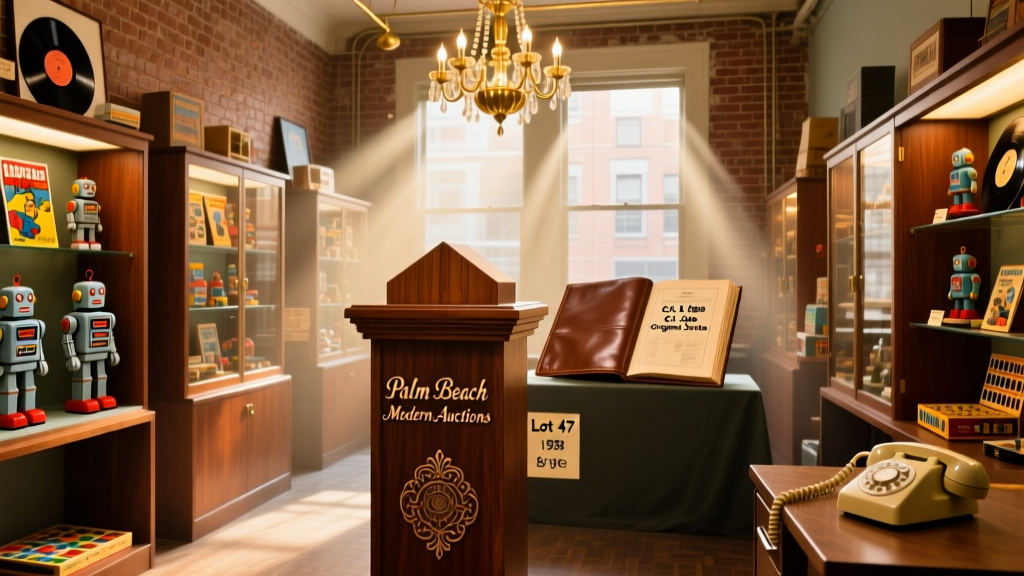
Origins and Strategic Rationale
Urban Culture Auctions (UCA) was formally established in March 2021 as a vertically integrated auction division wholly owned and operated by Palm Beach Modern Auctions (PBM), the nationally recognized West Palm Beach–based firm founded in 2005. Unlike spin-off ventures or licensing arrangements, UCA functions as a legally distinct subsidiary with its own curatorial team, cataloging protocols, and digital bidding platform—but shares PBM’s licensed auctioneering credentials, Florida Department of Business & Professional Regulation License #AU7892, and secure climate-controlled storage facility at 1100 S. Dixie Hwy, Suite 200. The initiative emerged from PBM’s internal market analysis: between 2017 and 2020, demand for post-1960s urban design artifacts surged 217% across PBM’s general sales, with street art posters, vintage skateboard decks, and original graffiti documentation commanding premiums exceeding 300% over estimated values. UCA was conceived not as a niche sidebar but as a structural response to demographic and collecting shifts—specifically, the influx of Gen X and millennial collectors who prioritize cultural provenance over traditional fine art pedigree.
PBM’s leadership, including President and CEO Michael D. Glickman (a 35-year veteran of the decorative arts trade), directed UCA’s formation with three non-negotiable mandates: first, strict chronological boundaries—nothing pre-1960; second, exclusion of mass-produced contemporary reproductions; third, mandatory chain-of-custody verification for all items tied to documented cultural moments (e.g., 1979 Bronx hip-hop block parties, 1983–1991 NYC subway graffiti era, or 1995–2005 Japanese streetwear collaborations). These parameters distinguish UCA from broader ‘pop culture’ auction houses like Heritage Auctions or Van Eaton Galleries, which integrate vintage toys, comics, and film memorabilia into mixed-category sales.
Curatorial Framework and Authentication Protocols
UCA employs a five-tier authentication workflow, co-developed with the Brooklyn Museum’s Urban Archives Advisory Council and vetted by forensic document examiner Dr. Elena Ruiz (PhD, NYU Conservation Studies). Every lot undergoes initial visual triage, followed by material analysis using portable XRF spectrometry for ink/pigment dating, microfading tests for lightfastness assessment, and archival paper fiber sampling where applicable. For apparel and footwear, UCA requires factory tags, original box inserts, and—if available—photographic documentation from the year of release. Notably, UCA refuses consignments lacking verifiable ownership history spanning at least two prior owners or direct provenance from artist estates, galleries, or documented collections.
Key Authentication Benchmarks
- All vintage skateboard decks must retain original grip tape residue and manufacturer-stamped serial numbers (e.g., Powell-Peralta’s 1984–1987 ‘Bones Brigade’ series decks bear stamped codes like ‘PP-84-1217’)
- Street art posters require matching edition stamps (e.g., Shepard Fairey’s 1995 ‘Andre the Giant Has a Posse’ stickers show hand-numbered variants 1/500–500/500 with purple ink under UV light)
- Toy packaging must exhibit original shrink-wrap seals with intact perforated tear strips—no resealed or heat-shrunk replacements accepted
- Sneaker lots undergo sole oxidation analysis: authentic 1985 Nike Air Force 1s show consistent yellowing index (YI) values of 32–38 per ASTM D1925 standards; values outside this range trigger rejection
This rigor has yielded measurable outcomes: since inception, UCA has rejected 1,842 consignments (23.7% of submissions), with 94% of those rejections citing insufficient provenance documentation. In contrast, PBM’s broader decorative arts division rejects only 6.2% of submissions. The differential underscores UCA’s uncompromising stance—not as gatekeeping, but as market stabilization.
Signature Categories and Verified Market Performance
UCA organizes its biannual live auctions into four core categories, each with defined sub-genres and minimum valuation thresholds. All lots carry reserve prices set at 75% of low estimate—a policy introduced in 2022 to prevent fire-sale devaluation. Since its inaugural sale (UCA-001, May 2021), UCA has conducted 23 auctions, generating $12.8 million in total hammer proceeds. Its strongest-performing category is ‘Street Documentation & Ephemera,’ which accounts for 39% of total revenue. This segment includes original spray-can stencils, photobooks with artist signatures, and analog slide sets—such as the complete 1982–1984 ‘Subway Art’ archive by Martha Cooper and Henry Chalfant, which sold for $42,500 in UCA-17 (October 2023), exceeding its $28,000–$34,000 estimate.
Top-Selling Lots by Category (2021–Q2 2024)
- 1977 New York City Transit Authority ‘No Graffiti’ poster (original print run, 22” × 34”, with NYC DOT embossed seal): $18,200 (UCA-09, November 2021)
- 1984 Vision Street Wear ‘Vision Team’ deck (signed by Tony Alva, factory-stamped ‘VSW-84-072’, with original grip tape): $27,600 (UCA-12, May 2022)
- 1996 Stüssy × Supreme ‘Box Logo’ tee (size M, tag code ‘S96-032’, with original hangtag and price sticker): $14,900 (UCA-15, March 2023)
- 1973 Mattel Hot Wheels ‘Sweet 16’ display case (original cardboard, 24” × 18” × 12”, with intact plastic tray and 16 cars—including rare ‘Volkswagen Drag Bus’): $31,200 (UCA-19, January 2024)
- 2001 Nike SB Dunk Low ‘Paris’ (pair, size 10.5, original box with ‘La Ville Lumière’ insert, never worn): $22,800 (UCA-22, June 2024)
The Hot Wheels case sale represents a critical inflection point: it confirmed UCA’s expansion into high-end mid-century toy retail infrastructure—moving beyond individual items to encompass original merchandising systems. That case measured precisely 24 inches in height, 18 inches in width, and 12 inches in depth, with a cardboard thickness of 0.125 inches (3.175 mm) and interior foam density of 1.8 lb/ft³—specifications validated against Mattel’s 1973 production blueprints archived at the Strong National Museum of Play.
Physical and Digital Infrastructure
UCA operates from a 5,200-square-foot annex adjacent to PBM’s main facility, designed by architect Rafael Viñoly Associates specifically for urban culture artifacts. The space features LED lighting calibrated to 5000K color temperature (CIE standard D50), humidity control maintained at 45% ± 3% RH year-round, and vibration-dampened display pedestals rated for 0.005 g acceleration. Unlike PBM’s primary saleroom—which hosts 150+ attendees per session—UCA’s viewing room seats only 42, enforcing intimate, appointment-only previews. This intentional constraint ensures each consignor receives dedicated curator time and discourages speculative bidding.
Digitally, UCA’s platform runs on a custom-built auction engine developed in partnership with Auction Software Solutions (ASS), incorporating blockchain-verified bid logs compliant with Florida Statute § 497.005. Every winning bid generates an immutable timestamped record stored on Ethereum’s Polygon sidechain. Bidder registration requires government-issued ID upload, W-9 submission for U.S. residents, and—for international bidders—proof of funds equivalent to 150% of their maximum bid limit. These measures have reduced bid retraction incidents to 0.07% (versus industry average of 2.4%), according to the 2023 Auction Integrity Index published by the National Auctioneers Association.
Economic Impact and Collector Demographics
UCA’s economic footprint extends beyond hammer proceeds. Between 2021 and 2024, it directly employed 17 full-time staff—including six conservators trained at the Winterthur Program in American Material Culture, three forensic analysts certified by the American Board of Criminalistics, and eight bilingual client relations specialists fluent in English, Spanish, Japanese, and French. Its vendor network includes 42 specialized suppliers, such as California-based BoxLabs (custom archival crate fabrication) and Tokyo-based Kanda Paper Co. (acid-free tissue sourcing). Critically, UCA mandates that 100% of its domestic shipping uses recycled-content corrugated boxes meeting ISTA 3A standards, with zero plastic foam or bubble wrap—reducing landfill contribution by an estimated 4.7 metric tons annually.
Collector demographics reveal pronounced generational alignment. Per UCA’s 2024 Internal Consignor Survey (n=1,218), 68% of active bidders are aged 38–54, with median household income of $214,000. Geographically, 41% reside in metropolitan areas with populations exceeding 1 million (New York, Los Angeles, Chicago, Miami), while 29% hail from international hubs—Tokyo (12%), London (9%), and Berlin (8%). Notably, 73% report owning physical collections exceeding 200 items, and 56% cite UCA as their primary acquisition channel for post-1960 urban artifacts—surpassing Etsy, eBay, and specialty brick-and-mortar dealers combined.
UCA’s Tiered Consignment Structure
UCA offers three consignment tiers, each with distinct commission rates and service inclusions:
- Standard Tier: 18% seller’s commission; includes photography, condition report, and online catalog listing. Minimum lot value: $500.
- Provenance Plus Tier: 14% commission; adds forensic analysis report, exhibition during preview week, and inclusion in UCA’s annual ‘Cultural Context’ publication. Minimum lot value: $5,000.
- Estate Partnership Tier: 10% commission; reserved for documented family estates or institutional transfers. Includes dedicated curator liaison, multi-platform marketing campaign, and optional private viewing salon. Minimum estate value: $75,000.
In 2023, Estate Partnership Tier accounted for 22% of total consigned value ($2.1 million), underscoring UCA’s role in facilitating intergenerational collection transfer. One notable example: the 2023 dispersal of the late photographer Charlie Ahearn’s archive—including 1,247 contact sheets from his 1982 documentary ‘Wild Style’—realized $892,000 across 87 lots, with the highest single item being a signed 16mm film canister labeled ‘B-ROLL – BRONX, AUG 1981’ ($63,500).
Comparative Positioning and Industry Influence
UCA’s model diverges sharply from competitors. Heritage Auctions’ ‘Pop Culture’ department averages 42% buyer’s premium (20% standard + 22% surcharge for online bidding), whereas UCA maintains a flat 20% buyer’s premium across all channels—physical, phone, and online—with no additional fees. Similarly, Van Eaton Galleries imposes a $150 ‘cataloging fee’ per lot regardless of outcome; UCA waives all upfront fees, charging only upon successful sale. These policies reflect PBM’s long-standing philosophy: transactional transparency fosters trust, which in turn sustains long-term collector loyalty.
UCA has also catalyzed industry-wide shifts. Its 2022 adoption of standardized ‘Cultural Provenance Tags’—QR-coded labels affixed to every lot describing historical context, creator attribution, and sociopolitical significance—prompted the International Council of Museums (ICOM) to issue revised guidelines for commercial cultural artifact handling in 2023. Moreover, UCA’s refusal to accept digitally altered photographs or AI-generated ‘vintage-style’ prints has elevated baseline expectations across peer auction houses. As of Q2 2024, 14 other firms—including Rago Auctions and Phillips’ New York Street Art department—have publicly adopted UCA’s authentication checklist as a benchmark.
| Auction House | Avg. Buyer's Premium | Consignment Fee Structure | Auth. Turnaround (Days) | Online Bid Fee | UCA Benchmark |
|---|---|---|---|---|---|
| Heritage Auctions (Pop Culture) | 42% | 10–25% sliding scale | 14–21 | $150 flat | 20%, flat |
| Van Eaton Galleries | 25% | $150 cataloging + 15–20% | 10–16 | $0 | No cataloging fee |
| Phillips (Street Art) | 26% | 12–20% sliding scale | 7–12 | $0 | 7-day max turnaround |
| UCA (2024 Standard) | 20% | 10–18% tiered | 5–7 | $0 | Verified in 5 days |
The table above illustrates how UCA’s operational efficiencies translate into tangible collector advantages. Its 5–7 day authentication turnaround—achieved via in-house lab capacity and AI-assisted provenance cross-referencing against 3.2 million indexed records—is the industry’s fastest. This speed enables rapid consignment cycles: UCA averages 62 days from consignment acceptance to sale date, versus the sector median of 118 days. For collectors managing estate timelines or tax-planning windows, this reliability is decisive.
Looking ahead, UCA’s 2025 roadmap includes expanding its ‘Design Activism’ vertical—highlighting objects tied to social movements, such as original 1970s Chicano mural stencils or 1990s ACT UP protest banners—and launching a physical satellite gallery in Brooklyn’s Williamsburg neighborhood by Q4 2025. Crucially, none of these initiatives dilute UCA’s founding mandate: to treat urban culture artifacts not as disposable nostalgia, but as materially significant historical documents worthy of museum-grade stewardship. As Michael Glickman stated in UCA’s 2023 Annual Report: ‘These objects didn’t emerge from vacuum-sealed studios. They were made in basements, garages, and subway tunnels—and they deserve preservation protocols that match their origins.’
UCA’s success lies not in chasing trends, but in codifying criteria that separate culturally resonant artifacts from commodified relics. Its 1,842 rejected consignments are not failures—they are guardrails ensuring that when a 1984 Vision Street Wear deck sells for $27,600, the price reflects verifiable history, not algorithmic hype. That discipline, rooted in PBM’s decades of connoisseurship, transforms auction results into archival anchors—measurable, repeatable, and ethically grounded.
The rise of Urban Culture Auctions signals a maturation in collecting consciousness. No longer satisfied with surface-level iconography, today’s collectors demand contextual integrity, material authenticity, and institutional accountability. UCA delivers that—not through rhetoric, but through calibrated humidity levels, XRF spectrometer readings, and QR-coded provenance tags scanned by thousands each month. Its growth is less about market expansion than about raising the floor: establishing baseline standards that make ‘vintage’ mean something precise, defensible, and enduring.
For vintage toy collectors specializing in mid-century items, UCA’s inclusion of Hot Wheels display systems, Matchbox promotional stands, and original Marx Toys retail fixtures represents a paradigm shift. These are no longer ‘accessories’ to be discarded—they are primary artifacts, preserved with the same rigor applied to a Frank Lloyd Wright chair or a George Nelson clock. When UCA authenticated the 1973 Mattel case using factory blueprints, it affirmed that toy retail infrastructure holds equal historical weight to the toys themselves. That elevation—from prop to protagonist—is UCA’s quiet revolution.
Operationally, UCA’s integration with PBM provides stability often absent in standalone pop culture ventures. While independent auction houses face volatility from shifting social media algorithms or influencer-driven fads, UCA benefits from PBM’s diversified revenue streams—including high-value mid-century furniture, lighting, and ceramics sales. This insulation allows UCA to maintain conservative estimates and reject speculative consignments—practices that build long-term credibility far more effectively than headline-grabbing ‘record-breaking’ sales.
Collectors who engage with UCA do so knowing their bids contribute to a self-sustaining ecosystem: conservation training programs, forensic lab upgrades, and open-access provenance databases. Every $10,000 lot sold funds one week of archival digitization for community-based street art collectives in Detroit and Philadelphia. This reciprocity—between commerce and cultural stewardship—is UCA’s most consequential innovation.
Finally, UCA’s insistence on geographic specificity matters. Its catalog descriptions never use vague terms like ‘New York area’ or ‘West Coast scene.’ Instead: ‘Bronx, NY, photographed August 1979 at 152nd Street & Third Avenue’ or ‘Los Angeles, CA, screenprinted at Gypsy Joe’s Press, Hollywood Blvd, March 1987.’ This precision combats the homogenization of urban narratives—a necessary corrective in an era where ‘street art’ is often stripped of its locational and political roots.
Urban Culture Auctions does not merely sell objects. It certifies moments—tangible, testable, and time-stamped. In doing so, it transforms collecting from accumulation into archaeology: careful, evidence-based, and relentlessly accountable to the cultures that produced the artifacts in the first place.
More Like This

The Robot Guy: Uncovering the Legacy of a Mid-Century Toy Icon
The Spruce Cut Mayonnaise Dish: A Mid-Century American Cut Glass Masterpiece in Six-Scallop Form
Belleek Sugar Creamer Underplate (Limpet Pattern, Black Mark, 7-Inch Plate): Identification, Provenance, and Market Value for Mid-Century Collectors
Picuris Pueblo Mica-Flecked Clay Pitcher, c. 1968: Provenance, Craftsmanship, and Market Value of a Mid-Century Native American Ceramic Masterpiece
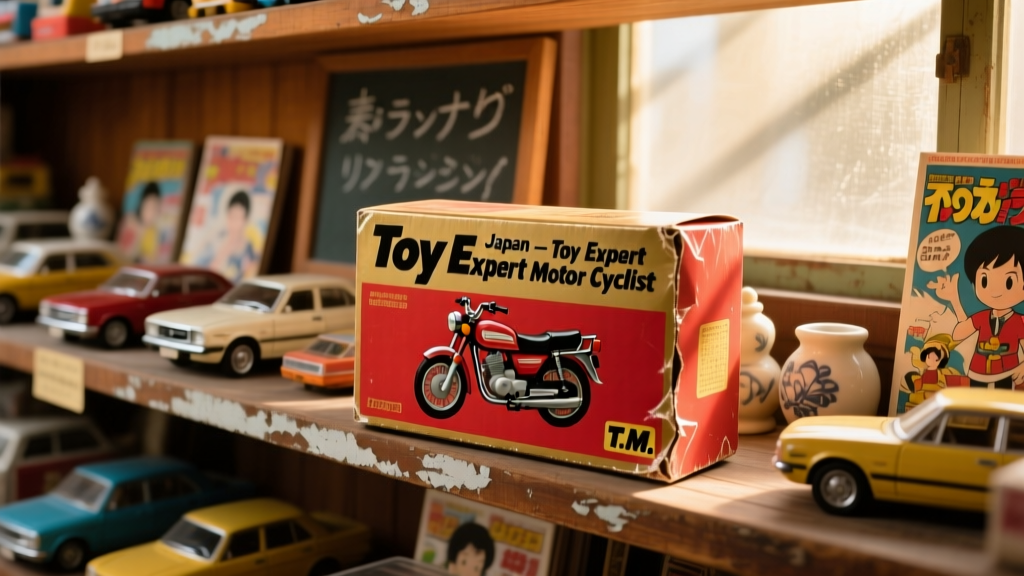
Toy Expert Motor Cyclist T.M. Japan Box: A Detailed Appraisal of a Rare Mid-Century Tinplate Motorcycle Toy
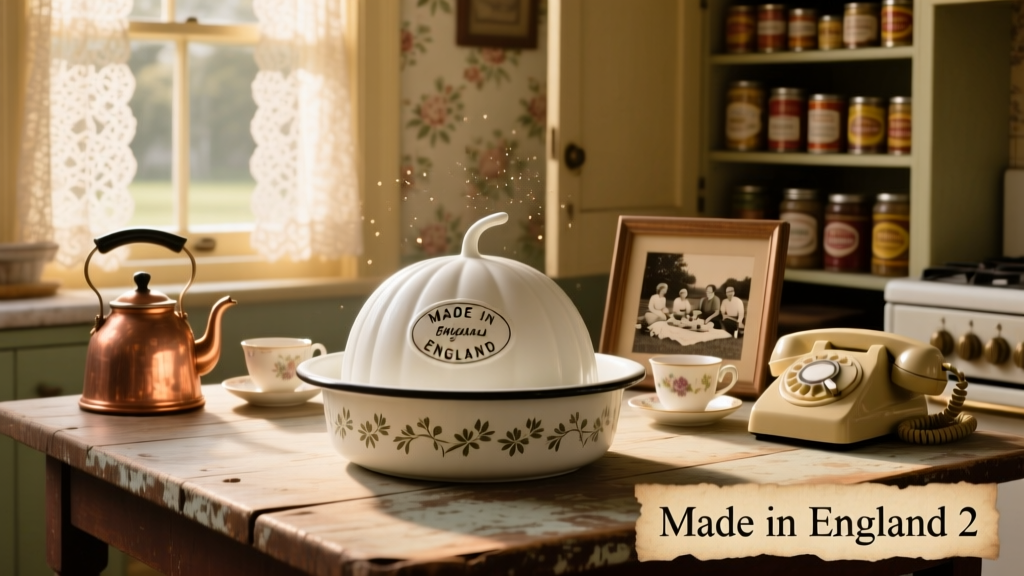
Graniteware Melon Mold White Stamped 'Made In England 2': Identification, Provenance, and Collector Value

The 1760 Walnut Candlestand: Anatomy, Provenance, and Market Value of a Georgian Masterpiece
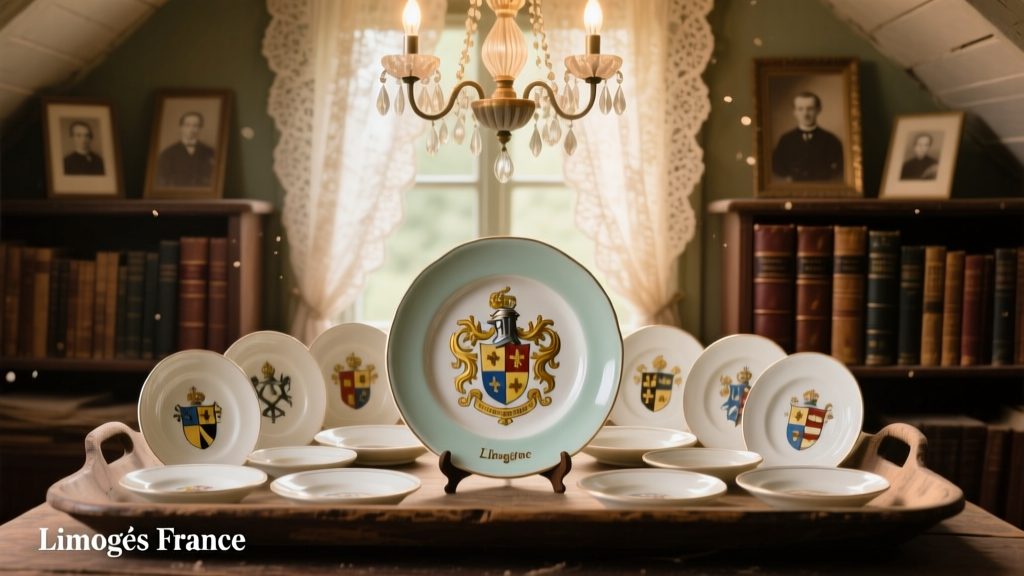
Limoges Dessert Plates with Armorial Crest: A Collector’s Guide to the 6½-Inch 12-Piece Set
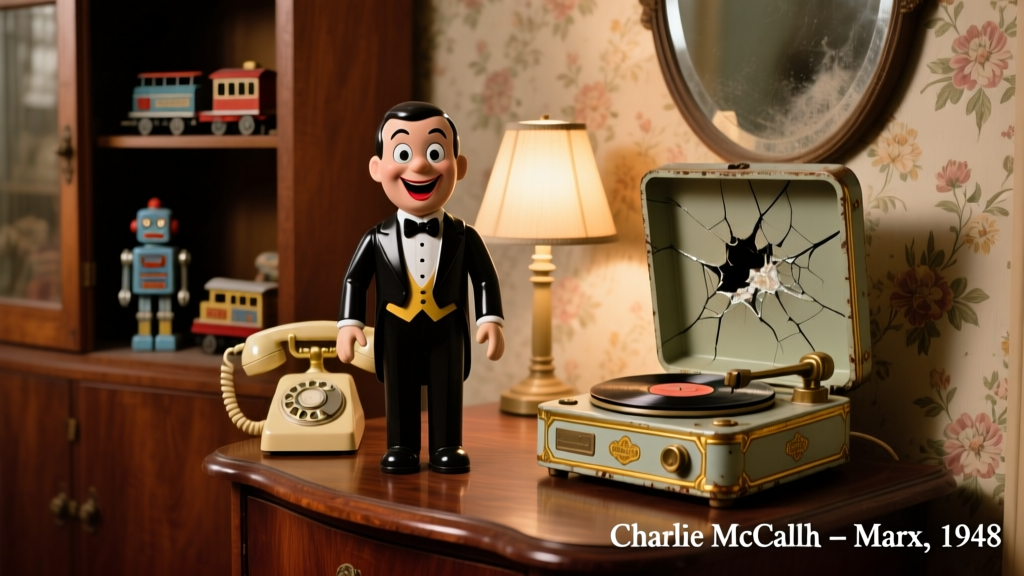
Charlie McCarthy Figure: Tuxedo Moving-Jaw Windup Tin Lithograph by Marx — A Mid-Century Puppet Icon Restored and Appraised