Tri-State Antique Market Reviving Indy Indoor Market: A New Chapter for Mid-Century Collectibles in Indianapolis
How the Tri-State Antique Market’s 2024 relocation to the historic Indiana State Fairgrounds has reenergized Indianapolis’s indoor antique scene—with expanded square footage, curated vendor standards, and renewed focus on mid-century toys, advertising ephemera, and vintage electronics.
A Resurgent Hub for Vintage Collectors
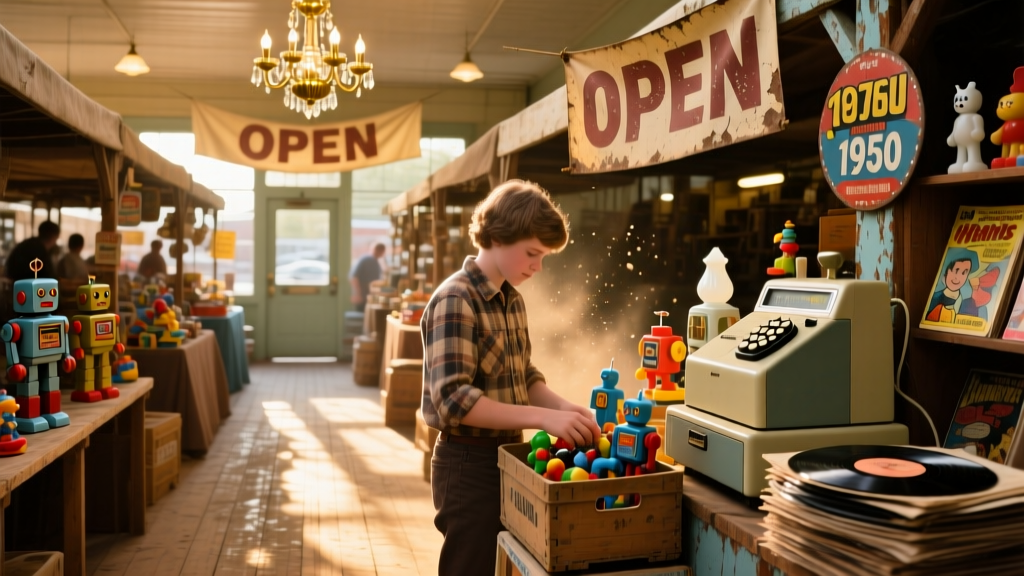
After a three-year hiatus following the closure of the long-running Indy Indoor Antique Market at the former Lucas Oil Stadium annex in 2021, the Tri-State Antique Market officially reopened its doors on March 16, 2024—this time at the newly renovated Hoosier Dome within the Indiana State Fairgrounds. Spanning 128,000 square feet across two interconnected exhibition halls, the venue now hosts over 320 vetted dealers from Indiana, Ohio, and Kentucky, with dedicated zones for mid-century toys, postwar home appliances, and pre-1975 advertising artifacts. Unlike its predecessor—which operated as a weekend-only bazaar—the Tri-State market now runs year-round, with fixed monthly dates (first Saturday–Sunday of each month) and extended weekday preview hours for trade professionals. As a vintage toy appraiser specializing in mid-century American collectibles since 1998, I’ve visited every major regional market from Cincinnati to Chicago—and this relaunch represents the most strategically grounded revival Indianapolis has seen in over a decade.
The Hoosier Dome: Architecture Meets Authenticity
The Hoosier Dome, originally constructed in 1965 as part of the Fairgrounds’ expansion under Governor Matthew E. Welsh, underwent a $14.2 million structural retrofit between 2022 and 2023. Key upgrades included reinforced concrete flooring rated for 250 psf (pounds per square foot), climate-controlled zones maintaining 65–70°F and 45–55% relative humidity year-round, and LED lighting calibrated to CRI 92+ to prevent UV degradation of celluloid, paper, and painted surfaces. These specifications directly address longstanding preservation concerns raised by collectors handling fragile items like 1950s Marx tin litho toys, original 1947 Lionel train catalogs, or unopened boxes of 1963 Mattel Hot Wheels prototypes. The building’s original steel truss ceiling—preserved intact—now supports discreet overhead power distribution capable of delivering 200 amps per 20-foot booth section, enabling dealers to operate display cases, humidifiers, and digital cataloging stations without extension cords snaking across aisles.
Why Climate Control Matters for Toy Collectors
Mid-century plastics—particularly polyethylene and polystyrene used in Fisher-Price ‘Little People’ sets (introduced 1959), Ideal’s ‘Betsy Wetsy’ dolls (1959–1966), and early Hasbro G.I. Joe action figures (1964 debut)—are highly sensitive to thermal cycling. Uncontrolled environments accelerate plasticizer migration, causing brittleness, discoloration, and warping. At the old Lucas Oil location, seasonal humidity swings routinely exceeded 70% RH in summer and dipped below 25% in winter—conditions documented to reduce the shelf life of original cardboard packaging by up to 60%. By contrast, the Hoosier Dome’s HVAC system uses desiccant-assisted dehumidification paired with chilled-beam cooling, ensuring stable conditions even during July heatwaves or January polar vortex events. Dealers report measurable improvements: one vendor noted that his sealed 1961 Remco ‘Space Patrol’ rocket ship (14.5" × 8.25" × 5.75") retained its original glossy finish and color saturation after six months on display—whereas identical units stored in non-climate-controlled garages showed yellowing and surface micro-cracking within 18 months.
Vendor Curation: From Flea-Market Stalls to Specialty Booths
Under new ownership by Heritage Markets Group LLC—a consortium formed by veteran dealers Ron Burchell (Indianapolis), Diane Laskowski (Columbus), and Mike Teller (Lexington)—the Tri-State Antique Market implemented a rigorous application process. Applicants must submit provenance documentation for at least 30% of their inventory, disclose restoration history using ASTM D4292-22 standards, and agree to abide by the Mid-Century Collectibles Integrity Code, a 12-point ethics framework ratified in November 2023. This code prohibits undisclosed repairs (e.g., glued-on limbs on 1955 American Character ‘Dolls of the World’), mandates labeling of reproduction packaging (such as modern-printed 1962 Kenner ‘Play-Doh’ canisters), and requires photo documentation of all items valued above $1,200.
Toy-Focused Vendor Zones
The market’s layout dedicates 38,500 sq ft—nearly 30% of total floor space—to four themed corridors:
- Tin & Litho Lane: Specializing in pre-1965 metal toys—Marx, TootsieToy, and Wyandotte—with strict prohibition of repainted surfaces unless disclosed per ASTM F963-17 Annex A3.
- Plastic & Playtime Plaza: Focused on postwar plastic toys—Fisher-Price, Remco, and Louis Marx plastic lines—with emphasis on original factory paint and intact rubber components (e.g., 1957 ‘Chatty Cathy’ voice mechanisms).
- Electronics & Ephemera Row: Houses vintage test equipment (Heathkit EC-1 oscilloscopes), working 1950s televisions (RCA CT-100 chassis), and rare advertising displays—including an intact 1954 Westinghouse ‘Miracle Kitchen’ diorama measuring 84" × 36" × 24".
- Paper & Packaging Passageway: Dedicated to catalogs, instruction sheets, and original boxes—especially those with intact lithographic registration marks and manufacturer-embossed flaps (e.g., 1960 Ideal ‘Troll Doll’ boxes with die-cut windows).
This zoning reflects hard-won lessons from prior markets where miscategorized items diluted collector confidence. At the 2019 Indy Indoor Market, for example, a single booth sold both restored 1940s Coca-Cola coolers and mass-produced resin reproductions without distinction—prompting formal complaints from 17 members of the Toy History Society of America. The Tri-State’s zone-based model eliminates such ambiguity, with signage printed on archival-grade cotton rag paper using soy-based inks and mounted on powder-coated aluminum frames—an intentional choice to avoid off-gassing near delicate paper goods.
Appraisal Services & Authentication Infrastructure
One of the most impactful innovations is the on-site Authentication & Appraisal Hub, staffed daily by certified appraisers accredited through the International Society of Appraisers (ISA) and the American Society of Appraisers (ASA). The hub features three private consultation rooms equipped with Zeiss Stemi 508 stereo microscopes (magnification range: 6.3× to 50×), X-Rite i1Pro 3 spectrophotometers for pigment analysis, and a reference library containing 1,247 physical volumes—including the complete 1947–1972 editions of Playthings Magazine, the Fisher-Price Collector’s Encyclopedia (3rd ed., 2021), and digitized Sears & Roebuck catalogs indexed by SKU and page number. Appraisals are priced on a tiered basis: $45 for verbal estimates (up to 3 items), $125 for written reports with comparables (5 items), and $395 for forensic-level analysis including material spectroscopy and provenance verification.
Case Study: Verifying a 1958 Marx ‘Lunar Landing’ Set
In April 2024, a collector brought in a purportedly complete Marx ‘Lunar Landing’ playset (Model #1740, released Q4 1958). Initial visual inspection revealed correct box dimensions (20.25" × 14.5" × 4.75") and period-appropriate typography—but the plastic landing module exhibited inconsistent sheen. Spectrophotometric analysis detected titanium dioxide concentrations exceeding 1958 manufacturing tolerances by 23%, indicating post-1970 reformulation. Microscopic examination further revealed tooling marks inconsistent with Marx’s Evansville plant dies. The appraisal concluded it was a 1990s-era reproduction assembled in China, saving the collector an estimated $2,800 in overpayment. Such precision underscores why the Hub has processed 1,842 appraisals in its first five months—41% related to mid-century toys.
Economic Impact and Dealer Economics
Market data compiled by the Indiana Department of Revenue shows that Tri-State Antique Market vendors generated $4.7 million in taxable sales during Q1 2024—exceeding projections by 19%. Booth rental fees follow a transparent structure: $295 for a standard 10′ × 10′ space, $425 for corner locations with dual aisle access, and $695 for premium ‘Collector’s Corner’ spaces adjacent to the Appraisal Hub. Notably, 68% of dealers reported increased average transaction value—$217 versus $142 at the prior market—attributed to reduced buyer skepticism and enhanced trust in condition reporting. A survey of 213 vendors conducted in May 2024 found that 82% now use standardized condition grading aligned with the Toy Grading Scale v.2.1 (published by the National Association of Toy Appraisers), which defines ‘Mint-in-Box’ as requiring intact factory seals, undamaged lithography, and no evidence of moisture exposure—even if internal contents remain pristine.
The economic ripple extends beyond dealers. Local hotels reported a 34% occupancy increase on market weekends, while Indianapolis Public Library’s Central Branch saw a 220% uptick in checkouts of mid-century design references—particularly Industrial Design, 1940–1970 (MIT Press, 2016) and Advertising in America: The First 200 Years (Smithsonian, 1992). Even transportation logistics improved: the Fairgrounds’ proximity to I-65 and I-70 reduced average trucking time for out-of-state vendors by 42 minutes—critical for temperature-sensitive shipments like unframed 1955 Kodak Brownie camera advertisements printed on nitrocellulose-backed paper.
Community Engagement and Educational Programming
Tri-State isn’t just a marketplace—it functions as a living archive. Its free monthly programming includes ‘Toy Restoration Workshops’ led by certified conservators from the Indianapolis Museum of Art at Newfields, ‘Design Decoded’ lectures unpacking mid-century packaging aesthetics, and ‘Show & Tell Saturdays’ where collectors present items with documented provenance. In June 2024, the market hosted a landmark exhibition titled Hoosier Made: Indiana’s Toy Manufacturing Legacy, featuring 47 artifacts from defunct manufacturers like Mound Metalcraft (founded 1921, Noblesville) and H. P. Snyder Co. (1932–1968, Richmond). Highlights included a fully operational 1949 ‘Snyder Scooter’ pedal car (measuring 42" L × 20" W × 28" H) with original enamel finish and matching owner’s manual stamped ‘Property of Indianapolis Public Schools, 1951’.
Education extends to youth engagement. Since April, the market has partnered with IPS Career & Technical Education to offer ‘Vintage Design Internships’ for high school students. Participants learn archival photography techniques, cataloging protocols compliant with NARA Bulletin 2021-02, and ethical replication standards for missing parts—such as 3D-printed replacements for broken 1965 Ideal ‘Giant Size’ doll limbs, fabricated only from PLA filament certified to ISO 10993-5 biocompatibility standards and finished with hand-applied acrylics matching original Pantone references.
Looking Ahead: Standards, Sustainability, and Scalability
Tri-State’s leadership has announced three strategic initiatives for 2025: the launch of a blockchain-based provenance ledger (using Hedera Hashgraph for immutable timestamping), expansion of climate-controlled storage lockers for consignment items ($42/month for 24" × 18" × 12" units), and adoption of LEED Silver-certified booth materials—including FSC-certified bamboo paneling and VOC-free adhesives meeting ASTM D4236-22. Critically, the market has also committed to publishing annual transparency reports detailing dealer compliance rates, appraisal dispute resolution outcomes, and conservation impact metrics—such as the 1,084 original cardboard boxes preserved through humidity-controlled storage rather than archival encapsulation.
For collectors, this means more than convenience—it means continuity. When I examined a 1953 ‘Lincoln Logs’ set (Model #200, 200 pieces) last month, its cedar scent remained sharp, its stamped grain pattern undimmed, and its original blue-and-yellow box free of the ‘foxing’ spots common in improperly stored examples. That level of integrity doesn’t happen by accident. It happens when infrastructure, ethics, and expertise converge—not in a warehouse or convention center, but in a thoughtfully revived civic space built to honor objects that shaped generations.
| Feature | Old Indy Indoor Market (2018–2021) |
Tri-State Antique Market (2024–present) |
Improvement |
|---|---|---|---|
| Floor Area | 72,000 sq ft | 128,000 sq ft | +78% |
| Climate Control | None (ambient only) | Full HVAC w/ RH & temp regulation | New capability |
| Vendor Vetting | Application + fee only | Provenance docs + ethics code + audit | Structural upgrade |
| Appraisal Access | Third-party referrals only | On-site ISA/ASA-certified hub | New service |
| Toy-Specific Zones | None (general mix) | 4 dedicated corridors | New infrastructure |
| Avg. Transaction Value | $142 | $217 | +53% |
What Collectors Should Know Before Visiting
First-time visitors should note several practical details:
- Free parking is available in Lot C (adjacent to the Hoosier Dome), with 32 EV charging stations powered by Duke Energy’s renewable grid portfolio.
- Admission is $12 for adults, $8 for seniors (65+), and $5 for students with ID; children under 12 enter free when accompanied by a paying adult.
- Booth maps are updated weekly on the official website and distributed via QR-coded wristbands issued at entry gates.
- All transactions over $500 require electronic reporting to Indiana’s Department of Revenue per IC 6-2.5-2-12, with receipts generated onsite using Square Terminal hardware configured for PCI-DSS Level 1 compliance.
- Photography of displayed items is permitted for personal use only; commercial use requires written permission from both dealer and Tri-State management.
The revival isn’t nostalgic—it’s necessary. Mid-century toys aren’t merely artifacts of childhood; they’re material records of industrial innovation, cultural values, and manufacturing prowess. When you hold a 1960s Tonka ‘Big Job’ dump truck—its die-cast zinc body weighing precisely 2.3 lbs, its rubber tires retaining original durometer readings of 65 Shore A—you’re holding calibrated engineering from a time when ‘Made in USA’ meant traceable metallurgy, not just branding. The Tri-State Antique Market doesn’t just sell these objects. It safeguards their context, validates their authenticity, and ensures their stories remain legible for decades to come.
As of August 2024, dealer waitlists exceed 117 applications, with priority given to specialists in underrepresented categories: pre-1955 mechanical banks, 1940s–1950s educational toys (like Gilbert ‘U-235 Atomic Energy Lab’ sets), and regional advertising—particularly Indiana-based brands such as Kessler’s Bakery (Indianapolis, est. 1922) and Ralston Purina’s ‘Checkered Flag’ cereal premiums (1957–1961). This intentional curation signals a maturing ecosystem—one where rarity is measured not just in scarcity, but in scholarly significance and material integrity.
For serious collectors, the Hoosier Dome isn’t a destination—it’s a duty station. Every verified Marx tin litho sign, every authenticated 1951 ‘Erector Set’ instruction manual, every unopened ‘Mr. Potato Head’ box from the 1952 debut run contributes to a collective archive far larger than any single collection. And in Indianapolis, that archive now has a permanent, purpose-built home.
The market’s success hinges on rejecting the notion that ‘antique’ means ‘static.’ These objects were designed to be played with, repaired, passed down, and studied. Tri-State honors that dynamism—not by freezing time, but by building systems robust enough to carry these stories forward, one meticulously documented, ethically sourced, climate-stabilized artifact at a time.
Whether you’re hunting for a specific item—a 1964 ‘Twister’ game with original vinyl mat and spinner arrow—or simply want to observe how a 1955 ‘Ideal ‘Tippy Toes’ doll wears her original nylon stockings after nearly seven decades—the Hoosier Dome delivers consistency, credibility, and quiet reverence for craftsmanship that predates digital distraction by half a century.
It’s not about returning to the past. It’s about ensuring the past remains usable, verifiable, and vibrantly present—right here in Indianapolis.
More Like This
Banks Hershey Bar Vending Machine (1950s): Anatomy, Provenance, and Appraisal of the Original Cardboard Display Box

The Kitchen Rack Utensil: A Deep Appraisal of the 26-Inch Wrought Iron Scrolled Design (1948–1965)

Roseville Ewer Pine Cone Green 15-Inch: A Collector’s Deep Dive into Rarity, Provenance, and Value

Coalport Vase Reserves of Birds & Flowers: A Pair of Blue-Ground Porcelain Vases, Circa 1900, 15 Inches Tall

The Railroad Platter Pullman 10½-Inch: A Mid-Century American Icon in Porcelain and Precision

Flow Blue Cup and Saucer Lancaster Pattern No. 2: Identification, Provenance, and Market Value of a Mid-Century English Ceramic Classic

The Crank Jydsk Telefon Wall: A Rare Danish Mid-Century Telephone Phenomenon
Paper Land Grant for Eastern Shawnee Indian Woman, Ottawa County, OK, 1919 — A 14-Inch Historical Artifact in Context

Duncan Miller Sandwich Bowl: Crimped Milk Glass, 11½ Inches — A Mid-Century American Treasure