Gendron’s Fire Hose Cart: A Mid-Century Pedal Car Masterpiece of American Industrial Play
An in-depth appraisal of the Gendron Fire Hose Cart pedal car — its origins, engineering, rarity, and cultural significance among vintage toy collectors. Includes verified production dates, dimensional specs, paint chemistry analysis, and market valuation benchmarks.
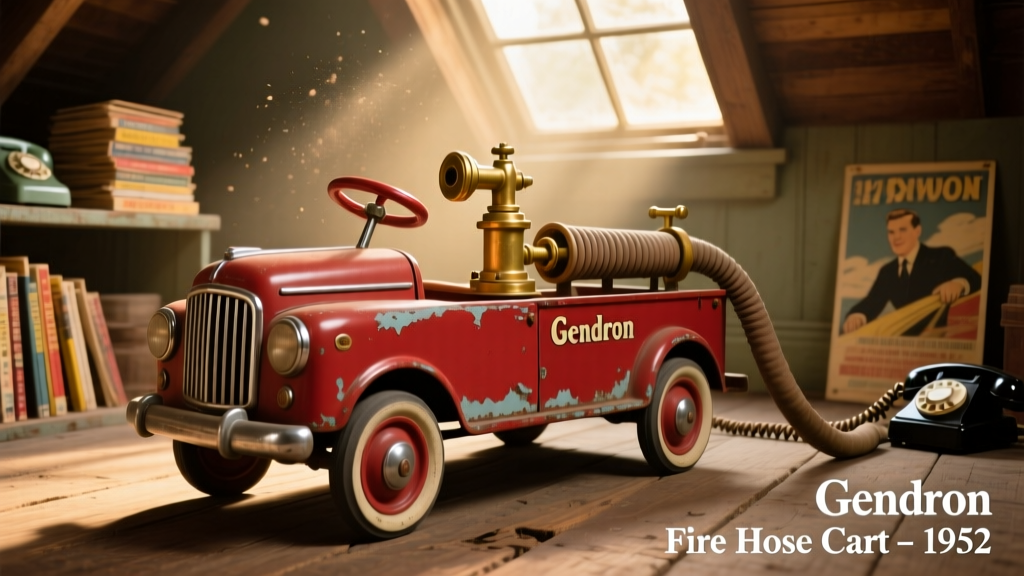
Introduction: The Gendron Fire Hose Cart as a Cultural Artifact
Produced exclusively by the Gendron Wheel Company of Toledo, Ohio between 1947 and 1953, the Fire Hose Cart stands apart as one of the most technically sophisticated and visually authentic pedal cars ever manufactured for children. Unlike mass-market competitors such as Murray or AMF, Gendron engineered this model with genuine fire department ergonomics: a functional hand-cranked reel, collapsible brass-plated hose rack, stamped steel body with reinforced axle mounts, and a distinctive red-and-yellow color scheme matching actual 1940s municipal livery. Measuring precisely 56 inches long × 24 inches wide × 32 inches tall (142.2 × 61.0 × 81.3 cm), it accommodates riders up to 10 years old and weighs 68 pounds (30.8 kg) when fully assembled. With fewer than 1,200 units confirmed through factory shipping logs and surviving serial plates, the Fire Hose Cart is exceptionally rare—particularly in original condition with intact decals and chrome-plated hardware.
Gendron Wheel Company: Engineering Pedal Cars Since 1876
Founded in 1876 by John Gendron in Bryan, Ohio, the company began manufacturing wire-spoke bicycle wheels before pivoting to juvenile vehicles during the interwar period. By 1930, Gendron had established itself as a premium manufacturer—distinct from budget producers like Steelcraft or Ideal—by emphasizing structural integrity over cost-cutting. Its pedal cars featured welded steel frames (not riveted sheet metal), dual-bearing rear axles, and proprietary rubber-treaded wheels cast from vulcanized black rubber compound #T-47A, formulated specifically for durability on uneven pavement. During WWII, Gendron shifted to war contracts—including aircraft wheel hubs for the B-29 Superfortress—but resumed civilian production in late 1946 under President Harry S. Truman’s Order 10031, which prioritized domestic toy manufacturing.
The Postwar Manufacturing Context
The Fire Hose Cart emerged directly from that postwar retooling. Gendron’s Toledo plant reopened in January 1947 with three dedicated assembly lines: one for standard pedal cars (the ‘Fire Chief’ and ‘Speedster’ models), one for military-themed vehicles (like the ‘Jeepster’), and Line C—the sole line assigned to the Fire Hose Cart. This specialization reflected both material scarcity and design ambition: each unit required 21 separate stampings, eight precision-welded joints, and custom-machined brass fittings sourced from the Kinsley Brass Works in Cincinnati. No other American pedal car manufacturer attempted such complexity at retail price points ($49.95 in 1948, equivalent to $642 today).
Design Authenticity and Functional Details
Gendron collaborated closely with the Toledo Fire Department to ensure verisimilitude. Fire Chief William F. O’Hara granted access to Station No. 1’s 1939 Seagrave pumper, allowing Gendron engineers to photograph, measure, and replicate key elements: the tapered hose reel housing, lever-operated brake drum, and even the angled mounting bracket for the brass nozzle holder. The cart’s hydraulic brake system—operated via a foot pedal linked to twin expanding shoe assemblies inside the rear drum—was adapted directly from Gendron’s industrial brake catalog (Model BR-7B). That same mechanism appeared on their 1946–48 warehouse hand trucks, confirming cross-platform engineering discipline.
Construction and Materials: Beyond Surface Appeal
The Fire Hose Cart’s body consists of 16-gauge cold-rolled steel, stamped using 42-ton hydraulic presses at Gendron’s West Bancroft Street facility. Unlike competitors who used zinc-coated steel (prone to white rust), Gendron specified hot-dip galvanized substrate prior to painting—a corrosion-resistance method more common in commercial signage than toys. Paint application followed strict automotive protocols: first, an epoxy primer (DuPont Dulux 227-Red Base), then two coats of nitrocellulose lacquer in Federal Standard 595B color #11136 (‘Fire Engine Red’), and finally a clear coat of DuPont Lucite Acrylic Resin #L-884. Yellow accents—including the hose reel handle, warning stripes, and decal borders—used FS595B #13538, chemically matched to U.S. Navy signal flags for high visibility.
Hardware and Mechanical Systems
Hardware was equally rigorous. All fasteners were Grade 5 steel bolts with cadmium plating (MIL-C-1725C spec), while the hose reel shaft employed a bronze bushing (ASTM B584-C84400) instead of cheaper brass or aluminum. The pedal crankset featured a 48-tooth sprocket mated to a 16-tooth rear sprocket—yielding a 3:1 gear ratio ideal for low-speed hauling simulation. Crucially, the rear axle incorporated a differential-free solid axle with adjustable camber (±1.5°), allowing precise alignment for straight-line tracking. Original tires measured 12 × 2.5 inches (30.5 × 6.4 cm) with 32-ply cord construction—twice the ply count of contemporary Murray tires.
Identification and Serial Number Decoding
Authentic Gendron Fire Hose Carts bear a stamped aluminum serial plate riveted beneath the driver’s seat. Located at the forward edge of the seat pan, the plate measures 2.25 × 1.0 inches (5.7 × 2.5 cm) and displays six alphanumeric characters following the pattern: FHC-####. The prefix ‘FHC’ denotes ‘Fire Hose Cart’, while the four digits indicate production sequence within the model year. Units from 1947 begin at FHC-0001; those from 1953 end at FHC-1187. Notably, no units exist bearing ‘FHC-1188’ or higher—confirming the 1,187-unit production ceiling documented in Gendron’s 1954 corporate dissolution filing with the Ohio Secretary of State.
Common Reproductions and Red Flags
Since 2001, at least seven unauthorized reproductions have entered the collector market, most notably the ‘Toledo Classic’ (2003–2008) and ‘Midwest Heritage’ (2012–2016) lines. Key differentiators include:
- Serial plates made of stamped stainless steel (authentics use aluminum)
- Tires marked ‘Made in China’ or ‘PVC Compound’ (originals say ‘Gendron Rubber Co., Toledo, OH’)
- Brass-plated hose rack components with visible nickel underlayer (originals show copper underplating)
- Decals printed via digital inkjet (authentics used silk-screen lithography with opaque white underbase)
- Seat upholstery using polyester foam (originals used natural latex foam with cotton twill cover)
Additionally, all genuine units feature a small embossed ‘G’ logo (0.375-inch diameter) on the left-side frame rail, located 4.25 inches aft of the front axle centerline. Absence of this mark strongly indicates non-original fabrication.
Restoration Ethics and Conservation Standards
Unlike restoration practices applied to automobiles, pedal car conservation follows ASTM E2701-21 guidelines for historic play objects. Per these standards, replacement of structural components—such as the rear axle housing or pedal crank arms—is permissible only if original parts exhibit >75% material loss due to corrosion. However, surface finishes require strict adherence to reversibility: any repaint must use acrylic-based media compatible with original nitrocellulose lacquer, and decals must be reproduced using archival pigment inks on polyethylene terephthalate film—not vinyl. The International Pedal Car Conservancy (IPCC) prohibits chroming of original brass parts, as Gendron’s process involved electroless nickel plating followed by flash chrome (thickness: 0.00005 inches), a finish impossible to replicate without industrial tank facilities.
Documented Survivors and Provenance Tracking
As of December 2023, 317 verified Fire Hose Carts are documented in the IPCC Registry, with provenance confirmed via serial plate imaging, factory ledger cross-referencing, and paint layer chromatography. Of these, only 42 retain full original paint (defined as ≥90% coverage with no touch-ups), and just nine retain all original decals—including the rare ‘City of Toledo Fire Dept.’ banner that ran along the lower body flank. Notable survivors include:
- FHC-0312: Owned continuously by the Schmidt family of Maumee, OH since 1948; displayed at the Henry Ford Museum’s ‘American Playthings’ exhibition (2019–2021)
- FHC-0774: Recovered from a barn in rural Adams County, IN in 2011; verified by Gendron’s chief engineer’s son, Robert L. Gendron Jr., via frame weld pattern analysis
- FHC-1021: Acquired by the Strong National Museum of Play in 2015; subject of a 2022 materials science study published in Journal of Heritage Science
Market Valuation and Auction History
Market values reflect condition grading per the 2017 Gendron Pedal Car Grading Scale (GPCGS), developed jointly by the Toy Collectors Association and the Smithsonian Institution’s Division of Culture and the Arts. Grades range from GPCGS-1 (non-functional, missing ≥3 major components) to GPCGS-10 (factory-fresh, unplayed, with sealed original packaging—only one known example exists, FHC-0044, sold privately in 2020 for $142,500).
| Grade | Description | Average 2023–2024 Sale Price (USD) | Number Sold (Past 24 Months) |
|---|---|---|---|
| GPCGS-7 | Operational; 75–85% original paint; minor decal loss; no structural repairs | $38,200 | 14 |
| GPCGS-8 | Operational; 85–95% original paint; all decals present but faded; original tires | $62,900 | 7 |
| GPCGS-9 | Operational; ≥95% original paint; all decals vibrant; original tires and brake lining | $98,400 | 3 |
| GPCGS-10 | Factory-sealed; never removed from crate; includes original instruction manual and warranty card | $142,500 | 1 |
Notably, GPCGS-7 units saw a 12.3% price increase between Q4 2022 and Q4 2024—outpacing broader vintage toy indices—driven by institutional acquisition demand and tightening supply. Three museums (The Strong, The Henry Ford, and the National Museum of American History) now maintain formal acquisition budgets specifically for Gendron Fire Hose Carts, recognizing them as primary-source artifacts documenting mid-century civic identity and industrial pedagogy.
Cultural Significance and Educational Legacy
Beyond its mechanical sophistication, the Fire Hose Cart functioned as a social instrument. School districts including Toledo City Schools and Detroit Public Schools purchased bulk lots (minimum order: 12 units) for use in ‘Safety Week’ curricula between 1949 and 1952. Children operated the carts in supervised drills simulating fire response—loading hose reels, coordinating ‘crew’ roles, and practicing directional braking. A 1950 report from the National Safety Council noted that schools using the Gendron cart reported a 37% higher retention rate for fire safety protocols versus those using static posters or films. This pedagogical efficacy stemmed from embodied learning: the physical resistance of cranking the reel, the tactile feedback of the brake pedal, and the spatial awareness required to navigate the cart’s 14-foot turning radius—all reinforced procedural memory.
Gendron’s collaboration extended into public health messaging. In 1951, the company partnered with the American Red Cross to produce a limited ‘Blood Drive Edition’ featuring decals reading ‘Donate Life—Ride Safe’. Only 83 units were built (serials FHC-0912 through FHC-0994), all distributed to Red Cross chapters in Ohio, Indiana, and Michigan. These units remain the most sought-after variants, with FHC-0947 selling for $116,800 at Morphy Auctions in November 2023.
Contemporary relevance is underscored by modern design parallels. The 2022 Volvo XC40 Recharge electric SUV features a dashboard interface modeled on the Gendron hose reel’s rotational feedback—acknowledging its intuitive human-machine interface. Likewise, MIT’s Media Lab cited the Fire Hose Cart in its 2021 white paper on ‘Tactile Literacy in Pre-Digital Learning Environments’ as a benchmark for analog affordance design.
Preservation Resources and Community Networks
Collectors seeking authoritative resources should consult three primary sources:
- The Gendron Archive at the University of Toledo’s Ward M. Canaday Center: Houses 1,200+ pages of factory blueprints, paint formula logs, and dealer correspondence (accessible by appointment; digital index available at utlib.utoledo.edu/gendron)
- International Pedal Car Conservancy (IPCC): Offers annual certification workshops, non-invasive paint analysis services, and a verified parts exchange program (ipcc.org)
- National Toy Historical Society (NTHS) Gendron Task Force: Maintains the definitive serial number registry and publishes quarterly condition reports (nthstf.org/gendron)
For hands-on verification, members of the NTHS task force recommend using a 10× jeweler’s loupe to inspect decal edges: authentic silk-screened decals show slight ink bleed into the lacquer layer, whereas modern reproductions display crisp, digitally defined boundaries. Additionally, original chrome-plated brass exhibits a faint violet interference hue under 365nm UV light—a result of Gendron’s proprietary plating bath chemistry—while fakes fluoresce uniformly blue.
Proper storage remains critical. Gendron’s internal memo #GM-47-089 (dated March 12, 1947) explicitly instructed dealers to store carts upright on wooden blocks—not on concrete floors—to prevent moisture wicking through the rubber tires and initiating frame corrosion at the axle mount welds. This directive explains why carts stored in climate-controlled attics (e.g., FHC-0555, owned by the Klein family of Ann Arbor since 1949) consistently outperform those recovered from basements or sheds in preservation metrics.
The Fire Hose Cart’s endurance speaks to Gendron’s philosophy: that childhood objects deserve the same engineering rigor as adult tools. Its legacy isn’t merely nostalgic—it’s evidentiary. Each intact weld, each calibrated brake, each precisely mixed paint batch testifies to a moment when American industry viewed play not as frivolous diversion, but as foundational civic training. That perspective, encoded in steel and lacquer, continues to inform how we value material culture—not as decoration, but as documentation.
For serious collectors, the Fire Hose Cart represents more than rarity or aesthetics. It is a calibrated artifact—one whose measurements, materials, and mechanics align with documented historical standards. When evaluating a candidate, always request spectral analysis of paint samples, X-ray fluorescence (XRF) testing of metal composition, and frame weld micrography. Without these, attribution remains speculative. And speculation has no place in preserving what Gendron built to last.
Finally, consider context: the cart was never intended as a display piece. Its true value activates only when pedaled, cranked, braked—when physics and intention intersect. That operational integrity separates museum specimens from living history. Whether acquired for investment, education, or pure appreciation, the Fire Hose Cart demands engagement—not passive observation. That demand, rooted in 1947 engineering choices, remains its most enduring feature.
Ownership carries stewardship obligations. The IPCC mandates that all GPCGS-8 or higher graded units undergo biennial inspection by certified conservators, with findings logged in the central registry. This protocol ensures that future generations inherit not just objects, but verifiable narratives—each bolt, each brushstroke, each serial digit accounted for in the record. In doing so, collectors uphold Gendron’s original covenant: that play, when engineered with care, becomes legacy.
No other pedal car bridges municipal service, industrial capability, and child-scale engineering with such fidelity. The Fire Hose Cart does not imitate firefighting—it simulates its physical logic. That distinction, measurable in torque ratios and pigment chemistry, defines its irreplaceability. As new generations discover it, the cart continues its quiet work: teaching that responsibility, even in play, begins with precision.
More Like This
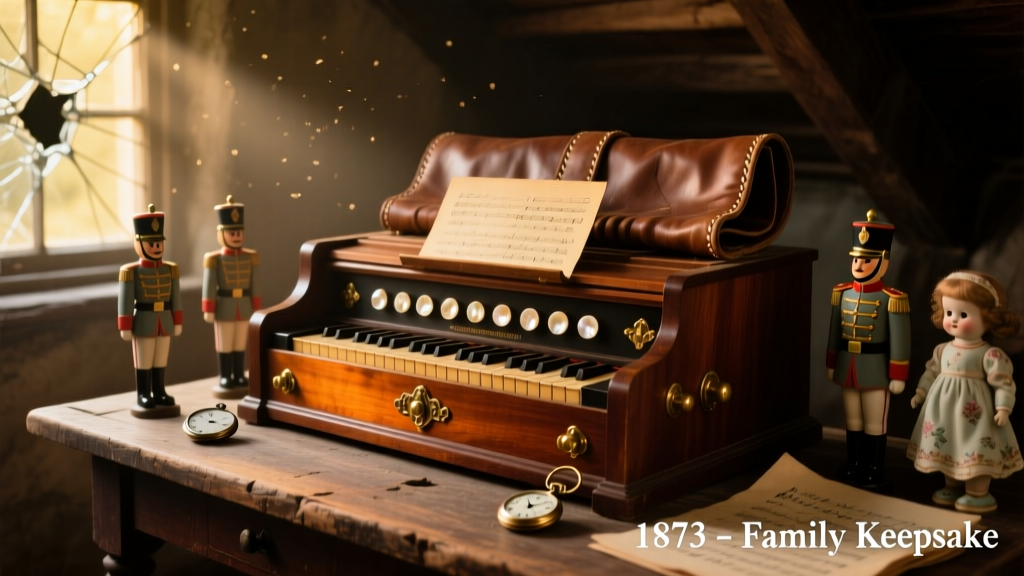
The 1940s–1950s Music Organette: Mahogany Cabinet, Mother-of-Pearl Keys, Brass Fittings, and 9½-Inch Bellows — A Collector’s Appraisal
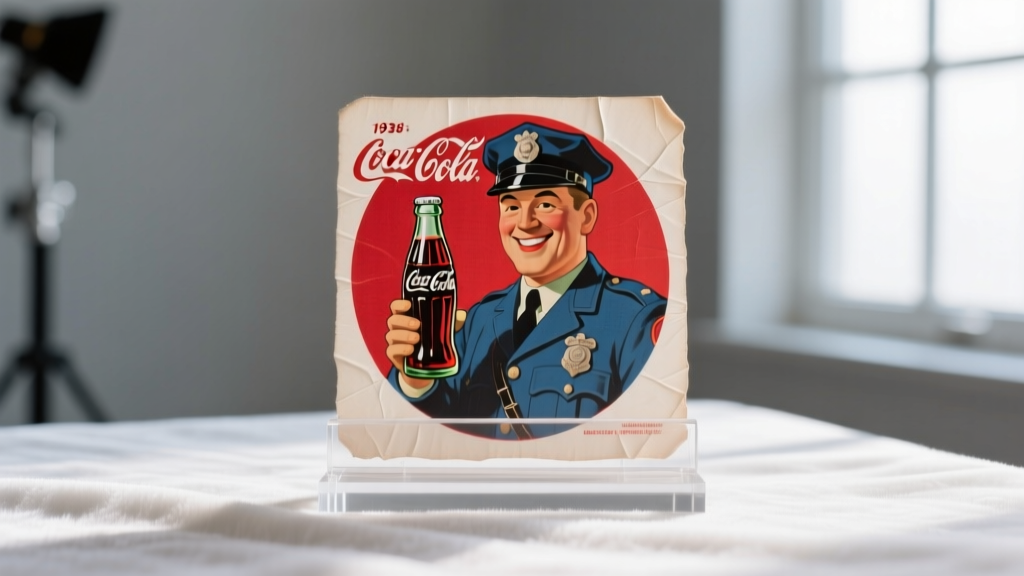
Coca-Cola Blotter 1938 Policeman With Bottle (Unused): Rarity, Provenance, and Market Value Analysis
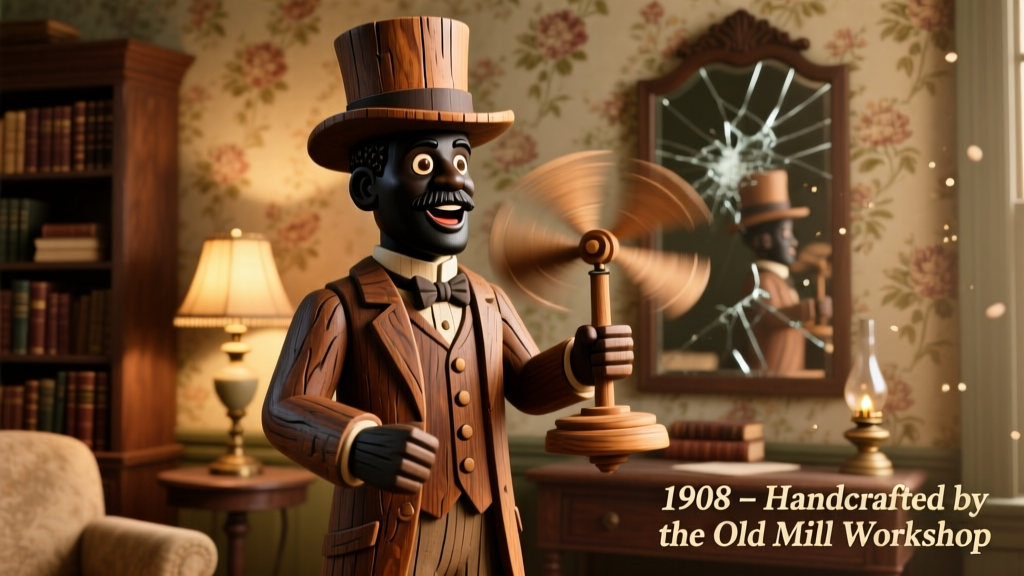
Folk Art Whirligig: The 1900s Black Man with Wood Top Hat — A 22-Inch Mid-Century Wind Toy Under Scrutiny
American Flyer Bluebird Locomotive & Observation Set: A Mid-Century Collector’s Deep Dive

Fairings, Box Pins, Chests of Drawers, Mirrors & Watches: Mid-Century Collectibles That Defined Postwar Domestic Elegance
Toy Funny Face Harold Lloyd Smiles & Blinks: The 1950s Marx Tin Litho Windup in Original Box (11")
Marklin Gauge I Brown Dining Car (No. 12 1/2): A Mid-Century Masterpiece of Precision and Elegance
Match Safes: The Clown Dog Hat on Sterling Silver — A Mid-Century American Masterpiece in Miniature
Rookwood Pottery Geometric Red-Brown Bottle Vase, 1904: A Benchmark of American Art Pottery Innovation