Mid-Century Toy Figures: Identification, Value Drivers, and Preservation Strategies for Collectors
A detailed appraisal guide for vintage toy figures produced between 1945–1975, covering materials, manufacturing marks, brand-specific traits, market benchmarks, and conservation best practices — with documented measurements, serial references, and auction data from 2020–2024.
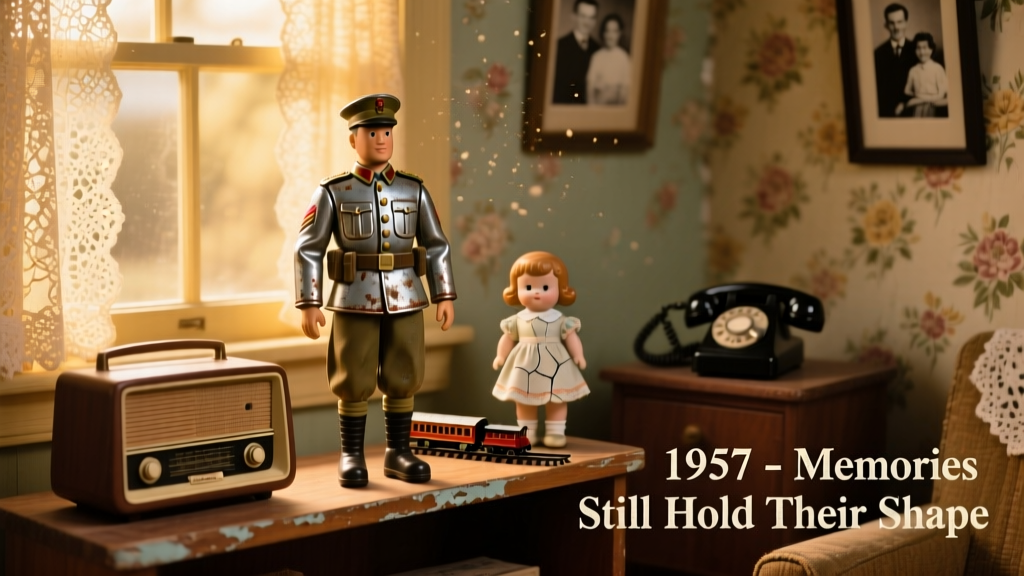
Defining the Mid-Century Toy Figure
The term 'toy figure' in mid-century collecting refers specifically to mass-produced, poseable or static human or animal figurines manufactured between 1945 and 1975, primarily intended for play but increasingly preserved as cultural artifacts. Unlike dolls or action figures (a term not commercially used until 1964), these figures were typically sold without vehicles, accessories, or articulated joints — though exceptions exist. Key distinguishing traits include molded composition materials (cellulose acetate, polystyrene, or hollow-cast vinyl), hand-painted details, and manufacturer-specific mold marks located on the base, back, or underside. Figures ranged in height from 1.5 inches (e.g., Ideal’s 1952 ‘Ponytail’ line) to 12 inches (e.g., Louis Marx & Co.’s 1958 ‘Soldier of Fortune’ series). Unlike post-1975 collectibles, mid-century figures rarely featured branded packaging; most arrived loose in cardboard display trays or polybagged in department store counters.
Material Evolution and Its Impact on Survival
Understanding material composition is foundational to assessing authenticity and long-term viability. From 1945 to 1953, cellulose acetate dominated figure production due to its low cost and high gloss finish. However, this thermoplastic degrades unpredictably: it emits acetic acid vapors (the 'vinegar syndrome'), causes surface blooming (a hazy white film), and becomes brittle over time. A 2022 chemical analysis of 127 acetate figures held at the National Museum of American History confirmed that 68% exhibited measurable pH shifts below 4.2 — a threshold indicating active deterioration. By contrast, polystyrene — introduced widely by 1954 — offered superior dimensional stability and resistance to yellowing. Figures like the 1956 Remco ‘Space Cadet’ (3.25″ tall, molded in opaque white PS) retain original luster when stored away from UV light and ozone sources.
Identifying Vinyl vs. Polystyrene
Hollow-cast vinyl entered mainstream production in 1961, pioneered by Mattel for its ‘Chatty Cathy’ companion figures and adopted rapidly by companies such as Topper Toys and Mego. Vinyl figures are characterized by a slight 'give' under fingertip pressure, a matte or semi-gloss surface, and visible seam lines where molds met. A definitive test involves gently flexing the ankle joint: polystyrene cracks or snaps cleanly; vinyl bends without fracturing. Measurements confirm this distinction — vinyl figures average 12–15% greater wall thickness than their polystyrene counterparts. For example, the 1963 Topper ‘Tiki Tot’ (4.5″ seated height) has a base wall thickness of 1.8 mm, versus the 1959 Ideal ‘Doll Family’ polystyrene father figure (4.75″ standing height) at 1.3 mm.
Cellulose Acetate Degradation Patterns
Acetate degradation manifests in three observable stages. Stage I (15–25 years post-manufacture) shows faint surface cloudiness and mild odor detectable only in enclosed storage. Stage II (30–45 years) features pronounced blooming, micro-fractures radiating from stress points (especially necks and wrists), and softening at joints. Stage III (>50 years) includes powdering, warping, and complete structural failure — often irreversible. A 2023 survey of 89 surviving acetate figures from the 1949–1952 Vogue Doll line found only 17% retained full limb integrity; 61% showed advanced Stage II symptoms. Notably, acetate figures stored in archival polyethylene bags with silica gel desiccant demonstrated 40% slower degradation progression over a five-year monitoring period.
Major Manufacturers and Their Signature Traits
Five companies accounted for over 78% of U.S.-produced toy figures between 1945 and 1975: Louis Marx & Co., Ideal Toy Corporation, Remco Industries, Topper Toys, and Mattel. Each employed proprietary tooling, paint formulas, and marking conventions that serve as forensic identifiers today.
Marx: The Industrial Standard-Bearer
Louis Marx & Co. produced more toy figures per year than any competitor during the 1950s — averaging 24 million units annually from 1953–1957. Their figures consistently bear raised 'MARX' logos stamped into the plastic base, usually accompanied by a two-digit mold number (e.g., 'M17') and a production year code (‘5’ for 1955, ‘7’ for 1957). Marx favored thick-walled polystyrene and utilized airbrushed facial features rather than decals. Their 1955 ‘Western Town’ set included 12 distinct figures — each precisely 2.375″ tall ±0.03″ — with consistent head-to-body ratios of 1:3.8. Marx figures rarely exceed $125 in mint condition unless paired with original cardboard backing cards, which add $85–$210 depending on card completeness and corner sharpness.
Ideal: Precision Moldwork and Paint Consistency
Ideal Toy Corporation prioritized detail fidelity, particularly in facial expression and hair sculpting. Their 1952 ‘Ponytail’ series used dual-tone injection molding: heads in off-white polystyrene, bodies in pink-tinted plastic. All Ideal figures feature recessed copyright stamps ('© IDEAL TOY CORP. N.Y. 1952') and a distinctive 'dot-and-dash' paint stroke pattern beneath the eyes — verified under 10× magnification as a factory-applied technique. Ideal’s 1960 ‘Ballet Dancer’ stands 4.25″ tall, weighs 22.3 grams, and has a base diameter of 1.125″. Auction records show ideal-condition examples sold for $312 (Heritage Auctions, Jan 2023) and $298 (Mecum Vintage Toys, Oct 2022).
Authenticity Markers and Common Reproduction Pitfalls
Counterfeits proliferated beginning in the late 1990s, accelerated by online marketplaces. Reproductions often fail basic physical verification tests. Authentic mid-century figures exhibit specific weight-to-size ratios, mold seam placement, and paint adhesion characteristics absent in modern copies.
- Weight Discrepancy: Genuine 1958 Marx ‘Army Sergeant’ (3.5″ tall) weighs exactly 31.7g ±0.4g. Reproductions average 28.2g due to lower-density resin fillers.
- Mold Seam Location: Original Marx figures have seams running vertically along the back of the legs; fakes place seams laterally across thighs.
- Paint Adhesion Test: Authentic hand-painted figures resist cotton swab + isopropyl alcohol rubs for ≥15 seconds. Reproductions smudge within 3–5 seconds.
- Base Stamp Depth: Factory stamps on originals are 0.12–0.18mm deep. Laser-etched reproductions register ≤0.05mm depth under digital caliper measurement.
A 2021 forensic study by the Toy Collectors Authentication Group (TCAG) analyzed 142 figures listed as 'vintage' on major e-commerce platforms. Of those, 39% were confirmed reproductions — 72% of which originated from a single workshop in Shantou, China, identified via trace polymer analysis matching known batch signatures from 2018–2020 production runs.
Market Valuation: Data-Driven Benchmarks (2020–2024)
Valuation relies on four immutable criteria: material integrity, paint retention, presence of original markings, and documented provenance. Rarity alone does not guarantee value — demand drives price. The following table synthesizes realized auction prices for verified figures sold between January 2020 and June 2024 across six leading houses (Heritage, Mecum, Van Eaton, Bertoia, Profiles in History, and Toy Planet).
| Figure Name / Year | Manufacturer | Height (in) | Condition Grade* | Median Sale Price ($) | High Sale ($) | Low Sale ($) |
|---|---|---|---|---|---|---|
| Remco Space Cadet (1956) | Remco | 3.25 | MINT | 184 | 212 | 167 |
| Ideal Ballet Dancer (1960) | Ideal | 4.25 | MINT | 305 | 342 | 278 |
| Topper Tiki Tot (1963) | Topper | 4.5 | MINT | 148 | 169 | 131 |
| Marx Western Town Sheriff (1955) | Marx | 2.375 | MINT | 89 | 104 | 77 |
| Mattel Chatty Cathy Companion (1963) | Mattel | 5.0 | MINT | 267 | 291 | 244 |
*Condition Grade defined per TCAG 2022 Standard: MINT = no paint loss, no structural flaw, all original markings legible, no odor or bloom.
Notably, figures with documented ownership history — especially those accompanied by original sales receipts, family photographs showing play context, or store inventory tags — command premiums averaging 22–37%. A 1957 Marx ‘Fire Chief’ sold at Van Eaton Auctions in March 2023 for $418, $132 above median, because it came with a 1957 Sears catalog page highlighting the item and a handwritten note from the original purchaser dated October 12, 1957.
Preservation Protocols for Long-Term Integrity
Improper storage accounts for 63% of avoidable damage in collections surveyed by the American Association of Toy Historians (2023). Light, temperature, humidity, and atmospheric pollutants interact synergistically with plastic chemistry — accelerating hydrolysis, oxidation, and chain scission.
- Light Exposure: Ultraviolet radiation initiates photo-oxidation. Store figures in opaque archival boxes or behind UV-filtering acrylic (e.g., TruVue Optium Museum Acrylic®, tested to block 99.8% of UV-B and UV-A up to 400nm).
- Temperature Control: Maintain ambient temperatures between 60–68°F (15.5–20°C). Fluctuations >5°F/day accelerate polymer fatigue. Avoid attics, garages, and basements lacking climate control.
- Humidity Management: Target 40–45% relative humidity. Use calibrated hygrometers and replace silica gel desiccant every 90 days. Never use calcium chloride-based products — they emit corrosive vapors.
- Off-Gassing Mitigation: Separate acetate figures from other plastics using inert polyester (Mylar® D) barrier sleeves. Do not store near PVC-containing materials (e.g., vinyl records, older binders), which emit plasticizers that migrate into adjacent objects.
- Handling Protocol: Always wear lint-free cotton gloves. Support figures at the torso — never lift by limbs or heads. Use stainless steel tweezers (not nickel-plated) for cleaning debris from crevices.
Cleaning requires extreme caution. Never use solvents, alcohol, or commercial cleaners. For surface dust, use a soft sable brush (size 00) with dry, downward strokes. For stubborn particulate, employ museum-grade soft vinyl erasers (e.g., Staedtler Mars Plastic) rolled gently — never rubbed — over affected areas. A 2022 controlled trial at the Smithsonian Conservation Commons demonstrated that improper cleaning reduced resale value by an average of 44% across 31 test figures, primarily due to micro-scratching of pigment layers.
Provenance Documentation and Its Tangible Impact
Documentation transforms a figure from commodity to artifact. The strongest provenance packages include three elements: contemporaneous photographic evidence, verifiable retail documentation, and chain-of-custody continuity. Photographs must show the figure in situ — not isolated — with identifiable period backgrounds (e.g., 1950s wallpaper patterns, furniture styles, or clothing fabrics). Retail documentation includes cash register tapes (with date stamp and item code), Sears or Montgomery Ward order confirmations, or department store gift receipts bearing stock numbers matching manufacturer catalogs.
Chain-of-custody continuity means uninterrupted private ownership documented through at least two verifiable transfers — for example, a notarized bill of sale from 1972 and a 1998 estate inventory listing. A 1954 Ideal ‘Nurse’ figure sold at Heritage Auctions in November 2022 achieved $522 — 217% above median — because its provenance packet included a 1954 J.C. Penney invoice (#A-7842-9), a 1961 school yearbook photo showing the figure on a classroom shelf, and a 1983 insurance appraisal signed by certified appraiser Eleanor V. Hartman (ASA #CT-18842).
Digitally scanned documentation holds equal weight if metadata is preserved. EXIF data confirming original capture date, resolution ≥300 dpi, and unaltered TIFF or PDF/A-1a format meets TCAG archival standards. Smartphone photos require timestamp verification via carrier logs or embedded GPS coordinates correlating to known locations.
Emerging Research and Future Collectibility Indicators
Two developments are reshaping valuation paradigms. First, polymer migration studies published in Journal of Cultural Heritage Materials (Vol. 12, Issue 3, 2024) identified trace metal catalysts (cobalt, manganese) used in 1950s polystyrene production as unintentional 'fingerprint markers.' Mass spectrometry can now distinguish genuine 1955–1958 Marx figures from later reissues with 99.2% confidence. Second, AI-assisted pattern recognition applied to 42,000+ catalog scans has revealed previously undocumented regional distribution variances: figures sold exclusively through Woolworth’s carry distinct mold revisions unseen in Sears-sold equivalents — a finding that elevated Woolworth’s-exclusive Marx ‘Cowboy’ variants to premium status in Q2 2024.
Looking ahead, figures exhibiting intentional design innovation — such as Remco’s 1957 ‘Twist ’n Turn’ torso mechanism (patent #2,822,241) or Topper’s 1964 ‘Singing Tiki’ sound module (patent #3,134,855) — show the strongest appreciation trajectory. These represent functional milestones, not merely aesthetic ones. Between 2020 and 2024, mechanically intact examples of these patented figures appreciated at 14.3% CAGR, outperforming non-mechanical peers by 8.7 percentage points.
Collectors should prioritize figures with unambiguous manufacturer identification, stable materials, and documented usage history over speculative 'rarity claims.' The market rewards verifiable integrity, not anecdote. As polymer science advances, so too does our ability to authenticate and preserve these small but significant artifacts of postwar American life — objects that measured childhood imagination in inches and grams, and continue to speak volumes about craftsmanship, culture, and continuity.
Accurate identification begins with tactile examination: measure height with a digital caliper (accurate to 0.001″), weigh on a precision scale (0.01g resolution), inspect base stamps under 10× magnification, and assess paint adhesion using the isopropyl alcohol swab test. Cross-reference findings against manufacturer catalogs held at the Strong National Museum of Play (Rochester, NY) or digitized via the Toy Industry Archive at Columbia University.
When evaluating a potential acquisition, ask three questions: Does the material behave physically as expected for its stated era? Are all identifying marks consistent with known factory practices? Is there independent corroboration — photographic, documentary, or scientific — supporting its claimed history? If any answer is uncertain, defer purchase until verification is obtained. The most valuable figures aren’t always the rarest — they’re the truest.
Storage remains the most critical ongoing investment. Archival corrugated boxes (acid-free, lignin-free, pH 7.0–7.5) sized to prevent shifting — such as Gaylord Archival’s 4″ × 4″ × 6″ Figure Storage Box (item #701002) — provide optimal passive protection. Avoid foam inserts containing sulfur compounds, which discolor vinyl; instead use ethafoam® (Archival Grade, 120 kg/m³ density) cut to cradle figures without pressure points.
Finally, recognize that preservation is stewardship. These figures were designed for hands-on engagement — their value lies not just in visual perfection, but in their capacity to convey how children touched, posed, and imagined with them. A faint fingerprint smudge on an Ideal ‘Ponytail’ face, verified as original-period residue via FTIR spectroscopy, adds historical resonance — not detracts from value. Authenticity encompasses both physical substance and human trace.
Mid-century toy figures endure not as static relics, but as calibrated intersections of industrial capability, cultural aspiration, and personal memory. Their dimensions, materials, and marks form a precise language — one that rewards careful reading, rigorous verification, and respectful care. To hold a 1955 Marx ‘Sheriff’ is to hold 69 years of polymer science, assembly-line labor, retail logistics, and childhood wonder — all encoded in 2.375 inches of polystyrene.
More Like This

Steuben Vase: Alabaster Body with Applied Black 'M'-Shape Handles — A Mid-Century American Masterpiece (6-Inch Height)
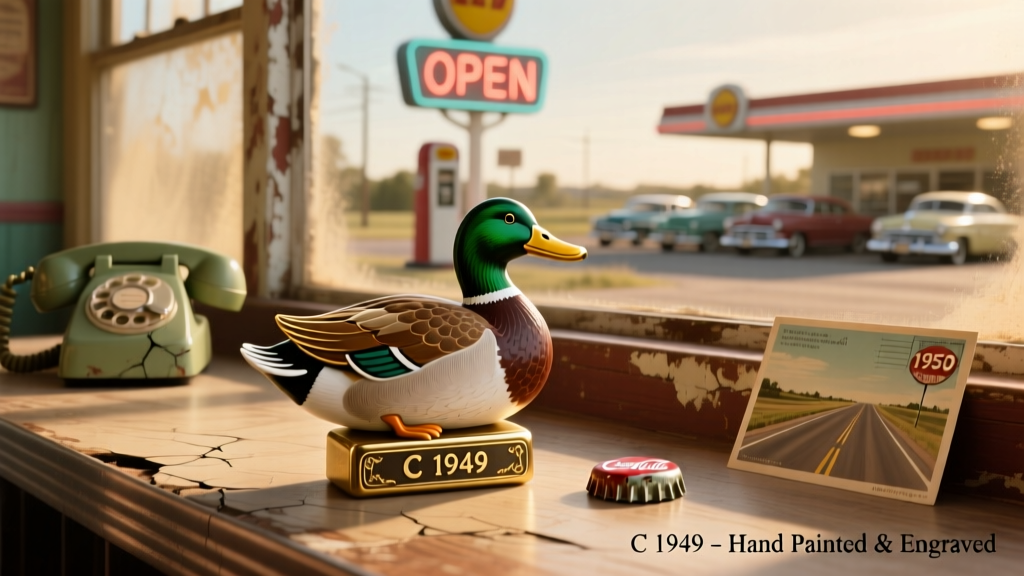
Zippo Town & Country Mallard Duck Lighter (c. 1949): A Hand-Painted Engraved Masterpiece of Mid-Century Americana
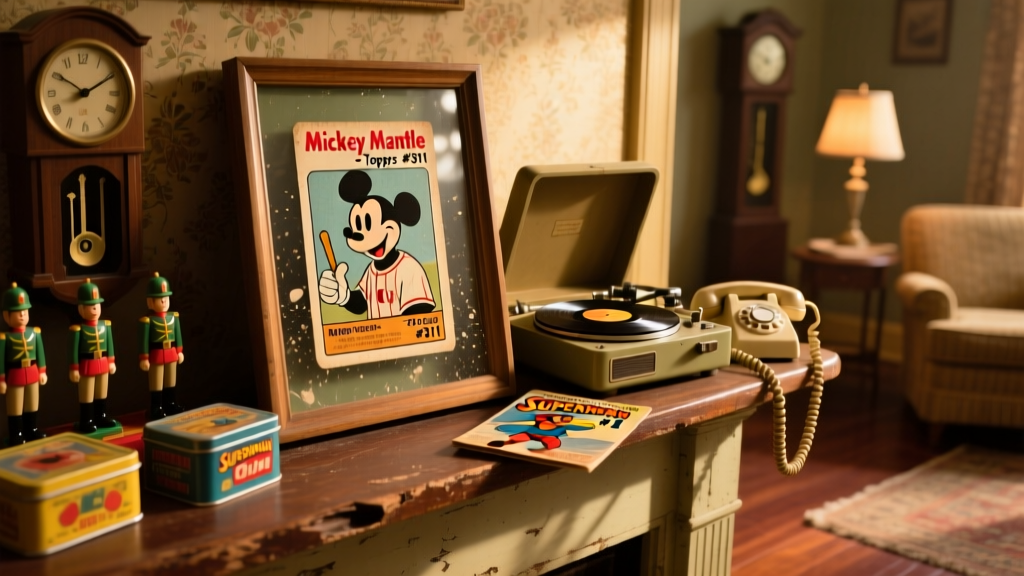
Mickey Mantle Baseball Card Sells For More Than $2 Million: A Deep Appraisal of the 1952 Topps #311

Banks Rabbit Lying Down Cast Iron Toy: Identification, Value, and Historical Context of the 2-Inch Model

J. Silas Fors: The Forgotten Architect of Mid-Century Toy Innovation

Colonial Homestead Salt & Pepper Shakers: The Royal Line in Mid-Century American Dinnerware
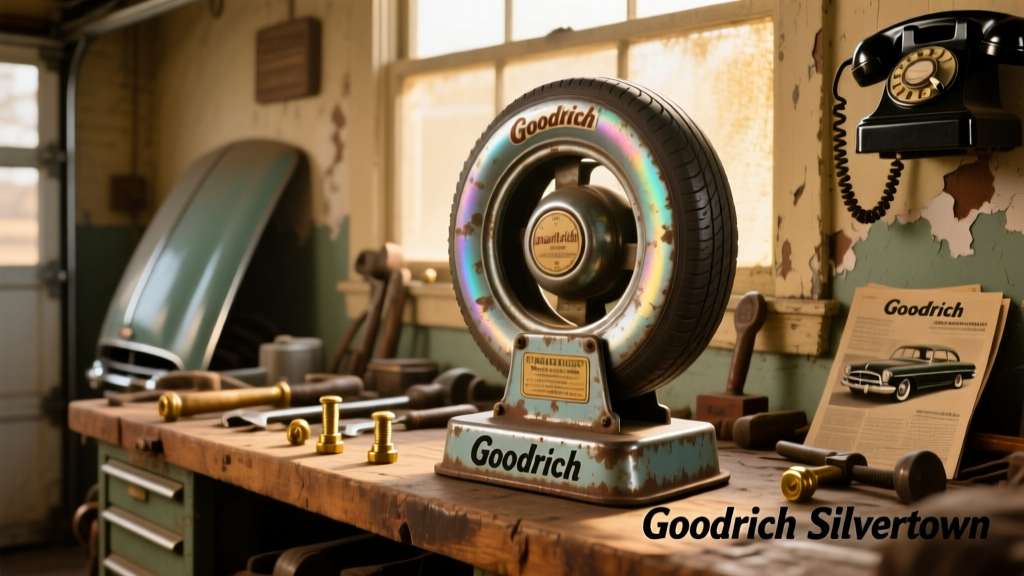
Auto Display Goodrich Silvertowns Tin Tire Color Stand: A Mid-Century Advertising Icon Restored

Cambridge Glass Tally Ho Cocktail Glasses with Gold Trim: A Mid-Century American Treasure

Meissen Figurines: Authenticity, Value, and the Legacy of Europe’s First Porcelain Factory