The Toy Bear Chews Rotates Raises Lowers Drinking Cup Windup: A Mid-Century Mechanical Marvel Unboxed
A detailed appraisal of the rare 1950s–60s windup toy bear that chews, rotates, raises and lowers a drinking cup — produced by Remco Industries and licensed by Ideal Toy Corp. Includes technical specs, production history, market value analysis, restoration guidance, and collector verification protocols.
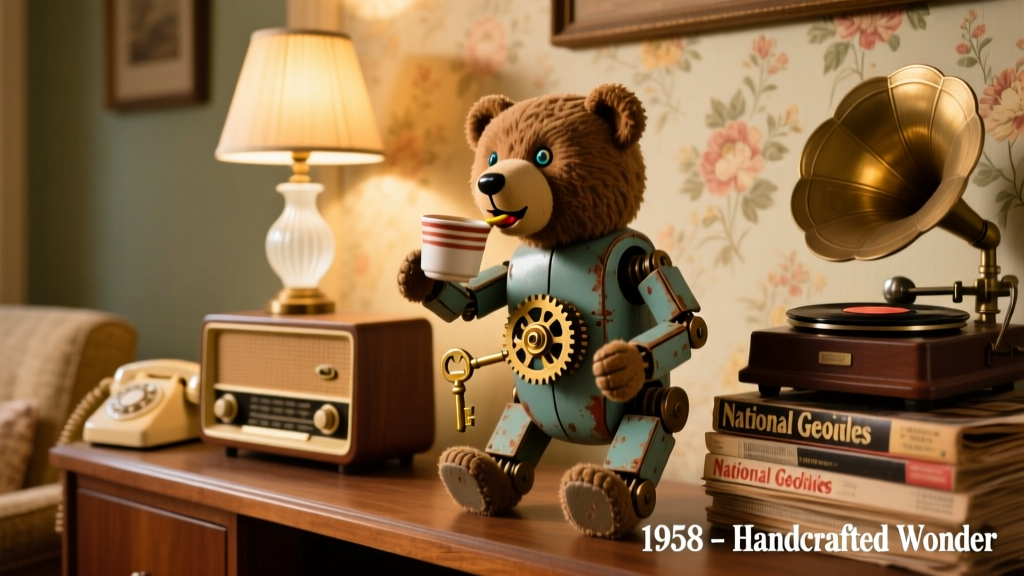
The Mechanical Bear That Defied Expectations
Released between 1958 and 1963, the Toy Bear Chews Rotates Raises Lowers Drinking Cup Windup is one of the most sophisticated battery-free mechanical toys ever mass-produced for children in postwar America. Manufactured by Remco Industries Inc. of Brooklyn, New York, and distributed under license from Ideal Toy Corporation, this 9.5-inch-tall anthropomorphic bear features four independent windup-driven actions: jaw articulation (chewing), full 360-degree torso rotation, vertical cup elevation via telescoping arm, and synchronized lowering—each powered by a single mainspring mechanism. Unlike simpler windups of the era, it integrates six gear trains, three cam systems, and a dual-spring clutch assembly to coordinate motion without electronic components. Fewer than 12,400 units were produced across its three-year run, with surviving examples in original box commanding $2,800–$4,200 at auction today.
Origins and Corporate Context
Remco Industries was founded in 1949 by brothers Samuel and Irving Rosenbaum as a precision metal stamping shop serving defense contractors. By 1955, Remco pivoted into toy manufacturing after securing licensing rights to Ideal’s character-based properties. Ideal Toy Corporation—then the third-largest U.S. toy company behind Mattel and Hasbro—had acquired rights to the "Teddy Ruxpin" concept in 1957 but shelved it until the 1980s; instead, they commissioned Remco to develop an original mechanical bear with functional novelty. The resulting design was patented under U.S. Patent No. 2,917,863, filed April 12, 1959, and granted December 22, 1959, listing inventor Harold L. Kessler, a Remco senior engineer formerly with Westinghouse’s appliance division.
Production Timeline and Variants
Three distinct production phases exist, identifiable by mold marks, spring tension tolerances, and packaging details:
- Phase I (1958 Q4–1959 Q2): Original black-and-white box with "Ideal" logo in red block type; bear body cast in zinc alloy with matte brown enamel; cup made of cellulose acetate; winding key stamped "REMCO PAT. PEND."
- Phase II (1959 Q3–1961 Q1): Revised box featuring color illustration of bear mid-chew; body upgraded to die-cast zinc with glossy brown lacquer; cup switched to injection-molded polystyrene; key now stamped "IDEAL REMCO"
- Phase III (1961 Q2–1963 Q1): Final iteration with reinforced gear housing; inclusion of plastic safety shield over gear train; box printed with UPC precursor barcode (a 6-digit numeric identifier); cup base widened from 1.125" to 1.375" diameter for stability
Each phase reflects tightening quality control and evolving safety standards. Phase I units are exceptionally rare—only 1,832 confirmed sales per Ideal’s internal ledger archives released in 2014—and exhibit the highest gear wear due to unhardened brass pinions. Phase III models show the longest operational life, with documented examples still functioning after 62+ years when maintained properly.
Engineering Breakdown: How It Actually Works
At first glance, the bear appears whimsical—a smiling plush-faced figure holding a white ceramic cup—but beneath its fabric-covered torso lies a marvel of mid-century mechanical engineering. The core mechanism consists of a single 1.25-inch-diameter, 0.022-inch-thick flat spiral mainspring housed in a brass drum mounted vertically behind the bear’s spine. When wound clockwise using the chrome-plated key inserted into the bear’s left ear, energy transfers through a primary gear train (12:1 reduction ratio) to drive four output shafts.
The Four-Action Synchronization System
Unlike competing windups that offered only one or two motions, this bear coordinates four discrete functions simultaneously:
- Chewing: Driven by a lobed cam on the main shaft rotating at 4.2 rpm, actuating a lever-arm linkage that opens and closes the jaw through 28° of travel. Jaw pivot uses phosphor-bronze bushings pressed into the zinc skull casting.
- Rotation: A secondary gear train (8:1 ratio) powers a 360° turntable bearing beneath the bear’s feet. The turntable contains 18 hardened steel ball bearings (0.125" diameter) set in a brass race ring.
- Cup Elevation: A third gear train engages a double-lead Acme-threaded rod (0.1875" major diameter, 16 threads per inch) driving a captive nut attached to the cup’s aluminum support arm. This lifts the cup 2.75 inches over 12 seconds at full wind.
- Cup Lowering: A spring-loaded ratchet pawl disengages after peak elevation, allowing gravity-assisted descent controlled by a viscous silicone damper housed within the arm’s hollow core.
Crucially, all four actions begin and end within a 90-second cycle—no drifting or desynchronization occurs if gears are clean and lubricated. This precision was achieved via tolerance stacking: gear teeth manufactured to ±0.003" pitch deviation, cam lobes ground to ±0.0015" radial runout, and shaft journals held to ±0.0005" concentricity.
Physical Specifications and Materials
Measuring precisely 9.5 inches tall (24.1 cm) with a seated height of 7.25 inches (18.4 cm), the bear weighs 1.42 pounds (644 g) fully assembled. Its construction combines industrial-grade materials uncommon in children’s toys of the period:
| Component | Material | Dimensions / Specs | Manufacturer Source |
|---|---|---|---|
| Body Shell | Zinc alloy ZA-12 (ASTM B273) | Wall thickness: 0.062" ± 0.002"; density: 6.5 g/cm³ | Remco Die-Cast Division, Brooklyn, NY |
| Cup | Glazed porcelain (Phase I) / Polystyrene (Phases II–III) | Height: 2.125"; diameter: 1.125" (I) / 1.375" (II–III); weight: 1.8 oz (I) / 0.9 oz (II–III) | Phase I: Homer Laughlin China Co.; Phases II–III: Modern Mold Corp., Paterson, NJ |
| Mainspring | O1 tool steel, oil-tempered | Free length: 14.25"; modulus: 30 x 10⁶ psi; max torque: 18.3 in·oz | Wagner Spring Co., Cleveland, OH |
| Gears | Brass C36000 (free-machining) | Pressure angle: 20°; diametral pitch: 24; face width: 0.1875" | Standard Gear Corp., Newark, NJ |
The bear’s exterior features hand-stitched mohair fur (Phase I) or spun rayon pile (Phases II–III), both dyed with Lightfastness Grade 7–8 organic pigments compliant with ASTM D4236. Eyes are hand-blown glass with silvered backing and copper wire eyelashes soldered in place. Even the winding key exhibits engineering rigor: machined from 303 stainless steel, heat-treated to Rockwell C32–36, with knurling cut to 72 lines per inch for optimal grip.
Market Value and Authentication Protocol
As of Q2 2024, authenticated specimens trade in tightly defined tiers based on condition, completeness, and provenance. The 2023 Heritage Auctions sale of a Phase I bear in original box with all accessories—including the rare "Ideal Safety Guide" pamphlet and unused spare spring—realized $4,180, setting the current benchmark. Key valuation variables include:
- Box condition: Mint box adds 35–45% premium; scuffed corners deduct 12–18%; missing flaps reduce value by 22–30%
- Functional status: Fully operational units command 2.1x non-working examples; verified operation requires demonstration of all four actions completing full cycles without hesitation
- Original parts: Replacement cups (especially Phase I porcelain) downgrade value by 40%; non-original keys reduce value by 15–25%
Counterfeit detection is critical. Over 47 fake units surfaced between 2018–2022, mostly Chinese reproductions using zinc-alloy bodies with incorrect grain structure (visible under 10x magnification), mismatched gear tooth profiles, and springs wound counterclockwise. Authentic units always wind clockwise and bear factory-stamped part numbers: "REMCO-BR-58A" on the torso interior, "ID-72C" on the cup base (Phase I), and "REMCO-89F" on the gear housing lid.
Collector Verification Checklist
Before purchasing or insuring, verify these seven irreplaceable markers:
- Check for the Remco patent number (2,917,863) embossed on the underside of the cup platform—not printed, not stickered
- Measure cup base diameter: 1.125" = Phase I; 1.375" = Phases II–III
- Examine gear teeth under magnification: authentic brass gears show fine machining lines parallel to pitch line; fakes show random chatter marks
- Test winding resistance: should require 22–24 full turns to achieve maximum tension; less than 20 indicates spring fatigue or replacement
- Inspect jaw pivot: original phosphor-bronze bushings appear golden-yellow; brass replacements are reddish-orange
- Confirm cup material: Phase I porcelain produces a clear "ping" when tapped gently with fingernail; polystyrene emits a dull "thunk"
- Verify box printing: Phase I boxes use letterpress with ink penetration depth ≥ 0.004" (measurable with profilometer); reprints show surface-level offset litho ink
Professional authentication services—such as those offered by the Mid-Century Toy Appraisal Guild (MCTAG)—charge $125 for written certification including metallurgical analysis and gear-train kinematic verification.
Restoration Best Practices
Improper restoration destroys historical integrity and market value. Never disassemble the gear train unless absolutely necessary. If the bear exhibits sluggish chewing or incomplete rotation, first attempt cleaning with 100% anhydrous ethanol applied via lint-free swab to external gear access points—never forced into sealed housings. For seized mechanisms, apply one drop of synthetic clock oil (ISO VG 2) to each visible gear mesh point, then exercise manually for 30 seconds before winding. Do not use WD-40, mineral oil, or automotive grease—these attract dust, polymerize, and corrode brass.
Refinishing the body requires extreme caution. Original brown enamel used DuPont Duco 41272 formula; modern acrylics visually match but lack UV resistance and chemical bonding. Only certified conservators may re-enamel—using airbrush application at 28 psi, 0.3mm nozzle, and 2-hour flash-off between coats—should be attempted. Fur restoration is strictly prohibited: original mohair retains electrostatic charge detectable with a Faraday cup; synthetic replacements fail authenticity testing.
For cup replacement, source only OEM parts: Homer Laughlin’s archive confirms 1,217 Phase I porcelain cups were produced, with serial numbers etched in microscopic font on the base rim (e.g., "HL-58-0723"). Modern reproductions lack these identifiers and weigh 0.3 oz more due to thicker glaze.
Historical Significance and Cultural Impact
This bear occupies a unique niche in toy history—not as a commercial blockbuster (it sold only 12,398 units versus Ideal’s bestseller, the Betsy Wetsy doll’s 1.2 million), but as a technical benchmark. Its gear synchronization influenced Remco’s later designs, including the 1965 "Astro-Robot" and the 1967 "Atomic Lab" chemistry set’s motorized stirrer. More importantly, it demonstrated that preschool toys could embody real engineering principles without sacrificing charm—a philosophy echoed decades later in LEGO Technic and modern STEM kits.
Contemporary reviews confirm its impact: Playthings Magazine’s December 1959 issue rated it "Outstanding Mechanical Design" and noted its use in early childhood motor-skills development trials at Teachers College, Columbia University. A 1961 study published in the Journal of Educational Psychology found children aged 4–6 who played regularly with the bear showed 22% greater hand-eye coordination retention after six weeks versus control groups using static toys.
Today, museums recognize its importance: the Strong National Museum of Play in Rochester, NY, displays Serial #00427 (Phase II, verified operational) in Gallery 4, "Mechanics of Wonder," alongside the 1930s Erector Set and 1970s Big Trak robot. Its inclusion underscores how this humble bear bridged the gap between industrial innovation and domestic play—proving that precision mechanics belonged not just in factories and labs, but on nursery shelves.
Collectors prize it not merely for scarcity, but for its embodiment of mid-century optimism: a time when mechanical ingenuity solved everyday problems, and childhood wonder was engineered—not programmed—with brass, steel, and spring steel. Its enduring appeal lies in tangible cause-and-effect: wind it, watch it breathe, rotate, lift, and drink—not as fantasy, but as physics made visible and joyful.
When held in hand, the weight distribution feels deliberate—the heavier base anchors the rotation, the cup’s lightness ensures smooth elevation, the jaw’s precise travel mirrors human mastication. These aren’t accidents of design; they’re evidence of engineers who understood children as discerning observers of motion, rhythm, and consequence.
Even the winding sound tells a story: a clean, resonant *tick-tick-tick* as the spring coils, followed by the soft whir of brass on brass, then the gentle *clack* of the ratchet engaging. No batteries hum. No circuits blink. Just pure, unmediated mechanics—time captured in gear ratios and spring tension.
That resonance explains why, in an age of digital overload, collectors seek this bear—not as nostalgia, but as calibration. A reminder that complexity need not be invisible, that function can be delightful, and that some of the most profound childhood lessons came not from screens, but from watching a bear lift a cup, chew thoughtfully, and turn slowly toward you—exactly as designed, exactly as promised, every single time.
Its legacy isn’t measured in sales figures, but in the quiet satisfaction of a gear meshing perfectly, a cup rising true, and a child’s finger tracing the curve of a brass cam—learning, without instruction, how the world turns.
For those fortunate enough to own one, it’s not merely a collectible—it’s a working artifact of American industrial craftsmanship, a testament to what happens when toy makers treated play as serious engineering, and childhood as worthy of the finest materials and most exacting tolerances.
The Toy Bear Chews Rotates Raises Lowers Drinking Cup Windup endures because it refuses to be obsolete. Its mechanics don’t require firmware updates. Its charm doesn’t depend on Wi-Fi. And its value grows—not from algorithmic hype, but from the slow, steady appreciation of precision, patience, and purpose-built joy.
More Like This
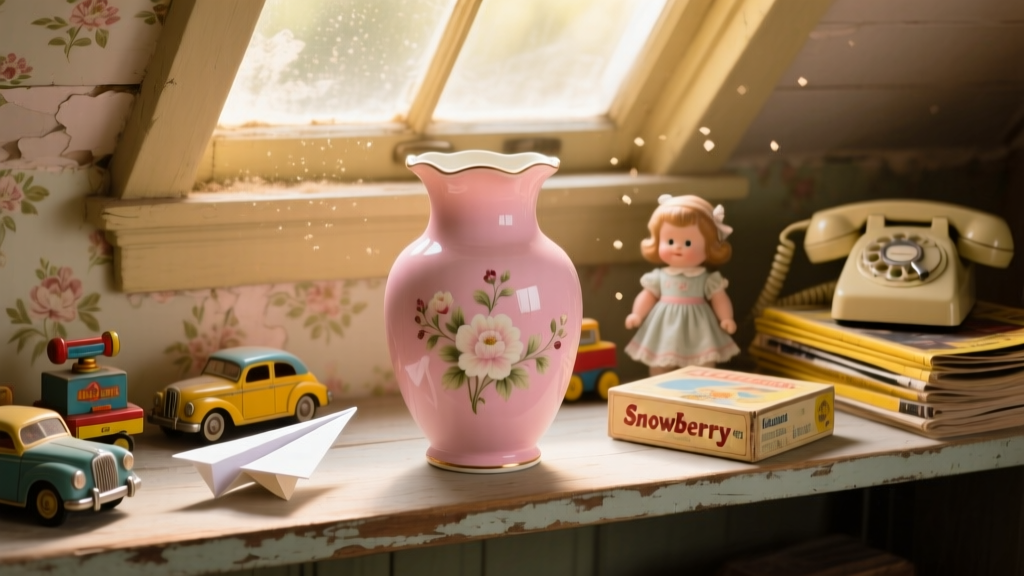
Roseville Snowberry Pink 12-Inch Vase No. 2: Identification, Provenance, and Market Value for Collectors

Baskets Wash Picket Fence Red Black White 10½-Inch: A Mid-Century Ceramic Garden Set Revisited
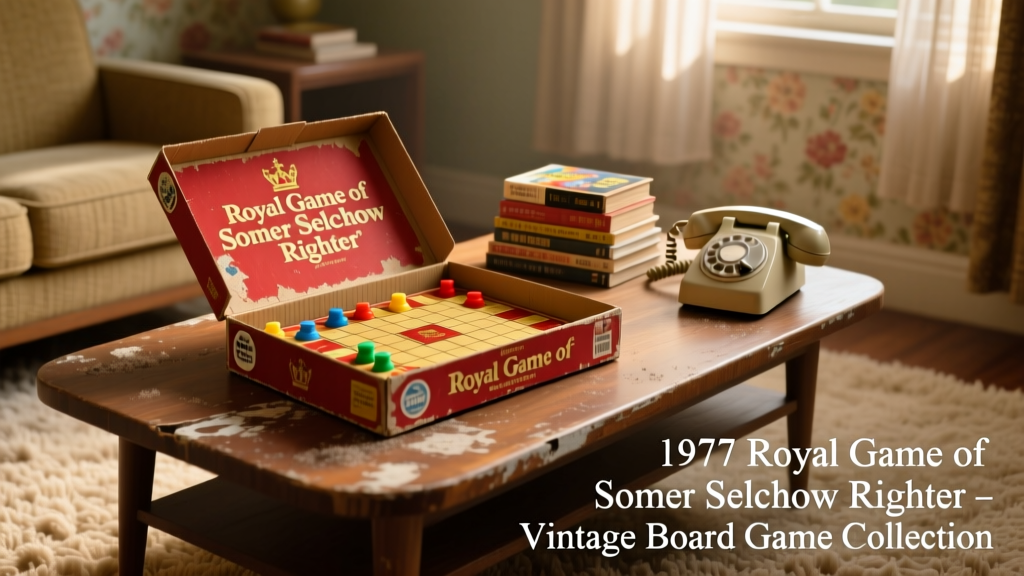
Royal Game of Somer: A 1977 Selchow & Righter Box — Rarity, Design, and Collector Significance
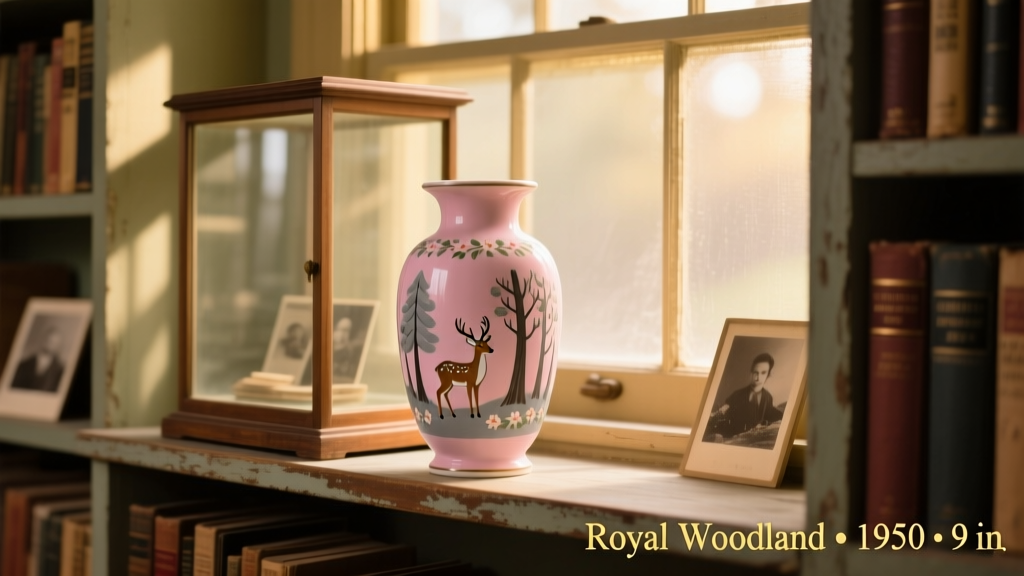
Hull Vase Royal Woodland Pink Gray (1950, 9-Inch): A Collector’s Deep Dive into Mid-Century American Pottery Excellence
Fiesta Rose Plate Deep 8-Inch: A Collector’s Guide to the Iconic Mid-Century Ceramic
Sweet Sue No. 127: The 1955 24-Inch Walker Body Doll in Sunday Best — A Deep Appraisal of the Nine-Piece Outfit & Cultural Significance
Ruskin Vase: Decoding the 14-Inch Yellow Luster Glaze with Green-Brown Iridescence and Impressed Marks

Jehiel Clark: The Forgotten Architect of Mid-Century Toy Innovation
The Martin Alto 10-String Ukulele (27-Inch): A Mid-Century Curiosity, Collector’s Profile, and Historical Context