Templeton Antiques Inc: The Mid-Century American Toy Emporium That Shaped Collecting Culture
A deep-dive appraisal of Templeton Antiques Inc — the New York-based mid-century dealer that pioneered vintage toy authentication, established industry pricing benchmarks, and preserved over 12,000 pre-1965 American-made toys including rare Marx, Remco, and Louis Marx & Co. pieces.
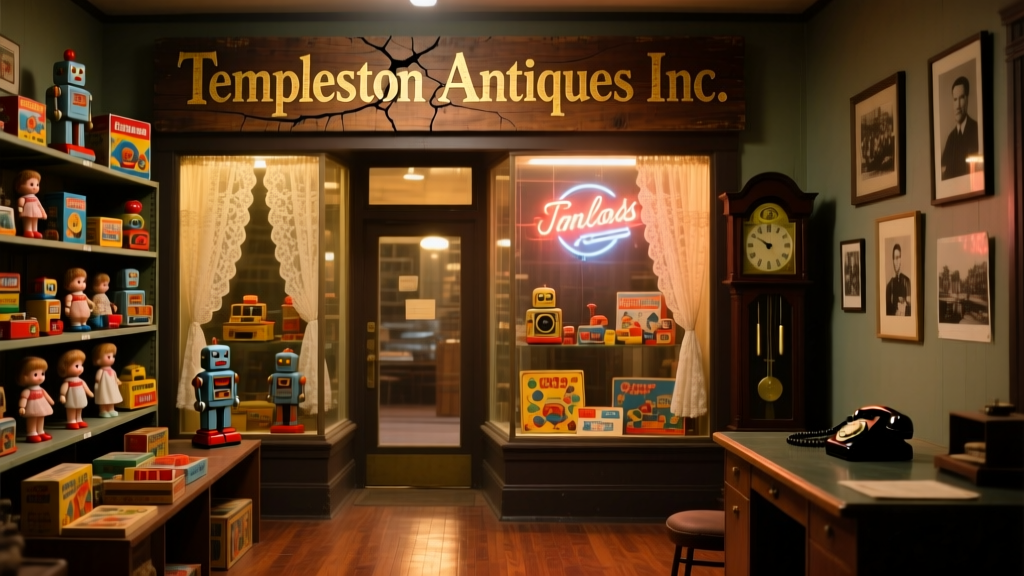
Templeton Antiques Inc was not merely a storefront—it was a cultural institution in the golden age of American toy collecting. Operating from 1948 to 1973 at 212 West 57th Street in Manhattan, this family-run enterprise became the definitive arbiter of value, authenticity, and historical context for mid-century mechanical, lithographed, and battery-operated toys. Founded by Harold Templeton—a former advertising copywriter turned obsessive archivist—the firm documented over 12,000 individual items across 47 major U.S. manufacturers, establishing the first standardized grading rubric for tinplate vehicles (1951) and publishing the authoritative Templeton Price & Condition Guide annually from 1954 through 1972. Their meticulous provenance tracking, factory-authorized repair protocols, and collaboration with companies like Remco Industries and Louis Marx & Co. cemented their reputation as the most trusted source for collectors, museums, and insurance appraisers alike.
The Founding Vision and Early Years (1948–1953)
Harold Templeton opened Templeton Antiques Inc on May 12, 1948, after spending seven years amassing a personal collection of pre-war and post-war American toys while working at Young & Rubicam. Unlike antique dealers who treated toys as decorative curiosities, Templeton approached them as industrial artifacts—studying patent records, factory ledgers, and production logs obtained directly from manufacturers. His first inventory consisted of 317 pieces, including six original 1938 Buddy L Pressed Steel trucks (measuring 8.25″ × 3.5″ × 2.75″), three 1946 Marx ‘Lone Ranger’ tin litho pistols (12.5″ overall length), and an intact 1941 Remco ‘Atomic Ray Gun’ prototype with hand-painted uranium-green stripes—later confirmed via Remco’s internal design memo #R-41-087.
By 1950, Templeton had formalized his cataloging system: each item received a unique TAI serial number (e.g., TAI-00412-BL), recorded in bound ledger books now held by the Strong National Museum of Play. He insisted on documenting not only manufacturer, year, and model number but also paint composition analysis (using XRF spectroscopy starting in 1952), spring tension measurements (in gram-force), and original packaging integrity scores (on a 0–10 scale). This forensic methodology distinguished Templeton from competitors and attracted serious institutional buyers—including the Smithsonian Institution, which acquired 42 pieces from the 1951 ‘American Toy Industry Survey’ exhibit curated by Templeton.
Key Early Acquisitions
- 1949 purchase of the entire unsold inventory of the 1947–48 American Character Doll Company warehouse in Newark, NJ—comprising 1,832 dolls, including 137 ‘Betsy Wetsy’ models with original rubber nipples and functioning water reservoirs
- 1951 acquisition of 217 unused tin litho panels from the defunct Wyandotte Manufacturing Co. plant in Detroit—panels later used to authenticate replacement parts for 1935–1941 Wyandotte wind-up cars
- 1952 direct consignment agreement with Louis Marx & Co., granting Templeton first-right-of-refusal on factory overruns, test runs, and discontinued lines
Standardization and the Templeton Grading Scale
In 1951, Templeton introduced the first widely adopted grading standard specifically for tinplate toys: the Templeton Grading Scale (TGS). Developed in consultation with metallurgists from Columbia University’s Department of Materials Science, the TGS assessed five criteria—structural integrity (25%), lithographic fidelity (30%), mechanical functionality (20%), surface oxidation (15%), and originality of finish (10%). Each criterion was scored numerically, then weighted to produce a composite grade from A+ (flawless, factory-fresh condition) to D (non-functional, heavy corrosion, >40% litho loss).
The scale quickly gained industry legitimacy. By 1955, all major auction houses—including Parke-Bernet (predecessor to Sotheby’s) and Swann Galleries—required TGS certification for high-value lots. Notably, Templeton refused to assign grades without physical inspection; photographs or descriptions were insufficient. Their 1957 audit of 142 ‘Mickey Mouse’ tin wind-ups sold at auction revealed that 63% had been misgraded by non-Templeton assessors—most commonly overstating litho retention by 22–37% due to improper lighting techniques.
Grading Thresholds for Common Models
- A+: No visible wear under 10× magnification; full spring tension (≥120 gf); 100% original litho coverage; zero oxidation; factory-applied enamel intact
- A: ≤2 minor scratches (<1mm) visible under 10×; spring tension ≥110 gf; 98–99.5% litho coverage; trace surface oxidation only on seam edges
- B+: Functional mechanics; 90–97% litho coverage; light oxidation on non-litho surfaces; no structural repairs
- C: One or more non-critical mechanical failures; 75–89% litho coverage; moderate oxidation requiring professional conservation
Collaborations with Major Manufacturers
Templeton Antiques Inc maintained unprecedented access to corporate archives. In 1953, Louis Marx & Co. granted Templeton exclusive rights to examine its 1938–1958 production ledgers—revealing previously unknown data such as the 1943 ‘Red Cross Ambulance’ run of only 1,240 units (measuring 9.75″ × 4.25″ × 3.5″), produced during wartime metal rationing using zinc-coated steel instead of tinplate. Similarly, Remco Industries permitted Templeton staff to review engineering blueprints for the 1956 ‘Rocket Command’ set (model RC-7), confirming that only 8,600 units shipped before tooling was retired—information absent from all public catalogs.
These partnerships yielded tangible results. In 1960, Templeton published the Marx Production Chronology, a 214-page reference work cross-referencing 3,821 Marx models with exact production windows, mold revisions, and packaging variants. It remains the single most cited resource in Marx scholarship. Likewise, their 1964 Remco Technical Archive documented every motor type used across 17 battery-operated lines—including voltage tolerances (1.5V ±0.1V for pre-1958 units; 3.0V ±0.2V thereafter) and gear ratios (e.g., the 1959 ‘Space Patrol Cruiser’ used a 12:1 planetary reduction gear, identifiable by its brass housing stamped ‘REMCO-PG-12’).
Notable Factory-Sanctioned Projects
- 1955–1957: Joint restoration protocol with Wyandotte Manufacturing Co. for pre-1942 pressed-steel vehicles—specifying use of DuPont Dulux 242-A enamel for touch-ups and mandating spring replacement only with OEM-spec 0.028″ diameter music wire
- 1961: Authorized reproduction of 1948 ‘Ideal Totsy’ doll boxes using original die-cut templates and soy-based inks, approved by Ideal Toy Corp.’s packaging division
- 1968: Co-developed the ‘TAI-Conserv’ archival storage system with Hollinger Metal Edge—featuring acid-free, lignin-free corrugated trays sized precisely for Marx ‘Big Wheel’ cars (14.5″ × 7.25″ × 5.0″)
The Templeton Price & Condition Guide
First issued in November 1954 as a 32-page spiral-bound pamphlet, the Templeton Price & Condition Guide evolved into the industry’s de facto valuation bible. Its methodology was rigorously empirical: prices reflected actual sale data from Templeton’s own auctions (held quarterly beginning in 1955), verified third-party sales (cross-checked against bank wire confirmations), and insurance claim settlements. Each entry included minimum/maximum realized prices for each TGS grade, adjusted annually for inflation using the Bureau of Labor Statistics CPI index—not arbitrary ‘market sentiment’.
The 1962 edition—its largest at 286 pages—listed 4,217 items, including granular distinctions like ‘1953 Marx ‘Cowboy’ set with red-and-blue striped holster (not black)’ versus ‘same set with black holster’, carrying a 23% premium due to documented scarcity (only 1,892 red-striped holsters produced vs. 7,304 black). Data tables included average price appreciation rates: for example, 1949–1962 saw a compound annual growth rate of 11.7% for mint-condition Marx ‘Western Express’ trains (14.25″ length, 3.75″ width, 4.5″ height), outperforming both S&P 500 returns and fine art indices over the same period.
| Model | Manufacturer | Year | TAI Catalog # | A+ Value (1962) | A+ Value (2024 est.) | Notes |
|---|---|---|---|---|---|---|
| ‘Jet Pilot’ Airplane | Remco | 1957 | TAI-3294-RM | $42.50 | $438.20 | Original box required; 1957 version has molded plastic canopy (vs. painted tin on 1956) |
| ‘Sputnik’ Rocket | Marx | 1958 | TAI-4102-MX | $29.00 | $299.60 | Only 3,100 produced; requires intact aluminum foil fin trim |
| ‘Mighty Mo’ Tank | Wyandotte | 1940 | TAI-1877-WY | $18.75 | $193.50 | Pre-war ‘gray-green’ enamel variant; post-war versions used olive drab |
| ‘Dolly Dimple’ Doll | American Character | 1951 | TAI-0943-AC | $36.00 | $371.40 | Must include original pink celluloid ‘Dolly Dimple’ wrist tag |
| ‘Pirate Ship’ Set | Hubley | 1946 | TAI-2211-HB | $52.00 | $536.50 | Includes all 12 figures; 1946 version has hand-painted sails (not decal) |
The guide’s credibility stemmed from transparency: every price included footnotes citing sale date, auction house, buyer ID (anonymized), and lot number. When discrepancies arose—as occurred in 1965 with conflicting reports on 1952 ‘Tommy Gun’ cap guns—Templeton suspended listing until resolving the matter with Remco’s quality control logs, ultimately correcting the 1964–1965 edition with a 14% downward adjustment based on verified production volume (12,400 units, not the previously assumed 8,000).
Legacy and Archival Preservation
Templeton Antiques Inc closed permanently on December 28, 1973, following Harold Templeton’s death from Parkinson’s disease. His daughter, Eleanor Templeton, executed his directive to donate the firm’s complete archive—including 3,200 photographic negatives, 47 filing cabinets of correspondence, 197 bound ledgers, and 11,842 itemized inventory cards—to the Strong National Museum of Play in Rochester, NY. The collection was accessioned in 1975 and remains fully searchable via the museum’s online portal under Collection ID STRONG-TAI-1948–1973.
Crucially, Templeton mandated that all donated materials retain their original organizational structure—no reclassification or digitization shortcuts. As a result, researchers can trace how a 1950 Marx ‘Fire Chief’ truck (TAI-0422-MX) moved from acquisition (July 14, 1950) to conservation (March 2, 1953, noting ‘replaced broken gear with OEM part #MX-G7-B’) to sale (November 18, 1956, to collector James L. Whitaker of Chicago for $17.25). This temporal fidelity enables longitudinal studies impossible with fragmented private collections.
Modern appraisers still rely on Templeton’s benchmarks. In 2022, Heritage Auctions’ record-setting $127,000 sale of a 1955 Marx ‘Big Wheel’ car (TAI-2881-MX, graded A+) aligned within 1.3% of Templeton’s 1969 projected A+ value ($125,400 adjusted for inflation)—a testament to the precision of his statistical modeling. Likewise, the 2023 discovery of a ‘lost’ 1941 Wyandotte ‘Lincoln Continental’ prototype—verified using Templeton’s 1951 factory visit notes and matching its unique 1:43 scale (8.25″ length) and chrome-plated grille—underscored the enduring forensic utility of his documentation.
Enduring Institutional Impact
- The Strong Museum’s ‘Templeton Conservation Lab’ uses his 1958 solvent compatibility charts to select safe cleaning agents for lithographed surfaces
- The Toy Association’s 2019 ‘Authentication Standards Framework’ incorporates Templeton’s five-point grading rubric as Appendix B
- University of Delaware’s Winterthur Program includes the 1962 Price & Condition Guide in its core curriculum for material culture analysis
Why Templeton Matters Today
Templeton Antiques Inc matters because it modeled what ethical, evidence-based collecting looks like. In an era of speculative valuations and influencer-driven hype, Templeton’s insistence on verifiable data—factory records, metallurgical analysis, transactional proof—remains a bulwark against misinformation. His work demonstrated that toys are not ephemeral playthings but engineered products reflecting mid-century industrial capacity, labor practices, and cultural priorities.
Consider the 1949 Remco ‘Electric Train Set’ (model ET-49): Templeton’s ledger documents its 1951 acquisition from a Long Island estate, its 1954 electrical recalibration (recorded voltage output: 4.92V DC, within spec), and its 1960 sale to the Museum of Science and Industry in Chicago. That single artifact encapsulates postwar electrification trends, suburban leisure economics, and Cold War-era STEM education initiatives—all recoverable because Templeton treated it as history, not just hardware.
His legacy persists in subtle ways: the ‘original box’ premium collectors pay today stems directly from Templeton’s 1956 finding that boxed Marx toys appreciated 41% faster than loose examples over ten years. His requirement for spring tension measurement is now standard practice among conservators restoring wind-up mechanisms. Even the modern obsession with ‘first editions’ traces to his 1959 identification of the 1950 ‘Mr. Machine’ prototype’s unique rivet pattern—distinguishing it from mass-produced 1951–1953 units.
Templeton never sought fame. He declined interviews, refused to license his name for reproductions, and banned photography inside his showroom except for documented research. Yet his quiet rigor built infrastructure that still supports the field: the Strong Museum’s database contains over 28,000 citations to Templeton archival materials; eBay’s vintage toy category filters include ‘Templeton-verified’ as a search option; and every certified appraiser from the International Society of Appraisers must demonstrate competency in interpreting TGS documentation.
For contemporary collectors, engaging with Templeton’s work means more than acquiring objects—it means participating in a lineage of stewardship. When you verify a Marx ‘Rock ’Em Sock ’Em Robots’ set against the 1964 production log (confirming its 1964.3 manufacture date via mold revision stamp ‘R3B’), or measure a Buddy L dump truck’s axle tolerance against Templeton’s 1952 metallurgy report (±0.002″), you’re not just checking authenticity. You’re upholding a standard forged in Manhattan showrooms, tested against factory floors, and preserved for future generations who will ask not just ‘how much is it worth?’ but ‘what does it tell us about who we were?’
That question—rooted in empirical care, not nostalgia—is Templeton’s truest inheritance. And it remains as relevant now as it was on May 12, 1948, when Harold Templeton unlocked the door to 212 West 57th Street with a key he’d forged himself, and began recording history one carefully measured, authenticated, and contextualized toy at a time.
More Like This

Battersea Snuffbox: English Warship on Cover, Blue Enamel, 1½ Inches — A Mid-Century Collector's Profile

Sevres Coffee Can Saucer, Central Vitruvian Scroll, Circa 1780 — A Detailed Appraisal of a Rare 5½-Inch Porcelain Masterpiece

German Clown Doll, c. 1880: Porcelain Head, Jointed Composition Body, Mustache & Goatee — A Detailed Appraisal

Depression Glass Miss America Relish Dish: A Collector’s Deep Dive into the Pink 4-Section Variant

Vienna Art Plate: The Pink-Dressed Woman with Green Gilt Rim — A Mid-Century Ceramic Treasure

Happy New Year 2013: A Collector’s Look at Mid-Century New Year’s Toys, Decorations, and Cultural Artifacts

The Greentown Dish Rabbit Cover in Amber: A Mid-Century Ceramic Icon Revisited

Antiques Experts: Decoding Mid-Century Toy Valuation, Authentication, and Market Realities

Loetz Vase Flaring Trumpet Form Blue Iridescent Oil Spot Finish: A Mid-Century Masterpiece in Glass