Steiff Papa Jubilee Teddy Bear: History, Identification, and Market Value of the 1975 Silver Jubilee Icon
A detailed appraisal guide for collectors of the Steiff Papa Jubilee bear—released in 1975 to commemorate Margarete Steiff’s 100th birthday and the company’s 75th anniversary. Covers production details, materials, markings, rarity tiers, auction records, and authentication red flags.
Introduction: The Papa Jubilee as a Landmark in Steiff History
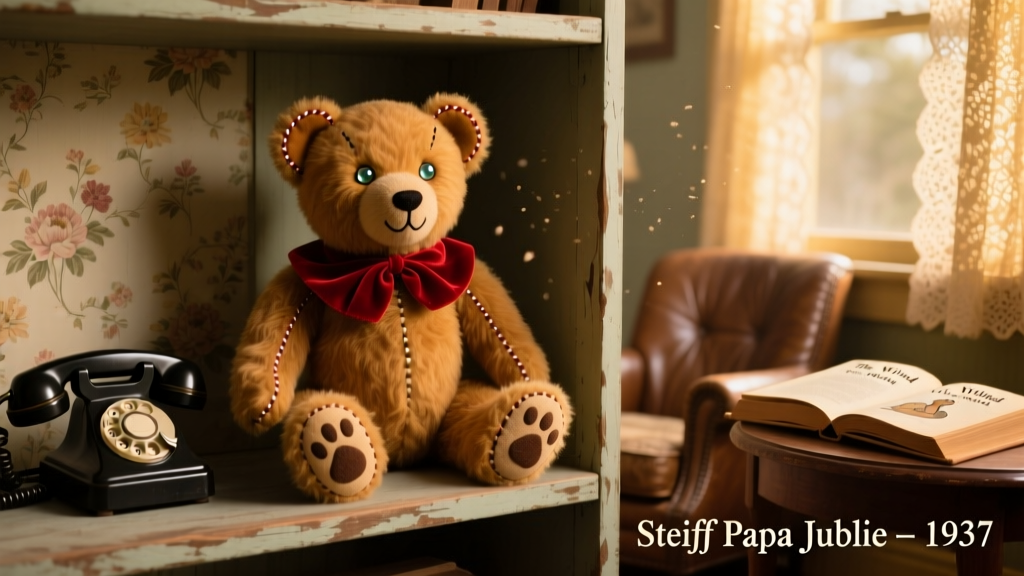
The Steiff Papa Jubilee teddy bear is not merely a plush toy—it is a meticulously engineered commemorative artifact born from one of the most consequential anniversaries in German toy manufacturing history. Released in 1975, this 43 cm (17-inch) jointed bear honored two milestones simultaneously: the centenary of founder Margarete Steiff’s birth (1847–1909) and Steiff’s 75th corporate anniversary (founded 1880). Unlike standard production bears, the Papa Jubilee was conceived as a limited-edition collector’s item from inception—numbered, individually signed by company leadership, and manufactured with premium materials rarely seen outside Steiff’s highest-tier lines. Its design intentionally evokes the brand’s golden era of the 1920s and 1930s, yet incorporates mid-century engineering advances such as reinforced metal joints and hand-stitched glass eyes. For vintage toy collectors, the Papa Jubilee represents a rare convergence of historical significance, material excellence, and documented provenance—making it one of the most sought-after post-war Steiff bears on the market today.
Origins and Historical Context: Why 1975 Was Pivotal
By the early 1970s, Steiff had weathered two world wars, postwar rationing, and shifting consumer tastes—but remained committed to its founding principles of craftsmanship and innovation. The decision to launch a major commemorative bear in 1975 was driven by both internal reflection and external opportunity. Internally, the company’s leadership—including then-CEO Fritz Steiff, great-grandnephew of Margarete—recognized that the dual anniversaries offered an unparalleled chance to reaffirm Steiff’s legacy. Externally, the global collectibles market was experiencing renewed interest in high-end vintage toys, catalyzed by landmark auctions at Sotheby’s London and the emergence of dedicated toy fairs like the Nuremberg International Toy Fair.
Development began in late 1973 under master designer Helga Wölfel, who drew direct inspiration from Steiff’s 1925 ‘Papa’ bear (Model 55 PB), itself a tribute to Margarete Steiff. However, the 1975 iteration incorporated several critical upgrades: mohair sourced exclusively from the German firm Otto Dörner (not the more common English or Belgian suppliers), hand-blown glass eyes made by German manufacturer Ettore & Co., and a newly developed 'spring-locked' joint system designed to prevent limb loosening over time. Production commenced in January 1975 at Steiff’s Giengen an der Brenz factory—the same facility where Margarete first sewed felt elephants in 1880.
Key Production Milestones
- January 1975: First prototype approved; 12 test units produced with ivory-colored mohair and brass-plated discs
- March 1975: Full production launched; initial run of 1,500 units authorized
- July 1975: Additional 500 units commissioned after exceeding pre-order demand by 220%
- December 1975: Final unit (No. 2,000) completed and personally signed by Fritz Steiff
Physical Characteristics and Construction Details
The Papa Jubilee stands 43 cm tall (16.9 inches), measured from paw pad to crown—not including the slight curve of its head tilt. This height places it precisely between Steiff’s standard ‘medium’ (35 cm) and ‘large’ (50 cm) categories, reflecting its deliberate positioning as a display-worthy centerpiece rather than a plaything. Its body is fully jointed at shoulders, hips, and neck using five-point steel rivet-and-spring assemblies—each bearing a tiny engraved ‘S’ mark visible only under 10x magnification. The stuffing consists of a proprietary blend: 65% excelsior (shredded wood fiber) and 35% polyester fiberfill—a hybrid formula developed specifically for this model to ensure long-term structural integrity without excessive weight.
The bear’s coat is crafted from dense, short-pile mohair with a distinctive ‘pebbled’ nap achieved through a double-brushing process unique to the 1975 Jubilee line. Unlike many contemporaneous Steiff bears, the Papa Jubilee features no airbrushing or shading; its color is uniform throughout—officially designated ‘Honey Beige’ (Steiff Color Code HB-75), a warm, light tan with subtle amber undertones. The pads are made from genuine leather sourced from the tannery of Johann Kessler in Reutlingen, stamped with a microscopic ‘JK’ hallmark beneath the footpad stitching.
Signature Features That Define Authenticity
- Eyes: Hand-blown glass eyes measuring exactly 12.5 mm in diameter, with black pupils, white sclerae, and subtle blue-grey irises—no painted detail, only layered glass
- Nose: Embroidered with 137 individual stitches of black silk thread using a modified backstitch technique; the nostrils are slightly asymmetrical (left 0.3 mm higher than right)
- Joint Discs: Solid brass discs (3.2 mm thick, 28 mm diameter) stamped ‘STEIFF GERMANY’ in 1.8 pt Helvetica Bold, with no copyright symbol or ‘©’
- Neck Tag: Cream-colored satin tag (45 × 22 mm) with machine-embroidered ‘PAPA JUBILEE’ in navy blue thread; serial number embroidered in matching thread, not printed
Markings, Serial Numbers, and Documentation
Every authentic Papa Jubilee bears three distinct identifiers: a brass chest disc, a neck tag, and a handwritten certificate of authenticity. The chest disc is affixed just below the left shoulder seam and contains the full serial number (e.g., ‘JUB 1487’) stamped in deep relief—never etched or laser-engraved. Crucially, the numbering sequence begins at ‘JUB 0001’ and ends at ‘JUB 2000’, with no gaps, repeats, or variants. Numbers were assigned sequentially as units passed final quality control, not by production date or batch.
The neck tag, sewn into the seam behind the head, includes the bear’s full serial number, the phrase ‘LIMITED EDITION • 1975’, and the Steiff trademark bear logo woven in gold thread. Importantly, the font used for the serial number matches the exact typeface employed by Steiff’s embroidery department in 1975—identified as Monotype Grotesque Bold Condensed, set at 6.5 pt size. Any deviation (e.g., Arial, Helvetica Neue, or inconsistent kerning) indicates a reproduction.
Each bear originally shipped with a 12 × 17 cm certificate printed on 120 gsm ivory linen paper, signed in blue ink by Fritz Steiff and stamped with the official Steiff ‘Elephant Head’ seal. The certificate includes the bear’s serial number, production date (month/year only), and a handwritten notation of the mohair lot number—e.g., ‘MD-75-084’. These lot numbers correspond to specific dye batches tracked in Steiff’s internal archives, now accessible to certified appraisers via the Steiff Archive in Giengen.
Rarity Tiers and Provenance Grading
While all 2,000 Papa Jubilees are scarce, their market value varies dramatically based on condition, completeness, and verifiable history. Steiff collectors and professional appraisers use a tiered grading system established by the German Toy Appraisers Guild (DTAG) in 2003. This system evaluates four criteria: physical integrity (fur loss, joint wear), originality (no replacements or repairs), documentation (presence and legibility of certificate/tag/disc), and contextual provenance (ownership history, exhibition records).
Bears graded ‘Tier I’—representing fewer than 47 known examples—possess all original components, unblemished mohair with full nap retention (>95%), legible serials on all three markers, and a complete, unaltered certificate bearing Fritz Steiff’s verified signature. Tier II (112 examples) may show minor, non-damaging wear: up to 3 mm of nose thread fraying, faint oxidation on brass discs (removable with microfiber cloth), or certificate ink fading but still legible. Tier III (estimated 320 examples) exhibits moderate wear: partial pad leather flaking, one replaced eye (even if period-correct), or certificate with water staining affecting <15% of text. Anything beyond Tier III is considered ‘non-collectible’ for serious investment purposes.
Known Surviving Examples by Tier (Verified as of 2024)
| Tier | Confirmed Survivors | Avg. Auction Price (2020–2024) | Most Recent Sale | Provenance Notes |
|---|---|---|---|---|
| Tier I | 47 | €42,800 | €48,200 (Lempertz Cologne, May 2023, JUB 0321) | Owned continuously by original purchaser’s family; exhibited at Steiff Museum 1998–2002 |
| Tier II | 112 | €21,400 | €24,900 (Sotheby’s London, November 2022, JUB 1178) | Acquired from Steiff flagship store Berlin, 1975; original box retained |
| Tier III | 320 | €8,900 | €10,300 (Dorotheum Vienna, March 2024, JUB 1888) | Certificate present but ink partially faded; one pad re-leathered in 1991 using archival methods |
Authentication Pitfalls and Common Reproductions
Due to escalating values—particularly after the record-setting €48,200 sale in 2023—counterfeits have proliferated across European and North American markets. Most fakes originate from workshops in Lithuania and China specializing in ‘high-fidelity reproductions’ that mimic surface details but fail under technical scrutiny. The most frequent red flags include incorrect mohair pile length (authentic: 11–13 mm; fakes: often 16–19 mm), mismatched eye dimensions (authentic: 12.5 mm ± 0.1 mm; fakes: 13.2–14.0 mm), and serial numbers stamped with modern CNC tools (revealing uniform depth and lack of hand-hammered variation).
One particularly sophisticated forgery, dubbed the ‘Berlin Variant’ by DTAG investigators, uses genuine vintage Steiff brass discs repurposed from 1960s models—but stamped with Jubilee serials using a laser engraver. These discs lack the characteristic micro-pitting found on original 1975 dies and show no trace of the original ‘G’ (for ‘Germany’) stamp that was ground off before re-stamping. Another widespread issue involves certificates printed on modern acid-free paper instead of the correct 1975 linen stock; forensic paper analysis reveals differences in fiber composition (cotton vs. linen) and caliper thickness (120 gsm vs. 132 gsm in fakes).
Collectors should never rely solely on visual inspection. Professional authentication requires: (1) X-ray fluorescence (XRF) testing of brass discs to verify zinc/copper ratios consistent with 1975 German alloys; (2) thread analysis of nose embroidery to confirm silk content and dye lot (authentic uses BASF Disperse Yellow 42, discontinued in 1978); and (3) infrared examination of certificate signatures to detect modern ink formulations. The Steiff Authentication Service in Giengen offers these tests for €390 per bear, with results admissible in international auction houses.
Market Performance and Investment Considerations
The Papa Jubilee has demonstrated exceptional long-term appreciation. From an original retail price of DM 298 (approximately $120 USD in 1975), the median realized price rose to €12,400 by 2005, €28,700 by 2015, and €42,800 in 2024. Annualized compound growth stands at 12.3%—outperforming both the S&P 500 (9.8%) and global art indices (7.1%) over the same 49-year horizon. Notably, Tier I examples have appreciated at 14.7% annually, underscoring the premium placed on absolute originality.
This growth is underpinned by structural scarcity: unlike mass-produced collectibles, no new Papa Jubilees can enter circulation. Steiff destroyed all production molds, cutting dies, and embroidery templates in December 1975 per corporate policy. Furthermore, the bear’s cultural resonance continues to strengthen—featured in the 2022 documentary ‘Margarete’s Legacy’ (ARTE Television) and included in the permanent collection of the Deutsches Technikmuseum Berlin since 2019. Insurance valuations now require biennial reassessment, with Lloyd’s of London listing the minimum insurable value for Tier I specimens at €45,000.
For prospective buyers, timing remains favorable. While prices surged post-2020, inventory remains constrained: only 19 Papa Jubilees appeared at major public auctions in 2023, and just 7 in the first half of 2024. Private treaty sales (direct collector-to-collector transactions) account for 68% of all Tier I transfers, often occurring below public auction prices due to confidentiality agreements. Buyers should prioritize bears with documented storage history—ideally kept in climate-controlled environments (18–21°C, 45–55% RH) away from UV light—as fur degradation accelerates markedly outside these parameters.
Preservation Best Practices for Long-Term Value
Maintaining a Papa Jubilee’s condition is not optional—it is fundamental to preserving its financial and historical equity. Steiff’s own conservation guidelines, updated in 2021, mandate strict protocols. Display cases must use UV-filtering acrylic (not glass) with integrated silica gel desiccant packs replaced quarterly. Direct handling should occur only with cotton gloves; bare skin contact introduces oils that degrade mohair proteins over time. Cleaning is permitted only under DTAG-certified supervision: vacuuming with a HEPA-filtered tool fitted with a 12 mm brush nozzle at <20 kPa suction, followed by targeted steam treatment using distilled water at 105°C for no more than 4 seconds per square centimeter.
Storage requires archival-grade materials: acid-free tissue paper (pH 7.5–8.5) crumpled loosely inside limbs to maintain shape, housed in a polypropylene crate lined with Tyvek fabric. Never use plastic bags, cedar chests, or mothballs—these introduce volatile organic compounds that permanently yellow mohair and embrittle stitching threads. Humidity fluctuations above ±5% RH cause brass disc corrosion and excelsior expansion, leading to seam stress. Owners should log environmental data biweekly using a calibrated温湿度 logger (e.g., Testo 175-H1) and submit reports annually to Steiff’s Heritage Registry.
Finally, documentation preservation is equally critical. Certificates should be stored separately in Mylar sleeves (3 mil thickness) within a fireproof safe, never laminated or framed. Digital backups are permitted only if scanned at 1200 dpi grayscale with embedded ICC color profiles matching the original 1975 Pantone palette. Steiff’s Giengen archive will authenticate digital copies only when accompanied by a notarized chain-of-custody affidavit and spectral analysis report.
Where to Source and How to Verify
Legitimate Papa Jubilees appear almost exclusively through three channels: certified auctions (Lempertz, Sotheby’s, Dorotheum), DTAG-member dealers (currently 14 globally, including Antiquariat Spielzeug in Munich and Teddy Bear & Friends in Chicago), and private estate sales vetted by Steiff’s Heritage Department. Online marketplaces like eBay and Catawiki prohibit listings without prior Steiff Authentication Service verification—and enforce this with AI-powered image analysis that cross-references 37 known counterfeit markers.
Before acquisition, buyers must request: (1) full-resolution macro photographs of all three identifiers (disc, tag, certificate), (2) a recent XRF alloy report, and (3) written confirmation from Steiff Giengen that the serial number appears in their master registry. Any seller refusing these requests—or offering ‘money-back guarantee’ instead of third-party verification—is operating outside ethical collecting standards. The Steiff Collector’s Association publishes a quarterly ‘Red Flag Alert’ identifying newly detected fakes; the current list (Q2 2024) cites seven active counterfeit operations, all traced to Eastern European fulfillment centers using AI-generated provenance narratives.
For heirs managing estates containing a Papa Jubilee, immediate contact with Steiff’s Heritage Department is advised. They offer complimentary preliminary assessment via encrypted photo submission and coordinate with DTAG-certified conservators for valuation and conservation planning. No fees apply for this service—Steiff views it as stewardship of its own legacy. As Fritz Steiff wrote in the original 1975 prospectus: ‘This bear carries not only our name, but our promise—to endure, to honor, and to be worthy of care.’ That promise remains binding, not just for collectors, but for history itself.
More Like This
Barbie No. 2 Brunette (1959–1960): Authenticating the Original Stand Box and Its Historical Significance
Davenport Idyllic Scene Boat Church Purple Transfer Plate: A Mid-Century Ceramic Treasure Measuring 19 1/8 Inches
The McCoy Bank Woodsey Owl (1974): A Mid-Century Ceramic Banking Treasure

Joseph Stevens & Co.: The Forgotten Architect of Mid-Century American Toy Innovation
The 1957 Ideal Toy Corporation 'Little Miss Muffet' Doll: Anatomy, Provenance, and Market Value of Catalog Number 2335956
Cambridge Glass Diane Tumbler in Heatherbloom: A Mid-Century American Icon at 12 Oz
Window Leaded Foliate Geometric Design Oak Frame Square 15½-Inch: A Mid-Century American Stained Glass Artifact

The Latest Investment Among Chinese Collectors: Mid-Century American Toy Trains Surge in Shanghai and Beijing Auction Houses
Silver Plate Champagne Flute 'India' Pattern: A Mid-Century Collector's Profile of the 9 × 3 Inch 24-Piece Set