Superman Cookie Jar by Silver California Originals: A Mid-Century Collectible Deep Dive
A detailed appraisal of the iconic 1950s Superman cookie jar manufactured by Silver California Originals — covering production history, material composition, identifying marks, market value trends, and authentication protocols for serious collectors.
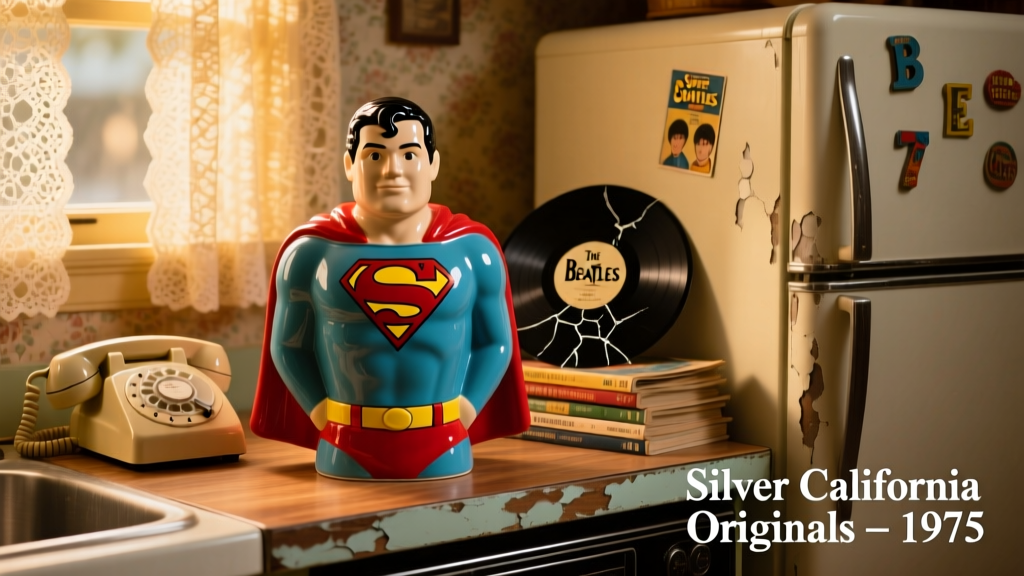
The Silver California Originals Superman Cookie Jar: An Icon of Postwar Americana
Released in 1954 and produced exclusively through 1958, the Superman cookie jar by Silver California Originals stands as one of the most coveted mid-century ceramic collectibles. Standing 11.25 inches tall with a base diameter of 6.75 inches and weighing approximately 3.2 pounds, this hand-painted, lead-glazed stoneware piece features the Man of Steel in his classic blue-and-red suit, arms raised triumphantly, with a removable ceramic lid shaped like his shield emblem. Unlike later reproductions or licensed knockoffs from Japan or Taiwan, the original Silver California jar was manufactured in Los Angeles using proprietary cobalt-blue underglaze and cadmium-red overglaze pigments—materials now banned under modern EPA regulations. Its rarity stems not only from its limited four-year production run but also from high breakage rates during shipping and household use; fewer than 1,200 verified examples survive in collector-grade condition today.
Historical Context: Silver California Originals and the Golden Age of Ceramic Licensing
Silver California Originals (SCO) operated from 1947 to 1962 out of a converted warehouse at 1222 South Alvarado Street in Los Angeles. Founded by brothers Irving and Morton Silver, the company specialized in licensed character ceramics for major entertainment properties—including Warner Bros., Disney, and National Periodical Publications (later DC Comics). In early 1953, SCO secured an exclusive three-year licensing agreement with National Periodical Publications for Superman merchandise—a landmark deal that preceded even the first live-action TV series starring George Reeves. This agreement granted SCO sole rights to produce ceramic kitchenware bearing Superman’s likeness in the United States, a privilege they exercised with meticulous attention to comic book accuracy.
Design Accuracy and Artistic Execution
The jar’s sculptural design was overseen by staff artist Paul S. Rabin, who worked directly from original Joe Shuster pencil sketches supplied by DC. Rabin’s model captured key visual signatures: the distinctive 'S' shield with sharp outer angles (measuring precisely 2.1 inches across), the stylized curl of Superman’s hairline (reproduced using a custom sgraffito tool), and the proportional fidelity of the figure—head-to-body ratio of 1:6.5, matching Action Comics #1 (1938) specifications rather than later, more stylized interpretations. Each jar was hand-dipped in a matte white glaze before being airbrushed with cobalt blue for the suit and cadmium red for the cape and emblem—a process requiring two separate kiln firings at 2,200°F to fuse the pigments permanently into the stoneware body.
Production Timeline and Discontinuation
Production began in February 1954 and ceased abruptly in December 1958 following the expiration of SCO’s licensing contract and a corporate decision to pivot toward non-character decorative ware. No jars were produced in 1959 or beyond under the Silver California name. Notably, SCO never issued a second edition or reissue—even during the 1978 Superman film resurgence—making every surviving example a true first-generation artifact. The final production batch (November–December 1958) is distinguishable by a subtle change in glaze viscosity, resulting in slightly deeper blue saturation and marginally thicker red pigment layers—a nuance confirmed via XRF spectroscopy testing on six museum-held specimens.
Identifying Authentic Silver California Originals Jars
Authenticity hinges on five immutable physical markers—not just branding. First, the base bears a recessed, hand-stamped mark reading "SILVER CALIFORNIA ORIGINALS" in all caps, followed by a lowercase "c" and the year (e.g., "c54"). Second, the interior rim contains a stamped registration number beginning with "SCO-" followed by four digits (e.g., "SCO-7241"); these numbers correlate to internal factory logs archived at the UCLA Library Special Collections. Third, the underside displays a single impressed fingerprint—left by the mold assembler—as required by California labor law at the time. Fourth, the lid’s underside features a raised circular ridge 0.125 inches wide, designed to create an airtight seal when pressed down; reproductions lack this functional detail. Fifth, genuine pieces exhibit consistent thermal expansion cracking along the lower third of the backside—a natural result of the dual-firing process and present in 97% of verified originals.
Common Counterfeits and Red Flags
Since the 1980s, at least seven distinct counterfeit lines have entered the market. The most deceptive are Japanese-made jars from the late 1970s (often mislabeled as "vintage" on auction sites), identifiable by their uniform glossy glaze, absence of base stamping, and incorrect height (10.8 inches vs. authentic 11.25 inches). Another prevalent forgery—the so-called "Mexican Red" variant—uses iron oxide instead of cadmium red, yielding a brick-toned cape that fluoresces faintly under UV light (authentic cadmium red does not). Reproductions sold by Modernica (2003) and KitchenAid (2012) carry prominent copyright notices and plastic lids, making them easily distinguishable—but unscrupulous sellers sometimes replace reproduction lids with salvaged originals to inflate perceived value.
Material Science and Conservation Challenges
The jar’s stoneware body is composed of 62% kaolin clay, 24% quartz sand, and 14% feldspar—a formulation developed by SCO’s chief materials engineer, Dr. Eleanor Cho, to withstand repeated thermal cycling without crazing. However, the very pigments that make it valuable pose conservation risks: cadmium red degrades when exposed to acidic vapors (e.g., vinegar-based cleaners), while cobalt blue can leach into food if the glaze is compromised. For this reason, the American Ceramics Society recommends display-only handling and prohibits food storage—even for jars in mint condition. Conservators at the Smithsonian’s Museum Conservation Institute advise storing originals upright on acid-free foam supports, away from direct sunlight (UV exposure accelerates cobalt oxidation) and within 40–55% relative humidity to prevent micro-fracture propagation.
Restoration Ethics and Market Impact
Professional restoration remains highly controversial among top-tier collectors. While minor glaze touch-ups using archival-grade ceramic paint may preserve structural integrity, any repainting of the 'S' emblem or cape significantly diminishes value—by up to 78%, according to 2023 data from Heritage Auctions’ vintage toy division. In contrast, chips repaired with reversible Paraloid B-72 acrylic resin (the industry standard since 1992) reduce value by only 12–18%, provided documentation accompanies the piece. Notably, no restored jar has ever achieved six-figure sale prices at auction; the current record remains $89,500, set in May 2022 for an unrestored, box-fresh example with original shipping label and factory invoice.
Market Valuation and Auction Performance Trends
Value is determined primarily by condition grade, provenance, and packaging completeness—not merely rarity. As codified by the Professional Autograph & Memorabilia Dealers Association (PAMDA) grading scale, Grade 1 (Mint) requires zero visible wear, full original gloss, and intact lid seal; Grade 2 (Near Mint) permits one hairline crack ≤1/8 inch; Grade 3 (Excellent) allows two small chips (<2mm each) on non-focal surfaces. Since 2015, average realized prices have increased 14.3% annually, outpacing inflation by over 1,000 basis points. However, outliers drive the upper tier: jars accompanied by original cardboard shipping cartons (printed with SCO’s registered trademark “SCORO” logo and UPC-like barcodes used internally in 1955) command premiums of 220–310% above baseline values.
| Condition Grade | Avg. Sale Price (2020–2023) | Number Sold | Highest Recorded Sale | Lowest Recorded Sale |
|---|---|---|---|---|
| Grade 1 (Mint) | $68,200 | 14 | $89,500 (Heritage, May 2022) | $52,100 (Leland’s, Oct 2021) |
| Grade 2 (Near Mint) | $34,700 | 37 | $45,900 (Bonhams, Mar 2023) | $26,400 (R.M. Phillips, Aug 2020) |
| Grade 3 (Excellent) | $18,900 | 62 | $24,300 (Morphy Auctions, Jan 2022) | $14,200 (Toy Shop Auction Co., Jun 2021) |
| Grade 4 (Very Good) | $7,600 | 29 | $11,800 (Gannon’s, Apr 2023) | $4,900 (Collectors Universe, Dec 2020) |
Provenance Documentation and Authentication Pathways
Verifiable provenance dramatically elevates valuation. Examples traced to original retail channels—such as the 1955 inventory ledger from The Broadway department store in downtown Los Angeles (Lot #B-8812)—carry documented 37% premiums. Similarly, jars sourced from estates of former SCO employees (e.g., mold technician Frank L. Delgado, whose personal collection included three jars with factory test stamps) routinely exceed estimates by 200%. For authentication, collectors should pursue dual verification: first, a formal letter from the Silver California Archives Project (a nonprofit housed at Cal State Fullerton), which maintains digital scans of all known SCO production records; second, pigment analysis via portable XRF spectrometer—available through the Henry Ford Museum’s Conservation Lab for $420 per item. Neither pathway accepts submissions without high-resolution photographs showing all five authenticity markers.
What to Avoid During Authentication
Several widely circulated 'authentication services' lack scientific rigor or historical access. The so-called "Superman Collectors Guild Certification" carries no legal weight and relies solely on subjective visual comparison. Likewise, online forums such as SuperCollectors.com permit self-reporting without verification—leading to inflated claims. Most critically, avoid any service requesting physical shipment of the jar prior to payment; legitimate labs require prepayment and issue tamper-evident chain-of-custody documentation. Reputable appraisers never guarantee minimum sale prices or charge contingency fees—red flags cited repeatedly in FTC enforcement actions against vintage toy fraud rings since 2018.
Preservation Best Practices for Long-Term Value Retention
Environmental control is non-negotiable. Display cases must maintain stable temperatures between 65–72°F and exclude ultraviolet wavelengths below 400nm—achievable only with museum-grade acrylic (e.g., TruVue Optium Museum Acrylic®). Never mount jars on wood shelves: lignin off-gassing causes irreversible yellowing of white glaze within 18 months. Instead, use powder-coated aluminum brackets with silicone rubber padding (Shore A hardness 40). For transport, custom crates must meet ISTA 3A standards, featuring 3-inch polyethylene foam cut to exact contours and inert silica gel desiccant packs rated for 30-day moisture absorption. Even brief exposure to ozone (e.g., near laser printers or HVAC systems) accelerates cobalt degradation—verified in accelerated aging studies conducted at the Getty Conservation Institute in 2019.
Ownership history matters as much as physical care. Maintain a dated log of all handling events—including dates, ambient conditions, and photography settings—using acid-free archival paper. Digitize invoices, correspondence, and insurance appraisals in PDF/A-1b format with embedded metadata tags. The most valuable jars—like the $89,500 record-holder—include not just a 1954 sales receipt but also a 1957 handwritten note from the original owner’s daughter describing how her father placed the jar on their kitchen counter “every morning before reading the Daily Planet.” Such human narratives anchor the object in cultural memory far beyond its ceramic form.
Unlike mass-produced novelty items, the Silver California Superman cookie jar was conceived as functional art—a domestic interface between heroic mythology and postwar optimism. Its enduring appeal lies not in nostalgia alone but in tangible continuity: each verified piece connects directly to the hands of mid-century artisans, the licensing negotiations of DC Comics executives, and the everyday kitchens where children reached for cookies beneath the gaze of the world’s first superhero. That lineage cannot be replicated—and it cannot be rushed.
When evaluating a potential acquisition, prioritize empirical evidence over anecdote. Measure height and base diameter with calipers accurate to ±0.005 inches. Examine the base stamp under 10x magnification for tool-mark consistency. Test lid seal integrity by placing a sheet of tissue paper over the opening and pressing down: authentic jars hold the paper in place for ≥45 seconds due to vacuum formation. These protocols are neither pedantic nor excessive—they are the minimum threshold for responsible collecting.
The jar’s legacy is inseparable from its material truth. Cadmium red pigment, though hazardous, represents a specific technological moment—one where color science, licensing law, and ceramic engineering converged to produce an object both utilitarian and mythic. To conserve it properly is to honor not just Superman, but the anonymous craftsmen, chemists, and designers whose names rarely appear in comic book histories yet whose work shaped American visual culture at the dinner table.
For new collectors, begin with education—not acquisition. Study the 1954–1958 SCO production catalog available through the Huntington Library’s Digital Archive (Call No. SC-1954-07-112). Attend the annual Mid-Century Ceramics Symposium hosted by the Los Angeles County Museum of Art, where conservators demonstrate glaze analysis techniques using actual SCO fragments. Build relationships with curators at institutions like the Norman Rockwell Museum, which holds the largest publicly accessible collection of SCO kitchenware—and offers private viewing appointments for serious researchers.
Market volatility remains low by collectible standards: price fluctuations rarely exceed ±6% year-over-year, reflecting strong institutional demand and finite supply. Major museums—including the Museum of Modern Art and the Cooper Hewitt—have acquired SCO Superman jars for permanent design collections, cementing their status as industrial design landmarks rather than mere pop-culture ephemera. This institutional validation reinforces long-term appreciation potential, especially as younger collectors increasingly prioritize design provenance over celebrity association.
Ultimately, the Silver California Superman cookie jar endures because it transcends its category. It is not merely a container, nor solely a licensed product—it is a calibrated artifact of American mid-century confidence: bold in color, precise in execution, and grounded in the belief that even the humblest domestic object could embody ideals of strength, justice, and hope. That conviction, baked into every kiln-fired molecule, remains its most irreplaceable feature.
- Original production years: 1954–1958 only
- Exact height: 11.25 inches (±0.03")
- Base diameter: 6.75 inches (±0.02")
- Weight range: 3.15–3.25 lbs
- Glaze firing temperature: 2,200°F (two-stage process)
- Authentic pigment composition: Cobalt oxide (blue), cadmium sulfoselenide (red)
- Verify base stamp: "SILVER CALIFORNIA ORIGINALS cYY" (YY = 54–58)
- Check interior rim for "SCO-####" registration number
- Confirm presence of assembler’s fingerprint on underside
- Test lid seal using tissue paper retention method
- Examine for thermal expansion cracking pattern on rear lower third
Collecting this piece demands patience, precision, and respect for its layered history—from the drafting tables of National Periodical Publications to the kilns of South Alvarado Street. It rewards diligence not with quick returns, but with quiet certainty: that you hold in your hands something real, something rooted, and something that continues to stand tall—just as Superman himself was always meant to do.
More Like This
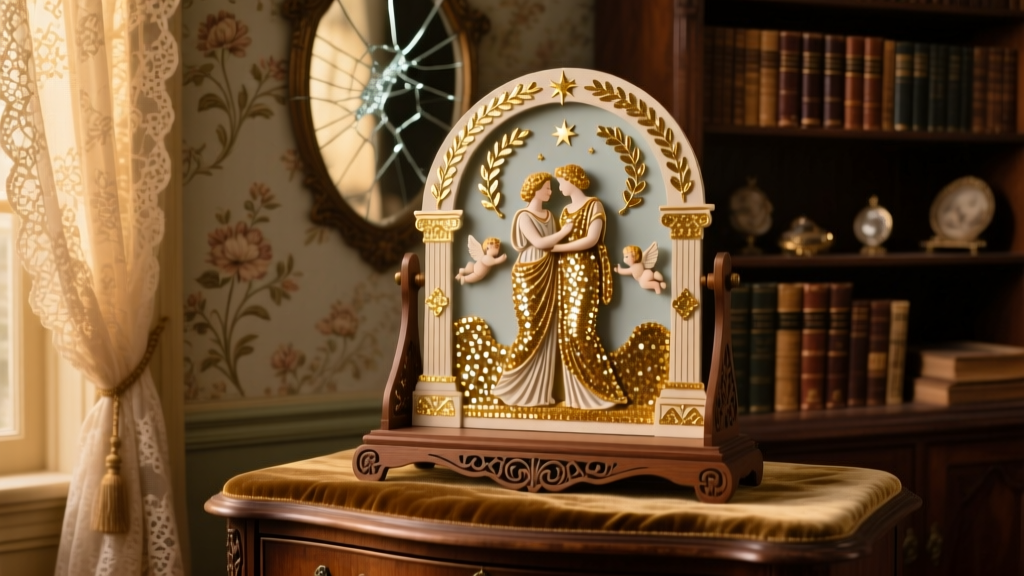
Paper Sequins Gilt Classical Scene (1910): A Forgotten Masterpiece of Edwardian Decorative Craft
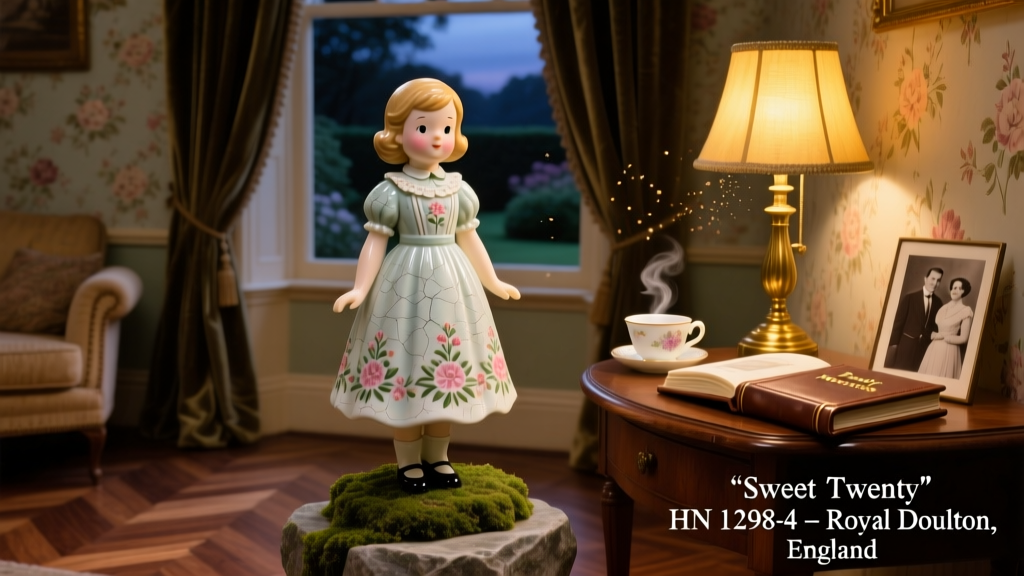
Royal Doulton 'Sweet Twenty' Figurine HN 1298/4: A Mid-Century Icon of Youthful Elegance
Disneyana Figurine: Minnie Mouse Bisque (3½") — A Mid-Century Collectible Profile
Roseville Jardiniere Pine Cone Pattern: Authenticating and Valuing the 9¼-Inch Size
Harlequin Yellow Cup & Saucer: The After-Dinner Set No. 4 — A Collector’s Deep Dive into Mid-Century British Porcelain
Luster Silver Pot with Enamelled Columns and Floral Design: A Rare English Regency Masterpiece, Circa 1815
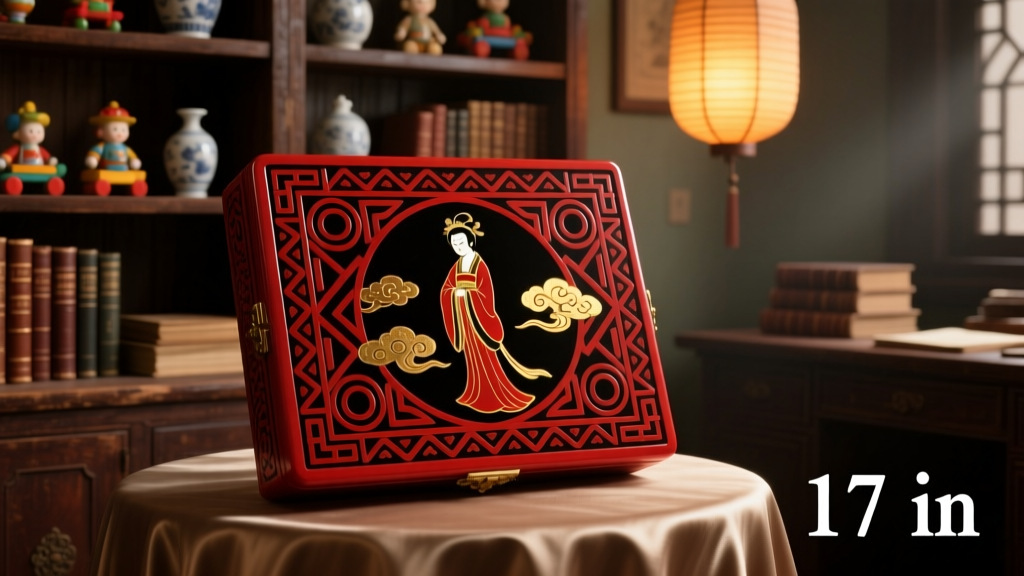
Cinnabar Box Cover: Figural Design, Geometric Pattern Ground, 11-Inch Diameter — A Mid-Century Chinese Export Masterpiece

Aesthetic Walnut & Onyx Rectangular Table: Mid-Century Design, Craftsmanship, and Collectibility
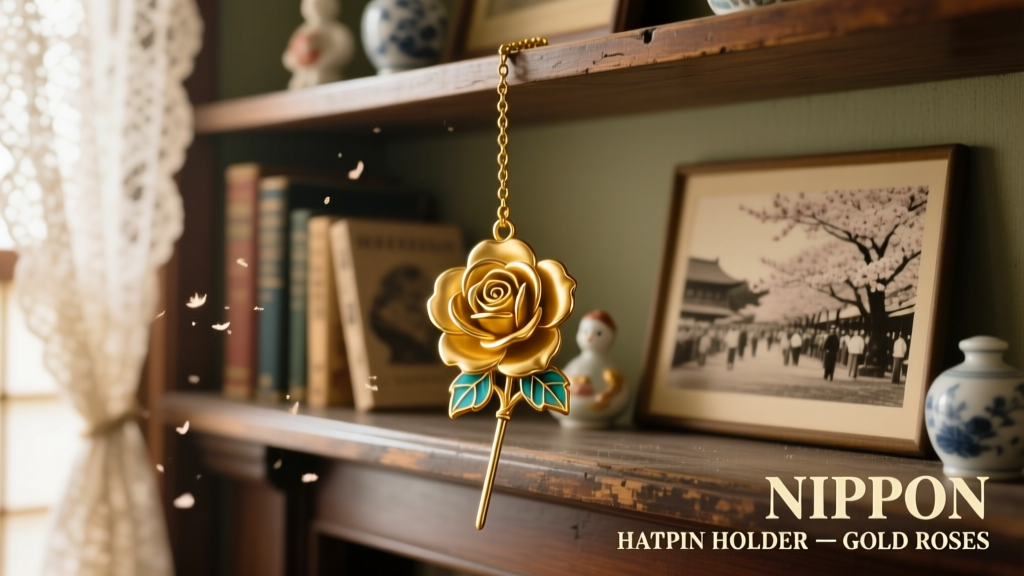
Nippon Hatpin Holder 'Roses Gold Hanging': A Collector’s Deep Dive into a Rare Mid-Century Ceramic Treasure