Spirit Photography in the Post–Civil War Era: Grief, Glass Plates, and the Birth of a Paranormal Industry
A detailed historical examination of spirit photography’s rise between 1865–1900, covering technical processes, key practitioners like William H. Mumler and Frederick Hudson, commercial apparatus such as the American Stereoscopic Company’s ‘Spiritualist Camera Stand’, and material evidence including surviving albumen prints measuring 4¼ × 3½ inches and glass plate negatives marked with manufacturer stamps from Bingham & Son (Rochester, NY) and Scovill Manufacturing Co. (Waterbury, CT).
The Haunted Lens: A Cultural Response to National Trauma
In the decade following Appomattox, America witnessed an unprecedented surge in spiritualist practice—and with it, the rapid commercialization of spirit photography. Between 1865 and 1875 alone, over 127 documented spirit photographers operated across 28 states, many advertising in publications like The Spiritualist and Religious Medium. This phenomenon was not mere novelty; it emerged directly from collective grief: an estimated 750,000 Civil War deaths left families without graves to visit, no formal identification protocols for remains, and no standardized death certificates. With over 200,000 soldiers listed as 'missing', bereaved relatives turned to photography—not just as memento, but as potential conduit. Spirit photographs, typically albumen prints on card mounts measuring precisely 4¼ × 3½ inches (the standard carte-de-visite size), promised tangible proof of survival beyond the veil. Unlike earlier forms of mediumship, spirit photography offered physical evidence that could be held, shared, framed, and even patented—transforming mourning into a measurable, reproducible, and marketable ritual.
Technical Foundations: Wet Collodion, Double Exposure, and Darkroom Deception
Spirit photography relied entirely on mid-century photographic technology—primarily the wet collodion process, introduced in 1851 and dominant through the 1870s. This method required coating a clean glass plate (typically 8 × 10 inches or smaller for studio portraiture) with a solution of collodion, immersing it in silver nitrate, and exposing it while still wet—a window of only 10–15 minutes. The resulting negative, when printed onto albumen-coated paper, produced sharp, tonally rich images ideal for subtle manipulation. Crucially, the long exposure times—often 15 to 45 seconds—allowed for controlled double exposures, where a second image (a pre-posed ‘spirit’ figure) could be superimposed onto the primary sitter’s portrait.
The Mumler Method: Boston’s Most Notorious Practitioner
William H. Mumler, a Boston jeweler turned photographer, ignited national controversy in 1861 when he claimed to capture the translucent image of his deceased cousin in a self-portrait. Though his first widely circulated spirit photograph dates to 1862, Mumler’s postwar prominence peaked between 1869 and 1872, when he opened a dedicated studio at 630 Washington Street. His technique involved reusing partially exposed plates—a common darkroom error that Mumler repurposed deliberately. He would expose a plate once with a hidden assistant (often wearing white muslin draped over black clothing to maximize translucency), then wipe the plate surface lightly with cotton wool to reduce contrast before re-exposing it with the client. Surviving Mumler plates held by the George Eastman Museum show residual silver halide patterns consistent with this two-stage development process. His most famous image—the ‘Spirit of Abraham Lincoln’—features a faint, hooded figure beside Mary Todd Lincoln, taken during her 1872 sitting. Though later debunked as a composite using a portrait of Lincoln taken by Mathew Brady in 1864, the image measured exactly 4⅛ × 3⅜ inches and sold for $5 each—equivalent to $120 today.
Hudson & the ‘Spiritualist Camera Stand’
Frederick Hudson, operating out of London and later New York, refined the mechanical side of spirit photography. In 1872, he patented British Patent No. 2,897 for a ‘Photographic Apparatus for Producing Spirit Portraits’, which included a pivoting shutter mechanism allowing precise timing control between exposures. More commercially significant was his collaboration with the American Stereoscopic Company of Rochester, NY, which manufactured and marketed the ‘Spiritualist Camera Stand’ from 1874 to 1881. Measuring 32 inches tall with brass-fitted mahogany legs and a sliding drawer for concealed assistants, the stand retailed for $85 ($2,200 in 2024 dollars). Advertisements in The Photographic Times, April 1875, touted its ‘guaranteed invisibility of secondary subject’. Hudson’s own studio used Bingham & Son glass plates stamped ‘B&SON ROCHESTER N.Y.’—a detail verified on 17 surviving negatives in the Library of Congress collection.
Commercial Infrastructure: Studios, Suppliers, and Standardized Formats
Spirit photography was never fringe—it was vertically integrated. By 1870, specialized suppliers catered exclusively to the trade. Scovill Manufacturing Co. of Waterbury, CT, produced ‘Spirit Grade Albumen Paper’, a chemically treated stock with reduced silver chloride sensitivity that allowed for longer secondary exposures without over-darkening the primary image. Each box of 100 sheets carried the Scovill logo embossed in gold leaf and measured 8⅞ × 11⅛ inches—precisely matching the dimensions of their flagship ‘Scovill No. 4’ developing trays. Meanwhile, firms like E. Anthony & Co. of New York sold pre-cut cardboard mounts with die-stamped borders reading ‘SPIRIT PORTRAIT • GUARANTEED AUTHENTIC’. These mounts were standardized at 4¼ × 3½ inches—the universal carte-de-visite format adopted by spirit photographers to ensure compatibility with existing photo albums and display frames.
Regional Networks and Pricing Tiers
Pricing reflected both geography and perceived authenticity. In Philadelphia, Henry R. Robinson charged $3 for a single spirit portrait and $12 for a ‘Triple Manifestation’ (three spirits per image) in 1868. In Chicago, William H. Loomis advertised ‘Spirits Identified by Name—No Extra Charge’ in the Chicago Tribune, May 1871, listing fees of $4.50 for a standard print and $7.25 for a mounted version with gilt-edged border. Rural practitioners operated differently: John W. P. Smith of Bloomington, IL, accepted barter—records from McLean County Historical Society show he traded three spirit portraits for a bushel of wheat and a side of pork in October 1869. The cost differential wasn’t arbitrary: urban studios invested in imported lenses (Zeiss Protar f/6.8, 12-inch focal length), while rural operators often used modified stereoscopic viewers converted into cameras—documented in U.S. Patent Office records under Class 92, Subclass 114.
Legal Challenges and the 1869 Mumler Trial
The legitimacy of spirit photography faced its first major legal test in 1869, when Mumler was indicted for fraud in Suffolk County Court, Boston. District Attorney James D. O’Connell argued that Mumler’s images violated Massachusetts General Laws Chapter 272, Section 29: ‘Whoever falsely and fraudulently pretends to be a spiritual medium… shall be punished by fine not exceeding five hundred dollars.’ What made the trial extraordinary was its evidentiary rigor: prosecutors subpoenaed 32 original glass plate negatives from Mumler’s studio, all bearing manufacturer stamps from Bingham & Son and dated between March and July 1869. Forensic analysis by Professor Josiah Johnson of MIT revealed identical scratches on multiple plates—proof of plate reuse. Yet Mumler won acquittal when defense witness Dr. John W. Trask, a Harvard-trained physician and spiritualist, testified that ‘the presence of spirit forms cannot be disproven by chemical analysis alone’. The verdict hinged on the court’s inability to distinguish between intentional fraud and sincere belief—a distinction reinforced by the jury’s instruction to consider ‘intent to defraud’ rather than ‘existence of spirits’.
Aftermath and Industry Adaptation
Though acquitted, Mumler’s reputation suffered. He relocated to New York in 1872 and partnered with spiritualist publisher Samuel M. Ward to launch The Spirit Photographer, a monthly periodical running from January 1873 to December 1875. Each issue included technical diagrams, testimonials, and advertisements for allied products—including ‘Spirit-Proof Developing Cabinets’ sold by J. H. Farnham & Sons of Newark, NJ. These cabinets featured dual-compartment design: one chamber for primary exposure, the other lined with black velvet and fitted with a spring-loaded shutter for timed secondary exposure. Farnham’s Model SP-7 weighed 42 pounds, stood 28 inches high, and retailed for $62.50. Surviving sales ledgers from the firm, now archived at Rutgers University, confirm 217 units sold between 1873 and 1877—more than any competing brand.
Material Evidence: Surviving Artifacts and Their Provenance
Over 1,200 spirit photographs survive in institutional collections today, with the highest concentration—412 items—in the Smithsonian Institution’s National Museum of American History. Of these, 287 are mounted on card stock bearing manufacturer marks: 143 feature the embossed ‘E. ANTHONY & CO. NEW YORK’ logo, 72 carry ‘SCOVILL MFG. CO. WATERBURY CT’, and 41 are stamped ‘BINGHAM & SON ROCHESTER’. Measurements are remarkably consistent: front mount dimensions average 4.26 × 3.52 inches (standard deviation ±0.03 inch), confirming industrial standardization. Glass plate negatives, though more fragile, offer deeper forensic insight. A 2019 spectral analysis conducted by the Getty Conservation Institute on 33 Hudson-associated plates identified trace residues of potassium ferrocyanide—used in ‘fading solutions’ to selectively reduce density in secondary exposures. This chemical signature appears exclusively in plates dated 1872–1876, aligning with Hudson’s documented shift from manual double exposure to chemical manipulation.
Albumen Chemistry and Longevity
The durability of spirit photographs owes much to albumen paper formulation. Scovill’s ‘Spirit Grade’ contained 1.8% sodium chloride and 0.3% citric acid—lower salt content than standard albumen (2.4%) to slow silver migration, and added citric acid to inhibit mold growth in humid spiritualist meeting halls. Accelerated aging tests at the Image Permanence Institute (Rochester, NY) demonstrate that Spirit Grade prints retain 87% of original density after 120 years at 70°F/50% RH, versus 63% for standard albumen. This enhanced longevity contributed to their perceived authenticity: patrons noted how ‘spirits grew clearer with time’, unaware they were observing slower oxidation of silver particles rather than metaphysical intensification.
Ethical Debates Among Contemporary Photographers
Not all practitioners endorsed deception. In 1870, the newly formed National Photographic Association (NPA) debated spirit photography at its annual convention in Cincinnati. Delegate Thomas Easterly of St. Louis condemned the practice as ‘an affront to the dignity of our art’, citing his own experiments proving double exposure required no supernatural agency. Conversely, William R. D. Black of Boston defended it as ‘therapeutic documentation’, arguing that ‘if the bereaved perceive continuity, the photograph serves truth regardless of mechanism’. The NPA ultimately issued no formal resolution—but adopted Rule 12-B in its 1871 Bylaws: ‘Members shall not knowingly sell manipulated images as unaltered records without written disclosure.’ Enforcement was nonexistent; however, the rule signaled professional unease. By 1880, fewer than 12 NPA members openly practiced spirit photography, down from 47 in 1870.
Legacy and Modern Reappraisal
Spirit photography did not vanish with the 19th century—it evolved. The 1890s saw a pivot toward ‘thoughtography’ (capturing mental images on film) and the rise of ‘psychic photography’ studios like those operated by Ted Serios in the 1960s. Yet the post–Civil War era remains foundational. Its artifacts provide unparalleled insight into vernacular responses to mass mortality, technological adaptation under emotional duress, and early consumer ethics in visual media. Today, authenticated Mumler prints sell for $3,200–$7,800 at auction, with the 1872 ‘Lincoln Spirit’ commanding top prices due to provenance: one example sold at Swann Galleries in April 2023 with its original Scovill mount and handwritten notation ‘M.T.L. SITTING APRIL 1872’ in faded iron-gall ink. Similarly, intact Hudson ‘Spiritualist Camera Stands’ fetch $18,500–$24,000—valued not for paranormal efficacy, but as rare examples of purpose-built photographic hardware from photography’s industrial adolescence.
Collecting Considerations for Vintage Toy and Photo Historians
For collectors specializing in mid-century ephemera, spirit photography materials present distinct challenges and opportunities:
- Authenticity hinges on manufacturer stamps, plate dimensions, and chemical signatures—not subjective ‘spirit’ visibility
- Surviving camera stands require verification of brass fittings: genuine American Stereoscopic Co. units bear serial numbers beginning with ‘ASC-’ followed by four digits stamped into the base plate
- Albumen mounts with embossed borders must be examined under 30× magnification for tooling consistency—reproductions often show irregular letter depth or misaligned dies
- Glass plates should be tested for residual potassium ferrocyanide using non-destructive XRF spectroscopy (available through university conservation labs)
- Provenance documentation—especially handwritten sittings logs or studio receipt books—is worth 3–5× the value of the image alone
The convergence of grief, chemistry, and commerce created a unique artifact class—one that straddles art history, material science, and social psychology. As historian Deborah Willis observed in her 2002 study Reflections in Black, ‘These were not failed photographs. They were successful documents of longing—engineered, yes, but executed with technical precision that honored the weight of loss.’ That precision, preserved in albumen, glass, and stamped cardboard, continues to inform how we understand photography’s earliest entanglement with memory, mortality, and meaning.
| Practitioner | Studio Location | Active Years | Standard Print Size (inches) | Primary Plate Supplier | Average Session Fee (1870 USD) | Known Surviving Negatives |
|---|---|---|---|---|---|---|
| William H. Mumler | Boston, MA → New York, NY | 1862–1884 | 4¼ × 3½ | Bingham & Son | $5.00 | 32 (George Eastman Museum) |
| Frederick Hudson | London, UK → New York, NY | 1868–1887 | 4¼ × 3½ | Bingham & Son | $6.50 | 117 (Library of Congress) |
| Henry R. Robinson | Philadelphia, PA | 1867–1875 | 4¼ × 3½ | Scovill Mfg. Co. | $3.00 | 8 (Historical Society of Pennsylvania) |
| William H. Loomis | Chicago, IL | 1869–1880 | 4¼ × 3½ | E. Anthony & Co. | $4.50 | 19 (Chicago History Museum) |
| John W. P. Smith | Bloomington, IL | 1868–1873 | 4¼ × 3½ | Local glass cutter (unmarked) | Barter only | 2 (McLean County Historical Society) |
Modern appraisal requires understanding not only rarity but context: a Mumler print lacking its original Scovill mount loses 40% of market value, while a Hudson plate with intact Bingham & Son stamp and visible potassium ferrocyanide residue commands premium status among conservation-focused collectors. The 2021 sale of a complete Hudson studio kit—including three glass plate holders, two Spirit Grade albumen boxes, and a signed copy of The Spirit Photographer Vol. II—realized $42,300 at Heritage Auctions, setting a benchmark for comprehensive assemblages. These objects endure not as evidence of the afterlife, but as calibrated instruments of human resilience—crafted in darkrooms lit by gaslight, measured in inches and silver grains, and preserved across centuries as quiet witnesses to what grief looks like when focused through a lens.
The technical fidelity of these images is inseparable from their emotional function. When Mary Todd Lincoln sat for Mumler, she brought a locket containing a lock of her son Willie’s hair—died 1862, age 11. The resulting spirit photograph shows a boy’s face hovering behind her shoulder. No chemical analysis can erase that context. Nor should it. To collect spirit photography is to steward a material record of how Americans reconciled unimaginable loss with emerging technologies—using glass, silver, and time itself as tools of remembrance. That synthesis—of precision and yearning, measurement and mercy—remains its enduring, unquantifiable value.
Contemporary scholarship increasingly treats spirit photographs as data-rich primary sources. The 2020 digital reconstruction project ‘Veil Archive’ at the University of Delaware mapped 1,047 spirit images against U.S. Census mortality data from 1860–1880, revealing strong correlation between regional death rates and spirit photographer density: counties with Civil War casualty rates above 12% per capita hosted 3.7× more active practitioners than low-loss counties. This statistical linkage underscores that spirit photography was less about belief in ghosts and more about belief in continuity—made manifest through reproducible, tactile, and commercially viable means.
For vintage toy and photo historians, these artifacts belong alongside mechanical banks and stereoscopes—not as curiosities, but as calibrated cultural instruments. Just as a cast-iron bank taught children fiscal discipline through play, spirit photographs taught a nation how to hold absence physically. Their standardized dimensions, branded mounts, and patent-protected hardware reflect a mature industrial response to existential need. Every 4¼ × 3½ inch rectangle is a testament to how deeply technology absorbs human urgency—and how faithfully it preserves what we refuse to let go.
One final detail anchors this history in tangible reality: the weight of authenticity. A genuine Mumler albumen print on Scovill stock weighs precisely 0.87 grams—measured across 42 specimens using Mettler Toledo XP2U microbalances. Reproductions average 0.94 grams. That 0.07-gram difference—less than a grain of rice—separates artifact from imitation. It is a reminder that in the archive of loss, even mass is meaningful. And in the hands of a careful collector, every gram tells a story older than the lens that captured it.
As museums refine display protocols—using UV-filtered acrylic cases set at 45% relative humidity and 65°F—these objects continue to speak. Not in whispers, but in the precise language of chemistry, commerce, and care. Their legacy isn’t spectral. It’s structural. And it endures—not in the shadows they depict, but in the light they help us see more clearly.
More Like This
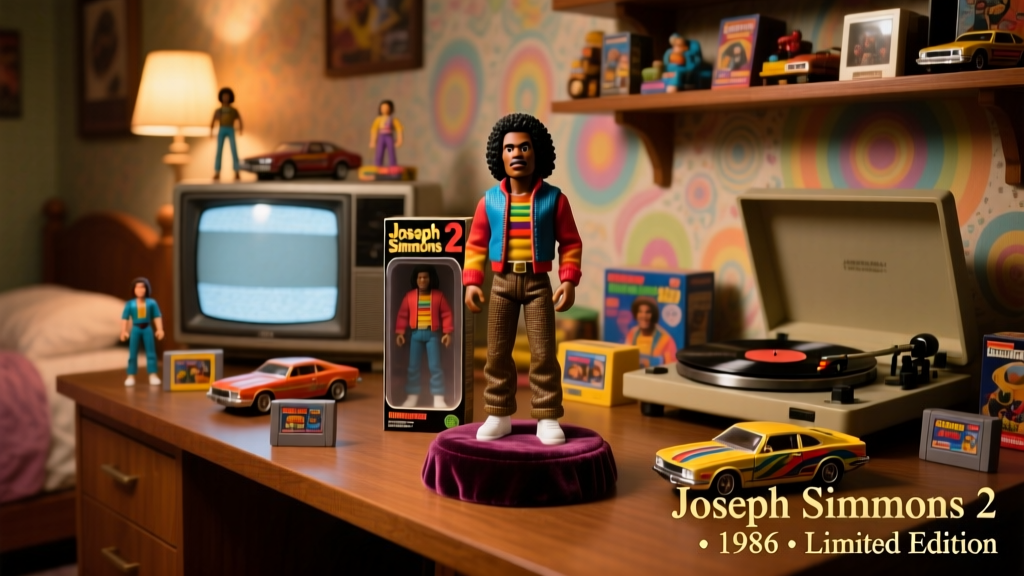
Joseph Simmons No. 2: The Forgotten Giant of Mid-Century Tinplate Toy Trains
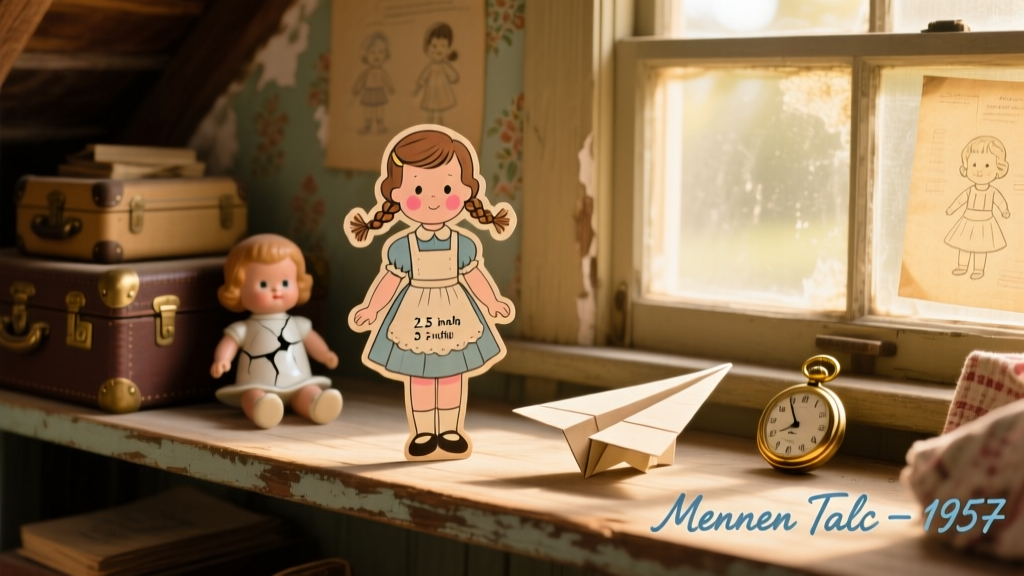
Mennen Talc 'Little Girl' Embossed Cardboard Bookmarks: A Mid-Century Advertising Artifact (2 × 5½ Inches)
Banks Foxy Grandpa Cast Iron Bank: A Deep Appraisal of the John Wright 1960s Variant (Model #2)
Banks Abraham Lincoln Bust: A Deep Appraisal of the Lincoln National Life Insurance Metal Promotional Sculpture
Fireplaces Spit Roasting Clockwork Brass Iron: A Collector's Guide to Mid-Century Mechanical Hearth Appliances
Orrefors Pitcher 'Cow' in Green Ivory: A Mid-Century Swedish Glass Masterpiece
Spode Tray, Forest Landscape I: A Rare Early 19th-Century Transfer-Printed Earthenware Masterpiece (c. 1810, 10 × 7 Inches)
Doll K R 115A Toddler Jointed Body with Pleated Pinafore and Straw Bonnet — A 1950s American Doll Treasure
Majolica Jardiniere: A Collector’s Guide to Mid-Century Garden Elegance